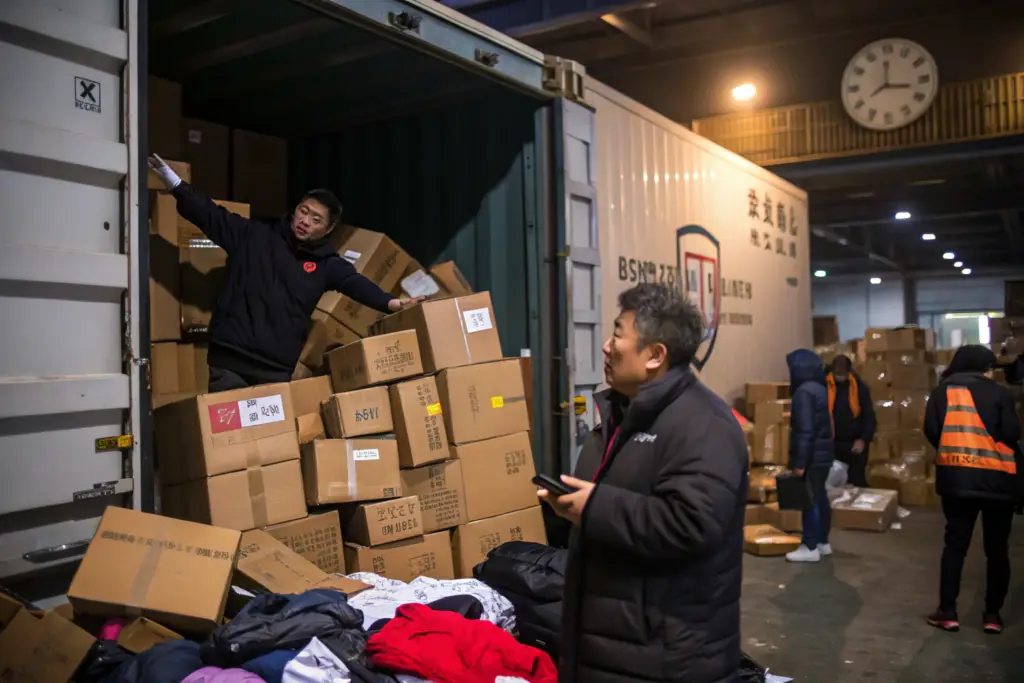
I still remember a cold November morning in 2023. A brand owner from Chicago called me in a panic. His container of 2,000 Christmas-themed hoodies was stuck in Long Beach port. The customs broker was not answering his emails. The port was congested. The demurrage fees were piling up at 300 dollars a day. He sold those hoodies mainly in the week between December 15th and December 24th. The goods finally cleared on December 22nd. He missed the entire window. He spent January selling holiday sweaters at 80 percent off to a jobber. That call changed how I think about shipping promises.
The only reliable way to beat the 2026 holiday rush is to switch to a factory that owns the logistics timeline through DDP shipping. At Shanghai Fumao, we take full responsibility for production, freight, customs clearance, and final delivery to your warehouse door before peak season congestion starts. You pay one price, and we remove the chaos.
The holiday season is not a surprise. It happens at the exact same time every year. But factories lie about delivery dates to get the deposit. Freight forwarders disappear once the ship leaves Asia. You are left staring at a tracking screen, losing sleep. I want to walk you through how we changed the game for several of our partners by moving the ship date three months earlier and using transparent planning. This is not about magic. It is about backward scheduling and taking ownership of the entire import process.
Why Do Most Clothing Suppliers Miss the Holiday Shipping Window?
The problem starts the moment you sign the purchase order. The salesperson promises a September 15th ship date. They sound so confident. They even put it in the contract. But October 1st arrives, and your goods are not ready. They blame the fabric mill. They blame the power. They send you a photo of a half-empty cutting table and ask for "one more week." That week turns into three weeks. The ship date slips to October 20th. Then the forwarder books space on a vessel leaving October 28th.
What they did not tell you is that the factory overbooked their production lines. They took a bigger order from a different client and pushed your small batch aside. In July and August, while your goods should have been cutting, the lines were busy with someone else's order. This is the dirty secret of quota-driven factories. They manage their capacity for the big fish and use the small brands as filler. You end up being the filler that spills over the deadline.

How Does Overbooking Production Lines Cause Delays?
I visited a massive factory in another province a few years ago. The sales director bragged about being at 120 percent capacity. He said it was proof of their success. But that math is a trap. If you have 100 production lines and you accept orders for 120 lines, someone will wait. The smallest customer always ends up at the back of the queue. When a large order runs into a quality problem, the factory shifts your workers to fix that big order. Your cut fabric sits on a shelf for two weeks.
At Shanghai Fumao, I run a strict policy. We book to 90 percent of our capacity. I keep that 10 percent buffer open specifically for unexpected bottlenecks. In June 2024, a zipper supplier in Wenzhou had a factory fire. It disrupted the supply chain for many of our competitors. Their orders sat half-finished for three weeks waiting for zippers. We activated our buffer. We shifted our internal scheduling to focus on styles that did not need zippers for those two days while we sourced emergency stock from our secondary supplier. This production planning discipline is the foundation of a fixed ship date. Do not fall for the "busy factory" marketing trick.
Why Are Transparency and Backward Scheduling Non-Negotiable?
A factory that refuses to share a detailed timeline is hiding something. I give every client a backward schedule before they pay the deposit. We start with your in-store date, say November 15th, 2026. We subtract 7 days for inland trucking and warehousing in the USA. We subtract 25 days for ocean transit from Shanghai to Los Angeles. We subtract 10 days for terminal handling, customs clearance, and potential random inspection. We subtract 5 days for loading and documentation. This brings us to a ship date around September 25th.
Now we work backward from the ship date into production. 35 days for sewing. 15 days for cutting and pre-washing. 20 days for fabric sourcing. Your raw material order must be placed in June. This backward logic is harsh but honest. I once showed this timeline to a potential client, and he realized his design was not finalized fast enough. He delayed his launch to the next season knowingly. That avoided a certain disaster. Retail giants like the National Retail Federation report that late shipments contribute to inventory gluts that force deep discounting. A strict timeline protects your margin.
How Does DDP Shipping Remove the Stress of Customs Clearance?
I hear this fear from small brand owners constantly. They have never imported goods before. The idea of dealing with US Customs and Border Protection scares them. They worry about filling out the wrong form. They fear their goods will sit in a bonded warehouse accumulating storage fees because they forgot a signature on a Form 5106. FOB terms sound cheaper on paper. But FOB means you own the problem the minute the container hits the water.
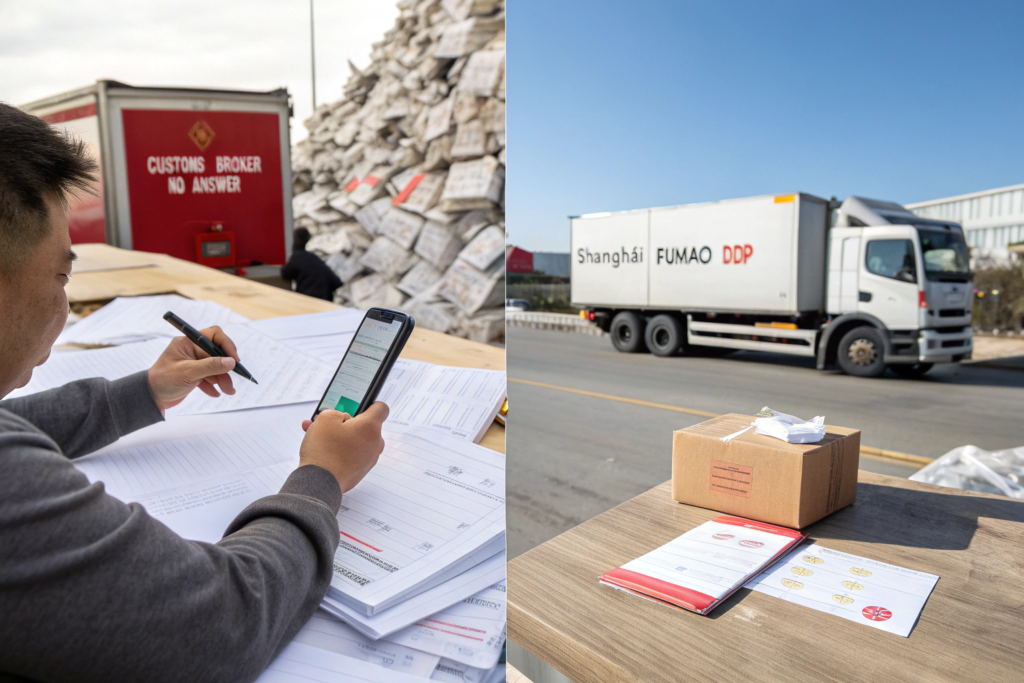
With DDP, we own the problem until the boxes are stacked in your warehouse. Delivered Duty Paid means Shanghai Fumao is the Importer of Record. We pay the duties. We clear the customs. We handle the FDA or CPSC holds if they happen. You do not talk to the port authority. You do not hire a customs broker. You send me an email. You pay one invoice. And a few days later, a truck backs into your loading dock.
What Happens When Customs Holds Your Holiday Shipment?
Last year, we shipped a batch of infant sleepwear to a brand in New Jersey under DDP. US Customs flagged the container for an X-ray inspection. This happens randomly. A shipment can get pulled for a radiation scan or a physical exam. If this brand owner had bought on FOB terms, his broker would have called him with bad news. He would have to coordinate with the Container Freight Station. He would pay for the trucker to move the container to the exam site. The fees add up fast.
Because we operate on DDP, our logistics team managed the entire exam process. Our forwarder had a bond on file with US Customs and Border Protection. They traced the container. The exam took 8 days. We notified the client on day 1 and day 8. That was it. He felt no pain. His goods arrived 10 days later, still three weeks before his planned launch. We had built that buffer into our DDP timeline. He told us he slept through the whole ordeal while his competitor in Florida lost a container to a month-long CPSC hold on similar products. Peace of mind is the whole product with DDP.
How Do Tariff Classifications Affect Your Bottom Line?
Customs duties are not random. They depend on the HTS code. A classification error can cost you big. If your factory declares a women's polyester jacket as a "windbreaker" instead of a "women's woven coat," the duty rate might jump from 4% to 27.7%. This difference on a 20,000-dollar order is thousands of dollars. You do not want CBP sending you a bill for back duties six months later.
We have an internal team that classifies every garment correctly before shipping. We use the Harmonized Tariff Schedule guidelines strictly. We do not play games. We do not undervalue the goods on the commercial invoice. I once talked to a brand owner who used FOB shipping with another supplier. That supplier declared the goods at half the real value to "save him money." CBP caught the discrepancy. They seized the container. The brand owner lost the entire shipment and got a fine. On our DDP terms, we protect our compliance record. We classify accurately and pay the correct duties. That keeps our customs record clean and your goods flowing. An honest HTS code is a shield, not a cost.
How Early Should You Start Production for Holiday 2026?
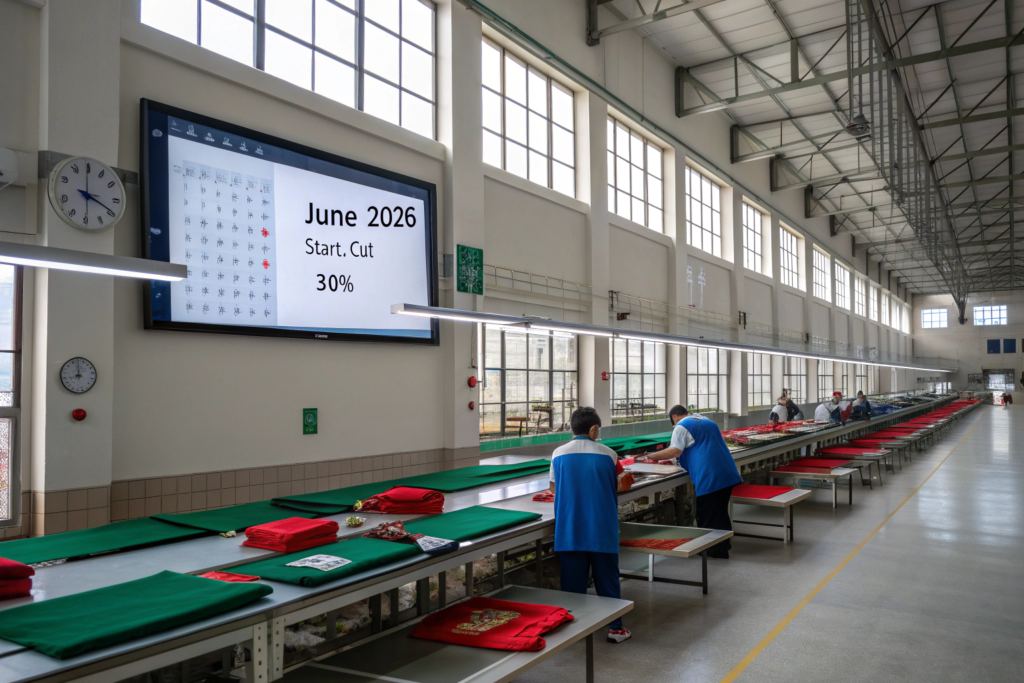
The summer sun feels far from Christmas snow. But the best time to start your holiday production is when the weather is hot. I tell all my clients this simple rule. If you want sweaters on the shelves in November, the yarn needs to be on the spinning frame by May. The cutting table must be active in June. The sewing lines must be humming in July. The shipment must leave Shanghai by late September. The entire sequence requires you to finalize your design choices long before you feel the holiday spirit.
I have seen too many brands treat August as the "prep month." They finalize colors and fabrics during summer vacation. They approve samples while on a beach trip. Then they email me in early September and ask for a November delivery. Unless you are ordering a simple t-shirt, that timeline is a recipe for a missed holiday. You need to start the conversation with us in March or April to comfortably hit the peak season.
What Is a Realistic Timeline for Knitwear vs. Woven Garments?
Each fabric category has a different gestation period. Knitwear like sweaters and cardigans takes the longest. A fine-gauge merino wool sweater requires an entire separate pre-production phase. The yarn must be skeined, dyed, dried, and wound onto cones. This alone can take 20-25 days. Linking and hand-finishing the sweater panels adds extra days. For woven shirts or trousers, the timeline is faster, but fabric weaving and dyeing still eat up 15-20 days.
Let me give a real example. In late April 2025, a client from Oregon started sourcing a fleece-lined flannel shirt jacket for Holiday 2025. We spent May approving the brushed cotton twill. We cut in late June. We shipped in early September. The goods arrived on his loading dock on October 10th. He sold out before Black Friday. Compare that to his neighbor brand. They started the same process in late July. Their flannels shipped in October. They arrived in Los Angeles the second week of December. They missed almost 40 percent of their planned sales. The textile manufacturing process cannot be compressed without damaging the material. Rushed dyeing leads to color variation. Rushed cutting warps the grainline. Start early.
How Do You Build a Pre-Production Buffer for Surprises?
Surprises always happen. A fabric lot fails the shrinkage test. The embroidery digitizing takes an extra round. A typhoon hits the coast and closes the port for two days. If your timeline has zero slack, a small problem turns into a total catastrophe. I insist on a 21-day buffer built into the calendar between the final sample approval and the bulk cutting start.
Last summer, we worked on a dress shirt with a specific Tencel fabric. The first dye lot was 10% lighter than the approved lab dip. The mill argued it was within tolerance. I looked at the sample. It did not match the brand's signature charcoal color. We rejected the lot. We waited for the re-dye. That cost us 14 days. But because we had a buffer, we still cut the fabric on time. The client never even knew there was a dye problem until I mentioned it casually later. That is the difference between a frantic panic call and a calm status update. Build a supply chain buffer. You will use it every single time.
What Product Categories Deliver the Highest Margins for Holiday Sales?
Not every garment makes a good holiday gift. You can sell basic t-shirts in a holiday color, but you will compete on price with H&M and Amazon. Your margin will be thin. The real profit in Q4 comes from items that feel like a gift. These are items with weight, texture, and a sense of occasion. When a customer picks up a garment and imagines the smile on the recipient's face, they stop looking at the price tag.
I have analyzed the sell-through data from several of our boutique partners. Outerwear, luxury knits, and novelty woven tops consistently deliver gross margins above 65 percent during the holiday season. These categories also align well with our factory's core strengths. We are not trying to sell you cheap flip-flops for December. We want to make you a product that your customer cherishes.

Why Do Luxury Knits Outperform Other Categories in Q4?
The holiday season is emotional. People want to give and receive items that feel cozy and indulgent. A 12-gauge cashmere blend turtleneck is a perfect example. The material cost is high, but the perceived value is even higher. Last holiday season, we produced a cable knit sweater for a boutique in Aspen. The COGS was around 38 dollars per unit. They sold it at a retail price of 168 dollars. They sold 400 units in three weeks.
The key to this margin is in the ply and the gauge. Many competitors use a 2-ply yarn to cut costs. We recommended using a 3-ply cashmere blend. The sweater was visibly thicker. It draped with more weight. Customers could feel the difference immediately. There was no need for a long sales pitch. A quality knit sells itself once it touches the skin. We also used a specific enzyme wash to reduce pilling risk. That cut their return rate significantly. Demand for cashmere sweaters and scarves spikes heavily in late November.
How Can Outerwear Become Your Cash Cow?
A well-cut wool blend coat is a major purchase for a consumer. They expect to wear it for years. They are willing to pay a premium for a great silhouette. We helped a brand in Chicago develop a double-faced wool wrap coat in September 2024. Double face means there is no lining. Two layers of fine wool are joined together with invisible stitching. It takes skill to sew. Seams are left raw-edged, bonded, and pressed meticulously. It requires a very flat cutting surface and patient workers.
The production cost per coat was significant. But because the coat looked like a high-end designer piece from a boutique window, the brand priced it at 320 dollars. The sell-through rate was over 85 percent. His holiday revenue was dominated by this one product. Outerwear is bulky to ship, but with our DDP freight rate calculation, we optimized the carton packing ratio. We used a space-saving garment folding technique to fit 12 coats in a carton instead of 8. This cut the freight cost per unit by 4 dollars. Your holiday cash cow is waiting in the wool coat category.
Conclusion
The 2026 holiday rush will crush brands that rely on hope and cheap freight quotes. The supply chain does not forgive a 30-day delay. When the snow starts falling and your customers are scrolling for gifts, your product either sits on the store rack ready to sell, or it sits in a customs warehouse consuming profit. The choice is made in April, not October. You beat the rush by locking in a transparent backward schedule now. You beat the rush by handing the logistics headache to a partner that operates on DDP terms.
We have shown that by protecting our production line capacity and refusing to overbook, we keep our ship dates fixed. Our careful handling of customs clearance and tariff codes prevents those terrifying phone calls from the port authority. And by collaborating early on high-margin categories like luxury knits and outerwear, we help you capture the maximum revenue from a short selling window.
Do not let the holiday panic catch you off guard. The key decision is moving your production timeline into the summer months. At Shanghai Fumao, we are ready to operate as your remote sourcing office right now. We cut. We sew. We ship DDP. You focus on building the holiday marketing campaign that converts. Send an email to our Business Director Elaine at elaine@fumaoclothing.com to get a 2026 holiday timeline built specifically for your collection. Let us make sure your next season is about restocking, not refunds.