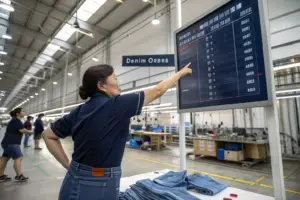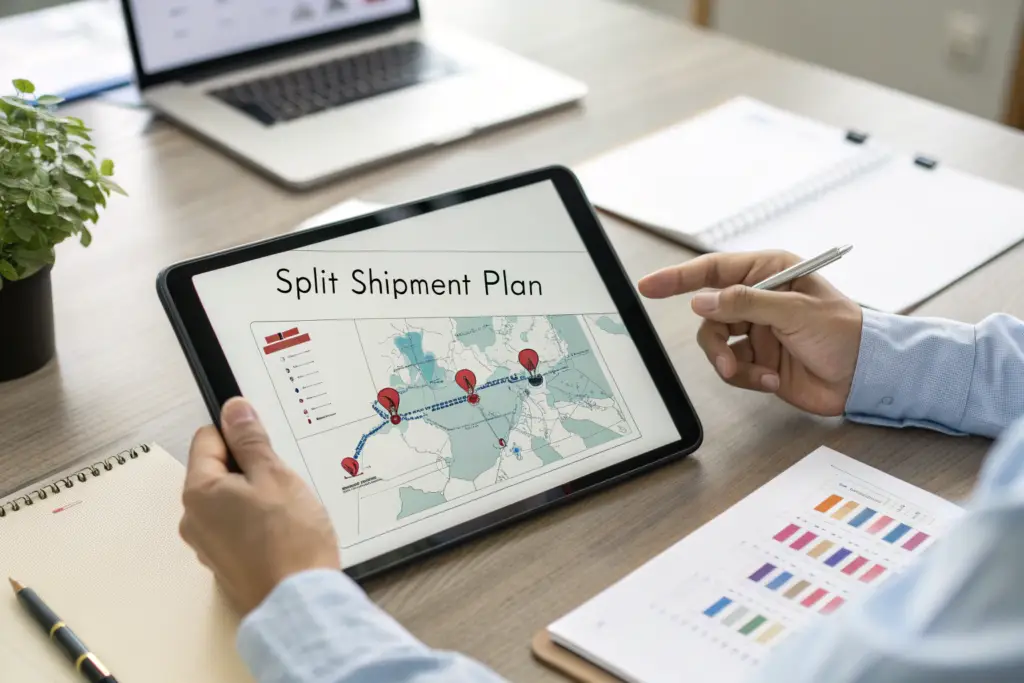
You have just landed your biggest order ever from a major retailer. The PO is for 15,000 units, and you are thrilled. But then you look at the fine print. They want deliveries staggered across three different distribution centers over a six-week period. Paying for the entire order to be produced and shipped at once, and then warehousing it, would crush your cash flow. You need your factory to split the shipment. A brand owner told me, "My first big wholesale order almost sank me because I didn't know how to negotiate the shipping. The factory wanted to ship it all at once. I needed a split, and I didn't know how to ask for it without sounding like a difficult client."
Negotiating split shipping for a massive wholesale order is a discussion about aligning production and logistics with your business's cash flow and your customer's needs. It is not an unreasonable request; it is a standard practice for scaling brands. The key is to frame it as a collaborative, planned strategy, not a last-minute demand. You must propose a clear, specific split schedule upfront, understand the cost implications for the factory, and be prepared to negotiate a solution that is fair to both sides, perhaps involving a small fee or a commitment to a production timeline that allows for efficient scheduling.
At Shanghai Fumao, we understand the realities of the wholesale market. We work with our B2B partners to create shipping plans that support their growth. Let me explain the right way to negotiate a split shipment, the real costs involved, and how to structure a deal that keeps your supply chain flowing smoothly and your retail customers happy.
How to Frame Split Shipping as a Strategic Plan, Not a Late-Stage Demand?
The single most important rule of negotiating a split shipment is: Ask early. The worst thing you can do is place a PO for 10,000 units, wait until the goods are packed in a container, and then say, "Actually, I only need 3,000 of those right now." That will damage your relationship and incur massive fees. A successful negotiation starts with the initial PO conversation. You present the split as a core part of the order's structure.
To frame a split shipment as a strategic plan, you must present it early in the process, ideally with the initial Purchase Order. You communicate it as a financial and logistical necessity for managing your wholesale accounts. You provide a clear, specific schedule showing the desired quantities and dates for each partial shipment. Most importantly, you link this schedule to the factory's production flow, showing that you understand the goods will need to be finished in stages.
A distributor we work with handles this brilliantly. When he places a large PO for a major retail program, his PO document itself is structured in stages. It reads: "Phase 1 (30% of order): 3,000 units, ready for shipment by Feb 1. | Phase 2 (50%): 5,000 units, ready by Feb 21. | Phase 3 (20%): 2,000 units, ready by March 15." He discusses this with us before we even schedule the production. This allows our production team to plan the cutting and sewing to match the staggered exit dates, minimizing warehousing time. This is a professional, planned approach that works seamlessly. This is the kind of strategic planning partnership we value.
Why Is Linking the Split Schedule to the Production Plan So Critical?
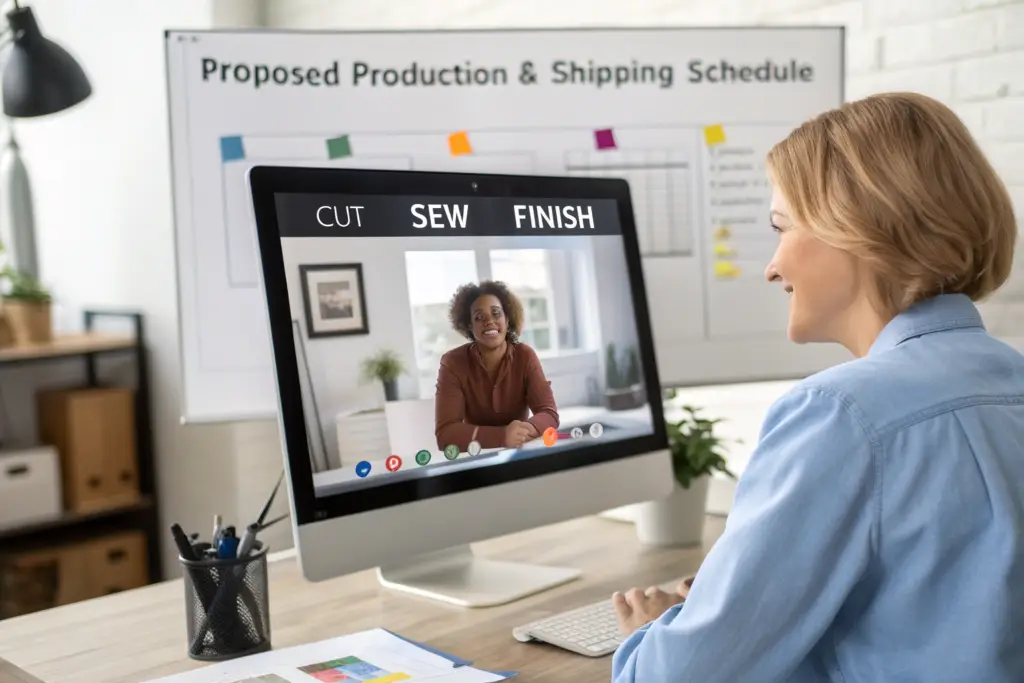
A factory is a flow system. If you ask them to produce 10,000 units and then store 7,000 of them for a month, you are asking them to absorb significant warehousing costs and risk. However, if you ask them to produce in stages, they can schedule their cutting and sewing lines accordingly. This is much more efficient for them and reduces the need for additional storage charges. This collaborative planning is key to a successful negotiation.
What Information Should a Professional "Split Shipment Request" Include?
Your request should be a clear, written document. It should include:
- The Total PO Quantity.
- The Breakdown by Phase: (e.g., Phase 1: 3,000 units, Phase 2: 5,000 units).
- The Desired "Ex-Factory" Date for Each Phase.
- The Destination for Each Phase. (e.g., Phase 1 to LA warehouse, Phase 2 to NY warehouse).
- The Reason: (e.g., "To align with our retail partner's staggered delivery requirements").
This turns a vague ask into a concrete, executable plan. This is our recommended practice for large volume orders .
What Are the Real Costs of Split Shipping and How Can They Be Mitigated?
It is important to approach the negotiation with a clear understanding that a split shipment is almost always more expensive than a single consolidated shipment. You are asking the factory to do more work, and you are paying for multiple smaller freight movements, which are less cost-efficient. Acknowledging this reality and coming to the table prepared to discuss how to mitigate these costs will make you a much more reasonable and respected partner.
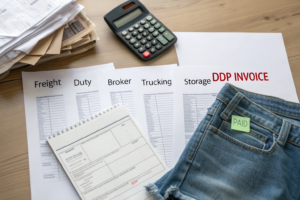
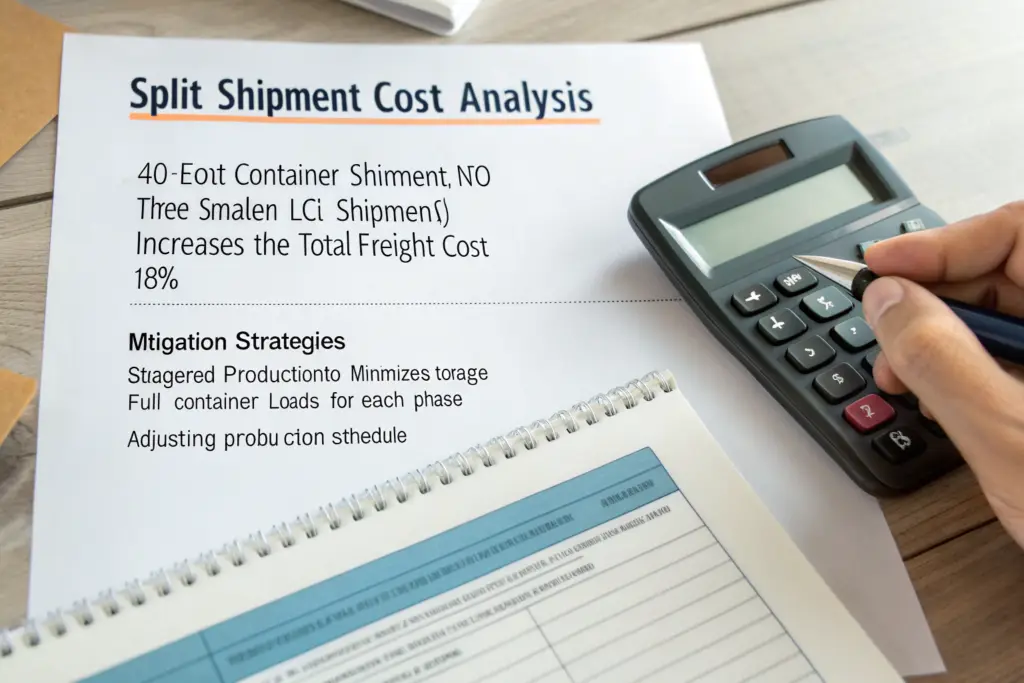
The primary costs of a split shipment are: 1) Higher Freight Costs (shipping three less-than-container loads (LCL) is far more expensive per unit than one full container load (FCL)), 2) Increased Handling and Documentation Fees (the factory must prepare multiple sets of export documents and coordinate multiple pickups), and 3) Potential Warehousing Costs (if the factory has to store finished goods while waiting for a later shipment window). You can mitigate these by, where possible, ensuring each phase is large enough to fill a full container, and by aligning the split schedule with the factory's natural production flow.
A brand we worked with was shocked when they saw the freight bill for their first split shipment. They had split a 5,000-unit order into three random groups, and the total freight cost was nearly 40% higher. We helped them re-engineer their plan. For their next order, they worked with their retailer to consolidate the delivery windows into two larger shipments, each of which filled a full container. The total freight cost was much more manageable. They learned the lesson of container optimization. This is the kind of logistics guidance we provide.
Why Is a Full Container Load (FCL) So Much More Cost-Effective Than LCL?
An FCL (Full Container Load) means you pay a flat rate for exclusive use of the entire container. An LCL (Less than Container Load) shipment means your goods are consolidated with other shippers' goods. You pay a premium for the consolidation service, and the per-unit cost is significantly higher. Whenever possible, each phase of your split shipment should be planned as a full container to maximize freight efficiency.
How Can You Build a "Split Shipment Fee" into Your Cost Model?
A smart brand anticipates this cost from the beginning. When you are calculating your wholesale pricing for a large retailer, if you know they will require split deliveries, you must build a small "split shipment surcharge" into your cost model. This protects your margin. You can even be transparent with the retailer about this small logistics fee. Many are understanding, as it is a standard industry practice.
How to Use Split Shipping to Improve B2B Relationships, Not Strain Them?
How you negotiate says as much about your partnership as what you negotiate. Approaching a split shipment request as a unilateral demand will strain the relationship. Approaching it as a collaborative problem—"How can we structure this to work for both of our businesses?"—can actually strengthen the partnership. It shows you are a thoughtful, long-term-oriented client.
To use split shipping to improve the relationship, you must approach it as a collaborative, win-win negotiation. Acknowledge the factory's extra effort and costs. Be flexible and open to their counter-proposals. They might suggest a slightly different schedule that aligns better with their production line efficiency, which you should seriously consider. Expressing your appreciation for their flexibility goes a long way. The goal is to find a solution that gets you the goods you need, when you need them, without making the factory feel squeezed or disrespected.
A brand founder I mentor always starts this conversation by saying, "I have a wholesale program that requires a staggered delivery. I know this creates extra work on your end. Can we sit down and figure out a plan that makes this as efficient as possible for you?" This simple framing—acknowledging the factory's challenge and inviting them to help solve it—completely changes the tone of the negotiation. It moves from a demand to a partnership. This is the essence of a strong B2B relationship .
What Is a Fair Trade-Off to Offer the Factory for Their Flexibility?
If you are asking for a costly split, be prepared to offer something in return. This could be:
- A Commitment to a Larger Total Order Volume.
- Agreement to Slightly Longer Lead Times that allow for more efficient production scheduling.
- Covering a Portion of the Additional Handling Fees.
- A Promise of Future Orders with Similar Volume.
A negotiation is a two-way street. Showing you are willing to give something to get something builds immense goodwill. This is the foundation of a strategic partnership .
How Does Split Shipping, Done Well, Signal You Are a Professional, Scaling Brand?
The ability to manage complex, multi-phased wholesale orders is a hallmark of a professional, growing brand. Your factory sees that you are dealing with major retailers and managing sophisticated logistics. This signals that you are a valuable, long-term partner who is worth investing in. What starts as a logistical challenge can actually elevate your status with your supplier.
How Does Fumao's Flexible Production Model Naturally Support Split Shipping?
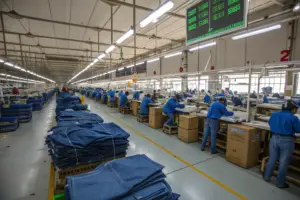
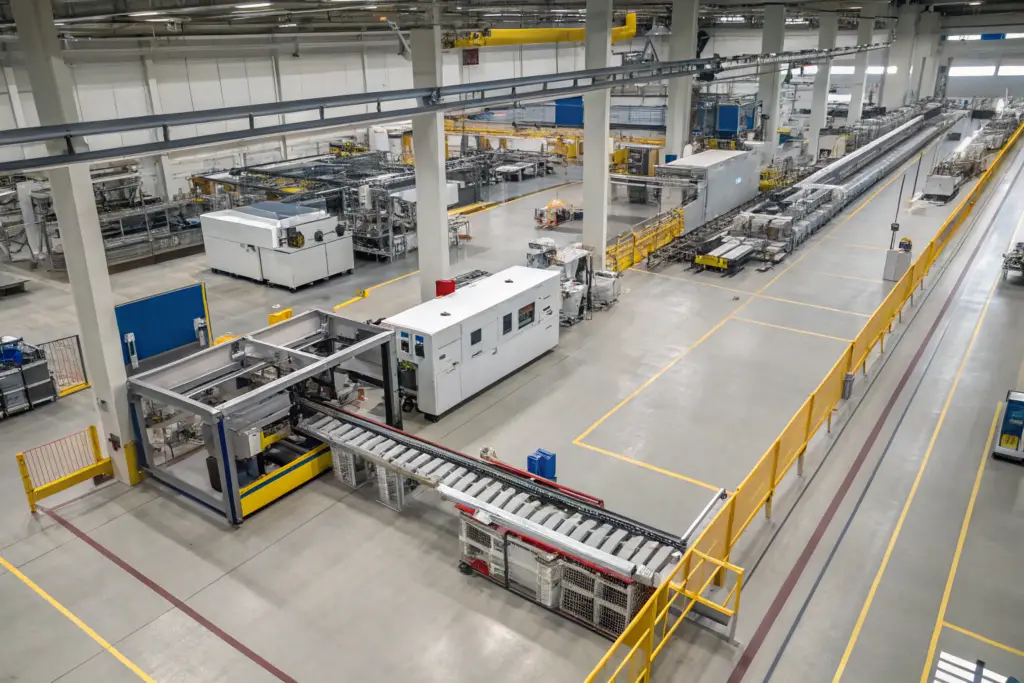
A factory with only one massive, inflexible production line will struggle with a phased shipping request. It is an all-or-nothing machine. Our flexible model, with its combination of high-speed lines and agile modular cells, is naturally designed to handle this kind of complexity. We can produce a large order in a way that seamlessly aligns with a staggered delivery schedule.
Fumao's flexible production model is a natural fit for split shipping. Our multiple, dedicated production lines allow us to schedule a large PO in phases without disrupting our overall factory efficiency. We can run a portion of your order, finish it, and prepare it for an early shipment, while the remainder of the order continues through production on another line. This internal agility allows us to accommodate reasonable split shipment requests with minimal additional cost or disruption.
We recently handled a 12,000-unit order for a brand that required three staggered deliveries over two months. We were able to split the order across two of our high-speed lines, scheduling the cutting and sewing in three distinct phases that perfectly matched the required ex-factory dates. The client was thrilled. They told us, "Your flexible production was the only reason I could win this big retail contract." This is the operational advantage of our multi-line factory .
How Does Our Production Planning Accommodate a Phased Approach?
Our production planning team treats a phased PO as a series of linked, but distinct, projects. We integrate your requested ship dates into our master production schedule from day one. We then plan the material allocation, cutting, and sewing to meet those specific deadlines, ensuring each phase is completed on time without holding excess inventory. This is the discipline of our production management .
Can We Direct-Ship to Multiple Retail Locations from Our Factory?
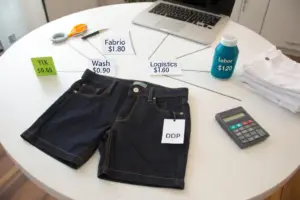
Yes, this is a common and valuable service. For each phase of the split shipment, you can provide us with a different final delivery address. We can manage the logistics, using our DDP service, to send Phase 1 directly to a retailer's distribution center in Los Angeles, Phase 2 to another in New York, etc. This eliminates the need for the goods to pass through your own warehouse, saving you time, money, and handling. This is the power of our end-to-end DDP logistics .
Conclusion
Negotiating split shipping for massive wholesale orders is a key skill for a scaling apparel brand. It is not about making a last-minute demand, but about presenting a thoughtful, planned, and collaborative proposal early in the process. By understanding the real costs, being willing to negotiate a fair plan, and partnering with a factory that has the flexible production capacity to support you, you can turn a logistical challenge into a competitive advantage.
At Shanghai Fumao, we are built for this kind of partnership. Our flexible production lines and our expertise in complex logistics allow us to seamlessly execute phased shipping plans that support our clients' growth into major retail channels. We are the partner that helps you manage the complexity of scale.
If you are planning a large wholesale program and need a manufacturing partner who can support a strategic split shipment plan, let's talk. Our Business Director, Elaine, can discuss how we can structure a production and logistics schedule that works for you. Please email Elaine at: elaine@fumaoclothing.com.