You walk into a Zara store on a Wednesday. You see a coat you like. You leave it. You come back on Saturday. It is gone. Not just sold out in your size. Gone from the store. Replaced by a new shipment of different styles. You check the app. It is sold out online too. This is not an inventory mistake. This is a deliberate, finely tuned machine designed to make you buy now. And that machine does not run on local production. It runs on a very specific kind of overseas factory partner.
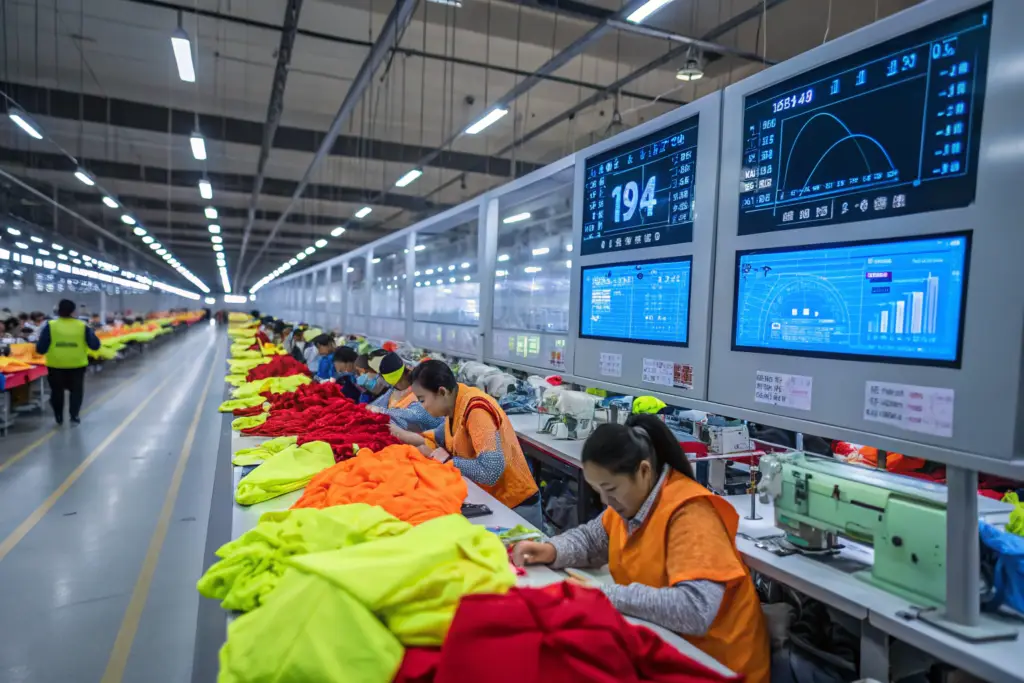
Fast fashion brands rely heavily on agile overseas garment factories because these factories offer a unique combination of massive vertical integration, flexible production lines that can switch styles in hours, and a skilled labor pool that can execute complex designs at speeds unattainable in Western markets. The core advantage is not just low cost. It is the ability to take a trend from a TikTok video to a finished garment hanging on a rack in less than three weeks.
I am the owner of Shanghai Fumao. We are not a faceless mega-factory. But we operate in this exact ecosystem. We see the purchase orders come in on Monday with a "SHIP BY FRIDAY" note. We see the panic when a celebrity wears a specific shade of green and suddenly every brand in America needs that color immediately. You might not be a fast fashion giant. But understanding why they operate this way will make you a smarter buyer, even if you are focused on premium basics.
What Specific Factory Capabilities Define a True "Agile" Partner?
You hear the word "agile" thrown around a lot. Every factory claims they are flexible. But when you ask for a 50-piece re-order in a new colorway, they tell you the lead time is 8 weeks. That is not agile. That is a standard supply chain with good marketing. True agility in garment manufacturing is a specific set of physical assets and management behaviors. If you are relying on a factory to help you chase a trend or restock a hot seller, you need to know what to look for beyond the glossy website.
A truly agile garment factory is defined by three core capabilities: Vertical Integration (in-house fabric cutting, sewing, and finishing under one roof), Low Minimum Order Quantity (MOQ) flexibility (ability to run 50-100 units profitably), and Rapid Changeover Protocols (the ability to switch a sewing line from producing t-shirts to producing dresses within a single shift). Without these three elements, speed-to-market claims are just marketing fluff.
How Does Vertical Integration Cut Lead Times from Weeks to Days?
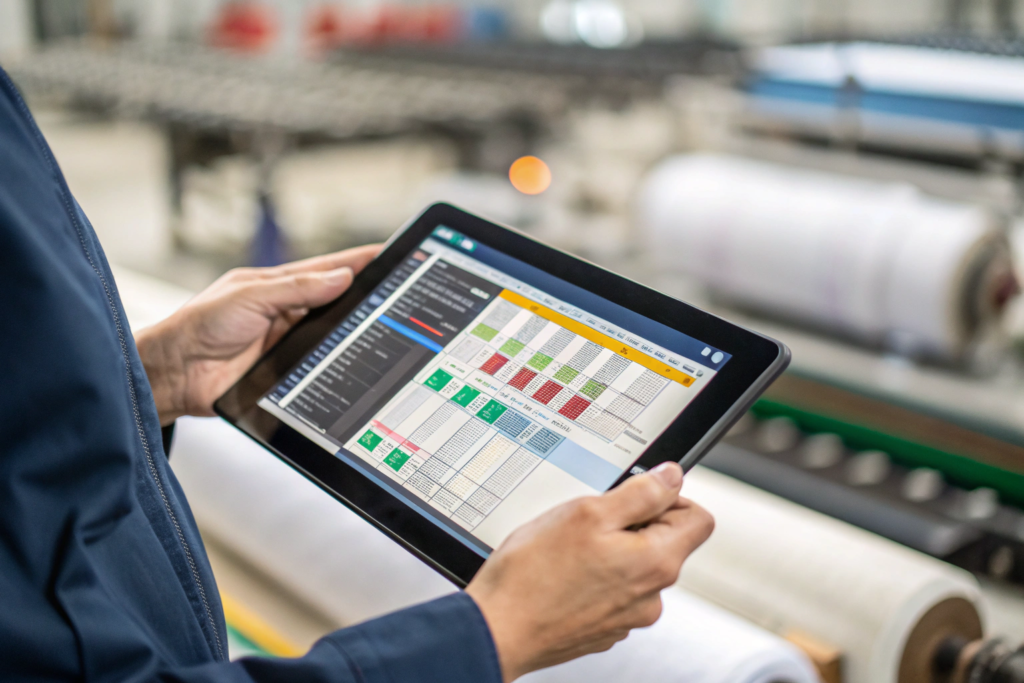
This is the secret weapon. When a brand like Shein places an order, they do not have time to send fabric to a cutting house, wait three days, truck the cut pieces to a sewing factory, wait two days, and then truck the garments to a washing facility. That is a 10-day process just in logistics.
In an agile, vertically integrated factory, the fabric warehouse is on the first floor. The cutting tables are on the second floor. The sewing lines are on the third floor. The washing and finishing machines are in the back. When the order comes in, the bolt of fabric goes up the elevator and comes down as a packed carton 48 hours later.
Let me give you a specific comparison based on our operations at Shanghai Fumao. We keep a buffer stock of common greige fabrics—things like 180gsm cotton jersey and 280gsm fleece. When a client needs a fast re-order of a best-selling hoodie, we do not have to call the textile mill. We pull the greige from our own racks.
Here is the time breakdown:
| Process Step | Traditional Factory (Subcontracted) | Agile Vertical Factory (In-House) |
|---|---|---|
| Fabric Pull & Relaxation | 2-3 Days (Mill Delivery) | 2-4 Hours (Internal Warehouse) |
| Cutting | 1 Day (Wait for spreader availability) | 4 Hours (Dedicated line) |
| Sewing | 3-5 Days (Batch processing) | 24-48 Hours (Continuous flow) |
| Washing/Finishing | 3-4 Days (Off-site vendor queue) | 12-24 Hours (In-house machines) |
| Packing | 1 Day | 4 Hours |
| Total Lead Time | 12-16 Days | 3-4 Days |
That 10+ day difference is the gap between a trend that has peaked and a trend you are actually capitalizing on. This kind of vertical integration is capital intensive. It costs millions to set up dyeing and washing facilities. But for the fast fashion model, it is the only way to survive.
What Is a Realistic MOQ for Trend-Driven Quick Response Orders?
Let's address the biggest lie in the sourcing world. The factory says: "MOQ 300 pieces per color." You want to test a new printed camp shirt. You need maybe 100 units in three colors. That is 33 units per color. The factory says no. You either over-order and risk deadstock, or you walk away from the trend.
Agile factories have a different mindset. They understand that the MOQ is not about the sewing machine; it is about the fabric roll. You cannot dye 10 yards of fabric economically. The dye machine holds 500 yards. So the minimum is based on the fabric, not the labor.
But here is how agile factories solve this for fast fashion brands: Greige Inventory Pooling.
We have 5,000 yards of undyed 100% cotton jersey in stock. It is not assigned to any specific customer yet. Five different small brands come to us wanting 100 units each of a t-shirt in different colors. We can combine their orders to fill the dye machine. We dye 500 yards of navy for Brand A, 500 yards of pink for Brand B, and so on. We then cut and sew the specific orders separately.
The MOQ for the brand becomes 50-100 units per style.
I worked with a New York-based influencer brand last summer. They had a viral moment with a specific shade of butter yellow. They needed 150 units of a cropped tee to drop immediately. A standard factory would have quoted a 500-unit minimum and a 6-week lead time. Because we had the greige jersey in stock and a slot in the garment dye schedule, we turned that 150-unit order in 10 days. The per-unit cost was about 18% higher than a bulk 1,000-unit order. But the sell-through was 100% at full price within 4 hours of the email blast. That is the trade-off. Higher COGS for zero inventory risk.
How Do Zara and Shein Use Regional Supplier Clusters to Speed Up Turns?
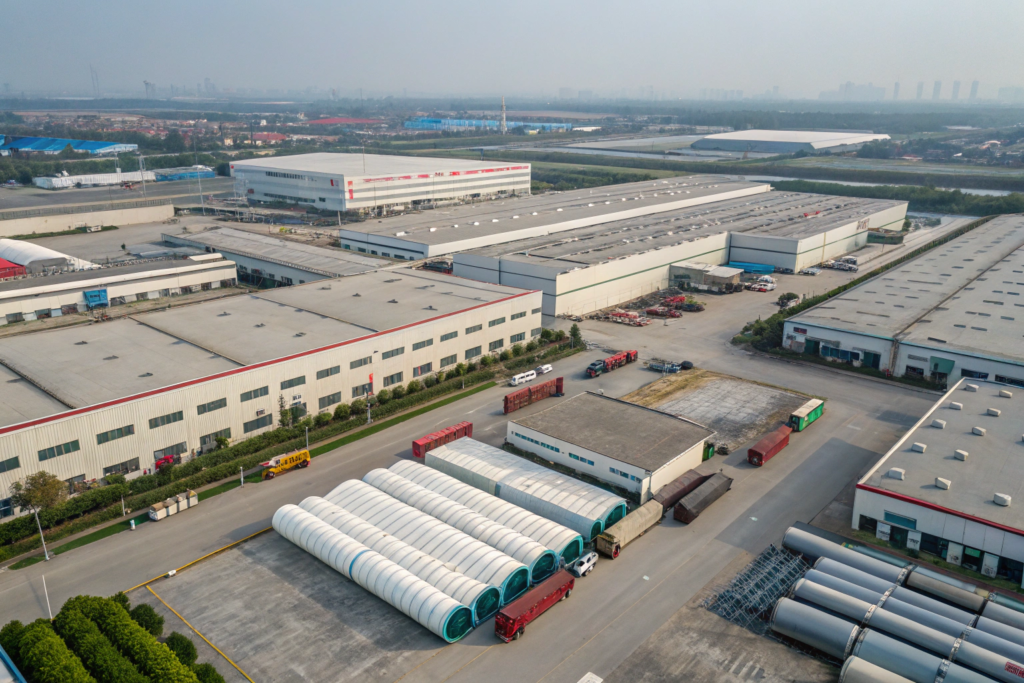
You might think Zara makes everything in Spain. That is only partly true. And you might think Shein makes everything in one giant building. That is also not quite right. The secret to their speed is geography. They operate within what are called Industrial Clusters. This is a concentrated area where every single component of a garment is made within a 10-mile radius.
Fast fashion giants rely on regional supplier clusters, such as those in Guangzhou (China) or Arteixo (Spain), because proximity eliminates freight time between sub-vendors. In a cluster, the fabric mill, the zipper factory, the printing shop, and the sewing floor are all within 30 minutes of each other. This allows for Just-In-Time (JIT) production where fabric is cut in the morning, sewn in the afternoon, and shipped that evening.
Why Does Proximity to Fabric Markets Like Shaoxing Matter More Than Labor Cost?
You are focused on the cost of sewing. You ask, "What is the CM (Cost of Make)?" But the real cost of fast fashion is time. And time is lost in transit.
Think about Shaoxing, China—the China Textile City. It is the largest fabric wholesale market in the world. There are literally miles of stalls selling every conceivable type of greige and finished fabric. If a Shein designer needs a specific leopard print on a stretch mesh, they do not email a mill and wait 4 weeks for a strike-off. They send a local sourcing agent to Shaoxing. The agent walks the market that afternoon and buys 500 yards of available stock.
That fabric is on a truck to the cutting factory in Guangzhou that same night.
Compare that to a U.S. brand. You see the trend. You email a factory in Vietnam. They email a mill in Taiwan. The mill sends a lab dip for approval (2 weeks). You approve the bulk (1 week). The fabric is woven and shipped to Vietnam (2 weeks). You have lost 5 weeks. The trend is over.
This is why fast fashion is so concentrated in the Yangtze River Delta and Pearl River Delta. The ecosystem is self-contained. We have a client who manufactures denim in the Xintang area (the "Denim Capital"). They told me they can get a custom metal shank button delivered by motorcycle courier in under 2 hours. In the US, that same button would take 3 days via UPS Ground from a warehouse two states away. That is the speed difference. It is not just about the factory. It is about the factory's neighborhood.
How Do "Micro-Factories" Handle Rush Orders That Big Plants Reject?
Big factories hate small rush orders. They disrupt the flow of the 50,000-unit basics order. The production manager wants the line to run the same style for three weeks straight. Changing styles means stopping the line, retraining the operators on a new seam, and adjusting the machines. It costs money in lost efficiency.
This is where the Micro-Factory ecosystem steps in. These are small workshops of 15-30 skilled sewers. They often specialize in one category—maybe only dresses, maybe only jackets. They are the special forces of the garment world. They are not cheap, but they are incredibly fast and flexible.
Fast fashion brands use a Hub-and-Spoke model.
- The Hub: The big brand's sourcing office or a Tier 1 vendor like Shanghai Fumao. We handle the fabric sourcing, the cutting, and the quality control standards.
- The Spokes: The micro-factories. We cut the fabric into bundles. We send 100 units to Micro-Factory A (specializing in knit tops) and 100 units to Micro-Factory B (specializing in woven shorts).
We get the finished goods back in 3-4 days. We do the final pressing, inspection, and packing centrally.
This model allows a brand to scale production up and down instantly without owning any sewing machines. When a style goes viral, they just send more cut bundles to more micro-factories. When demand drops, the micro-factories just switch to another brand's project.
Here is a typical timeline for a "Flash Collection" using this model:
| Day | Activity | Location |
|---|---|---|
| Day 1 | Trend identified online; Design sketch approved | Brand HQ / WeChat |
| Day 2 | Fabric sourced from Shaoxing market (on-hand stock) | Shaoxing Textile City |
| Day 3 | Fabric arrives; CAD pattern made; Cutting starts | Hub Factory (Shanghai) |
| Day 4 | Cut bundles distributed to 5 micro-factories | Local Courier Network |
| Day 5-7 | Sewing completed in small batches | Micro-factories |
| Day 8 | Garments returned to Hub; QC & Pressing | Hub Factory |
| Day 9 | Packed and shipped via Air Express | PVG Airport |
That is a 9-day calendar from sketch to airport. That is the reality of competing with Shein.
What Risks Do Brands Face When They Prioritize Speed Over Quality Control?
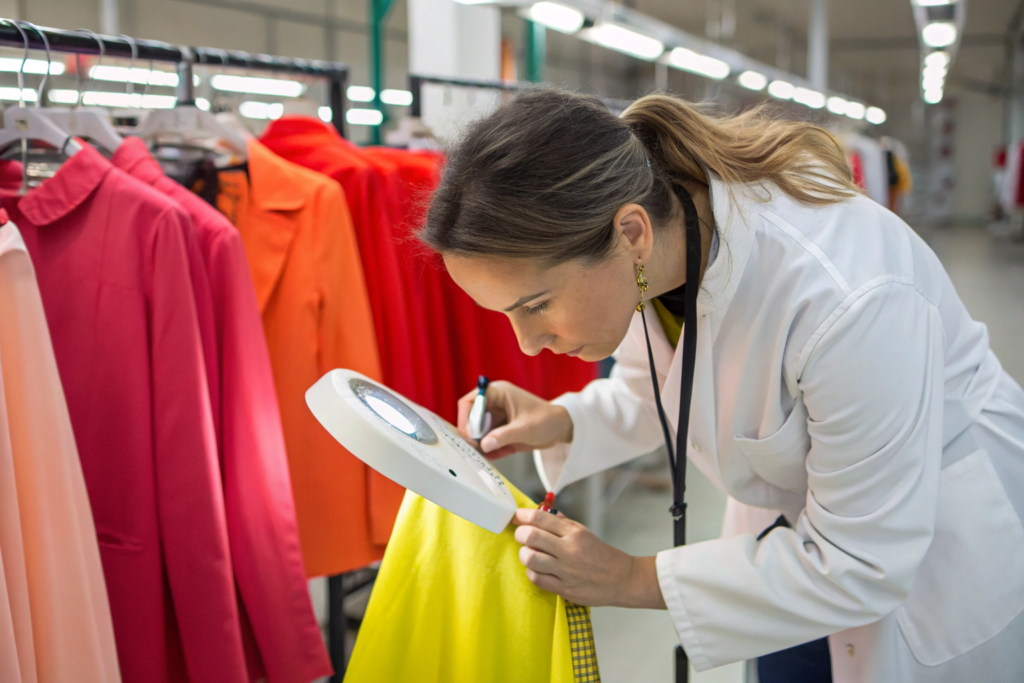
Speed is seductive. Getting the goods first means you win the customer's wallet. But there is a dark side to this agility that I see regularly. When the calendar is compressed to 10 days, the margin for error is zero. There is no time to fix a bad batch of fabric. There is no time to re-sew a crooked seam. You either ship it as is, or you miss the window. And if you ship bad quality, you deal with a wave of returns that erases the profit you made by being fast.
The primary risks of prioritizing speed over quality control include seam slippage due to insufficient stitches per inch (SPI), color bleeding from improperly fixed reactive dyes, and dimensional instability (shrinkage) from skipped relaxation processes. Fast fashion factories are under immense pressure to "wet the fabric and ship it," bypassing the 24-hour fabric relaxation period that prevents garment twisting after the first wash.
How Often Does "Wet Processing" Shortcuts Lead to Color Bleeding Returns?
This is the number one return reason for fast fashion items, even if the customer doesn't know the technical term for it. They just know their new red dress turned their white bra pink in the wash.
Dyeing fabric is chemistry. Reactive dyes need time, heat, and specific chemicals to bond permanently with the cotton fiber. After dyeing, the fabric must be "soaped" at high temperatures to remove the loose, un-bonded dye molecules. This process, called Post-Clearance, takes time and uses a lot of hot water.
When a factory is under a 48-hour deadline, the temptation is to cut the soaping cycle short. Maybe run it at 60°C instead of 95°C to save 20 minutes. Or skip the final rinse to save water. The fabric looks fine. It feels fine. But those un-bonded dye molecules are sitting on the surface of the yarn like dust on a table.
When the customer washes the garment, those molecules release. This is called Crocking (dry rub off) and Bleeding (wet color transfer). There is a specific test for this called the AATCC 61 Colorfastness to Laundering test. A reputable factory runs this test. A factory in panic mode does not.
I recall a situation with a client who was rushing a batch of brightly colored festival shorts. The factory promised a 12-day turnaround. They cut corners on the dye fixation. The shorts looked vibrant. The brand sold out. Two weeks later, the Instagram comments were a disaster. Photos of ruined white sneakers and tie-dyed legs. The chargeback rate was 15%. The brand spent the next month processing returns and refunds instead of designing the next collection. The "win" of being first to market was completely erased by the cost of poor quality control.
Why Is "Fabric Relaxation" the First Thing Skipped in a Time Crunch?
This is an invisible problem that drives customers crazy. They buy a t-shirt. It fits perfectly in the store. They wash it once. The side seam twists around to the front. The hem is crooked. The shirt looks like a spiral.
This happens because the fabric was not allowed to Relax.
When fabric is knitted, it is under tension. The yarns are stretched. If you cut and sew that fabric immediately, the yarns are locked into that stretched position. When the garment gets wet (washing), the yarns relax and try to return to their natural state. This causes Torque (twisting).
The proper process is to unroll the fabric and let it sit for 24-48 hours in a controlled environment. This allows the fabric to "shrink to stability" before the pattern pieces are cut.
In a fast fashion speed run, that 24 hours is an eternity. Factories will take the roll off the truck and put it on the cutting table the same hour. They use steam to flatten it, but steam does not release the internal tension of the yarn. It just makes it look flat.
We recently analyzed a return batch for a client who switched to a "faster" vendor. The main complaint was "twisted fit." We measured the Spirality (twist) on the returned shirts. It was over 8%. Industry standard for acceptable is less than 3%. The vendor had saved one day by skipping relaxation. That one day cost the brand thousands in lost inventory and a damaged reputation. You cannot outrun the laws of textile physics.
Can Premium Brands Benefit from This Same Agile Infrastructure?
You look at the chaos of fast fashion and think, "That is not my brand. I value quality. I value design." That is the right instinct. But writing off the entire agile infrastructure as "cheap junk" is a mistake. The same flexible production lines and quick-turn communication networks that make a $12 dress can also make a $120 jacket. You just use them differently.
Premium brands can absolutely benefit from agile infrastructure by leveraging Low Minimum Order Quantity (MOQ) capabilities for sampling and small capsule drops, and by using DDP express shipping to test new markets without committing to full container loads. The key difference is that a premium brand uses agility for precision and iteration rather than speed of trend replication. You use the flexible line to perfect a fit sample in 5 days instead of 3 weeks.
How Can Small Batch Agility Help You Perfect a Fit Before Bulk Cutting?
This is where the fast fashion model and the premium brand model converge in the most useful way. You do not need 10,000 units fast. You need 5 perfect fit samples fast.
Traditional product development is slow. You send a tech pack. The factory makes a sample in 10 days. Ships it (3 days). You review it. You send comments. They make a second sample (10 days). Ships it (3 days). Before you know it, 6 weeks have passed and you are still not ready to cut bulk.
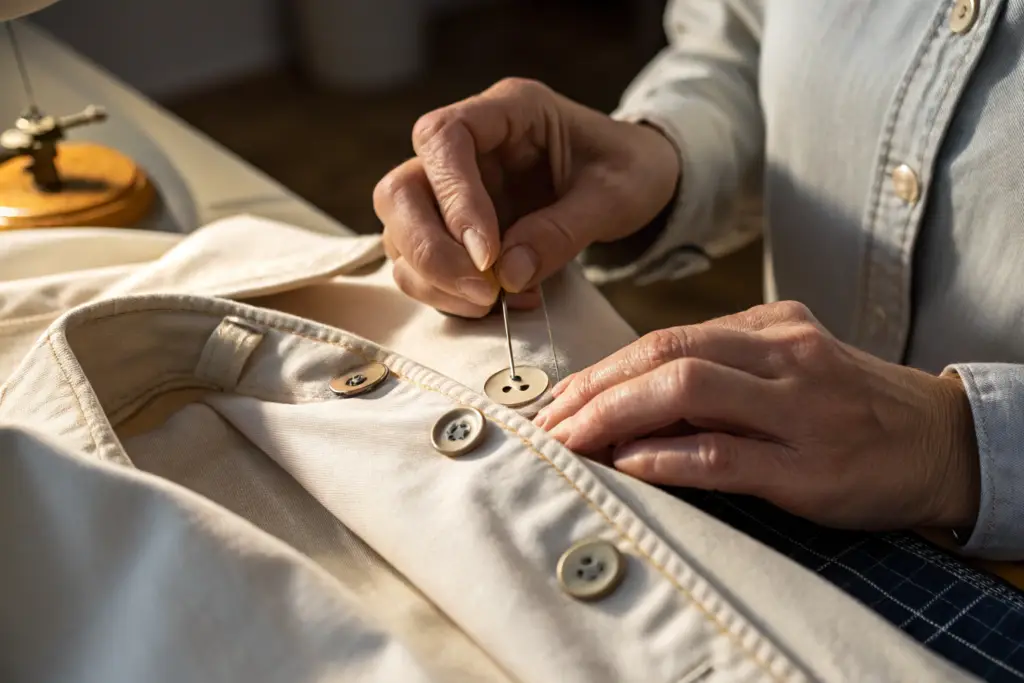
An agile factory uses a Dedicated Sample Room that operates like a micro-factory. They have one master sewer who only does development. They have access to the internal greige stock. If you need a sleeve cap adjusted by half an inch, that change is made the next morning Shanghai time. A photo is on your phone before you go to bed in the U.S.
We have a client who designs high-end women's suiting. Their fit is everything. They cannot afford a crooked shoulder seam on a $400 blazer. They use our agile sampling service. We can turn around a revised fit sample in 48-72 hours using stock lining and canvas. Once the fit is locked and approved, then we order the expensive Italian wool suiting fabric. We don't cut into the $40/yard fabric until the shape is perfect.
This approach reduces fabric waste on premium materials by a significant margin. It also compresses the development calendar. You can lock a Fall fit in June instead of April, giving you more time to observe market trends.
Does DDP Express Air Freight Make Sense for Testing New Premium Categories?
You make beautiful leather bags. Or heavy knit sweaters. You want to test a new color or a new silhouette. You do not want to order 500 units and ship them by ocean (6 weeks). By the time they arrive, you might have lost the window for that season.
Agile factories have access to consolidated Air Freight DDP services. This is not the FedEx rate you see online. This is a contracted rate for cargo.
Let's look at the economics of a test run for a premium item.
Scenario: You want 50 units of a new cashmere-blend beanie. Cost per unit FOB is $22. Retail price is $95.
| Shipping Method | Transit Time | Freight Cost (50 units) | Landed Cost per Unit | Risk |
|---|---|---|---|---|
| Ocean Freight LCL | 5-6 Weeks | $180 (Shared container) | $25.60 | Misses cold weather window if delayed. |
| DDP Air Express | 4-5 Days | $320 (Consolidated) | $28.40 | Arrives exactly when needed. |
The difference is $2.80 per unit. For a premium item, that is negligible. But the time value is enormous. With Air DDP, you can order the beanies on November 10th and have them for a Black Friday weekend pop-up shop. You can sell through the 50 units at full price. You prove the concept. Then, based on that sell-through data, you place a bulk re-order for January delivery via ocean freight.
This hybrid model is how smart premium brands are beating the department stores. They use the agility of the factory to be data-driven. They do not guess what will sell. They let the customer vote with their wallet on a small batch, and then they scale up what works. This reduces markdowns at the end of the season.
At Shanghai Fumao, we see this as the future of responsible fashion. Speed does not have to mean cheap. Speed can mean accurate. It can mean you only make what you know you can sell.
Conclusion
Fast fashion's reliance on agile overseas factories is not just about finding the cheapest seam. It is about building a supply chain that breathes at the same pace as the internet. We explored how true agility is defined by vertical integration, where fabric moves from the warehouse to the cutting table in hours instead of days. We saw how industrial clusters in China create an ecosystem where a zipper can be delivered by motorcycle faster than a pizza in New York. And we pulled back the curtain on the micro-factory network that allows brands to scale production up and down overnight.
We also faced the hard truth about the risks of this speed. The skipped relaxation processes that lead to twisted t-shirts. The rushed dye cycles that cause color bleeding. These are the hidden costs of chasing a trend too fast. A broken supply chain can deliver a garment quickly, but if that garment falls apart in the wash, the speed was wasted.
But the most important insight is this: The tools of fast fashion are not reserved for disposable clothing. The same agile infrastructure, the same low MOQ flexibility, and the same DDP logistics that deliver a $12 top can also deliver a perfectly fitted $200 dress. You, as a brand owner, get to decide how to use the machine. You can use it to cut corners, or you can use it to cut lead times while maintaining quality.
If you want to explore how to use agile production methods to create higher quality, better fitting, and more profitable collections without the waste of traditional bulk ordering, we should talk.
Reach out to our Business Director, Elaine. She can explain how we balance the speed you need with the quality control your brand reputation depends on. Contact her at elaine@fumaoclothing.com. Let's find the right pace for your production with Shanghai Fumao.