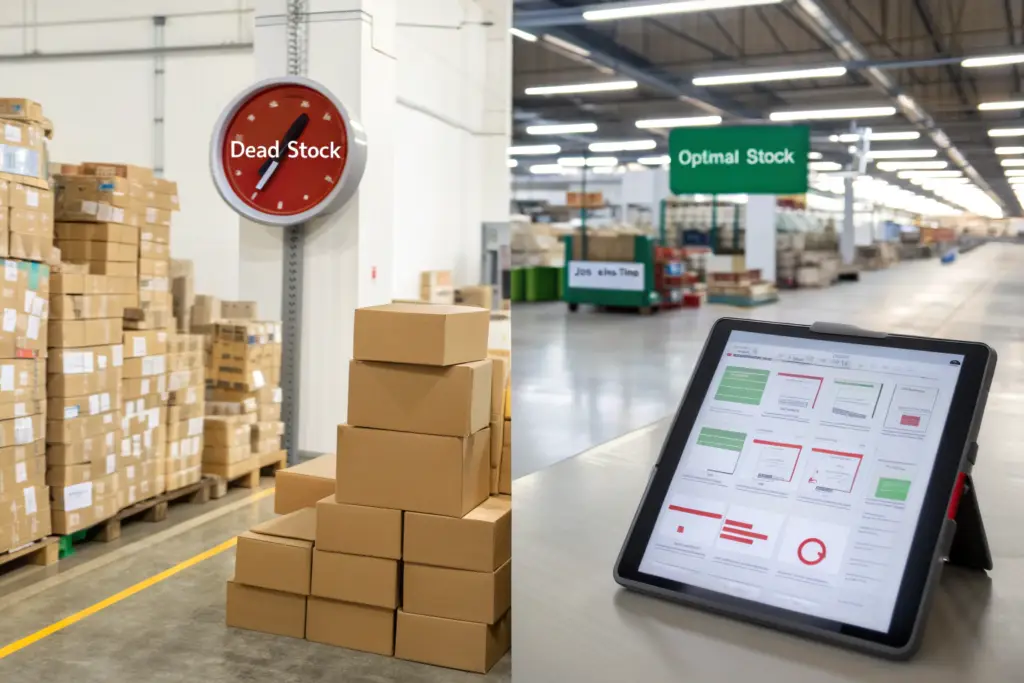
You have a hit product. It is selling faster than you anticipated. You email your factory: "I need 500 more units, ASAP!" The reply comes back: "Sorry, fabric is out of stock. Lead time 10 weeks." Your heart sinks. You just lost weeks of sales. Alternatively, you overestimated demand for a new style. You are now sitting on 1,000 units of dead stock, and your cash flow is choked. A brand owner told me, "Managing inventory felt like a constant gamble. I was either out of stock on my winners or drowning in my losers. I could never find the balance."
Managing inventory effectively is not about perfect prediction; it's about building a responsive supply chain with a reliable B2B garment producer. The key is to move from large, infrequent "batch" orders to a more agile model based on shared forecasts, strategic use of stock fabrics and flexible production lines, and transparent communication. A reliable partner enables you to hold less "just-in-case" inventory and rely more on a faster, more predictable "just-in-time" replenishment system.
At Shanghai Fumao, we see our role as not just making your clothes, but being a strategic partner in managing your inventory health. Our flexible production lines and transparent processes are designed to help you strike that elusive balance between stockouts and overstock. Let me share the specific strategies and ways of working with a factory that can transform your inventory from a liability into a competitive advantage.
The traditional, reactive model of inventory management is a recipe for stockouts and overstocks. A brand places a large Purchase Order based on a guess made months ago. The factory scrambles to source materials and schedule production. By the time the goods arrive, the market may have changed. The agile alternative is built on a foundation of shared information, starting with the Forecast. This is not a binding PO; it is a collaborative planning tool.
A shared 6-12 month rolling forecast is the single most powerful tool for agile inventory management. It allows the factory to pre-book greige fabric capacity and reserve production line time for your anticipated needs. This dramatically shortens the lead time for reorders and provides the factory with the confidence to hold buffer stock of your key materials, enabling a much faster response when your actual PO arrives.
A distributor we work with shares a quarterly forecast with us. He might say, "Q3: Anticipate 5,000 units of Style A. Q4: Likely 8,000 units, depending on a retailer meeting." This allows us to pre-book the recycled polyester greige fabric for his core styles. When his actual PO for 3,000 units of Style A arrives, the raw material is already waiting. We just issue the dye lot. This cuts 3-4 weeks off his standard lead time. He can operate with much lower safety stock because he trusts the replenishment pipeline. This is the power of a collaborative partnership . This aligns with best practices in supply chain management .

What Is the Difference Between a PO and a Forecast?
This is a crucial distinction for a healthy partnership.
- Purchase Order (PO): A legally binding commitment to purchase a specific quantity of finished goods at a specific price.
- Forecast: A non-binding, good-faith estimate of your future needs. It is a planning tool that allows the factory to prepare materials and capacity.
A factory understands that a forecast is not a guarantee. However, consistently sharing a reasonably accurate forecast builds immense trust and unlocks preferential treatment in terms of capacity and material reservation.
How Does Fabric Pre-Booking Reduce Reorder Lead Times?
The longest and most unpredictable part of the apparel supply chain is often the raw material: the fabric. By sharing a forecast, we can pre-book greige fabric (undyed cloth) from the mill on your behalf. This decouples the lengthy greige production from the final color decision. When you are ready with a reorder, the greige is already in our warehouse, ready to be dyed to your specific color. This single strategy can cut 2-4 weeks off a reorder timeline, which is a massive advantage in managing inventory. This is a key benefit of our fabric sourcing expertise.
How Do Flexible Production Lines Support "Just-in-Time" Replenishment?
Even with the best forecast, demand can spike unexpectedly. A style goes viral. A wholesale account places a last-minute reorder. In a traditional factory with only long, rigid production lines, these "rush" orders are a nightmare. They disrupt planned production and are often refused or quoted with long lead times and high premiums. This is where our flexible infrastructure becomes a strategic inventory tool.
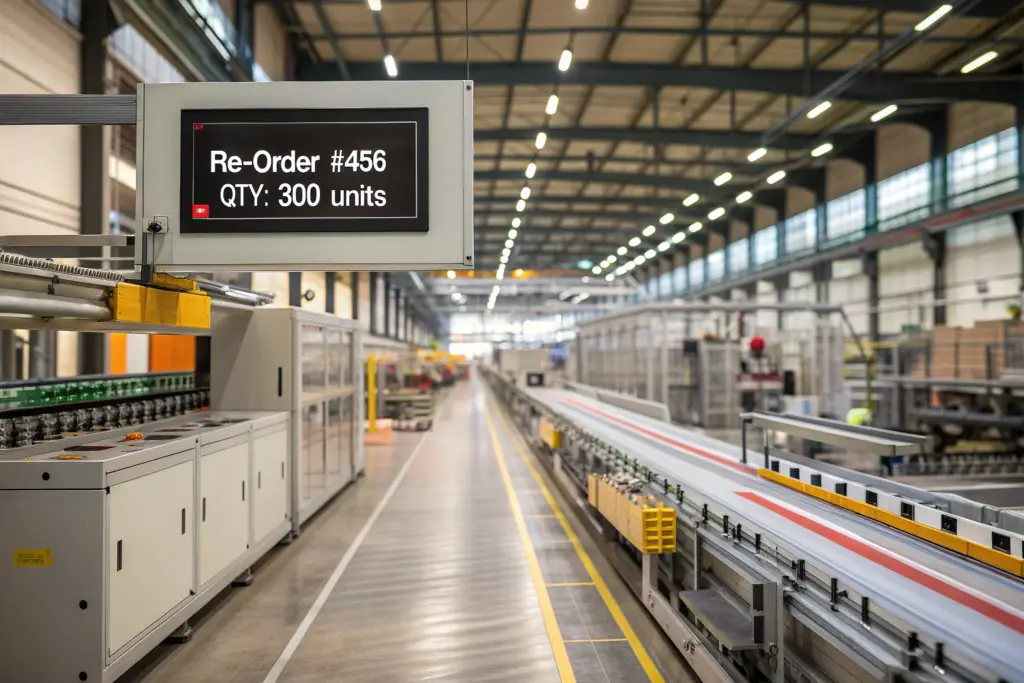
Our Modular Production Cells are the engine of "just-in-time" replenishment. These small, agile teams are designed for quick changeovers and small-batch efficiency. They can be rapidly deployed to fulfill a reorder of 100-300 units of a hot-selling style without disrupting the high-volume core production running on our main lines. This allows our brand partners to chase demand and replenish stock quickly, reducing the need to hold large amounts of safety inventory.
A men's wear brand we work with had a new chino style unexpectedly blow up on social media. They sold out of their initial 800-unit order in a week. Panicked, they called us. Because we had their pattern and their fabric on file, we were able to slot a 400-unit reorder into our Modular Cell #4. We turned the order in 4 weeks. They were able to restock their website and capture the next wave of demand. A traditional factory would have told them it was a 10-week wait. They would have lost thousands in sales. This responsiveness is only possible because of our five production lines .
What Is the Minimum Order Quantity (MOQ) for a Fast Reorder?
This is the critical question. A traditional factory's reorder MOQ is often just as high as the initial order. With our flexible model, the reorder MOQ for an existing, approved style (using stock or available fabric) can be significantly lower—often 100-200 units. This allows you to replenish your inventory in smaller, more frequent batches, which is the essence of lean inventory management.
How Does This Agility Reduce the Need for "Safety Stock"?
Safety stock is the extra inventory you hold "just in case" of a supply chain disruption or a demand spike. It ties up cash and takes up warehouse space. When you have a responsive, reliable manufacturing partner who can fulfill a reorder in 4-5 weeks instead of 10-12, you can confidently operate with a much lower level of safety stock. The factory's agility becomes your insurance policy. This is the financial benefit of a responsive supply chain .
How Can "Evergreen" Fabrics and Core Programs Stabilize Your Inventory?
One of the biggest drivers of long lead times and high MOQs is the use of fully custom fabrics. While custom fabrics are essential for unique, seasonal statements, they are a liability for your core, year-round products. The smartest brands separate their product strategy: they use custom materials for their trend-driven pieces and a curated library of "Evergreen" fabrics for their reliable, reorderable basics. This is a foundational strategy for inventory stability.
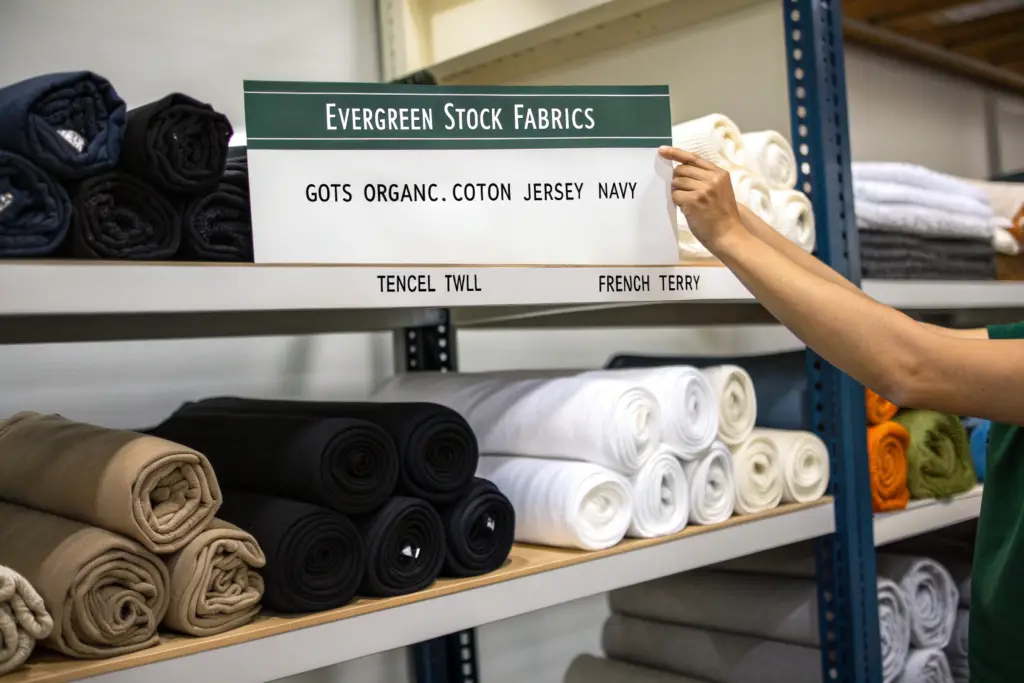
An "Evergreen" fabric program is a curated selection of high-quality, in-stock core fabrics that are available year-round with short lead times and low MOQs. By designing your core, reorderable basics from this library (e.g., your best-selling white tee, your essential black legging), you can decouple these stable products from the long lead times of custom development. This allows for fast, predictable replenishment and significantly simplifies your inventory planning.
A women's wear brand we work with has built a highly profitable business around this exact model. Their seasonal collections feature exciting custom prints and unique fabrics. But their reliable, year-round cash flow comes from their "Core Essentials" program—a perfect white tee, a black tank, a neutral crewneck—all made from our GOTS organic cotton jersey stock fabric. They know they can reorder these styles at any time with a 4-week lead time and a low MOQ. This stable foundation allows them to take more creative risks with their seasonal pieces. This is the power of a two-tiered fabric strategy .
What Qualities Make a Fabric "Evergreen"?
An Evergreen Fabric is defined by its consistent availability and timeless appeal. Key characteristics include:
- High-Quality Composition: e.g., GOTS organic cotton, Tencel, standard recycled poly fleece.
- Core, Seasonless Colors: Black, White, Navy, Heather Grey, Natural, Sand.
- Versatile Weight and Handfeel: A mid-weight jersey, a standard French terry, a classic twill.
- Consistent Supply: We maintain inventory of these fabrics year-round.
These are the reliable workhorses of a brand's collection. They are the foundation of a stable inventory strategy.
How Does a "Core Program" with a Factory Reduce Costs?
A Core Program—a set of styles you reorder season after season—is incredibly valuable to a factory. It allows us to:
- Bulk Buy Fabric: Secure lower material costs.
- Perfect the Workflow: Increase sewing efficiency and reduce defect rates.
- Stabilize Production Planning: Fill capacity during slower periods.
Because a core program reduces our operational costs and risks, we can often offer better pricing, more flexible MOQs, and priority production slots for these styles. This is a win-win that directly benefits your inventory costs and reliability. This is the foundation of a long-term partnership .
How Does Fumao's Transparency Help You Make Smarter Inventory Decisions?
Even the best strategies fail without accurate, timely information. You cannot manage what you cannot see. A reliable factory partner provides the data and transparency you need to make smart, real-time inventory decisions. You should not be guessing where your order is in the pipeline or whether your key fabric is available. This visibility is the final, critical piece of the inventory management puzzle.
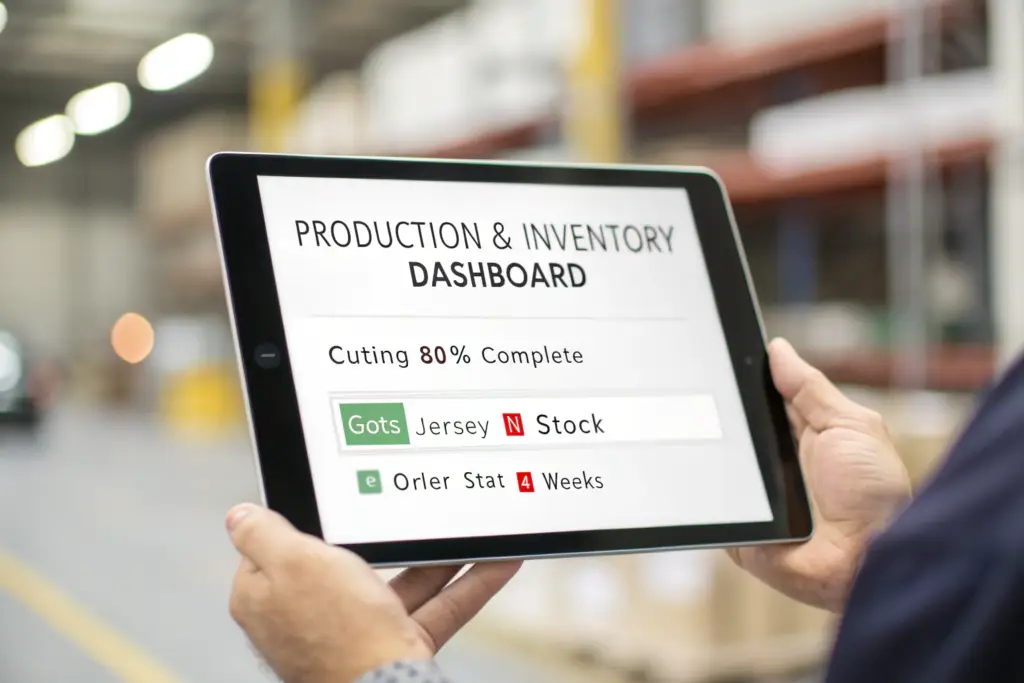
Fumao provides the transparency needed for smart inventory management through our integrated production dashboard and proactive Project Manager communication. You have real-time visibility into the status of your current POs—from fabric arrival to cutting to finishing. You know the on-hand availability of your key Evergreen fabrics. This data allows you to calculate accurate reorder lead times, plan your marketing campaigns with confidence, and make informed decisions about when to trigger the next PO.
A brand partner recently told us, "Your weekly update with the photo of the cutting table is my favorite email. It tells me exactly when to send the 'Back in Stock' notification to my customers. I used to just guess. Now I know." This is the power of transparency. It replaces guesswork and anxiety with data and confidence. It allows you to manage your inventory proactively, rather than reacting to stockouts or surprises. This is the level of visibility we provide through our Project Management system.
What Information Do You Need to Calculate an Accurate Reorder Point?
To calculate a smart reorder point, you need to know two things from your factory:
- Current Reorder Lead Time: Based on the actual availability of fabric and current production capacity. (Is it the standard 5 weeks, or is it longer due to peak season?)
- Fabric Availability: Is your key material in stock, or will a reorder trigger a new mill run?
Our Project Managers provide this information proactively, allowing you to time your POs perfectly to avoid both stockouts and excess inventory.
How Does Proactive Communication Prevent Stockouts?
A reliable partner does not just wait for you to ask about a reorder. They see a style selling well and might proactively reach out: "We've noticed your orders for Style #456 are increasing. Your core fabric stock is getting low. Would you like us to reserve more greige for you now to ensure a smooth reorder next month?" This is the pinnacle of a proactive, strategic partnership. It is how we help our clients stay ahead of their inventory needs and never miss a sale. This is the value of a true inventory partner .
Conclusion
Managing inventory effectively in the fashion industry is a complex dance, but it is not an impossible one. The key is to stop relying on large, risky batch orders based on guesswork and start building a responsive, transparent, and agile supply chain with a reliable B2B garment producer. It is about leveraging shared forecasts, flexible production, strategic material programs, and real-time visibility to create a predictable, efficient flow of goods.
At Shanghai Fumao, we are more than just a factory. We are a strategic partner in managing the health of your inventory and, by extension, your cash flow. Our flexible infrastructure, our transparent communication, and our collaborative approach are all designed to help you achieve the elusive goal of having the right product, in the right quantity, at the right time.
If you are ready to move beyond inventory guesswork and build a more responsive, profitable supply chain, let's talk. Our Business Director, Elaine, can discuss how our flexible production and transparent processes can support your brand's specific inventory needs. Please email Elaine at: elaine@fumaoclothing.com.