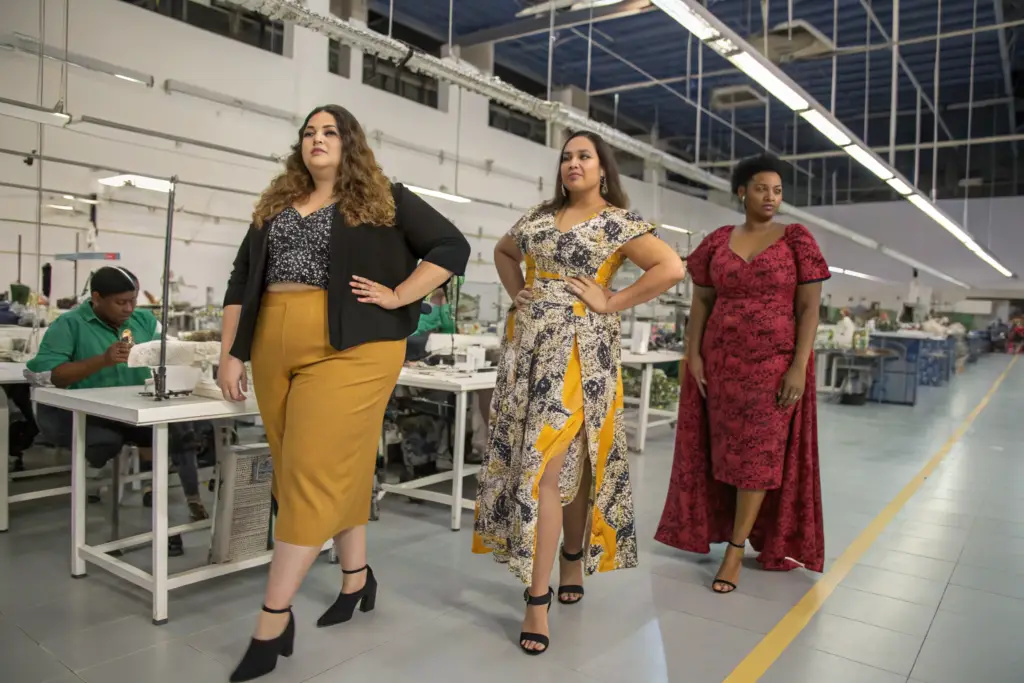
Three years ago, a woman named Maria came to me with a story I have heard a hundred times. She was a size 18. She loved fashion. But every time she walked into a store, she was relegated to a tiny corner in the back. Black tents. Shapeless sacks. Dull colors. She knew there was a massive, underserved market of women just like her who wanted the same trendy, well-made clothing that straight-size women took for granted. She wanted to launch a plus size line. Her fear was not design. Her fear was manufacturing. Could she actually produce beautiful, well-fitting plus size garments overseas without sacrificing quality or fit?
Launching a successful plus size clothing line using overseas sourcing is not only possible, it is a strategic advantage when done correctly. The key lies in understanding that plus size is not just a bigger straight size. It requires specialized pattern grading, deeper fit knowledge, and a factory partner who has dedicated experience with extended sizing. Overseas manufacturing, particularly with a partner like Shanghai Fumao, offers the economies of scale and specialized production lines needed to make plus size apparel profitable without compromising on the design, fabric quality, or fit that this discerning customer demands.
The plus size apparel market in the United States alone is valued at over $80 billion and is growing faster than the overall women's apparel market. The demand is screaming. The supply, especially in the contemporary and premium segments, is still catching up. This is your window. But you cannot walk through it with a standard fit model and a generic tech pack. Let me walk you through the exact process we use to help brands launch and scale successful plus size collections from our factory floor in China.
What Specialized Pattern Grading Is Required For Extended Sizes?
The single biggest mistake new plus size brands make is this: they take a size 6 pattern and just "grade it up." They add a standard two inches to the bust and one inch to the length for each size jump. The result is a size 22 garment that fits terribly. The armholes are huge and gaping. The shoulders are too wide and slide off. The bust darts point to nowhere. The customer tries it on, feels awful, and never buys from your brand again.
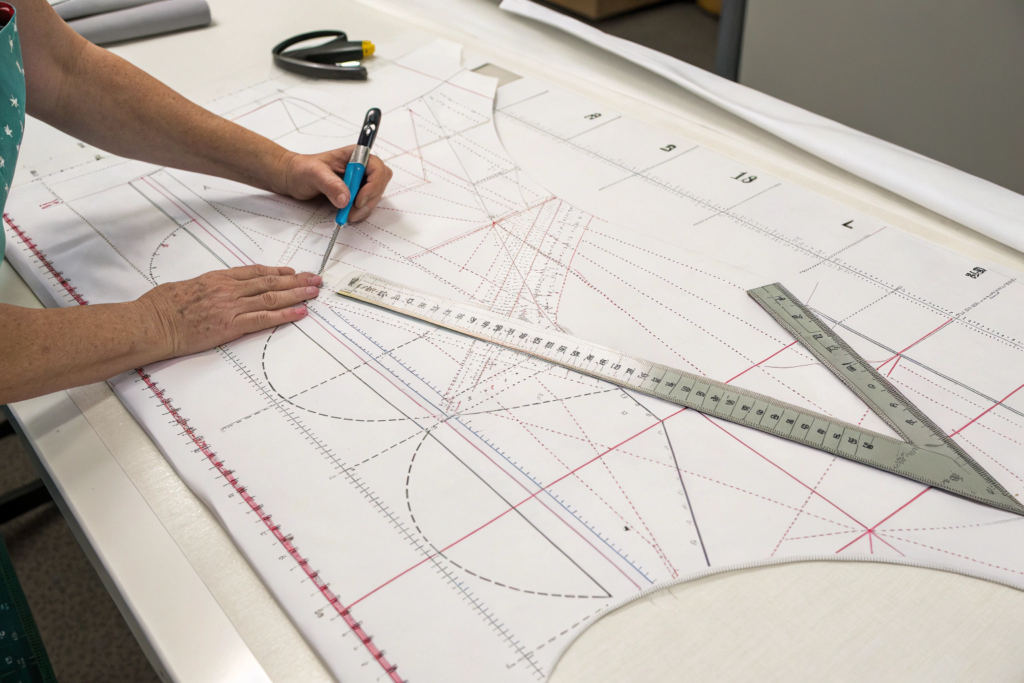
Plus size grading is not linear. The human body does not grow in perfect, proportional increments from a size 2 to a size 24. The relationship between the shoulder slope, the bust apex, the waist position, and the hip curve changes fundamentally. At Shanghai Fumao, we have developed proprietary grade rules based on years of fit data from the North American market. Let's break down the specific adjustments that make or break a plus size garment.
Why Does The Armhole And Shoulder Slope Need Non-Linear Adjustment?
When a woman goes from a size 8 to a size 20, her shoulders do not get dramatically wider in proportion to her bust. If you use standard linear grading, the size 20 shoulder seam will be so wide it will hang off the edge of her shoulder. This is a classic plus size fit failure.
We use a "graded shoulder narrowing" technique. As the bust circumference increases, the shoulder width increases at a much slower, diminishing rate. By the time you reach a 3X or 4X, the shoulder width might be only slightly wider than a size Large, but the armhole shape must be completely reconfigured to accommodate a fuller bust and upper arm without gaping.
Last year, we developed a woven blouse program for a plus size brand based in Atlanta. Their initial samples from another factory had the armhole issue. The armhole was so large and deep that when the model raised her arm slightly, the whole side of the blouse lifted up, exposing her bra. This is a dealbreaker for a customer. Our pattern maker re-engineered the armhole curve. We raised the underarm point, reshaped the front armhole to curve more gently around the bust, and adjusted the sleeve cap height. The revised fit was secure, flattering, and allowed full range of motion. The brand's return rate on that blouse style dropped from 12% to under 4%. This is the power of specialized grading.
We use advanced Gerber Accumark software to manage these complex grade rules. It allows us to create a "grade rule table" that is specific to the plus size body. The table dictates exactly how many millimeters each measurement point moves at each size break. This is not guesswork. It is engineering.
How Do You Adjust Bust Darts And Waist Placement For Fuller Figures?
The bust apex on a plus size figure is often lower and fuller than on a standard fit model. A standard dart that points to a generic bust point will create a "torpedo" shape or point to empty space. It looks dated and unflattering.
We adjust the dart point to align with the actual bust apex of a plus size fit model. We also often change the dart from a standard fisheye dart to a French dart or a princess seam, which provides a smoother, more elongated silhouette over a fuller bust.
Waist placement is another critical variable. The natural waist on a plus size body is often slightly lower in proportion to the overall torso length. If you use a standard waist placement, the garment will cinch in at the wrong spot, creating an unflattering "empire waist" effect when none was intended. We typically drop the waist seam or waist shaping by 0.5 to 1 inch for sizes 18 and up.
A client of ours who specializes in plus size occasion wear uses a specific fit block we developed over three rounds of sampling. The block features a lowered bust dart, a slightly raised back neck, and a contoured waist seam. She calls it her "secret sauce." Her customers rave about the fit. They feel seen and understood. And they come back season after season because they know her clothes will actually fit their bodies.
How Do You Minimize Per-Unit Costs On Plus Size Garment Production?
There is no way around one simple fact: plus size garments use more fabric than straight sizes. A size 3X dress will consume 30-40% more yardage than a size Small dress. This is a material reality. Brands that do not account for this in their pricing strategy will lose money. However, there are specific manufacturing and sourcing strategies that can dramatically reduce the per-unit cost penalty for extended sizes.
At Shanghai Fumao, we help our plus size brand partners optimize their cost structure in several concrete ways. The goal is not to make the size 3X cost the same as the size Small. That is impossible. The goal is to keep the upcharge reasonable and to make the entire size run profitable. Let's look at the two most effective levers.
Can Fabric Width Selection Significantly Impact Material Costs?
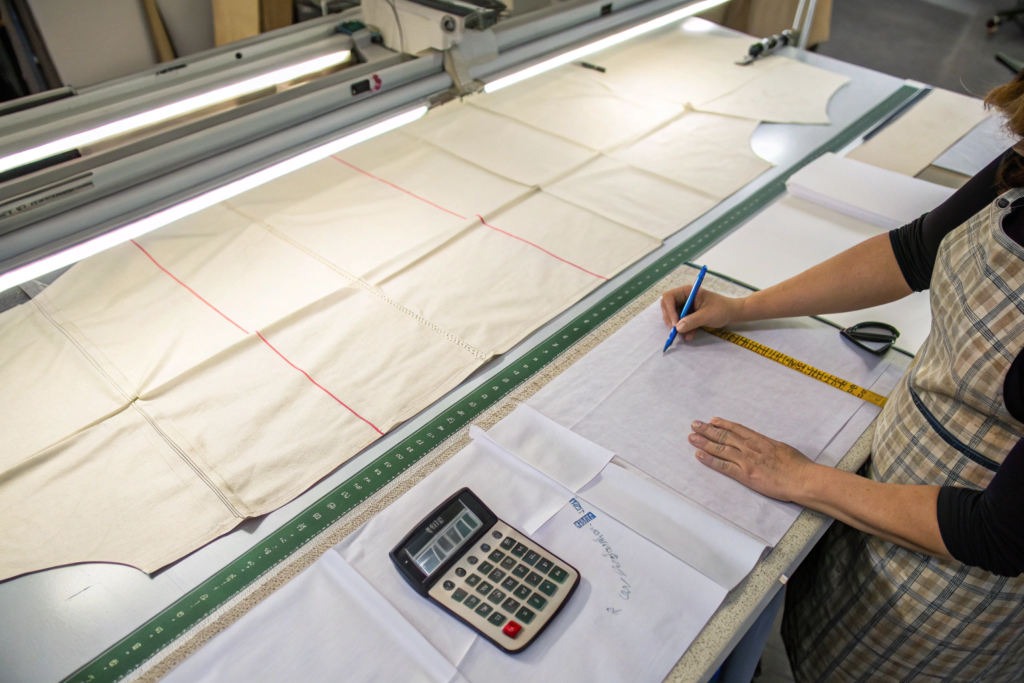
Yes, and this is a detail most new brand owners never consider. Standard fabric rolls for apparel are typically 58-60 inches wide. For straight sizes, you can often fit two front bodice pieces side-by-side within that width. For a size 3X bodice, you often cannot. You can only fit one piece across the width. The fabric on the other side of the center line becomes wasted dead space. This is called "poor marker efficiency."
The solution is to source Wider Width Fabric. Many mills offer fabric in 72-inch widths or even wider. For a plus size marker, the difference in efficiency between a 58-inch roll and a 72-inch roll can be 10% to 15%. That is a massive savings on your single largest cost input.
We default to sourcing wide-width fabrics for our dedicated plus size production runs. It requires working with mills that have the specific looms and knitting machines to produce these wider goods. Not every factory does this. It takes extra effort to qualify the suppliers and sometimes a slightly higher per-yard cost for the wider roll. But the net savings on fabric consumption more than offsets the small premium.
For example, we produced a run of 2,000 plus size maxi dresses in a rayon challis. By using a 72-inch wide fabric instead of the standard 58-inch, we reduced the fabric consumption for the size 3X from 3.8 yards to 3.2 yards. At $4.50 per yard, that is a savings of $2.70 per unit just on the largest size. Over a full size run, the savings add up to thousands of dollars.
Does Volume Bundling Across Colorways Reduce Cutting Room Costs?
Cutting room labor is charged by the hour or by the number of plies (layers of fabric) cut. If you have five colorways of a plus size style, and you cut them as five separate small lays, you pay for five separate setups. The cutting room spends time spreading the fabric, aligning the marker, and moving rolls around.
If you bundle those five colorways into a single, larger cutting lay, you amortize the setup time over more units. This is called "Combined Cutting." The challenge with plus size is that the pattern pieces are large. You cannot stack as many layers of fabric before the knife blade deflects or the bottom layers shift.
However, even with a lower ply height, combining colorways reduces the number of separate marker setups. We work with our cutting room supervisors to plan "rainbow lays" where different colors are spread in sequence in the same lay. This requires meticulous planning and clear labeling of the cut pieces so the sewing operators do not mix up the colors.
The savings in cutting labor are typically $0.15 to $0.30 per unit. This might seem small, but on a 5,000-unit order, that is $750 to $1,500 in pure profit retained. It also speeds up the production timeline because the cutting room is not stopping and starting between colorways. For a brand, this means your entire order ships a day or two earlier.
Which Silhouettes And Construction Details Flatter The Plus Size Body?
Designing for plus size is not about hiding the body under a tent of fabric. That approach is insulting and unsellable. The modern plus size customer wants to show her shape. She wants to look stylish and current. The key is understanding which construction techniques and silhouettes enhance her natural curves rather than fighting against them.
At our factory, we see which designs get re-ordered season after season and which ones end up on clearance. The winning designs share common technical characteristics. Let's explore the specific design elements that drive sell-through in the plus size category.
Why Are Strategic Seaming And Ruching Essential For Fit And Style?
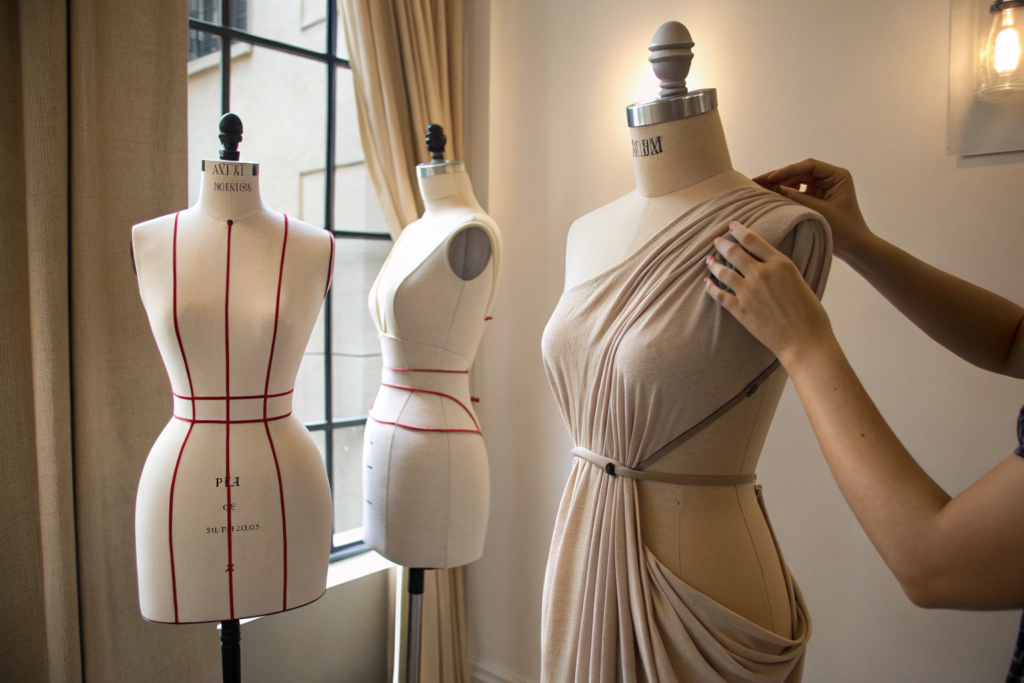
A flat, seamless front panel on a plus size garment is a missed opportunity. Strategic seams do two things: they provide structure and they create visual interest. A well-placed princess seam, which runs vertically from the shoulder or armhole down to the hem, creates a long, uninterrupted line that slims and elongates the torso. It also allows the pattern maker to shape the fabric more precisely around the bust and hip.
Ruching is another powerful tool. It is not just decoration. It is functional ease. A ruched side seam on a dress or top allows the fabric to expand and contract with the body's movement. It forgives minor fit variations. A customer might carry her weight in her midsection one month and in her hips the next. Ruching accommodates these natural fluctuations without the garment looking too tight or too loose.
We produce a best-selling wrap dress for a plus size client that features a carefully engineered side ruching detail. The ruching is created by sewing a strip of narrow elastic into the side seam allowance and stretching it as we sew. The resulting gathers are soft and controlled. The dress fits a size 18 woman with a defined waist and a size 22 woman with a less defined waist equally beautifully. This versatility is why the style has been in their collection for three years and sells out every time they restock it. From a manufacturing standpoint, adding this detail adds about 90 seconds of sewing time per unit. The client prices the dress $12 higher than a similar non-ruched style. Her customers happily pay the premium for the better fit.
What Are The Best Neckline And Sleeve Options For Extended Sizes?
Necklines and sleeves are the frame for the face and arms. They are the most visible parts of the garment in photos and on video calls. Getting them right is critical.
- Necklines: V-necks and Surplice (wrap) necklines are universally flattering. They create a vertical line that draws the eye up and down, elongating the neck and torso. Boat necks and high crew necks can be tricky. They can make the bust appear larger and the neck shorter if not cut precisely. We typically lower the front neckline drop slightly on our plus size blocks to open up the face area.
- Sleeves: The bane of many plus size women's existence is the sleeve that is too tight on the upper arm. We always add extra ease to the bicep circumference on our plus size grade rules. Beyond fit, flutter sleeves, kimono sleeves, and three-quarter length sleeves are popular choices. They provide coverage and movement without constricting the arm.
A client who launched a line of plus size workwear asked us to develop a perfect woven blouse. We spent extra time on the sleeve. We used a two-piece tailored sleeve instead of a one-piece set-in sleeve. The two-piece construction allows for a natural curve at the elbow and a more refined fit in the upper arm. The blouse became their hero product. It is the item their customers buy in multiple colors. The detail is invisible to the untrained eye, but the customer feels the difference when she puts it on.
How Can You Validate Your Plus Size Fit With An Overseas Factory?
This is the question that keeps plus size brand owners up at night. "How can I trust a factory thousands of miles away to get the fit right on a body they cannot see in person?" The old model of mailing a physical sample back and forth three or four times is too slow and too expensive for a new brand. The new model is faster, more accurate, and more collaborative.
At Shanghai Fumao, we have developed a remote fit validation process that eliminates the guesswork and reduces the sampling timeline for plus size brands by up to 50%. Here is how we do it.
What Is The Most Effective Way To Conduct Remote Fit Sessions?
The old way: We make a sample. We ship it to you. You try it on a fit model. You take some iPhone photos. You email them to us with notes like "it pulls here" or "this feels tight." We try to interpret your notes. We make changes. We ship another sample. This cycle takes 2-3 weeks per round.
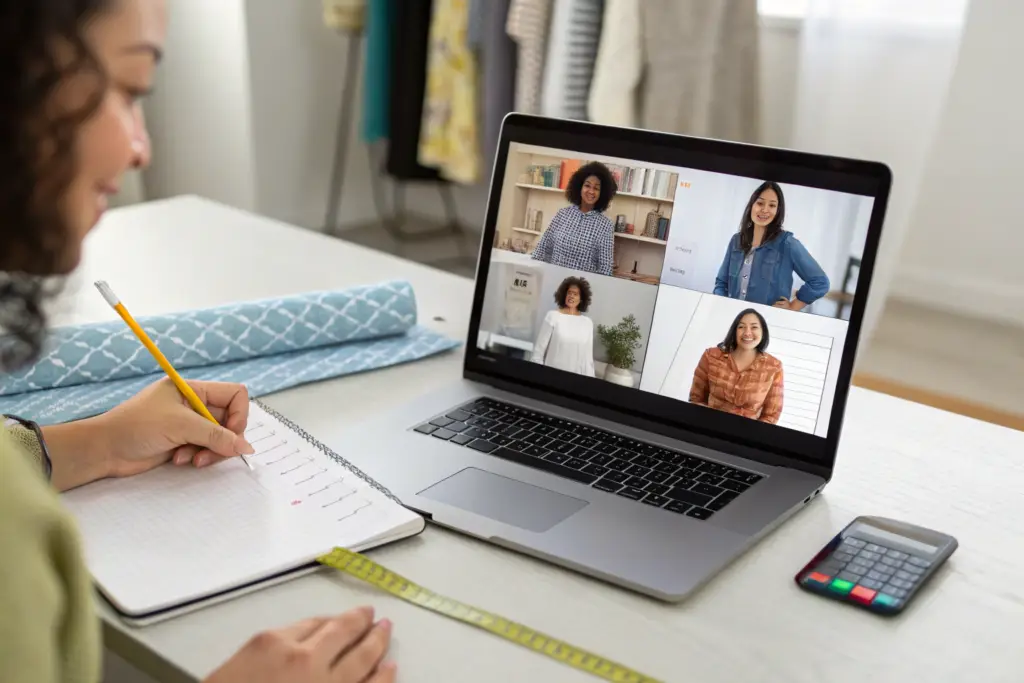
The new way: We schedule a Live Fit Session via Zoom. Here is the step-by-step process we use with our most successful plus size partners:
- The Fit Model: You hire a professional plus size fit model who matches your target customer's measurements (e.g., Size 18/20, specific bust-waist-hip ratio). This is an investment worth making. A consistent fit model is the foundation of your brand's fit identity.
- The Setup: The fit model wears the sample and stands in front of a plain wall with good lighting. You have a second person (or a tripod) holding a smartphone camera.
- The Session: Our pattern maker and I join the Zoom call. We watch the fit model move. We ask her to raise her arms, sit down, bend over, and walk. We see exactly how the fabric behaves in real-time.
- The Pinning: You have a set of safety pins and a fabric marker on hand. When we see an issue—say, excess fabric in the back waist—we instruct you: "Please pinch out half an inch at the center back seam and pin it vertically." You pin the adjustment on the fit model's body.
- The Documentation: We take screenshots of the pinned adjustment. We record the session. After the call, you mail the pinned sample back to us.
This process is revolutionary. We see the fit issue with our own eyes on a moving body. We agree on the exact adjustment in real-time. When we receive the pinned sample, we have a physical record of the change we watched you make. We translate that directly into the digital pattern. The first fit sample is often 80% correct. The second sample, using this method, is usually 95% correct and ready for production approval.
Why Are Wear Test Reports Critical For Plus Size Launches?
A fit session shows how the garment looks and feels for ten minutes in a well-lit room. A Wear Test shows how it performs over eight hours of real life. This is especially important for plus size garments, where issues like "riding up," "rolling down," or "chafing" only become apparent with extended wear.
We ask our brand partners to have their fit model (or a small group of trusted testers) wear the pre-production sample for a full day. They then fill out a simple Wear Test Report that covers:
- Did the waistband roll or dig in?
- Did the sleeves ride up?
- Did the garment lose its shape?
- Did you feel comfortable and confident?
One of our plus size activewear clients discovered a critical issue through wear testing. The waistband on their new legging felt fine during the Zoom fit session. But after a 30-minute walk, the tester reported that the waistband was slowly sliding down. This is a death sentence for a legging. We identified the problem: the elastic in the waistband was the correct length, but the stitch type we used to attach it was not secure enough for the dynamic movement of a plus size body. We switched from a standard overlock to a double needle coverstitch with a slightly tighter tension. The problem was solved. Without the wear test, that legging would have launched with a fatal flaw, generating returns and negative reviews.
Conclusion
Launching a successful plus size clothing line using overseas sourcing is a journey that demands more than just a good eye for fashion. It demands a deep respect for the technical craft of fit. The plus size customer is not a niche. She is the majority of American women. And she has been underserved for too long. By mastering specialized pattern grading that respects the non-linear proportions of the fuller figure, you create garments that fit and flatter rather than frustrate. By optimizing fabric widths and cutting room workflows, you control costs without sacrificing quality. By choosing silhouettes and construction details that enhance curves, you build a loyal following who see themselves reflected in your designs. And by leveraging modern tools like live remote fit sessions and wear test reports, you bridge the distance between your vision and the factory floor.
The opportunity in plus size apparel is enormous, but the barrier to entry is fit. Get the fit right, and you have a customer for life. Get it wrong, and you have a return and a lost relationship. At Shanghai Fumao, we have invested the time and resources to become experts in plus size manufacturing. Our pattern makers understand the body. Our production lines are configured to handle the specific needs of extended sizing. And our process is designed to give you confidence that the garments arriving in your warehouse will delight your customers.
If you are ready to build a plus size brand that women genuinely love to wear, let's talk. I invite you to reach out to our Business Director, Elaine. She can discuss your specific design ideas, walk you through our fit validation process, and provide a clear cost breakdown for your collection. You can contact her directly at elaine@fumaoclothing.com. The market is waiting for a brand that truly understands fit. Let's make sure it is yours.