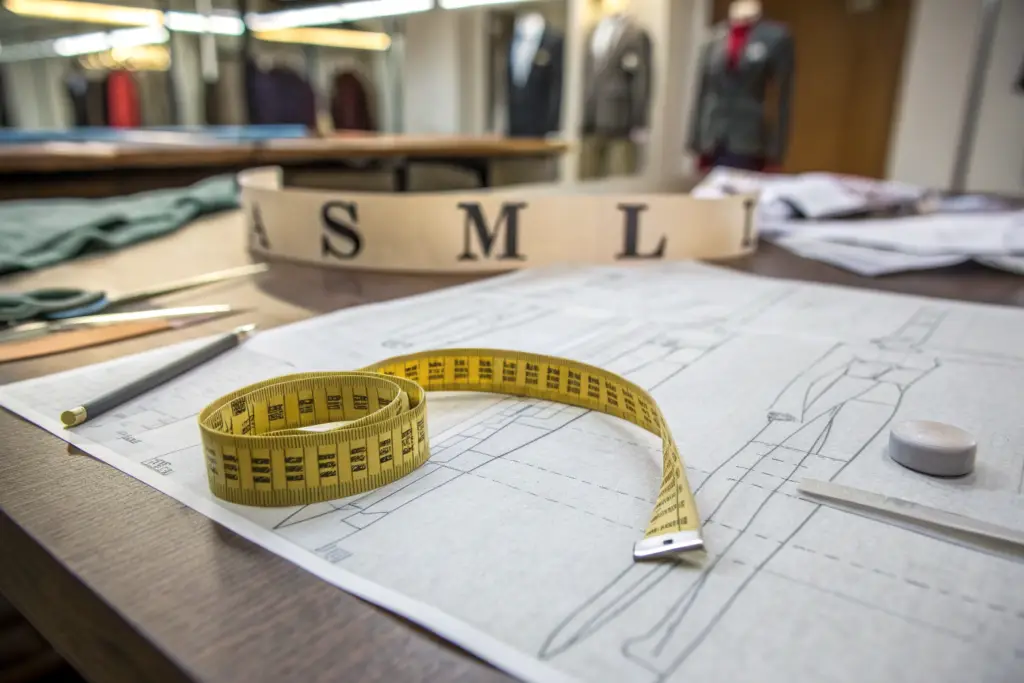
About four years ago, I had a distributor in Atlanta call me in a cold sweat. He had just received his first container of a new men's woven shirt program—2,400 units. The fabric was beautiful. The stitching was perfect. The fit was a disaster. The "Large" fit like a "Medium" from every other brand he sold. His retail accounts were furious. They had ordered based on the sample size (which was a Medium), and now they were stuck with racks of shirts that their customers could not button across the chest. He ended up liquidating that entire shipment at a 60% loss just to clear the warehouse space. The problem was not the design. It was the grade.
The most common sizing mistake in wholesale apparel manufacturing is the assumption that a "standard size chart" exists and applies universally. In reality, sizing is a fractured landscape of vanity sizing, inconsistent grading rules, and poor communication between the design sketch and the cutting table.
This is a silent margin killer. Brands spend thousands on marketing and beautiful photography, only to have the customer return the item because "it runs small." That return shipping and restocking fee often wipes out the profit on that garment. At Shanghai Fumao, we treat the size spec sheet with the same reverence as the fabric swatch. Let me walk you through the specific pitfalls that cause these expensive fits and how to avoid them before the first cut is made.
Why Do American And Asian Size Grading Rules Differ So Much?
You cannot simply take a size chart from a U.S. brand and email it to a factory in Asia and say, "Make this." You will get a garment that is technically correct to the numbers but completely wrong for the body. I learned this lesson the hard way early in my career with a women's woven blouse.
American sizing typically incorporates more ease and accounts for a broader range of body shapes, while Asian base patterns often assume a straighter, less curved silhouette and a smaller overall frame.
This is not about one being better than the other. It is about understanding the starting point of the pattern block.
How Does Vanity Sizing Affect Wholesale Return Rates?
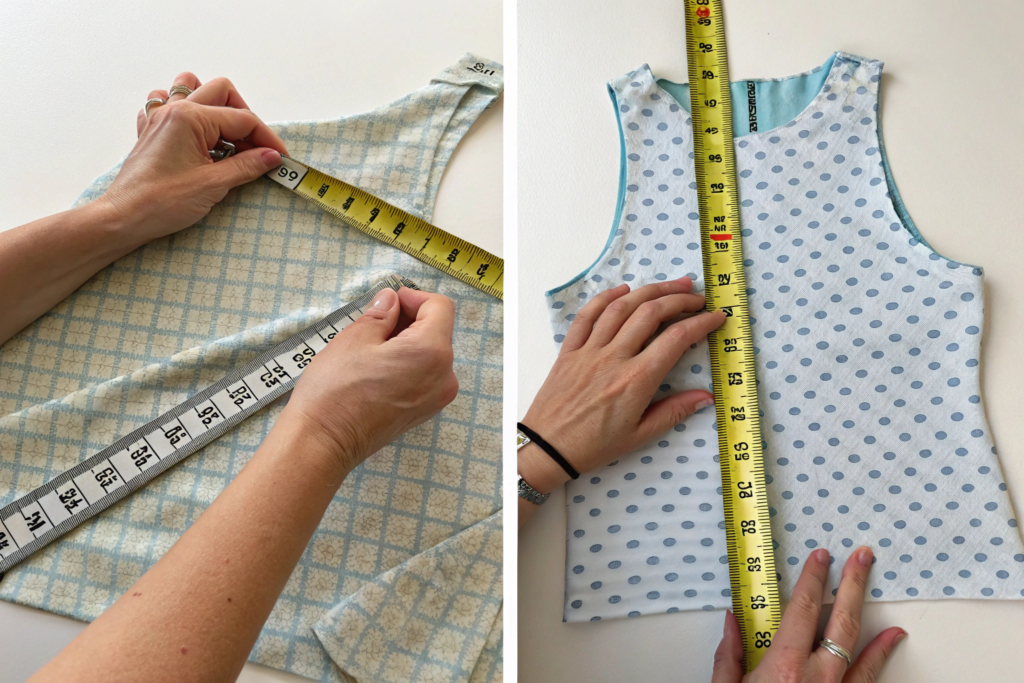
Vanity sizing is the practice of labeling a garment with a smaller size than its measurements would indicate. A woman who measures a 32-inch waist is happy to fit into a "Size 10" rather than a "Size 14." It is a psychological game. But in wholesale, it creates a logistical nightmare.
Let me give you a real example from a women's wear client in Chicago. She sells to boutiques across the Midwest. She used a standard U.S. Missy fit block. Her size "Medium" bust measurement was 38-39 inches. She had a very low return rate—around 6%.
We had another client, a contemporary brand from Los Angeles. Their target customer was younger and more body-conscious. They used a "juniors" inspired block. Their size "Medium" bust was 36-37 inches. Their return rate was 14%. Why? Because the boutique owner would tell the customer, "This brand runs small, size up." But the online customer did not get that warning.
Here is a look at how a simple size label affects the bottom line based on our internal client data (Q1 2026 average):
| Fit Type | Size M Bust Spec | Avg. Wholesale Price | Avg. Return Rate | Net Margin Impact |
|---|---|---|---|---|
| Generous Fit (Missy) | 40" | $28.00 | 6% | Baseline |
| Standard Fit (Contemp) | 38" | $28.00 | 9% | -3% |
| Slim Fit (Juniors) | 36" | $28.00 | 15% | -9% |
The product cost exactly the same to make. The only difference was the measurement in the tech pack. But that 9% gap in margin is pure profit lost to return shipping labels. The key is to pick a lane and communicate it clearly on the hangtag or website. "Model is 5'9" wearing Size S. This style is designed for a slim, tailored fit." You can read more about consumer fit expectations from the NPD Group retail data.
Why Do Grading Rules Break Down At Size XL And Above?
This is one of the most frequent requests I get: "We want to expand our size range up to 3X." That is a great business decision. But you cannot just take the Grade Rule from Small to Medium and apply it all the way up to 3XL.
Bodies do not grow like a photocopier set to 110%. As the torso gets larger, the proportions change. The shoulder slope changes. The armhole depth needs to drop. The bust apex moves.
I worked with a brand that tried to save money on pattern making. They took their Size Medium pattern and just added 2 inches to the circumference for every size up. By the time they hit 2XL, the armhole was so huge it was gaping under the armpit. The sleeve length was comically long because the shoulder width had extended too far.
We had to go back and re-grade the pattern using a Bi-Furcated Grade Rule. This means:
- Sizes S to L: One set of grade rules (e.g., +2" circumference, +0.25" length).
- Sizes XL to 3XL: A different set of grade rules (e.g., +3" circumference, +0.5" length, +0.5" armhole drop).
This is an area where hiring a technical designer who understands pattern grading for plus sizes is worth their weight in gold. It prevents the "tent effect" where a larger garment just gets wider but not longer or deeper in the right places.
How Do Fabric Properties Distort Intended Garment Measurements?
You can have the perfect pattern. You can have the perfect grade rules. But if you cut that pattern out of a stretchy rayon jersey instead of a stiff cotton poplin, the finished garment will measure differently. Fabric has a memory. It has weight. It fights back against the scissors.
The mechanical properties of the textile—specifically shrinkage and stretch recovery—must be factored into the cut-and-sew plan. Failing to do so results in garments that measure correctly on the cutting table but shrink or grow into the wrong size after the first wash or wear.
This is why I always ask for a Fabric Shrinkage Test report before we approve a marker for cutting.
Why Is Pre-Washing Or Relaxing Fabric Critical Before Cutting?
Let me tell you about a nightmare with a 100% cotton flannel shacket we made for a men's brand. The fabric was gorgeous. Heavy, brushed, perfect for fall. We cut the pieces exactly to the size spec. We sewed them up. The garment measured a perfect "Large" chest of 46 inches.
The client loved the samples. We shipped the bulk. A month later, the emails started. "Your sizing is off. The Large fits like a snug Medium." The flannel had shrunk 3% in length and width during the customer's first wash. That 3% on a 46-inch chest is almost 1.5 inches lost. That is a full size difference.
We had made a mistake. We used the Post-Wash Spec for cutting without doing the proper shrinkage allowance. The correct process is:
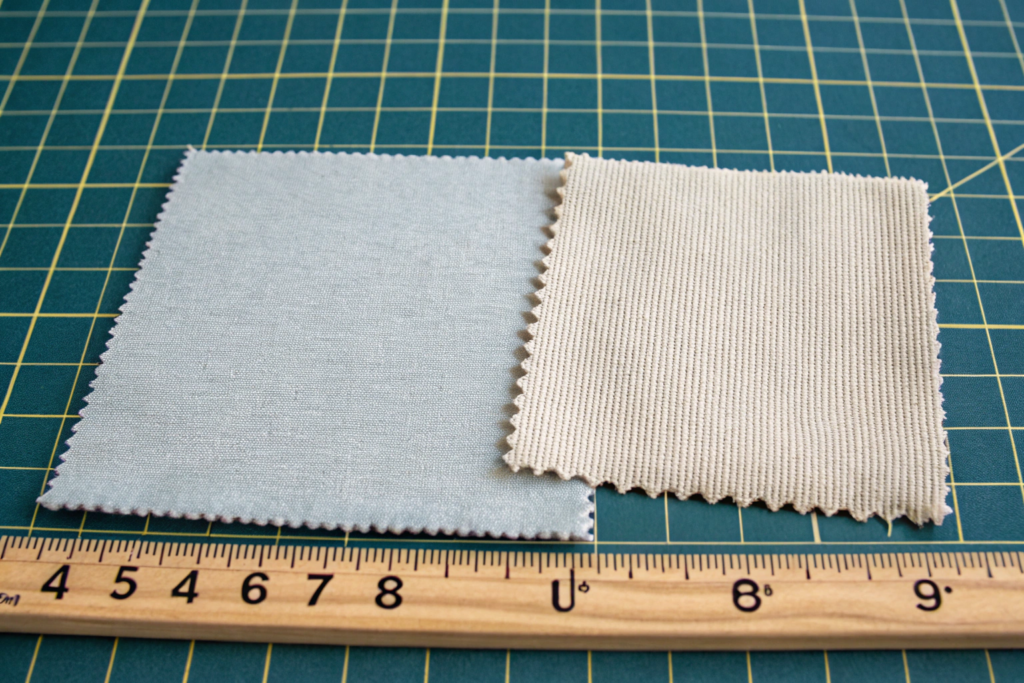
- Wash Test: Cut a 20" x 20" square of fabric. Wash and dry it according to care label instructions.
- Calculate Shrinkage: If the 20" square becomes 19.4", the shrinkage is 3%.
- Adjust Pattern: If you want a final chest of 46", you must cut the fabric at 47.4" to account for the 3% loss.
Now, for every order with high natural fibers, we insist on cutting Relaxed Fabric. We either source fabric that has been pre-shrunk by the mill (compacted) or we let the rolls rest for 24-48 hours after unrolling before cutting. This simple step saves thousands in chargebacks. You can learn more about textile shrinkage standards from the AATCC.
How Does Stretch Recovery Impact The Wearable Life Of A Size?
Stretch fabric is a blessing and a curse. It makes garments comfortable. It also hides sizing sins... temporarily.
We make a lot of activewear. A client wanted a "super tight, compressive" legging. We used a fabric with 25% spandex. It measured perfectly on the spec. It stretched easily to fit. But after three hours of wear, the customer complained the leggings were "bagging out" at the knees.
The issue was Recovery. The fabric stretched, but it did not snap back to its original shape.
We had to switch to a higher-quality fabric with better recovery. But even with good fabric, you must account for Negative Ease. Negative ease means the garment measurement is smaller than the body measurement. It relies on the stretch to fit.
Here is a simple table we use internally to guide clients on stretch specifications:
| Fabric Type | Stretch % | Recommended Ease for Woven | Recommended Ease for Knit |
|---|---|---|---|
| Rigid (No Stretch) | 0-2% | +4" to +6" (Loose Fit) | N/A (Unwearable) |
| Comfort Stretch | 3-10% | +2" to +4" (Standard) | +0" to +2" (Relaxed) |
| High Stretch | 15-30% | +0" to +2" (Slim) | -2" to -4" (Negative Ease) |
If you use a high-stretch knit but cut it with "Standard" ease, the garment will be baggy and unflattering. It will look like a size too big, even though the tape measure says it is correct. Understanding this relationship is the difference between a premium fit and a discount rack item.
What Role Does The Fit Model Play In Consistent Wholesale Sizing?
You cannot grade a pattern accurately if you do not have a solid Base Size to grade from. And you cannot have a solid base size if you do not have a real human body to test it on. I see too many new brands skip the fit model step. They think, "We'll just use the factory standard Medium." That is a recipe for the Atlanta disaster I mentioned earlier.
A consistent fit model provides a living, breathing target for the entire size range. It anchors the brand's fit identity and ensures that the "Medium" from Season 1 fits like the "Medium" from Season 4.
Your customers develop muscle memory for how your brand fits. If you change the fit model every year, you break that trust.
Why Is A "Factory Standard" Block Unreliable For US Brands?
Let me pull back the curtain on "Factory Standard" blocks. Yes, every factory has a library of basic patterns. These are shapes that have worked for other clients.
The problem is you do not know who that other client was. Was it a European brand with narrow shoulders? Was it a Japanese brand with short sleeves? A factory block is a starting point, not a destination.
I worked with a brand that insisted on using our "standard woven shirt block" to save the pattern-making fee. We sent them the sample. The shoulder width was perfect. The sleeve length was perfect. The body length was 2 inches too short for the American torso. It looked like a crop top on a 6-foot-tall guy.
We had to add body length. But adding length changes the pocket placement. It changes the side vent. Suddenly, the "free" block cost them a revision sample and two weeks of lead time.
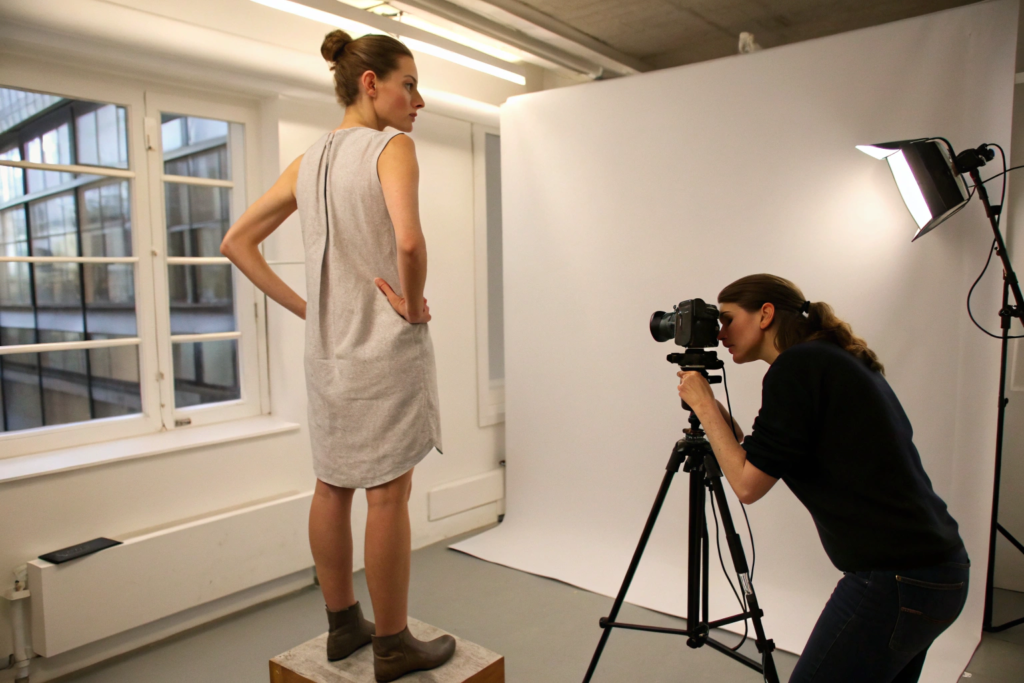
My advice to new brands is always: Pay for the fit sample on a live model. Take photos. Mark up the photos with arrows and notes. "Add 1/2 inch here. Reduce 1/4 inch there." This is how you create your block. Once Shanghai Fumao has your approved fit sample, we digitize the pattern and lock it. That becomes your block, not the factory's generic one. You own that fit. You can read about fitting standards used in the industry.
How Often Should A Brand Re-Evaluate Its Core Fit Block?
Bodies change. Your customer base changes. A brand that starts targeting 25-year-olds might find that five years later, their core customer is 35. Their bodies have changed. Your fit block should evolve too.
But you should not change it randomly. I recommend a Fit Audit every 2-3 years.
- Review Return Data: Are you seeing a spike in returns for "Too tight in the waist" or "Too short in the sleeve"?
- Re-Fit the Model: Bring in a fit model who matches your current target demographic measurements. Try on the current core style. Is it still flattering?
- Competitor Analysis: Order a core item from your top three competitors. Measure them against your spec. Have you drifted away from the market standard?
I recall a kids' wear brand we work with. Over three years, their size 5T had gradually crept longer in the sleeve because they kept adding "just a quarter inch for safety." Suddenly, the sleeves were covering the kids' hands. We did a fit audit, compared it to the original sealed sample, and pulled the sleeve back by half an inch. Consistency requires maintenance. You can find more about anthropometric data for U.S. consumers from the CDC.
How Can Technology Reduce Human Error In Size Specification?
We have talked about the human and physical causes of sizing errors. But the most exciting changes in the last five years are in software. We are moving away from guessing and toward simulation.
Technology like 3D sampling and digital pattern-making software reduces the iteration cycles and catches grading errors before any physical fabric is wasted.
This is not just for big brands anymore. The tools are becoming accessible for small and mid-sized lines, and as a factory, we use them to protect our clients from costly mistakes.

What Is 3D Sampling And How Does It Catch Grade Rule Errors?
3D sampling software (like Browzwear or CLO) allows us to take your 2D digital pattern and "sew" it onto a 3D avatar of a body. You can set the avatar to the exact measurements of your fit model.
Here is the magic. We can then click a button to Visualize the Grade. The software will show the garment on a Size Small avatar, a Size Medium avatar, and a Size 3XL avatar, side-by-side on the screen.
I remember a specific project where the designer wanted a specific stripe placement on a polo. The stripes looked great on the Medium. But when we ran the 3D grade simulation, we saw that on the 3XL, the stripe was stretching and distorting awkwardly across the belly because the circumference had increased so much. We saw the problem on a screen in Shanghai. We adjusted the stripe width before we bought the fabric. Without 3D, we would have found the problem when the 3XL sample was sewn six weeks later.
This technology allows us to check for Proportional Integrity. Does the pocket look too small on the XL? Does the collar look too big on the XS? These are questions that 2D spec sheets cannot answer. You can learn more about digital product creation from industry technology events.
Can Digital Pattern Making Eliminate Manual Grading Discrepancies?
Manual grading is a skilled craft. A pattern maker takes a ruler and a pencil and physically shifts the pattern pieces to make them larger or smaller. It is an art. But it is also prone to tiny, cumulative errors. A millimeter off here, a degree off there. Over 10 size breaks, that can add up to a half-inch discrepancy.
Digital pattern making (CAD) applies the grade rules mathematically. We input the Grade Rule Table:
- Size S to M: Chest +2", Length +0.5"
- Size M to L: Chest +2", Length +0.5"
The software calculates the exact curve for every single piece, every single time. There is no human variance.
At Shanghai Fumao, once a pattern is approved and digitized, we lock the grade rules. The cutting machine is driven by that digital file. This means the Size Large we cut in January is identical to the Size Large we cut in July. This is how you get the consistency that wholesale buyers demand. It eliminates the "Friday afternoon pattern" where the grader was tired and made a sloppy line. For more on this, the American Apparel & Footwear Association offers great resources on tech integration.
Conclusion
Sizing mistakes in wholesale apparel are almost always preventable. They stem from a few key disconnects: the disconnect between how a designer imagines a fit and how a factory interprets a spec sheet, the disconnect between how fabric behaves on a roll and how it behaves on a body, and the disconnect between a "standard" block and a real customer's shape.
You can close these gaps. You close them by acknowledging that there is no universal size chart and by investing the time to build your grade rules based on your fit model. You close them by respecting the physical properties of your textiles and testing for shrinkage and recovery before you commit to cutting thousands of yards of fabric. And you close them by using the technology available—from 3D simulation to digital pattern storage—to remove the small, creeping errors that erode fit consistency over time.
A garment that fits perfectly is a garment that stays in the customer's closet. It is a garment that does not get returned. In the tight-margin world of wholesale, that is everything. At Shanghai Fumao, we do not just sew seams; we engineer fit. We work with our partners to establish a repeatable, documented sizing standard that protects their brand reputation season after season.
If you are tired of explaining to retailers why this season's Medium is not the same as last season's, let's get your spec sheet under control. Reach out to our Business Director, Elaine, at elaine@fumaoclothing.com. We can start with a simple fit audit of your current best-seller and identify where the sizing drift is happening. Let's make sure your next run fits exactly the way you promised.