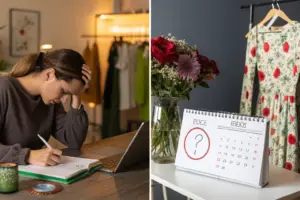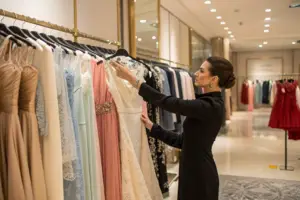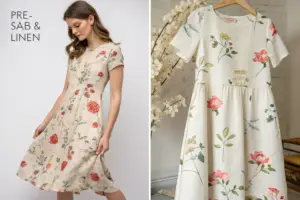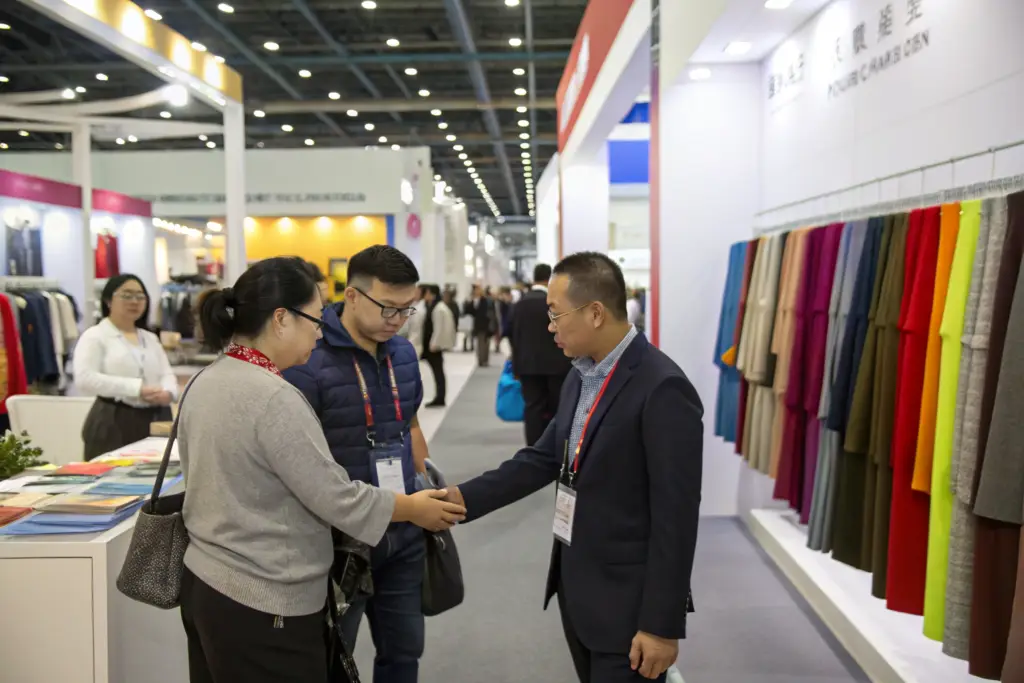
Last November, I received an email from a brand owner in Denver. He had spent six months sourcing a factory on Alibaba. Six months of back-and-forth messages, WeChat translations that made no sense, and three sample rounds that still looked wrong. He was exhausted. He had almost given up on launching his spring collection. A friend convinced him to fly to Shanghai for a trade show. He walked into the exhibition hall on a Tuesday morning, spent four hours touching fabric, talking to factory owners face-to-face, and shaking hands. By Friday, he had placed a sample order with Shanghai Fumao. By the following Tuesday, he had a tech pack in development. He told me later, "I accomplished more in four hours on that show floor than I did in six months behind a screen." That is the power of a trade show.
Professional buyers visit trade shows to find apparel manufacturers because these events provide an irreplaceable opportunity for tactile evaluation, immediate trust verification, and high-density networking. Unlike digital sourcing, a trade show allows a buyer to physically touch the fabric quality, assess the stitching and finishing of actual production samples, read the body language of the supplier, and compare dozens of potential partners side-by-side in a single afternoon. This multi-sensory evaluation dramatically reduces the risk of choosing a factory that looks good online but delivers poor quality in reality.
I have exhibited at major shows in Shanghai, Paris, and Las Vegas for over a decade. I have seen the look of relief on a buyer's face when they hold a garment from Shanghai Fumao and realize the construction matches the photo they saw on Instagram. Digital marketing is essential, but it is filtered. A trade show is raw and real. Let me walk you through exactly what happens on that show floor and why it remains the gold standard for serious apparel sourcing.
What Can You Learn About a Factory at a Trade Show That You Can't Learn Online?
A factory's website can look like a million dollars. Their Instagram feed can be curated with perfect lighting and professional models. Their Alibaba Gold Supplier status can be purchased. I say this as someone who has all three of those things. We invest in our online presence because it is the front door to our business. But the front door does not show you the kitchen. A trade show is a tour of the kitchen.
At a trade show, a buyer learns three critical things about a factory that cannot be faked online: the true hand feel and drape of the factory's core fabrics, the technical skill level revealed in the finishing of sample garments on display, and the unscripted professionalism and communication ability of the actual people who would manage the account. You can see if the sales representative is knowledgeable or just reading from a script. You can see if the sample zippers are YKK or cheap generic substitutes. You can feel if the cashmere is scratchy or soft.
How Does the "Hand Feel" of a Sample Reveal a Factory's True Capability?
This is the single most important reason to attend a show. You cannot email a piece of fabric. You cannot Zoom the drape of a silk charmeuse. Digital photography flattens texture. It hides sheen. It lies about weight.
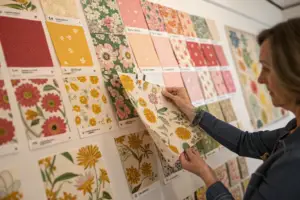
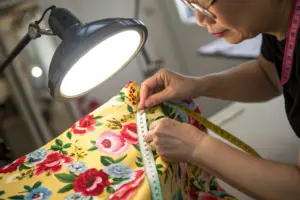
When you walk into the Shanghai Fumao booth at a show, the first thing I do is hand you a garment and stop talking. I let the fabric speak. I watch your hands. Professional buyers touch fabric the way a sommelier tastes wine. They rub it between their fingers. They scrunch it to see if it wrinkles. They hold it up to the light to check the weave density.
Here is a real example. A buyer from a contemporary women's brand in San Francisco was looking at our linen-blend trousers. She had seen photos of a similar pant from a competitor online. The price was almost identical. She picked up our sample and immediately felt the difference. The competitor's fabric had a stiff, papery hand feel. Ours had a soft, washed drape. The difference was Enzyme Washing. It is an extra step that costs about $0.40 per garment. The competitor skipped it to save money. You cannot see enzyme washing in a photo. You can only feel it. She placed an order for 800 units on the spot. That one tactile moment was worth the cost of her entire trip to Shanghai.
Here is a quick reference table of what your hands should be looking for at a booth:
| Fabric Claim | What to Feel For (Good Sign) | What to Feel For (Red Flag) |
|---|---|---|
| 100% Cotton Jersey | Soft, slightly fuzzy, springs back when stretched. | Slick, cool, overly smooth (sign of polyester blend or heavy silicone finish). |
| Wool Coating | Warm, resilient, springy. Rub two layers together—should feel slightly grabby. | Flat, slippery, feels like plastic felt (sign of high acrylic content). |
| Silk Charmeuse | Cool to the touch, liquid drape, subtle irregularity in the weave. | Uniformly slick, static cling, feels warm against the skin (sign of polyester). |
| Performance Activewear | Matte finish, substantial weight, stretches with resistance. | Shiny, thin, stretches out easily and stays stretched (sign of low-quality elastane). |
At Shanghai Fumao, we bring our "Wash Test" swatches to the show. We have small squares of fabric that have been washed five times and tumbled dry. We encourage buyers to compare the unwashed roll to the washed swatch. This shows pilling resistance and shrinkage instantly. Most online vendors will never show you that.
Can You Really Judge Communication Skills at a Booth?
Absolutely. And this addresses a major pain point: inefficient communication with supplier sales representatives.
In the booth, the conversation is live. There is no time delay. There is no Google Translate buffer. You ask a question about minimum order quantity, and you watch the representative's eyes. Do they understand the question immediately? Or do they look confused and call over a translator?
At Shanghai Fumao, I staff our booth with a bilingual team. Our sales manager, Elaine, speaks fluent English. She has lived in the U.S. and understands the retail calendar. When a buyer says, "I need these for a July floor set," Elaine does not just nod. She pulls out a calendar and works backward to the cut date. That level of immediate, context-aware communication is the foundation of a smooth production partnership.
You also get to observe the unspoken cues. Is the booth organized or chaotic? Are the samples pressed and clean? Are the business cards in a tidy holder or a crumpled pile? These small details are a mirror of the factory floor. A factory that cannot keep a 10x10 booth organized for three days will likely struggle to keep 500 cartons of your inventory organized for shipment. I have walked trade shows as a visitor and been shocked by booths with dirty carpet and coffee cups on the sample table. That is a factory I would never trust with a purchase order.
Which Global Trade Shows Offer the Best ROI for US Apparel Brands?
Not all trade shows are created equal. A buyer with a limited travel budget and limited time needs to choose wisely. Flying to the wrong show is an expensive mistake. You might end up in a hall full of suppliers who only want to sell 50,000 units of basic promotional t-shirts when you are looking for 500 units of premium cut-and-sew knitwear.
The best ROI for U.S. apparel brands sourcing from China is found at MAGIC Las Vegas (Sourcing at MAGIC) for convenience and regional access, and at the Canton Fair (Guangzhou) or Intertextile Shanghai for the deepest supplier pool and raw material access. For European-influenced fashion, Première Vision Paris is essential. The choice depends on whether the buyer prioritizes seeing a wide range of finished garments (MAGIC) or accessing the underlying fabric and trim supply chain directly in Asia (Intertextile).
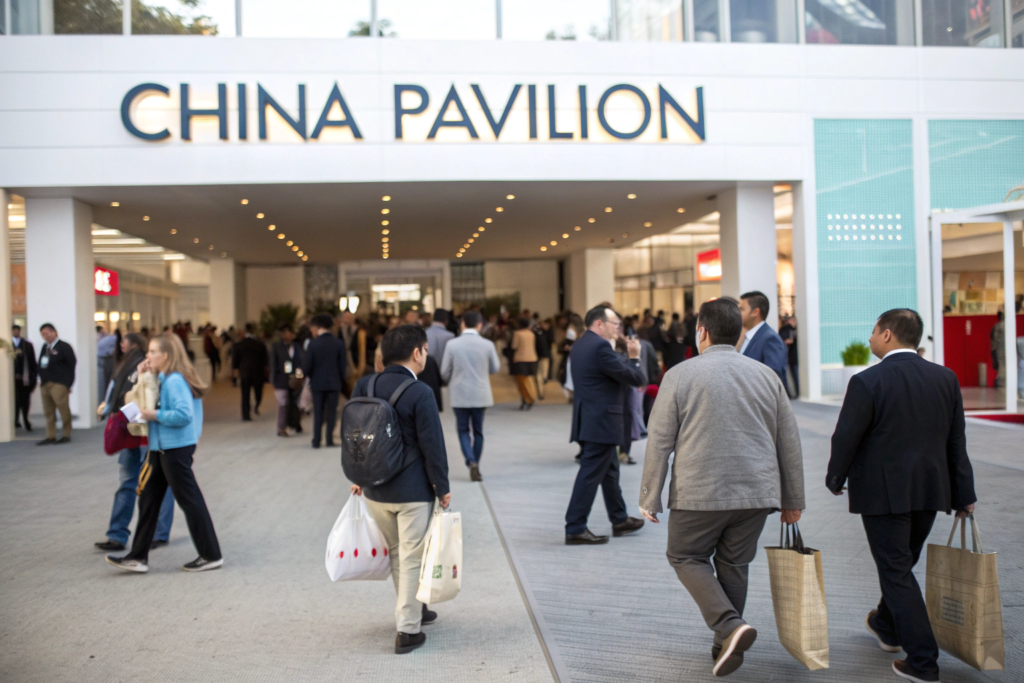
Why Is Sourcing at MAGIC Las Vegas Still Relevant for Finding Chinese Factories?
Some buyers think, "If I want a Chinese factory, I have to go to China." That is not entirely true. MAGIC Las Vegas is the largest apparel trade event in the United States, and the Sourcing at MAGIC section is filled with factories from China, Vietnam, India, and beyond.
The advantage of MAGIC is the U.S. context. The factories exhibiting there have already made the investment to travel to the U.S., obtain a visa, and ship their samples across the ocean. This is a significant filter. It means they are serious about the U.S. market and they have the financial stability to support it.
At a show like MAGIC, you can:
- Compare across countries: See a Chinese sweater next to a Peruvian sweater next to a Vietnamese sweater. Compare price and quality in real-time.
- Meet U.S.-based reps: Many Chinese factories, including Shanghai Fumao, send their U.S. sales agents or bilingual staff to MAGIC. You are speaking with someone who understands U.S. retail math and return policies.
- Avoid jet lag and visa issues: For a busy owner who cannot leave the country for a week, a trip to Las Vegas is a two-day, low-stress event.
I exhibited at MAGIC for three consecutive seasons. The buyers I met there were often more prepared than those at some Asian shows. They came with line sheets, target retail prices, and specific tech packs. They were ready to make decisions. The cost of a booth at MAGIC is high, but the quality of the buyer leads is also high. It is a place for closing business, not just browsing.
What Is the Difference Between Canton Fair and Intertextile Shanghai?
If you decide to make the trip to China, these are the two heavyweights. They serve different purposes, and many professional buyers attend both in the same week if the timing aligns.
Canton Fair (Guangzhou):
- Vibe: Massive, overwhelming, everything under the sun. It is the world's largest trade fair. Phase 3 is dedicated to Textiles and Garments.
- Product Focus: Finished consumer goods. You will find booths selling ready-made clothing, accessories, and home textiles.
- Supplier Type: Heavy mix of large state-owned enterprises and medium-sized trading companies. Many booths are focused on high-volume, lower-complexity items.
- Best For: Buyers looking for commodity items like basic t-shirts, socks, or promotional wear where price per unit is the primary driver.
Intertextile Shanghai Apparel Fabrics:
- Vibe: Specialized, technical, design-driven. It is held twice a year at the National Exhibition and Convention Center in Shanghai.
- Product Focus: Raw Materials and Fabrics. You are meeting the mills who make the yarn and weave the fabric. You are not just looking at a finished shirt. You are looking at the 5,000 options for the collar interlining.
- Supplier Type: Mills, textile innovators, and factories like Shanghai Fumao that have in-house design teams. Our office is just an hour from this venue, so we bring our best clients here to tour the fabric halls together.
- Best For: Buyers who want custom development. If you want to design your own print, develop a custom blend, or source a unique sustainable fabric, this is the show.
For a U.S. brand doing private label or custom cut-and-sew, I always recommend prioritizing Intertextile over Canton Fair. Canton Fair shows you what already exists. Intertextile shows you what can be made. That is the difference between being a follower and being a leader in fashion.
How Can a Buyer Prepare to Maximize 48 Hours at a Trade Show?
Walking into a trade show without a plan is like walking into a fabric store without a pattern. You will be overwhelmed by color and texture, and you will leave with a bag full of swatches you will never use and a dozen business cards from people you cannot remember. The most successful buyers I meet at our booth treat the show like a military operation. They have a mission, a map, and a time limit.
To maximize 48 hours at a trade show, a buyer must pre-register online, pre-schedule appointments with the top ten target factories, and pack a physical "Sourcing Kit" that includes a color standard, a spec sheet, and a method for documenting booth visits. The most critical preparation is a written list of non-negotiable questions regarding Minimum Order Quantity (MOQ), lead time, and compliance certification. This prevents the buyer from being swayed by a beautiful booth display and forgetting to ask about the factory's DDP shipping capability.
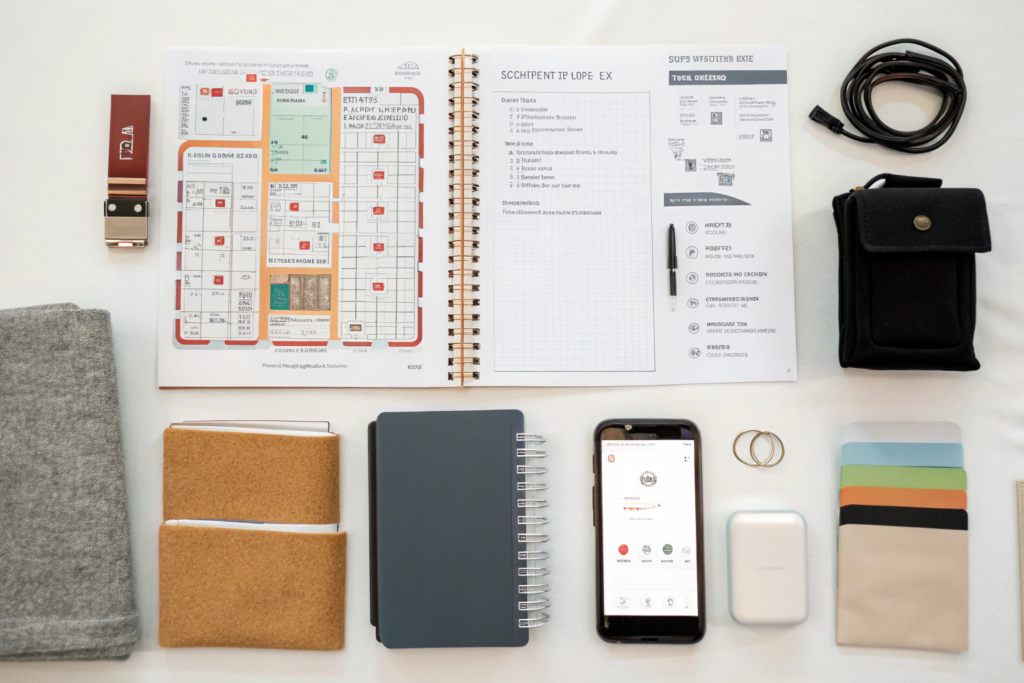
What Should Be in My Physical "Trade Show Sourcing Kit"?
You will be walking several miles a day on hard concrete floors. You need to be light, but you also need to be prepared. Here is the exact list of what I see the most professional buyers carrying when they walk into the Shanghai Fumao booth.
| Item | Purpose | Why It Matters |
|---|---|---|
| Comfortable Shoes | Survive 8 hours of walking. | Pain distracts from negotiation. |
| Portable Charger/Battery Pack | Phone dies scanning WeChat/WhatsApp QR codes. | No phone = no contacts saved. |
| Pre-Printed Sticky Labels | Stick on vendor info card. | You fill out 1 card, not 50. Saves 30 mins per day. Label says: Your Name, Brand, Email, Product Category. |
| Pantone Color Guide | Match fabric to your exact brand color. | Eliminates "It looked navy in the hall light" mistakes. |
| A Physical Sample (Target) | Show the vendor exactly what you want to replicate. | "I want this weight of fleece." Words fail. A sample speaks. |
| Small Zip Bags & Sharpie | Store fabric swatches and label them IMMEDIATELY. | If you wait until the hotel, the swatches get mixed up. |
| Notebook with Pre-Written Questions | Standardize your evaluation of each booth. | Prevents you from forgetting to ask about AQL standards at the fifth booth because you are tired. |
I once had a buyer from Chicago come to my booth. She pulled out a small digital scale from her bag. She weighed a similar sweater from a competitor's booth and then weighed ours. Ours was 40 grams heavier. That 40 grams represented a denser knit and better quality yarn. She smiled and said, "This is the one." That level of preparation is what separates a professional buyer from a tourist.
How Do I Use the First Hour of the Show to Save Time Later?
The first hour of a trade show is often the quietest. The crowds are still filtering in. The vendors are fresh and eager. Do not waste this hour wandering aimlessly.
Step 1: The High-Speed Perimeter Walk (15 minutes)
Walk the entire perimeter of the hall at a fast pace. Do not stop at booths. Just observe. Get a feel for the layout. Where is the "China Pavilion"? Where are the "Premium Design" sections? Where is the coffee stand? Mental map first.
Step 2: Target Verification (30 minutes)
Go to your top 3 pre-booked appointments. You are fresh. They are fresh. You have the deepest, most technical conversations right now. This is when you ask about supply chain traceability and DDP terms.
Step 3: Serendipity Scouting (15 minutes)
Walk one aisle that is not on your map. Sometimes the best factory is the one that did not have a huge marketing budget for a front-row booth. They might be in the back corner with the best quality and the best price because their overhead is lower. I have seen this happen countless times. At Shanghai Fumao, we do not always take the biggest booth. We invest in the product, not the carpet.
What Questions Should You Ask a Factory Representative Face-to-Face?
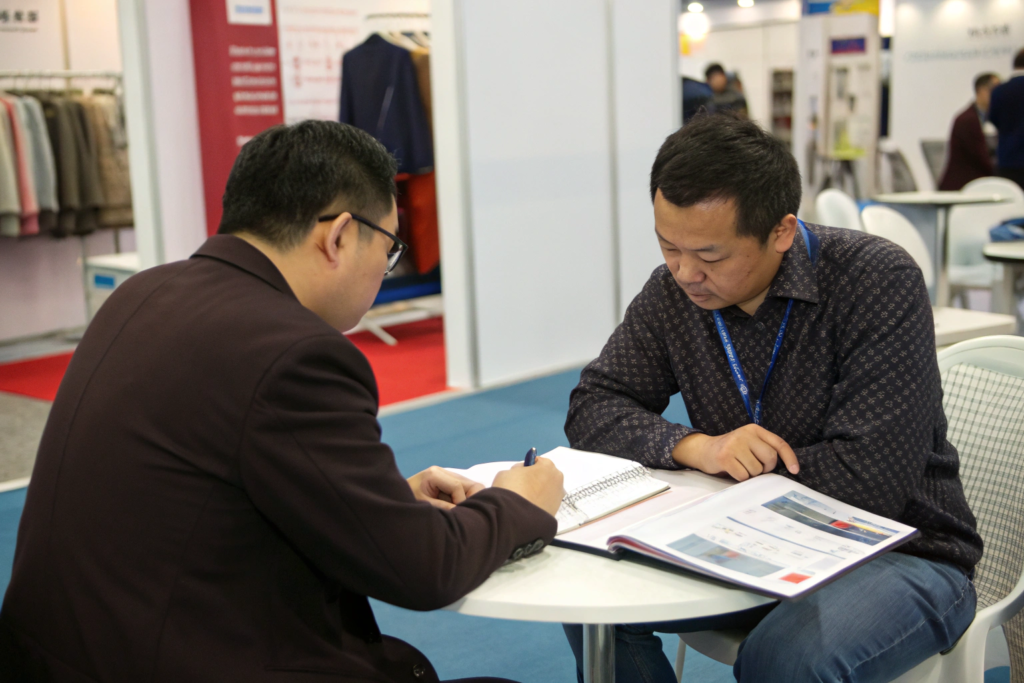
You have the factory representative in front of you. They cannot hide behind a delayed email response. This is your chance to ask the hard questions and watch their reaction. The way they answer is just as important as the answer itself. Do they get defensive? Do they dodge the question? Or do they pull out a file and show you the data?
Face-to-face, a buyer should ask a factory representative specific, open-ended questions that reveal their operational capacity and problem-solving approach. Key questions include: "Can you walk me through your process for handling a quality defect found during inline production?" and "What is your current capacity utilization on your five production lines?" and "How do you handle a situation where the bulk fabric shade does not match the approved lab dip?" The answers to these questions reveal whether the factory is a proactive partner or a reactive vendor.
How Can I Verify a Factory's Claim of "Specialization"?
Every factory says they are "specialists" in everything. "Yes, we do wovens. Yes, we do knits. Yes, we do outerwear." The booth will have samples of everything. But what do they actually do well, day in and day out, on their own five production lines?
Do not ask: "Do you make dresses?" (The answer is always yes.)
Ask: "What are the three most recent production orders that left your factory floor? Can you tell me the brand category, the fabric type, and the quantity?"
If the factory is a true specialist, the answer will be specific and narrow. At Shanghai Fumao, I would answer: "Last week we shipped 800 units of a tailored linen-blend trouser to a women's contemporary brand in New York. The week before, we finished 1,200 units of a technical woven hiking shirt for an outdoor brand in Colorado. And before that, 500 units of a silk-blend blouse."
If the answer is vague like, "Oh, we ship many items, shirts, pants, jackets, many things," they are likely a trading company showing you a catalog of items they broker but do not make. That is a red flag for quality control.
Here is a quick mental checklist for the booth visit:
- Look at the floor. Are there just finished garments? Or are there half-finished garments (toiles, muslins, pattern pieces)? A factory that brings their work-in-progress to the show is a factory that is proud of their process.
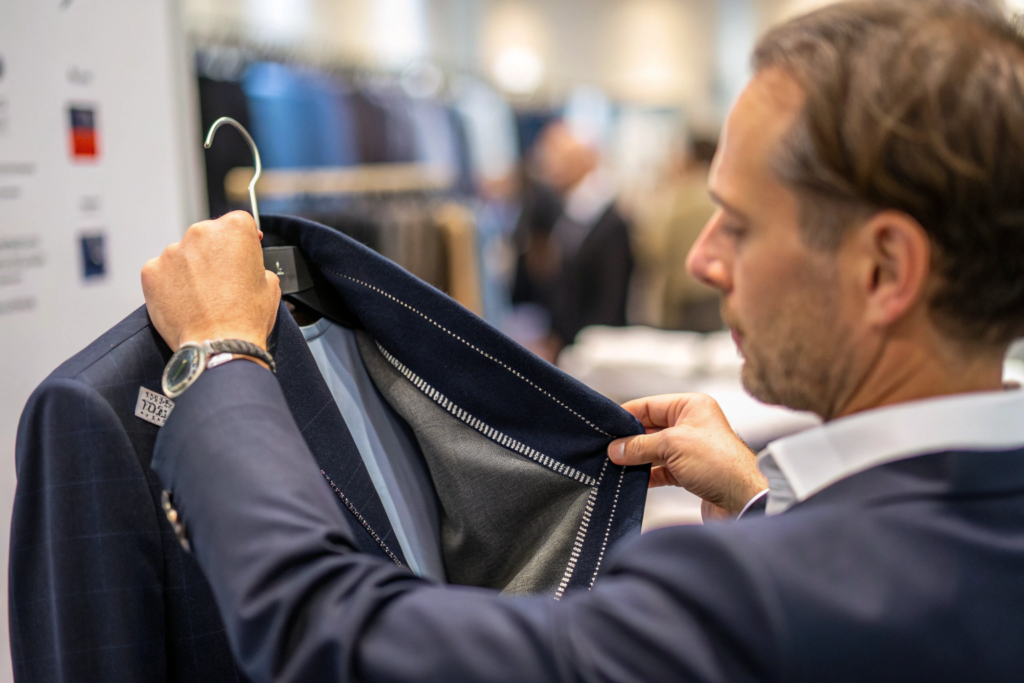
- Look at the seams. Turn the garment inside out. Is the stitching straight? Are the seams finished with overlock or French seam? A good factory shows off the inside. A bad factory hides it.
What Is the One Question That Reveals a Factory's Financial Health?
This is an advanced tactic. You cannot ask, "Are you financially stable?" They will say yes. You need to ask a question where the answer reveals their cash flow position.
Ask this: "If we place a DDP order for spring delivery, do you purchase the fabric before or after we pay the deposit?"
- Weak Factory Answer: "We need 50% deposit first, then we buy fabric." This means the factory has no working capital. They are using your deposit to finance the raw materials. If you cancel the order, you may never get that deposit back because it is already spent on fabric that cannot be reused.
- Strong Factory Answer: "We reserve greige goods and standard linings from our stock service, or we have credit terms with our mills. We use your deposit for labor and trim customization, but the base fabric is already in our warehouse or on order under our own account."
At Shanghai Fumao, we operate with a strong balance sheet. We carry inventory of our most popular base fabrics. When a client places an order for 300 units of a style using our Stock Cotton Jersey, we do not wait for the wire transfer to clear before we walk to the fabric shelf. The fabric is already there. This shaves 10-14 days off the production lead time and signals to the buyer that we are a stable, long-term partner, not a factory living hand-to-mouth.
This question is a subtle but powerful way to gauge whether you are dealing with a factory that will be there for you next season, or one that might close its doors before your second order ships.
Conclusion
The question was why professional buyers visit trade shows to find apparel manufacturers. The answer is not nostalgia or tradition. The answer is risk reduction and information density. A trade show condenses weeks of digital vetting into hours of physical, tactile, and interpersonal evaluation.
We explored the unique intelligence gathered at a show that cannot be captured in a PDF or a Zoom call. The hand feel of a washed linen. The unguarded moment of a sales rep's confusion. The weight of a sweater in your hands. These are the data points that predict a successful partnership. We mapped the landscape of global shows, from the U.S.-centric convenience of MAGIC Las Vegas to the deep textile innovation found at Intertextile Shanghai. We discussed the preparation required to turn 48 hours of walking into a year of smooth production. And we armed you with the specific, probing questions that separate the true manufacturers from the trading company middlemen.
I have stood in my booth at Shanghai Fumao for hundreds of hours over the years. I have shaken thousands of hands. The buyers who get the most value from these shows are the ones who come prepared, who trust their senses, and who use the face-to-face time to build a relationship that transcends the transactional nature of email.
If you are planning to attend an upcoming show in Shanghai, Las Vegas, or New York, I invite you to stop by our booth. Bring your sourcing kit. Bring your tough questions. Bring a fabric swatch you are trying to match. Let us have a real conversation about how we can make your next collection the best one yet.
If you want to know which shows Shanghai Fumao will be exhibiting at this season, or if you want to schedule a private appointment outside of the show floor, please reach out to our Business Director, Elaine. She can send you our show calendar and arrange a meeting time that works for your schedule. Contact Elaine at: elaine@fumaoclothing.com. Let us meet in person and put the fabric in your hands.