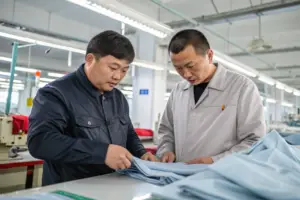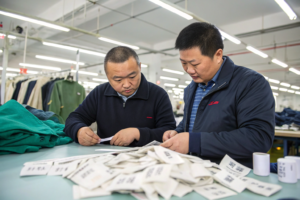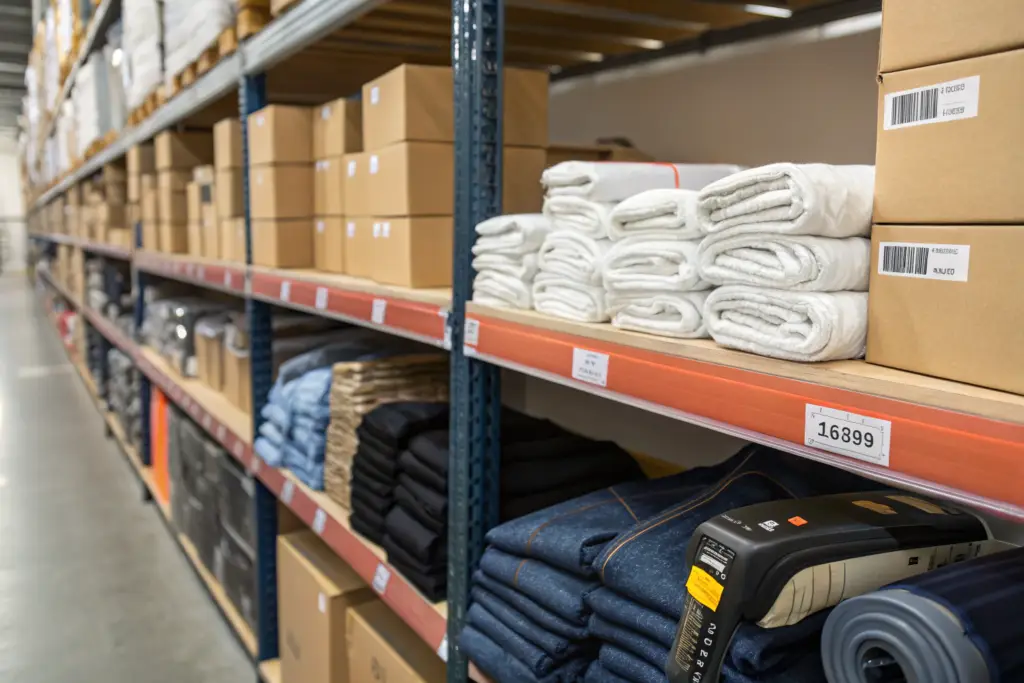
I learned a hard lesson about peripherals ten years ago. A distributor from Texas placed a $40,000 order for blank t-shirts. We shipped them on time. Quality was perfect. Then, three weeks later, I got a frantic call. His client was furious. The order was useless. Why? Because the distributor had forgotten to source the matching drawstrings for the hoodies and the branded hangtags. The shirts sat in a warehouse for six weeks while he scrambled. He lost the reorder. He almost lost the client. The main garment was flawless, but the missing "little things" nearly destroyed the deal.
The most profitable garment peripherals for American distributors are custom-branded hangtags, premium zipper pulls, and sustainable packaging solutions. These items have low manufacturing costs but carry extremely high perceived value, allowing distributors to mark them up 300% to 500% while solving critical client pain points related to brand identity and retail presentation.
Most distributors focus all their energy on negotiating the price per piece for the main garment. They haggle over ten cents on a t-shirt. That's fine. That's necessary. But they completely overlook the goldmine hiding in the accessories. The profit margin on a well-made hangtag or a custom zipper is often higher than the margin on the actual shirt. At Shanghai Fumao, we've seen how smart distributors bundle these peripherals to increase their average order value and lock in client loyalty. Here is where the real money is hiding in plain sight.
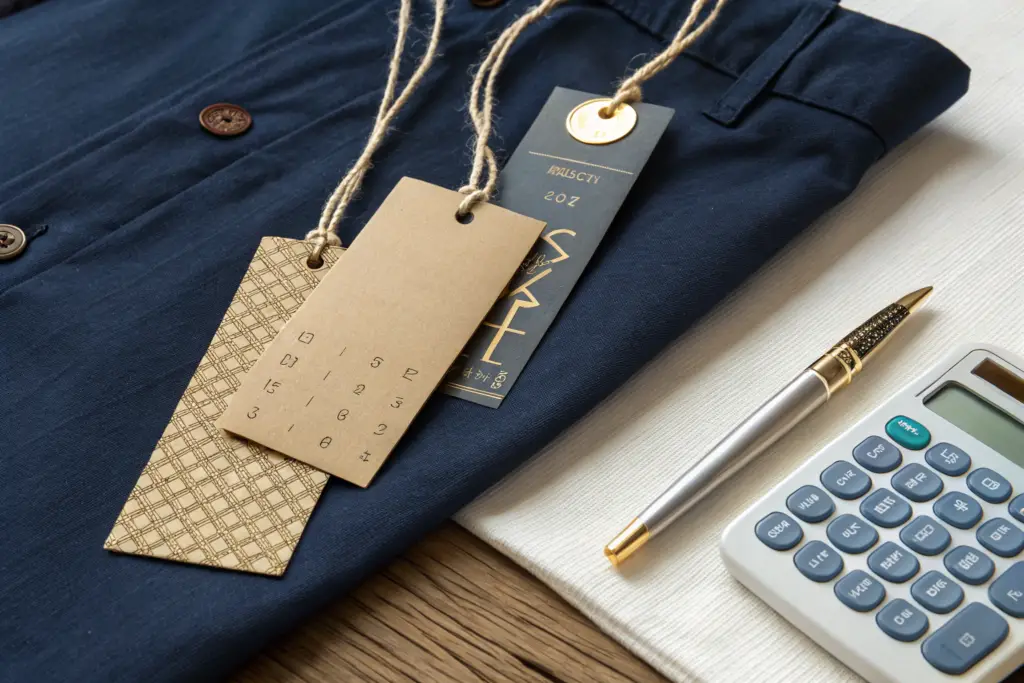
Think about the last time you bought a piece of clothing from a brand you love. What did you do with the hangtag? If it was a flimsy piece of glossy paper attached with a plastic barb, you probably ripped it off and threw it in the trash without looking at it. But if it was a thick, textured card with a nice weight and a piece of natural twine... you might have paused. You might have read it. You might have even kept it. That pause is worth money.
Custom hangtags represent one of the highest margin peripherals because the cost to produce a premium tag is often under $0.30, yet it allows a brand to justify a $5 to $10 increase in the final retail price of the garment.
The math is compelling. A basic printed hangtag from a cheap supplier costs about $0.08. It looks like it costs $0.08. A premium tag with soft-touch lamination, embossed foil, and a die-cut shape costs about $0.25 to $0.40 in bulk from a specialized manufacturer. But that tag transforms the garment. It signals to the consumer, "This item is special." It reduces the perception of risk when they are standing in the store deciding whether to pay $68 or $48. The $0.32 investment in the tag pays for itself many times over.
What Specific Hangtag Features Command the Highest Retail Perceived Value?
Not all hangtags are created equal. Some features look expensive but are surprisingly affordable to produce at scale. Other features are genuinely expensive and should be reserved for true luxury lines. Knowing the difference is how you maximize profit.
Here is a breakdown of features ranked by their Perceived Value Multiplier versus their Actual Production Cost:
| Hangtag Feature | Perceived Value | Actual Cost Impact (per 1k units) | Distributor Markup Opportunity |
|---|---|---|---|
| Soft-Touch Lamination | High (Feels like velvet) | Low (+$15) | Very High |
| Foil Stamping (Gold/Silver) | Very High (Looks like jewelry) | Low (+$20) | Very High |
| Die-Cut Custom Shape | Medium (Unique silhouette) | Medium (+$40 for new die) | High |
| Letterpress/Debossing | High (Artisanal feel) | Medium (+$50) | High |
| Acrylic or Wood Material | Extreme (Keepsake item) | High (+$150+) | Moderate |
I worked with a distributor last fall who specialized in supplying boutique fitness studios. We helped him source soft-touch laminated hangtags with rose gold foil. His cost was $0.28 per tag. He bundled 500 tags with a 500-piece hoodie order and charged the studio an extra $1.50 per garment for the "Premium Branding Package." That's a 435% markup on the tags alone. The studio owner was thrilled because the tags made her merch look like Lululemon. The distributor made an extra $610 profit on a single transaction just from a piece of paper.
How Can Distributors Avoid Common Hangtag Production Errors?
The most common mistake is ordering tags with the wrong attachment method. This sounds trivial. It is not. If you supply a tag with a plastic swiftach barb to a high-end eco-friendly brand, they will reject the entire shipment. They want natural cotton twine or a safety pin.
Another major pitfall is string length. If the string is too short, the tag flips up and covers the neckline of the shirt on the hanger. The retail staff hates this. They will cut the tag off and throw it away before the customer even sees it. The optimal string length for a standard fold-over tag is 4 to 5 inches.
Finally, check the bleed and cut registration. This is where Shanghai Fumao adds value as a partner. We inspect hangtag shipments before they are attached to garments. We check for fuzzy die-cuts and off-center foil stamping. A crooked gold logo on a tag makes the entire brand look cheap. As a distributor, if you receive a batch of misprinted tags from a random online printer, you eat the cost of the reprint. Having a manufacturing partner handle the sourcing and inspection eliminates that liability.
Why Do Premium Zippers and Pulls Create Significant Upsell Revenue
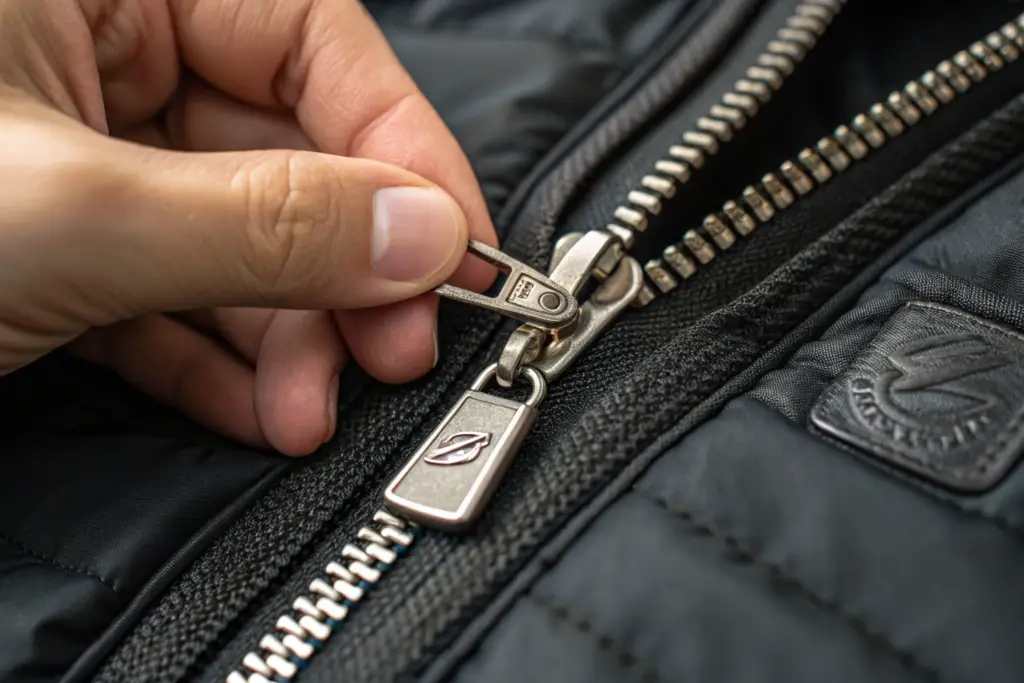
The zipper is the most touched part of any jacket, hoodie, or pair of pants. It is the interface between the human and the garment. A cheap zipper catches. It snags the fabric. It makes a grinding noise. It breaks after six months. Every time the customer struggles with that zipper, they curse your client's brand name under their breath. A premium zipper glides. It clicks satisfyingly into place. It feels solid and mechanical. It makes the user feel secure.
Premium zippers and custom pulls are an easy upsell for distributors because the upgrade cost is minimal relative to the garment price, but the tangible quality difference is immediately obvious to the end consumer.
Let's look at the numbers. A standard #5 nylon coil zipper for a hoodie might cost the factory $0.60. An upgrade to a YKK #5 Antique Brass Metal Zipper with a custom branded leather puller might cost $2.20. That's a $1.60 difference in cost. But that upgrade allows the brand to move the hoodie from the "Basic" category to the "Premium" category. The retail price jumps from $68 to $98. The brand is happy to pay that extra $1.60. The distributor who suggests this upgrade looks like a hero consultant, not just an order taker.
Which Zipper Brands Offer the Best Balance of Cost and Prestige?
The zipper market is dominated by one name: YKK. They hold roughly 40% of the global market. They are the gold standard for reliability. If a brand wants to advertise "YKK Zippers" on their website, they have to pay for it. YKK is more expensive, often 20-30% more than generic alternatives.
However, there are other excellent options that offer near-identical quality at a better price point for private label distributors:
| Zipper Manufacturer | Price Tier | Perception in US Market | Best Use Case |
|---|---|---|---|
| YKK | Premium | "The Best." Recognized by name. | Outerwear, Denim, Bags. Anywhere failure is catastrophic. |
| SBS | Mid-Range | "Good Quality Import." Known in industry. | Mid-tier fashion, private label activewear. Great value. |
| IDEAL | Mid-Range | "American Classic." Nostalgic appeal. | Workwear, heritage brands, made-in-USA claims. |
| Generic (No-Name) | Low | "Risky." | Promotional items, very low-cost basics. Avoid for premium. |
I recall a distributor from Los Angeles who specialized in supplying blank hoodies to streetwear start-ups. He started offering a "Zipper Upgrade Package." For an extra $1.20 per unit, the hoodies would feature heavy-gauge SBS metal zippers with custom branded metal pulls shaped like the client's logo. His profit margin on the zipper upgrade alone was 40%. More importantly, his clients reported a 60% reduction in returns due to "broken zipper." The upgrade paid for itself in saved shipping costs and retained customers.
What Are the Logistics of Sourcing Custom Zipper Pulls?
The zipper tape (the fabric part with the teeth) is usually standard stock. The magic is in the puller—the little tab you hold onto. This is where the branding happens.
Custom pullers can be made from:
- Zinc Alloy (Metal): Die-cast into any shape. Great for 3D logos. Minimum order quantity is high (usually 5,000 pieces per design).
- Silicone/Rubber: Molded with debossed logos. Soft touch. Lower MOQ (around 1,000 pieces).
- Leather/Vegan Leather: A strip folded over the slider and riveted. Very low MOQ. High perceived value.
For distributors, the Leather Puller is the sweet spot. We can source these in small batches at Shanghai Fumao because the metal slider is standard and the leather tab is just a small cut piece of material. It requires no expensive mold. It adds a distinct "artisanal" touch that photographs beautifully on social media. It's a detail that customers notice and appreciate.
How Does Sustainable Packaging Differentiate a Distributor's Offering
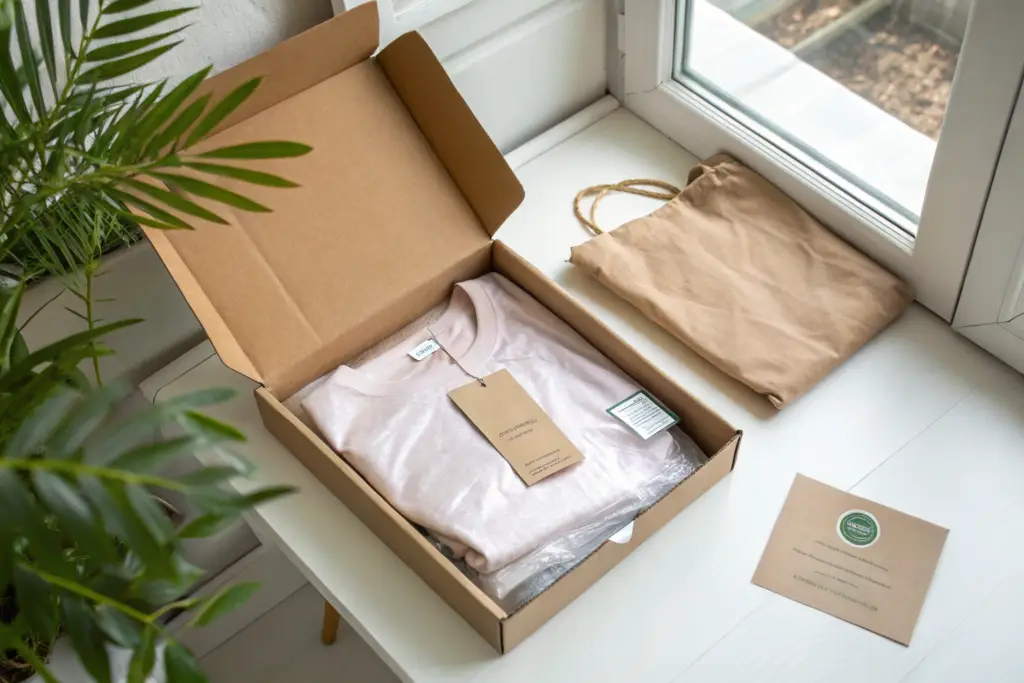
The unboxing experience is the new storefront. For many direct-to-consumer brands, the moment the customer opens the poly mailer is the only physical interaction they have with the brand before they try on the clothes. If that experience feels cheap or, worse, environmentally irresponsible, the brand has already lost points before the customer sees the stitching.
Sustainable packaging is a high-profit peripheral because it solves a growing consumer demand for eco-responsibility while allowing distributors to charge a premium for "Green Fulfillment Services."
American consumers, particularly Millennials and Gen Z, actively punish brands that use excessive plastic packaging. A 2023 survey by a major packaging association found that 74% of consumers would pay more for products in sustainable packaging. This is not a fringe trend. This is the new baseline.
The cost differential has also shrunk dramatically. Five years ago, a compostable poly mailer was 300% more expensive than a standard plastic mailer. Today, due to scale and new materials, the premium is closer to 40-60%. That gap is easily covered by the increased perceived value.
What Packaging Materials Offer the Best Margins for Distributors?
Some "green" materials sound good but are logistical nightmares (e.g., uncoated paper mailers that rip open in the rain). Others are easy wins.
| Packaging Item | Traditional Cost | Sustainable Alternative Cost | Distributor Upsell Price | Margin Potential |
|---|---|---|---|---|
| Poly Mailer | $0.08 (Plastic) | $0.14 (100% Recycled/Compostable) | $0.45 - $0.65 | High |
| Tissue Paper | $0.05 (Bleached) | $0.07 (Recycled, Acid-Free) | $0.25 - $0.35 | Very High |
| Garment Bag | $0.04 (Polyethylene) | $0.10 (PLA/Compostable Bio-plastic) | $0.30 - $0.40 | High |
| Hangtag String | $0.01 (Plastic Loop) | $0.02 (Cotton Twine) | $0.10 - $0.15 | Extreme |
Notice the pattern. The incremental cost to you is pennies. The incremental value to the brand is a marketing story. "We ship our garments in 100% home-compostable mailers and recycled tissue." That's a line they can put on their website that justifies a higher price point and builds customer loyalty.
How Do You Verify Legitimate Eco-Claims to Avoid Greenwashing?
This is the trap. If you claim a bag is "biodegradable" but it only breaks down in a commercial composting facility (which most consumers don't have access to), you are misleading the customer. In the US, the FTC Green Guides regulate environmental marketing claims. Making a false claim can get your client fined.
As a distributor, you must know the vocabulary:
- Compostable: Must meet ASTM D6400 standards. Will break down in a specific timeframe in a compost environment. Look for the BPI Compostable logo.
- Biodegradable: This term is almost meaningless without specifics. Most things biodegrade eventually. Avoid using this term unless you have specific test data on the timeframe.
- Recycled Content: Look for GRS (Global Recycled Standard) certification. This verifies the percentage of pre- or post-consumer waste in the material.
I always tell my clients at Shanghai Fumao to ask for the certificate of analysis for any "green" material. If the supplier cannot provide a third-party lab test confirming the ASTM standard, it's just a brown-colored plastic bag with a nice story. The last thing a growing American brand needs is a class-action lawsuit over a poly mailer.
What Sourcing Strategy Maximizes Peripheral Profit Margins
You know the products now. Hangtags. Zippers. Packaging. But knowing what to buy is only half the battle. Knowing how to buy it is where the real profit lies. Many distributors make the mistake of sourcing peripherals in isolation. They find a cheap printer on Alibaba for tags. They find a zipper trader on eBay. They find a bag supplier on Amazon. The result is a logistical nightmare of split shipments, inconsistent quality, and wasted time coordinating three different vendors.
The most profitable sourcing strategy for garment peripherals is consolidation through a single full-package manufacturing partner rather than piecemeal purchasing from multiple specialized vendors.
This approach creates three layers of profit protection:
- Volume Pricing: A factory like Shanghai Fumao buys hangtag string by the mile, not the foot. We buy zipper chain by the kilometer. We pass those bulk raw material savings on to you.
- Reduced Freight: Instead of paying for three separate FedEx shipments from three different Chinese suppliers, you pay for one consolidated shipment. Or better yet, the peripherals are packed inside the cartons with your finished garments. The freight cost for the peripherals becomes effectively zero.
- Quality Control Leverage: We have a team that inspects the peripherals before they go onto the garment. If a hangtag print is off-center, we catch it. We deal with the printer's claims department in Chinese. You get a finished, ready-to-sell product. You don't spend your Tuesday morning arguing with a vendor about a $50 credit.

Why Is Bundling Peripherals with Garment Production More Efficient?
Imagine the alternative scenario. You have 5,000 t-shirts arriving at your warehouse in New Jersey. Separately, you have 5,000 hangtags arriving from a printer in Florida. You now have to pay your warehouse staff to manually attach 5,000 hangtags. At a rate of 200 tags per hour, that's 25 hours of labor at $18/hour. That's $450 in labor costs that just evaporated from your margin.
When the peripherals are sourced and attached at the factory of origin, the labor cost for attachment is a fraction of US labor costs. The garment arrives at your warehouse completely floor-ready. You can cross-dock it straight to the retailer or the end consumer.
How Do You Communicate Peripheral Specifications Without Errors?
This is where most communication breaks down. A distributor emails: "I want a nice tag and a good zipper." That is not a specification. That is a wish.
To protect your margins, you need to provide exact details or trust a partner who knows what "premium" means. Here is a checklist of what you must specify for each peripheral category to avoid costly rework:
- Hangtag Checklist: Dimensions (e.g., 2" x 3"), Material (e.g., 18pt Kraft with Soft Touch), Print Method (e.g., 2/1 PMS Colors + Gold Foil), Attachment (e.g., 5" Natural Cotton Twine).
- Zipper Checklist: Chain Type (e.g., #5 Nylon Coil or Metal), Length (e.g., 26"), Tape Color (e.g., Match Body Fabric), Slider Type (e.g., Auto-lock), Puller Type (e.g., 1.5" Vegan Leather Tab with Deboss).
- Packaging Checklist: Inner Wrap (e.g., 17"x22" Recycled Tissue), Outer Bag (e.g., 14"x19" Compostable PLA Mailer with BPI Logo).
If this level of detail seems overwhelming, that's exactly why working with an experienced manufacturing partner is the smarter financial decision. We handle the translation of "I want it to look expensive" into technical specifications that factories can execute perfectly.
Conclusion
The path to higher profitability in garment distribution is not always found in squeezing another nickel out of the t-shirt cost. It's found in the overlooked details—the peripherals that surround the garment and define the brand experience. We've explored how custom hangtags can deliver 400% markups while justifying higher retail prices. We've examined how premium zippers prevent returns and create upsell opportunities that customers actually appreciate. We've detailed how sustainable packaging aligns with modern consumer values and commands a premium in the marketplace. And we've laid out a sourcing strategy that consolidates these items to eliminate hidden costs like split freight and domestic labor.
These peripherals are not just accessories. They are profit centers hiding in plain sight. They are the tools that transform a generic blank garment into a branded, memorable product that commands loyalty and repeat business. For the American distributor, mastering the peripheral game is the difference between being a low-margin commodity broker and a high-value supply chain partner.
You shouldn't have to juggle five different vendors and worry about whether the hangtag string matches the zipper pull color. Let us handle the complexity of sourcing and coordinating these details. We can provide a single, cohesive package that includes your garments fully finished with all the premium touches your clients demand.
To discuss how we can bundle profitable peripherals with your next production run, please contact our Business Director, Elaine. She can provide samples and pricing for our full range of accessory options.
Contact Elaine at: elaine@fumaoclothing.com