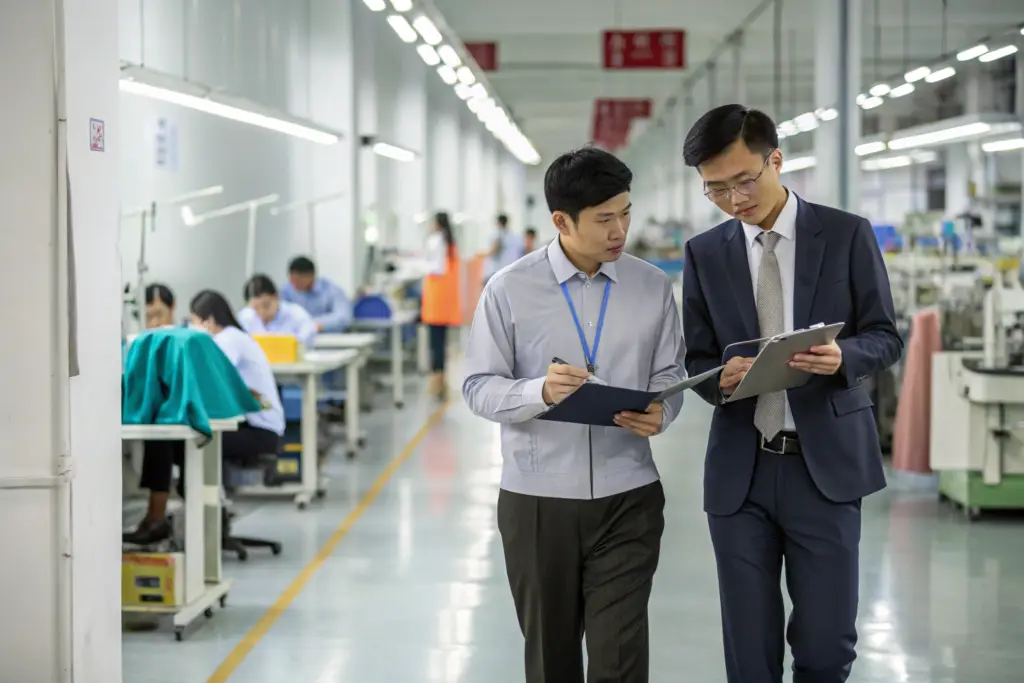
I have been running Shanghai Fumao for over a decade. In that time, I have been audited by dozens of third-party inspection companies. I have seen audits from the factory side. I have also helped my clients understand what these audits mean and how to use them effectively.
For a brand owner or distributor, auditing an overseas factory is one of the most important steps in building a reliable supply chain. But many new buyers do not know where to start. They hear terms like "SOC audit" or "QCA" and feel overwhelmed. They wonder which audit they need. They worry about the cost. They ask me, "How do I know if the audit report is honest?"
In this article, I will walk you through the process of auditing an overseas garment factory using third-party services. I will explain the different types of audits. I will share what to look for in an audit report. I will tell you how to verify that the audit is genuine. And I will give you practical tips from my own experience on both sides of the audit process.
What Types of Audits Should You Request for a Garment Factory?
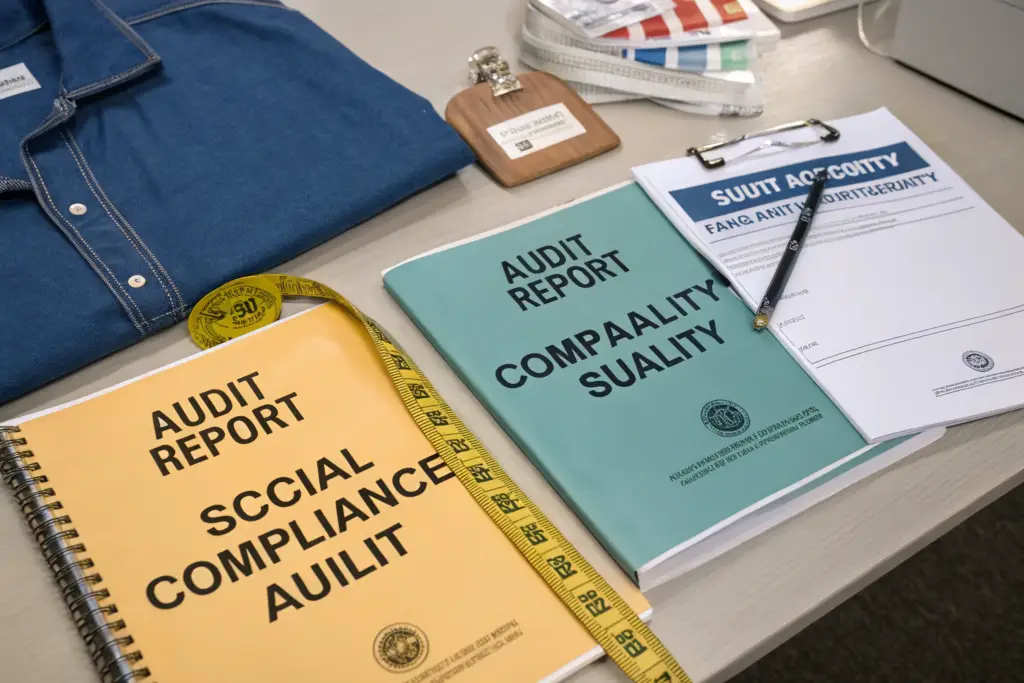
Not all audits are the same. Different audits focus on different aspects of a factory's operations. Requesting the right type of audit for your needs is important. A social compliance audit will not tell you if the factory makes good garments. A quality audit will not tell you if the factory treats its workers fairly.
Quality Audit
A quality audit evaluates the factory's production capabilities and quality control systems. It answers questions like:
- Does the factory have the right equipment for your product?
- Are there documented quality control procedures?
- Is the factory organized and clean?
- What is the factory's defect rate?
A quality audit is essential if you are sourcing a new product category or working with a new factory for the first time. It tells you if the factory can actually produce what you need.
Social Compliance Audit
A social compliance audit evaluates the factory's labor practices and working conditions. It answers questions like:
- Are workers paid fairly and on time?
- Is there any child labor or forced labor?
- Are working hours within legal limits?
- Is the workplace safe?
- Do workers have freedom of association?
For brands selling to major retailers or department stores, a social compliance audit is often required. Many retailers will not accept goods from a factory without a valid social compliance audit.
Security Audit
A security audit evaluates the factory's supply chain security. It is often required for brands shipping to the US under the Customs-Trade Partnership Against Terrorism (C-TPAT) program. It answers questions like:
- Is the facility secured with fences and cameras?
- Are employees screened before hiring?
- Is access to the facility controlled?
- Is there a system to detect and prevent unauthorized access to containers?
Environmental Audit
An environmental audit evaluates the factory's environmental practices. It answers questions like:
- Is wastewater treated before discharge?
- Are chemicals stored properly?
- Is there a system for managing solid waste?
- Does the factory track energy and water usage?
For brands with strong sustainability commitments, an environmental audit is becoming more common.
What Is the Difference Between a First-Party, Second-Party, and Third-Party Audit?
Understanding the different types of audits helps you choose the right approach for your needs.
First-Party Audit
A first-party audit is conducted by the factory itself. The factory reviews its own systems against a set of standards. This is an internal audit. It is useful for the factory's own improvement. But it is not independent. For a buyer, a first-party audit report has limited value because the factory is judging itself.
Second-Party Audit
A second-party audit is conducted by the buyer or a representative of the buyer. This could be a visit by your own quality manager or a consultant you hire. The auditor works for you. The advantage is that the audit can be customized to your specific requirements. The disadvantage is that it is not independent in the way a third-party audit is.
Third-Party Audit
A third-party audit is conducted by an independent inspection company. The company is not connected to you or the factory. They have no financial interest in the outcome. Their job is to provide an objective assessment. This is the most credible type of audit. Major retailers and brands almost always require third-party audits.
I remember a conversation with a brand owner in Chicago. She had been visiting her factory in Vietnam twice a year. She felt confident in their operations. But a potential retail partner asked for a third-party social compliance audit. The factory refused. The retail partner walked away. The brand owner lost a major opportunity because she had not established third-party audit requirements with her factory.
Which Third-Party Audit Companies Are Most Trusted in the Apparel Industry?
There are several well-established third-party audit companies in the apparel industry. They have experience with garment factories. They understand the specific risks in our industry.
SGS
SGS is one of the largest inspection companies in the world. They offer quality audits, social compliance audits, and technical inspections. Their auditors are trained and experienced. Many large retailers accept SGS audit reports.
Bureau Veritas
Bureau Veritas is another major player. They offer similar services to SGS. They have a strong presence in Asia. Their audits are widely accepted by brands and retailers.
Intertek
Intertek is a trusted name in product testing and auditing. They have deep expertise in the apparel industry. Their quality audits are particularly thorough.
TÜV Rheinland
TÜV Rheinland is a German inspection company. They are known for rigorous standards. Their audits are respected in the European and North American markets.
UL (Underwriters Laboratories)
UL is known for safety testing. They also offer supply chain audits. Their social compliance programs are well-regarded.
When we work with new clients, we often provide audit reports from these companies. Our clients appreciate that we have established relationships with trusted third-party auditors. It saves them the time and cost of arranging the audit themselves.
How Do You Choose the Right Third-Party Audit Service?
Choosing the right audit service requires understanding your specific needs. A quality audit for a new factory is different from a social compliance audit required by a retailer. The audit company you choose should have experience in the apparel industry.
Define Your Audit Objectives
Before you contact an audit company, define what you want to learn. Ask yourself:
- Is this factory capable of producing my product to the required quality level?
- Do I need to verify the factory's social compliance for a retailer?
- Am I concerned about supply chain security for US Customs?
- Do I need to verify environmental claims for sustainability marketing?
Your objectives determine which type of audit you need.
Match the Audit Company to Your Needs
Different audit companies have different strengths. Some are better at technical quality audits. Some are stronger in social compliance. Ask about the auditors' experience with garment factories. An auditor who usually inspects electronics factories may not understand the specific risks in apparel production.
Consider the Factory's Location
Choose an audit company with local presence in the factory's country. A local office means they have auditors who speak the local language and understand local labor laws. This makes the audit more accurate.
Understand the Cost Structure
Audit costs vary. A basic quality audit might cost $800 to $1,500. A comprehensive social compliance audit with unannounced timing might cost $2,000 to $3,500. The cost typically includes:
- Auditor travel and accommodation
- Auditor time on site (usually 1 to 3 days)
- Report preparation
- Follow-up if needed
I had a client in Texas who wanted to audit a potential new factory. She found an audit company that quoted $500. The price seemed good. But the audit was a desktop review. No one visited the factory. The report was based on documents the factory sent. This was not a real audit. She learned that a proper on-site audit costs more. But the information she got from the on-site audit was worth the investment.
What Should You Look for in an Audit Report?
An audit report is only valuable if you can understand it. A good audit report is clear, detailed, and actionable. It should help you make a decision about working with the factory.
Executive Summary
The report should start with a summary. This tells you the overall result. Did the factory pass? Are there major issues? Is the factory recommended or not?
Detailed Findings
The report should list specific findings. Each finding should describe the issue, its severity, and evidence. For example: "Observation: Emergency exits were blocked by fabric rolls on the second floor. Evidence: Photograph attached. Severity: High."
Severity Ratings
Findings should be rated by severity. Common ratings are:
- Critical: Immediate risk to workers or product. Must be fixed before production.
- Major: Significant issue that could affect quality or compliance.
- Minor: Issue that should be addressed but not urgent.
- Observation: Suggestion for improvement.
Photographs and Evidence
A good audit report includes photographs. Visual evidence helps you understand the issues. A photo of blocked emergency exits is more convincing than a text description.
Corrective Action Plan
The report should include a corrective action plan. This lists the steps the factory needs to take to fix the issues. It also specifies the deadline for each correction.
Auditor Credentials
The report should identify the auditor. It should state the auditor's qualifications and experience. This adds credibility to the findings.
How Can You Verify That an Audit Report Is Genuine?
I have seen cases where factories falsify audit reports. They take an old report and change the date. They use a report from a different factory. They even create fake reports with logos that look legitimate. Verifying the authenticity of an audit report is important.
Contact the Audit Company Directly
The most reliable verification is to contact the audit company. Ask them to confirm that they conducted the audit for the factory on the date stated. Most audit companies will confirm this. Some will provide a copy of the report directly to you.
Check the Report Number
Legitimate audit reports have a unique report number. You can ask the audit company to verify that report number. If the factory provides a report but the audit company has no record of the number, the report is likely fake.
Look for Consistency
Check that the report details are consistent. Does the factory name match the address? Does the report date match the timeline? Does the auditor's name appear in other reports from the same company?
Request the Corrective Action Documentation
If the audit report shows issues that were corrected, ask for documentation of the corrections. A factory that has a legitimate audit should have records of how they fixed the issues.
I had a client in Florida who received an audit report from a factory. The report looked professional. It had the logo of a major inspection company. But when I looked closely, the report number was a simple sequence that did not match the audit company's format. I contacted the audit company. They confirmed they had never audited that factory. The report was fake. We helped the client find a different factory with legitimate certifications.
What Are the Key Areas a Third-Party Audit Should Cover?
A comprehensive audit covers multiple areas of the factory's operations. Each area tells part of the story. If an audit misses key areas, the report is incomplete.
Production Floor
The auditor should walk the entire production floor. They should observe:
- Cleanliness and organization
- Workflow and material flow
- Machine maintenance and condition
- Worker behavior and safety practices
- Quality control checkpoints
Warehouse and Material Storage
The warehouse area reveals how the factory manages materials. The auditor should check:
- Fabric storage conditions (clean, dry, protected from pests)
- Organization of materials
- Inventory management systems
- Handling of hazardous materials
Worker Records
The auditor should review worker records. This is a key part of social compliance audits. They check:
- Worker ID and age verification
- Employment contracts
- Payroll records
- Working hours and overtime
- Leave records
Worker Interviews
The auditor should interview workers privately. This is the best way to verify labor conditions. Workers may tell the auditor things they would not tell management. The auditor should speak with workers from different departments and different seniority levels.
Safety Systems
The auditor should verify safety systems. They check:
- Fire extinguishers and sprinkler systems
- Emergency exits and evacuation routes
- First aid kits and trained first responders
- Personal protective equipment availability
- Electrical safety
Chemical Management
For factories that dye or print fabric, chemical management is important. The auditor checks:
- Chemical storage areas
- Material Safety Data Sheets (MSDS)
- Chemical handling procedures
- Wastewater treatment systems
Why Is the Worker Interview the Most Important Part of a Social Audit?
I have been through many social compliance audits. The part that always makes factory management nervous is the worker interview. And there is a reason for that. Documents can be prepared. Production floors can be cleaned. But workers tell the truth.
Private Interviews
The auditor should interview workers in private. No factory management present. No supervisors. The workers should feel safe to speak honestly. The auditor might interview workers in a separate room, or outside the factory during a break.
What Workers Reveal
Workers can reveal issues that documents hide. They might say:
- "We work 12 hours a day, not the 8 hours on the schedule."
- "Overtime is mandatory. If we refuse, we lose our bonus."
- "The fire alarm was broken for two months."
- "We are not paid for the first 30 minutes of overtime."
Sample Size
The auditor should interview a representative sample of workers. This includes:
- Workers from different departments
- Workers with different seniority
- Male and female workers
- Migrant workers if present
I have seen audits where the factory prepared perfectly. The documents were in order. The production floor was spotless. But during worker interviews, the truth came out. Workers reported unpaid overtime and unsafe working conditions. The audit failed. The factory had to make significant changes before they could pass a follow-up audit.
How Do You Interpret a Factory's Corrective Action Plan?
After an audit, the factory receives a corrective action plan (CAP). This is a list of issues that must be fixed. How a factory responds to the CAP tells you a lot about their commitment to improvement.
Root Cause Analysis
A good CAP includes root cause analysis. The factory should explain why the issue happened. For example, not just "missing fire extinguisher" but "we did not have a monthly inspection schedule." Root cause analysis shows the factory is thinking about preventing recurrence, not just fixing the symptom.
Realistic Timelines
The CAP should have realistic timelines. Some issues can be fixed immediately. Others take time. A factory that promises to fix everything in one week may be rushing or may not understand the scope of the work.
Follow-Up Verification
The audit company should offer follow-up verification. They come back to check that the CAP was implemented. This is often an additional cost. But it is worth it. A factory that passes a follow-up audit has shown they can sustain improvements.
I worked with a factory in Vietnam that failed a social audit. The CAP was extensive. They had to improve their fire safety system, adjust their overtime recording, and retrain managers on worker rights. They took the CAP seriously. They hired a consultant to help. They made all the changes. Six months later, a follow-up audit passed. That factory became a trusted partner for several of our clients.
How Do You Use Audit Results to Make Sourcing Decisions?
An audit report gives you data. But data alone does not make a decision. You need to interpret the data in the context of your business needs. A factory that fails an audit for one buyer might be acceptable for another buyer. It depends on your risk tolerance and requirements.
Categorize the Findings
Start by categorizing the findings. Separate them into:
- Deal-breakers: Issues that make the factory unacceptable for your business
- Major issues: Issues that need correction before production
- Minor issues: Issues you can accept or work around
- Observations: Suggestions that are nice to have but not required
Assess Risk
Consider the risk of working with this factory. A factory with critical safety issues is a high risk. A factory with minor documentation issues is a low risk. Your decision should reflect your risk tolerance.
Consider Cost vs. Risk
Sometimes a factory with issues is still the right choice for certain types of orders. A factory with minor quality issues might be acceptable for basic products with wide tolerances. The same factory would be unacceptable for high-end garments with tight specifications.
Plan for Improvement
If you decide to work with a factory that has issues, have a plan. Require them to complete the corrective action plan before production. Build in additional quality checks for the first few orders. Visit the factory yourself if possible.

When Should You Walk Away from a Factory Based on Audit Results?
There are times when walking away is the right decision. Continuing with a factory that has serious issues will cost you more in the long run.
Critical Safety Issues
If the audit reveals critical safety issues that endanger workers, walk away. These issues include:
- Blocked emergency exits
- Missing fire suppression systems
- Unsafe electrical wiring
- Structural issues in the building
These issues put workers at risk. They also put your brand at risk if an accident occurs.
Systematic Labor Violations
If the audit reveals systematic labor violations, walk away. These include:
- Child labor or forced labor
- Withholding of wages
- Confinement of workers
- Physical or verbal abuse
These violations are illegal and unethical. They also create significant brand risk.
Falsified Documents
If the audit reveals that the factory falsified documents, walk away. This indicates a culture of dishonesty. If they lie about their workers or their systems, they will likely lie about your production.
No Commitment to Improvement
If the factory shows no commitment to improvement, walk away. A factory that argues with every finding, refuses to make changes, or delays the corrective action plan is not a partner you can trust.
I had a client in New York who was considering a factory in Bangladesh. The audit report showed several major safety issues. The factory promised to fix them. But six months later, during a follow-up, none of the issues were fixed. The client walked away. They told me later it was the right decision. The factory eventually lost all their international clients and closed.
How Do You Balance Cost, Quality, and Compliance in Factory Selection?
Factory selection is always a balancing act. The lowest-cost factory may have quality or compliance issues. The most compliant factory may have higher prices. Your job is to find the balance that works for your business.
Define Your Non-Negotiables
Start by defining what you cannot compromise on. For some brands, social compliance is non-negotiable. For others, quality is the priority. For commodity products, cost might be the main driver. Be clear about your priorities before you start evaluating factories.
Look Beyond the Price
A factory that offers a low price but fails audits is not actually cheap. You will pay for:
- Additional quality inspections
- Potential shipping delays
- Rework and replacement costs
- Brand damage if something goes wrong
Consider Long-Term Partnership
A factory that passes audits and demonstrates commitment to improvement is worth a slightly higher price. They will be more reliable. They will communicate better. They will help you solve problems. A long-term partnership with a good factory is more profitable than a short-term relationship with a problematic factory.
Use Audits as a Starting Point
An audit is a snapshot in time. It tells you about the factory on the day of the visit. A factory can pass an audit and then change. The best way to ensure ongoing compliance is to build a relationship. Visit regularly. Communicate often. Build trust over time.
At Shanghai Fumao, we have been audited many times. We maintain our certifications. We welcome audits from new clients. We believe that transparency builds trust. When a client asks for an audit, we see it as an opportunity to demonstrate our commitment to quality and compliance.
Conclusion
Auditing an overseas garment factory using third-party services is one of the most effective ways to protect your brand and your business. A good audit gives you objective information about a factory's capabilities, labor practices, and safety systems. It helps you make informed sourcing decisions.
But an audit is just one tool. It is a snapshot in time. The real value comes from how you use the information. A factory that passes an audit is a good candidate. But a factory that takes corrective action seriously, that improves over time, that communicates openly about challenges, that is the factory you want as a long-term partner.
At Shanghai Fumao, we have been through audits from SGS, Bureau Veritas, Intertek, and many of our clients. We maintain our certifications. We welcome third-party inspections. We believe that an open, transparent factory is the best partner for any brand.
If you are looking for a factory that is ready for audit, that maintains high standards of quality and compliance, and that values long-term partnerships, we would love to talk with you.
Reach out to our Business Director, Elaine, at elaine@fumaoclothing.com. Let us discuss how we can help you build a reliable, compliant supply chain.