You have been there. You approve a sample. You wait weeks. The bulk order arrives. It is wrong. The color is off. The fit is inconsistent. The seams are crooked. You wonder what happened. The sample was perfect. Why is the bulk different? Or maybe you have been the factory. You received a tech pack. You made a sample. The client approved it. You started production. Then the client rejected the bulk. They said it did not match the sample. You were confused. The sample was approved. What went wrong? I have seen both sides of this problem many times. The issue is not bad luck. It is a sample process that did not go far enough.
Based on our experience producing millions of garments, a proper sample development process prevents bulk production problems by catching issues at five critical stages. The development sample catches design flaws. The fit sample catches sizing issues. The pre-production sample validates production methods. The production sample confirms the first batch. And the reference sample provides a standard for comparison. For example, last year we worked with a brand from Portland. They had a history of bulk production problems with their previous factory. The factory would make a nice sample. Then the bulk would be inconsistent. When they switched to us, we implemented our full sample process. The development sample revealed a construction flaw. The fit sample required two rounds to perfect the sizing. The pre-production sample showed that the production fabric had a different hand feel. We addressed each issue before bulk started. The final bulk was consistent. The brand received exactly what they expected. That is how sample development prevents problems.
So, how does sample development prevent bulk production problems? Let me walk you through each sample stage. I will explain what problems each stage catches. I will share real examples of problems we caught before they reached bulk. And I will give you a framework for a problem-free sample process.
How Does the Development Sample Prevent Design and Construction Problems?
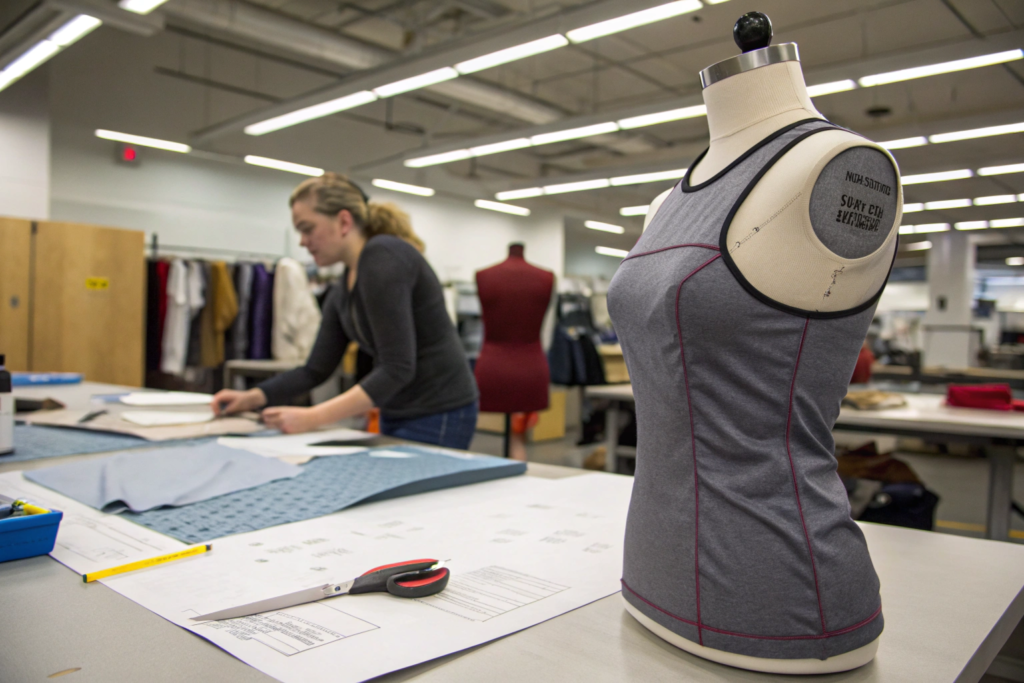
The development sample is the first physical representation of your design. It is made by the most skilled sample maker. It uses sample fabrics. Its purpose is to validate the design concept. I remember a client from Austin. They sent us a tech pack for a women's top with a complex cutout. The design looked great on paper. But the first development sample revealed that the cutout gaped open. The fabric could not hold the shape.
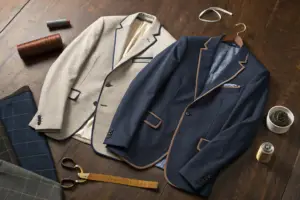
The development sample catches design flaws that are invisible on paper. Fabric may not drape as expected. Seams may not align. Details may not work at scale. For the Austin client, we caught the cutout issue in the first sample. We worked together to reinforce the cutout with a stabilizing tape. The second sample worked perfectly. If we had gone straight to bulk, thousands of tops would have been defective. For complex designs, we often go through multiple development samples. Each round refines the design. Each round catches issues before they become expensive. For a tailored jacket client, the first development sample showed that the lapel was rolling incorrectly. We adjusted the interfacing. The second sample was correct.
What Construction Problems Are Only Visible in a Development Sample?
Many construction problems only appear in physical form. A seam may pucker because the fabric is too heavy for the stitch type. A zipper may ripple because the tape is too stiff. A collar may not lay flat because the interfacing is wrong. For a shirting client, the development sample showed that the buttonholes were too tight for the buttons. We adjusted the buttonhole setting. The bulk production had perfect buttonholes.
How Do You Test Different Construction Methods During Development?
During development, we test multiple construction methods. We try different seam types. We try different stitch lengths. We try different interfacing weights. For a denim client, we tested three different thread types for the topstitching. One thread was too heavy. One thread was too light. One thread was perfect. The sample revealed what the tech pack could not specify.
How Does the Fit Sample Prevent Sizing and Proportion Problems?
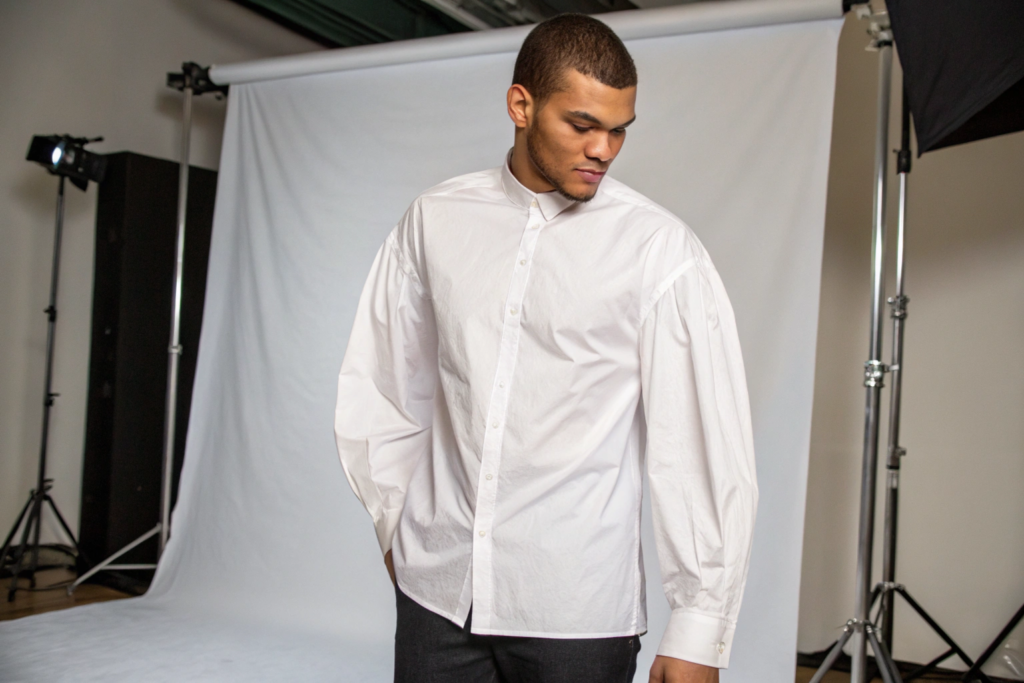
Sizing is one of the most common sources of bulk production problems. A garment can look perfect on paper. But on a real body, it is different. I remember a client from Boston. They sent us measurements for a men's shirt. The first fit sample was made to those measurements. It looked terrible on the fit model. The shoulders were too wide. The sleeves were too long. The client had never tested the measurements on a real body.
The fit sample is made to test the garment on a real body. It uses the same construction methods that will be used in bulk. The fit model represents the target customer. Adjustments are made based on how the garment looks and feels on the body. For the Boston client, we did three fit rounds. The first adjusted the shoulders. The second adjusted the sleeves. The third was perfect. The client's final shirts fit well. For workwear, we test fit with the wearer moving. The garment must allow bending, lifting, and reaching. A static fit sample is not enough.
What Fit Problems Are Only Visible in a Fit Sample?
Many fit problems are invisible on paper. A bust dart may point to the wrong place. A neckline may gape. A sleeve cap may have excess fabric. A waist may sit too high or too low. For a women's dress client, the fit sample showed that the waist seam was hitting above the natural waist. We lowered it by 1 inch. The second sample was perfect.
How Many Fit Rounds Does It Take to Prevent Bulk Fit Problems?
The number of fit rounds varies by complexity. A simple t-shirt may take one fit round. A tailored jacket may take three or four. For a denim client, we did two fit rounds. The first adjusted the rise. The second adjusted the thigh. The bulk fit was consistent. For a tailored blazer, we do four rounds: one for the body, one for the shoulders, one for the sleeves, and one for the collar. Each round prevents a different set of bulk problems.
How Does the Pre-Production Sample Prevent Production Process Problems?
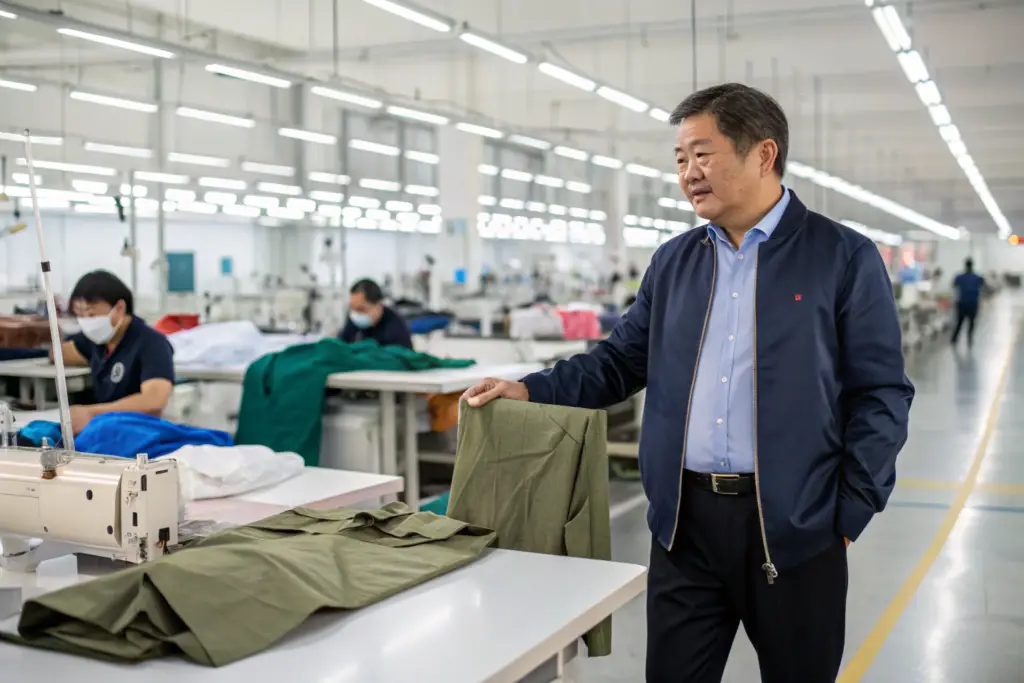
The development sample and fit sample are made by the most skilled sample makers. They use sample machines. They work slowly and carefully. Bulk production is different. It uses production operators. It uses production machines. It runs at speed. I learned this with a client from Seattle. They approved a fit sample. They went straight to bulk. The bulk production had sewing issues. The operators could not replicate the sample maker's work.
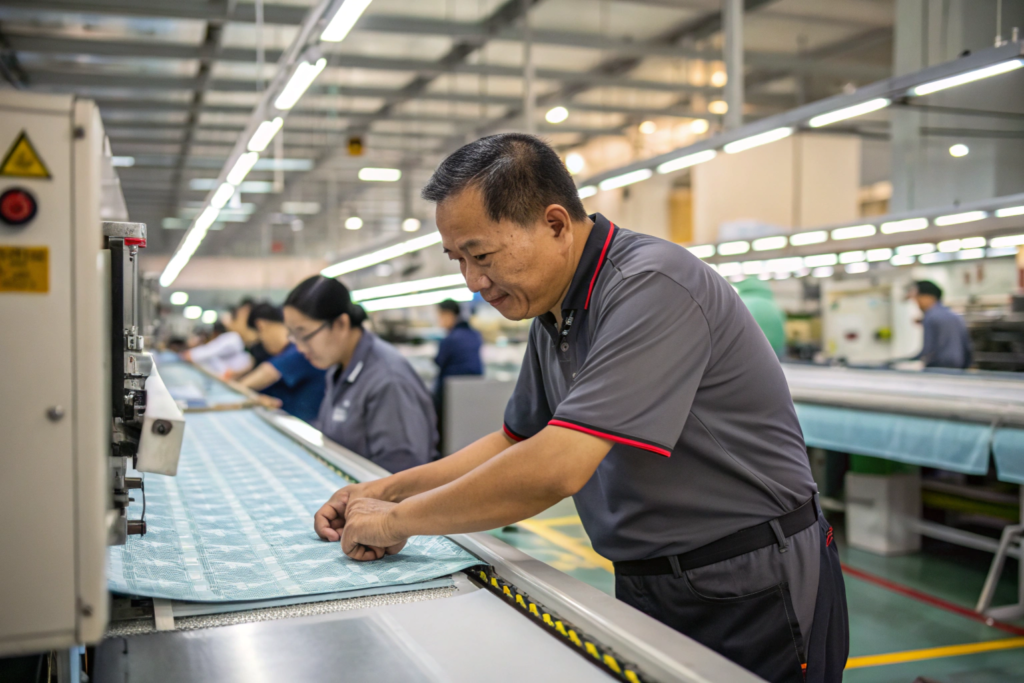
The pre-production sample, or PP sample, is made exactly as the bulk will be made. It uses production fabrics, production trims, production machines, and production operators. It validates that the production process can replicate the sample quality. For the Seattle client, the PP sample revealed that the production operators were struggling with a complex seam. We simplified the seam. The bulk production ran smoothly. For fast fashion, we use the PP sample to set production standards. The operators know exactly how to sew the garment. The quality is consistent.
What Production Problems Are Only Visible in a Pre-Production Sample?
The PP sample catches issues that only appear in production conditions. The fabric may behave differently in bulk. The sewing machines may have different tensions. The operators may have different skill levels. For a sportswear client, the PP sample revealed that the production fabric had more stretch than the sample fabric. We adjusted the pattern to compensate. If we had not caught this, the bulk garments would have been too loose.
How Does the PP Sample Validate Production Methods?
The PP sample is sewn on the production line. It uses the same machines, the same attachments, and the same operators. If there is an issue with the equipment, it shows up now. For a denim client, the PP sample showed that the production machine was not creating the correct topstitching tension. We calibrated the machine. The bulk production had perfect stitching.
How Does the Production Sample and Reference Sample Prevent Inconsistent Bulk Quality?
Even with a good PP sample, bulk production can drift. The first 100 pieces may be perfect. The next 100 may have issues. I remember a client from Denver. They received a good PP sample. They approved it. The first 500 pieces of bulk were good. Then the quality dropped. The factory had changed operators. The new operators were not following the same standards.
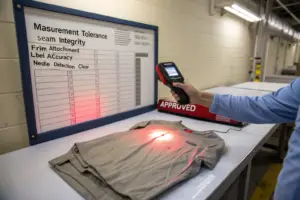
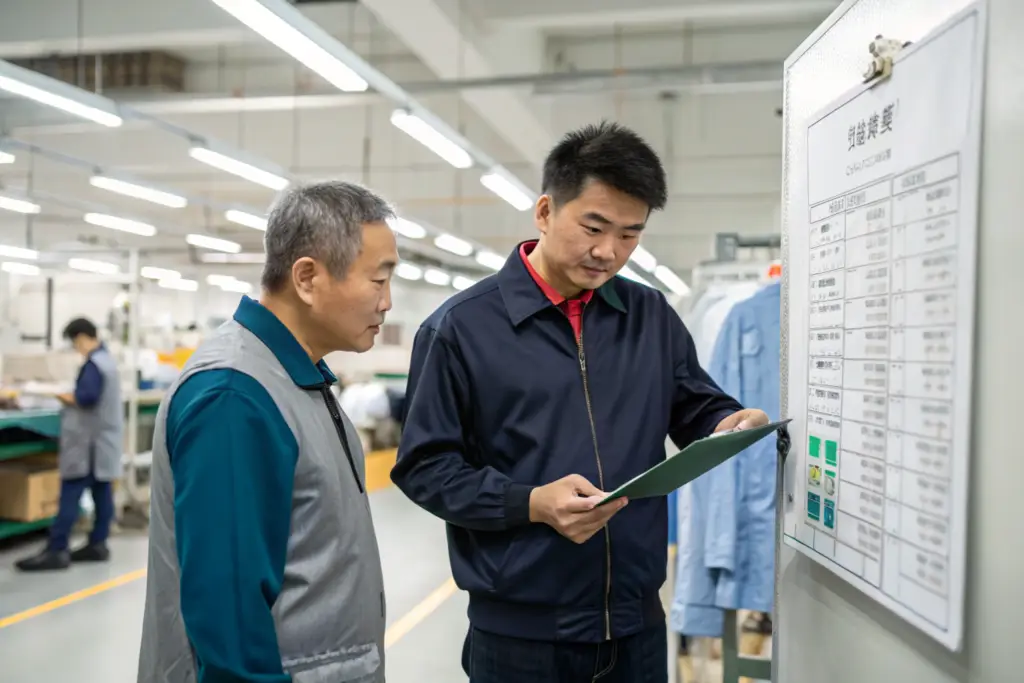
The production sample is taken from the first batch of bulk production. It confirms that the bulk matches the PP sample. The reference sample is the approved standard. It is kept in the quality control office. Every bulk garment is compared to it. For the Denver client, we now pull a production sample at the start of every bulk run. We measure it. We inspect it. We compare it to the PP sample. If there is any deviation, we stop production and correct it. For large orders, we pull production samples every 500 pieces. This catches drift early.
How Does the Production Sample Catch Quality Drift Early?
The production sample is taken at the beginning of bulk. It is the first check that the production process is working correctly. If the production sample does not match the PP sample, we stop. We investigate. We correct. For a t-shirt client, the production sample showed that the neckband was 0.5 inches wider than the PP sample. We stopped production. We found that the operator was using the wrong machine attachment. We corrected it. The rest of the bulk was correct.
Why Is a Reference Sample Essential for Quality Control?
The reference sample is the standard. The QC team uses it to check every bulk garment. They compare the color. They compare the measurements. They compare the construction. For a workwear client, the reference sample is kept in the production line. Operators can check their work against it. This ensures consistency across thousands of units.
Conclusion
Sample development prevents bulk production problems by catching issues at every stage. The development sample catches design flaws. The fit sample catches sizing issues. The pre-production sample validates production methods. The production sample confirms the first batch. And the reference sample provides a standard for comparison. Each stage protects you from costly mistakes.
At Shanghai Fumao, we have built our reputation on a rigorous sample development process. We do not skip steps. We do not rush. We believe that good samples lead to good production. We catch problems before they reach bulk. We ensure that what you approve is what you receive.
Let us show you how our sample process can protect your next production. Contact our Business Director, Elaine, directly at elaine@fumaoclothing.com. Send us your tech pack. We will walk you through the sample development journey.