Men's wear has changed. The old rules are gone. Men no longer accept clothing that wrinkles easily, fades quickly, or restricts movement. They want garments that look sharp, feel comfortable, and perform throughout the day.
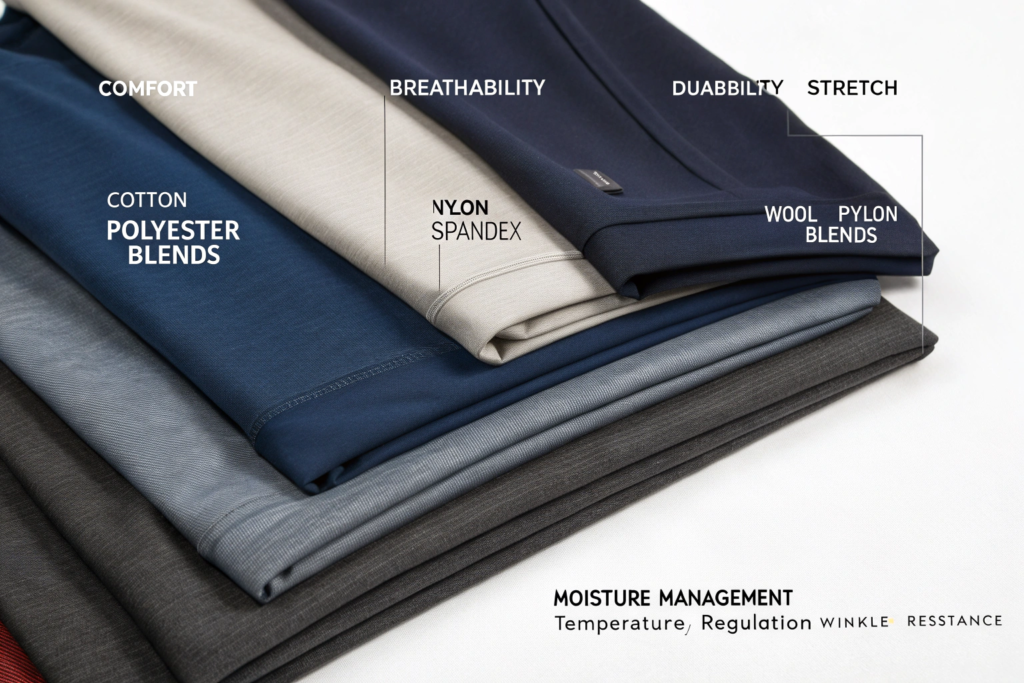
The best fabric blends for high performance men's wear combine natural fibers for comfort and breathability with synthetic fibers for durability, stretch, and moisture management. Cotton-polyester blends offer the best balance for everyday wear. Nylon-spandex blends provide superior stretch and recovery for active pieces. Wool-nylon blends deliver temperature regulation and wrinkle resistance for travel and business wear. The right blend depends on the garment's intended use and the performance characteristics the brand wants to deliver.
I run Shanghai Fumao, a clothing factory in China with five production lines. Over the years, I have developed countless fabric blends for men's wear brands across the United States. The brands that succeed are those who understand that the fabric is the foundation. They invest time in selecting the right blend for each garment. Their customers reward them with loyalty.
What performance characteristics should men's wear fabrics have?
Before choosing a blend, understand what performance means for men's wear. Different garments need different characteristics. A dress shirt and a pair of hiking pants have different demands.
Why is moisture management important for men's wear?
Men's bodies produce heat and moisture throughout the day. A garment that traps moisture feels uncomfortable. It looks damp. It can develop odors.
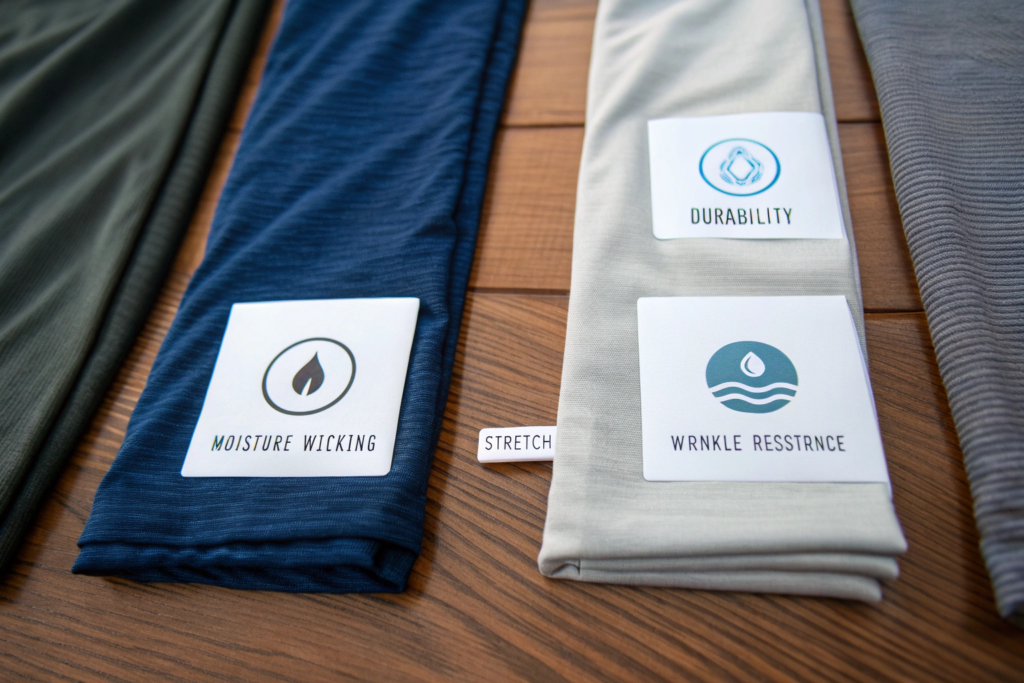
Moisture management means the fabric pulls sweat away from the skin. It spreads it across the surface. It allows it to evaporate quickly. This keeps the wearer dry and comfortable.
Synthetic fibers like polyester and nylon excel at moisture management. They are hydrophobic. They do not absorb water. Instead, they move it along the surface. Natural fibers like cotton absorb moisture. They hold it. This can feel cool initially but then becomes heavy and damp.
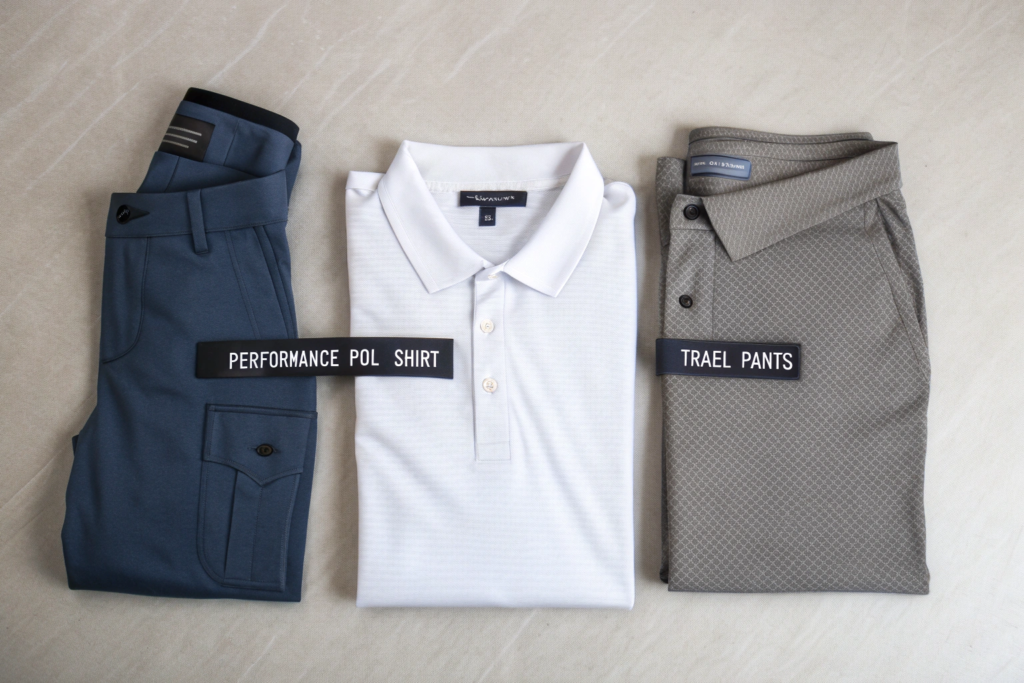
For a client from Florida, we developed a performance polo shirt. The client wanted a garment that looked like a traditional cotton polo but performed in the heat and humidity. We used a cotton-polyester blend with 60% cotton and 40% polyester. The cotton provided the natural look and feel. The polyester provided moisture management. The shirt kept its appearance even after hours in the heat. The client sold out his first order.
For active wear like golf shirts or hiking shirts, higher polyester content is better. Some blends use 100% polyester with a special knit structure. These garments dry in minutes. They do not cling when wet.
What role does stretch play in comfort and fit?
Stretch is essential for performance men's wear. A garment with stretch moves with the body. It does not restrict movement. It does not pull or bind when you reach or bend.
Stretch comes from two sources. The fiber itself can be elastic. Spandex, also called elastane or Lycra, is the most common elastic fiber. Even a small percentage adds significant stretch. The fabric construction also matters. Knit fabrics naturally stretch. Woven fabrics can be engineered to stretch through the weaving process.
A client from Colorado needed a line of travel pants. He wanted pants that looked like dress trousers but moved like active wear. We developed a woven fabric with 95% nylon and 5% spandex. The nylon provided durability and a crisp appearance. The spandex added four-way stretch. The pants had the look of formal trousers but the feel of joggers. His customers loved them. He now sells over 10,000 pairs per year.
When choosing a stretch blend, consider the garment's use. A dress shirt needs moderate stretch. It should not feel tight across the back. A golf shirt needs high stretch for the golf swing. A pair of jeans needs stretch in the waist and thighs for sitting and moving.
How does durability affect garment longevity?
Men's garments take abuse. They are worn frequently. They are washed often. They are subjected to friction from bags, belts, and daily activities. A high performance garment must withstand this wear.
Durability comes from fiber strength and fabric construction. Nylon is the strongest common apparel fiber. It resists abrasion better than polyester or cotton. Polyester is also strong. It holds up well to repeated washing. Cotton is weaker. It can wear thin over time.
A client from Texas produces workwear for outdoor professionals. His garments must survive rough conditions. We use heavy nylon-cotton blends for his pants. The nylon provides abrasion resistance. The cotton provides comfort. The blend ratio is 65% nylon and 35% cotton. His customers report that the pants last twice as long as cotton-only alternatives.
Durability also relates to color retention. A garment that fades quickly looks worn out. Polyester holds dye better than cotton. It resists fading from washing and sunlight. For garments that need to maintain their color, higher polyester content is beneficial.
What are the top fabric blends for different men's wear categories?
Different garments need different blends. Matching the blend to the intended use is the key to success.
What blend works best for performance dress shirts?
Dress shirts have a specific challenge. They must look formal and crisp. They must also be comfortable for long wear. They should resist wrinkles.
The best blend for performance dress shirts is a cotton-polyester blend with a high cotton content. A ratio of 70% cotton to 30% polyester works well. The cotton provides the natural look and feel that men expect in a dress shirt. The polyester adds wrinkle resistance and durability.
For a client from New York, we developed a dress shirt collection with this blend. The shirts had the appearance of 100% cotton broadcloth. But they required no ironing after washing. They resisted wrinkles throughout the day. The client's customers appreciated the convenience. They bought multiple shirts in different colors.
Some premium dress shirts use cotton-nylon blends. Nylon is stronger than polyester. It also has a softer hand feel. A 75% cotton, 25% nylon blend creates a shirt that feels luxurious and performs well. The nylon adds durability and wrinkle resistance without the synthetic feel that some men dislike.
For the ultimate performance dress shirt, some brands use polyester with a special treatment. These shirts are completely wrinkle-free. They dry in minutes. But they lack the natural feel of cotton. They are best for travel or high-heat environments where performance outweighs traditional aesthetics.
What is the ideal blend for travel and casual pants?
Travel pants need to do many things. They must look good for business casual settings. They must resist wrinkles from packing. They must stretch for comfort on long flights. They must be durable enough for walking and exploring.
The ideal blend for travel pants is nylon-spandex or polyester-spandex. A ratio of 92% nylon or polyester to 8% spandex provides the best balance. The synthetic fiber provides wrinkle resistance, durability, and quick drying. The spandex provides stretch for movement and comfort.
A client from Seattle built a successful brand around this concept. His pants have a woven construction that looks like traditional chinos. But the fabric contains 8% spandex. The pants stretch in every direction. They recover their shape perfectly. His customers wear them for business meetings, long flights, and weekend hikes. He now offers multiple fits and colors.
For a softer hand feel, some brands use a cotton-nylon-spandex blend. A ratio of 60% cotton, 35% nylon, 5% spandex creates a fabric that feels like cotton but performs like synthetic. The cotton provides comfort and natural appearance. The nylon adds durability and wrinkle resistance. The spandex adds stretch.
These blends are more expensive than pure cotton. But customers who experience them rarely go back to traditional pants.
How do you choose blends for active and golf wear?
Active wear has the highest performance demands. These garments must manage moisture, provide unrestricted movement, and withstand frequent washing.
The standard for active wear is polyester-spandex. A ratio of 90% polyester to 10% spandex is common. Polyester wicks moisture effectively. It dries quickly. It resists odors when treated with antimicrobial finishes. Spandex provides the stretch needed for athletic movement.
For a client from California, we developed a golf polo collection using this blend. The shirts had a textured knit that looked like performance pique. The fabric moved with the swing. It did not cling when wet with sweat. The client's retail partners reported strong sales. Customers appreciated that the shirts looked good on and off the course.
Some premium active wear uses nylon-spandex. Nylon has a softer hand feel than polyester. It also has better draping qualities. A 88% nylon, 12% spandex blend creates a fabric that feels almost like silk but performs like technical gear. This is ideal for higher-end active wear brands.
For base layers and compression garments, higher spandex content is used. Some blends contain 15% to 20% spandex. These garments fit tightly against the skin. They provide muscle support and thermal regulation. They are popular for running, training, and cold weather activities.
The fabric market is always evolving. New fibers and blends offer exciting possibilities for men's wear brands. Staying informed helps you differentiate your products.

Why are Tencel and lyocell blends gaining popularity?
Tencel and lyocell are fibers made from wood pulp. They are produced in a closed-loop process that recycles water and solvents. This makes them more sustainable than many synthetic fibers.
These fibers have excellent properties for men's wear. They are soft. They drape well. They breathe. They resist wrinkles. They manage moisture effectively.
For a client from Oregon, we developed a line of casual shirts using a Tencel-cotton blend. The ratio was 60% Tencel and 40% cotton. The shirts had a soft, fluid feel. They looked slightly dressier than standard cotton shirts. They required minimal ironing. The client marketed them as an eco-friendly alternative to traditional dress shirts.
Tencel blends are also used in denim. A cotton-Tencel blend creates denim that is softer and more breathable than 100% cotton. It also has better drape. Men who find traditional denim stiff appreciate the comfort.
Tencel-polyester blends combine sustainability with performance. The Tencel provides softness and breathability. The polyester adds durability and moisture management. These blends are ideal for active wear and travel garments.
What are the benefits of wool-nylon blends for men's wear?
Wool is a remarkable fiber. It regulates temperature. It resists odors. It looks elegant. But pure wool has limitations. It can be itchy. It can be delicate. It can be expensive.
Adding nylon to wool solves many of these issues. Nylon adds strength and durability. It reduces itchiness by creating a smoother surface. It also helps the garment hold its shape.
A client from Boston produces men's blazers using a wool-nylon blend. The ratio is 80% wool and 20% nylon. The blazers have the appearance and feel of high-quality wool. But they are more durable. They resist wear at the elbows and cuffs. They hold their shape between dry cleanings. The client charges a premium price. His customers appreciate the quality.
For travel suits, some brands use a wool-polyester blend. The polyester adds wrinkle resistance and durability. The wool provides the classic look. These suits can be packed in a suitcase and worn immediately. They are ideal for business travelers.
Wool-nylon blends are also used for socks, base layers, and cold weather accessories. The nylon adds durability in high-wear areas. The wool provides warmth and temperature regulation.
How are recycled and sustainable blends changing the market?
Sustainability is no longer a niche concern. Mainstream men's wear brands are adopting recycled fibers. Consumers increasingly prefer products with environmental credentials.
Recycled polyester, or rPET, is made from plastic bottles. It has the same performance properties as virgin polyester. It wicks moisture. It dries quickly. It is durable. But it has a lower environmental impact.
A client from Austin built his brand entirely around sustainability. He uses 100% recycled polyester for his active wear. He tells his customers the origin of every garment. His marketing emphasizes that each shirt diverts several plastic bottles from landfills. His customers connect with this story.
Some blends combine recycled polyester with organic cotton. A 50% recycled polyester, 50% organic cotton blend creates a fabric that is both sustainable and high-performing. The recycled polyester provides moisture management and durability. The organic cotton provides softness and natural feel.
Other sustainable fibers include hemp, linen, and bamboo blends. These natural fibers have lower environmental impact than conventional cotton. They also offer unique properties. Hemp is strong and breathable. Linen is cool and crisp. Bamboo is soft and naturally antimicrobial.
For a client from Colorado, we developed a hemp-cotton blend for casual shirts. The blend was 55% hemp and 45% cotton. The shirts had a distinctive texture. They were breathable and durable. The client's customers appreciated the natural, sustainable story.
How do you evaluate and test fabric blends before production?
Choosing a blend is only the first step. You must verify that the fabric performs as expected. Testing is essential.
What physical tests should you request?
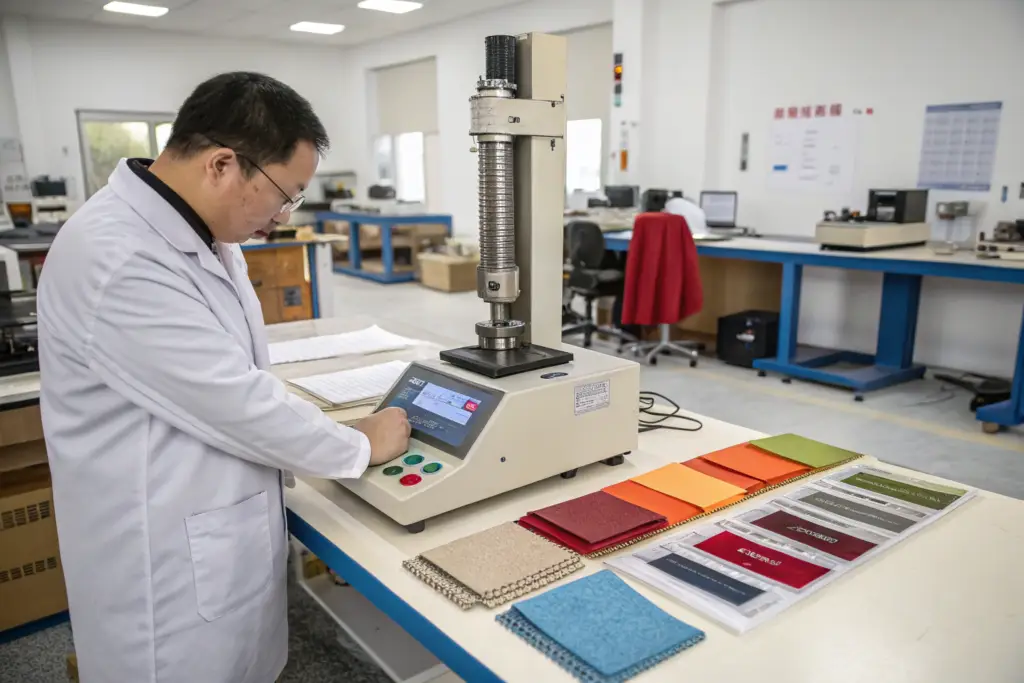
Before committing to bulk production, request physical tests from your supplier. These tests provide objective data about the fabric's performance.
Request a fabric weight test. This measures the grams per square meter, or GSM. A higher GSM generally indicates a heavier, more durable fabric. A lower GSM indicates a lighter, more breathable fabric. For men's wear, a typical range is 150 GSM for lightweight shirts to 350 GSM for heavy jackets.
Request a tensile strength test. This measures how much force the fabric can withstand before tearing. For high-performance garments, you want high tensile strength. This ensures the garment will not tear under stress.
Request a seam slippage test. This measures how well the fabric holds stitches. For woven fabrics, this is especially important. You want seams that stay in place when the fabric is pulled.
Request a pilling test. This measures how much the fabric forms pills, or small balls of fiber, with abrasion. A high-performance fabric should resist pilling. Pilling makes garments look worn and cheap.
A client from Chicago required all these tests for his performance dress shirt line. We provided the test results. He compared them to industry standards. He selected the blend that performed best. His shirts maintain their appearance after many washes. His return rate is among the lowest in his category.
At Shanghai Fumao, we conduct these tests for every fabric we source. We share the results with our clients. We believe that data builds trust.
How do you test colorfastness and shrinkage?
Colorfastness and shrinkage are critical for consumer satisfaction. A garment that fades or shrinks after the first wash will generate returns and complaints.
Request a colorfastness to washing test. This measures how much color is lost during laundering. A good result is a rating of 4 or 5 on a scale of 1 to 5. This means minimal color loss.
Request a colorfastness to light test. This measures how the fabric holds up to sunlight exposure. For garments that will be worn outdoors, this is important. A high rating ensures the color will not fade quickly.
Request a shrinkage test. This measures how much the fabric contracts after washing. A good result is less than 3% shrinkage in both length and width. Higher shrinkage leads to fit problems.
I recall a client from Miami who had a bad experience with a previous supplier. The shirts he received shrank by 8% after the first wash. They no longer fit. He had to replace them at his own cost. When he came to us, we showed him our shrinkage test results. We guaranteed less than 3% shrinkage. His customers now have consistent fit wash after wash.
These tests take time. They add a week or two to the development process. But they are essential for quality assurance.
What role does wear testing play in fabric selection?
Laboratory tests are important. But they do not tell the whole story. A fabric must also perform in real-world conditions.
Wear testing means having real people wear garments made from the fabric. They wear them in their daily activities. They wash them as they normally would. They report back on comfort, appearance, and durability.
A client from Denver used wear testing to refine his travel pants blend. He gave samples to ten men. They wore them for two weeks. They provided feedback. Some wanted more stretch. Some wanted a softer hand feel. Based on this feedback, we adjusted the blend. The final product had the perfect balance of performance and comfort.
Wear testing is especially valuable for new or innovative blends. Laboratory tests cannot predict how a fabric will feel against the skin over a full day. They cannot predict how it will perform in different climates. Real-world testing fills these gaps.
If you are developing a signature product, invest in wear testing. It adds time and cost to development. But it reduces the risk of launching a product that does not meet customer expectations.
Conclusion
Fabric blends are the foundation of high performance men's wear. The right blend delivers comfort, durability, and style. The wrong blend leads to returns and disappointed customers.
Start by understanding the performance characteristics your garment needs. Moisture management for active wear. Stretch for comfort and movement. Durability for long-lasting wear.
Match the blend to the garment category. Cotton-polyester for performance dress shirts. Nylon-spandex for travel pants. Polyester-spandex for active wear.
Consider emerging options. Tencel blends for sustainability and softness. Wool-nylon blends for premium durability. Recycled fibers for eco-conscious customers.
Test thoroughly. Request laboratory tests for strength, shrinkage, and colorfastness. Conduct wear testing to validate real-world performance.
At my factory, we have developed hundreds of fabric blends for men's wear brands. Each project starts with understanding the brand's vision and the garment's purpose. We source fibers. We create samples. We test. We refine. The result is a fabric that performs as promised.
If you are developing a men's wear collection, let us help you select the right fabric blend. At Shanghai Fumao, we have the expertise and the sourcing network to bring your vision to life. Contact our Business Director, Elaine, at elaine@fumaoclothing.com to discuss your project. We will guide you through the selection, testing, and production process.