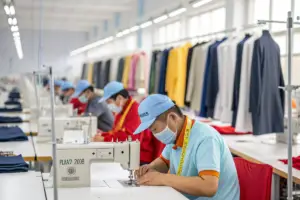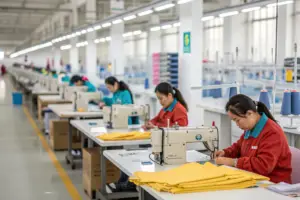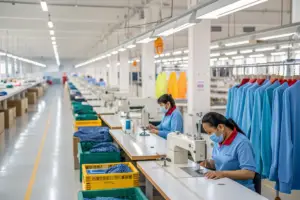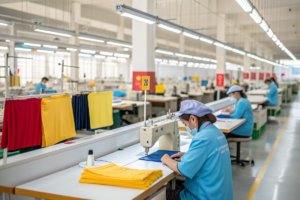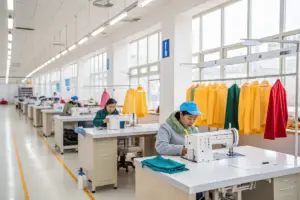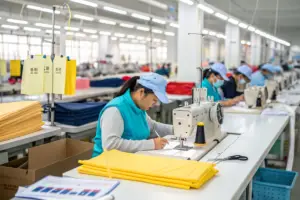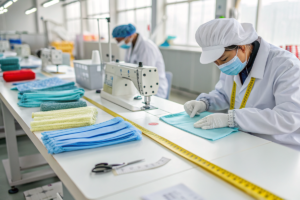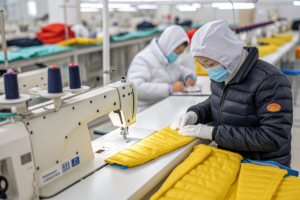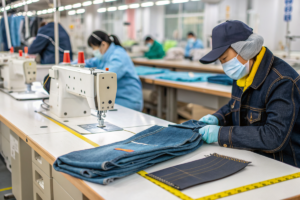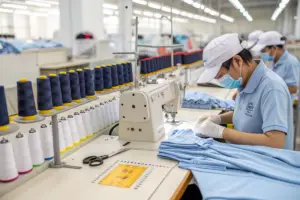
You find a manufacturer with good prices and fast delivery. Then the first shipment arrives. The seams are crooked. The stitches are loose. The garments fall apart after three washes. This is a nightmare scenario for any brand owner.
Assessing stitching quality requires a systematic approach that goes beyond a simple visual check. You need to evaluate thread tension consistency, stitch type appropriateness, seam strength, and the finishing details. The most reliable method combines on-site inspection, sample testing, and clear communication of quality standards. A good manufacturer will welcome these checks because they take pride in their work.
I run Shanghai Fumao, a clothing factory in China with five production lines. Over the years, I have welcomed many American buyers to my factory floor. The ones who succeed are those who know what to look for. They ask the right questions. They check the details that matter. They build partnerships based on a shared commitment to quality.
What are the first visual signs of good stitching quality?
Good stitching starts with what you can see. The visual signs are immediate. They tell you if a manufacturer cares about the basics.
What does proper stitch tension look like?
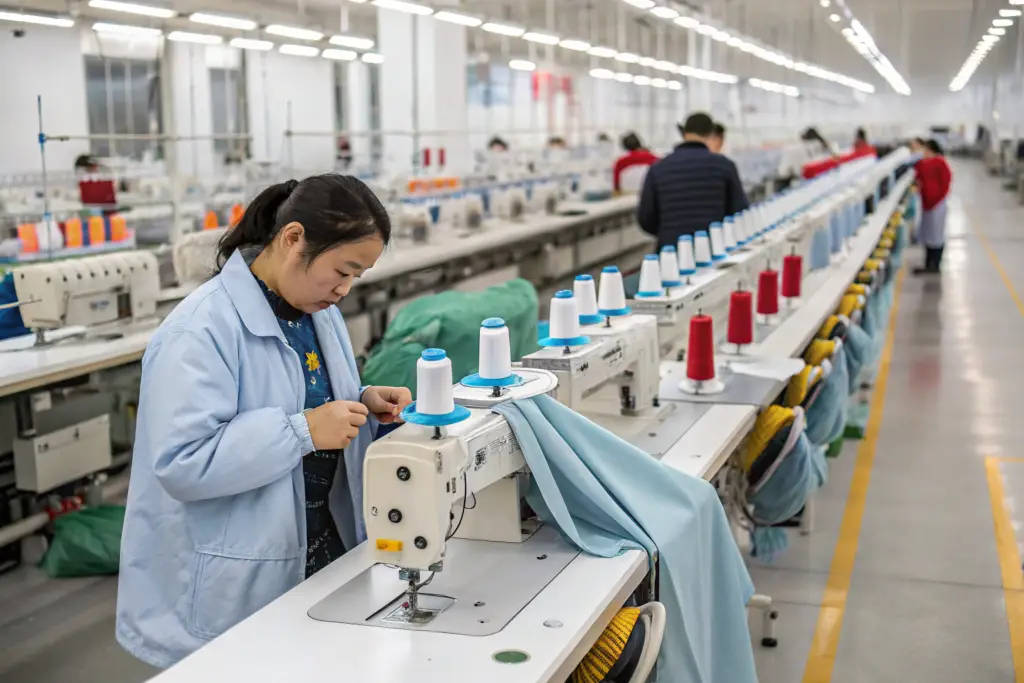
Stitch tension is the balance between the top thread and the bobbin thread. When tension is correct, the two threads lock in the middle of the fabric. You cannot see one thread dominating the other.
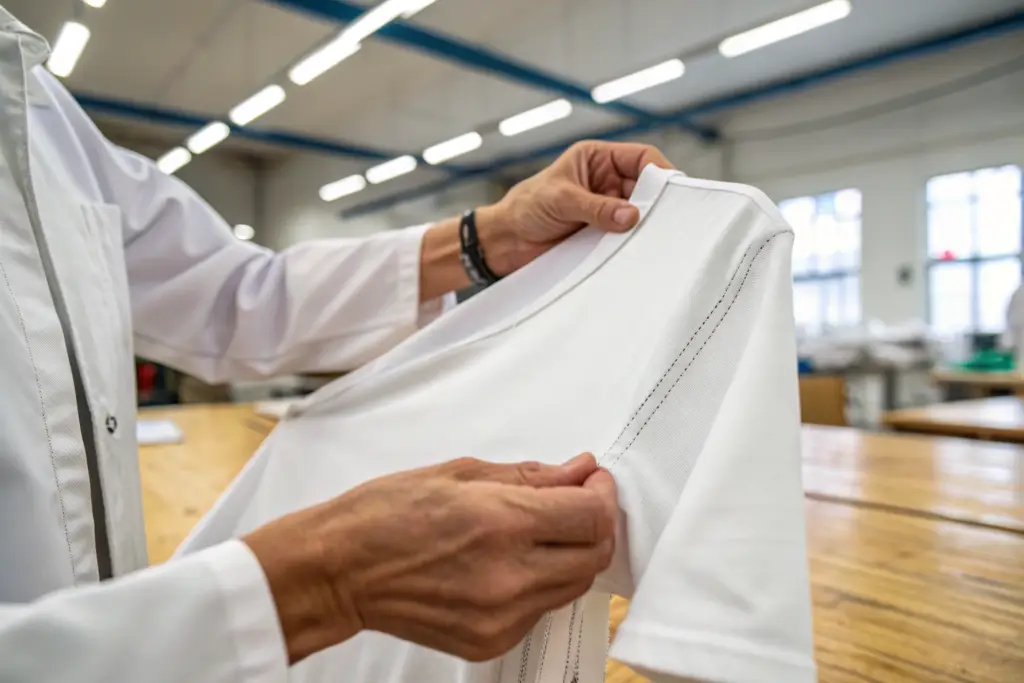
To check tension, look at a seam from both sides. The stitches should look identical on the top and bottom. If you see loops or loose threads on one side, the tension is off. If the fabric puckers along the seam line, the tension is too tight.
I remember a client from Atlanta who visited our factory for the first time. He brought a competitor's sample with him. He pointed to the seam on the sleeve. The top thread was pulling through to the underside. He said, "This is what I do not want." That moment told me he understood quality. We showed him our inspection process. We explained how we calibrate each machine at the start of every shift. He placed his first order that day. The relationship has lasted four years.
When you visit a factory, ask to see their machine calibration log. A good factory keeps records. They should be able to show you when each machine was last checked. This attention to detail translates directly to your garments. You can also ask about their quality control procedures before committing to production.
How do you spot consistent stitch length?
Stitch length should be uniform across the entire seam. Variations in length indicate inconsistent machine operation or operator skill.
Hold a garment up to the light. Look at a long seam, like the side seam of a shirt. The stitches should appear evenly spaced. There should be no sudden changes in length.
I once worked with a startup brand that had a bad experience with another factory. They showed me a batch of polo shirts. The stitch length on the collar attachment varied from six to twelve stitches per inch. The collar was wavy and uneven. They had to reject the entire order.
We produced a test run for them. Our operators maintained a consistent eight stitches per inch across every collar. The result was a clean, professional finish. The brand owner told me that seeing this consistency gave him confidence. He now sends all his production to us.
Consistent stitch length also affects garment durability. When stitches are evenly spaced, the load distributes evenly across the seam. This prevents weak points where tears can start. For brands, this means fewer returns and happier customers.
What finishing details indicate quality work?
Finishing details are the small touches that separate good garments from great ones. They are easy to miss but impossible to ignore once you know what to look for.
Check the thread ends. On a quality garment, all thread ends are trimmed cleanly. There should be no loose tails hanging off seams. Good factories trim threads at every stage of production.
Check the seam edges on inside seams. For knit garments, seams should be either overlocked or coverstitched. The edge of the fabric should be fully enclosed. For woven garments, seams should be either serged or bound. Raw edges should never be visible.
Check the topstitching on areas like pocket openings or waistbands. Topstitching should be straight and even. The distance from the edge should be consistent.
A New York denim brand shared their quality checklist with us. It included a specific test for pocket stitching. They required the topstitch on the back pockets to be exactly 3 millimeters from the edge. Their previous supplier could not meet this consistently. We adjusted our machines and trained our operators. We now meet their standard on every pair. The brand owner told me that consistent finishing details helped them build a reputation for quality. Their customers notice the difference. You can learn more about our finishing capabilities on our website.
How do you test seam strength and durability?
Visual inspection is not enough. You need to know how a seam performs under stress. Simple tests can reveal a lot about durability.
What is the simple stretch test for knits?
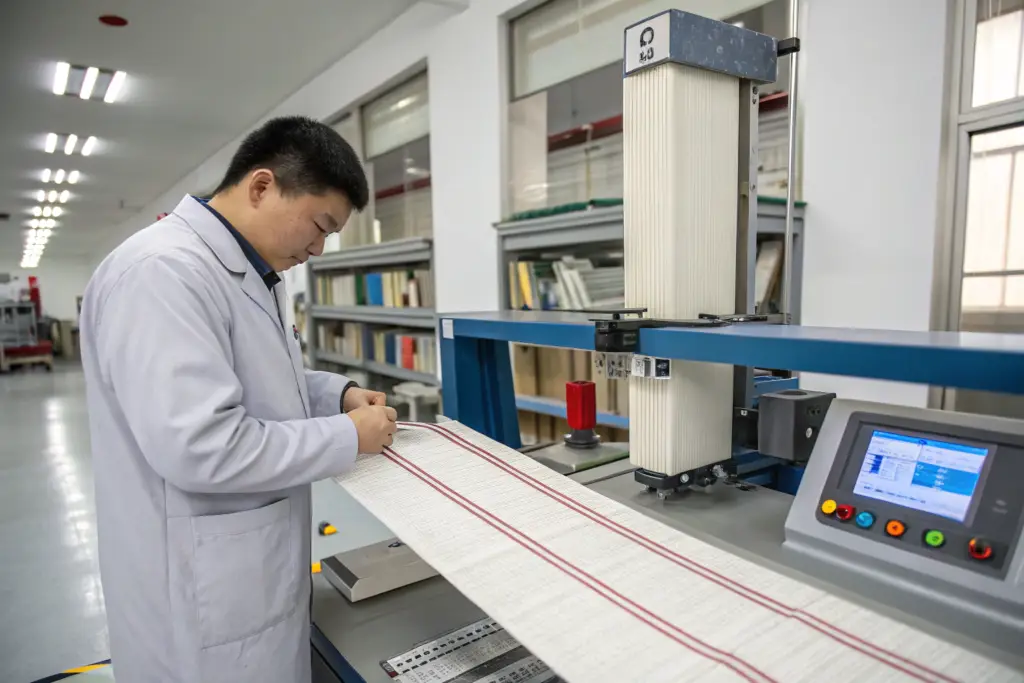
Knit garments stretch. The seams must stretch with the fabric. A seam that does not stretch will break or cause the fabric to tear.
Take a knit garment. Stretch the fabric across a seam. Hold it for a few seconds. Then release. Look at the seam. The stitches should return to their original position. There should be no gaps or broken threads.
For a more rigorous test, do the same stretch while the garment is inside out. Watch the seam allowance. The overlock or coverstitch should stretch without breaking. The fabric around the seam should not pucker.
I demonstrated this test for a client from Chicago last year. She brought a seamless legging from another supplier. When we stretched the waist seam, the threads snapped. The elastic inside was also twisted. She was angry. Then we tested one of our samples. The seam stretched fully and returned to shape. She placed a trial order with us. Her first shipment sold out in two weeks.
This simple test takes thirty seconds. It tells you more about seam quality than any certificate. Any good manufacturer will let you perform this test on their samples. If they hesitate, that is a red flag.
How do you check seam slippage on woven fabrics?
Woven fabrics present a different challenge. The threads in the fabric can slide apart under stress. This is called seam slippage. It is a common problem on smooth fabrics like silk or satin.
To check for seam slippage, take a woven garment. Grip the fabric on both sides of a seam. Pull gently but firmly. Watch the seam line. The stitches should stay in place. The fabric threads should not pull apart.
For a more formal test, you can ask the factory for seam slippage test results. A standard test measures how much force causes the seam to open by a specific amount. A result of 10 pounds or more is generally acceptable for most apparel.
A menswear brand from Boston had a problem with seam slippage on their dress shirts. The side seams would gap open when the wearer sat down. Their previous factory had never tested for this. We provided test results showing our seams held at 12 pounds of force. We also used a stronger thread and a different seam construction. The client now includes seam slippage testing in their quality agreement with us.
For brands, this issue matters because it affects the garment's appearance and lifespan. A shirt that gaps at the side seam looks cheap. It also fails quickly. This leads to returns and brand damage.
What is the role of proper seam allowance?
Seam allowance is the fabric between the stitching line and the raw edge. It is a hidden detail that has a big impact on durability.
For woven garments, a proper seam allowance is usually between 0.5 and 0.75 inches. This width gives the seam strength. It also allows for alterations if needed.
Check the seam allowance on inside seams. It should be even from top to bottom. It should be finished properly with serging or binding. A narrow or uneven seam allowance will fail under stress.
I recall a client who showed me a jacket from a competitor. The side seam allowance was only 0.25 inches wide. It was also not serged. After just three wears, the seam started to unravel. The jacket was unsalvageable.
We produced the same style with a 0.6-inch seam allowance and a serged edge. The jacket lasted through an entire season of wear. The client now uses our seam allowance standards for all their woven products.
Good factories have standard operating procedures for seam allowances. They train their operators to check this with every piece. Ask to see their training materials. A manufacturer that invests in training is a manufacturer that cares about quality.
What are the critical stitch types for different garments?
Different garments need different stitch types. Using the wrong stitch for a fabric or construction type leads to failure. A good manufacturer knows which stitch to use for which application.
When should a manufacturer use lockstitch vs. chainstitch?
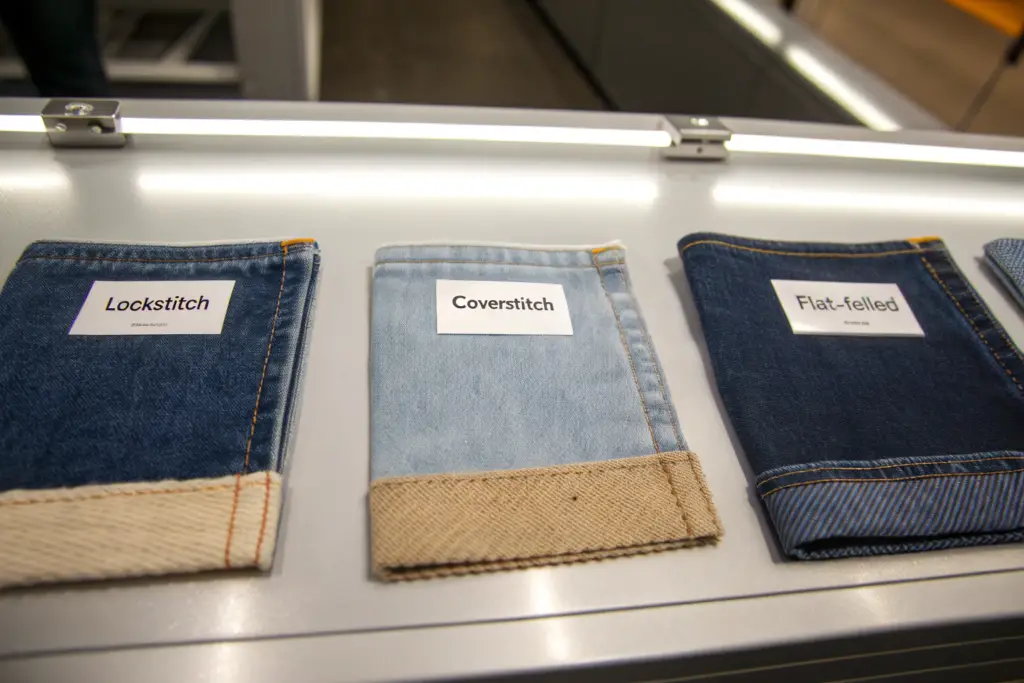
Lockstitch is the most common stitch type. It uses a top thread and a bobbin thread that lock together. It is strong and secure. It does not unravel easily if the thread breaks.
Chainstitch uses a single thread that loops together. It is more elastic than lockstitch. It works well for seams that need to stretch. But chainstitch will unravel completely if the thread breaks at one point.
For most woven garments, lockstitch is the better choice. For knits, chainstitch or coverstitch is often preferred because of the stretch.
A denim brand from Los Angeles once received a batch of jeans with chainstitch used on the inseam. The thread broke on one pair. The entire inseam unraveled within minutes. The brand had to recall the batch. We now produce their jeans using lockstitch on the inseam and chainstitch on the hem, which is standard practice.
When you evaluate a manufacturer, ask about their stitch selection. They should be able to explain why they choose each stitch type for each seam. This knowledge indicates technical competence.
Why is coverstitch essential for knit garments?
Coverstitch is a specialized stitch for knit fabrics. It uses two or more needles on top and a looper thread underneath. It creates a flat seam on the outside and a flexible chain on the inside.
Coverstitch is what you see on the hem of a t-shirt or the shoulder seam of a polo. It stretches with the fabric. It does not pop or break when the garment is stretched.
A fitness brand from Miami came to us after their previous supplier used lockstitch on their activewear tops. The seams broke during workouts. The brand had high return rates. We switched their production to coverstitch on all seams that required stretch. The returns dropped by over 70%.
Coverstitch also creates a professional appearance. The flat finish on the outside looks clean. The inside is comfortable against the skin. For any knit garment, coverstitch is the mark of quality.
When you examine a sample, check the hem and shoulder seams. If they are finished with a single row of lockstitch, the manufacturer is cutting corners. A good manufacturer will use coverstitch with two or three needles for durability and appearance.
How do you identify a proper flat-felled seam on denim?
Flat-felled seams are the hallmark of quality denim. This seam construction encloses the raw edges completely. It creates a flat, strong seam that lasts for years.
To identify a proper flat-felled seam, look at the inside of the jean leg. You should see a flat seam with two rows of stitching. The raw edge is folded inside and stitched down. There is no serging or exposed edge.
I once visited a denim factory in another region. They claimed to make premium jeans. But their "flat-felled" seam was actually a fake. They simply topstitched over a serged edge. The seam looked fine from the outside. But the inside showed a raw edge that would fray over time.
We use true flat-felled seams on all our denim production. It takes more time and skill. But the result is a product that lasts. A client from Texas told us their customers specifically mention the seam quality in reviews. They notice the difference.
When you assess a denim manufacturer, ask to see the inside of the seam. If the raw edge is visible or only serged, they are not doing true flat-felled construction. This is a clear indicator of the quality level you can expect.
How do you verify quality control systems at a factory?
A factory can talk about quality. But their systems tell the real story. The way they organize their quality control reveals their commitment.
What should a factory's in-line inspection process include?
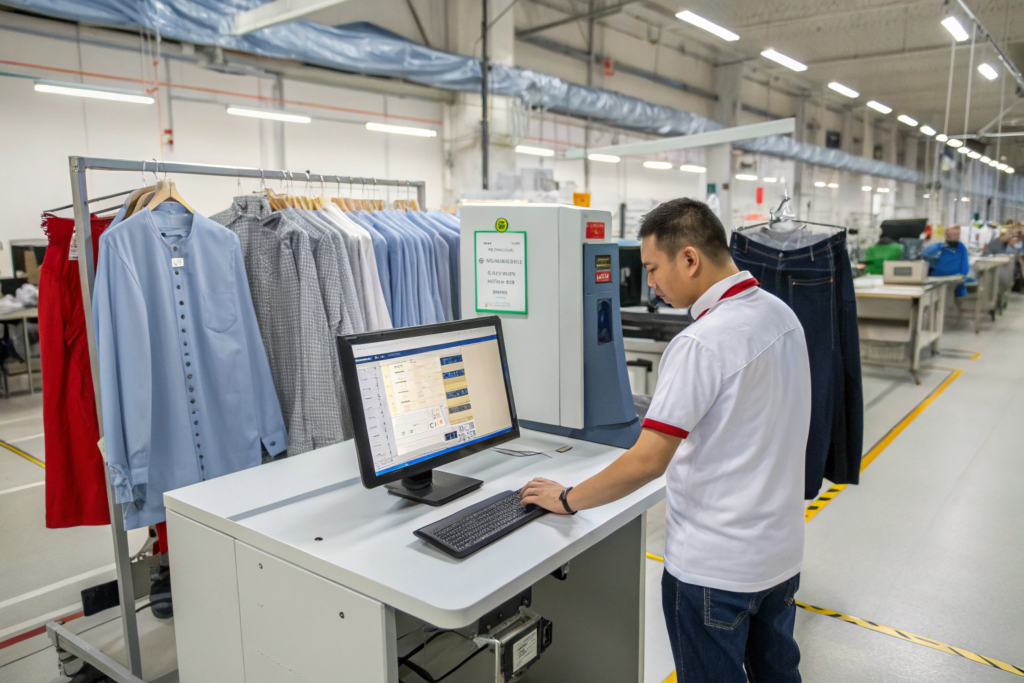
In-line inspection means checking quality during production, not just at the end. This catches problems early when they are cheaper to fix.
A good factory should have inspectors at key points. After cutting, someone checks the fabric for flaws. After sewing each major section, someone checks the seam quality. Before packing, someone does a final check.
We have inspectors at five points in our production line. They check the first piece from each operator at the start of each shift. They do random checks every hour. They keep logs of every check.
A brand owner from Oregon visited our factory last spring. She watched our in-line inspection process. She saw an inspector stop a line because a stitch tension was slightly off. The operator adjusted the machine before any garments were completed. The client later told me this moment convinced her to work with us. She knew we would catch problems before they reached her.
Ask to see a factory's inspection logs. They should show dates, times, and corrective actions. A factory that cannot show you these records likely does not have a real quality system.
How do final inspections and AQL standards work?
AQL stands for Acceptable Quality Limit. It is a statistical sampling method. You inspect a sample of the order. The number of defects in the sample determines if the whole order passes.
A typical AQL for apparel is 2.5 for major defects and 4.0 for minor defects. This means that in a sample of 200 pieces, a certain number of defects are acceptable.
When you work with a factory, agree on the AQL standard before production. Ask to see their final inspection reports. These reports should list every defect found and the action taken.
A client from Denver had a problem with a previous supplier. The supplier claimed to use AQL standards. But they never showed the client any reports. The client suspected they were skipping inspections to save time.
We now share every final inspection report with this client. They review the reports before we ship. This transparency builds trust. The client knows exactly what we shipped and what we rejected.
A good factory will not hide inspection results. They will share them openly. If a factory hesitates to show inspection reports, consider it a warning sign.
What certifications should you look for?
Certifications are third-party verification of quality and ethical practices. They are not a guarantee. But they indicate a factory's willingness to be audited.
Look for ISO 9001 for quality management systems. This certification shows the factory has documented processes for quality control.
For social compliance, look for BSCI or WRAP certification. These audits cover working conditions, wages, and safety.
For product safety, look for Oeko-Tex certification. This ensures the fabric is free from harmful substances.
At Shanghai Fumao, we maintain ISO 9001 and BSCI certifications. We share our audit reports with clients. We also welcome third-party audits at any time.
When I work with a new brand, I always ask about their certification requirements. Some need specific certifications for their market. Others rely on their own audits. I am happy to accommodate both.
A manufacturer who invests in certifications is serious about their business. They are willing to be measured against international standards. This is a strong indicator of reliability.
Conclusion
Assessing stitching quality is not complicated. But it requires attention and a systematic approach.
Start with visual inspection. Look at stitch tension, stitch length, and finishing details. These basics tell you if a factory cares about the fundamentals.
Move to physical testing. Stretch the seams. Check for slippage. Look at seam allowances. These tests reveal durability that visual inspection alone cannot show.
Understand stitch types. Know which stitch belongs on which garment. A manufacturer who uses the wrong stitch is cutting corners.
Verify quality systems. Ask about in-line inspection. Review AQL reports. Check certifications. A factory with strong systems will have the documentation to prove it.
At my factory, we welcome this scrutiny. We know that brands who ask these questions become our best partners. They understand quality. They value the work we do. They stay with us for years.
If you are looking for a manufacturing partner who takes stitching quality seriously, we are ready to prove ourselves.
I invite you to visit Shanghai Fumao to see our quality systems in action. We can show you our inspection logs, our testing procedures, and our trained operators. Contact our Business Director, Elaine, at elaine@fumaoclothing.com to schedule a factory tour or video walkthrough. Let us show you what real quality looks like.