For years, women's clothing came with side seams, back seams, and uncomfortable ridges. Then seamless technology arrived. Now, it is everywhere. From activewear to everyday dresses, seamless garments are changing how women dress and move.
Seamless garments are becoming the top choice for women's wear because they offer unmatched comfort, a flattering fit, and superior durability. The technology eliminates traditional seams, creating a smooth silhouette that moves with the body. It also reduces production waste and allows for targeted compression or support in specific zones. For modern women, this combination of comfort, style, and performance is exactly what they want.
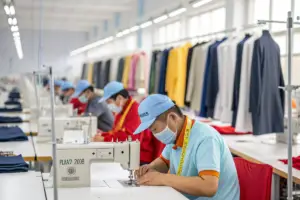
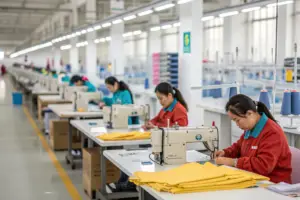
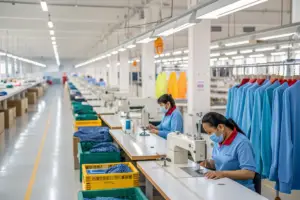
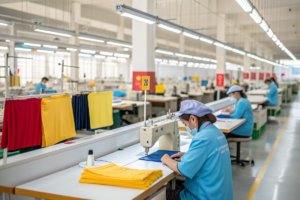
I run Shanghai Fumao, a clothing factory in China with five production lines. Over the past five years, I have seen seamless orders grow from a small niche to a major part of our business. American brands are switching to seamless for their top-selling collections. The shift is not a trend. It is a fundamental change in how women's wear is made.
What makes seamless garments different from traditional cut-and-sew?
The difference between seamless and traditional garments starts at the manufacturing level. It is not just about removing a seam. It is a completely different way of building a garment.
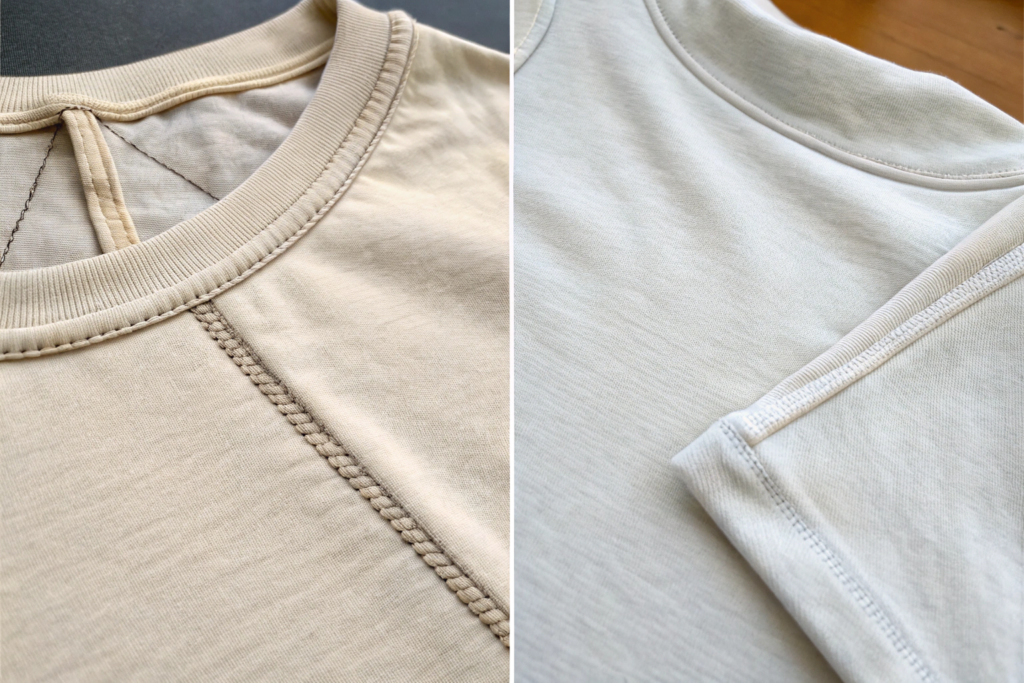
How does seamless knitting technology actually work?
Traditional clothing uses a cut-and-sew process. We cut pieces of fabric from a large roll. Then we sew them together. This creates seams at the sides, shoulders, and other places.
Seamless garments use a different method. We use specialized circular knitting machines. These machines knit the garment in three dimensions. The machine knits the body, the sleeves, and even the neckline in one continuous piece.
The process is similar to 3D printing but with yarn. The machine follows a digital program. It can create different stitch structures in different areas. It can make the fabric tighter around the waist for support. It can make it looser around the arms for freedom of movement. All in one piece.
A few years ago, a yoga wear brand from Colorado asked us to develop a seamless legging. They wanted no side seam. They wanted a waistband that did not dig in. Using our seamless machines, we programmed the knit to create a natural waistband. The waist area has a tighter, more supportive stitch. The leg area has a smoother, stretchier stitch. The final product has zero seams. The brand owner told me it was the first legging their customers asked for by name. You can learn more about our seamless manufacturing capabilities on our website.
What are the main comfort benefits for the wearer?
Comfort is the number one reason women choose seamless garments. When you remove seams, you remove the main source of friction and irritation.
Think about a traditional t-shirt. The side seams can rub under your arms. The shoulder seams can feel heavy. The back seam can create pressure points when you sit or lean back.
A seamless garment has none of these issues. It feels like a second skin. The smooth surface moves with your body. There is no chafing. There are no hard edges.
Last year, we worked with a New York-based intimates brand. They were launching a new line of seamless bralettes. Their previous cut-and-sew bras had a common complaint. The side seams caused irritation after a full day of wear. We developed a seamless version for them. The feedback was immediate. Customers described it as "the bra I forget I am wearing." The brand's reorder rate for that style doubled within six months. This comfort factor is why seamless is no longer just for activewear. It is now a staple for everyday women's wear.
How does the fit compare to traditional garments?
Seamless garments offer a fit that traditional construction cannot match. The garment is shaped during the knitting process, not after.
With cut-and-sew, the fit depends on how the pieces are cut and assembled. If the sewing is off by a few millimeters, the fit changes. With seamless, the shape is programmed into the machine. Every garment comes out exactly the same.
This consistency is a huge benefit for brands. A size medium seamless top will fit the same every time. There is no variation from one production batch to the next.
We also program different zones of stretch and support. For a seamless dress, we can make the bodice area more structured. We can make the skirt area more fluid. The transition is smooth because it is all one piece. A client from Los Angeles used this for their best-selling bodycon dress. They programmed a smoothing effect around the midsection. The result was a dress that flattered a wide range of body types. They told us their return rate for fit issues dropped by 35% after switching to seamless. This level of control is simply not possible with traditional sewing. You can read more about innovative garment construction techniques in industry publications.
How do seamless garments perform better for active and everyday wear?
Women today expect their clothing to perform. Whether they are in a yoga class or running errands, they want garments that move with them. Seamless technology delivers this performance.

Why is seamless ideal for activewear and yoga?
Activewear demands freedom of movement. It also needs to hold its shape through sweat and stretching. Seamless construction meets both needs better than traditional methods.
When you do a deep lunge in a seamless legging, there is no side seam to pull or twist. The fabric stretches evenly because it is one continuous piece. This reduces the feeling of restriction.
Seamless also allows for engineered compression. We can program the machine to create a tighter stitch in the legs for muscle support. We can create a looser stitch in the waist for comfort. This zone-specific performance is not possible with cut-and-sew.
A Seattle-based sportswear brand came to us two years ago. They wanted to create a running top that did not bounce or ride up. We developed a seamless top with a built-in support band. The band was knitted directly into the garment, not added later. The top stayed in place during high-impact runs. The brand sold out their initial order of 5,000 units in three weeks. The seamless construction was the key feature they highlighted in their marketing. Many of their customers had never tried seamless before. Now, they request it for every new activewear style.
What role does seamless play in shapewear and intimates?
Shapewear and intimates have unique demands. They need to be smooth under clothing. They need to provide support without discomfort. Seamless technology solves both problems.
Traditional shapewear uses heavy elastics and multiple seams. These can create visible lines under tight clothing. They can also dig into the skin. Seamless shapewear uses integrated knit structures. The shaping zones are knitted into the fabric. There are no separate elastic bands or bulky seams.
We developed a seamless bodysuit for a California-based shapewear brand. We programmed the knit to be firmer in the torso area. We made it softer in the shoulder and leg openings. The result was a shaping garment that felt like a soft bodysuit. The brand reported that customer reviews consistently mentioned the lack of visible lines under clothing. This is a direct benefit of seamless construction.
The same principles apply to bras and underwear. A seamless bra has no side seam to poke or rub. It has no back clasp if designed as a pullover style. This makes it ideal for everyday wear. Many women now choose seamless bras as their go-to option, not just for special occasions. You can see examples of seamless intimates and shapewear from major retailers who have embraced this technology.
How does seamless handle moisture and temperature?
Seamless garments offer performance benefits beyond fit. The knitting process allows us to create open structures for breathability. We can also use different yarns in different areas.
For activewear, we often use moisture-wicking yarns. These pull sweat away from the skin. We can program the machine to create mesh-like zones in high-sweat areas like the back or underarms. These zones are part of the garment, not added as a separate piece.
For a cycling brand we work with, we created a seamless jersey with a mesh back panel. The mesh is knitted directly into the garment. There is no seam where the mesh meets the main fabric. This eliminates any potential chafing point. The cyclist stays cooler, and the jersey lasts longer because there is no weak seam to fail.
We also use different yarn types for different seasons. For winter seamless tops, we use heavier yarns with a brushed interior for warmth. For summer seamless tops, we use lightweight, open-knit structures for airflow. All of this is achieved in a single knitting process. This versatility makes seamless suitable for every season and every activity. For brands, it means they can offer high-performance garments without the complexity of multiple fabric panels and seams.
What are the sustainability benefits of seamless manufacturing?
Sustainability is no longer a nice-to-have. It is a requirement for modern brands. Seamless manufacturing offers significant environmental advantages over traditional cut-and-sew methods.
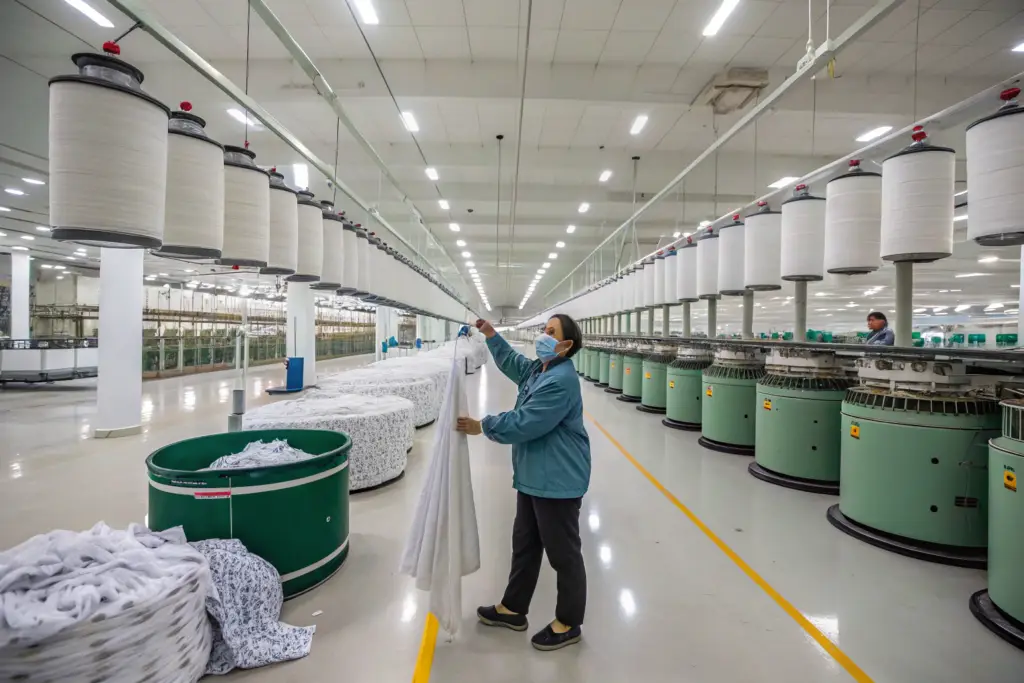
How much waste does seamless production eliminate?
Traditional cut-and-sew creates fabric waste. When we cut garment pieces from a large roll, some fabric is left over. These scraps often go to landfill. For complex styles, fabric waste can reach 15% or more.
Seamless production creates almost zero fabric waste. The machine knits the exact shape of the garment. There is no cutting. The only waste is the small amount of yarn left on the cone at the end of the run.
A children's wear brand we partner with calculated the impact of switching to seamless for their t-shirt line. In the first year, they reduced their fabric waste by over 1,200 kilograms. That is equivalent to the weight of about 600 t-shirts that never went to landfill. The brand now uses this statistic in their sustainability marketing. Their customers appreciate knowing that their clothing is made with minimal environmental impact.
We have also found that seamless garments require less packaging. Traditional garments often need folding and wrapping to protect seams. Seamless pieces are more durable and less prone to creasing. This allows for simpler, reduced packaging. You can find more data on textile waste reduction strategies through circular economy research.
Does seamless construction make garments last longer?
A garment that lasts longer is more sustainable. You buy fewer replacements. Seamless garments typically outlast cut-and-sew equivalents.
Seams are often the first point of failure in a garment. Thread can break. Stitching can come undone. Seamless garments have no seams. The weak points are eliminated.
We tested this with a client who makes everyday dresses. Their cut-and-sew dresses often showed wear at the side seams after 30 to 40 washes. The seamless version we developed showed no signs of failure after 80 washes. The test was done by a third-party lab. The client now offers a longer guarantee on their seamless line because they trust the durability.
The yarns used in seamless knitting are also continuous. There are no short fibers cut and sewn together. This creates a stronger overall fabric structure. For brands, this means fewer customer complaints about garment failure. For consumers, it means a better value over time.
How does the supply chain benefit from seamless?
Sustainability is not just about the product. It is about the process. Seamless manufacturing simplifies the supply chain in ways that reduce environmental impact.
Fewer steps mean less energy use. Traditional cut-and-sew involves fabric production, cutting, sorting, sewing, and finishing. Seamless combines several steps into one. The garment goes from yarn to finished piece in a single machine.
Simpler logistics also help. A seamless garment requires fewer components. There are no separate panels to source and track. There is no need to match dye lots for different fabric pieces. This reduces the complexity of shipping and inventory management.
For a client in Texas, switching to seamless reduced their supplier count from five to two. They no longer needed a separate fabric supplier and trim supplier. Everything came from us. This simplified their operations and reduced the carbon footprint of their supply chain. The client told me that supply chain simplification was as valuable as the product benefits. They now use our full-package manufacturing services for all their seamless production, creating a more efficient and sustainable partnership.
What should brands consider when switching to seamless?
Switching to seamless is a strategic decision. It requires changes in design, sampling, and production planning. But for most brands, the benefits far outweigh the challenges.
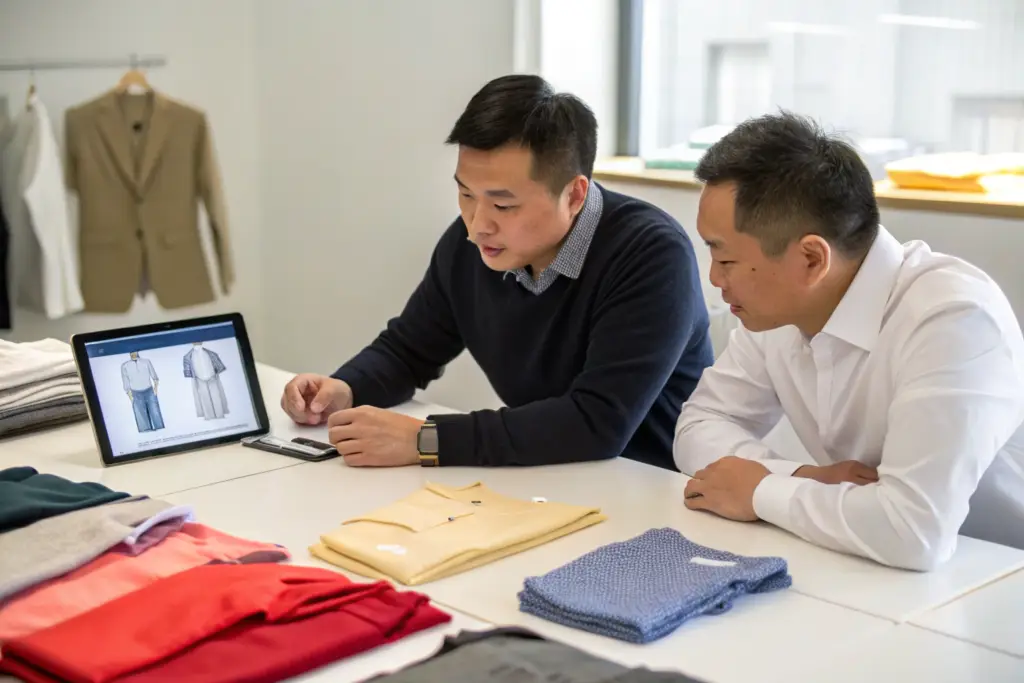
How does design change for seamless garments?
Designing for seamless is different from designing for cut-and-sew. You cannot simply remove the seams from an existing design. You need to think in terms of knit structures.
In cut-and-sew, design is about shapes and panels. In seamless, design is about stitch patterns and zones. You decide where the garment should be tighter. You decide where it should be more open. You decide how the transitions flow.
We help our clients through this transition. Our design team works with their designers. We explain what is possible with our seamless machines. We show them how to use stitch structures to create visual interest without seams.
A New York contemporary brand made this switch last year. Their designers initially struggled with the new approach. But after a few sampling rounds, they embraced it. They started using stitch patterns to create texture and visual lines. The result was a collection that looked cleaner and more modern than their previous cut-and-sew lines. The brand's creative director told me seamless gave them a new design language. This is a common experience. Seamless does not limit design. It opens new possibilities.
What are the sampling and MOQ considerations?
Seamless production has different minimum order quantities (MOQs) than cut-and-sew. The knitting machines require setup time. The programming for each style takes investment.
For small test runs, we can work with lower MOQs. A brand can start with 300 to 500 pieces per style. This allows them to test the market without a huge commitment. Once a style proves successful, we scale up production.
Sampling also works differently. Physical samples still matter for fit and feel. But we also provide 3D simulations. Clients can see the stitch structures and fit on a digital model before we knit the first physical sample. This speeds up the development process.
We recently worked with a startup activewear brand. They had a limited budget for sampling. We created 3D simulations for six styles. They chose three to move to physical samples. This saved them time and money. The brand launched with three seamless styles. Within four months, they added two more styles based on customer feedback. Starting with a focused range allowed them to grow sustainably. We encourage new seamless clients to book a call with our Business Director, Elaine, to discuss the best sampling and MOQ strategy for their specific goals.
How do costs compare with traditional production?
Many brands assume seamless is more expensive. In some cases, it is. But the total cost picture is more complex.
Seamless machines are more expensive than basic sewing machines. The knitting process is slower than cutting and sewing. So the unit production cost can be higher.
However, there are offsetting savings. There is no fabric waste. There are lower trim costs because you need less elastic and binding. There is simplified logistics. And most importantly, seamless garments often command higher retail prices. Consumers are willing to pay more for the comfort and quality.
For a client in Chicago, we did a detailed cost analysis. Their cut-and-sew legging cost $12.50 to produce. The seamless version cost $14.00 to produce. But the seamless version sold for $68 at retail, compared to $58 for the cut-and-sew version. The higher retail price more than covered the production cost difference. The brand also saw lower return rates, which further improved profitability.
The key is to look at the full financial picture, not just the unit cost. For most of our clients, seamless proves to be a more profitable option in the long run.
Conclusion
Seamless garments are not a passing trend. They represent a fundamental improvement in how women's clothing is made and worn.
The benefits are clear. Unmatched comfort from the absence of seams. A flattering fit that moves with the body. Superior performance for active and everyday wear. Significant sustainability advantages through waste reduction and durability. And a design language that feels fresh and modern.
At my factory, we have seen seamless transform our clients' businesses. They launch collections that sell out. They build loyal customer bases who come back for the comfort. They reduce their environmental footprint without sacrificing style or quality.
If you are a women's wear brand looking to elevate your collection, seamless is the direction to go. Your customers are already looking for it. They want clothing that feels as good as it looks.
We invite you to partner with Shanghai Fumao to explore seamless manufacturing. With our five production lines and dedicated seamless knitting machines, we have the capacity and expertise to bring your vision to life. Contact our Business Director, Elaine, at elaine@fumaoclothing.com to discuss your seamless project. Let us create something exceptional together.