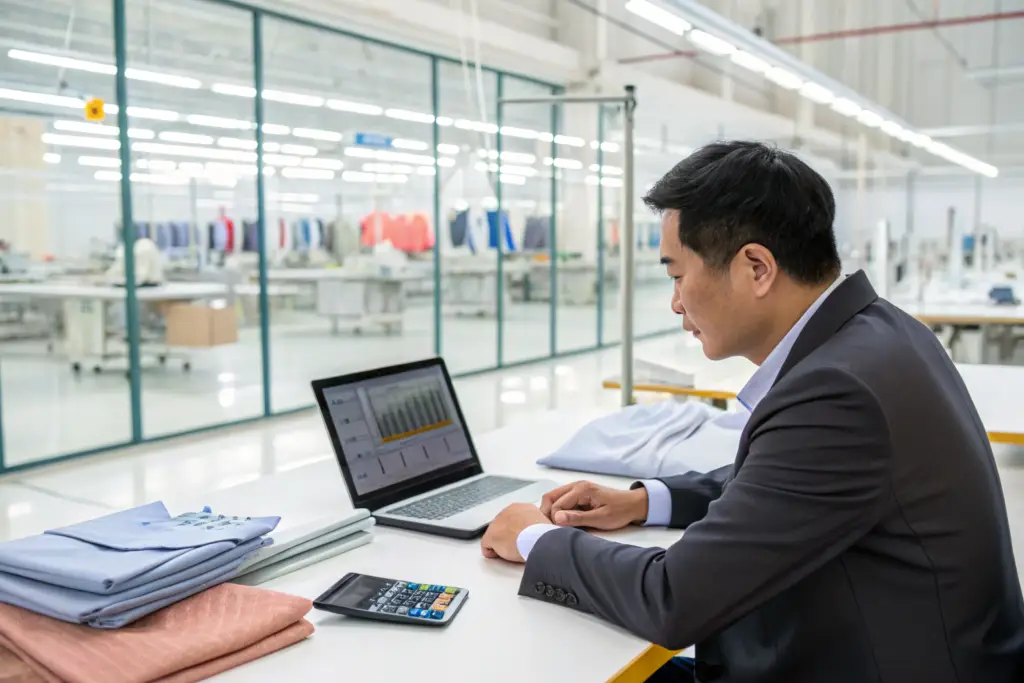
You look at your margins. You see the cost of goods sold eating into your profits. You think about the money you spend on fabric, on trims, on shipping, and on the factory itself. You wonder if there is a cheaper country to produce in. You wonder if you should manage everything yourself to save the "middleman" fees. But hidden costs are everywhere. Delays cost money. Mistakes cost money. Miscommunication costs money. The lowest price per unit is not always the lowest total cost.
Yes, private label garment manufacturing can significantly reduce your total costs. It does not always mean the lowest price per shirt. But it means a lower total landed cost. By consolidating sourcing, production, quality control, and shipping, private label eliminates the expensive hidden costs of managing multiple vendors. We reduce your labor costs, your error costs, your shipping delays, and your inventory risks. You pay for a service, but you save money on the process.
I have run Shanghai Fumao for over 15 years. I have seen brands try to save money by cutting out the "full package" service. They try to source fabric themselves. They try to find their own trim suppliers. Almost always, they come back to us. They learn that the money they "saved" on the factory price was lost ten times over in other areas. Let me show you where the real savings come from in a private label partnership.
How does consolidated sourcing lower your material costs?
When you source materials yourself, you are a small buyer. You walk into a fabric market or email a mill asking for 500 yards. They quote you a price. It is not their best price. They have higher margins for small, one-time buyers. When we source materials for you, we are a large, consistent buyer. We buy millions of yards every year. Our suppliers give us their best prices because they want our repeat business.
What volume discounts can we pass on to you?
This is the most direct cost saving. Because we buy in bulk for all our clients, our purchasing power is immense. For a basic cotton jersey, a small brand might pay $4.00 per yard buying on their own. Our cost might be $2.80 per yard for the exact same fabric from the same mill. We do not keep all that saving. We pass a significant portion on to you. For a brand in Chicago launching a line of basic t-shirts, we sourced their organic cotton fabric. They had a quote from a US-based supplier for $6.50 per yard. Our price, including shipping to our factory, was $3.90 per yard. On an order of 3,000 yards, that saved them $7,800 before we even cut a single piece of fabric. This economies of scale benefit is only available when you partner with a large manufacturer.
How do we eliminate material waste and overage costs?
When you source your own fabric, you often have to order a minimum quantity from the mill. That minimum might be 1,000 yards. But you only need 850 yards for your production. You now have 150 yards of waste that you paid for. You have to store it or throw it away. When we source for you, we order exactly what is needed for your production. We have relationships with mills that allow us to buy smaller, exact quantities because we are a regular customer. We also have a large inventory of "dead stock" from other clients. Sometimes, the fabric you need is already sitting in our warehouse from a cancelled order or a previous overage. For a small activewear brand in Texas, they needed 200 yards of a specific navy Supplex. The mill minimum was 500 yards. We checked our inventory and found 220 yards from a previous project. We sold it to them at a discount. They got their fabric with no minimum and no waste. This inventory optimization is a hidden cost saver.
How does private label reduce your operational overhead?
You are a brand owner. Your time is valuable. Your team's time is valuable. Every hour you spend on WhatsApp with a trim supplier in Vietnam is an hour you are not designing, marketing, or selling. Private label removes this operational burden. You are not paying us just to make clothes. You are paying us to manage your supply chain.
What is the true cost of managing multiple vendors?
Think about the math. You have a fabric vendor. You have a trim vendor. You have a cutting vendor. You have a sewing vendor. You have a logistics vendor. For each one, you have to:
- Find and vet the supplier.
- Negotiate prices and terms.
- Send purchase orders.
- Track delivery dates.
- Inspect incoming goods.
- Handle quality issues.
- Process invoices and payments.
If you value your time at $100 per hour, and you spend just 5 hours managing each vendor for a single order, that is $500 in overhead. For an order of 1,000 units, that adds $0.50 per unit in hidden cost. And this is a conservative estimate. I have seen brands spend weeks fixing a single vendor issue. When you work with Shanghai Fumao, you have one vendor. You send one PO. You talk to one account manager. You pay one invoice. This single-source supplier model dramatically reduces your overhead. You get your time back to focus on growing your business.
How do we reduce your sampling and error costs?
Errors are expensive. A bad sample means you pay for another sample. A bad production run means you lose the cost of materials and labor, and you have no products to sell. Private label reduces errors because we have more experience. We know the pitfalls. For a womenswear brand in New York, they came to us with a design for a dress with a very delicate, sheer fabric. They had tried to produce it with another factory that specialized in basic cotton. The factory ruined the fabric. They lost $2,000 in materials. With us, our pattern maker immediately suggested using a different needle type and a stabilizer to prevent the fabric from tearing. We made the sample correctly on the first try. The cost of our expertise was built into our price. The saving was avoiding a $2,000 mistake. This design for manufacturability expertise is a direct cost reducer.
Can private label lower your shipping and logistics costs?
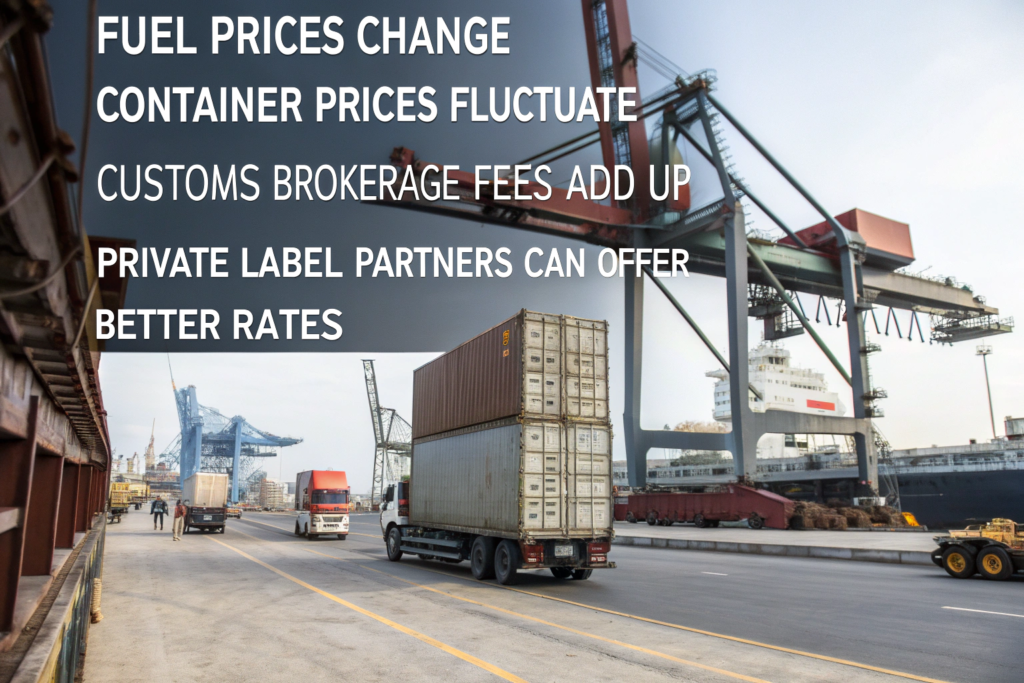
Shipping costs have become a huge part of the total landed cost. Fuel prices change. Container prices fluctuate. Customs brokerage fees add up. Managing this yourself is risky and expensive. Private label partners manage this complexity and can often get you better rates.
How does consolidated shipping cut your freight bill?
We ship thousands of containers every year. We have contracts with major shipping lines. Our freight rates are significantly lower than what a small brand can get from a freight forwarder. We book hundreds of containers at a time. The shipping line gives us a discount. When we ship your order, you benefit from these discounted rates. For a brand in Seattle shipping a 20-foot container, the difference between our rate and a retail rate can be $500 to $1,000. On top of that, we consolidate shipments. If you do not have a full container, we combine your goods with another client's goods. You pay only for the space you use, which is much cheaper than shipping a less-than-container-load (LCL) shipment on your own. This freight consolidation is a major cost advantage.
What are the savings from DDP vs. handling customs yourself?
Handling your own customs clearance is a gamble. If you make a mistake on the HTS code, you can face fines and delays. If you do not pay the duties correctly, your goods can be seized. To avoid this, you hire a customs broker. A good broker charges $200 to $400 per shipment. With DDP (Delivered Duty Paid), we handle all of this. We have in-house customs expertise. We file the paperwork. We pay the duties. The cost of this service is built into our price, but it is almost always less than what you would pay a broker separately. More importantly, you avoid the risk of demurrage and detention fees. If your shipment sits at the port because of a paperwork error, the shipping line charges you hundreds of dollars per day. We have never had a DDP shipment stuck in customs for more than 24 hours. This customs compliance saves you from unexpected, punishing fees.
How does private label help you avoid inventory mistakes?
The biggest cost in fashion is not production. It is unsold inventory. If you make 1,000 units and sell only 500, you have lost the cost of the 500 units you cannot sell. You also have to store them or write them off. Private label manufacturing can help you make smarter inventory decisions.
Can private label help you produce smaller, smarter batches?
We understand that you do not want to bet the farm on one style. We offer flexible minimum order quantities (MOQs). For new clients, we can start with smaller batches of 200 to 300 pieces per style. This allows you to test the market. You launch a small collection. You see which styles sell. Then you reorder the winners. You are not stuck with 800 unsold units of a style that missed the trend. For a streetwear brand in Los Angeles, this was a game-changer. They used to order 500 pieces per design from a high-MOQ factory. They would sell out of some and sit on others. With us, they order 200 pieces first. The ones that sell out in a week, they reorder immediately. The ones that are slow, they discount and move on. Their overall inventory waste dropped by 40%. This low MOQ manufacturing protects your cash flow and your margins.
How do we help you forecast and avoid stockouts?
We also help you plan for success. When a style works, you need more of it fast. Because we control the entire supply chain, we can often help you with "quick response" reorders. We might hold some of your fabric or trim stock for you. When you need a reorder, we can cut and sew immediately. You avoid the cost of a stockout, which is the lost profit from sales you could have made. For a sportswear brand in Colorado, their best-selling leggings were constantly out of stock. They were losing thousands in sales every month waiting for fabric. We now hold a buffer of their primary fabric. When they hit a reorder trigger, we can deliver new stock in 4 weeks instead of 10. This inventory buffer strategy turns lost sales into found revenue, which is the best kind of cost saving.
Conclusion
Cost is not just the number on the factory invoice. It is the sum of everything you spend to get a product to your customer. Private label manufacturing reduces that total cost. We save you money on materials through our bulk buying power. We save you overhead by eliminating the need to manage multiple vendors. We save you on shipping with our consolidated freight and DDP expertise. And we save you from the biggest cost of all: unsold inventory, by offering flexible batches and quick reorders. You pay for a service, but you invest in a system that protects your margins.
At Shanghai Fumao, we have spent years building a system that delivers value, not just low prices. We help brands like yours compete by keeping their total costs low and their quality high. If you are ready to stop fighting your supply chain and start growing your profits, let's talk. Contact our Business Director, Elaine, at elaine@fumaoclothing.com. Tell us about your current costs, and let's see how much we can save you together.