You have spent months designing your collection. You have found a factory. You have placed your order. Then the boxes arrive. You open them with excitement, and your heart drops. The stitching is crooked. The fabric color is uneven. The buttons are falling off. This is the nightmare that keeps every brand owner awake at night. Quality is not just about how a garment looks. It is about your reputation. It is about returns. It is about your customer trusting you again.
At FumaoClothing, we ensure quality in private label production by building it into every single step of the process, not just checking it at the end. We start with raw material testing before any fabric is cut. We perform in-line inspections at every sewing station. We conduct a final AQL inspection on finished goods. And we use DDP shipping to control the product until it arrives at your door. Our system is designed to catch defects early, when they are cheap to fix, and to guarantee that what you receive is exactly what you approved.
I am the owner of Shanghai Fumao. For 15 years, my team and I have built a quality system that protects our clients' brands. We have learned that trust is our most valuable asset. If a client cannot trust our quality, they cannot trust us at all. Let me walk you through exactly how we protect that trust, from the first thread to the final box.
How do we control quality before production even starts?
Most quality problems are baked in before the first piece is cut. Bad fabric, wrong trims, or unclear specifications guarantee a bad final product. We stop these problems before they start. Our quality process begins the moment you send us a design. We review your specs with a critical eye. We test every material before it goes to the cutting table.
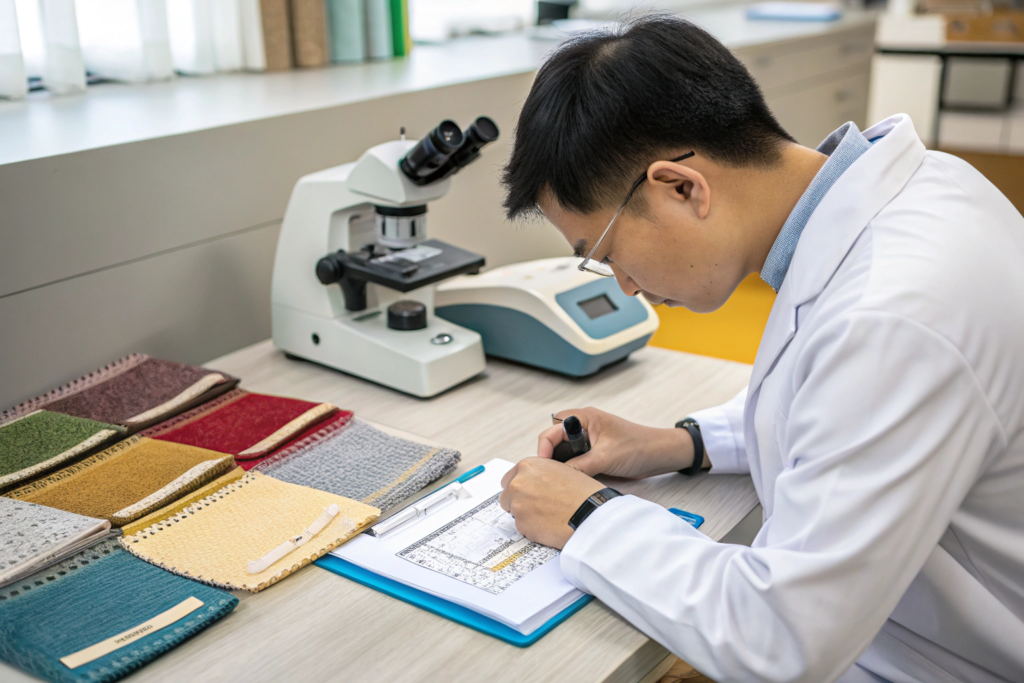
What fabric and trim tests do we perform in-house?
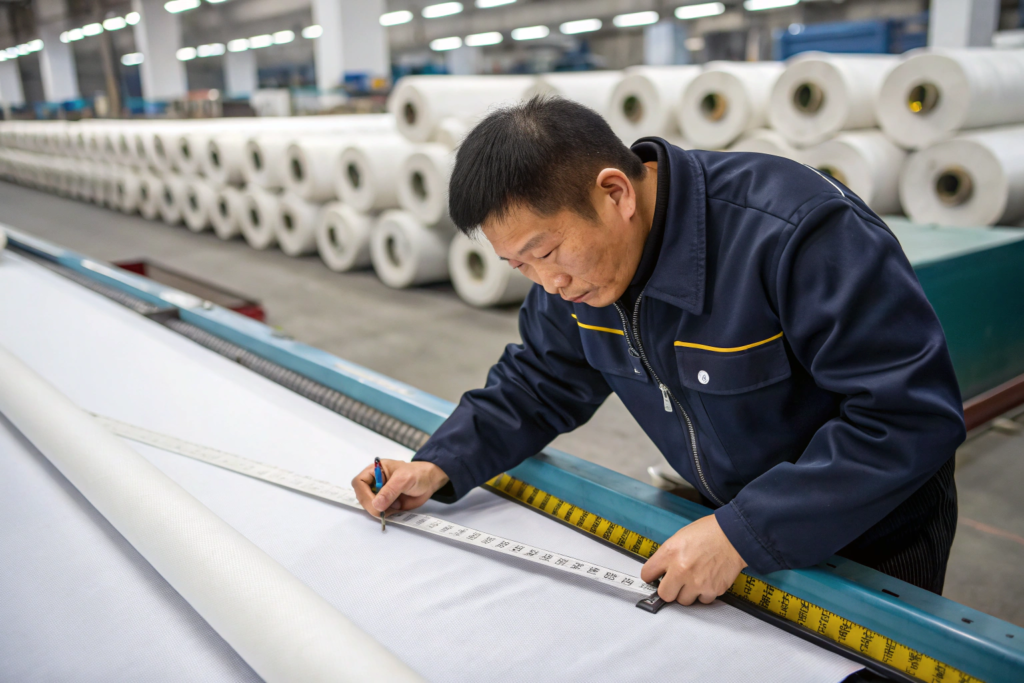
When your fabric arrives from the mill, it does not go straight to cutting. It goes to our inspection room. First, we perform a "shakeout" test. We unroll the entire length of fabric and inspect it under bright light. We look for weaving defects, dye streaks, or holes. We measure the width to ensure it matches the spec. A fabric that is 1 inch narrower than expected can ruin your pattern cutting and cause sizing issues. Next, we test for colorfastness. We rub the fabric with a white cloth, both dry and wet, to see if the dye transfers. For a client in Florida making bright, colorful resort wear, this test is critical. The last thing they need is red dye running onto a white skirt in the humidity. We also test for shrinkage. We wash a sample of the fabric and measure it before and after. If a cotton fabric shrinks 5%, we know we need to add that allowance to the pattern before cutting. These fabric quality control tests are our first line of defense. They ensure we are only cutting perfect materials.
How do we verify your tech pack before cutting?
A tech pack is your instruction manual. If it has errors, the whole production run will have errors. Before we cut anything, our technical team does a "tech pack audit." We check for consistency. Does the measurement chart on page 2 match the construction details on page 5? Is the stitch type specified? For a menswear brand in Chicago, their tech pack called for a specific type of reinforced seam on a pair of chinos. In the construction notes, they had accidentally specified a standard seam. We caught the inconsistency during the audit. We called them, clarified the intention, and corrected the tech pack before a single piece was cut. This saved them from having 1,000 pairs of pants with the wrong seam strength. This tech pack review is a free service we provide. It protects you from your own small mistakes.
What happens during production to catch defects early?
Waiting until the end to check quality is a recipe for disaster. If you find a problem after 1,000 pieces are made, you have 1,000 pieces of waste. You also have a huge delay. We check quality continuously while the garments are being made. This "in-line" system means we fix problems when they are small.
What is "line walking" and how does it work?
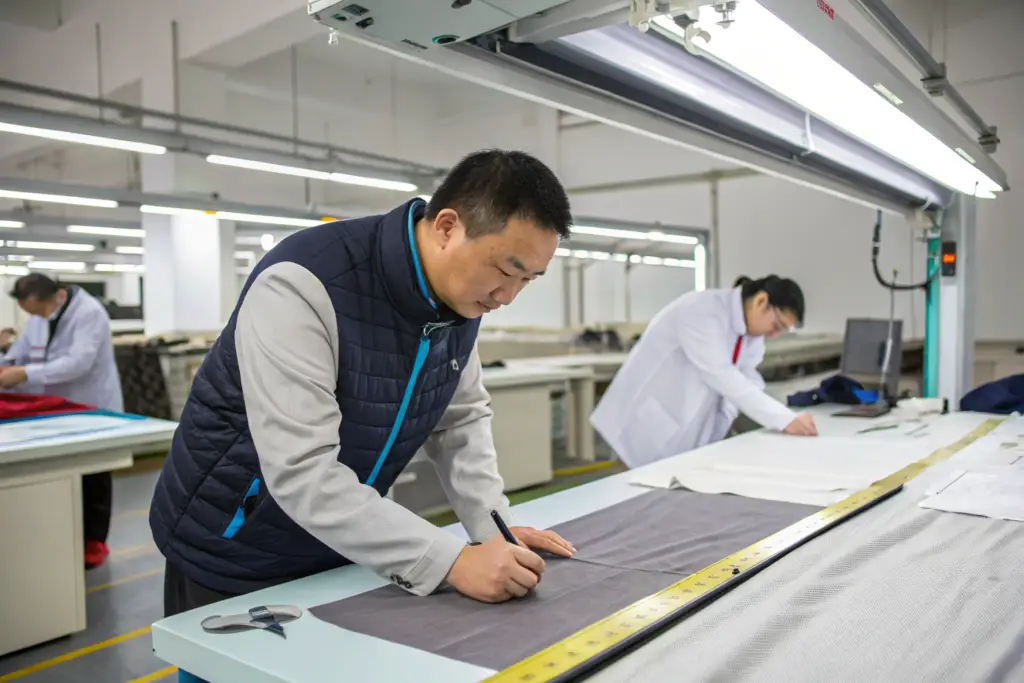
We have dedicated quality auditors who do not sew. Their only job is to "walk the line." They move from sewing station to sewing station all day long. At each station, they take a garment that was just completed at that step. They inspect it against the standard. For example, after the collar attachment station, the auditor checks that the collar is centered, the points are sharp, and the stitching is even. If the operator's machine is slightly out of adjustment, the auditor catches it on the 5th piece, not the 500th. For a children's wear brand in Seattle, our line walker noticed that the snaps on a line of rompers were not being aligned perfectly. The first few pieces were fine, but the operator had started rushing. We stopped the line, retrained the operator on the correct placement, and re-inspected the last 50 pieces. Only 3 were defective. We fixed them immediately. This patrol inspection keeps quality consistent throughout the entire production run.
How do we use "golden samples" on the production floor?
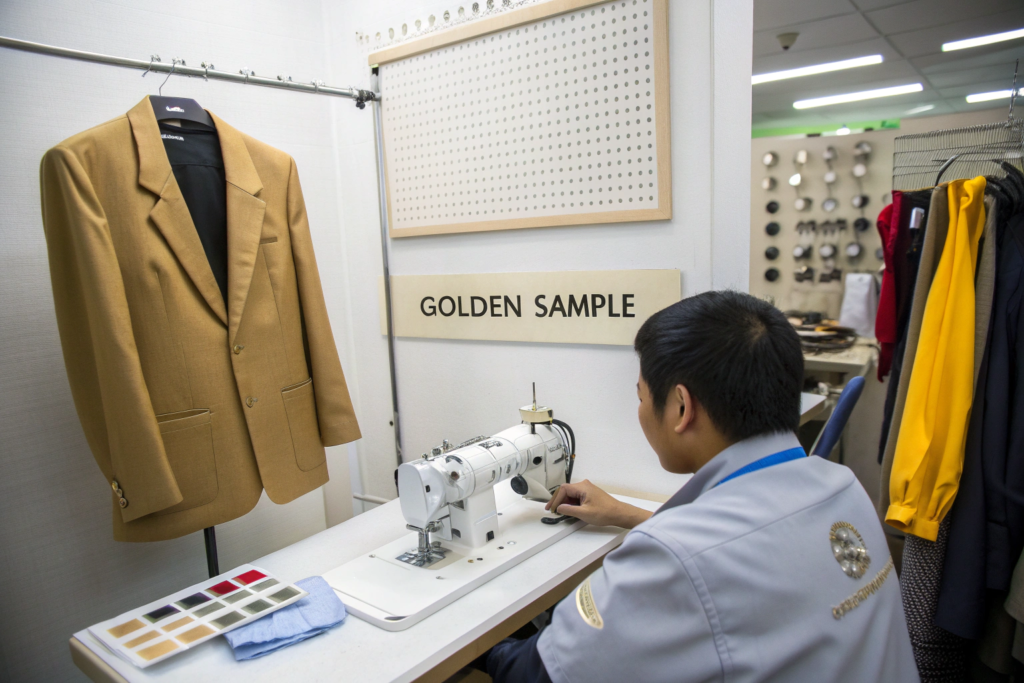
Every production line gets a "golden sample." This is the final, approved sealing sample, signed off by you. It is hung right next to the line supervisor's station. Every sewer knows that their work must match this golden sample. When there is a question about a stitch or a hem, they can walk over and look at the physical example. It removes ambiguity. For a complex activewear line for a brand in Colorado, the golden sample was essential. The garment had multiple panel pieces and reflective taping. The sewers constantly referred to the golden sample to check the taping placement. It was their visual guide. This simple tool, a physical reference standard, ensures that the production floor is always building to your exact approval, not to a vague memory of what was right.
How do we inspect finished goods before they ship?
After the last stitch is sewn, the work is not done. The garments go to the finishing and packing department. But before they are packed, we perform a rigorous final inspection. This is the last chance to catch anything that slipped through.
What is the AQL standard we follow?
We do not inspect every single garment in a large order. That is too slow and too costly. Instead, we use the internationally recognized AQL (Acceptable Quality Limit) standard. Specifically, we use AQL standards based on ISO 2859-1. For most of our private label clients, we work to an AQL of 1.5 for major defects and 2.5 for minor defects. This means that in a random sample, we allow a very small number of minor issues, but almost no major ones. Here is a simple table of how this works for a typical order:
| Order Size | Sample Size | Allowed Major Defects | Allowed Minor Defects |
|---|---|---|---|
| 501-1200 pcs | 80 pcs | 2 | 5 |
| 1201-3200 pcs | 125 pcs | 3 | 7 |
| 3201-10000 pcs | 200 pcs | 5 | 10 |
If we find more defects than the AQL allows, the entire batch is rejected. It goes back for 100% re-inspection and rework. This statistical quality control gives you a mathematical guarantee of quality, not just a hope.
What happens during the final packing check?
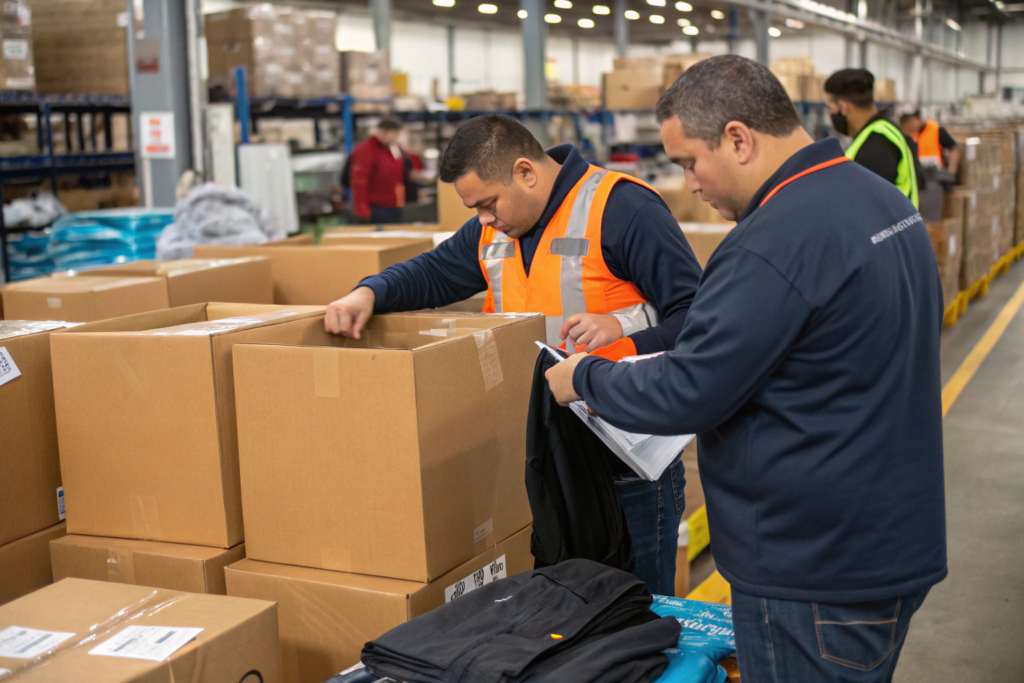
The final inspection also covers packing. We check that the poly bags are the right size. We check that the hang tags are attached correctly. We check that the sizes on the garments match the sizes on the carton labels. One of the most frustrating errors for a brand is receiving a box of size "M" that is full of size "S" garments. This destroys your inventory system. During packing, we have a separate auditor who does "carton marking verification." They open random cartons and verify the contents against the packing list. For a denim brand in Texas, we once found that a batch of 50 cartons had been mislabeled by a new packer. The cartons said "Size 30," but the jeans inside were "Size 32." We caught it during the final packing check. We relabeled every carton before they left the factory. The client received exactly what they ordered. This final packing inspection is your last line of defense against logistical chaos.
How do we ensure quality during shipping and delivery?
Our responsibility does not end at the factory gate. If a container gets wet on the ship, or if customs mishandles the boxes, the quality you receive is still bad. We control the process all the way to your door.
How does DDP shipping protect your goods in transit?
When we ship DDP (Delivered Duty Paid), we control the entire logistics chain. We choose the freight forwarder. We book the container. We oversee the loading. We require that all cartons are packed on pallets and wrapped in stretch film to protect against moisture. For a client in New York shipping high-end knitwear, moisture damage was a real fear. We ensured that every carton was lined with a moisture-proof bag inside and shrink-wrapped on the pallet. Because we manage the shipping, we can also track the container's environment. If there is a delay at the port, we know immediately and can communicate with you. This end-to-end supply chain control means the care we put into making the garment extends to how it is handled on its journey to you.
What is our process for handling defects you find?
Despite all our checks, occasionally a defect slips through. It is rare, but it happens. When it does, our response is what matters. We have a clear "claims process." You send us photos and a description of the defect. Our quality team reviews it. If it is our fault, we take responsibility immediately. We do not argue. We offer solutions. For a sportswear brand in Los Angeles, they received an order and found that a small batch of garments had a loose thread issue on the inside of the pocket. It was a minor defect, but it bothered them. We apologized. We offered a discount on their next order to cover the cost of having a local tailor correct the few affected pieces. We also traced the issue back to a specific operator on the line and retrained our team. This corrective action process ensures that every problem becomes a lesson that improves our system for you.
Conclusion
Quality is not a single moment. It is a system. At Shanghai Fumao, our system starts with testing raw materials and verifying your tech pack. It continues on the production floor with in-line line walking and golden samples. It is verified at the end with rigorous AQL inspections and packing checks. And it is protected during shipping with DDP control and a fair claims process. We build this system for every private label client because your reputation is our reputation. When your customers love your clothes, they keep coming back. That is good for both of us.
If you are looking for a manufacturing partner who treats quality as a non-negotiable foundation, not an afterthought, let's talk. Contact our Business Director, Elaine, at elaine@fumaoclothing.com. Tell us about your brand and your standards. We will show you how our quality system can protect them.