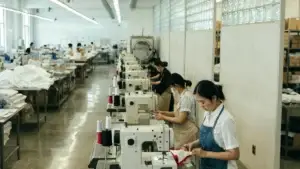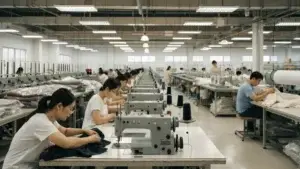
I learned about hidden costs the hard way. It was my third year in business, and I had landed my biggest client yet. A department store chain in the Midwest wanted 20,000 of our denim jackets. We negotiated the price, signed the contract, and celebrated. Six months later, when we finally closed the books on that order, I was stunned. We had made almost no profit. The price we agreed on looked great on paper, but the actual cost of producing and delivering those jackets was far higher than I had ever imagined. I had missed the hidden costs.
Hidden costs in garment manufacturing are expenses not included in the factory's quoted price. They include raw material waste, sample development fees that get written off, third-party inspection charges, rush shipping costs, currency fluctuation losses, and the soft cost of your team's time fixing preventable problems. Identifying these costs before you start is the difference between profit and loss.
I have been on both sides of this equation for over 20 years. As a buyer early in my career, I lost money to hidden costs. As a factory owner now at Shanghai Fumao, I see buyers make the same mistakes every day. They focus all their energy on negotiating the garment price down by 10 cents, but they ignore the costs that can add dollars to their final landed price. Let me share what I have learned so you can protect your margins.
What sampling and development fees are often forgotten?
When a new client asks for a price, they usually want the "bulk price." They want to know what 5,000 pieces will cost. But they forget that before you can produce 5,000 pieces, you have to develop the product. Sampling is not free. And for complex designs, sampling can become expensive very quickly.
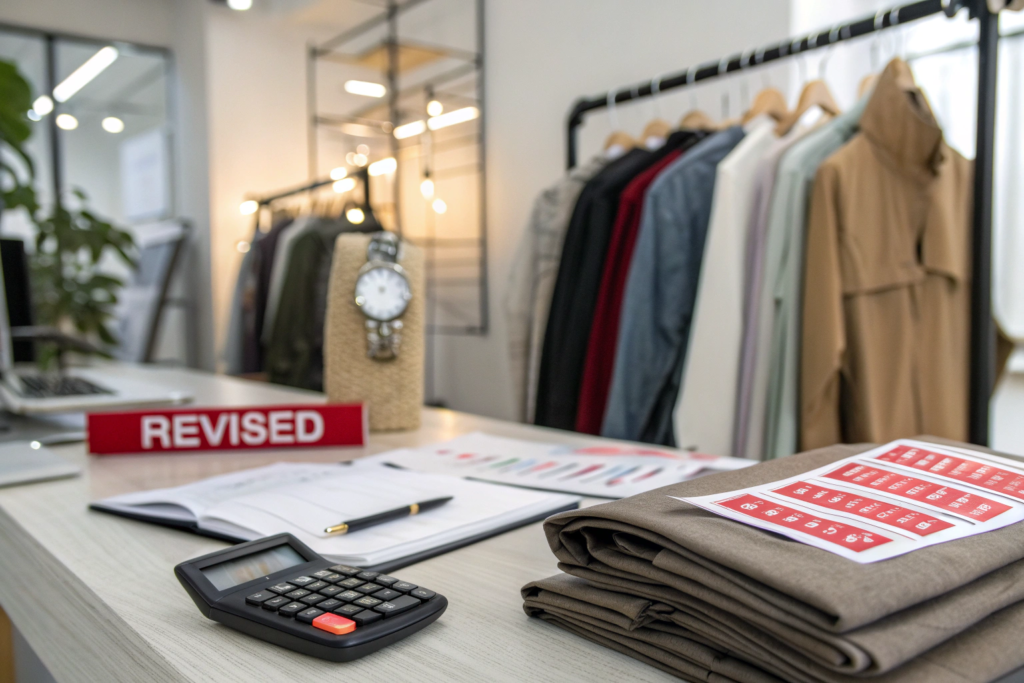
Sampling and development fees often include pattern making costs, sample fabric and trim sourcing, labor for the sample room, shipping costs for sending samples, and the cost of multiple revision rounds. These fees can easily add several hundred to several thousand dollars to your project before a single bulk piece is cut.
I had a client from New York who wanted a very complex women's jacket. It had multiple panels, special stitching, and a unique lining. We quoted him a sampling fee of $400 for the first sample. He was surprised. He said, "Other factories quoted me lower." I explained that our sampling fee includes pattern making, cutting, sewing, and one round of revisions. The cheaper factories were only quoting for the sewing. They would hit him with extra charges for every pattern change.
We went ahead. The first sample was good, but he wanted changes to the collar. That was one revision, included. The second sample was better, but he wanted the sleeves adjusted. That was a second revision, which we charged for. By the time we had a final approved sample, he had paid $800 in sampling fees. But that sample was perfect. When we went into bulk production, we had zero issues. The patterns were right. The fit was right. He saved thousands in bulk production problems because he invested in proper sampling. For a guide on managing sampling costs, you can look at resources from the Council of Fashion Designers of America.
Why do pattern and grading costs vary between factories?
Pattern making and grading are technical skills. They are not the same everywhere. A pattern is the blueprint of your garment. Grading is the process of scaling that blueprint up and down to create all the sizes you need. The cost of this work varies based on the complexity of your design and the skill of the pattern maker.
A simple t-shirt pattern might cost $50 to $100 to create. A complex, tailored blazer with 20 pattern pieces might cost $300 to $500. Grading adds more cost. If you have five sizes, the grader has to calculate the correct measurements for each size based on your grade rules.
Some factories include pattern making in their sampling fee. Others charge it separately. Always ask. At Shanghai Fumao, we are transparent about these costs. We will tell you upfront what the pattern making and grading will cost based on your design. If a factory gives you a very low sampling fee, ask them what is included. You may find that the pattern making is an extra charge that appears on your first invoice. Knowing this in advance helps you budget accurately. You can learn more about the grading process from industry publications like Textile World.
How many sampling rounds should you budget for?
This is one of the most common questions I get. And the answer is always the same: budget for at least two to three rounds. The first sample is rarely perfect. It gets you close. The second sample incorporates your feedback and should be very close. The third sample is usually for final approval.
I had a client once who was very organized. He sent us a perfect tech pack. Every measurement was there. Every stitch type was specified. His first sample was approved with no changes. That was a rare and beautiful thing. But most designs are not that perfect. There is always something. The pocket is a little low. The color of the thread is slightly off. The fit feels different on a real body than it did in the sketch.
Budgeting for three rounds gives you a cushion. It means you are not stressed if the first sample needs work. It means you can take the time to get it right. Rushing sampling to save a few hundred dollars almost always leads to mistakes in bulk production that cost thousands. Be patient. Invest in the sampling process. It is the cheapest insurance you can buy. For more on the sampling process, this guide to apparel sampling is very helpful.
How do payment terms and currency fluctuations impact your real cost?
Money is not just about the price on the invoice. It is about when you pay and what currency you pay in. I have seen buyers lose significant money because they did not pay attention to these details. The garment price stayed the same, but the cost in US dollars went up.
Payment terms and currency fluctuations affect your real cost because they determine your cash flow and your exposure to exchange rate risk. Paying a deposit months before delivery ties up your capital. Paying in a foreign currency exposes you to rate swings that can add 2% to 5% to your cost if the dollar weakens against the Chinese Yuan.
I remember a client in 2020 who placed a large order with us. The price was agreed in US dollars. But between the time he paid his deposit and the time he paid the final balance, the value of the dollar dropped against the Yuan. We do not change our prices based on daily exchange rates. But for him, when he converted his final payment, it cost him 4% more than he had planned. It was not our cost. It was his bank's exchange rate and the market movement.
You can protect yourself from this. You can agree to pay in US dollars, which most international factories accept. You can also use financial instruments like forward contracts to lock in an exchange rate. But the simplest way is to be aware. Do not ignore the currency. Factor a small buffer, maybe 2% to 3%, into your cost model to account for potential exchange rate movements. For more on managing international payments, the International Trade Administration has useful resources.

What is the true cost of a 30% deposit versus a 50% deposit?
The deposit is the money you pay upfront to secure your production slot and buy raw materials. The percentage matters because it ties up your cash. Cash that is sitting in a factory's bank account is cash you cannot use to run your business.
A 30% deposit is standard in the industry. It covers the cost of fabric and trim. The remaining 70% is paid before shipment, after you have approved the final inspection. A 50% deposit is higher. It means more of your money is out of your control for longer.
The true cost of a higher deposit is the opportunity cost. What else could you have done with that money? Could you have used it to launch a marketing campaign? Could you have used it to develop another product? Every dollar tied up in a deposit is a dollar not working for you. When you negotiate with a factory, ask about their deposit terms. A reputable factory with strong cash flow should be comfortable with a 30% deposit. If they demand 50% or more, ask why. They may have cash flow problems themselves, which is a red flag. At Shanghai Fumao, we work with clients to find deposit terms that work for both of us, usually 30% to start.
How do bank and wire transfer fees add up over multiple orders?
This is a small cost that most buyers ignore. But over time, it adds up. Every time you send an international wire transfer, your bank charges a fee. The factory's bank charges a receiving fee. And if there is a correspondent bank in the middle, they charge a fee too.
A single wire transfer might cost you $25 to $50 in fees. If you pay a 30% deposit and then a 70% balance, that is two wires per order. If you place six orders a year, that is 12 wires. At an average of $40 per wire, you are spending $480 a year just on bank fees. Over five years, that is $2,400.
These fees are pure expense. They do not buy you anything. You can reduce them by consolidating payments. Some factories accept payment platforms like PayPal or TransferWise, which have lower fees. But always check the total cost. Ask your factory for their bank details and then ask your bank what the total fee will be to send that amount. Build that fee into your cost model. It may seem small, but it is real money leaving your account. For a comparison of international transfer fees, websites like Wise can be helpful.
What logistics and warehousing costs surprise first-time importers?
The garment is made. It is packed. It is on a ship. The hard part is over, right? Wrong. For many first-time importers, the hardest part is just beginning. The logistics and warehousing phase is where many hidden costs appear. They appear after you have already paid the factory, so they hit your profit margin directly.
Logistics and warehousing surprises include demurrage and detention fees at the port, customs brokerage fees, trucking and drayage charges, warehousing storage fees, and the cost of repackaging or relabeling if your cartons do not meet retailer requirements. These costs can easily add 10% to 15% to your total landed cost.
I had a client from Chicago who imported his first container. He was so focused on the production that he forgot to arrange his trucking in advance. The ship arrived, the container was unloaded, and he had no one to pick it up. The container sat at the port for five days. The port charged him demurrage. Then his trucker finally arrived, but the container was in a different part of the terminal, so there was another fee. By the time the container reached his warehouse, he had paid an extra $1,200 in unexpected charges.
The lesson is simple. Plan your logistics before your goods ship. Have a freight forwarder lined up. Know who will clear customs. Know who will truck the container to your door. Have your warehouse ready to receive it. If you are using DDP terms, the factory handles all of this for you. That is one reason many of our clients prefer DDP. They pay one price, and the goods arrive. The risk and the hidden costs are ours to manage, not theirs.
What are demurrage and detention charges at US ports?
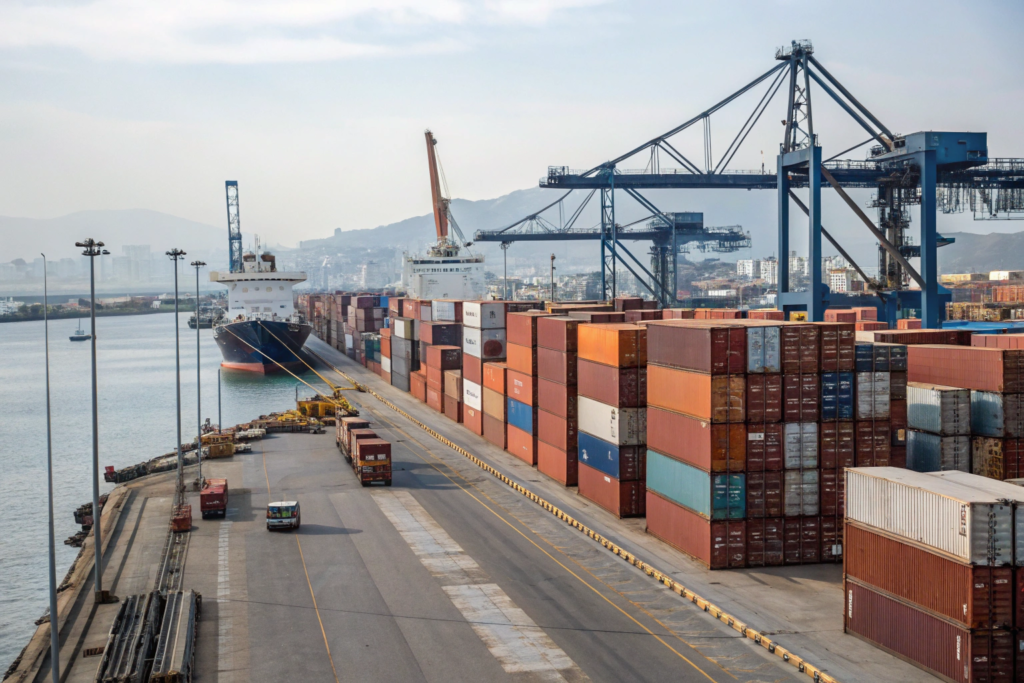
These are two of the most common and most frustrating charges for new importers. Demurrage is a charge for leaving a container inside the port terminal beyond the free time allowed. Detention is a charge for keeping the container itself, the physical metal box, beyond the free time allowed by the shipping line.
Here is how it works. Your container arrives at the port. The port gives you a few days, usually 3 to 5, to pick it up. If you do not pick it up in that time, demurrage starts. It can be $100 to $200 per day, and it increases the longer you wait. Then, once you pick up the container, the shipping line gives you a few days to unload it and return the empty container. If you keep it longer, detention starts.
These charges can spiral quickly. If your paperwork is wrong, if customs holds your shipment, or if your trucker is late, you can end up paying thousands. The best way to avoid them is to work with an experienced freight forwarder who knows the process. They will ensure your paperwork is correct and your trucking is scheduled. Do not try to handle this yourself. It is too easy to make a costly mistake. The Federal Maritime Commission has information on demurrage and detention rules.
Why does warehousing inventory for months eat into your profit?
Warehousing seems simple. You store your goods until you sell them. But storage costs money. And the longer your goods sit, the more that cost eats into your profit.
Let us do the math. You import 5,000 t-shirts. They cost you $10 each landed, so your total inventory investment is $50,000. You store them in a warehouse. The warehouse charges you $200 a month. That does not sound like much. But if it takes you six months to sell all 5,000 shirts, you have paid $1,200 in storage fees. That is an extra $0.24 per shirt, which comes directly out of your profit.
But the bigger cost is the opportunity cost of that $50,000. It is tied up in t-shirts sitting in a warehouse. It is not in your bank account earning interest or being used to develop your next collection. If you could have sold those shirts in three months instead of six, you would have had that money back sooner to reinvest. This is why forecasting your sales and managing your inventory is so critical. Order what you can sell in a reasonable time. Do not let the allure of a lower unit price for a larger quantity trick you into buying inventory that will sit for a year. That "savings" on the unit price is often eaten up by storage and the cost of your tied-up capital.
Conclusion
Hidden costs are not mysteries. They are predictable expenses that experienced buyers know to look for. They are the sampling rounds, the pattern making, the currency fluctuations, the bank fees, the demurrage charges, and the warehousing costs. When you add them all up, they can turn a profitable deal into a break-even exercise or worse. The key to protecting your margins is to build a complete cost model before you start. Ask the factory about every fee. Talk to your freight forwarder about every port charge. Talk to your bank about every transfer fee. Build a buffer for the unexpected.
At Shanghai Fumao, we believe in radical transparency. We want our clients to know exactly what they are paying for and why. We have seen too many brands struggle because they did not understand the full cost of manufacturing. We are here to help you navigate this complexity. If you are planning your next collection and want to build a cost model that protects your profit, please reach out. Contact our Business Director, Elaine, at elaine@fumaoclothing.com. Let us work together to make sure there are no surprises, only success.