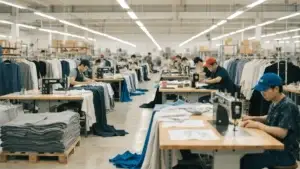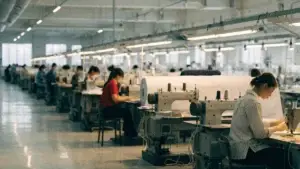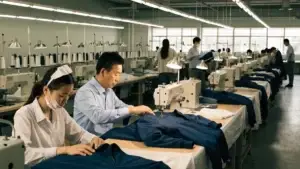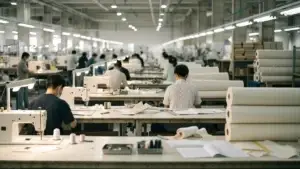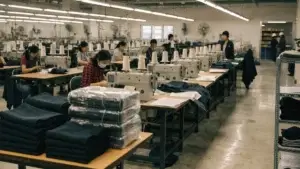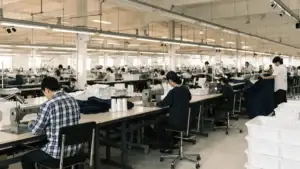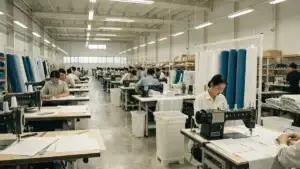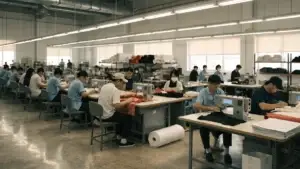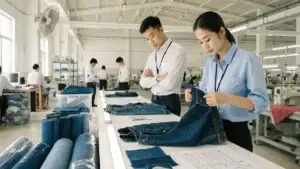
I started my career on the other side of this table. Before I owned Shanghai Fumao, I was a buyer just like you. I would fly to trade shows in Hong Kong, walk miles of aisles, and collect hundreds of business cards. I would find a great supplier for plain t-shirts, another for hoodies, and another for caps. Then I would bring them all back to the U.S., sew in my labels, and hope for the best. But I quickly learned that managing multiple suppliers was a nightmare. One shipment would be late, another would have inconsistent colors, and my profit margin would disappear in a cloud of logistics fees and customer complaints.
Sourcing apparel for rebranding in the American market requires a strategic approach focused on finding a full-package manufacturing partner who can deliver consistent quality, blank or white-label products, reliable timelines, and transparent communication. It is not about finding the cheapest individual product; it is about building a supply chain that protects your brand's reputation and maximizes your long-term profitability.
Over the last two decades, I have helped hundreds of American brands source their products. I have seen what works and what fails. The brands that succeed are not the ones who find the lowest price. They are the ones who find a reliable partner. They understand that rebranding is not just about slapping a logo on a shirt. It is about creating a product that customers will love and come back for. Let me walk you through how to do it right.
What is the difference between blank, private label, and custom manufacturing?
When I talk to new buyers, they often use these terms interchangeably. But they mean very different things for your business model, your investment, and your profit potential. Understanding the difference is the first step in building your sourcing strategy.
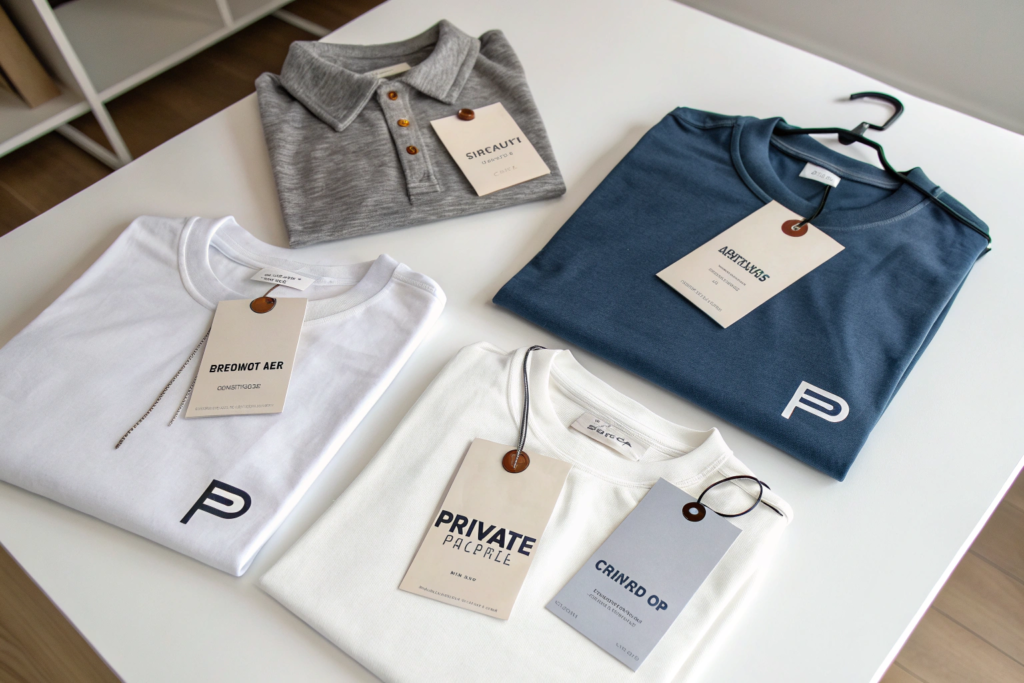
Blank manufacturing means you buy finished, unbranded garments from a factory's existing stock. Private label means you take an existing factory style and add your own woven labels and hang tags. Custom manufacturing means the factory creates a unique garment from scratch based on your designs, patterns, and specifications.
Let me give you a real example from our own business. We have a client in California who started with blank manufacturing. He bought our basic, high-quality t-shirts, screened his own designs on them in his garage, and sold them at local markets. It was a great way to start with very low risk.
As he grew, he moved to private label. He kept the same t-shirt style, the same fabric, the same fit. But we sewed his brand's woven label into the neckline and packed them in his custom poly bags. This gave him a more professional look without the cost of developing a new pattern.
Now, he is a major brand. He works with us on custom manufacturing. We developed a unique fit just for his customers. We source exclusive fabric with his own custom mill. We create styles that no one else has. His margins are higher, and his customers are more loyal because they cannot find his products anywhere else. Each step requires a different level of investment and commitment. You need to choose the model that fits your current stage and your growth goals.
How does blank manufacturing work for new brands testing the market?
Blank manufacturing is the safest, fastest, and most affordable way to start a rebranding business. You are essentially buying ready-made inventory. The factory has the styles in production already. They have the fabric in stock. They have the cutting and sewing lines running.
For you, the buyer, this means minimal lead times. Instead of waiting 90 to 120 days for custom development and production, you can often get blank goods in 30 to 45 days. This is perfect for testing a new market, a new design, or a new product category without a huge financial commitment.
We work with many startup brands this way. They order 300 pieces of a basic hoodie in three colors. They screen print their logo and sell them online. They see what sells. Then they come back and order 500 more. They are learning about their customers without betting the farm on a custom style that might not sell. The trade-off is that your product is not unique. Other brands can buy the same blank hoodie. But for testing and early growth, this is often the smartest path. You can find a wide selection of wholesale blank apparel from suppliers on platforms like Alibaba, but always verify the factory behind the listing.
When should you invest in custom manufacturing for higher margins?
You should invest in custom manufacturing when you have data. When you know what your customers want. When you have a loyal following that expects a specific fit or fabric. Custom manufacturing is an investment in differentiation.
The math is simple. A blank t-shirt might cost you $5. You can sell it for $25. That is a $20 gross profit. A custom t-shirt with a unique fabric and a perfect fit might cost you $8. But because it is unique and higher quality, you can sell it for $40. That is a $32 gross profit. The margin is higher, and you have no direct competitor with the exact same product.
I had a client who made yoga pants. She started with blanks, but the fit was never quite right. Women complained that the waistband rolled down during practice. She decided to invest in custom manufacturing with us. We developed a new pattern with a wider, more supportive waistband. We sourced a special moisture-wicking fabric. The new pants cost her 20% more, but she was able to raise her price by 50%. Her customers loved the better fit, and her profits soared. If you are ready to make that leap, you need a partner who understands pattern making and grading to bring your vision to life.
How do you find reliable apparel manufacturers in China and Vietnam?
I have been in this industry for over 20 years, and I still get asked this question constantly. Where do you find the good ones? The internet is full of suppliers, but it is also full of traders and middlemen who will take your money and disappear. Finding a reliable manufacturer is part research, part instinct, and part verification.
You can find reliable manufacturers through verified B2B platforms like Alibaba with Gold Supplier status, by attending industry trade shows in the U.S. or Asia, through personal referrals from other brand owners, and by working with sourcing agents who have a track record of vetting factories. The key is to verify every claim with documentation and third-party checks.
I remember a buyer from Florida who found us through a referral. He had been burned twice by factories he found on a public listing site. They sent him beautiful samples but then shipped garbage. A friend in the industry recommended he talk to us. That referral was worth its weight in gold. He came to us already trusting us because someone he trusted vouched for us. That relationship is now ten years strong.
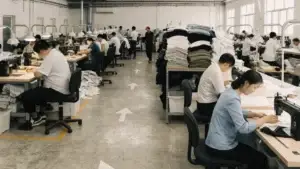
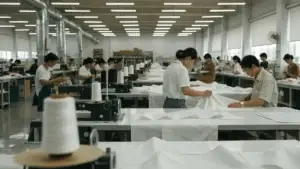
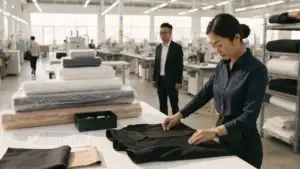
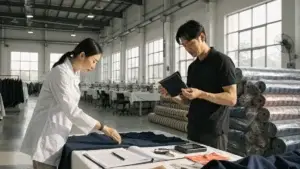
Trade shows are another excellent way. Shows like Magic in Las Vegas or Premier Vision in Paris are full of vetted suppliers. You can meet face to face, touch the fabrics, and get a feel for the people behind the company. It is harder to fake competence when you are sitting across a table from someone. And if you can, visiting a factory in person is the ultimate verification. Seeing the sewing lines, meeting the QC team, and walking through the cutting room tells you more than a hundred emails ever could.

What should you look for on Alibaba to find real factories, not traders?
Alibaba is a huge marketplace. It has real factories, and it also has many trading companies. Traders are middlemen. They do not own a factory. They take your order, mark up the price, and send it to a factory. This adds cost and removes your control over quality and communication.
To find real factories on Alibaba, you need to look at the supplier's profile carefully. First, look for "Gold Supplier" status with a high number of years. This means they have paid for verification and have been in business for a while. Second, look for the "Onsite Check" badge. This means a third-party company visited the factory to verify their existence and capabilities. You can often view the inspection report.
Third, look at their "Business Type." It should say "Manufacturer," not "Trading Company." But be careful, some traders also list themselves as manufacturers. So look at their product range. If they sell everything from t-shirts to shoes to electronics accessories, they are almost certainly a trader. A real factory specializes. At Shanghai Fumao, we focus on apparel. We do not sell bags or hats. That focus is a sign of a real manufacturer. Finally, ask for a video call. A real factory can walk you onto their production floor in real time. A trader cannot.
Why are personal referrals better than online searches for finding suppliers?
Trust is the most expensive thing in this business. You can spend thousands of dollars on samples and inspections. But a personal referral from someone who has already done that work is invaluable.
When another brand owner recommends a factory, they are putting their own reputation on the line. They are telling you, "I have used them, they delivered, and I trust them." This is worth more than any Gold Supplier badge. It shortcuts the vetting process by months.
I have built my business on referrals. Many of our clients come from other clients. They talk to each other at trade shows, on industry forums, or in Facebook groups. One brand owner will say, "I am using a factory in Shanghai called Fumao, and they are great." Another brand owner will make a note and contact us. That is how lasting partnerships begin. So, get involved in industry communities. Join apparel sourcing groups on LinkedIn or Facebook. Ask for recommendations. Listen to the stories. The collective wisdom of other brand owners is your best protection against bad suppliers.
I have had this conversation too many times. A new client calls me, excited about the price they negotiated. They say, "I am getting these hoodies for $8.50! I can sell them for $40 and make a fortune!" Six months later, they call back, and the tone is different. They tell me, "I do not understand. My profit is gone. What happened?" What happened is they forgot to calculate the full cost of rebranding.
The hidden costs of rebranding apparel include logo label and hang tag production, warehousing and fulfillment fees, marketing and photography costs, chargebacks from retailers for labeling errors, and the cost of holding inventory that does not sell as quickly as projected. These soft costs can easily add 20% to 40% to your landed cost.
I remember a client from Texas who ordered 10,000 custom hoodies. He negotiated a great price with us. He calculated his shipping and duty. He thought he had it all figured out. But he forgot to budget for the custom woven labels, the custom hang tags, and the special poly bags he wanted. Those items alone added another $0.75 per hoodie. Then, when the hoodies arrived, he had to store them. He did not have a warehouse, so he rented space. That was another $500 a month. He hired a photographer to shoot the new line. That was $2,000. By the time he actually started selling, his cost was much higher than he planned.
The lesson is simple. When you build your cost model, include everything. The price of the garment is just the beginning. You need to factor in every single cost from the factory door to the customer's hands. Only then do you know your true profit potential.

How do labeling and packaging requirements affect your pricing?
Labels and packaging might seem like small details. But they are critical for rebranding, and they have real costs. In the U.S., there are also legal requirements for labeling that you must follow.
First, there is the cost of the labels themselves. Woven labels are more expensive than printed labels but look more professional and last longer. You need main labels, care labels, and sometimes size labels. Then you need hang tags. These are printed cards that hang from the garment with your branding, price, and sometimes marketing messages.
Then there is the packaging. How will your customer receive the garment? In a poly bag? In a box? With tissue paper? Each of these choices has a cost. And if you are selling to retailers, they often have strict requirements. They might require specific barcode labels on each poly bag. They might require the cartons to be labeled in a certain way. If you get this wrong, you can face chargebacks, where the retailer deducts money from your payment for non-compliance.
At Shanghai Fumao, we help our clients navigate this. We can source the labels. We can print the hang tags. We can pack the garments exactly as your retailer requires. We have done this for hundreds of brands, so we know the FTC labeling requirements for the U.S. market. Getting this right the first time saves you money and frustration.
What are the risks of minimum order quantities for rebranding?
Minimum order quantities, or MOQs, are one of the biggest challenges for rebranding businesses. Factories have MOQs for fabrics, for colors, and for styles. If you cannot meet these MOQs, you either pay more or you cannot make the product at all.
The risk of MOQs is inventory risk. If you have to order 1,000 pieces of a style to meet the MOQ, but you only have confidence you can sell 500, you are stuck with 500 pieces of inventory. That inventory ties up your cash. It takes up space. And if the style does not sell, you have to discount it, which eats into your profit.
I advise my clients to be realistic about MOQs. Do not let a factory talk you into ordering more than you can sell just to get a lower unit price. A lower price on 1,000 pieces that you cannot sell is a worse deal than a higher price on 500 pieces that you sell out of. Start with lower MOQs, prove the style, and then scale up. Some factories, like ours, are flexible. We work with growing brands to find solutions. Maybe we use a stock fabric instead of a custom one to lower the MOQ. Maybe we combine multiple colors into one production run. There are always ways to work together if the factory is a true partner.
Conclusion
Sourcing apparel for rebranding in the American market is a journey. It starts with understanding your own business model and choosing the right manufacturing path, whether that is blank, private label, or custom. It continues with the hard work of finding a reliable partner you can trust, using referrals, trade shows, and careful online verification. And it requires a clear-eyed view of all the costs involved, from labels and packaging to inventory and marketing.
At Shanghai Fumao, we have been on this journey with hundreds of American brands. We have helped startups test the market with blanks. We have helped growing brands build their identity with private label. And we have helped market leaders create unique products with full custom manufacturing. We understand the American market because we have served it for decades. We are not just a factory. We are a partner in your success.
If you are ready to start or grow your rebranding business, I invite you to reach out. Let us talk about your goals, your challenges, and how we can build a supply chain that works for you. Please contact our Business Director, Elaine, at elaine@fumaoclothing.com. We are here to help you bring your vision to the American market.