Have you ever wired a large deposit to a new supplier, only to hear nothing for weeks? You lie awake wondering if your money is gone. Or maybe you've had a factory demand the full balance before they even put your goods on a ship, leaving you with no leverage if something is wrong. The fear is real. I've seen it in the eyes of hundreds of buyers.
The standard payment terms for full package manufacturing are typically 30% deposit to start production, and 70% balance payment before shipment, usually against a copy of the Bill of Lading. This structure protects both parties. The deposit covers our initial material costs. The balance paid on shipping documents ensures you don't pay for goods you haven't received, and we don't ship goods we haven't been paid for.
I'm the owner of Shanghai Fumao. For 15 years, I've built this business on trust, but trust needs a framework. Money is the most sensitive part of any partnership. Let me walk you through the standard terms, the variations, and how to protect yourself while building a strong relationship with your factory.
Why Is A Deposit Required To Start?
A client from Miami once asked me, "Why do you need 30% upfront? Don't you trust me?" I explained that it wasn't about trust. It was about physics. I showed him the invoice for his fabric. It was $15,000. I showed him the invoice for his custom buttons. Another $2,000. If I used my own money to buy these materials, and then he changed his mind or cancelled, I would be stuck with fabric and buttons I couldn't use for anyone else. He understood immediately.
The deposit is not a profit center for the factory. It is a cash flow tool. We use your deposit to pay the fabric mills and trim suppliers. We cannot start production without materials. A 30% to 50% deposit is standard industry practice because it covers the "hard costs" of the raw materials. It shows us you are serious and committed to the order.
Let's break down where your deposit goes. The moment you approve your samples and sign the purchase order, we start placing orders with our suppliers. The fabric mill requires a deposit from us, usually 30% to 50%. The button factory requires payment in full for custom orders. The label maker needs money to run their looms. We are essentially acting as your bank, coordinating all these suppliers. The deposit you give us flows directly to them. We don't see a penny of profit from it until the garment is sewn and shipped. At Shanghai Fumao, we are very transparent about this. If you ask, we can show you the pro-forma invoices from our suppliers. Some of our long-term clients even pay the fabric mill directly to save a step. But for most, the 30% deposit is the simplest and safest method. The percentage can vary. For a simple order using stock fabric, the deposit might be only 30%. For a complex order using expensive, custom-woven fabric, we might ask for 50% because our own supplier demands it.
What Happens If I Cancel After Paying The Deposit?
This is the hard question. If you cancel after we have ordered the fabric, you are legally in breach of contract. You will likely lose your deposit. The factory has incurred costs. They have your fabric. They might be able to sell it to another client, but if it's a custom color or a custom weave, it's probably worthless to anyone else. In a good partnership, we would try to mitigate your loss. We would try to use the fabric for another order. We would deduct only the actual costs we've incurred and refund the rest. But this is a negotiation. The contract protects us both. The deposit is your commitment. If you cancel, we are protected. If we fail to deliver, you are protected (more on that later). I've only had a few cancellations in 15 years. In most cases, we worked out a solution. One client in Texas had to cancel due to a family emergency. We kept his fabric in our warehouse for six months. When he was ready, we used it for his new order. No extra cost. That's the kind of relationship you want.
Can I Negotiate A Lower Deposit?
Yes, you can. But it depends on your relationship with the factory. For a first order, most factories will stick to 30% or 50%. It's their security. For a repeat client with a good payment history, we are much more flexible. We have clients who now pay only 10% deposits. We have one client in Boston who we trust so much, we sometimes start production on just a purchase order, with no deposit at all, because we know his check is coming. But that trust is earned over years. You can also negotiate a lower deposit if you agree to pay for the fabric directly, or if you use a Letter of Credit (which we will discuss next). The key is to be honest about your cash flow. If 30% is a strain, tell us. We might be able to split it into 20% now and 20% later, or we can adjust the payment schedule. Communication is everything. Don't just agree to terms you are uncomfortable with. Talk to us.
What Are The Options For The Final Balance Payment?
A client from Seattle once insisted on paying the full balance only after the goods arrived at his warehouse. I had to say no. I explained that once the container leaves my factory, I have no control. The ship could sink. It could get stuck in customs. If I have to wait 40 days for my money, I can't pay my workers or buy materials for the next order. He understood. We agreed on payment against the Bill of Lading.
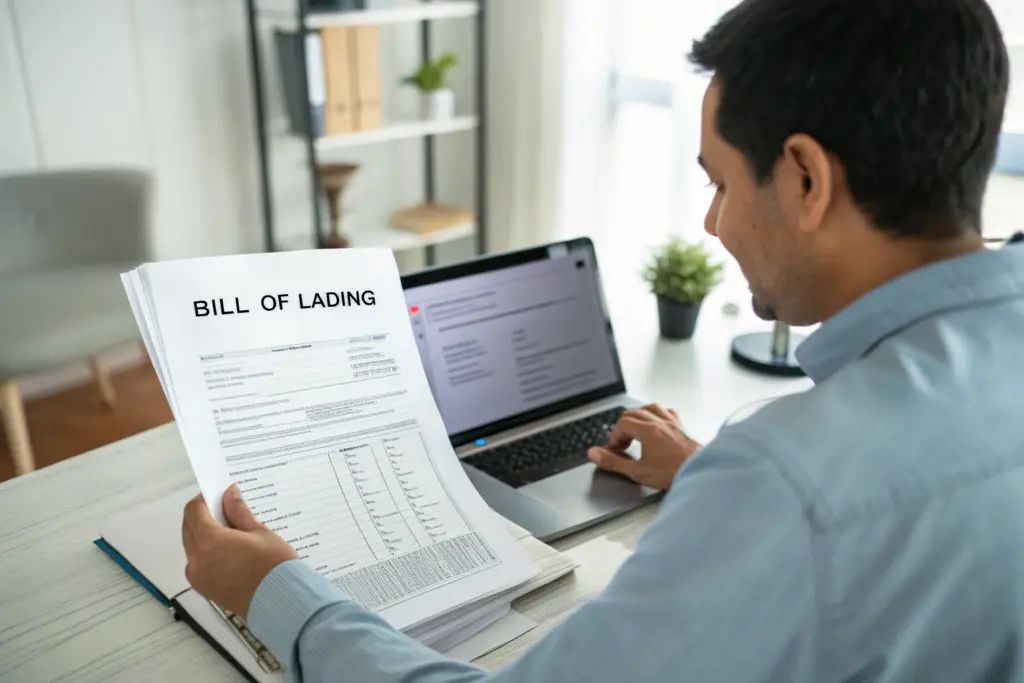
The standard for the final 70% balance is payment "against BL" or "against shipping documents." This means once the container is loaded on the ship, we email you a copy of the Bill of Lading, the commercial invoice, and the packing list. You then wire the balance. Once we receive it, we courier the original documents to you, or release them electronically, so you can claim your goods at the destination port.
The Bill of Lading (B/L) is the key. It is the title of ownership for the goods. Whoever holds the original B/L owns the container. By paying against a copy of the B/L, you are ensuring that we have actually shipped the goods. We can't get the original documents to you until you pay. This is a secure system. It has worked for decades. Some clients prefer to pay by T/T (Telegraphic Transfer) , which is a wire transfer. It's fast and simple. Others prefer a Letter of Credit (L/C) . An L/C is a bank-to-bank guarantee. Your bank promises to pay our bank once we present the shipping documents. It's very secure, but it's also more paperwork and can be slower. We accept both. For very large orders (over $100,000), an L/C is common. For most orders, a simple T/T is fine. We also offer D/P (Documents against Payment) , where the bank handles the document exchange. But T/T against BL copy is by far the most common and easiest.
What Is A Letter Of Credit And How Does It Work?
A Letter of Credit (L/C) is a complex but very secure payment method. You go to your bank. You tell them you want to pay us $50,000 for a shipment of goods. Your bank issues an L/C, which is a document promising to pay our bank once we present proof of shipment. We then ship the goods. We take the Bill of Lading, the invoice, the packing list, and any other required documents (like a certificate of inspection) to our bank. Our bank checks the documents against the L/C. If everything is perfect, they send them to your bank. Your bank then pays our bank, and we get our money. The L/C protects you because we only get paid if we ship exactly what the L/C says. It protects us because your bank guarantees payment, not just your promise. However, L/Cs are strict. If we misspell a word on the invoice, the bank can reject it. It requires perfect paperwork. For a first-time client or a very large order, an L/C is a great tool. We have a dedicated team to handle L/Cs because the documents must be flawless. We use it often with clients who have trade financing needs.
Is It Safe To Pay The Full Balance Before Shipment?
Generally, no. I advise my own clients never to pay 100% upfront. If you pay in full before the goods are shipped, you lose all your leverage. If the quality is bad, you have already paid. If the shipment is late, you have already paid. The factory has no incentive to fix problems. The standard model of deposit + balance against shipping documents is designed to protect you. You have skin in the game with the deposit, but you keep the majority of the money until you have proof the goods are on their way. There are exceptions. For very small orders, like sample orders or small production runs under $2,000, a factory might ask for 100% upfront. The administrative cost of processing a 30% deposit and then a 70% balance for a small amount isn't worth it. For a $500 sample, we ask for 100% payment upfront. That's normal. But for a $20,000 production order, you should never pay 100% upfront. If a factory insists on it for a large order, that is a major red flag. At Shanghai Fumao, we never ask for 100% before shipment. It's not how we do business.
How Do Currency Fluctuations Affect Payment?
A client from Chicago once got a great quote from us in January. By March, when it was time to pay the deposit, the Chinese Yuan had strengthened against the US dollar. His 30% deposit cost him 5% more than he had budgeted. He was frustrated. I felt bad. We now have a conversation about this before we quote.
Most Chinese factories, including us, quote in US dollars. This protects you from currency risk. You pay in dollars, and we convert them to Yuan to pay our workers and suppliers. However, if the Yuan strengthens dramatically against the dollar between the quote and the payment, we lose money. To manage this, we usually keep our quotes valid for a set period, like 30 or 60 days. For longer-term projects, we might include a currency adjustment clause.
Here's how it works in practice. Let's say we quote you $20.00 per garment in January. The exchange rate is 7.0 Yuan to the dollar. We need 140 Yuan to cover our costs. In March, when you pay, the rate might be 6.7 Yuan to the dollar. Your $20.00 is now only worth 134 Yuan. We just lost 6 Yuan per garment. For a 5,000-piece order, that's 30,000 Yuan (about $4,500) of profit gone. To avoid this, we have a few strategies. First, we quote based on a conservative exchange rate. Second, we ask for the deposit to be paid within a certain timeframe to lock in the rate. Third, for very large orders, we might suggest you pay in Yuan, which you can buy from your bank. Most US banks can handle CNY transactions now. It's more complex, but it eliminates the currency risk for both of us. We always advise our clients to watch the exchange rate trends and pay when the dollar is strong. A few days can make a difference.

What Happens If The Payment Is Late?
Late payments are a strain on any business. For a factory, a late payment means we might not be able to pay our fabric supplier on time, which hurts our credit. It might mean we delay paying our workers' bonuses. In our contract, we have a late payment penalty, usually 1% to 1.5% interest per month on the overdue amount. This is standard. But honestly, we rarely enforce it with good clients. If a client tells us in advance, "Elaine, our bank is slow, the payment will be 5 days late," we say okay. Communication is key. The problem is when a client goes silent. That's when we worry. If you are going to be late, just tell us. We can work with you. We've had clients who needed to delay payment because of their own cash flow issues. We've agreed on payment plans. We are partners, not just vendors. But if you disappear, we will stop your shipment. We will not release the Bill of Lading until we have the money. That's our right.
Should I Use PayPal Or Credit Card For Payments?
For samples, sometimes yes. For production orders, absolutely not. PayPal and credit card fees are high, usually 3% to 5%. On a $50,000 order, that's $2,500 in fees. Also, there is a risk of chargebacks. A client could dispute the charge with their credit card company months after receiving the goods, and we could lose the money. For production, bank-to-bank wire transfers (T/T) are the standard. They are secure, traceable, and have lower fees. For new clients, we sometimes ask for a small payment via PayPal for samples just for convenience, but for the bulk, it's always wire transfer or L/C. It's cleaner and safer for everyone.
How Do I Protect Myself From Payment Fraud?
A few years ago, a client in New York almost lost $40,000. He received an email that looked exactly like it was from me. It said, "Our bank account has changed. Please wire the final payment to this new account." He was about to do it. Luckily, he called me to confirm. The email was a scam. A hacker had intercepted our emails. We stopped the payment just in time.
Payment fraud is a real and growing threat. The most common scam is "CEO fraud" or "invoice hijacking," where criminals impersonate a supplier and send fake bank details. You must have a verification protocol. Never trust an email that changes bank details. Always verify by phone or video call with a known contact at the factory. We have a strict policy: we never change our bank details via email. If you ever receive a change, call us immediately.
Here is our protocol at Shanghai Fumao. On our first invoice, we provide our bank details. They are also listed on our website and on our letterhead. We tell every client: "If you ever receive an email saying our bank has changed, do not trust it. Call me, Elaine, or our finance manager on WeChat or WhatsApp immediately." We have had clients send us the scam email, and we confirm it's fake. It's a constant battle. You should also use two-factor authentication on your email. Be careful with attachments. When you are about to make a large payment, call your contact. Use a number you have used before, not one from a suspicious email. The extra 5 minutes it takes to verify can save you tens of thousands of dollars. We take this very seriously. We train our staff to spot phishing attempts. Your security is our security.
What Bank Details Should I Verify?
When you receive a wire instruction, you need to verify several things. First, the Beneficiary Name. It should match the company name you are dealing with. For us, it's "Shanghai Fumao Clothing Co., Ltd." or a similar legal name. Second, the Bank Name and SWIFT Code. This is the bank's international ID. Third, the Account Number. This is your factory's specific account. Check that the country matches (China). If you have paid before, compare every single digit to your previous payment. Scammers often change just one digit. If anything looks different, even the layout of the document, stop and call. We also recommend that for the first payment, you send a small test amount, like $100. Once we confirm receipt, you send the rest. This is a bit slower, but it's 100% safe. We are happy to do this for new clients. It builds trust from the very first transaction.
What Is The Role Of A Purchase Order Contract?
A signed Purchase Order (PO) is your first line of defense. It is a legally binding contract. It should state the payment terms clearly: "30% deposit due upon PO confirmation. 70% balance due against copy of Bill of Lading." It should also state the penalties for late payment or non-delivery. Having everything in writing protects you if there is a dispute. If a factory takes your deposit and doesn't deliver, you have a contract to take to a mediator or to court. It's rare that it goes that far, but the contract is your proof. At Shanghai Fumao, we issue a formal Pro-Forma Invoice and a Sales Contract for every order. We ask you to sign and stamp it. This is the foundation of our business relationship. It removes all ambiguity. We both know what we agreed to, including the payment terms. If you ever work with a factory that doesn't want to sign a contract, that is a major red flag. Always get it in writing.
Conclusion
Payment terms for full package orders are designed to balance risk between you and the factory. The standard model—30% deposit to start, 70% balance against shipping documents—is fair and has stood the test of time. The deposit covers our material costs. The balance against the Bill of Lading ensures you don't pay until the goods are on their way. You have options like Letters of Credit for extra security, and you should always be vigilant against payment fraud. Communication about money is just as important as communication about design.
At Shanghai Fumao, we believe that clear, fair financial terms are the bedrock of a long-term partnership. We are transparent about our costs and our payment expectations. We work with you to find a structure that fits your cash flow and your risk tolerance. We've been doing this for 15 years, serving brands across the US, and we've built a reputation for honesty and reliability in every financial transaction.
If you have questions about payment terms, or if you're ready to start an order with a partner you can trust, let's talk. Contact our Business Director, Elaine, directly at elaine@fumaoclothing.com. She can walk you through our process and answer any questions you have about keeping your money safe while we make your products.