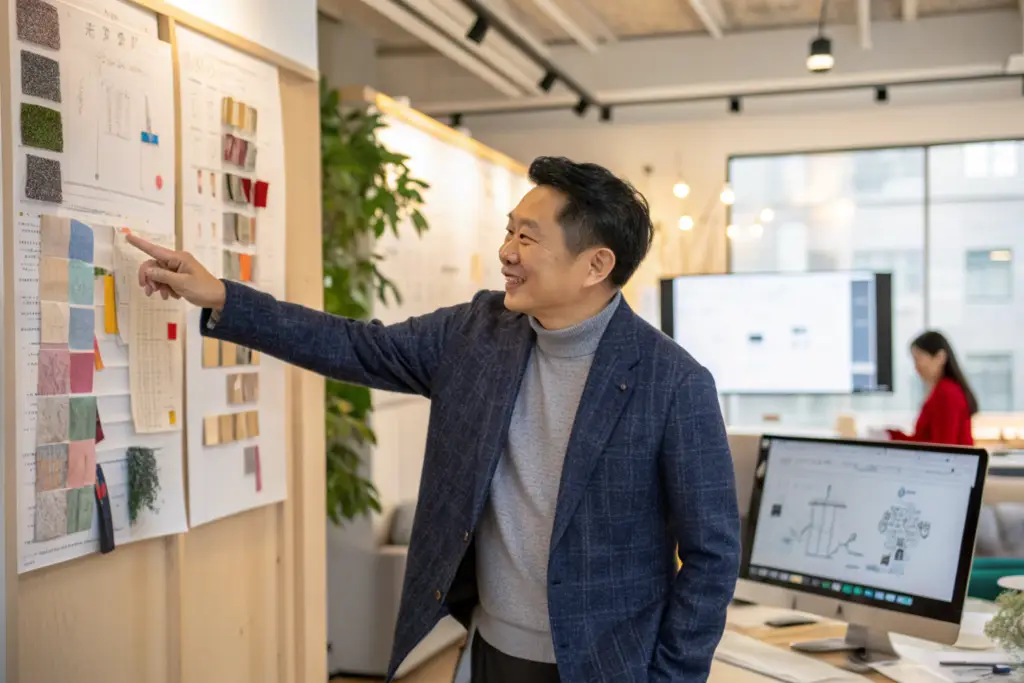
Have you ever had a great idea for a clothing brand, but felt stuck because you don't know how to actually make the clothes? You have the vision, the name, the logo. But when you talk to factories, they ask for "tech packs" and "bill of materials," and you feel lost. You are not alone. Most great brands start with a vision, not a sewing background.
Full package manufacturing is the engine that turns your brand vision into a physical product you can sell. It supports private label clothing by handling everything: design development, fabric sourcing, pattern making, sampling, production, quality control, and shipping. You provide the idea and the label. We provide the expertise, the machines, and the workforce to bring it to life, completely branded as your own.
I'm the owner of Shanghai Fumao. Over the last 15 years, I've helped hundreds of entrepreneurs start their own clothing lines. Some came with detailed sketches. Some came with just a napkin drawing. Some came with only a feeling. My job is to take that raw energy and shape it into a product that sells. Let me show you how this partnership works.
How Do I Start If I Only Have A Concept?
I remember a client from Austin, Texas. She was a yoga instructor. She had a following on Instagram. Her students kept asking where to buy her mats and leggings. She had a name, "Lotus Flow," and a logo. But she had never made a piece of clothing in her life. She came to me with a photo of a legging she liked from another brand. She said, "I want these, but with a higher waist and a pocket for my phone." That was her entire tech pack. It was enough.
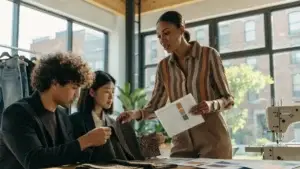
Full package means we start at the very beginning. You don't need a finished tech pack. We can reverse-engineer a sample you like, or we can build a new design from scratch based on your descriptions. We take your concept, create flat sketches, develop the pattern, and sew the first prototype. We guide you through the process, explaining the options and the costs at every step.
Let me walk you through the "Concept to Sample" process we use with new brands. First, we have a discovery call. You tell me about your brand, your customer, and your idea. Second, we do "reference gathering." You send me photos of styles you like. You point out the details: the neckline, the sleeve length, the pocket style. Third, our design team creates a "flat sketch" or "CAD" (Computer-Aided Design) of your garment. We send it to you for approval. Fourth, we discuss materials. I show you options based on your budget and the garment's function. Once the sketch and fabric are approved, our pattern maker goes to work. We cut the first "proto sample." We sew it in our sample room. We send you photos or a video of the sample on a form. You give feedback. We adjust. This loop continues until the sample is perfect. For the yoga instructor, we went through three rounds. The first waistband was too tight. The second pocket was too small for an iPhone Max. The third was perfect. She then took that sample, shot content for her pre-order, and used the funds to pay for the bulk order. That's the power of starting small with a full package partner.
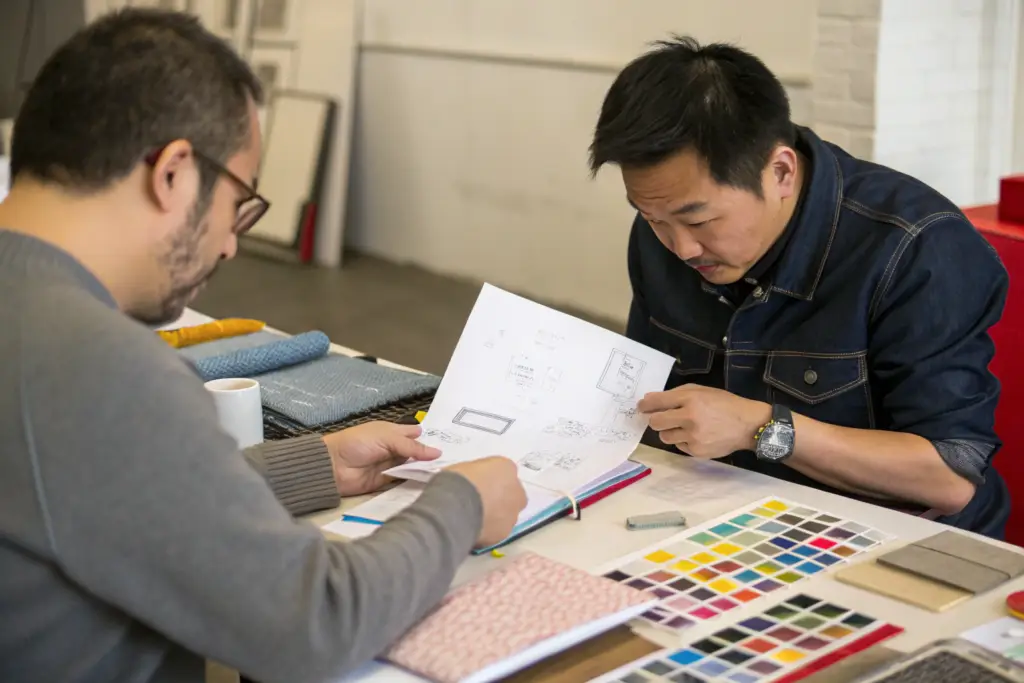
What Is A Tech Pack And Do I Really Need One?
A tech pack is the instruction manual for your factory. It includes the technical flat sketch with measurements, the bill of materials (BOM) listing every single component (fabric, thread, zipper, label), and construction notes. Do you need a professional, 20-page tech pack to start? No. But you need clear communication. For a first-time brand, a "simplified tech pack" is fine. It can be a Word document with pictures and measurements. The key is to be specific. Don't say "short sleeve." Say "short sleeve, ending 2 inches above the elbow." Don't say "pink." Give us a Pantone color code. At Shanghai Fumao, we actually help you build your tech pack. As we go through the sampling rounds, we document everything. By the time the sample is approved, we have a complete tech pack that we both agree on. This protects you and us. It's the contract for how the bulk goods will be made.
How Do I Choose The Right Fabric For My Brand?
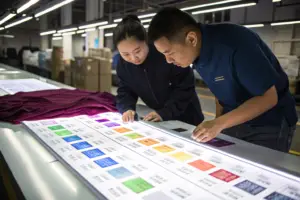
This is where many new brands get overwhelmed. There are thousands of fabrics. Cotton, polyester, rayon, linen, blends, different weights, different weaves. My advice is to think about the "hand feel" and the "drape." Hand feel is how it feels to the touch. Soft? Crisp? Smooth? Drape is how it hangs. Does it flow? Does it hold a shape? Your design will dictate this. A structured blazer needs a stiff fabric with body. A flowy dress needs a soft, drapey fabric. We have a library of thousands of fabric samples. When a new client comes in, we sit down and feel them together. We talk about price points. A client from Chicago wanted a "luxury" t-shirt. We guided him towards a 40-singles combed cotton jersey. It's incredibly soft and smooth. It felt premium. It cost more, but his customers were willing to pay for it. We also talked about the weight. 180 GSM (grams per square meter) is a standard t-shirt. 220 GSM is heavier, more "premium." He chose 200 GSM as a sweet spot. We helped him find his brand's signature fabric. You can also look at fabric marketplaces like Vogue Fabrics to get an idea of what's out there, but always order a "hand loom" or sample yardage from the actual mill we will use before committing to bulk.
How Does Sampling Work For Private Label?
A client from Miami once sent us a design for a linen shirt. It looked simple. But when we made the first sample, the collar stood up funny. It didn't roll right. We tried three different types of interfacing (the stiff material inside the collar) before we got it perfect. The client didn't know about interfacing. He just knew the collar on the first sample looked "cheap." Our job was to find the technical solution to his aesthetic problem.
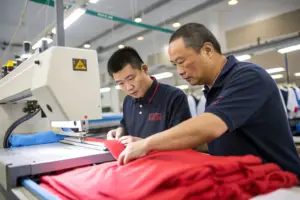
Sampling is where your idea gets tested in the real world. It's where we find the problems. The fit is off. The fabric puckers. The pocket is too low. A full package factory doesn't just sew what you ask; we advise you on what will work. We use our experience to suggest improvements that make your garment easier to manufacture and better looking on the body.
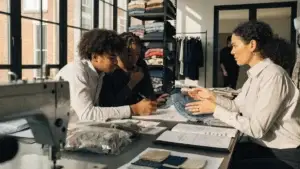
There are usually three stages of samples. First is the Proto Sample. This is to check the overall look and silhouette. We often use a "sample fabric" that is similar in weight to your chosen fabric, but maybe not the exact one. This saves money while we figure out the shape. Second is the Fit Sample. This is made in your actual chosen fabric. We put it on a fit model (a real person with standard measurements). We pin it, mark it, and adjust the pattern. This is where we perfect the measurements. Third is the Photo Sample or Salesman Sample. This is the final, approved garment. It's made perfectly. You use this for your lookbook, your website, and to show to retailers. For a client in Boston who was launching a high-end knitwear line, we made four rounds of samples. The first proto was too boxy. The second fit sample had sleeves that were too long. The third had a neckline that gaped. The fourth was perfect. That sample then went on to be photographed for Vogue.com. The investment in sampling paid off.
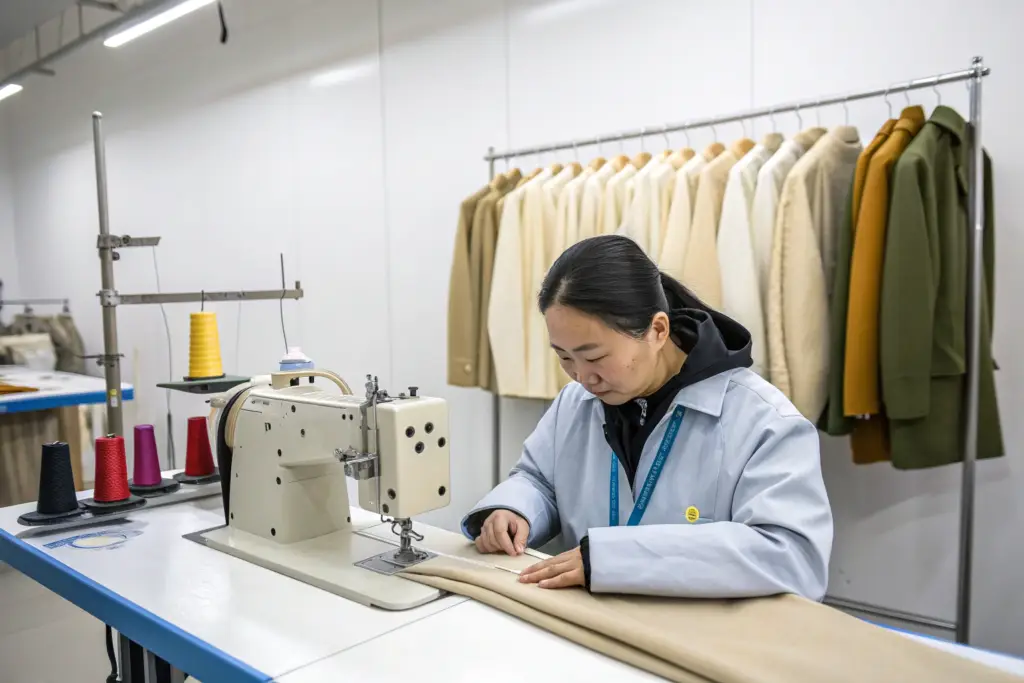
How Many Samples Are Normally Needed?
For a simple design, like a basic t-shirt or a tote bag, you might only need two rounds. The first to check the size, the second to approve the final fabric and print. For a complex design, like a tailored jacket or a dress with lining and pleats, you might need four or five rounds. You should budget for this, both in time and money. Each sample round takes about 1 to 2 weeks and costs a sample fee. But think of it as insurance. It's much cheaper to fix a problem on one sample than to fix it on 1,000 finished garments. At Shanghai Fumao, we try to be efficient. We combine steps. We might send you a "proto" and a "fit" comment at the same time. We use video calls to show you the fit in real-time, so you can approve changes instantly. We try to minimize the number of physical samples shipped back and forth, which saves time and courier costs.
What Is "Fit Approval" And Why Is It Crucial?
"Fit approval" is the moment you say, "Yes, this garment fits the way I want it to on a human body." This is a huge responsibility. Once you approve the fit sample, we grade the pattern into all your sizes (S, M, L, etc.) based on that fit. If the fit sample is wrong, all the sizes will be wrong. We send you a "size set" of samples (one in each size) to check the grading. You need to check that the small isn't too small and the large isn't too large. We use a specific [grading rule](https://www. sizing-charts.com/) based on industry standards, but we can adjust it for your target customer. If your customer is curvier, we might add more room in the hips as the sizes go up. This is all part of the development phase. Never skip the size set approval. I had a client who approved the fit sample but was in a hurry and skipped the size set. The XL shirts came out looking like tents. The proportions were wrong. We had to re-cut the whole size range. It was expensive and late. Approve every step.
How Do I Add My Branding To The Garments?
A client from Los Angeles once told me, "I don't just sell clothes. I sell a tribe." His brand was all about surf culture. The clothes were just the canvas. The real value was the logo on the chest and the community it represented. He was right. We spent hours discussing the label. Should it be woven or printed? What color thread? Should it be on the neck or the hem? That label was the symbol of his tribe.
Private label means the product carries your name, not ours. A full package factory handles all the branding elements. This includes woven neck labels, printed care labels, hang tags, custom buttons with your logo, and even custom-printed poly bags. We source these items and ensure they are attached perfectly to every single garment.
Let's break down the common branding elements. First, the Main Label. This is usually woven and sewn into the back of the neck. You can choose a satin weave for a soft, premium feel, or a taffeta weave for a crisper look. Second, the Care Label. This is usually printed and contains the washing instructions and fiber content. It's a legal requirement in the US. Third, the Hang Tag. This is your marketing moment. It can be simple cardstock, or fancy with foil stamping or embossing. We can attach it with a plastic fastener or a string. Fourth, Custom Trims. You can get your logo engraved on buttons, printed on zipper pulls, or even woven into a custom elastic waistband. For a luxury brand in New York, we made custom metal buttons with their logo etched into them. Each button cost $2, but it transformed the look of the blazer. For a more budget-friendly brand, custom printed plastic buttons are a great option. We source all these from specialized suppliers, often in places like Zhejiang for buttons.
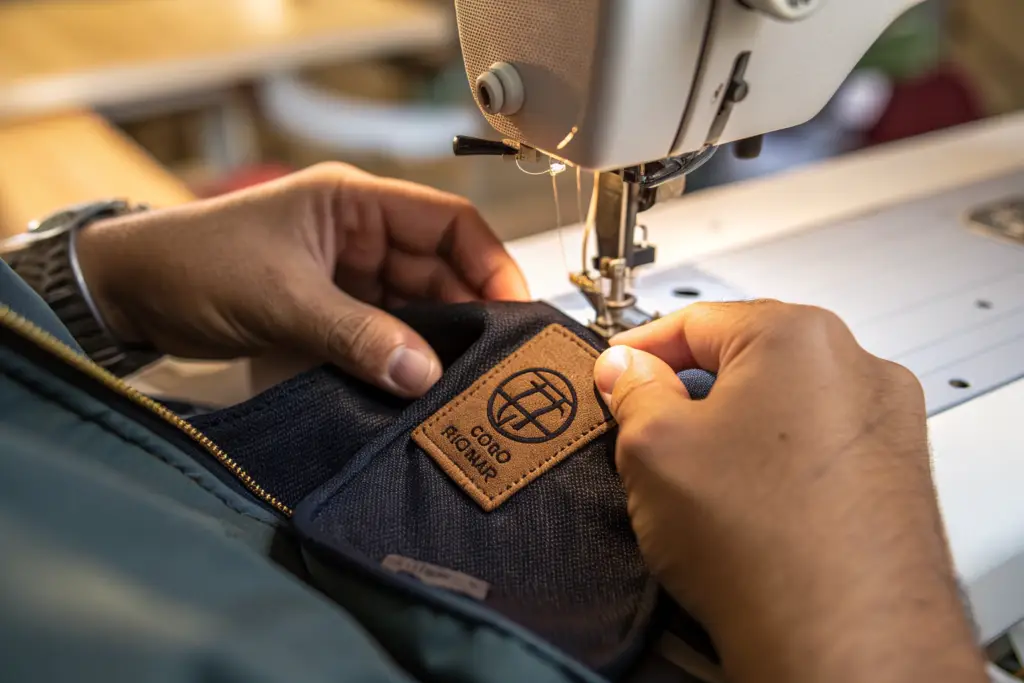
What Is The Lead Time For Custom Labels And Trims?
This is a crucial point. Custom items take time. A simple woven label might take 2 to 3 weeks from artwork approval to delivery. A custom-dyed button might take 4 weeks. A custom-embossed leather patch could take 5 to 6 weeks. You cannot order these at the last minute. They are part of the production timeline. When we plan your order, we place the trim orders at the same time we order the fabric. This way, the labels and buttons arrive at our factory just as the sewing is about to start. We manage this "trim matrix" for you. We track every single component. If you want to save time, you can keep stock of basic labels. But for a new, custom design, plan for an extra 3 to 4 weeks in the development phase. We always advise our clients to order a small extra quantity of labels (say, 10% more) to account for waste and for future small reorders. It's cheaper to make them all at once.
How Do I Protect My Brand With Labels?
Your label is also your proof of origin. In the US, the "Made in China" label must be there. It's the law. But you also need a "RN Number" (Registration Number) if you sell to US retailers. This number, issued by the FTC, identifies you as the manufacturer or importer. It goes on the care label. It helps consumers find you if there's a problem. At Shanghai Fumao, we ensure all labeling complies with US Textile Fiber Products Identification Act. We double-check the fiber content percentages. If you say 100% cotton, but the fabric is 98% cotton and 2% spandex, you are mislabeling and breaking the law. We test the fabric to confirm the exact blend. We then print that on the label. This protects you from lawsuits and fines. It's a small detail, but a vital one for a professional brand.
How Does Full Package Handle Minimums And Costs?
A young designer from Portland came to me with a beautiful collection of dresses. She had 10 styles. She wanted to order 100 pieces per style, so 1,000 pieces total. That's a small order for a big factory. But she had passion and a clear plan. We didn't turn her away. We worked with her. We adjusted the styles to use the same fabric and same trim. This made the production more efficient. She got her small batch, and we got a loyal client who now orders 5,000 pieces per season.
One of the biggest fears for new brands is "Minimum Order Quantities" (MOQs). Factories often have high MOQs for fabrics and for production runs. A full package factory can help you navigate this. We can suggest using stock fabrics to avoid fabric MOQs. We can combine multiple styles into one production run to meet the sewing line MOQ. We find ways to say "yes" to small brands because we know they are the big brands of tomorrow.
Let's talk about where the MOQs come from. The biggest MOQ is usually the fabric mill. A mill might require you to buy 1,000 yards of one color. If you only need 300 yards, you have a problem. The solution is to use "stock fabric" or "greige goods" that the mill already has. We have relationships with mills that keep popular fabrics in stock, ready to dye in smaller quantities. The second MOQ is the sewing line. Setting up a line takes time. Workers need to be trained on your specific style. A factory might need you to run at least 300 to 500 pieces per color to make the setup worthwhile. The solution is to combine colors. Run 300 pieces of black and 300 pieces of navy in one production block. We do this all the time. For a client in Denver who wanted 5 styles in 3 colors, we grouped them by fabric type. All the styles in cotton jersey were made in one batch. All the styles in French terry were made in another. This saved them thousands of dollars in setup fees.
How Are Private Label Costs Calculated?
Your cost is made up of several parts: Fabric Cost + Trim Cost + Cutting Cost + Sewing Cost + Finishing Cost + Factory Profit + Shipping Cost. That's the simple version. The fabric and sewing are the biggest chunks. A complex garment with many details (pockets, zippers, linings) costs more to sew than a simple one. A premium fabric costs more than a basic one. When you ask for a quote, we break it down for you. We show you the fabric price per yard and how many yards your garment uses (the "consumption"). We show you the CMT (Cut, Make, Trim) price. We show you the trim cost. This transparency helps you make decisions. You might see that the fabric is 60% of the cost. If you need to hit a lower price point, you might choose a slightly less expensive fabric. We guide you on where to save money without ruining the look. For a client in Ohio, we swapped a branded zipper for a high-quality unbranded one. It saved $1.50 per garment, and no one noticed the difference.
What Is The True Cost Of Low Minimums?
Producing in small batches is more expensive per piece. The setup costs are spread over fewer units. The fabric might cost more because you aren't buying in bulk. You need to accept this as a startup cost. It's the price of testing the market. But don't be afraid of it. It's better to make 300 pieces and sell out than to make 3,000 pieces and have 2,000 sitting in your garage. Full package manufacturing allows you to start lean. You can prove your designs, build your audience, and then scale up. Once you are ordering 1,000 pieces per style, the unit cost drops significantly. We've seen this happen with countless brands. They start with small, expensive runs. They learn what sells. They grow. And we grow with them. That's the partnership.
Conclusion
Full package manufacturing is the bridge between your dream and your customer's wardrobe. It supports private label clothing by taking your concept and handling every single step after that. We develop the patterns, source the perfect fabric, sew the samples until they are flawless, add your custom labels, and manufacture the bulk order with rigorous quality control. We manage the MOQs, explain the costs, and ship the finished goods to your door. You focus on your brand, your marketing, and your customers. We focus on making you look good.
At Shanghai Fumao, we specialize in turning brand founders into brand owners. We have 15 years of experience guiding entrepreneurs through the complexities of apparel manufacturing. We speak your language. We understand your fears about minimums, costs, and quality. And we have a system designed to help you succeed, whether your first order is 300 pieces or 3,000.
If you have a concept for a clothing line and you're ready to make it real, let's talk. Contact our Business Director, Elaine, directly at elaine@fumaoclothing.com. Tell her about your vision, and let's start building your brand together.