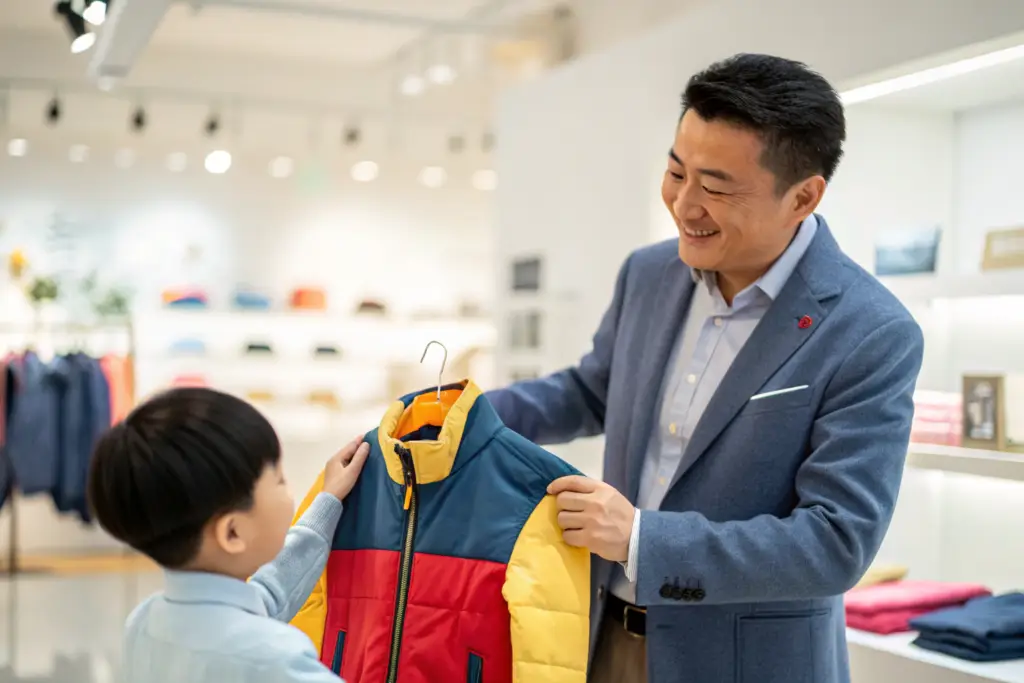
Have you ever received a shipment of children's jackets only to find the buttons pop off after one wash? Or maybe the fabric failed the flammability test, and now your entire line is stuck at customs. I've had parents call me, not as a factory owner, but as a fellow parent, worried about the safety of the clothes we make. That responsibility sits heavy on my shoulders.
Choosing a full package factory for kids wear is not just about stitching fabric. It's about entrusting your smallest customers' safety to a partner who understands the rigid US safety standards (CPSIA), the need for durable materials that survive playgrounds, and the importance of soft, non-irritating fabrics. A full package factory manages the entire chain, ensuring that every button, zipper, and thread is compliant and safe.
I'm the owner of Shanghai Fumao. For 15 years, we've been making clothes for all ages, but kids' wear holds a special place in our hearts. The margin for error is zero. A scratchy seam can ruin a toddler's day. A loose button is a choking hazard. Let me share why you need a partner who takes this as seriously as you do.
How Do Safety Regulations Affect Kids Wear Production?
A few years ago, a new client from Florida sent us an order for organic cotton baby rompers. They were beautiful. But they didn't specify the zipper type. We used our standard metal zipper. It was high quality, but it had a nickel finish. When the client received the samples, they tested them. The nickel failed their internal standard for baby skin. We had to scrap 500 zippers and replace them with nickel-free plastic ones. It cost us money, but we learned a valuable lesson: kids' wear requires a different mindset.
In the USA, children's clothing is regulated by the Consumer Product Safety Improvement Act (CPSIA). This law sets strict limits on lead and phthalates in materials. It requires tracking labels. It mandates stringent flammability standards for sleepwear. A full package factory knows these rules. We don't just sew; we ensure every component, from the fabric dye to the elastic waistband, meets these federal requirements.
Let's break down what CPSIA actually means for your production. First, it's about the content. For children under 12, any product must have very low levels of lead (90 ppm) and phthalates (1000 ppm). This applies to the fabric, the print, the button, the zipper pull, everything. Second, it's about testing. You need to have a Children's Product Certificate (CPC) based on tests from a CPSC-accepted lab. We work with labs like Bureau Veritas to test random samples from every production batch. We don't just test the final garment. We test the raw fabric when it arrives. We test the buttons before they are sewn on. We do this because if a hazardous material slips through, you face a recall. A recall can destroy your brand overnight.
What Are The Specific Rules For Sleepwear?
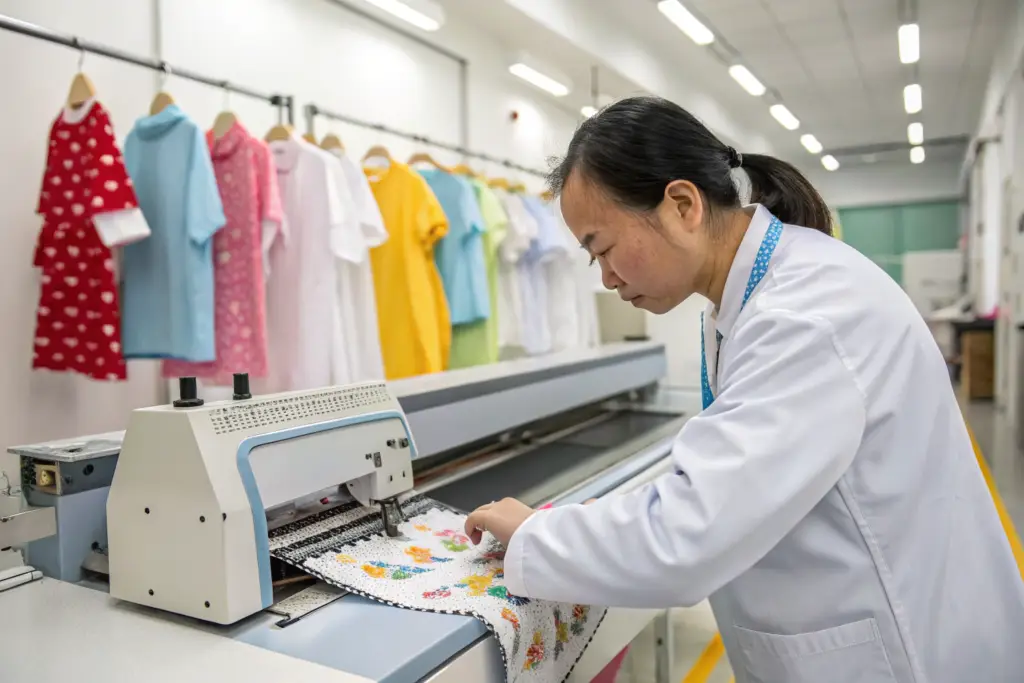
Sleepwear for kids is a whole different ball game. The US has the Flammable Fabrics Act (FFA). For children's sleepwear sizes 0 to 14, the fabric must be either flame-resistant or tight-fitting. Flame-resistant fabrics are treated with chemicals. Tight-fitting sleepwear is designed to be snug so it doesn't catch fire easily. You have to choose one path. If you choose the flame-resistant path, the fabric must pass a specific vertical flame test. If you choose the tight-fitting path, the garment must meet specific measurement requirements. We've had clients mix these up. They made loose-fitting pajamas in untreated cotton. That's a fire hazard and illegal. At Shanghai Fumao, we always flag this during the development stage. We ask: "Is this for sleeping? What's your compliance strategy?" We then source the correct certified fabric and ensure the pattern matches the tight-fitting specs. It's a conversation we have on day one, not on shipping day.
How Do I Ensure Buttons And Zippers Are Safe?
A button on a child's coat is a potential snack. Seriously. Choking hazards are the number one reason for recalls in kids' wear. The CPSC has a "small parts cylinder." If a button or a decoration fits inside that cylinder (which is roughly the size of a toddler's throat), it is banned for children under 3. This means we have to use "torque" and "tension" tests. We literally pull and twist buttons with a force gauge to see if they come off. For a recent order of hoodies for a client in Oregon, we used decorative metal eyelets. They looked great. But during our pre-production check, we realized they were slightly too small and could potentially detach. We immediately switched to a larger, more secure rivet. The client never knew there was a problem. That's our job. We also use special "safety locks" on zippers to prevent the fabric from catching a child's skin. These small details are invisible to the customer but vital for the child's safety.
Why Is Fabric Choice More Critical For Children?
I remember a client from New York who wanted a line of "ultra-soft" sweatshirts for toddlers. He sent us a sample made from a standard cotton fleece. It felt okay to him. But I have a 5-year-old nephew. I know that "okay" isn't good enough. I sent him a sample of our "brushed" organic fleece. It was like touching a cloud. He switched his whole order. The feedback from his customers was amazing. They said it was the softest sweatshirt their kids ever wore.
Children's skin is thinner and more sensitive than adult skin. They are more prone to rashes, allergies, and irritation. This means the fabric choice is not just about aesthetics; it's about health. You need fabrics that are breathable, hypoallergenic, and free from harsh chemicals. A full package factory can help you navigate the world of organic cotton, bamboo viscose, and Oeko-Tex certified materials.
Let's look at the certifications you should know. The most common is the Oeko-Tex Standard 100. This certification means every component of the garment (fabric, thread, buttons) has been tested for harmful substances and is harmless for human health. There are different product classes. Class 1 is for babies (under 3 years). This is the strictest class. It tests for things like pesticides and allergenic dyes. If you are making baby clothes, insist on Class 1 certified fabric. Another important one is GOTS (Global Organic Textile Standard). This covers the entire supply chain, from the organic farming of the cotton to the social responsibility of the factory. If you are marketing "organic" clothes, you need GOTS certification to back it up. We work with many GOTS-certified mills so our clients can put that logo on their hang tags.
How Do I Choose Between Organic Cotton And Bamboo?
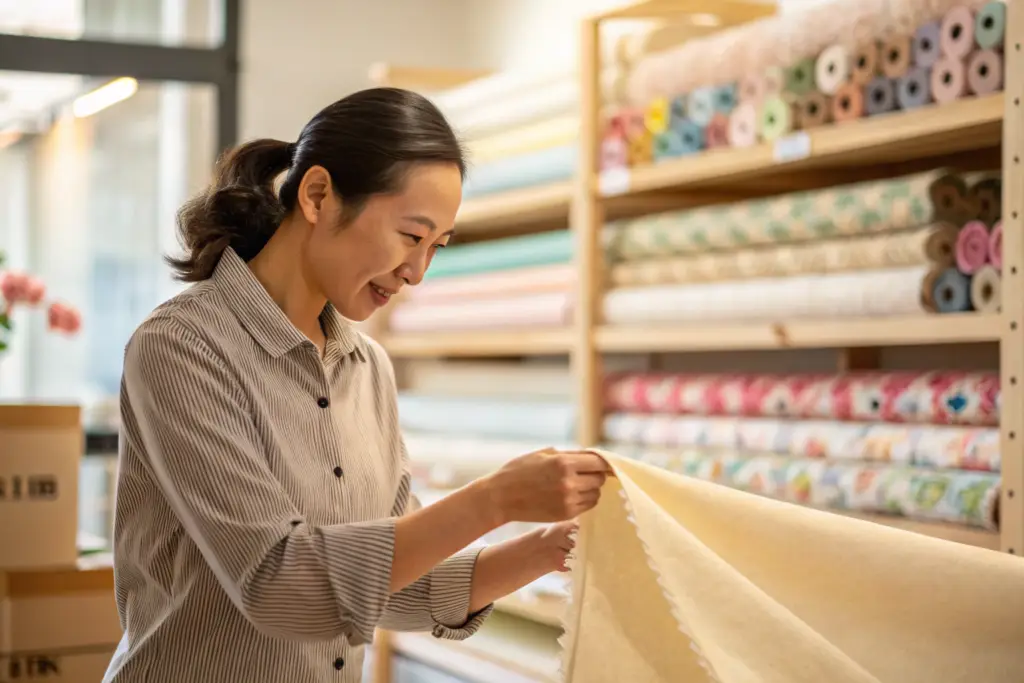
This is a common question. Organic cotton is soft, breathable, and durable. It's a safe, reliable choice. Bamboo viscose is often softer and has a beautiful drape. It's also naturally anti-bacterial and moisture-wicking. However, the process of turning bamboo into fabric can involve harsh chemicals. If you choose bamboo, you must ensure the mill uses a "closed-loop" system that recycles the chemicals. Look for Lyocell (often branded as Tencel) which is a more eco-friendly version of rayon, sometimes made from bamboo or wood pulp. For a recent client in Colorado making activewear for kids, we recommended a bamboo-spandex blend. It was soft, stretchy, and perfect for movement. For a line of everyday t-shirts for a brand in Boston, we stuck with organic cotton. It was more durable for daily wear and tear. The choice depends on the garment's function and your brand's story.
What About Prints And Dyes For Kids?
Kids love color and prints. But the dyes used must be safe. Some azo dyes can break down and release cancer-causing chemicals. These are banned in the EU and the US. We always use fiber-reactive dyes for cotton. They bond with the fiber, so they are colorfast (they don't bleed) and are much safer than other types. For prints, we often recommend water-based screen printing. It has a soft hand-feel and is free from the phthalates found in some plastisol inks. For a recent order of graphic t-shirts for a client in Texas, we used a water-based discharge print. It actually bleaches the cotton and replaces it with color, resulting in a print that is super soft and part of the fabric itself. The client's customers loved that they couldn't feel the print. It's these small details that make a kids' garment feel premium and safe.
How Does Durability Testing Differ For Kids Wear?
A father from Ohio once wrote us a letter. He bought one of our jackets for his son. His son loved it. He wore it every day. He climbed trees, fell in the mud, and wiped his hands on the sleeves. After a whole winter, the jacket was still in one piece. The father said it was the only jacket that survived his son. That letter is framed in our office. It reminds us why we test so hard.
Kids don't "wear" clothes. They "use" them. They crawl, climb, run, and fall. This means the garment needs to withstand abrasion, seam slippage, and tensile stress that adult clothes never face. A full package factory performs specific durability tests on kids' wear to ensure the knees don't rip out and the seams don't split during a game of tag.
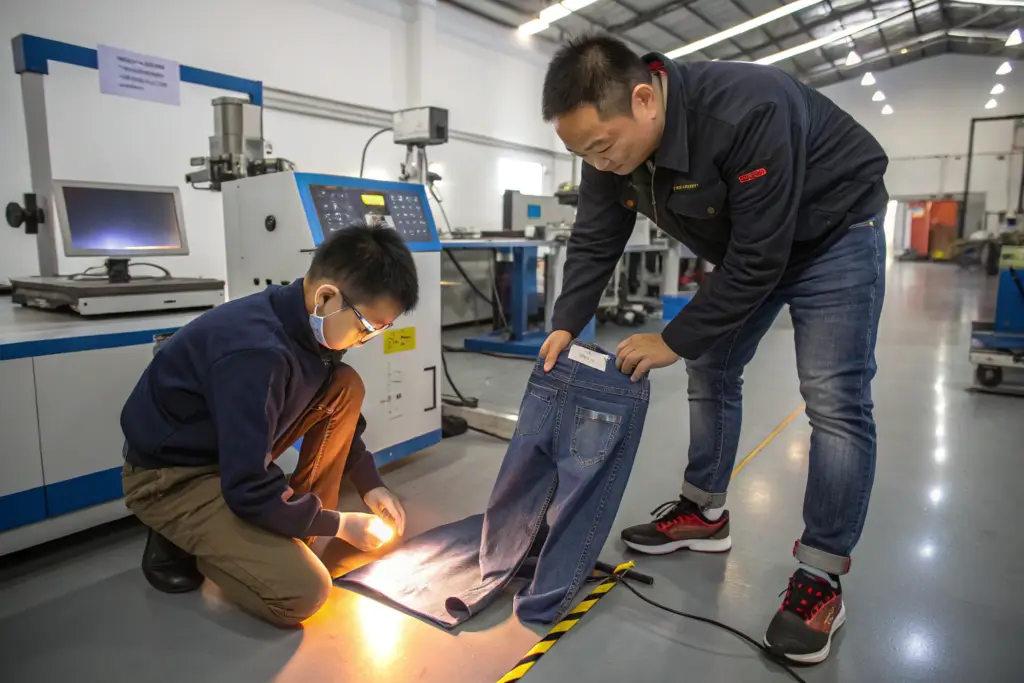
We use the Martindale Test to check abrasion resistance. We rub the fabric in a figure-eight pattern against a standard abrasive until it wears through. For kids' pants, we want a high rub count, especially for the knees. We also perform Seam Slippage Tests. We pull on a seam to see if the threads pull out of the fabric. This is crucial for armholes and seat seams where kids put the most stress. For a recent order of cargo pants for a client in Seattle, we found the seam at the back pocket was pulling during our test. The fabric was strong, but the thread tension was slightly off. We adjusted the machines and re-stitched the sample. The final product was bulletproof.
How Do I Test For Wear And Tear On Knees And Elbows?
The knees and elbows are the first to go in kids' clothes. For active lines, we often recommend reinforcing these areas. This can mean using a double layer of fabric, adding a patch, or using a bar-tack stitch for extra strength. We also look at the fabric construction. A tighter, higher thread count weave is more durable than a loose, open weave. For a brand in Denver that makes hiking clothes for kids, we used a ripstop nylon for the pants. It has a grid of stronger threads woven in, so if it does tear, the tear stops at the grid line. It's incredibly durable. We also tested the stretch recovery of the waistbands. Kids have bellies. The waistband needs to stretch and then snap back, order after order. We use a specific elastic that we've tested to survive 50 washes without losing its stretch.
What Are The Standards For Drawstrings And Cords?
This is a critical safety issue. Drawstrings on hoodies and jackets can get caught on playground equipment, car doors, or bus rails. This has led to strangulation deaths. The US has specific guidelines from the CPSC: No drawstrings on the hood or neck area of children's upper outerwear in sizes 2T to 12. Waist and bottom drawstrings should be shorter and have toggles that break away under pressure. We don't just follow this rule; we enforce it. If a client sends us a design with a hoodie drawstring for a size 6, we stop the process. We explain the law. We show them the CPSC guidelines. We suggest alternatives, like snaps or elastic. It's not about losing a design feature. It's about keeping a child safe. We have a zero-tolerance policy on this. It's non-negotiable.
How Can A Full Package Factory Simplify My Logistics?
A client in Chicago once managed five different suppliers for one kids' collection. One factory made the tops. Another made the bottoms. A third supplied the hats. He spent months coordinating deliveries, only for the hats to arrive three weeks late. He had to ship the tops and bottoms first, then pay extra to ship the hats separately. It was a logistical nightmare. He came to us for the next season.
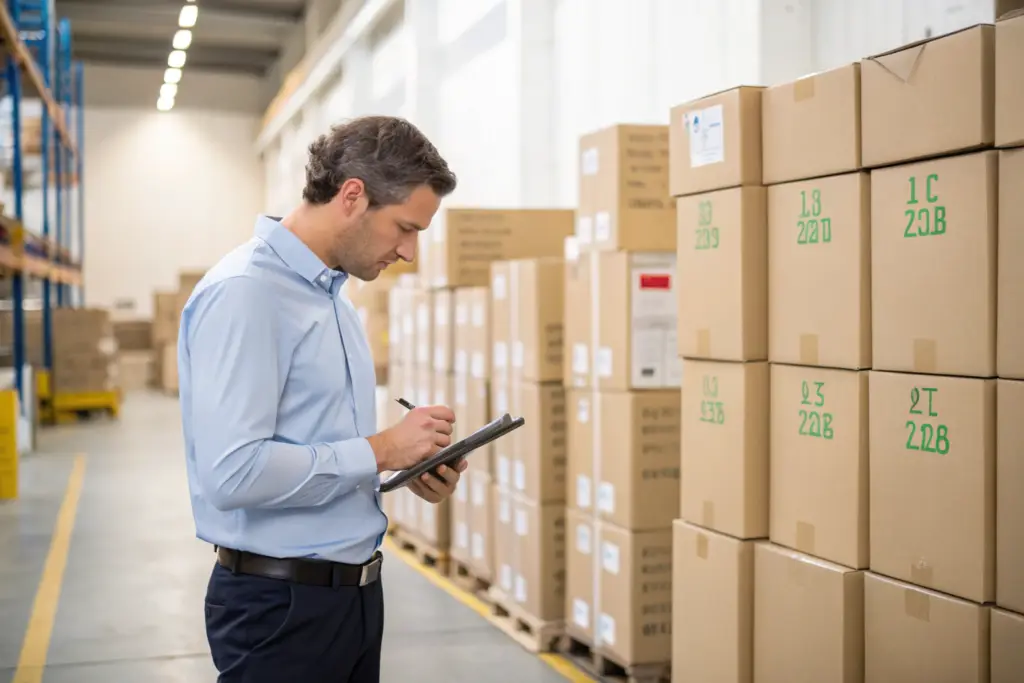
Managing kids' wear often means managing multiple, smaller SKUs (styles and colors). You might have a dress in three prints and four sizes. That's 12 SKUs. Coordinating this across different factories is a recipe for disaster. A full package factory handles it all under one roof. We consolidate your entire collection, manage the quality across all SKUs, and ship it in one container, saving you time, stress, and freight costs.
Let's talk about the money. Shipping is paid by the container or by the cubic meter. If you ship tops from one factory and bottoms from another, you might end up with two half-full containers, paying for two lots of ocean freight. Or you might have to wait for one supplier, pay for storage, and then ship. When we consolidate, we fill the container efficiently. We mix the boxes of tops, bottoms, and dresses together. We create a master packing list. We handle the documentation for the whole shipment. For a recent client in Florida with a 20-piece kids' collection, we managed everything. We made the samples, sourced all the fabric, produced every style, and shipped one single container. They received one invoice, one tracking number, and one delivery. That simplicity is worth a lot.
How Does Inventory Management Work For Kids' Lines?
Kids' clothes are often sold in "sets" or "collections." A customer might buy the top and the bottom together. If you run out of the top, you can't sell the bottom. You need to manage inventory carefully. When we produce the full package, we can control the ratios. If you tell us you sell 100 tops for every 80 bottoms, we can cut and sew exactly to that ratio. We don't overproduce one item. We also manage the "size runs." The demand for size 4 might be higher than size 10. We have the data from our clients. We adjust production to match their sales history. This minimizes your leftover stock and maximizes your sell-through rate. It's called "demand-driven manufacturing," and it's only possible when you have a partner who controls the whole process.
What About Hang Tags And Packaging For Kids?
Kids' wear packaging is often more fun and colorful. You might want special shaped hang tags, or poly bags with prints. You might need the garments folded in a specific way to fit in a box set. A full package factory manages these "finishing" details. We source the custom hang tags. We ensure they are attached with the safety clips (the little plastic things that break away easily). We package the garments according to your planogram. For a client in California who sells matching "mommy and me" outfits, we packaged the adult and kids' items together in one poly bag. It was ready to put directly on the retail shelf. We also manage the "traceability" labels. Every kids' garment needs a tracking label with a batch number. We print and sew these in. If there is ever a recall, you can trace the problem back to the exact day and batch it was made. That level of control is built into our full package service.
Conclusion
Choosing a full package factory for kids' wear is a decision rooted in safety, quality, and peace of mind. It's about having a partner who understands that CPSIA compliance isn't optional, it's the law. It's about knowing that the fabric is soft enough for sensitive skin and durable enough for the playground. It's about trusting that every button is secure and every drawstring is safe. And it's about the simplicity of having one partner manage your entire collection, from concept to a single consolidated shipment.
At Shanghai Fumao, we treat every kids' garment as if it were for our own children. We have the systems, the certifications, and the experience to navigate the complex world of US children's wear regulations. We've been doing it for 15 years, helping brands from New York to Los Angeles bring safe, beautiful, and durable clothes to their smallest customers.
If you are looking for a manufacturing partner who truly understands the responsibility of making clothes for children, let's start a conversation. Contact our Business Director, Elaine, directly at elaine@fumaoclothing.com. Tell her about your kids' wear line, and let's build something safe and beautiful together.