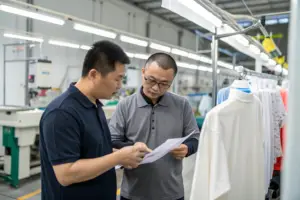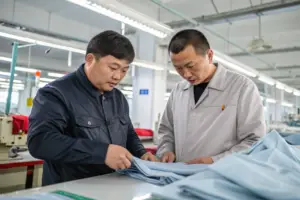
For years, I’ve sat across the table from buyers just like you. You fly into Shanghai, tired from the long flight, but excited about a new collection. We shake hands, discuss your sketches, and agree on a fantastic price for full-package production. Everyone leaves the meeting happy. But six months later, I get a frustrated email. The budget blew up. The timeline slipped. The “hidden costs” ate into your profit margin. It’s a story I’ve heard too many times, and it’s why I’m writing this.
The hidden costs of full package apparel production aren't about secret fees added to your invoice. They are the operational inefficiencies, communication breakdowns, and quality failures that occur when you partner with the wrong manufacturer. These costs include expensive air freight due to production delays, lost sales from missed seasons, and brand damage from inconsistent quality, often stemming from a lack of transparency and proactive problem-solving from your supplier.
My name is David, and I own Shanghai Fumao, a factory with five production lines that has been serving the U.S. market for over a decade. I’ve seen the good, the bad, and the ugly of this business. My goal today isn’t just to list problems, but to show you how a true partner eliminates these hidden costs from the start, ensuring the price we agree on is the price you pay.
How Do You Verify Supplier Certifications To Avoid Fraud?
I learned this lesson the hard way about five years ago. A buyer from Colorado, a great guy building an outdoor brand, sent me a certificate from a potential supplier in Vietnam. It looked official. It had the right logos. But when we ran a deeper check for him—something we do as a courtesy for our clients—we found the certification had expired two years prior. The supplier had simply photoshopped a new date. The buyer was shocked. He had almost placed a $200,000 order based on fake documents. This is a common trap in our industry.
To verify supplier certifications and avoid fraud, you must move beyond the PDF. You need to verify the certificate number directly with the issuing body, request unedited video evidence of the certified processes in action, and cross-reference the supplier's factory address with independent trade databases. A legitimate manufacturer will have no problem facilitating this level of transparency.

Can You Validate A BSCI Or Sedex Number Yourself?
Absolutely, and you should. Don't just look at the logo. Every major audit, like BSCI, Sedex, or WRAP, has a unique ID number associated with the specific factory. You can go to the official website of the auditing body and use their search function. For example, on the amfori BSCI platform, you can enter the supplier's BSCI ID to see the audit's status, its expiry date, and the scope. If the number doesn't come up, or the name doesn't match, that's a massive red flag. I always advise our partners to do this simple check. It takes two minutes but can save you from a major legal and reputational headache.
Does A Virtual Factory Tour Replace An On-Site Audit?
No, it doesn't replace it, but a live, unscripted video tour is your next best tool. A pre-recorded video can be staged. What I do with our clients is schedule a video call. I walk them through our cutting room, our sewing lines, and our quality control station. They can see the machines running, the fabric rolls, and the workers in real-time. For a supplier to pass this test, everything must be in order. If they hesitate or give you excuses, it suggests they have something to hide. After a successful virtual tour, you can then decide if a full, third-party on-site audit is necessary for your final vendor approval.
What Is The Real Cost Of Delayed Shipments On Your Business?
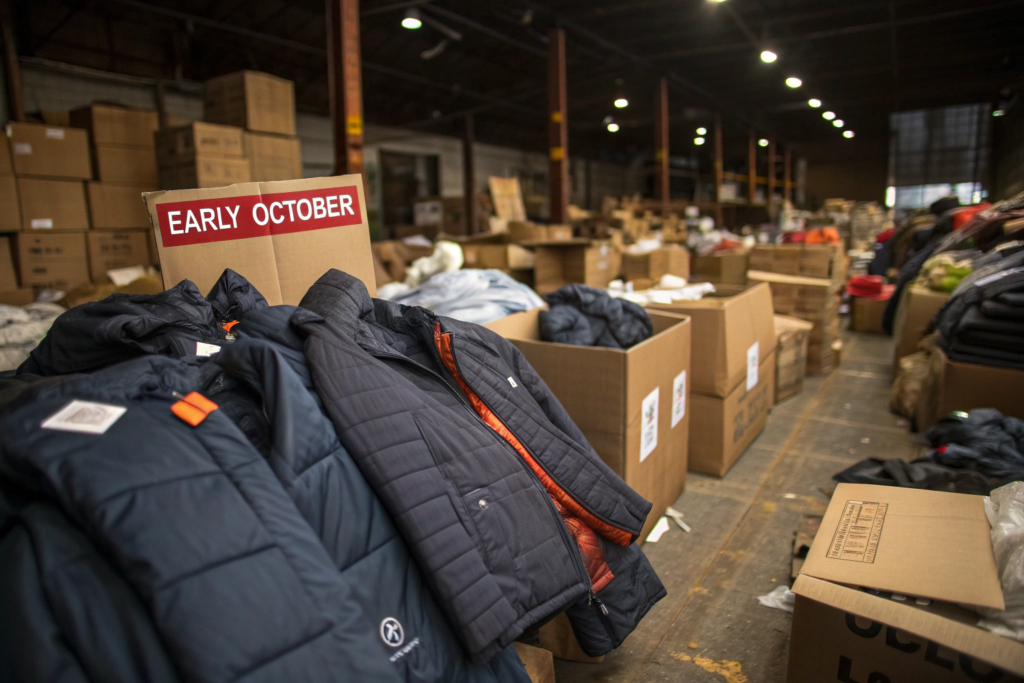
A few years ago, we had a client in New York who needed a line of heavy winter coats. We quoted him a price and a production timeline. He chose another supplier who was 15% cheaper. That supplier promised him the goods by August 1st. On August 15th, the goods still hadn't shipped. They arrived at his warehouse in early October. He had missed the entire back-to-school and early winter sales window. He was forced to discount the coats heavily, and his profit margin evaporated. The 15% he saved on manufacturing cost him his entire season's profit.
The real cost of delayed shipments is not just an invoice for air freight. It is the loss of full-price sales, the irreversible damage to your brand's reliability with retailers, and the expensive markdowns needed to clear inventory that arrives after the season ends. A cheap price that leads to a missed deadline is the most expensive mistake a brand can make.
How Does A Late Delivery Affect Your Cash Flow And Margins?
It's a domino effect. You have probably already presold a portion of that inventory to your retail partners. When you miss the delivery date, those retailers may cancel the orders or demand a discount for the delay. Your accounts receivable shrink overnight. Meanwhile, you still have to pay your own bills. You might have taken out a loan to finance the production. Now you have inventory sitting in your warehouse instead of cash in your bank account. To generate cash, you are forced into a sale. You drop the price from $100 to $60, completely wiping out the small savings you got from the cheaper supplier. Your healthy 50% margin just turned into a 10% margin—or a loss.
What Logistics Failures Cause The Most Expensive Delays?
In my experience, the biggest culprit is poor planning around raw materials. If the fabric supplier is late, the factory can't start cutting. This is especially common with mills in developing countries. Then, there's the paperwork. A single mistake on a commercial invoice or a packing list can hold your goods in customs for weeks. At Shanghai Fumao, we have a dedicated logistics team that double-checks every document against U.S. Customs requirements. We also book space on vessels weeks in advance. The cheap supplier often waits until the goods are ready to find space, only to discover the next container ship is fully booked for three weeks. That delay is on them, but the cost is on you.
How Can Inefficient Communication Derail Your Production?
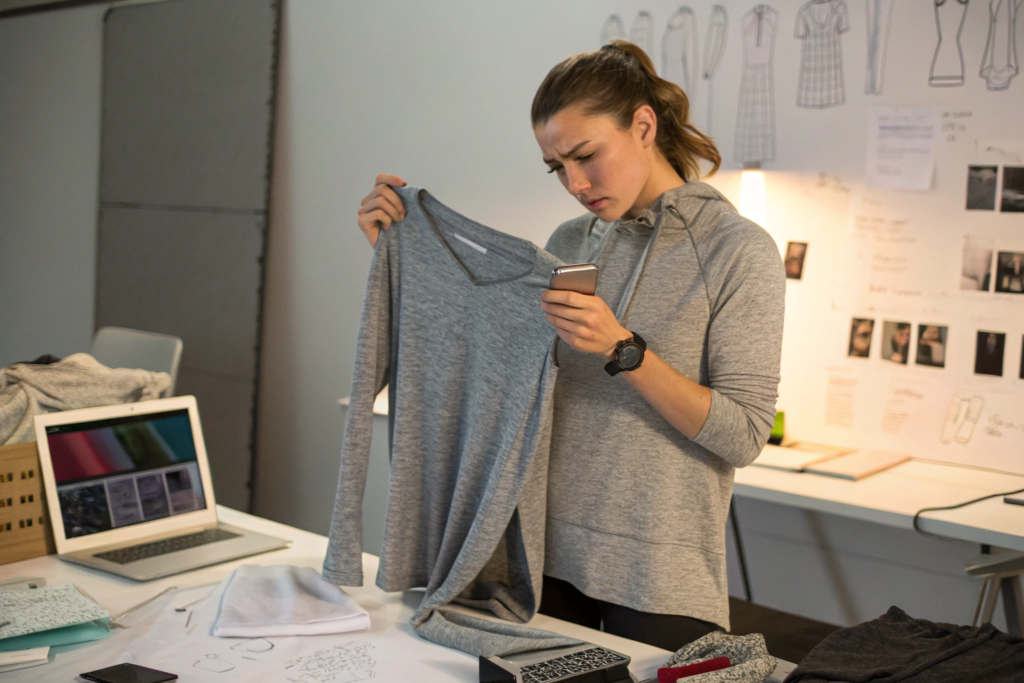
I remember a project for a Los Angeles activewear brand. The designer, a very talented young woman, sent a detailed tech pack to her supplier in India. She specified a "heather grey" fabric. The sales rep, eager to please and maybe not wanting to ask "dumb" questions, confirmed it without checking. What he thought was "heather grey" was actually a solid grey with a very subtle texture. They made 5,000 units. When the samples arrived, the color was wrong, the texture was wrong, and the whole vibe of the collection was off. Three months of work, down the drain. It all started with a simple miscommunication.
Inefficient communication derails production by turning assumptions into expensive mistakes. When sales reps act as order takers instead of technical partners, details about fabric weight, stitch density, and dye methods get lost in translation. This leads to a finished product that misses your design intent, requiring costly reworks or resulting in unsellable inventory.
What Questions Should Your Sales Rep Be Asking You?
A good rep should ask questions that challenge your design. They should ask, "You've chosen this lightweight viscose for the trousers. Have you considered that it might be too sheer for the white color?" Or, "Your tech pack calls for a specific type of pocket stitching. Our machines can do that, but it might add 5% to the labor cost. Is that in your budget?" If your rep only says "OK" to everything, they aren't thinking about how to make your product successfully. They are just waiting for you to stop talking so they can send the order to the factory floor and hope for the best. A partner asks the hard questions upfront.
Why Is A Language Barrier More Than Just Words?
The language barrier is about more than vocabulary; it's about context and culture. In many Asian cultures, directly telling a client "no" or "that won't work" can be seen as rude. So, a rep might say "maybe" or "we will try," even when they know it's impossible. You hear "it's possible," and you move on. Two months later, you find out it wasn't possible. The true cost here isn't just the failed sample; it's the wasted time and the lost opportunity to have designed something different that could have worked. This is why at Shanghai Fumao, our sales team is trained to give direct, technical answers. If an idea is bad for production, I want my team to tell you why, with data, so we can find a better solution together.
What Are The Hidden Quality Control Traps?
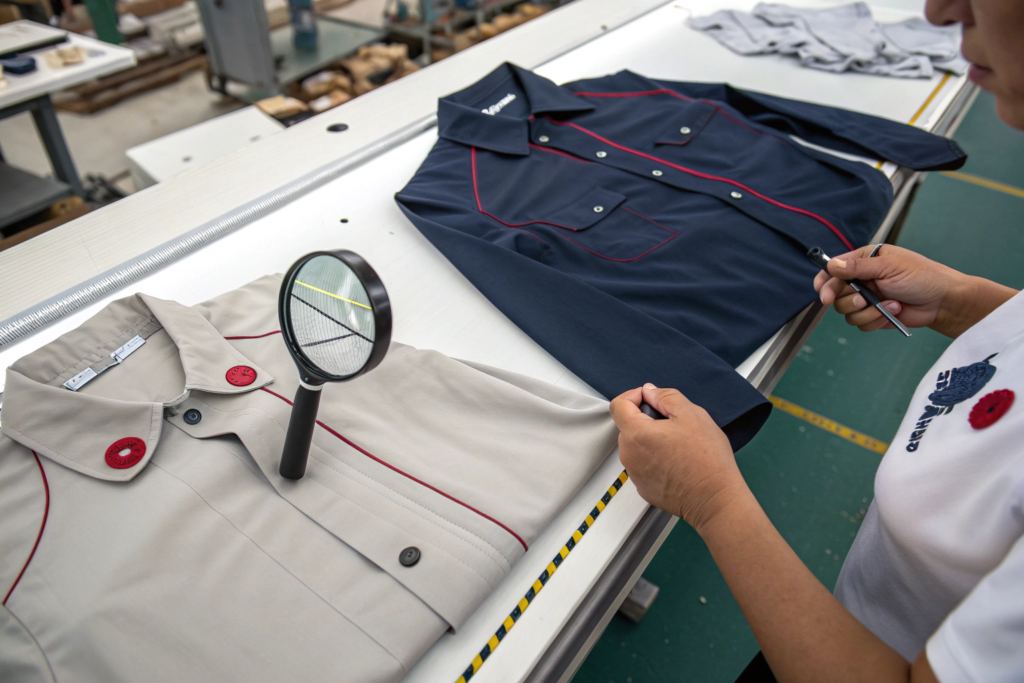
One of our current partners is a brand from Texas that makes high-end western shirts. Before they came to us, they worked with a factory that had great prices. The initial samples were perfect. But when the bulk order of 1,000 shirts arrived, they had a nightmare. The stitching on the plackets was inconsistent. Some buttons were sewn on with just two threads, so they fell off after one wear. The placket on one shirt was a full half-inch wider than on another. The factory had promised "AQL 1.5" quality but delivered goods that looked like seconds. The brand had to hire a local company to re-inspect and repair every single shirt, costing them thousands.
The hidden quality control traps lie in the gap between the sample you approve and the bulk production run. Unscrupulous suppliers use your approved samples as the "bait," then cut corners during mass production by using cheaper thread, less experienced sewers, or faster machine speeds to save time and money. Without rigorous, in-line inspections, these defects go unnoticed until your container arrives.
Does AQL 1.5 Really Mean The Same Thing To Every Factory?
Technically, yes, it's an international standard. But in practice, no. AQL 1.5 means you accept a certain number of minor defects per batch. Some factories will try to push every defect to the very edge of that limit. They will let through items that, in your showroom, you would never accept. A true quality partner operates to a much higher internal standard. We aim for zero defects. We know that every imperfect garment that reaches you is a potential return, a negative review, and a loss of trust in your brand. We don't just check at the end. Our quality control team checks at every stage: during fabric spreading, during cutting, and during sewing. We fix problems when they are a single shirt, not when they are a hundred cartons.
Why Do Some Factories Fail To Test Fabric Before Cutting?
This is one of the biggest and most costly traps. Fabric from a mill can have defects: dye variations, weak spots, or shrinkage issues you can't see by just looking at it. A factory trying to save money might skip the pre-production testing. They cut the fabric, sew the garments, and only then discover the problem. They might ship it anyway, hoping you won't notice. But you will notice when your customer washes a "pre-shrunk" t-shirt and it shrinks two sizes. At Shanghai Fumao, before we cut a single piece of your fabric, we run a full suite of tests. We check for colorfastness, shrinkage, pilling, and tensile strength. This small step, which costs very little, protects you from a catastrophic failure later.
Conclusion
Navigating the world of full-package production is complex. The price on a quote sheet is just the beginning. The real cost of a partnership is determined by the supplier's transparency, their communication skills, and their commitment to quality at every step. For years, I've seen how choosing a partner based solely on price leads to stress, missed deadlines, and damaged brands. It doesn't have to be that way.
At Shanghai Fumao, we've built our entire operation around eliminating these hidden costs for our clients. We don't just take orders; we solve problems. We verify certifications before you ask. We plan logistics so your goods arrive on time. We train our sales team to communicate clearly and technically. And we inspect every garment as if we were buying it ourselves.
If you are tired of worrying about what might go wrong with your production, I invite you to experience a different way of working. Let's build a partnership based on trust and reliability. Please contact our Business Director, Elaine, to discuss your next collection. She will make sure you have a clear, honest picture of what it takes to bring your designs to life, without any hidden surprises.
You can reach Elaine directly at: elaine@fumaoclothing.com