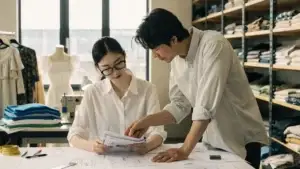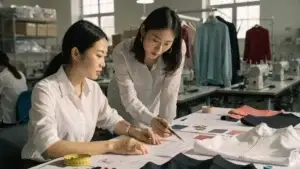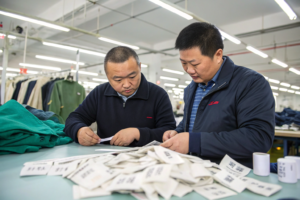
As the owner of an American brand, I know the pressure of hitting the next drop deadline. You’re not just buying clothes; you’re buying a promise. A promise that the quality is right, the shipment leaves on time, and the certificates aren’t fakes. For years, I’ve been in your shoes, sourcing from Vietnam, India, and across China. I’ve felt the frustration of sales reps who don't understand technical specs and the panic of a container arriving late, missing the entire spring season. That’s why I’m writing this. I want to share what I’ve learned about finding a partner, not just a vendor.
I won’t pretend finding a “full package” supplier is easy. It’s a search that often leads to dead ends. But after two decades in this industry and running my own factory here in China, I’ve seen what separates a reliable partner from a costly mistake. The real secret isn’t just visiting a trade show or sending a message on Alibaba. It’s about knowing exactly what to look for before you even send that first email. Let me walk you through the process I use myself and the one I wish every buyer would use when they find our company, Shanghai Fumao.
What does "full package" manufacturing actually mean for my brand?
Many suppliers claim to be "full package," but their definition often stops at "cut and sew." When you're building a brand, that's not enough. You need a partner who handles the entire journey from a sketch on a napkin to a box on a retailer's shelf in North America. I learned this the hard way when I first started. I once worked with a supplier in India who said they were full package, but I ended up chasing my own fabric and trims across Mumbai. It was a nightmare. True full package means you hand over a design, and they hand back a finished product, managing everything in between.
What specific steps does a true full package service cover?
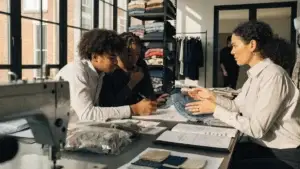
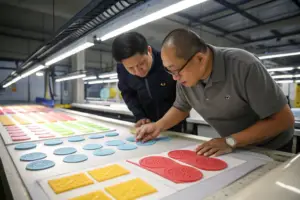
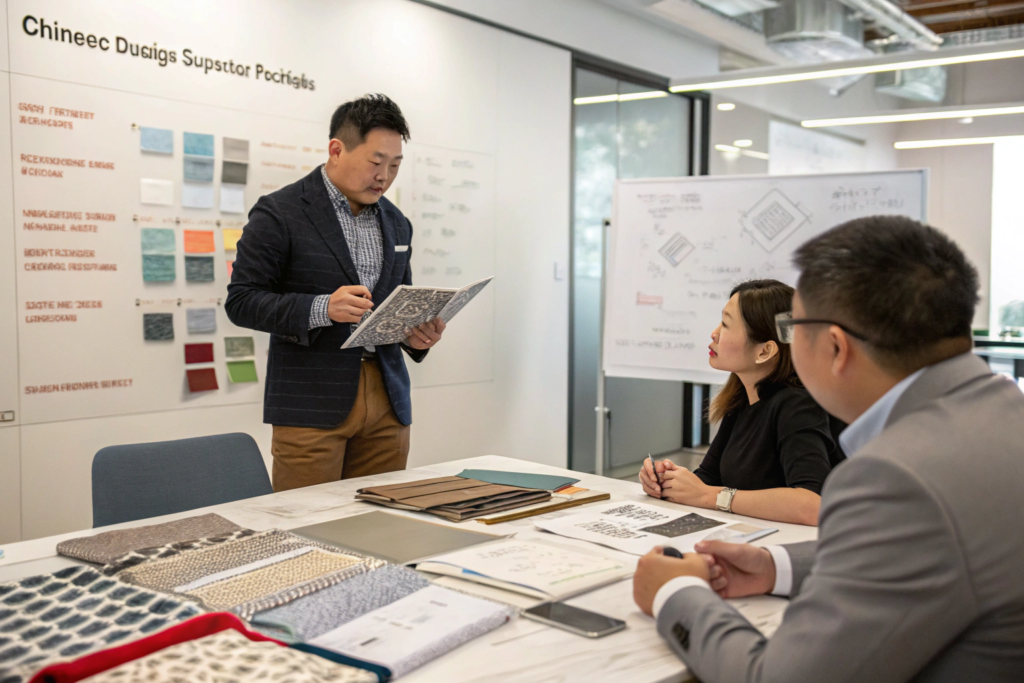
A real full package service starts before the first thread is cut. It begins with product development. Let’s say you have a sketch for a women’s woven blouse with a specific drape. A full package partner takes that idea and creates a tech pack. We source the right fabric, often from our own network of mills, which saves you from paying inflated minimums. We then create patterns and samples. At Shanghai Fumao, we treat this sampling phase as a critical step. We recently worked with a New York contemporary brand on a complex knit top. They had issues with the neckline gaping. Our development team fixed the pattern, sourced a different ribbing, and sent back a sample that fit perfectly. That’s product development, not just production.
Then comes the actual production. This includes sourcing all the trims—buttons, zippers, labels, hang tags. We manage the cutting, sewing, and finishing. After that, we handle the quality control checks. Finally, we manage the export logistics, including documentation and shipping. We even offer DDP mode, which means we handle everything up to your door in the USA, including duties and taxes. You don’t need five different vendors. You just need one point of contact.
How is this different from just a CMT (Cut, Make, Trim) supplier?
The difference is night and day, especially when you care about quality and timing. A CMT supplier is like renting a kitchen. You bring all your own ingredients (fabric), your own recipe (pattern), and your own pots and pans (trims). They just cook it. If your fabric is late, production stops. If your zippers are the wrong color, that’s your problem to fix. It puts all the risk and coordination on you, the brand owner.
A full package manufacturer, on the other hand, acts as your partner. We own the supply chain. When a buyer from a major Los Angeles activewear brand came to us with a rush order for a new line of seamless leggings last year, we didn't just sew them. Our team sourced the specific nylon-spandex blend from our trusted mills, ordered the custom reflective logos, and managed the entire production flow. Because we controlled the materials, we cut their lead time by three weeks. We took the stress of coordination off their plate. That’s the value of full package. You’re not just paying for labor; you’re paying for a system that delivers a finished product on time.
How can I be sure the factory's quality control is real?
This is the biggest fear for any buyer, and it should be. It’s one thing to see a perfect sample. It’s another to get a container of 5,000 pieces and find that the stitching is crooked, the colors don't match, or there are holes. I’ve had suppliers in the past show me a shiny quality control manual, but on the floor, I saw workers rushing and skipping steps. Real quality control isn’t a document; it’s a process built into every stage of production.
What are the key stages for in-line inspections?
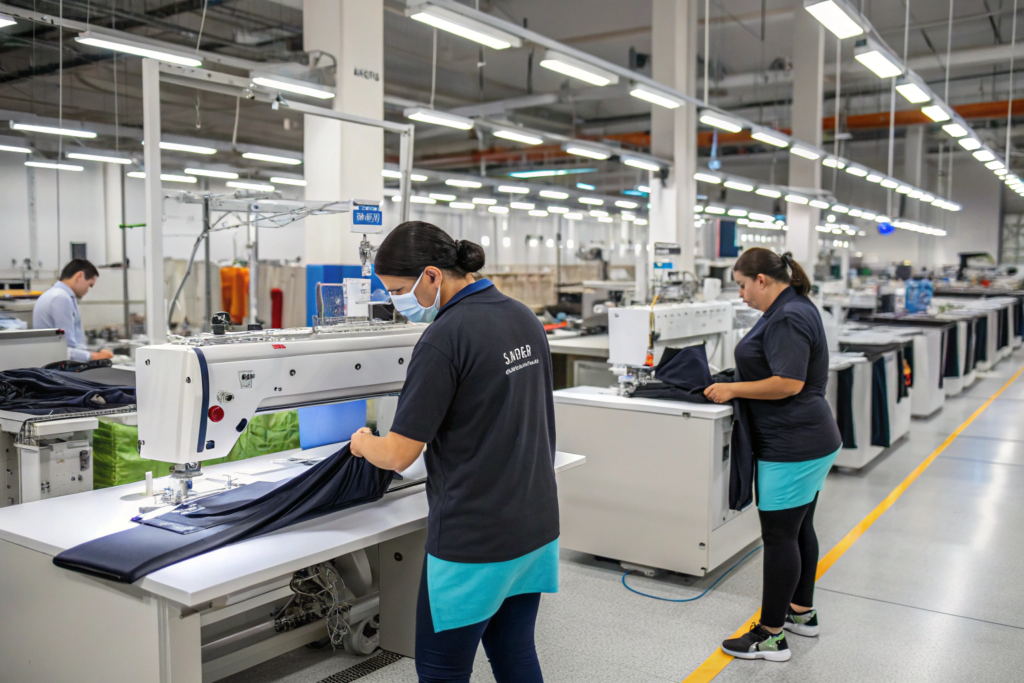
Waiting until the end to check quality is a recipe for disaster. If you find a problem when the goods are 100% finished, it’s too late. The shipment is delayed while you wait for reworks, or you have to accept bad products. The right way is to have checks at multiple points. This is something we ingrained in our five production lines at our factory.
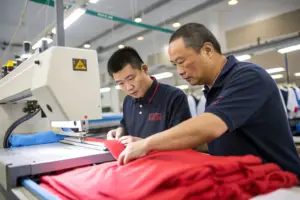
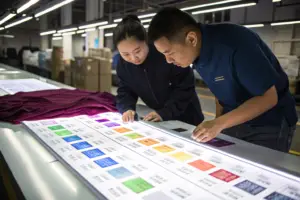
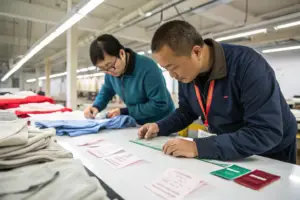
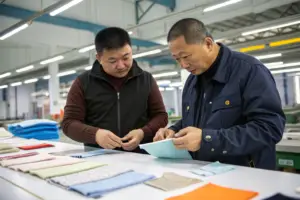
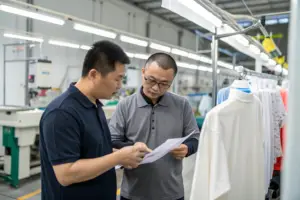
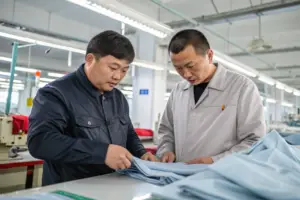
First, there's the fabric inspection. Before a single piece of fabric is cut, we check it for flaws, color consistency, and weight using machines like a four-point system. If the fabric is bad, the garment will be bad. Second, we do an in-line inspection during cutting and sewing. Our floor supervisors check the first pieces off each line. They look at seam strength, stitch density, and measurements. For a recent order of men’s woven shirts for a Chicago-based distributor, our in-line check caught a miscalibration on a pocket placer after just 20 pieces. We fixed it immediately. If we had waited until the end, 500 shirts would have needed to be reworked. Third, we conduct a pre-shipment inspection. This is a random sampling of the finished, packed goods, often done by a third-party agency like SGS or Bureau Veritas if the client requests it. They check the packaging, the measurements, and the overall appearance against the approved sample.
What third-party certifications should I actually look for?
Certificates can be faked. I’ve seen it happen. A supplier shows you a shiny PDF, but it’s either expired or completely fabricated. You need to verify them. But when they are real, they are a powerful signal. For the U.S. market, certain ones are non-negotiable depending on your product.
For social compliance, look for Sedex or WRAP (Worldwide Responsible Accredited Production) certifications. These show the factory treats its workers fairly and provides safe conditions. For quality management systems, ISO 9001 is the standard. It shows the factory has consistent, documented processes. If you’re selling children’s wear, you absolutely need to ensure the factory can provide products that meet CPSIA (Consumer Product Safety Improvement Act) standards. This involves lead and phthalate testing. At Shanghai Fumao, we guide our clients through this. For a children’s pajama line we produced for a Texas brand last fall, we not only ensured the fabric was compliant but also managed the required lab testing and provided all the documentation they needed to pass U.S. Customs. Don't just ask for a certificate. Ask the factory how they handle specific testing for your product category.
Why do shipments keep getting delayed, and how do I stop it?
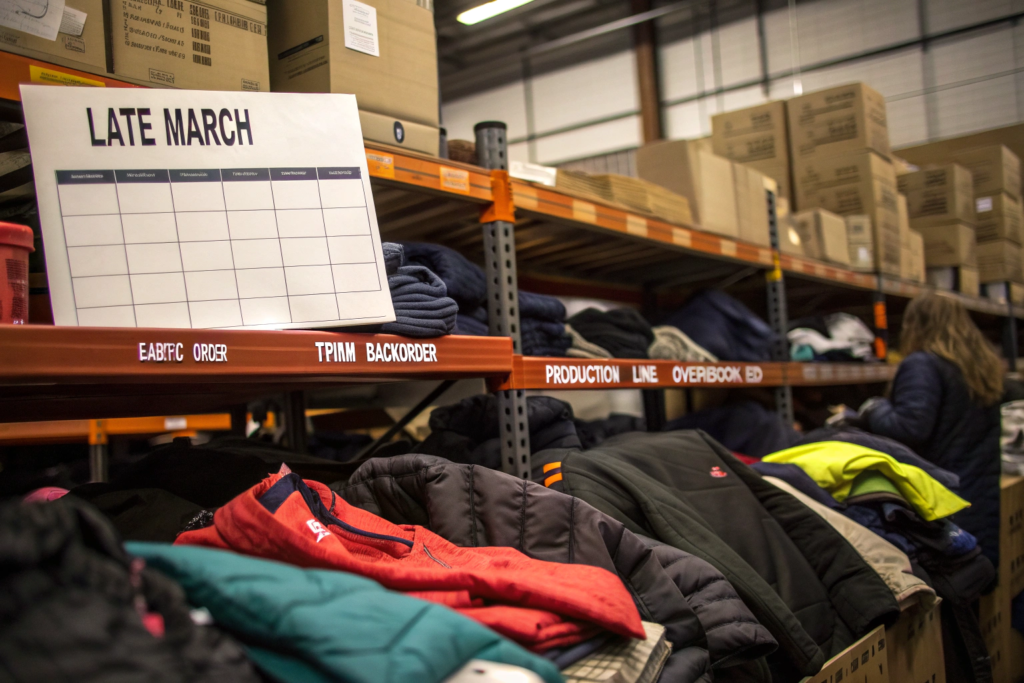
Late shipments kill brands. You miss the back-to-school window, or your winter coats arrive in March. You’re left with inventory you can’t sell and retailers who won’t trust you again. In my experience, delays are rarely about one big disaster. They are a chain of small failures. A fabric order that takes two extra days, a trim that’s on backorder, a production line that’s overbooked. It compounds. As someone who's run a factory for years, I can tell you exactly where these failures start and how you, as a buyer, can spot the risk before you sign the contract.
Communication is the canary in the coal mine. When a sales rep takes 48 hours to reply to an email, or gives vague answers like "we will try our best" without a concrete plan, your shipment is already at risk. I remember talking to a buyer from Seattle who was furious with his previous Vietnamese supplier. The rep always said "everything is fine," but three weeks before the shipment date, they suddenly admitted the fabric was stuck at the port. The rep didn't want to be the bearer of bad news, so they hid it until they couldn't anymore.
A reliable partner communicates proactively, even when the news is bad. If our fabric sourcing hits a snag, we tell our client immediately: "We have an issue with the specific shade of blue you requested. We have two options from other mills. Here are the swatches and the impact on the timeline. Which one do you prefer?" This gives you control. You can make a decision based on facts, not surprises. Pay attention to the sales rep's English skills, too. If they struggle to understand your tech pack, they will also struggle to explain a production problem to you. At Shanghai Fumao, we ensure our client-facing team has strong technical English so these nuances aren't lost in translation.
How can we build a production timeline that actually works?
A realistic timeline is your best defense against delay. Many suppliers will promise you 30 days for a full production run just to get your order. It’s a trap. You need to build a timeline that includes buffers. For a full package order, break it down. How many days for fabric sourcing and milling? How many days for pattern making and sampling approval? How many days for cutting? How many days for sewing, finishing, and packing? How many days for final inspection and shipping?
I always advise brand owners to ask for a detailed production schedule with dates for each milestone. Not just a ship date. If the factory can't provide that, it's a major red flag. They don't have a handle on their own process. For example, when we work with a new client, we provide a Gantt chart. It shows the start and end of every stage. We did this for a Canadian outerwear brand last winter. Their design had a complex technical fabric that needed a special lamination process. We built an extra week into the schedule for that fabric's production and shipping to us. When that week wasn't needed, the order finished early. That’s a happy client. Build in the buffer, and you'll either be on time or early. Don't build it in, and you'll be late.
Where do I start my search to find a partner, not just a supplier?
You can find a vendor anywhere—Alibaba, a trade show, a LinkedIn message. But finding a true partner requires a different approach. It's about moving from a transactional mindset to a relational one. You are looking for someone who understands that your success is their success. The place you start your search matters less than the questions you ask once you get there.

What specific questions should I ask on a factory visit?
If you can, visit the factory. There’s no substitute. But don’t just take the tour they give you. Be curious. When you walk onto the production floor, look at the workers. Do they look engaged or bored and tired? Look at the machines. Are they well-maintained? Is the floor clean and organized? A messy factory is a sign of messy processes, which leads to messy quality.
Ask to see the fabric storage area. Is it clean and dry? Ask about their current orders. "What are you working on right now? Who is it for?" A confident factory will show you. A nervous one will make excuses. Ask to speak to the quality control manager, not just the sales person. Ask them: "What was the last major problem you had on a production line, and how did you fix it?" Their answer will tell you more about their commitment to quality than any certificate can. On my last visit to a potential supplier for a project, I asked this question. The QC manager proudly told me they had never had a problem. That was the answer. I knew they were either lying or blind, so I didn't work with them.
How can I test a factory's capabilities with a small trial order?
Never place your entire season's order with a new factory based on a single sample. The sample is often made by the best pattern maker on the best machine. It’s a showpiece. You need to test their system. Place a small trial order first. It could be 100 pieces of a core style, not your most complicated design. This order tests everything. It tests how they source fabric in smaller quantities. It tests their communication during a real production run, not just sampling. It tests their ability to meet a deadline under real pressure.
We had a buyer from a Florida resort wear brand do this with us. He sent us a small order for a simple linen-blend men's shirt. During this trial, we found that the shrinkage on the first production batch was slightly higher than the sample. Because it was a small order, we could stop the line, re-treat the fabric, and fix it without a major catastrophe. The client saw how we handled a problem. We proved our process. That small order built the trust needed for him to place his main collection with us. That’s how you find a partner. You give them a small test, watch how they perform under pressure, and then make your decision based on real evidence.
Conclusion
Finding a reliable full package clothing manufacturer isn't about luck. It's about knowing the right questions and understanding where to look for the real answers. You need a partner who defines full package as more than just production, who builds quality into every step, who communicates problems before they become disasters, and who is willing to earn your trust through small tests, not just big promises. It’s a search that takes effort, but the reward is a supply chain that lets you sleep at night, knowing your products will arrive on time and meet your standards.
At Shanghai Fumao, we’ve built our five production lines around this philosophy. We understand the stress you face because we’ve been in your position. If you’re tired of chasing suppliers and are ready to build a partnership with a manufacturer who values your brand as much as you do, let’s start a conversation. Reach out to our Business Director, Elaine, directly at elaine@fumaoclothing.com. Tell her about your project, and let's see how we can bring your next collection to life without the headaches.