I have wired millions of dollars to factories I have never visited. It sounds crazy, I know. But in over two decades of business, I've learned that trust is not about a handshake or a flight. It's about systems. I remember a buyer from Ohio who called me, panicked. He had found a great supplier for knitwear on Alibaba. The price was right. The sales rep was friendly. The photos of the factory looked immaculate. He placed a $50,000 order without visiting. When the container arrived, half the sweaters had holes. The yarn was cheap and broke during knitting. The factory's quality claims were completely false. He nearly went bankrupt.
The short answer is no, you cannot blindly trust a supplier's quality claims without verification. But you also don't need to book a flight to China every time you place an order. Trust is built on a foundation of verifiable evidence, not words. This evidence includes third-party audits, transparent communication, independent inspections, and small test orders. A reliable supplier will welcome your scrutiny. A dishonest one will make excuses.
I am the owner of Shanghai Fumao, and my team and I have worked with hundreds of overseas buyers who have never set foot in our factory. We have built that trust over years, one order at a time, by proving our claims with actions, not just words. Let me share with you the specific methods you can use to verify a supplier's quality claims from 7,000 miles away, without ever leaving your office.
How Can Third-Party Audits Validate A Factory's Capabilities?
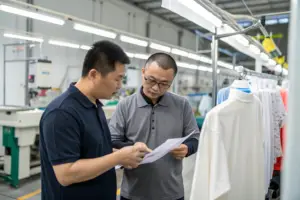
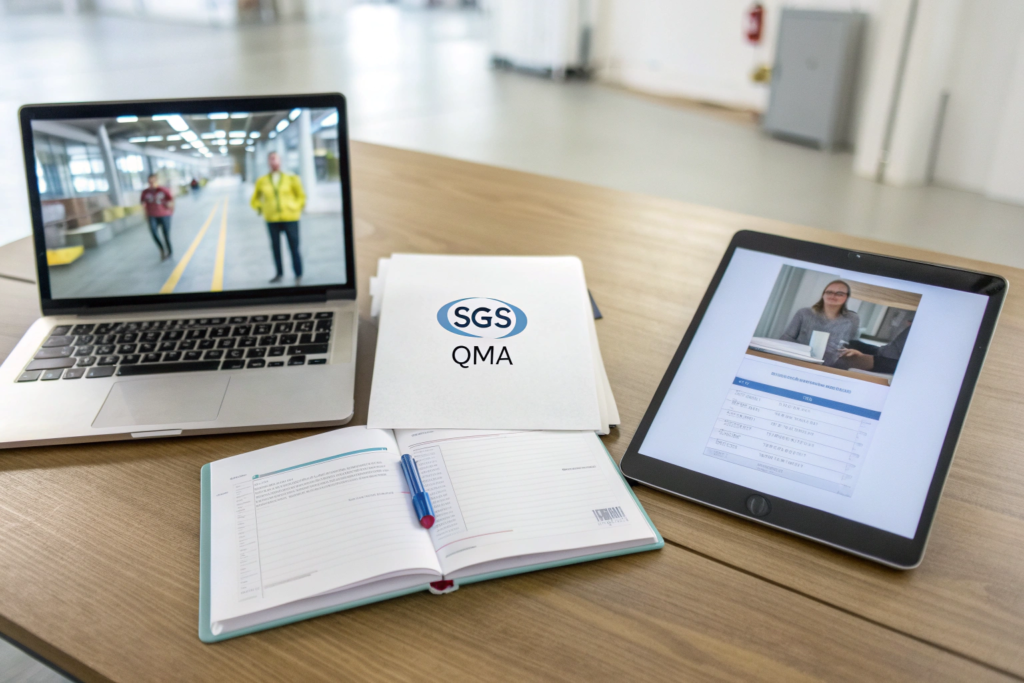
A brochure can show you a beautiful factory photo. A website can list any certification. But a recent, independent audit report is proof. It is a document created by a company that has no stake in your order. They are paid to tell the truth. When a supplier tells me they are "ISO 9001 certified," I don't just nod. I ask for the certificate and the audit date. I look at the scope of the certification. Is it just for trading, or for actual manufacturing?
What specific audits should I ask for?
Don't just ask for "an audit." Be specific. For social compliance and ethical manufacturing, ask for a Sedex Members Ethical Trade Audit (SMETA) or a WRAP certificate. For quality management systems, ask for ISO 9001:2015. But the most useful audit for you might be a technical audit from a company like QIMA or SGS. These audits look specifically at a factory's equipment, processes, quality control procedures, and technical expertise. They will tell you if the factory has the right machines for your product and if they have a real QC system in place. A few years ago, a client from Texas was considering a new supplier for denim. The supplier claimed to have all the latest machinery. We asked for a recent technical audit. The audit showed their "new" washing machines were actually 15 years old and prone to inconsistency. The client saved a huge headache. You can learn about the different types of audits on the websites of major providers like SGS or QIMA. We at Shanghai Fumao regularly undergo audits for our clients and are always happy to share our reports because we have nothing to hide.
How do I know if an audit certificate is fake?
Unfortunately, fake certificates exist. Some dishonest factories photoshop documents. To verify, you need to do a small amount of detective work. First, look at the audit date. Is it current? Audits older than two years are not very useful. Second, look at the audit company's logo and report number. You can often contact the auditing company directly with the report number to verify its authenticity. For example, if a factory gives you an SGS report, you can email SGS to confirm. Legitimate suppliers expect this. If a supplier gets defensive or says "the auditor is on holiday" when you ask to verify, consider it a major red flag. Resources like the International Accreditation Forum can help you understand the global certification landscape.
What Role Does Transparent Communication Play In Building Trust?
I always tell my team: answer every question like your mother asked it. Be honest. If we have a problem, we say it immediately. Hiding problems is the fastest way to lose a client. Communication is the window into a factory's soul. If a sales rep gives vague answers, avoids video calls, or takes three days to respond to a simple question about lead times, that is a huge red flag. They are either disorganized or hiding something.

What questions should I ask to test their honesty?
Ask questions they cannot easily fake. Don't just ask, "Do you do quality control?" Ask, "Can you walk me through your 5-point quality control system? Who does the final inspection? What is their name? Can I speak to them briefly on a video call?" Ask for photos of their warehouse with today's newspaper in the frame. Ask for a video showing the specific machine that will make your garment running. A few years ago, a potential client for a complex activewear line asked us to video call the operator who would sew the critical seams. We did it. The client saw the operator's skill and the machine's condition. That small act of transparency sealed the deal. If a supplier refuses these simple requests, trust your gut. Also, pay attention to how they handle problems. When we make a mistake, and we do sometimes, we tell the client immediately with a plan to fix it. A supplier who blames everyone else is not a partner you can trust. For excellent advice on supply chain communication, I recommend resources from the Council of Supply Chain Management Professionals.
How do I verify their claims about other clients?
A supplier will often say, "We make clothes for Brand X." This is a common claim. You can ask for proof. Ask for a letter of authorization from that brand allowing the factory to use their name. Many reputable brands will not allow this. A more reliable method is to ask for references. Ask for contact information for three current clients, preferably in your country and with similar products. Then, actually call them. I have had many buyers call my references. It's the most honest feedback you can get. Ask the reference: "Do they deliver on time? Do their sales reps communicate clearly? Have they ever had a major quality issue, and how did they handle it?" This direct feedback is invaluable. You can also sometimes find reviews on platforms like Trustpilot or industry-specific forums, though these are less common for B2B suppliers.
Why Are Third-Party Inspections Non-Negotiable For Remote Buying?
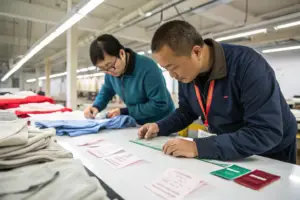
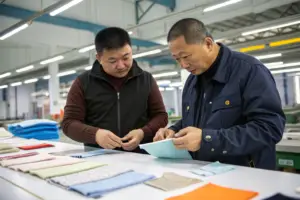
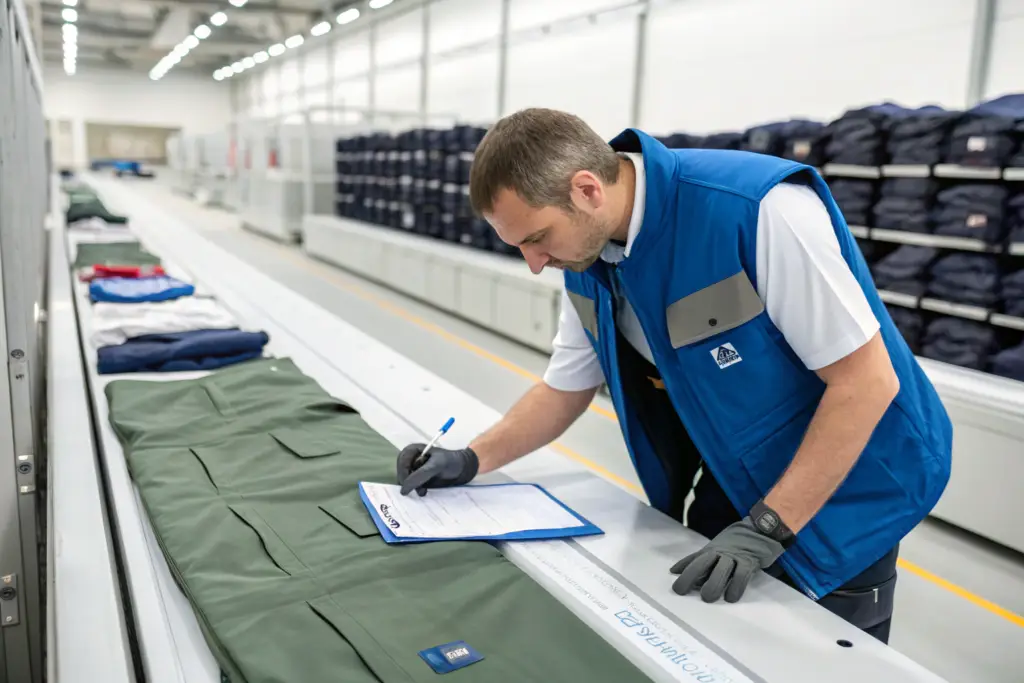
You can have the best communication and the cleanest audit. But when the goods are packed in a carton, you need an independent set of eyes. I have seen too many buyers skip this step to save a few hundred dollars, only to lose thousands later. A third-party inspection is not an insult to the factory. A professional factory welcomes it because it protects both of us. It creates a clear, unbiased record of quality at the time of shipment.
What is the difference between during-production and pre-shipment inspections?
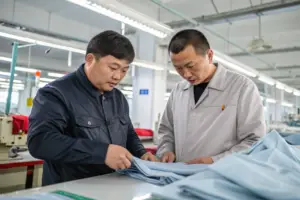
Both are valuable, but they serve different purposes. A during-production inspection (DPI) happens when about 20-30% of the order is finished. The inspector checks the quality of the work in progress. This allows you to catch problems early. If the stitching is wrong on the first 200 pieces, you can fix it before the remaining 800 are made. A pre-shipment inspection (PSI) happens when 100% of the order is finished and at least 80% is packed. The inspector randomly selects cartons and checks the finished goods against your specifications (AQL standards). This is your final check before the money is wired and the ship sails. For a complex order from a Canadian brand last year, our client used both. The DPI caught a minor issue with a button attachment, and the PSI confirmed it was fixed. The order arrived perfect. You can learn more about AQL (Acceptable Quality Limit) standards from the American Society for Quality (ASQ). We always coordinate with our clients' chosen inspection agencies at Shanghai Fumao to ensure a smooth process.
Which inspection companies are reputable?
Several global companies are trusted for their impartiality and professionalism. SGS, Bureau Veritas, QIMA, and TÜV Rheinland are some of the most well-known. They have inspectors all over China who can show up at your supplier's factory with little notice. The cost is usually based on the inspector's time and the size of the order. For a typical order, it might cost a few hundred dollars. This is a tiny fraction of your total investment. I always advise my clients to use these services, even when working with us. It provides them with absolute peace of mind. It also creates a formal record that can be used if there is a dispute. A supplier who refuses to allow a third-party inspection is almost certainly hiding something. You can explore the services of these companies directly on their official websites: SGS, Bureau Veritas, and QIMA.
How Can A Test Order Reveal More Than Any Promise?
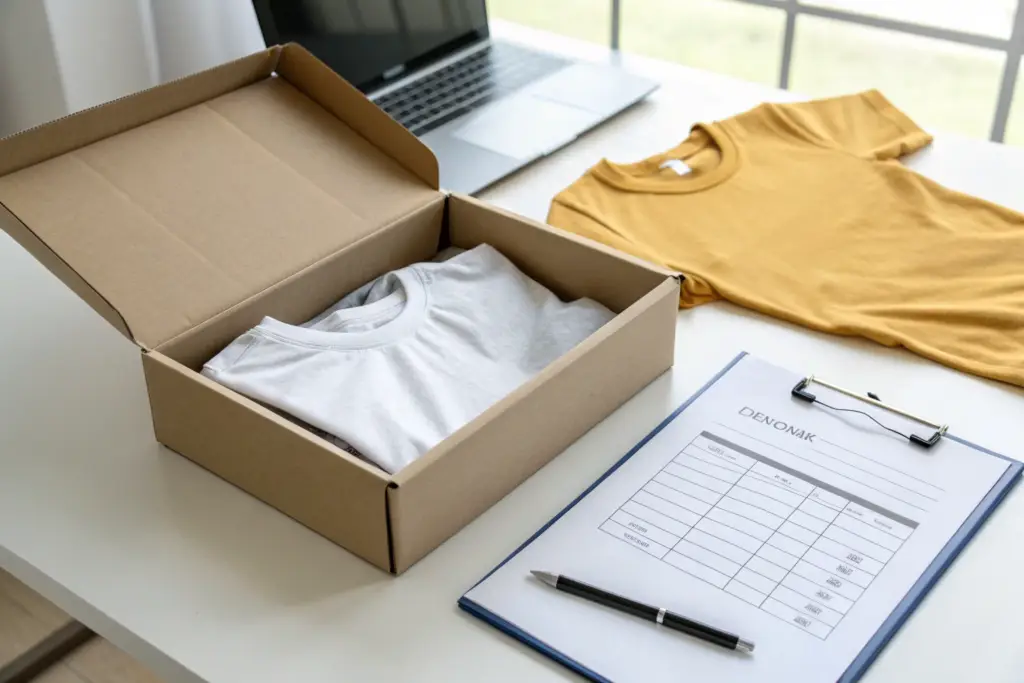
Talk is cheap. A small, paid test order is the ultimate proof. I always recommend this for new clients who are unsure. Don't start with 10,000 pieces. Start with 300 or 500. This is not just about seeing the product quality. It's about experiencing the entire process. How fast do they respond to emails? Do they hit the sample deadline? Do they ship the test order on time? How is the packaging? This real-world test tells you everything you need to know about a potential long-term partner.
What should I evaluate during a test order?
Evaluate everything. First, the product quality. Does it match the sample exactly? Wash it, wear it, pull on the seams. Second, the process. Did they send you tracking information promptly? Was the communication clear? Third, the packaging. Are the garments folded neatly? Are they in polybags? Is the carton strong enough for shipping? A few years ago, a client from Florida placed a test order with a new supplier for 200 pieces. The garments were fine, but they arrived in a flimsy carton that was partially crushed. The client realized this supplier would not be good for larger, more valuable shipments. The test order saved them from a future disaster. This trial run is a standard practice recommended by organizations like the United States International Trade Commission for companies new to importing.
What if the test order is perfect but I still have doubts?
A perfect test order is great, but it's only one data point. Some dishonest factories will put all their best workers on a small test order to impress you. Then, when the big order comes, they use the regular team. To guard against this, you can request that the test order be produced on the same lines and by the same team that will handle the bulk order. You can also ask for random video checks during the bulk production. At Shanghai Fumao, we treat every order, test or bulk, with the same level of care because we know our reputation is on the line. But we also understand a buyer's caution. We are happy to accommodate reasonable requests for verification during production. For more strategies on supplier verification, the International Trade Centre offers excellent tools and resources for small businesses.
Conclusion
Trusting a supplier you have never met is one of the biggest risks in the apparel business. But it is a risk you can manage. You do not need to be on a plane to verify quality. You need to be smart. You need to demand verifiable evidence: third-party audits, transparent communication, independent inspections, and the proof that comes from a successful test order. These tools are your eyes and ears. They turn blind faith into informed confidence.
At Shanghai Fumao, we have built our business on this principle of verifiable trust. We know that our clients in America and Europe cannot visit us every month. So we make our processes visible. We share our audit reports willingly. We jump on video calls at a moment's notice. We coordinate seamlessly with third-party inspectors. We treat every test order as if it were a million-dollar contract. We have helped a startup brand from Chicago grow from a 300-piece test order to a consistent, six-figure annual partnership. We have guided a buyer from Florida through his first importing experience, ensuring every quality claim we made was backed by proof.
If you are tired of wondering who you can trust, let's start a conversation. Let us prove our quality to you, step by step, from 7,000 miles away. Please contact our Business Director, Elaine, at strong>elaine@fumaoclothing.com to discuss your needs and see how transparent partnership works.