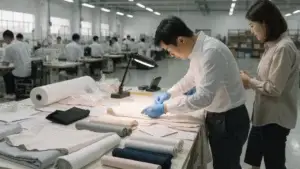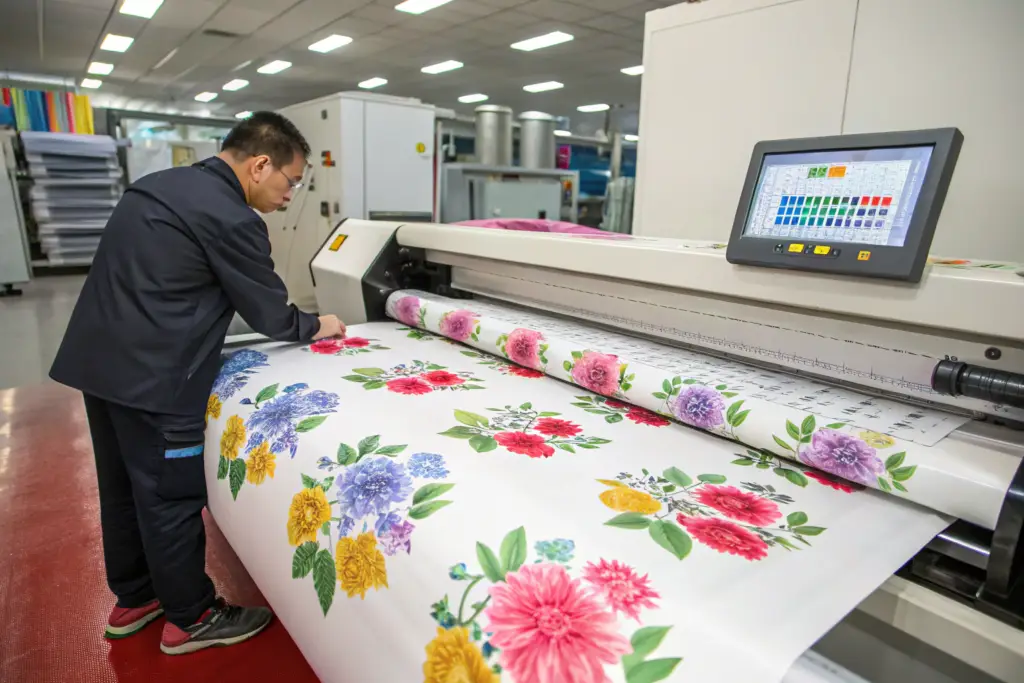
Ten years ago, if you wanted custom printed fabric for your clothing brand, you had one option: rotary screen printing. And you had to order at least 3,000 yards per colorway. That meant tying up fifty thousand dollars in inventory before you even knew if the design would sell. You would cross your fingers and pray that the floral print you loved in January would still look fresh when it hit stores in August. If it did not sell, you were stuck with pallets of dead stock. You either liquidated it for pennies or paid storage fees until you finally gave up and donated it. That old model was a gamble. A very expensive gamble.
Digital fabric printing eliminates that gamble completely. This technology allows wholesale apparel brands and manufacturers like Shanghai Fumao to print as little as one yard of fabric profitably. There are no screens to carve. No color separation limits. No minimum order quantity barriers. Digital printing compresses the production timeline from months to weeks and reduces fabric waste by up to 60% compared to traditional rotary methods. It is the single biggest technological shift in textile manufacturing since the invention of the sewing machine.
So why should you care about this if you are a brand owner or distributor? Because digital printing changes the math on risk and reward. You can test five new designs in small batches instead of betting the farm on one. You can offer your customers more variety without building more warehouse space. And you can respond to a viral trend on TikTok in two weeks instead of two seasons. Let me walk you through exactly how this technology works on our factory floor in China and why it is giving American apparel brands a massive competitive advantage right now.
What Makes Digital Textile Printing More Cost-Effective For Small Batches?
For decades, the wholesale apparel industry was built on volume. You had to order big to get a decent price. This locked out small brands and forced even large brands to play a guessing game with inventory. Digital printing flips that model upside down. The cost per yard is higher than rotary at massive scale. But the total landed cost for a 500-yard order is dramatically lower. And in today's market, where consumers want fresh drops every few weeks, 500 yards is the new normal.
I have watched this shift happen in real time on our production floor. Five years ago, maybe 10% of our custom fabric orders were digital. Today, it is over 60%. Let's break down the specific cost drivers that make digital the smart choice for wholesale buyers who value cash flow and flexibility.
Why Are There No Screen Setup Fees With Digital Printing?
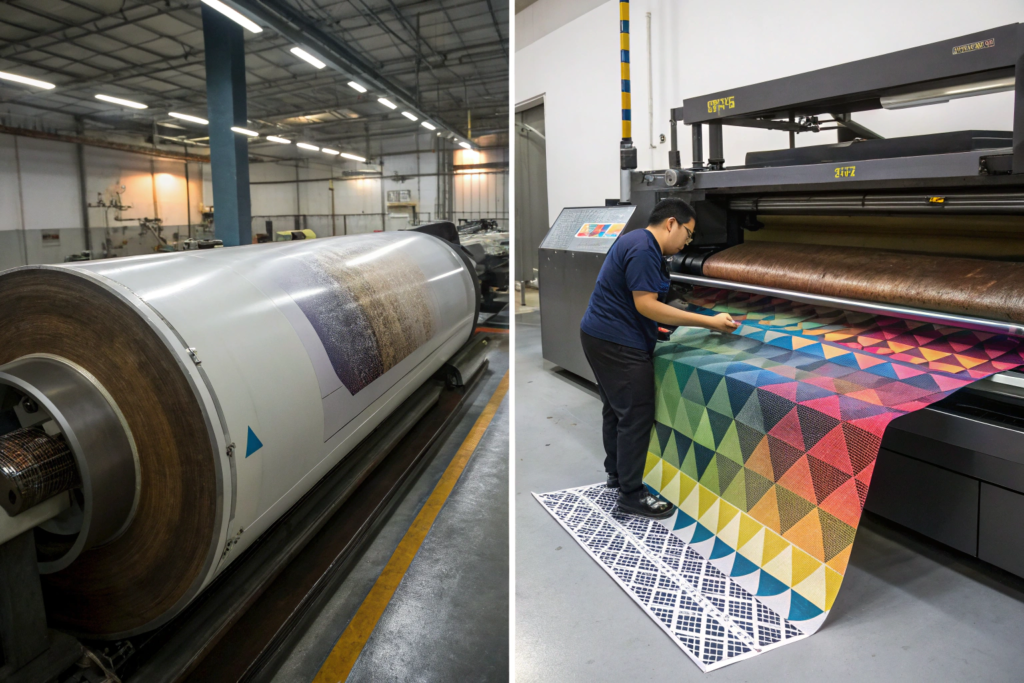
In 2024, a swimwear startup from Miami approached Shanghai Fumao with a beautiful design. It was a tropical palm print with nine distinct colors. Under the old rotary system, that design would have required nine separate screens. Each cylindrical rotary screen costs between $200 and $400 to engrave. That is $1,800 to $3,600 just in screen fees before a single yard of fabric is printed. For an order of 500 yards of swimwear lycra, those setup fees add $3.60 to $7.20 per yard in hidden cost. The math simply does not work for a small brand.
With digital printing, there are no screens. The design file goes directly from the computer to the print head. We upload the Adobe Photoshop file to our MS Printing Solutions RIP software, calibrate the color profile for the specific fabric type, and hit print. The setup cost is zero dollars. Zilch. For that Miami swimwear client, we printed exactly 400 yards of the palm print and 100 yards of a solid coordinating color. Their total fabric bill was under $8,000. Under the old system, just the screens would have eaten up nearly half of that budget. This is why digital is the great equalizer for emerging brands.
How Does Reduced Fabric Waste Lower Your Wholesale Unit Price?
Waste in traditional textile printing is not just about unsold inventory. It is about what happens on the printing table. Rotary printing uses a technique called "continuous registration." The fabric runs under the screens, and each color is applied one after another. But here is the dirty secret: the first 10 to 15 yards of every single print run are garbage. They are called "strike-off waste." The machine needs that much fabric running through it to get the screen pressure and ink flow perfectly aligned across all colors. For a 500-yard order, 15 yards is 3% waste. That is manageable. For a 50-yard sample order, 15 yards is 30% waste. You are paying for fabric that goes straight into the landfill.
Digital printing works differently. The print heads calibrate in seconds on a blank section of the belt. Actual fabric waste during setup is less than one yard. Let me share a real example. Last month, we produced a small run of men's woven shirts for a boutique in Austin, Texas. They wanted 80 yards of a custom geometric print on Cotton Poplin. Here is the waste comparison based on our internal production data:
| Printing Method | Order Quantity | Setup Waste | Waste Percentage | Cost of Wasted Fabric ($6.50/yd) |
|---|---|---|---|---|
| Rotary Screen | 80 Yards | 12 Yards | 15.0% | $78.00 |
| Digital Print | 80 Yards | 0.8 Yards | 1.0% | $5.20 |
That $72.80 difference goes straight to your bottom line. And it does not even account for the ink savings. Digital printers use precisely the amount of ink needed for the pixels in the design. Rotary screens push ink through the mesh whether the design has heavy coverage or light coverage in that area. Less waste means a lower FOB (Free on Board) price for our wholesale partners.
How Does Digital Printing Accelerate Speed To Market For Brands?
In the apparel business, timing is everything. You have all heard the phrase "fashion is fleeting." But today, it is more extreme than ever. A trend on Instagram Reels has a shelf life of maybe six weeks. If you cannot get product into your customers' hands while the trend is hot, you missed the window. Traditional manufacturing was built for a world of two seasons: Spring/Summer and Fall/Winter. Digital printing, combined with the right manufacturing partner, allows you to operate on a 52-season calendar.
Speed is not just about the printing machine itself. It is about the entire ecosystem around it. How fast can you sample? How fast can you correct a color issue? How fast can you reorder a bestseller? Let's look at the two areas where digital printing collapses the timeline for American brands.
Can You Really Go From Design File To Finished Garment In Weeks?
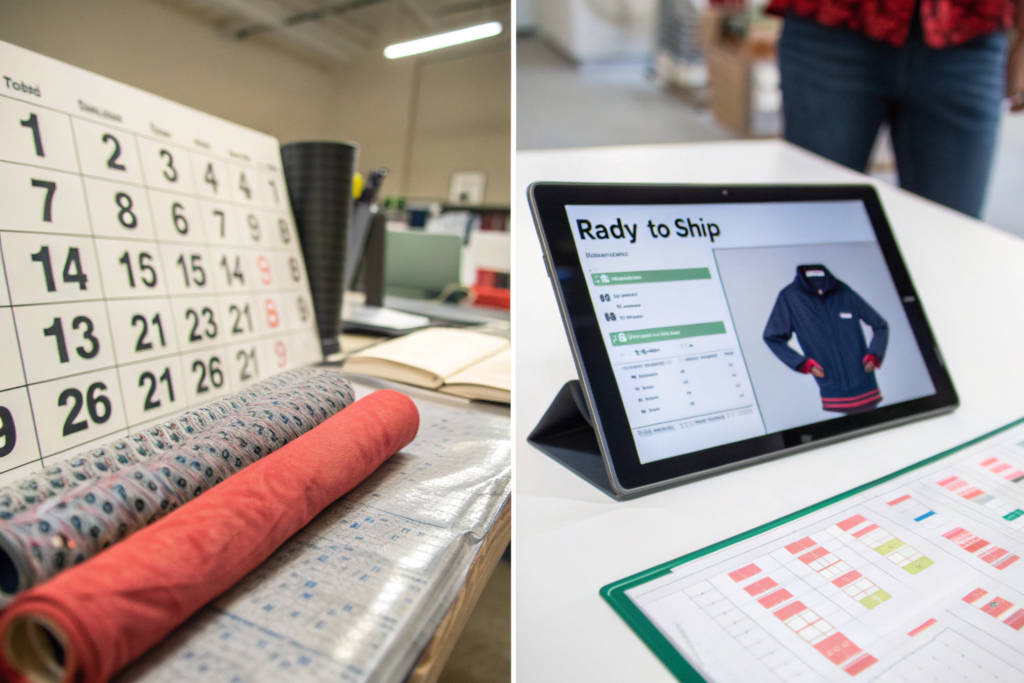
Yes. And I will prove it with a real case study. In February 2026, a women's wear brand from California came to Shanghai Fumao with an urgent request. They had seen a specific watercolor floral motif blow up on a celebrity stylist's TikTok. They needed 800 units of a blouse in that print style for an upcoming pop-up shop event. They sent us a mood board on a Monday morning Shanghai time.
Here is exactly how that timeline played out:
- Day 1-2: Our designer converted the low-resolution mood board image into a high-resolution repeatable textile file using Adobe Illustrator.
- Day 3: We printed 5 yards of strike-off on our MS JP7 digital printer to check color accuracy against the client's Pantone references.
- Day 4: Client approved the digital photo of the strike-off via WhatsApp.
- Day 5-10: We digitally printed the full 700 yards of fabric. Simultaneously, our cutting department prepared the pattern markers.
- Day 11-18: Sewing and finishing of the 800 blouses on our dedicated production line.
- Day 19: Quality control and packing.
- Day 22: Shipment via air freight DDP to Los Angeles.
Total time from idea to finished goods: Three weeks and one day. If we had to engrave screens, the screens alone would have taken two weeks to manufacture and ship to our facility. That California brand sold out of that blouse in three days at their pop-up. They have since re-ordered the style twice. Digital made that reactive business model possible.
What Makes Strike-Off Approvals Faster With Digital?
Strike-offs are the physical swatches of printed fabric you approve before we print the bulk order. In the rotary world, getting a strike-off is a painful, slow process. You have to wait for the screen engraver to finish his work. Then you have to schedule time on the massive rotary machine, which is usually booked solid with 20,000-yard production runs. Fitting in a 5-yard sample run is a nuisance for the factory. It often takes 10 to 14 days just to get that first swatch in your hand.
With digital, a strike-off is just another print job. We load your file into the queue, select "Sample Mode," and the machine prints 3 yards in about 4 minutes. We cut a swatch, FedEx it to you, and you have it in 48 hours. Even more importantly, if the color is slightly off, we adjust the ICC color profile in the software and print a revision in another 4 minutes. I worked with a men's shirt brand last year that went through six rounds of color correction on a rotary print. Each round took a week. Six weeks of sampling. With digital, we can usually nail the color in two rounds max, sometimes one. This speed allows our wholesale partners to be more adventurous. They can try a risky color combination on a small batch without committing six weeks of time to find out it does not work.
Which Fabric Types Benefit Most From Digital Printing Technology?
Not all fabrics are created equal when it comes to digital printing. If you try to digitally print on the wrong base cloth, you will end up with a muddy, faded mess. Or worse, the ink will wash right out in the first laundry cycle. Understanding which materials work best with digital technology is critical for any brand owner looking to optimize quality and speed.
At Shanghai Fumao, we have tested hundreds of fabric compositions through our digital workflow. Some are absolute superstars that produce gallery-quality results. Others require special pre-treatment that adds time and cost. Let's categorize the fabric landscape so you can make smarter sourcing decisions.
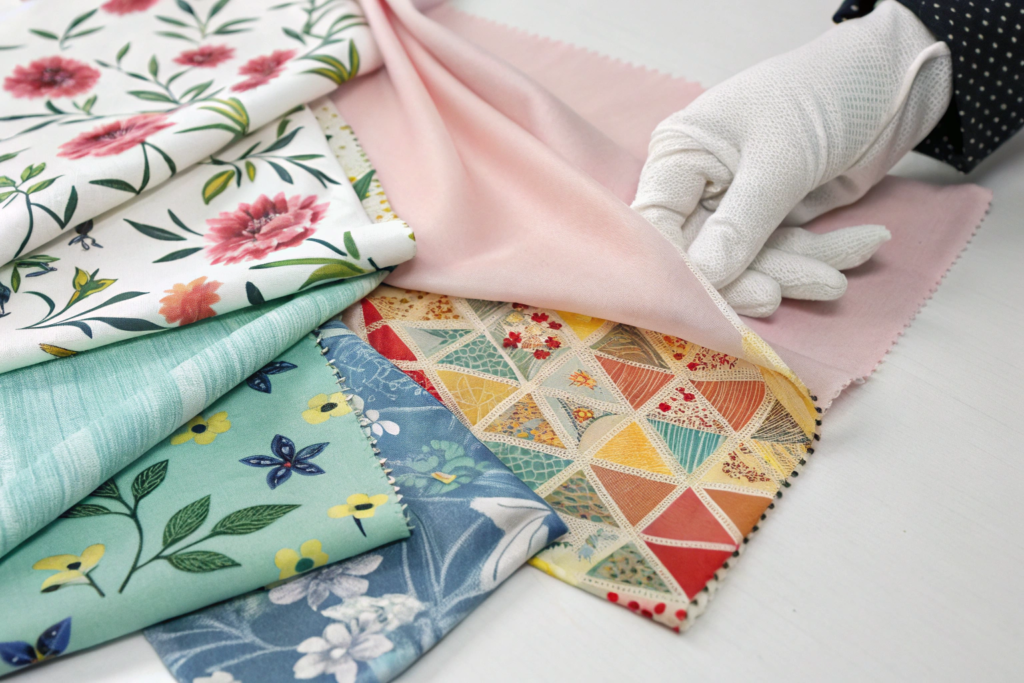
Is Polyester Still The King Of Digital Sublimation?
For the activewear and sportswear categories, the answer is a resounding yes. Dye-sublimation printing on polyester is the most mature and reliable form of digital textile printing. It is the gold standard for custom leggings, jerseys, and performance tops. The science is straightforward: the ink turns into a gas under high heat and pressure, bonding permanently with the polyester polymer chains. The print becomes part of the fabric. You cannot feel it on the surface. It will never crack, peel, or fade in the wash.
We produce over 50,000 yards of sublimated polyester knit per year for American activewear brands. Here is why it works so well:
- Vibrancy: The colors are incredibly bright and saturated because the white base fabric reflects light through the translucent dye.
- Durability: The AATCC 61 wash fastness rating is typically 4.0-4.5, which is near-perfect.
- Hand Feel: The fabric remains soft and breathable because there is no heavy pigment sitting on top of the fibers.
However, there is one major limitation: You must use at least 65% polyester content. You cannot sublimate onto 100% cotton. If you want a vintage, faded, soft-feel graphic on a cotton t-shirt, sublimation is the wrong tool. You would need Direct-to-Garment (DTG) printing instead, which we also offer for smaller quantity decorated apparel orders.
How Does Pigment Ink Perform On Natural Fibers Like Cotton?
This is the frontier of digital textile printing. For years, printing on cotton digitally was the holy grail that nobody could quite solve. You had to pre-treat the fabric with a heavy chemical coating, print with reactive dyes, and then steam the fabric for 30 minutes to fix the color. It was slow, wet, and environmentally unfriendly.
The game changer has been advanced pigment inks. Pigment inks are essentially tiny colored particles suspended in a liquid binder. When heated, the binder wraps around the cotton fibers and glues the color in place. In 2025, we invested in a new generation of pigment printers that use Kornit Presto technology. The results are finally good enough for mainstream wholesale apparel.
Here is a comparison of digital printing methods based on fabric type:
| Fabric Type | Recommended Digital Method | Hand Feel | Wash Durability | Best Use Case |
|---|---|---|---|---|
| 100% Polyester | Dye Sublimation | Extremely Soft (No Feel) | Excellent | Activewear, Swimwear, Flags |
| Cotton / Linen | Pigment Ink | Slightly Crisp (Softens after wash) | Good | T-shirts, Dresses, Home Decor |
| Rayon / Modal | Reactive Dye | Soft | Very Good | Women's Blouses, Scarves |
| Nylon / Lycra | Acid Dye | Soft | Excellent | Swimwear, Intimates |
Last season, a children's wear brand we work with switched their cotton dress prints from rotary to digital pigment. The print quality was 95% as sharp as rotary, but they gained the ability to order 200 yards per color instead of 2,000. That allowed them to offer 10 different dress prints in their catalog instead of just 2. Their sales volume increased by 40% year-over-year because they had more variety on their B2B wholesale portal. More choice equals more orders. It is that simple.
How Does Sustainable Digital Printing Impact Wholesale Buyer Decisions?
Sustainability is no longer a niche concern for a few eco-warrior brands. It is a purchasing requirement for major retailers like Target and Walmart. If you are a wholesale distributor selling to these big boxes, they are asking you for data on water usage and chemical compliance. If you cannot provide it, you lose the shelf space. Digital printing is not just faster and cheaper for small runs. It is fundamentally cleaner.
I have walked through traditional rotary print mills that smell like a chemical plant. The air is thick with solvent fumes. The floors are wet with colored wastewater. Digital printing changes that physical reality of manufacturing. Let's examine the two biggest environmental wins that matter to our wholesale partners.
Can Digital Printing Help You Meet Big Box Retailer Compliance?
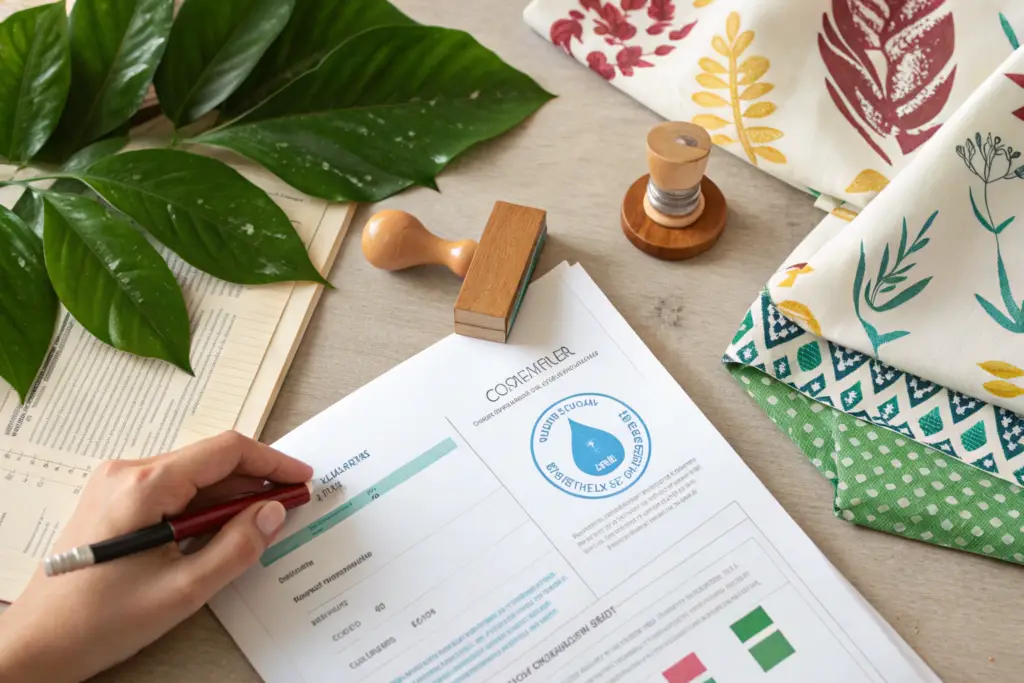
Absolutely. And here is a concrete example from our factory. In 2025, a major American department store chain required all private label vendors to submit a ZDHC (Zero Discharge of Hazardous Chemicals) wastewater report. They wanted proof that the dyes and auxiliaries used in their garments were not poisoning rivers in developing countries.
Our digital printing operation uses ECO PASSPORT by OEKO-TEX certified inks. More importantly, digital printing uses almost no water in the printing process itself. Rotary printing requires washing screens constantly, generating hundreds of gallons of contaminated sludge per day. Our digital pigment line uses dry heat fixation. There is no post-print washing step. Zero water discharge. We were able to provide that department store with a clean report within 24 hours. This is becoming a non-negotiable ticket to entry for doing business with the largest wholesale buyers in North America and Europe.
Does Lower Water Usage Translate To A Marketing Advantage?
Consumers are increasingly skeptical of "greenwashing." They do not want to hear vague promises about saving the planet. They want specific, verifiable facts. Digital printing gives you a number you can actually put on a hangtag. Here is the data we share with brands who partner with Shanghai Fumao for their printed apparel lines:
- Water Savings: Digital pigment printing saves approximately 25-30 liters of water per kilogram of fabric compared to traditional rotary reactive printing.
- Energy Savings: Digital uses about 30% less electricity because you are not running massive drying ovens and screen washing stations continuously.
One of our clients, a men's outdoor apparel company based in Colorado, used this data to create a hangtag for their printed fishing shirts. It read: "This print saved 12 gallons of water versus conventional methods." Their customers loved it. It gave them a tangible reason to feel good about a $79 shirt. For a B2B buyer, this is a powerful selling tool. You are not just selling a garment. You are selling a story of responsible manufacturing. And in a crowded wholesale market, that story can be the difference between a buyer choosing your line or a competitor's line.
Conclusion
Digital fabric printing has rewritten the rules of the wholesale apparel game. It has shattered the barrier of high minimum order quantities that kept small and mid-sized brands from accessing custom textile designs. It has collapsed the production timeline from a sluggish multi-month crawl to a responsive two-to-three-week sprint. It allows you to test the market with 200 yards of a risky floral print instead of gambling on 3,000 yards of dead stock. And it aligns your supply chain with the strict environmental standards now demanded by major retailers and conscious consumers alike.
From the elimination of expensive rotary screen setup fees to the drastic reduction in water and fabric waste, the technology offers a clear path to better margins and faster inventory turns. Whether you are printing vibrant sublimation graphics on polyester activewear or soft pigment prints on premium cotton dresses, digital is the engine that powers agility in a market that waits for no one. The brands that embrace this flexibility are the ones capturing market share right now.
If you are ready to explore how custom digital fabric printing can transform your next collection, we are here to help you navigate the process. At Shanghai Fumao, we combine our five production lines with state-of-the-art digital printing capabilities to offer true full-package manufacturing for North American and European brands. Whether you need a small test run of 100 pieces or a larger wholesale order, we can handle it efficiently with our DDP shipping service.
Let's discuss your print ideas and how we can bring them to life faster than you thought possible. Reach out to our Business Director, Elaine, directly for a consultation on fabric options and pricing. You can contact her at elaine@fumaoclothing.com. Let's get your next printed collection off the ground and into your customers' hands.