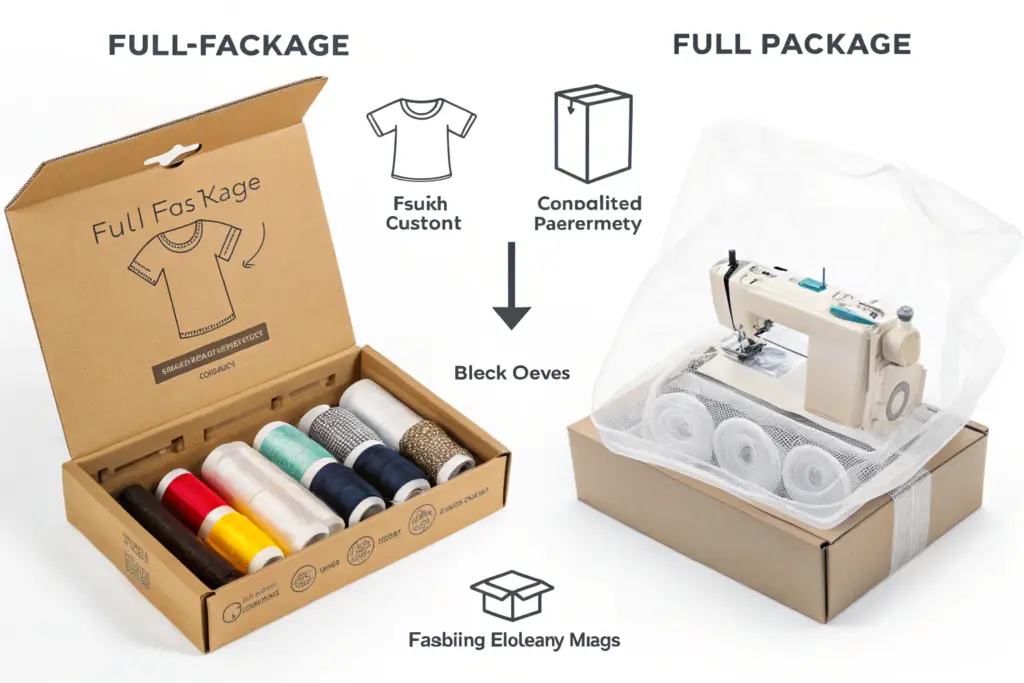
Your brand has grown. You have successfully launched several collections using the convenience of a Full-Package supplier. But now, you are hitting a ceiling. You want more control over your fabric quality. You want better margins. You want a more unique product. You know that CMT (Cut, Make, Trim) is the answer, but the transition feels like a huge, scary leap. A brand owner told me, "I knew I needed to move to CMT to get to the next level. But I was terrified of breaking something that was already working. The logistics of managing my own materials felt overwhelming."
Switching from a Full-Package to a CMT supplier is a strategic, multi-step evolution, not a sudden, risky jump. The smartest approach is a phased transition. Start by identifying one or two of your best-selling, core styles that use a common fabric. Work with your new CMT partner to source that exact fabric directly, run a small, parallel CMT order to test the new workflow, and only then transition the bulk of your production. This de-risks the process and allows you to learn and adapt.
At Shanghai Fumao, we specialize in guiding B2B brands through this exact evolution. We offer both Full-Package and CMT services and can provide a seamless, supportive bridge from one model to the other. Let me give you a practical, step-by-step roadmap for making this transition smoothly, safely, and profitably.
What Is the Smartest First Step in Transitioning from Full-Package to CMT?
The biggest mistake brands make is trying to switch their entire collection to CMT all at once. This is a recipe for chaos, logistical nightmares, and potential stock-outs. The smart, de-risked approach is to run a pilot program with a single, ideal candidate product. This allows you to learn the new workflow, test your new material supply chain, and build confidence with your new CMT partner before committing your entire business.
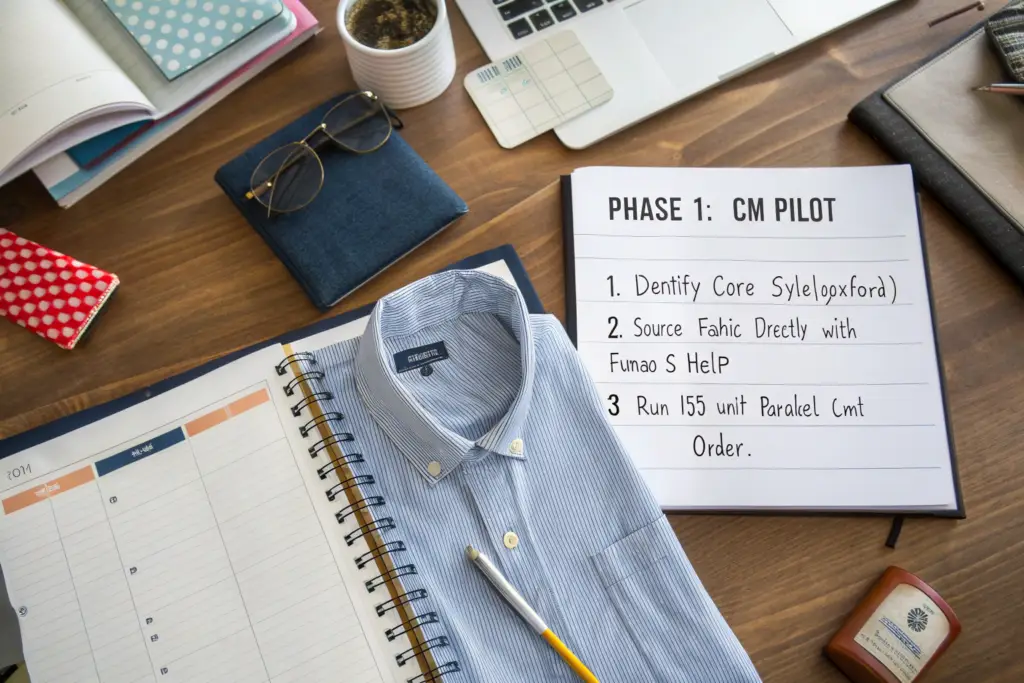
The smartest first step is a "CMT Pilot Program" with a single, proven style. The ideal candidate is a consistent best-seller with a stable, reorderable fabric (like an Oxford cloth or a basic jersey). The goal of the pilot is not to save a massive amount of money immediately, but to stress-test the new process. Work with your CMT factory to source the exact same fabric you were using in Full-Package. Run a small, parallel CMT order (e.g., 150 units) alongside your usual Full-Package order. This allows for a direct quality and cost comparison with minimal risk.
A men's wear brand we work with did this brilliantly. Their best-selling product was a classic Oxford shirt. For their pilot, we helped them identify the exact mill and fabric quality their Full-Package supplier had been using. They opened a direct account with the mill and placed a small CMT order with us for 200 units. They ran this while still placing their regular Full-Package order for the rest of their stock. The CMT pilot was a success. The quality was identical, and they saved 18% on their landed cost. This gave them the confidence and the data to transition the entire Oxford shirt program to CMT the following season. This is the power of a phased, data-driven CMT transition .
How Do You Identify the Perfect "Pilot Style" for Your First CMT Project?
Look for these characteristics in a candidate style:
- Consistent, Proven Seller: You have reliable sales data and reorder history.
- Stable Fabric: Uses a common, non-trendy material like an Oxford cloth, a standard twill, or a basic jersey. Avoid complex prints or delicate, hard-to-source fabrics for the pilot.
- Relatively Simple Construction: Minimize the number of unique or complex trims.
This is not the time to test a complex new design. This is about testing the new process. This is a key part of our strategic onboarding for new CMT partners.
What Is the Value of Running a "Parallel" Order During the Transition?
Running a CMT pilot order while still placing your usual Full-Package order is your safety net. If anything goes wrong with the CMT pilot—a delay, a quality hiccup—your business is not disrupted. You still have your Full-Package inventory arriving. This removes the pressure and allows you to learn and iterate. It is the single most effective way to de-risk the switch. This is a strategy we strongly recommend for all emerging CMT brands .
How Do You Replicate Your Existing Fabric and Trim Supply Chain for CMT?
One of the biggest anxieties about switching to CMT is the fear of the unknown: "How will I ever find the exact same fabric I was using before?" The good news is that you have a huge head start. You are not starting from scratch. You are simply taking control of a supply chain that already exists. The information you need is often right there on the garment you are already selling.
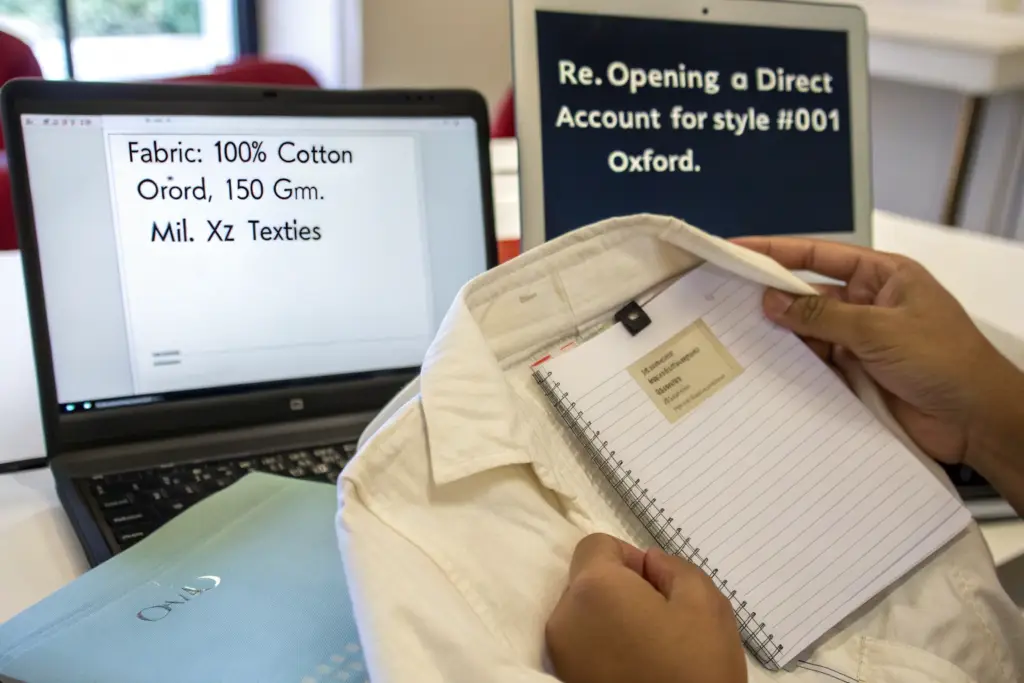
To replicate your existing supply chain, you must become a detective. Start with the garment itself. The care label often provides clues about the fabric composition. More importantly, have a candid conversation with your new CMT partner. Show them the garment. A skilled factory can often identify the fabric quality, weight, and even the likely mill source based on their industry experience. They can then help you open a direct account with that mill, effectively cutting out the Full-Package middleman and capturing that margin for yourself.
A brand transitioning to CMT was worried about losing the unique, soft handfeel of the Tencel jersey they used in their best-selling dress. They sent us a sample of the dress. Our sourcing team examined it, identified it as a specific 180 GSM Tencel quality from a well-known mill, and provided the client with the mill's contact information. The client opened a direct account and was able to purchase the exact same fabric at a 22% lower cost per yard. The mystery was solved, and the savings were significant. This is the power of leveraging a knowledgeable CMT partner .
How Can Your New CMT Factory Help You Identify Your Existing Fabric?
This is a huge value-add of a great CMT partner. Bring us a sample of the garment you have been producing. Our sourcing team, with decades of experience, can act as your textile forensics lab. We can identify:
- Fiber Content and Blend.
- Fabric Weight (GSM).
- Yarn Construction (e.g., ring-spun, combed).
- Likely Mill Sources.
We can then guide you on how to approach those mills directly. This is a key part of our CMT onboarding and support .
What Is the Process for Opening a Direct Account with a Fabric Mill?
It is more straightforward than you might think. Typically, you will:
- Contact the mill's sales department (we can provide an introduction).
- Request a sample yardage of the specific quality you need.
- Establish payment terms (often pro-forma invoice for a first order).
- Place your order.
You are now a direct customer, bypassing the Full-Package factory's markup. This is a core financial benefit of the CMT model. This is the essence of direct sourcing .
What New Operational Skills and Systems Do You Need to Develop?
Switching to CMT is not just a financial change; it is an operational evolution. In the Full-Package model, you managed a single vendor relationship. In CMT, you become the central coordinator of a small supply chain. This requires developing a few new, simple but critical, skills and systems. The good news is that this is entirely manageable with a bit of discipline and the right tools.
The key new skills are proactive project management and basic logistics coordination. You need a simple system to track your material orders: a spreadsheet with POs, tracking numbers, and expected delivery dates to the factory. You must get comfortable ordering "Buffer Stock" (3-5% extra fabric) and managing the inbound freight of your materials. This is a shift from being a reactive customer to a proactive supply chain manager.
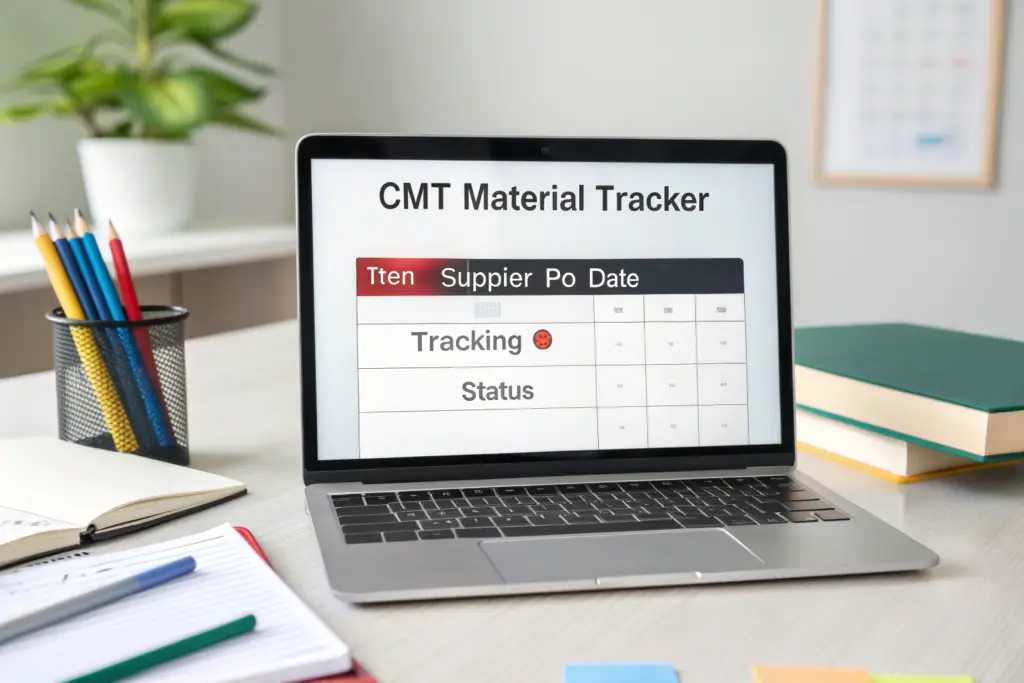
A founder I mentored was initially overwhelmed by this. We helped her set up a simple Google Sheet called her "CMT Command Center." It had tabs for each of her materials—fabric, buttons, labels. In each tab, she tracked the supplier, the PO number, the tracking link, and the expected arrival date at our factory. She updated it weekly. This single, simple tool transformed her anxiety into a feeling of control. She told me, "Once I had my system, CMT wasn't scary. It was just a new, manageable part of my job." This is the operational discipline of a successful CMT brand .
What Is a Simple System for Tracking Your CMT Material Orders?
You do not need expensive software. A simple, shared spreadsheet (like Google Sheets) is perfect. Create a tab for each supplier or each style. Include these columns:
- Item Description (e.g., "Style #001 - 100% Linen, Natural")
- Supplier Name & Contact
- Your PO Number & Date
- Supplier's Confirmed Ship Date
- Tracking Number
- Status (Ordered, Shipped, Delivered to Fumao)
Share this sheet with your Project Manager at the factory. This single source of truth eliminates confusion and ensures everyone is on the same page. This is a key tool we recommend for our CMT partners .
How Do You Master the Art of Ordering "Buffer Stock"?
This is a non-negotiable CMT discipline. You must get used to ordering extra. Start with a simple rule: +5% for fabric, +3% for trims. Use our Total CMT Cost Calculator to factor this extra cost into your budget. After a few production runs, you will get a feel for the exact buffer needed for your specific fabrics and designs. It is an insurance policy that prevents short shipments and costly delays. This is a key part of CMT financial planning .
How Does Fumao Support a Smooth and Low-Risk Transition to CMT?
We understand that switching manufacturing models is a significant decision. We do not just hand you a CMT quote and wish you luck. Our role is to be your guide and partner through the entire transition. We have developed a structured, supportive process specifically designed to make the move from Full-Package to CMT as smooth, transparent, and low-risk as possible.
Fumao supports a smooth CMT transition by providing a structured roadmap, expert sourcing support, and dedicated Project Management. We help you identify the right pilot style. We act as your textile forensics team to help you replicate your existing fabric supply chain. We guide you on buffer stock and logistics. And our Project Managers provide the proactive communication and transparency that make the new CMT workflow feel manageable and clear. We are your partner in this evolution.
A brand founder who recently transitioned her core line to CMT with us told me, "I was so scared to make the switch. But your team held my hand through the whole thing. The pilot program was genius. By the time we were ready to go all-in on CMT, I felt like a pro. I couldn't have done it without your structured approach." That is our goal. To provide the expertise, the systems, and the supportive partnership that empowers our B2B clients to evolve their supply chains with confidence. This is the value of a true strategic manufacturing partner .
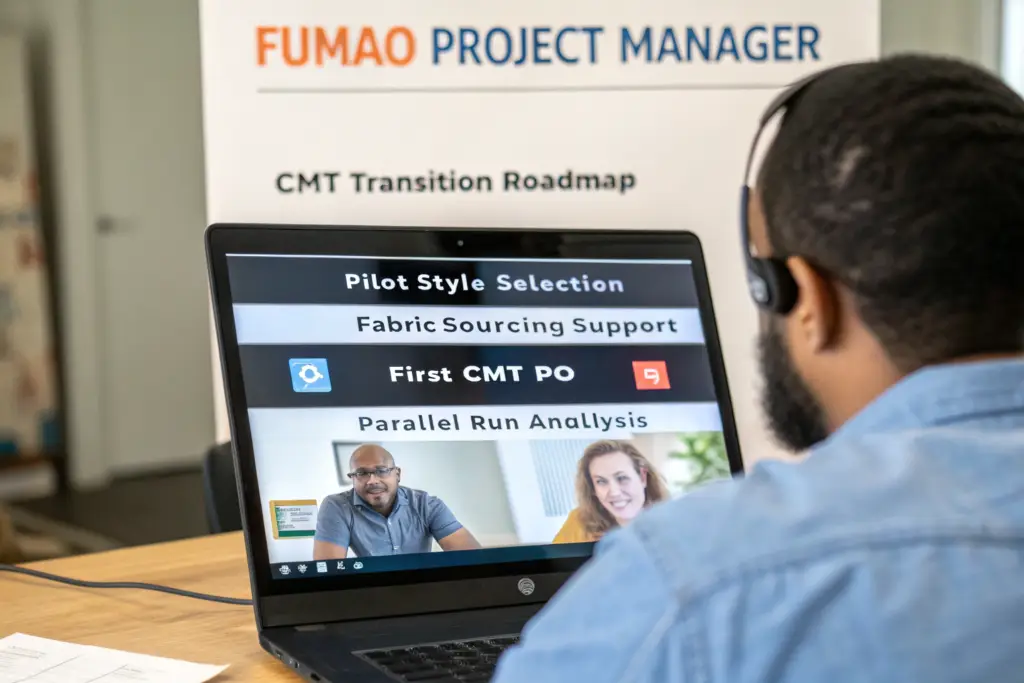
What Does a "CMT Transition Roadmap" Look Like?
Our roadmap is a simple, phased plan:
- Phase 1: Assessment & Pilot Selection: We analyze your product line to identify the best candidate for a CMT pilot.
- Phase 2: Supply Chain Replication: We help you identify and open accounts with the mills for your pilot fabric.
- Phase 3: Pilot Production Run: We execute a small, parallel CMT order.
- Phase 4: Review & Scale: We analyze the results of the pilot and create a plan for transitioning larger volumes.
This structured approach removes the guesswork and the fear. This is the foundation of our CMT transition services .
How Do We Help You Avoid the Common Pitfalls of First-Time CMT?
We act as your guide, warning you of the hidden rocks. We will remind you to order buffer stock. We will help you estimate realistic freight costs for your materials. We will educate you on the importance of clear trim labeling. Our experience is your safety net. We help you avoid the costly mistakes that often plague first-time CMT brands. This is the benefit of partnering with an experienced CMT manufacturer .
Conclusion
Switching from a Full-Package to a CMT supplier is a strategic move toward greater control, better margins, and a more unique brand identity. It is not a leap of faith, but a calculated evolution. By taking a phased, pilot-driven approach, leveraging the expertise of your new CMT partner to replicate your supply chain, and developing simple new operational disciplines, you can make the transition smoothly and successfully.
At Shanghai Fumao, we are the ideal partner for this journey. Our expertise in both Full-Package and CMT, our structured transition roadmap, and our supportive Project Management make the complex feel manageable. We help you unlock the next level of control and profitability for your brand.
If you are ready to explore the transition to CMT with a partner who will guide you every step of the way, let's talk. Our Business Director, Elaine, can walk you through our CMT Transition Roadmap. Please email Elaine at: elaine@fumaoclothing.com.