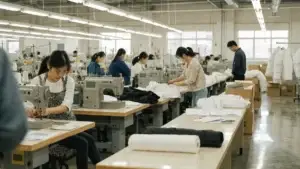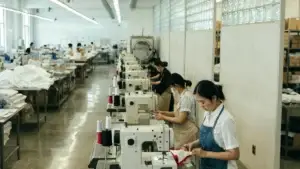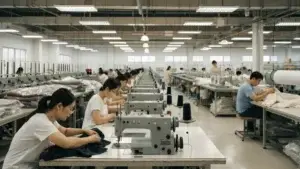
If you run an American clothing brand, you know the pain. You spend weeks perfecting a design. You send it overseas. Then you wait. And wait. The factory comes back with a list of problems. The fabric drapes wrong. The zipper color doesn't match the Pantone. The seam allowance is too narrow for mass production. Every day of delay means you miss your delivery window. You lose that prime retail shelf space. And you watch your margin evaporate as you scramble for air freight.
The truth is that optimizing designs for factory production does not mean dumbing down your creative vision. It means making smart, technical decisions upfront. These decisions remove friction from the cutting table, the sewing line, and the finishing room. At Shanghai Fumao, we have seen that when a design is "factory-ready," production lead times drop by an average of 25% to 30%. You get the same look and feel you wanted. But you get it faster and with far fewer headaches.
That sounds like a win-win, right? But how do you actually do it? How do you take a sketch or a concept and turn it into something that flows through a production line like water? It is not magic. It is a specific process of communication and technical adjustment. Let's walk through the exact steps that separate a slow, problematic order from a fast, smooth one. I will share some real examples from our production floor in China that show you exactly what works.
What Are The Biggest Design Bottlenecks In Apparel Manufacturing?
Most brands think production delays happen because the factory is lazy. That is rarely the case. Delays almost always start with a small, overlooked detail in the design file that creates a big problem on the sewing floor. Before we talk about solutions, we need to identify the real choke points. When I look at the orders that sail through our five production lines versus the ones that get stuck, the difference is always in the preparation. Let's break down the two biggest culprits that slow down custom clothing manufacturing.
While every style is different, the majority of slowdowns fall into two categories: the fit block and the Bill of Materials. You cannot fix what you do not understand. Here is a deeper look at where the train usually goes off the tracks.
Why Do Unclear Measurement Specs Slow Down Cutting?
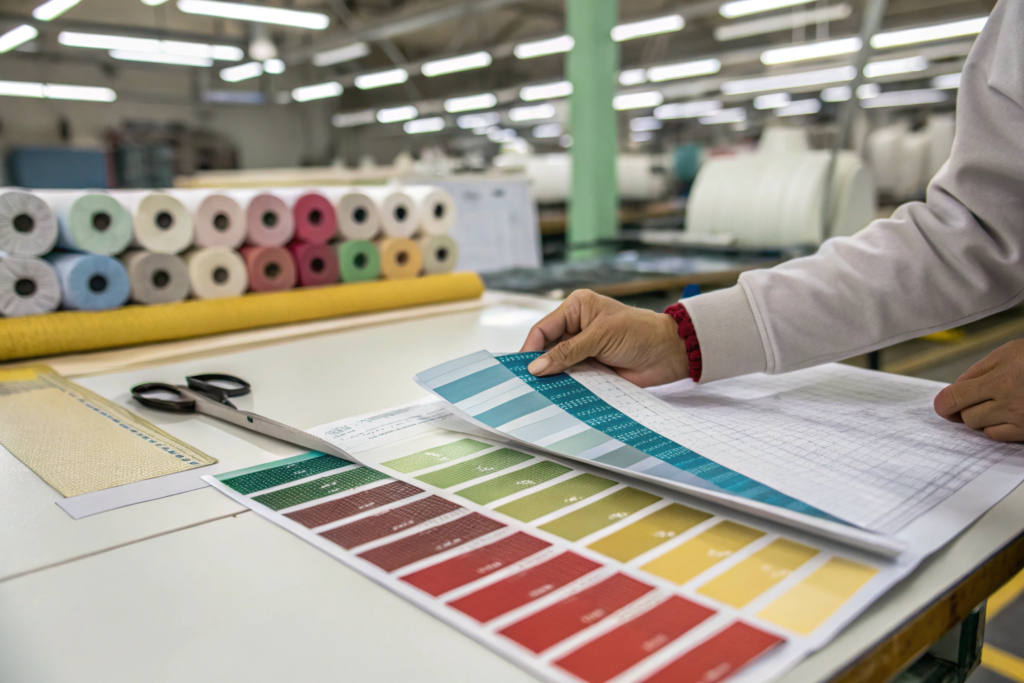
In March of 2025, we worked with a streetwear startup from Chicago. They were launching a new line of heavyweight hoodies. The designer sent us a sample size medium and said, "Make it exactly like this, but slightly more oversized." That phrase "slightly more oversized" is a factory manager's nightmare. It is subjective. Our pattern maker spent four days going back and forth just to define what "slightly" meant in inches. We finally solved it by having the client send a photo of themselves wearing the sample with a measuring tape held against the chest and arm. We translated "slightly oversized" into +2 inches on the chest width and +1.5 inches on the sleeve length. Once those numbers were locked in the tech pack, the cutting department moved immediately.
Here is why vague specs are a disaster for speed. The cutting table is the first step in physical production. If the master pattern is not approved, the entire production line sits idle. Our cutters cannot lay out the fabric. They cannot fire up the straight knife cutting machine. I always tell my American partners: If it is not a number, it is not a design yet. You need to provide either a physical graded spec sheet or a digital file with exact tolerances. Without hard numbers, we have to stop and ask questions. In the time zone difference between New York and Shanghai, that "quick question" costs you at least 24 hours of daylight production time.
Can Complex Trims Increase Your Production Lead Time?
In 2024, a large distributor from Texas ordered 5,000 units of women's blouses from us at Shanghai Fumao. The design was beautiful but it had a problem: a custom, curved metal buckle sourced from a small workshop in Italy. The lead time on that buckle was 12 weeks. The sewing of the blouse itself only took 4 weeks. That means the entire order was held hostage by one piece of metal the size of a quarter.
Trims are the silent killers of fast fashion production. Here is a quick comparison based on our internal data at Shanghai Fumao regarding trim complexity and time:
| Trim Complexity | Sourcing Lead Time (Typical) | Production Impact |
|---|---|---|
| Standard YKK Zipper | 1-2 weeks (Stocked in China) | Minimal delay; runs through line smoothly. |
| Custom Dyed-to-Match Buttons | 3-4 weeks | Requires dye lab approval; risks shading mismatch. |
| Specialty Plated Metal Hardware | 6-10 weeks | High risk of shipping delays and customs hold on base metal components. |
| Flocked or 3D Printed Logos | 2-5 weeks | Requires separate subcontractor; increases handling time. |
If you want to optimize for speed, you have to look at your trim list. Can you swap that Italian buckle for a high-quality alternative from a YKK catalog that is already stocked in Asia? Or, can you order the trim six weeks before you even finalize the garment sample? In our DDP (Delivered Duty Paid) shipping mode, we handle all the customs clearance for these trims, but we cannot speed up the manufacturing of the trim itself. The simpler the hardware, the faster the garment.
How To Create Factory-Ready Tech Packs For Quick Turnarounds?
A tech pack is not just a formality. It is the instruction manual for the people who make your clothes. If the manual is written in a language the factory does not speak, the work stops. I cannot count the number of times I have received an email with just a screenshot from Instagram and the word "Make this." That is not a tech pack. That is a treasure hunt. For Shanghai Fumao to turn your custom clothing around quickly, especially for men's wear and women's wear, we need a blueprint that leaves zero room for guessing.
A common myth is that tech packs are only for big brands like Nike or Lululemon. That is false. Even a small boutique owner with an order of 300 pieces can cut weeks off their timeline by providing a clean set of instructions. Let's look at the specific pages of a tech pack that matter most for speed.
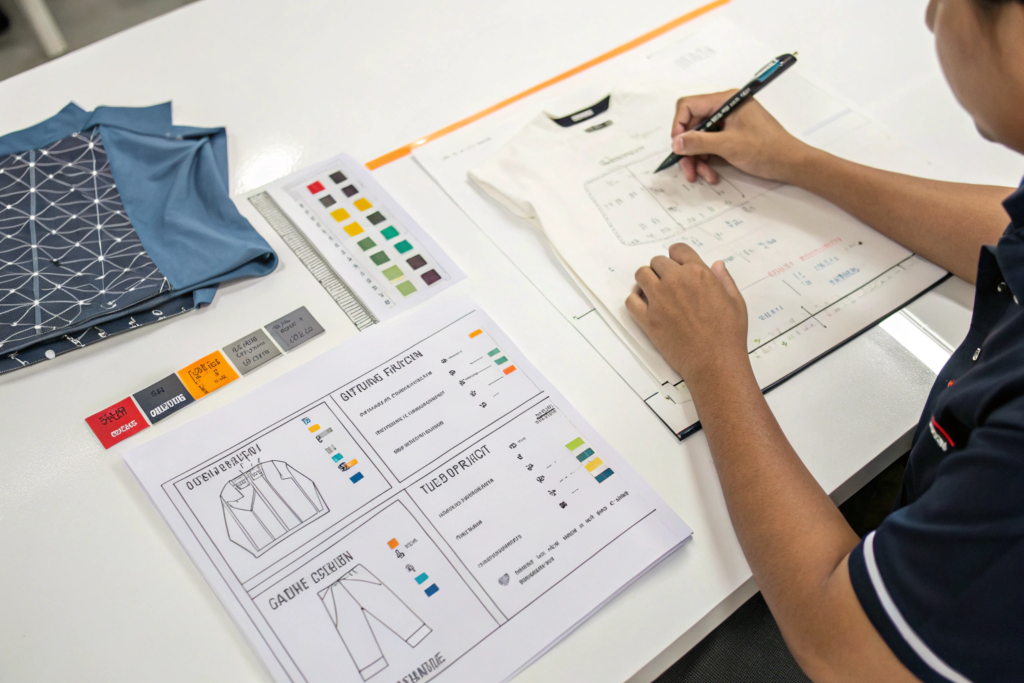
What Should A Speed-Optimized Tech Pack Include?
Last fall, an owner of a women's wear label in Los Angeles sent us a tech pack that was 22 pages long. It was overkill. She had included 3D renderings of the garment on five different avatars. It looked impressive but it buried the key information. We had to scroll through 15 pages just to find the Stitch Class for the side seam.
To optimize for factory speed, your tech pack needs to be dense with the right information, not just dense with images. Here are the non-negotiable elements we need to keep the line moving at full speed without stopping to ask you questions:
- Front and Back Flat Sketch (Black and White Vector Only): Do not send fashion illustrations with flowing hair and shadows. We need a technical line drawing. A CAD vector file is best.
- Stitch and Seam Callouts: Use the standard ISO 4915 Stitch Type numbers. For example, "401.516" tells our mechanic exactly which thread tension and machine foot to use. Writing "stretchy stitch" is not specific enough.
- Graded Measurement Chart: This is the most important piece of paper on the cutting floor. Include POM (Points of Measure) for Chest, Body Length, Sleeve Length, Shoulder Drop, and Armhole Curve. Leave the tolerance (+/- 0.5 inch).
- BOM (Bill of Materials) with SKU Numbers: Do not just write "White Cotton." Write "Supplier XYZ, Article #12345, 100% Cotton Poplin, 120gsm, White Optic."
How Do Clear Construction Notes Reduce Sampling Errors?
We once produced a batch of men's shirts for a European distributor. The design called for a specific hem finish: a 1/4" double needle topstitch. The tech pack simply said "hem." The sewer used a blind stitch because it was faster and standard for that style of shirt. The whole batch had to be re-hemmed. It added three days to the shipment.
This is why I push my clients to take photos with their phones. You do not need a $5,000 camera. If you have a favorite shirt in your closet and you want the hem to look exactly like that, take a macro close-up photo of the hem and paste it into the comments column of the tech pack. For the Chicago streetwear order I mentioned earlier, the client wanted a specific wash effect on the hoodie drawcord tips. He sent a 10-second video of him pulling the cord through the grommet of a competitor's hoodie. That video replaced a thousand words of confusing email text. It allowed our finishing department to set the correct heat transfer press pressure immediately. Clear notes do not just prevent errors; they prevent the email chain that kills a day of production.
Which Fabric Choices Lead To Smoother Mass Production?
Choosing fabric based only on how it feels in your hand is a common trap for new brand owners. A fabric might feel like heaven as a single swatch. But can it withstand the speed of an industrial spreader machine? Can it be cut 100 layers high without shifting? At our factory, we have seen beautiful, slinky fabrics turn into production nightmares simply because they were too delicate for the equipment used in bulk manufacturing. If you want fast production, you need to choose fabrics that are stable.
There is a big difference between a fabric that works for a sample maker's small table and a fabric that works on a 20-meter cutting table. Let's look at the specific characteristics that separate a "fast" fabric from a "slow" fabric.
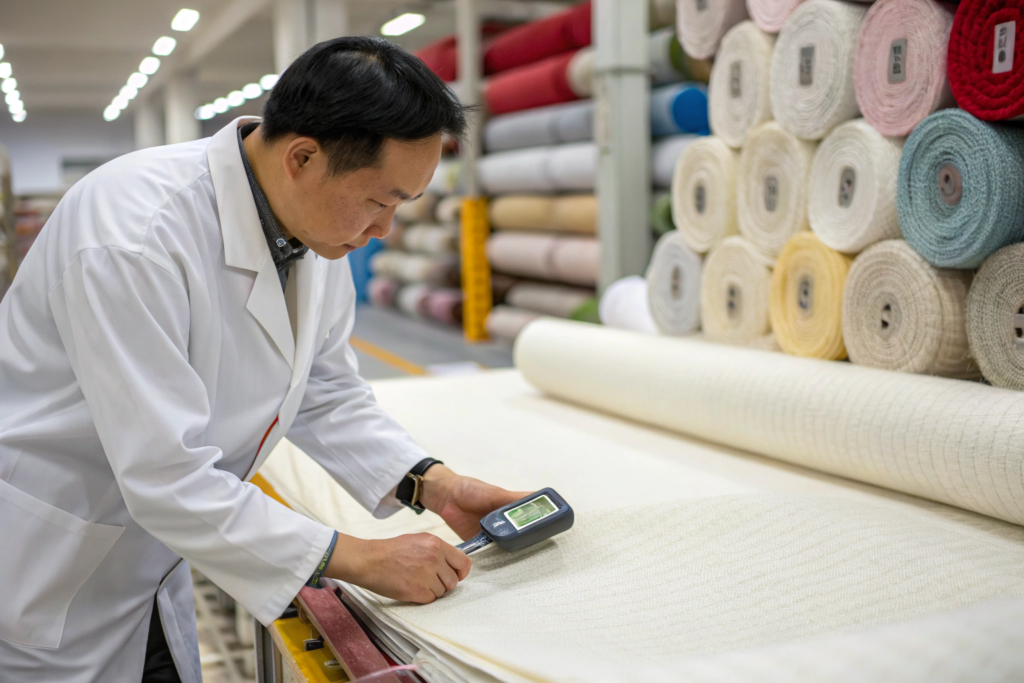
Is Your Knit Fabric Stable Enough For Automated Cutting?
In early 2025, a client from New York sent us a very loose gauge sweater knit. It was beautiful. It was also like trying to cut a bowl of spaghetti. The automated spreading machine kept stretching it unevenly. The edges curled. We had to shut down the automated line and cut it by hand with scissors and weights. This tripled the cutting labor time and increased the cost.
Here is a simple test I ask my clients to do before they commit to a fabric for large orders: The Tug Test. Pinch the fabric between your thumbs and forefingers six inches apart. Pull gently. If the fabric stretches more than 15-20% and does not snap back immediately to its original shape, it will be a problem child on the cutting table. You should look for fabrics with a higher TPI (Twists Per Inch) or a tighter weave. For Shanghai Fumao partners looking for DDP shipping to North America, we often recommend shifting from a 100% Viscose Jersey (which is notoriously slippery) to a Modal/Cotton blend (which has more grip and stability) without sacrificing the soft hand feel.
Does Shrinkage Testing Actually Save Time Later?
This is not an optional step. It is the law of physics. If you skip shrinkage testing, you are gambling with your entire inventory. One of our long-term partners, a distributor in Florida, learned this lesson the hard way before they came to us. They had a batch of men's polo shirts made with a different factory. The fabric was not pre-shrunk or tested. The size Large came out of the dryer fitting like a size Small. They had to liquidate the stock for pennies on the dollar.
At Shanghai Fumao, we perform a AATCC 135 shrinkage test on every new fabric roll before cutting begins. This test simulates home laundering. Here is the workflow we use to prevent time loss due to sizing issues:
- Fabric Arrival: Raw fabric arrives at warehouse.
- Swatch Cut: 50cm x 50cm square marked precisely.
- Wash Cycle: 3 consecutive wash/dry cycles per standard.
- Measurement: We measure the Wale (Length) and Course (Width) change.
- Pattern Adjustment: If the fabric shrinks 5% in length, we adjust the digital pattern file to add that 5% back into the body length. This is called Shrinkage Allowance.
If you do not account for shrinkage in the pattern, the garment will be too small. If the garment is too small, you cannot sell it. And you have wasted 6-8 weeks of production time. It takes us 48 hours to do this test. It takes 8 weeks to re-make a wrong-sized order. You do the math.
Why Does Proactive Quality Control Accelerate Delivery?
Waiting until the very end of production to check quality is the single biggest reason for missed shipping deadlines. This is what I call "Hope-Based Manufacturing." You hope the zippers are all right. You hope the color is correct. You hope the size run is consistent. Then you open the final carton and find 200 pieces with a collar defect. Now you have two choices: ship defective goods and ruin your brand reputation, or hold the container and spend three weeks reworking the order. Both options are expensive. Both destroy your timeline.
At Shanghai Fumao, we use a system called Inline Inspection. We do not wait for the ship date to inspect the goods. We inspect them while they are still under the sewing machine needle. This is how we maintain a 98.7% on-time shipment rate for our North American and European clients.
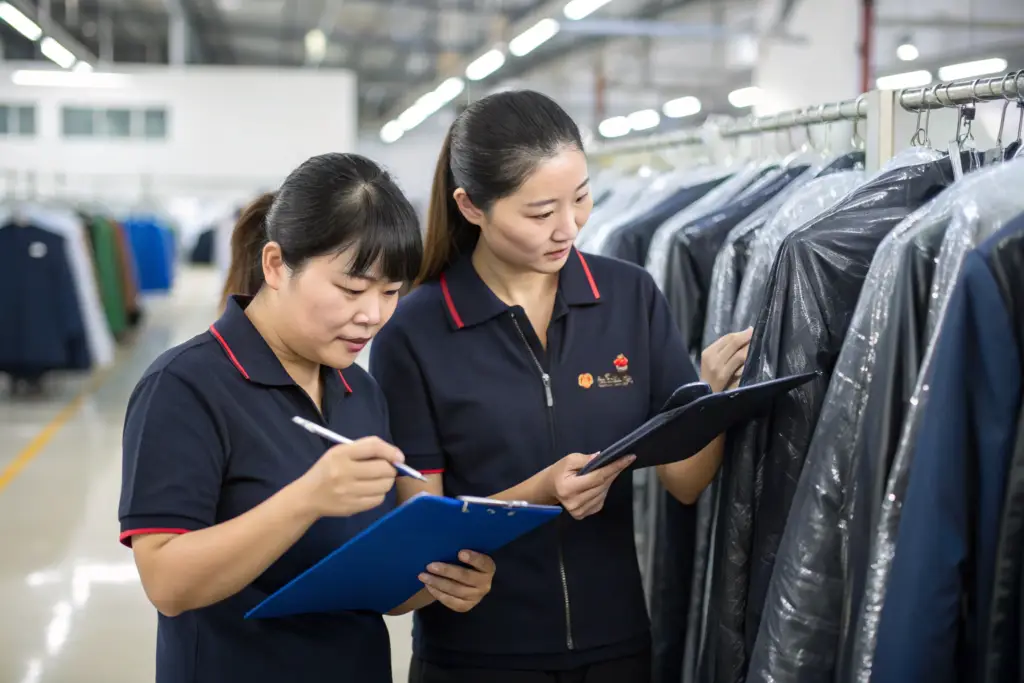
How Does Inline Inspection Prevent Last-Minute Reworks?
We had an order for 3,000 women's blouses going to a boutique chain in the Midwest. The design featured a delicate lace trim. During the first hour of production, our inline QC checker noticed that the operator was using the wrong presser foot tension. The lace was puckering slightly—not enough for a layperson to see immediately, but enough to fail a professional AQL 2.5 inspection. Because we caught it at 8:15 AM instead of three weeks later, we only had to re-train one operator and re-sew 12 blouses. That is it. Twelve pieces. If we had waited for the Final Random Inspection (FRI), all 3,000 units would have been packed and sealed. Opening 300 cartons to fix a small stitch issue would have added five working days to the schedule and a significant labor cost.
Here is a comparison of the two methods based on our internal data from 2024:
| Inspection Method | Defect Discovery Time | Rework Complexity | Impact on Ship Date |
|---|---|---|---|
| End-of-Line Only | 2-3 Weeks after cut | High (Unpack, Sort, Fix, Repack) | 5-10 Day Delay |
| Inline Inspection | Within 2 Hours of error | Low (Immediate Operator Correction) | 0 Day Delay |
This is not about finding faults. It is about stopping the faults from multiplying. For American brands, this means you can confidently book your DDP freight to the US knowing the goods will pass customs and be ready for your warehouse team without a crisis.
What Role Do Packaging Standards Play In Fast Shipping?
You might think packaging is the last thing on your mind. But it is the first thing the freight forwarder looks at. We learned a valuable lesson in 2023 with a shipment to a client in Canada. The poly bags were 0.03mm too thin. They did not meet the suffocation warning label requirements for North America. The entire container was flagged at the port of Long Beach for inspection. That random check added 11 days of demurrage fees and storage charges.
To avoid this bottleneck, you must align packaging specs before the first unit is sewn. We ask two critical questions during development:
- What is your FBA box weight limit? If you sell on Amazon Seller Central, you know that boxes over 50 lbs require special "Team Lift" labels. We configure our carton packing to stay under 49 lbs to avoid this friction.
- Do you need specific retail hang tags attached? Attaching a hang tag with a plastic swift tacker takes 4 seconds on the finishing line. But if we have to open 50 boxes in a US warehouse to attach them manually, it takes 15 seconds per unit and costs you extra labor.
We also ensure every poly bag has the required 16 CFR Part 1700 warning printed clearly. It is a small detail, but it keeps the container moving through customs. Fast shipping is not just about the factory speed; it is about having all the paperwork and packaging correct so the boat or plane does not get held up.
Conclusion
Optimizing your clothing designs for factory production is about closing the gap between what looks good on a sketchpad and what performs well on a high-speed sewing line. We have covered the specific choke points that slow down most orders: unclear measurement specs, complex trims with long lead times, unstable fabric choices, and the dangerous practice of leaving quality control until the very end. By tightening up your tech pack with exact stitch codes and graded measurements, you remove the need for back-and-forth emails. By choosing stable fabrics and running quick shrinkage tests, you avoid sizing disasters that ruin your brand's reputation. And by implementing proactive, inline inspections, you catch the small problems before they become big, expensive rework projects that miss the selling season.
Every day a garment sits in a factory waiting for an answer is a day it is not on a store shelf making money. At Shanghai Fumao, we have built our five production lines and our service model specifically to eliminate that waiting time. We do not want to be just another supplier. We want to be the manufacturing partner that helps you navigate the complex details of trims, fabrics, and export logistics to North America and Europe.
If you are tired of delays caused by simple communication errors or overlooked technical details, let's build a production plan that works. We can handle everything from custom logo development to full-package DDP shipping. Reach out to our Business Director, Elaine, directly. She can walk you through our process and show you how we get your garments from concept to delivery without the usual headaches. You can email her at elaine@fumaoclothing.com. Let's get your next collection produced on time and on point.