Your brand is growing. You started with a small, focused collection. Now you want to do more. You want to launch a core program of men's basics, but also offer a limited-edition capsule of complex outerwear. You want to be able to quickly reorder your best-selling style while simultaneously developing next season's intricate samples. You present this vision to a factory with only one or two rigid lines. They look at you and say, "We can do one or the other. Not both." Your growth hits a wall. A brand owner told me, "I felt like I had outgrown my factory. They couldn't keep up with my different needs. I needed a partner with more dimensions."
Partnering with a factory that has 5 specialized production lines provides a critical strategic advantage: true manufacturing agility without compromise. It means the factory can run high-volume basics, complex small-batch styles, delicate luxury fabrics, and rapid R&D samples simultaneously on lines optimized for each task. This translates directly to lower risk, faster speed-to-market, consistent specialized quality across your entire collection, and a single, scalable partner who can support every facet of your brand's growth.
At Shanghai Fumao, our five production lines are the physical embodiment of our B2B philosophy. We are built to be your versatile, long-term manufacturing partner, capable of handling the full spectrum of your brand's needs. Let me show you exactly how this unique infrastructure directly benefits your agility, quality, and profitability.
How Does Having 5 Lines Create True Agility for a Growing Brand?
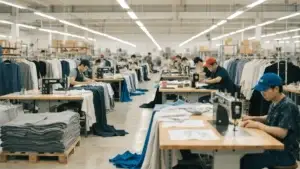
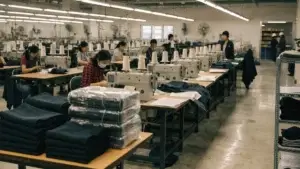
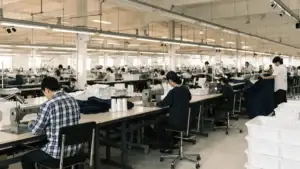
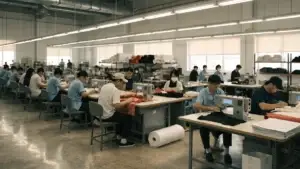
A factory with only one or two long assembly lines is like a one-lane highway. It is efficient if all the traffic is the same, but a single complex garment or a small-batch order is like a tractor-trailer trying to make a U-turn. It causes a traffic jam. Everything else stops. Our five production lines give us a multi-lane highway with dedicated lanes for different types of vehicles. This is the essence of true manufacturing agility.
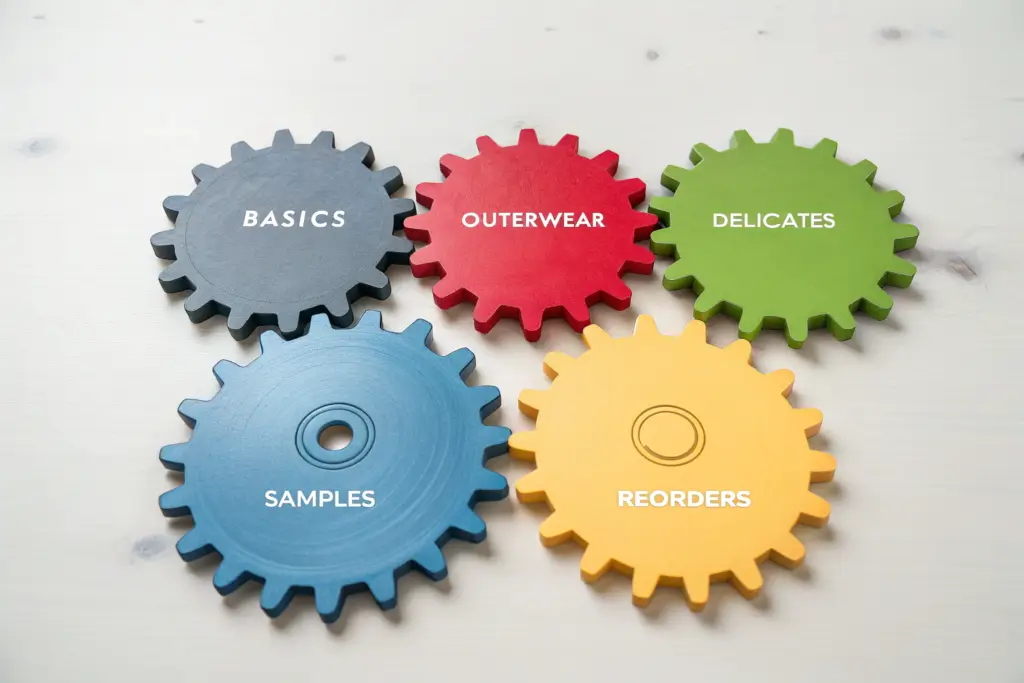
Five lines mean we never have to make a false choice between conflicting priorities. Line 1 can run your 5,000-unit basic tee order with maximum cost-efficiency. Simultaneously, Line 3 (a modular cell) can produce your 200-unit complex women's jacket. Meanwhile, Line 5 (our dedicated sample room) can be developing the prototypes for your next collection. This parallel processing eliminates bottlenecks and allows your brand to operate on multiple fronts at once without sacrificing speed or quality.
I recall a distributor who came to us because his previous factory made him choose: either stop his profitable reorder of a basic hoodie to make samples for the new season, or delay the new season's development. He was stuck. With our multi-line setup, we simply ran his hoodie reorder on our high-speed Line 2 and developed his new samples on our agile Line 4. Both projects proceeded on schedule. He didn't have to choose. He could do both. This is the freedom and agility that a multi-line, flexible production setup provides.
What Is the Difference Between a "Straight Line" and a "Modular Cell"?
This is the core of our operational advantage:
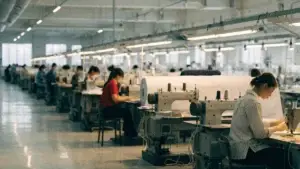
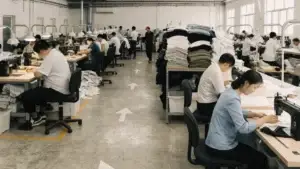
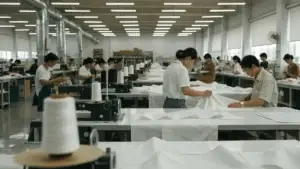
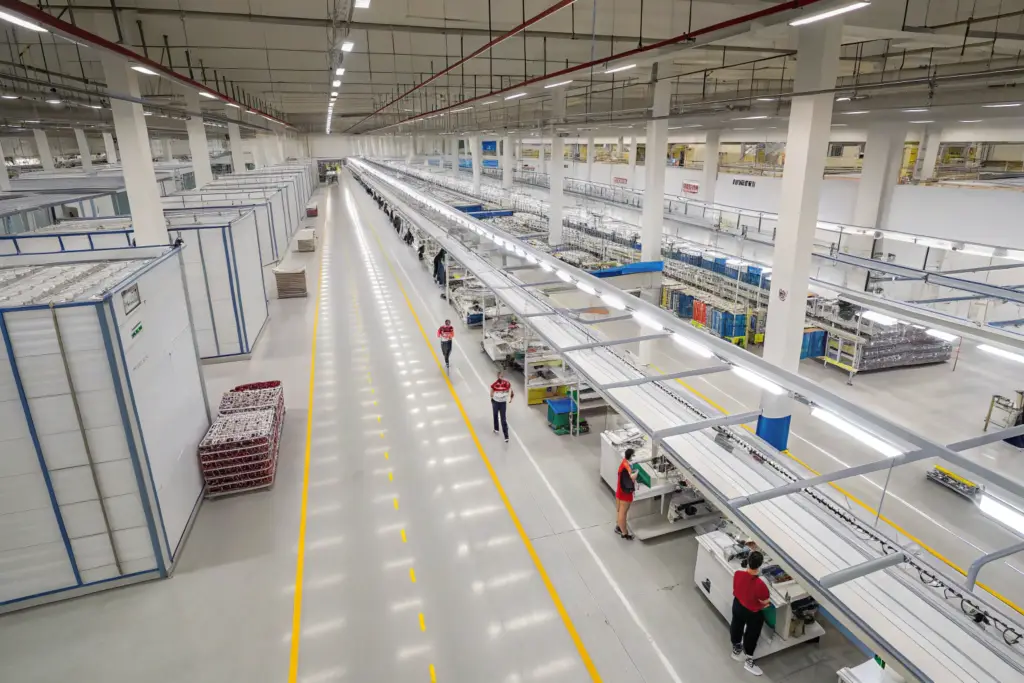
- Straight Line (Lines 1 & 2): Long, sequential lines where each operator performs one specialized task. Optimized for maximum speed and cost-efficiency on high-volume orders (2,000+ units) of a single, relatively simple style.
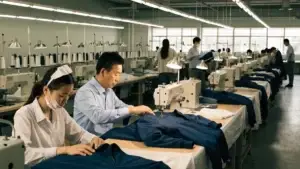
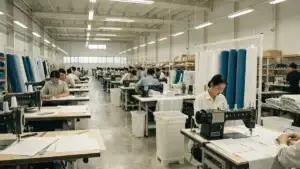
- Modular Cell (Lines 3 & 4): U-shaped, self-contained teams of multi-skilled operators. Optimized for agility and complexity. They can switch between styles in under an hour and profitably run small batches (50-500 units) of complex or rare style garments.
Having both types of lines means we can always match the production method to the specific needs of the order.
How Does This Allow Us to Offer Lower MOQs for Complex Styles?
A traditional factory's MOQ is driven by the need to keep its single type of line busy. A complex style on a high-speed line is a disaster. They will either refuse the order or charge a massive premium. Because we have dedicated modular cells designed specifically for complexity and small batches, we can profitably accept orders for complex styles with MOQs as low as 50-100 units. This is a game-changer for brands wanting to test new, intricate designs or offer limited-edition on-demand production .
How Do Dedicated Lines Ensure Consistent Quality for Different Garment Types?
A factory that uses the same line and the same operators to sew a delicate silk blouse and a heavy denim jacket is compromising on both. The machine settings, the thread tension, the operator skill set, and even the handling protocols are completely different. Quality suffers when you force a diverse range of products through a single, inflexible system. Specialization is the key to consistent excellence.
Dedicated lines ensure higher and more consistent quality by allowing for specialization. Our high-speed lines are optimized for speed and consistency on knits. Our modular lines are staffed by multi-skilled artisans who excel at complex woven garments and delicate handling. Our outerwear line is equipped with heavy-duty machines and specialized folders. By routing each garment to the line best suited for its specific construction and fabric, we ensure it is made by the right people, with the right equipment, and with the right techniques.
A luxury women's wear brand partners with us specifically because of our "Delicates Line" (Line 4). They know their silk charmeuse dresses will be handled by a team that uses specialized needles, reduced machine speeds, and meticulous hand-finishing. They would never entrust those garments to a high-speed line that just finished a run of polyester hoodies. This specialized approach ensures their quality is impeccable and their return rate is near zero. This is the tangible benefit of a multi-line quality control system.
Why Is a Dedicated Outerwear Line Crucial for Complex Jackets?
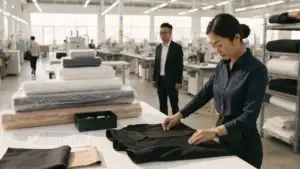
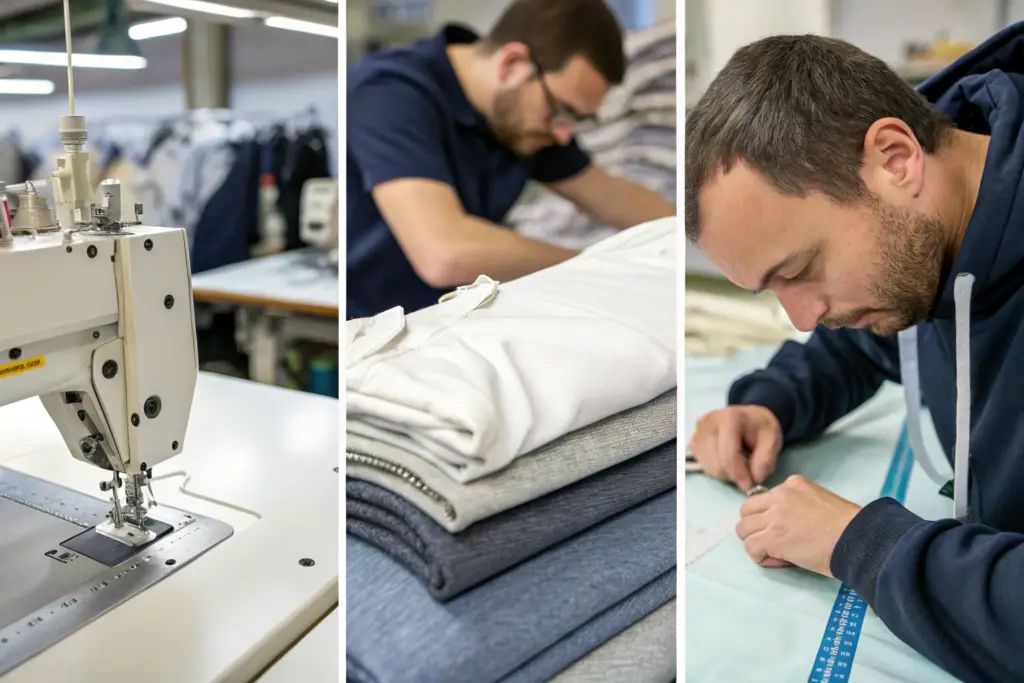
Outerwear involves heavy, dense fabrics, multiple layers, complex interlinings, and specialized hardware like heavy-duty zippers and snaps. Standard sewing machines struggle with this. Our dedicated Outerwear Line (Line 3) is equipped with:
- Heavy-duty, compound-feed walking foot machines that can power through thick layers without shifting.
- Specialized folders and guides for bulky seams.
- Operators trained specifically in the unique construction techniques of tailored jackets and coats.
This specialization is the only way to produce a high-quality, durable jacket that hangs correctly and lasts for years.
How Does a "Delicates Line" Protect Premium Fabrics?
Delicate fabrics like silk, Tencel, and viscose require a pristine environment and specialized handling. Our dedicated line for these materials enforces strict protocols:
- White glove handling to prevent snags.
- Padded work surfaces and specialized presser feet.
- Reduced machine speeds.
- Immediate hanging storage to prevent creasing.
This "clean room" mentality is impossible to maintain on a line that is also processing rugged workwear. The dedicated line protects your investment in premium materials and ensures a flawless finished product.
What Does This Mean for Sampling, R&D, and Rapid Reorders?
In a factory with limited lines, Product Development (R&D) and Replenishment are the enemies of bulk production. They are seen as disruptions. Making a new sample means stopping a profitable bulk line. Running a small reorder means losing efficiency. This creates a constant, stressful conflict. Our five-line structure resolves this conflict by design. We have dedicated capacity for the work that keeps your brand fresh and responsive.
With five lines, we can dedicate one line (Line 5) entirely to Sampling and R&D. This ensures that new sample development never delays a bulk order. Simultaneously, our modular cells (Lines 3 & 4) can be quickly reconfigured for rapid reorders of 50-200 units of a best-selling style, allowing you to chase demand without disrupting the large-scale production on Lines 1 and 2. This keeps your brand agile and your supply chain responsive.
A men's wear client had a style unexpectedly blow up on social media. He needed a fast reorder of 300 units to capitalize on the momentum. His previous factory told him it would be 12 weeks because they were booked with large orders. We slotted his reorder into our Modular Cell #4. Because we had his patterns and fabric on file, we turned the order in 4 weeks. He captured the sales and avoided disappointing his new customers. This responsiveness is only possible because of our dedicated agile production capacity .
How Does a Dedicated Sample Line Speed Up Product Development?
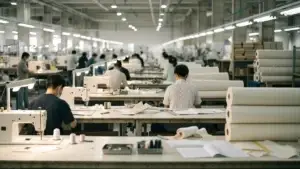
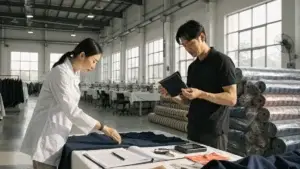
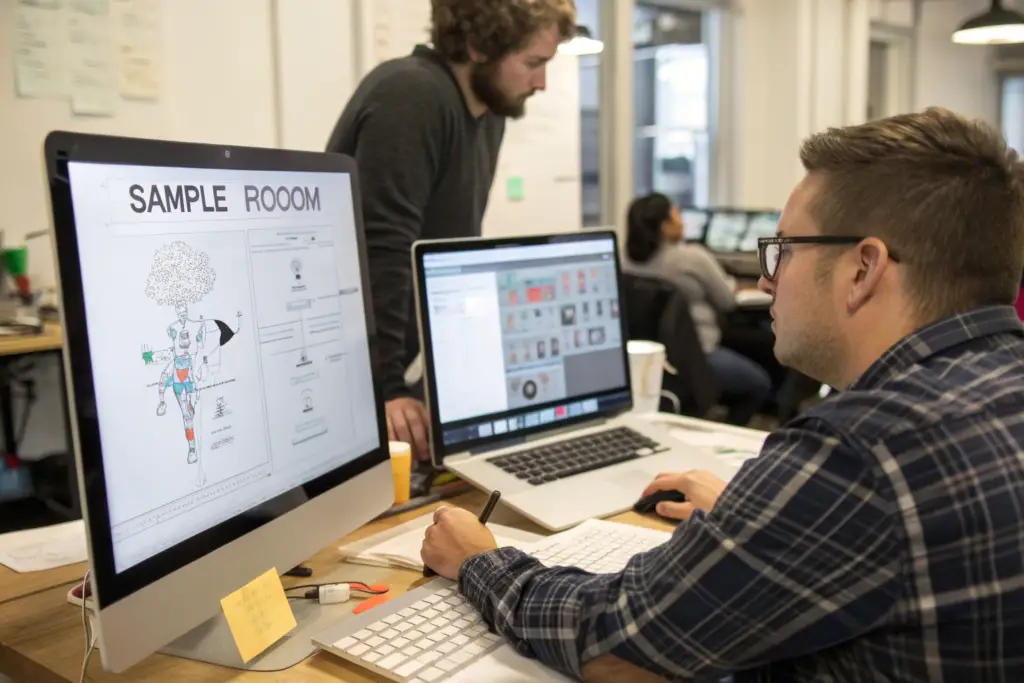
Our dedicated Sample Line (Line 5) is staffed by our most experienced, cross-trained artisans. Their only job is to make Proto Samples, Fit Samples, and PP Samples. They are not under pressure to hit bulk production quotas. This means:
- Faster turnaround on sample requests.
- Higher quality, more accurate prototypes.
- Zero disruption to bulk production timelines.
This dedicated resource compresses your development calendar and gets your collection to market faster.
How Does This Enable a "Test and Reorder" Business Model?
The combination of our low-MOQ modular cells and our rapid reorder capability enables a powerful, low-risk business model. A brand can launch a new style with a small test run of 100 units. If it sells well, they can immediately place a reorder for 300 units, which we can fulfill quickly. If it does not sell, they are not stuck with a warehouse full of dead stock. This "test and reorder" model is the most capital-efficient way to build a brand in the modern market, and our five production lines are the engine that makes it possible.
How Does This Infrastructure Support Long-Term Brand Scalability?
The ultimate advantage of our five production lines is that they provide a single, cohesive manufacturing platform that can support a brand through every stage of its lifecycle. You do not need to find a "starter factory" and then graduate to a "bigger factory" as you grow. You do not need to find a separate "specialty factory" for your complex pieces. We are the single partner who can scale with you, from your first 100-unit test run to your 10,000-unit core program, and from simple basics to complex tailoring.
Five production lines provide a scalable platform for long-term growth. A brand can start by utilizing our modular cells for low-risk, small-batch production. As certain styles become proven best-sellers, we can seamlessly transition them to our high-speed lines for maximum cost efficiency at higher volumes. Meanwhile, the brand can continue to use our R&D line for innovation and our specialty lines for expanding into new, more complex product categories—all under one roof, with one trusted partner.
A brand we have worked with for years started with small runs of graphic tees on our modular lines. As their business grew, their core tee program moved to our high-speed line, lowering their unit cost and increasing their profit margin. They then expanded into a successful line of outerwear, which we produce on our dedicated outerwear line. They are now developing a luxury capsule in silk, which will run on our delicates line. Their entire, diverse product ecosystem is managed seamlessly by a single B2B partner. This is the ultimate expression of a scalable, long-term manufacturing partnership .
Can a Brand Transition a Style from a Modular Cell to a High-Speed Line?
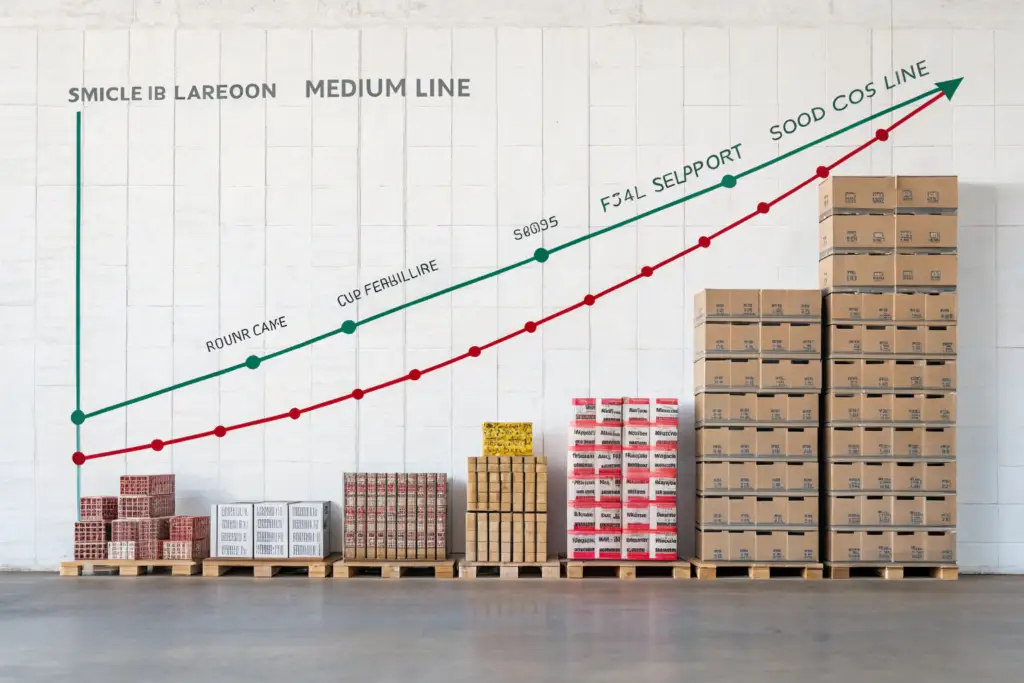
Absolutely. This is a key part of our scalability model. A style often starts its life on a modular cell for its initial, low-volume test run. Once the style is validated and the order quantities increase to 2,000+ units, our engineering team will analyze the construction and, if appropriate, re-engineer it for our high-speed lines. This transition is managed seamlessly. The brand benefits from the agility of low-volume production initially, and the cost-efficiency of high-volume production later. This is a unique advantage of our multi-line infrastructure.
Why Is This Better Than Working with Multiple, Specialized Factories?
Managing multiple vendors is a logistical nightmare. It fragments your supply chain, increases your communication burden, and makes consistent quality harder to achieve. By having all these specialized capabilities under one roof, we provide a single point of accountability. You have one Project Manager, one quality standard, one DDP logistics process, and one trusted partner for your entire collection. This simplicity and integration are invaluable as you scale.
Conclusion
Our five production lines are far more than a statistic. They are the strategic foundation of our ability to be a true, versatile, and scalable B2B partner. They provide the agility to handle everything from a 50-unit rare style to a 10,000-unit basic run. They ensure specialized quality for everything from delicate silk to rugged outerwear. And they create the dedicated capacity for the innovation and responsiveness that modern brands require to thrive.
At Shanghai Fumao, we have intentionally built this infrastructure to solve the core challenges faced by growing private label brands: the need for flexibility without sacrificing efficiency, and the need for a single, reliable partner who can support their entire journey. Your brand is multi-faceted. Your manufacturing partner should be too.
If you are looking for a manufacturing partner with the versatility and capacity to support your brand's unique growth trajectory, let's talk. Our Business Director, Elaine, can explain how our five-line structure can be tailored to your specific needs. Please email Elaine at: elaine@fumaoclothing.com.