You have embraced the CMT (Cut, Make, Trim) model for the control and unique material story it gives your brand. The first few orders have gone smoothly. But inevitably, you will hit a bump in the road. A sample comes back with the wrong fit. A shipment of your precious buttons is delayed. You receive an Incoming Inspection Report showing a flaw in your fabric. These moments can feel like crises. A seasoned brand owner told me, "The key to CMT isn't avoiding problems. It's knowing how to solve them quickly and having a partner who helps you navigate them."
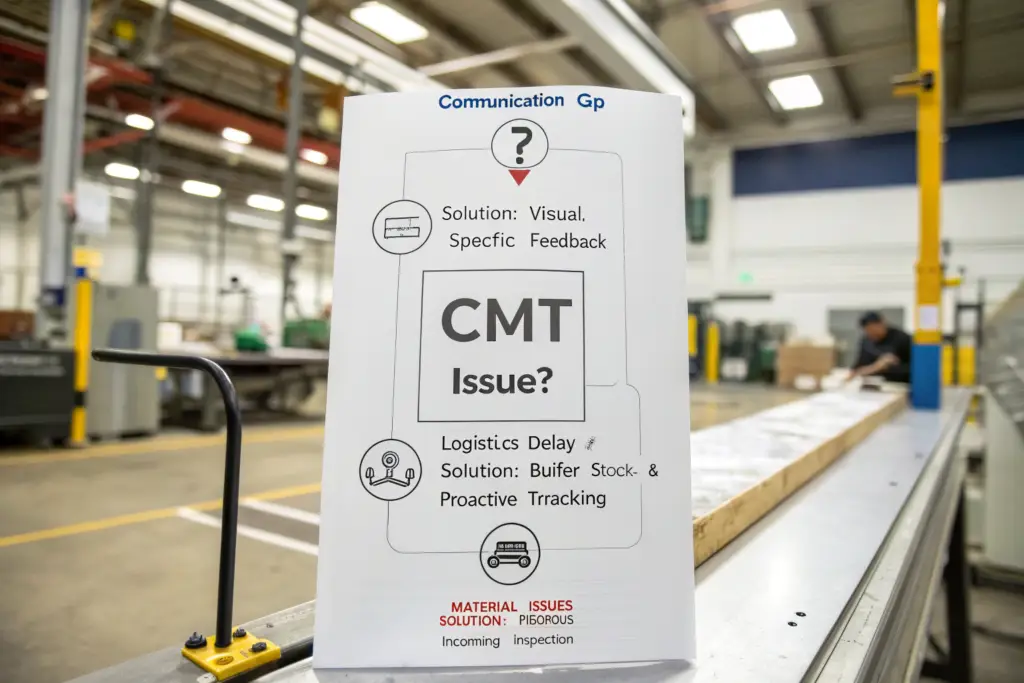
Solving common problems in CMT manufacturing requires a shift from reactive panic to proactive, systematic problem-solving. The most frequent issues fall into three categories: 1) Communication & Fit Issues (solved by using visual, measurable feedback), 2) Logistical & Material Delays (mitigated by buffer stock and proactive tracking), and 3) Quality & Material Defects (addressed through rigorous incoming inspection and a clear defect policy). The key is to view these not as failures, but as manageable parts of the CMT process.
At Shanghai Fumao, we have seen and solved every common CMT challenge. Our entire B2B service model is built to be a partner in proactive problem-solving, not just a reactive vendor. Let me share the specific, actionable strategies we use to navigate the most frequent CMT hurdles, turning potential disasters into manageable, and even relationship-strengthening, moments.
How Can You Fix Communication and Fit Issues Remotely?
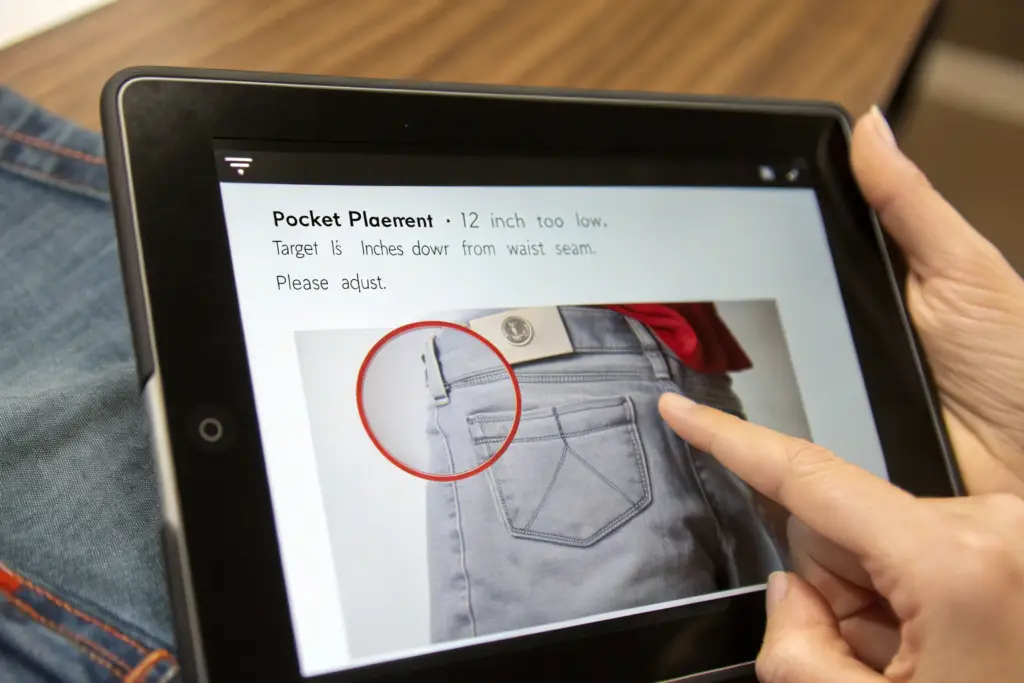
The most common source of frustration in remote CMT is the dreaded "fit issue" on a sample. You receive the garment, and something is not right. The sleeve feels tight, the body is too long, the collar is not sitting correctly. Vague, subjective feedback ("The sleeve feels weird") is the enemy. It leads to confusion, multiple wasted sample rounds, and a strained relationship with the factory. The solution is a disciplined, visual, and measurable feedback process.
The solution to remote fit and communication issues is to eliminate subjectivity. Always combine written feedback with annotated photos or a short video. Circle the issue, draw an arrow, and state the measurable change required. For example: "Refer to POM 'D' (Bicep). Issue: Too tight. Target: 14' flat. Current sample measures 13.5'. Please increase by 0.5' total circumference." This visual, data-driven approach transcends language barriers and ensures the pattern maker understands the exact correction needed.
I recall a brand founder who was incredibly frustrated after receiving a third round of samples for a blazer that still was not right. Her feedback had been, "The shoulders still feel off." We guided her to a different approach. We had her put the blazer on her fit model, take a clear photo of the back, and draw a red line exactly where she wanted the shoulder seam to sit. She sent that photo with the note: "Shoulder seam needs to be moved forward by 1/2 inch. See red line in photo." The next sample was perfect. She learned that in CMT, a picture with a measurement is worth a thousand words. This is the standard communication protocol we use with all our CMT partners .
What Is the Best Way to Provide Feedback on a Complex Fit Issue?
For complex 3D fit issues, a short video clip is invaluable. Put the sample on a moving fit model. Walk around them. Show how the fabric pulls when they move their arms or how the drape looks when they walk. A 10-second video can communicate what a paragraph of text and a static photo cannot. This is a powerful tool for bridging the distance.
How Can You Use the Measurement Report to Depersonalize the Feedback?
Every sample we ship includes a detailed Measurement Report showing the target spec, tolerance, and actual measurement for every POM. Use this report as the foundation for your feedback. It shifts the conversation from "I don't like how this fits" to "The data shows this measurement is off-spec." This objective, data-driven approach is more efficient and less emotionally charged. It is a key part of our transparent development process .
What Are the Solutions for Material Delays and Logistical Hiccups?
In CMT, you are the supply chain manager. A delayed shipment of fabric or trims is not a question of if, but when. The difference between a minor inconvenience and a full-blown production crisis is proactive planning. Waiting until a delay happens to react is a recipe for missed ship dates and frustration. The solution is to build a resilient, well-buffered supply chain from the start.
The solution to material delays is proactive buffer stock and relentless tracking. Always order a 3-5% buffer of fabric and trims. This extra material acts as insurance against minor delays or small defects. Second, use tracking numbers for all shipments and monitor them. If a delay is spotted, communicate it to the factory immediately, along with a clear plan (e.g., "The buttons are delayed by 3 days. Please proceed with cutting the fabric. We will air freight a small quantity of buttons to arrive in time for sewing."). Proactive communication is key.
A brand I work with is a master of this. They use a simple spreadsheet to track every incoming CMT component. When a zipper shipment from their supplier in Italy was delayed by a week, they saw it on the tracker. They immediately emailed us. Because we knew, we were able to adjust the production schedule and move another order up. The zipper arrived, and their original ship date was maintained. The client was not stressed, and the factory was not surprised. This is the power of proactive CMT logistics management .

How Do You Create an Effective "Buffer Stock" Strategy?
Calculate your exact material needs for the order. Then, add a percentage based on the material and design complexity:
- Stable Fabrics (e.g., basic cotton jersey): Add 3%.
- Delicate or Shifty Fabrics (e.g., silk, rayon): Add 5-7%.
- Complex Designs with Many Pieces: Add 5%.
- Trims (Labels, Buttons): Add 3-5%.
This buffer is not optional; it is a required insurance policy for CMT. We guide all our CMT clients on this.
What Is the Protocol When a Key Trim Is Delayed?
- Notify the Factory Immediately. Do not wait and hope it arrives.
- Provide a Revised ETA.
- Work with the Factory on a Mitigation Plan: Can they proceed with cutting and other sewing operations? Can you air freight a small quantity of the trim to bridge the gap?
- Update Your Own Sales/Marketing Plans Accordingly.
A good CMT partner will work with you to minimize the impact. This collaborative problem-solving is a hallmark of a strong B2B partnership .
How Should You Handle Quality Issues or Defects Found in Your Supplied Materials?
You have sourced a beautiful fabric. You ship it to us. Then, you receive our Incoming Inspection Report, and it shows a flaw: a stain, a dye streak, or a weaving defect on one of the rolls. Your heart sinks. This is a critical moment. How you handle this determines whether it is a minor setback or a major financial loss. The key is to view the inspection report as a valuable tool, not a personal criticism.
The solution to material defects is a two-part process: 1) Rely on the factory's rigorous Incoming Inspection to catch issues before cutting, and 2) Have a clear, professional process for managing a claim with your supplier. The factory's report, with photos and documentation, is your evidence. You then contact the mill or trim supplier, present the evidence, and negotiate a resolution—typically a credit or a replacement. This is a standard, manageable part of the CMT model.
A brand founder once called me in a panic after receiving an inspection report showing a "barre" mark on two rolls of her expensive wool. I reassured her that this was exactly why we do the inspection. We provided her with a detailed report and high-resolution photos. She contacted the mill in Italy, presented the evidence, and they issued her a credit for the defective yardage. She then used her buffer stock to complete the order. She learned that a professional inspection report is her best friend in managing supplier relationships. It turns a potential disaster into a manageable business transaction. This is the value of our meticulous CMT inspection process .

How Do You File a Professional Claim with a Fabric Mill?
Be factual and provide evidence.
- State the Issue Clearly: "We received 150 yards of Style #XYZ. Two rolls (Roll #45 and #48) have a consistent barre mark defect."
- Provide the Evidence: Attach the factory's Incoming Inspection Report and the clear, high-resolution photos.
- State Your Desired Resolution: "We are requesting a credit for the 25 defective yards, or a replacement roll."
A professional, evidence-based approach yields the best results. Our reports are designed to provide you with exactly this documentation.
What If the Flaw Is Found After Cutting Has Begun?
This is why the buffer stock is critical. If a flaw is discovered during cutting (which is rare after our inspection, but possible), the affected panels are pulled, and new panels are cut from the buffer fabric. The flaw is documented. The buffer stock absorbs the impact, and the order quantity is fulfilled. This is the insurance policy in action.
How Does Fumao's Proactive Partnership Model Help You Solve Problems?
The true test of a manufacturing partnership is not when everything goes perfectly. It is when a problem arises. A transactional vendor reports a problem and leaves you to solve it. A true B2B partner identifies the problem, presents it proactively, and comes to the table with a proposed solution. Our entire service model is built on this principle of proactive, collaborative problem-solving.
Fumao's proactive partnership model helps solve problems by focusing on early detection, transparent communication, and collaborative solutions. Our rigorous Incoming Inspection catches material issues before they become crises. Our Project Managers are trained to flag potential delays early and work with you on a mitigation plan. We do not just deliver bad news; we deliver a clear, data-backed assessment and a proposed path forward. We are your partner in navigating the complexities of CMT.
A brand owner recently told me, "What I appreciate most is that your team never just dumps a problem in my lap. When there was a delay on a trim, my Project Manager didn't just say, 'The zippers are late.' She said, 'The zippers are delayed by 3 days. Here are three options for how we can handle this to minimize the impact on your ship date.' That's the difference between a vendor and a partner." That is the standard we hold ourselves to. We are your ally in making CMT a successful, manageable, and profitable model for your brand. This is the core of our strategic CMT partnership .

How Does Our Incoming Inspection Report Empower You to Solve Supplier Issues?
It transforms you from a hopeful buyer into an informed, evidence-backed professional. The report gives you the objective data and visual proof you need to have a productive, successful conversation with your supplier. It is the tool that allows you to manage your upstream supply chain effectively. This is a key part of our risk management for CMT .
Your dedicated Project Manager is your eyes and ears on the ground. They track your materials and your production timeline daily. If they see a potential issue—a late shipment, a quality hiccup—they flag it before it becomes a crisis. They then work with you to develop a mitigation plan. They are your proactive problem-solving partner. This is the human element that makes our CMT services stand out.
Conclusion
Problems in CMT manufacturing are not failures; they are predictable challenges that can be managed and solved with the right systems and the right partner. The key is to move from a reactive, stressful mindset to a proactive, disciplined approach. It is about using visual, data-driven communication, building a resilient supply chain with buffer stock, and having a clear process for handling material issues.
At Shanghai Fumao, we do not just manufacture garments. We provide the systems, the transparency, and the proactive partnership that turns common CMT problems into manageable, solvable events. We are your ally in navigating the complexities, allowing you to focus on the creative and strategic benefits of the CMT model.
If you are looking for a CMT partner who will help you solve problems, not just report them, let's talk. Our Business Director, Elaine, can explain our proactive approach to partnership. Please email Elaine at: elaine@fumaoclothing.com.