You have a vision. A garment that carries not just a logo, but a soul. A hand-smocked dress with your brand's monogram delicately embroidered on the cuff. A textured linen blazer with your logo laser-engraved onto a genuine horn button. A carbon-brushed fleece hoodie with a soft-hand, water-based print that feels like part of the fabric, not a plastic sticker. You want the power of branding combined with the allure of a rare, artisanal style. You take this vision to a standard promotional merchandise supplier. They show you a wall of cheap, boxy t-shirts and a single-color plastisol print that will crack after five washes. They don't understand rare style. Then you take it to a high-end atelier. They can make the beautiful garment, but they refuse to apply your branding. They want their own label. You are stuck between a commodity and an ego. We built our factory to be the bridge.
Shanghai Fumao produces custom logo apparel with rare style by merging our artisanal craft cells with our professional branding department. We can hand-smock a blouse and then embroider your logo with a high-density Tajima machine. We can garment-dye a linen set to your signature shade and then deboss your brand name into a leather patch. We treat your logo as a design element, not an afterthought, and we apply it using the application technique that best complements the rare fabric and construction.
The fusion of rare style and custom branding requires a dual skillset: the ability to create a textile that is itself a work of art, and the technical precision to apply a brand mark that enhances, rather than cheapens, that art. Let me walk you through the four dimensions of this fusion that we have mastered.
Dimension One: Integrated Craft and Branding Workflow
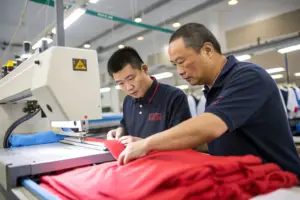
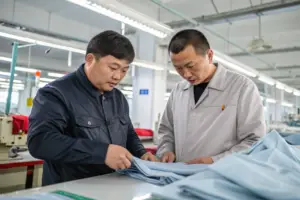
In a standard factory, the "embroidery department" is a noisy room at the back where generic logos are slapped onto finished garments. The delicate, rare-style garment leaves the atelier and enters a rough, industrial process. It gets crushed. The tension of the embroidery hoop distorts the fine fabric. The logo looks like a foreign object glued onto a piece of art. We do not separate craft and branding. We integrate them into a single, respectful workflow.
Our rare style branding is executed within a controlled workflow that respects the integrity of the artisanal garment. The hand-smocked or embroidered piece moves directly from the craft cell to a specialized branding station that uses equipment and techniques calibrated for delicate fabrics. We use topper films for embroidery on textured surfaces, soft-hand water-based inks for prints on luxury knits, and laser engraving for leather patches. The branding process does not damage the rare construction. It completes it.
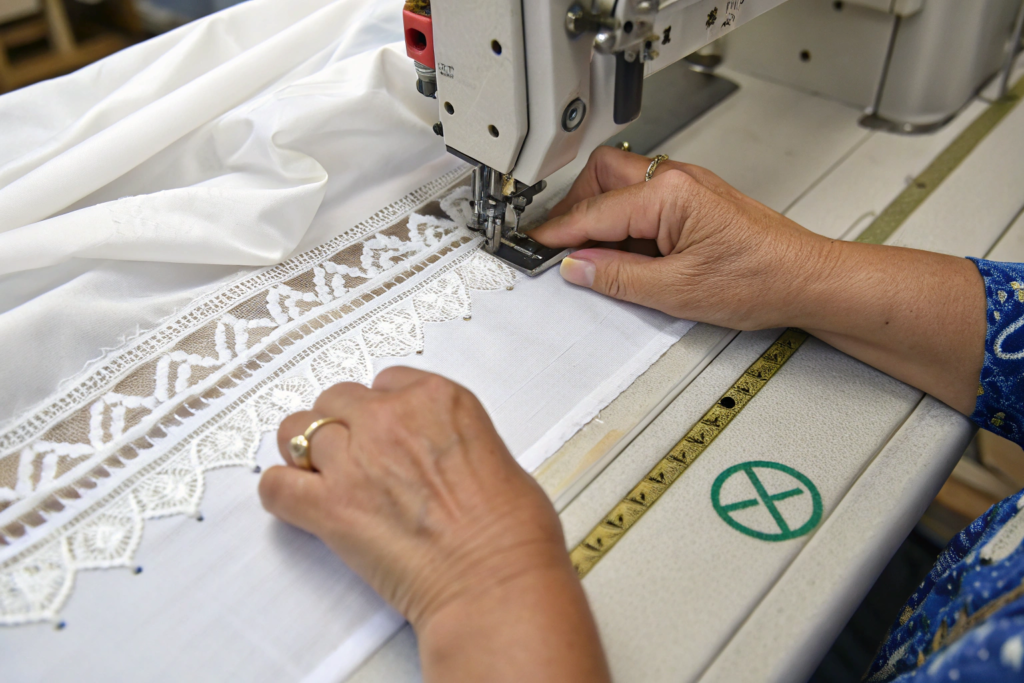
How Do We Prevent Embroidery from Distorting Delicate Fabrics?
A standard embroidery machine hoop clamps the fabric tightly to keep it stable for stitching. On a delicate silk or a loosely knitted linen, this clamping can leave permanent hoop burn, distort the weave, or pull the bias grain out of shape. We use magnetic hooping systems and specialized backing papers that require far less mechanical tension. The fabric is held gently but securely without crushing the fibers.
For a particularly fragile hand-smocked bodice, we might use a "topper," a thin, water-soluble film placed on top of the fabric. The embroidery needle penetrates the topper, which stabilizes the surface stitches and prevents the decorative smocking threads from being caught or pulled by the machine needle. After the logo is embroidered, the topper is simply washed away with water, leaving the perfect logo and the undisturbed hand-smocking. This is the kind of technical sensitivity that a standard promotional factory lacks entirely.
How Does Laser Engraving Brand Leather Patches Without Damaging Fabric?
A debossed or laser-engraved leather patch is a premium, artisanal branding element that perfectly complements a rare style linen blazer or a wool coat. The challenge is attaching the patch. A standard factory sews the patch onto the finished garment, and the thick leather and dense stitching can cause puckering on the delicate outer fabric. We attach our leather patches before the garment lining is closed.
The patch is positioned and stitched onto the shell fabric while it is still a flat panel. The stitching is perfectly controlled. Then, the garment is assembled, and the lining covers the back of the patch, leaving a clean, unblemished exterior. The laser engraving itself is done on our in-house CO2 laser machine, which etches your logo into the leather with microscopic precision. The result is a branding element that feels like it grew organically from the garment, not like it was stapled on as an afterthought.
Dimension Two: Custom Logo Techniques That Enhance Rare Textiles
The branding technique must speak the same language as the fabric. A thick, heavy plastisol print screams "promotional merchandise" and utterly destroys the tactile pleasure of a rare, carbon-brushed fleece. A flashy metallic embroidery can overwhelm the subtle sophistication of a hand-smocked voile. The choice of branding medium is a critical design decision that we guide you through.
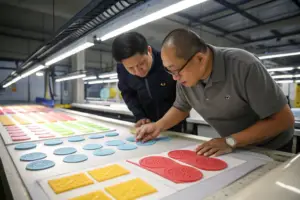
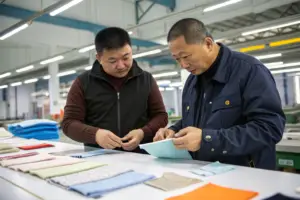
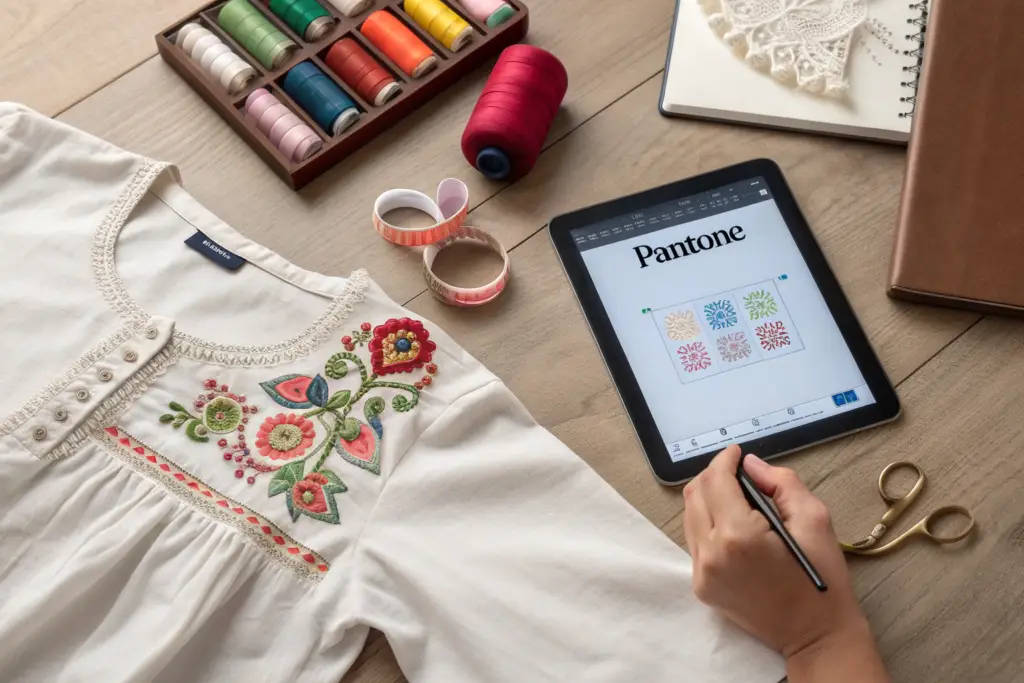
We offer a curated palette of premium branding techniques, each suited to specific rare fabrics. High-density tonal embroidery on textured linens and slub cottons. Soft-hand, water-based discharge printing on brushed fleeces and fine knits. Subtle blind debossing on leather patches. Precision laser engraving on horn buttons. Metallic or matte foil stamping on hangtags and inner neck labels. We present these options with physical samples on your chosen fabric, so you feel the interaction between the logo and the textile before committing.
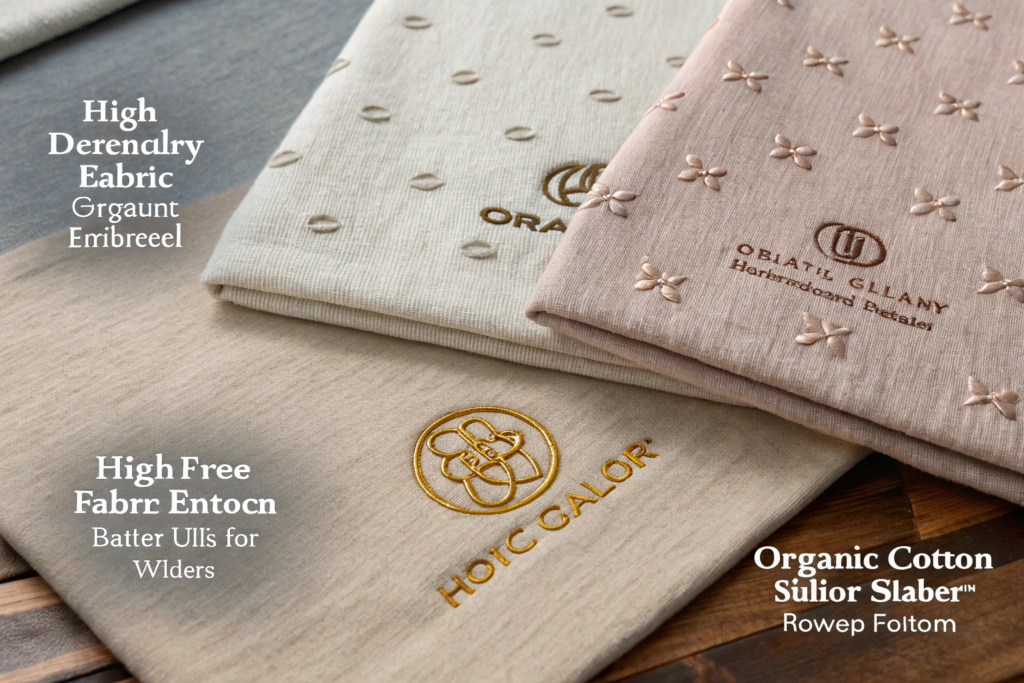
Why Is a Tonal Embroidery Often Superior for Rare Textured Fabrics?
A heavy slub linen or a textured seersucker has a strong, three-dimensional surface character. If you apply a bright white, thick embroidery thread on it, the logo fights the fabric. It looks like a sticker. A tonal embroidery uses a thread color that is a subtle shade darker or lighter than the fabric, or exactly matched to it. The logo is visible through its texture and density, not through a loud color contrast.
When the customer touches the logo, they feel the soft, dense thread work, which complements the slub texture rather than masking it. For a Melbourne-based contemporary brand, we used a rich navy embroidery on a navy seersucker overshirt. The logo was almost invisible from a distance, but up close, it was a beautiful, tactile discovery. This is the kind of sophisticated, quiet branding that a luxury customer appreciates. It elevates the rare fabric, rather than screaming over it.
What Is a Water-Based Discharge Print and Why Is It the Only Choice for Luxury Fleece?
A standard plastisol print is a PVC-based ink that sits on top of the fabric. It has a rubbery, plastic feel. It does not breathe. On a carbon-brushed fleece that we spent weeks developing for its cashmere-like hand feel, a plastisol print would be a tragedy. The customer would touch the print and feel plastic, not the luxurious fibers. A water-based discharge print works on a fundamentally different principle. It uses a chemical agent to remove, or discharge, the dye from the fabric in the exact shape of your logo. The result is a print that is literally part of the fabric.
There is no hand feel. No edge. No plastic barrier. The logo is as soft and breathable as the fleece itself. For a London-based loungewear brand, their signature logo is a large back print. We executed it as a water-based discharge on our plant-based fleece. The print is invisible to the touch. The garment feels like a single, continuous piece of pure softness. This is the branding technology that a premium, rare-style brand demands.
Dimension Three: Logo Placement as a Design Element
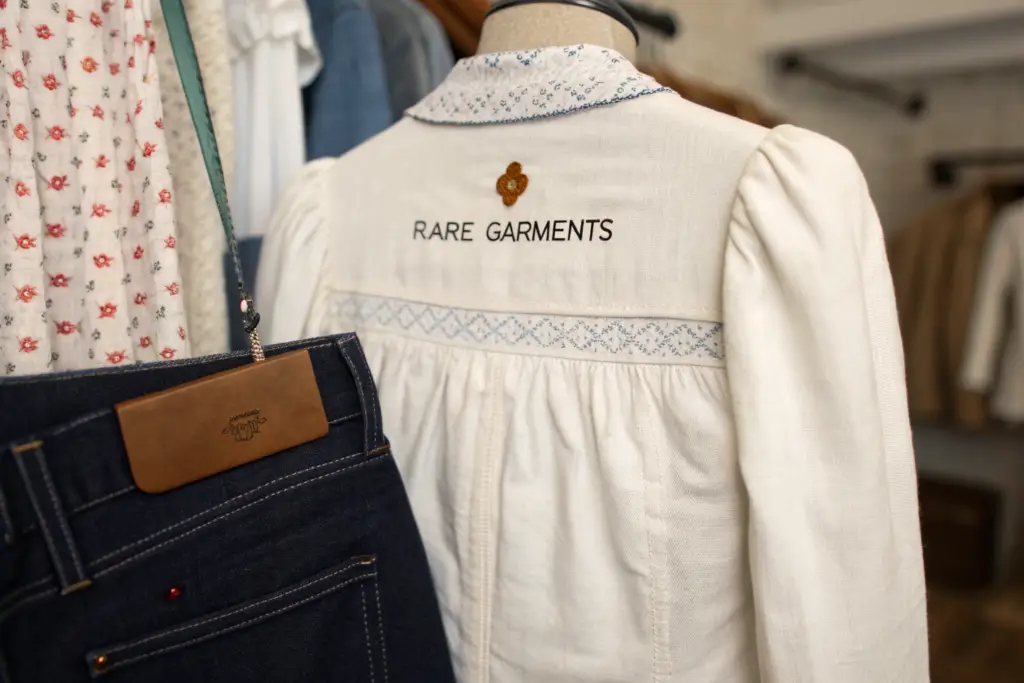
Mass-market branding shouts from the center of the chest. It turns the wearer into a walking billboard. Rare style branding is discovered. It is on the inner placket of a shirt. It is engraved on a button. It is embroidered in a tonal thread on the back yoke, visible only when the wearer turns away. The placement of the logo is as important as its design. It signals to the customer that this brand respects their intelligence and understands subtlety.
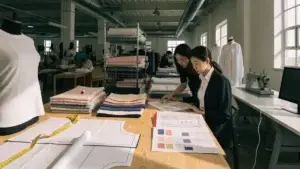
We work with you to engineer logo placements that integrate with the design of the rare garment, rather than dominating it. A logo can be embroidered on the inside neck facing, visible only when the garment is hung. It can be laser-engraved on the button, touched every time the garment is fastened. It can be printed on the pocket lining. We provide a placement map with each tech pack, specifying the exact X and Y coordinates of every brand mark, measured to the millimeter. The logo becomes a signature, not a shout.
Why Is an Inside Placket Print a Powerful Branding Choice?
A logo on the inside placket of a shirt, the strip of fabric behind the buttons, is a completely private brand statement. The wearer sees it only when they put the shirt on. It is a quiet moment of brand connection. It communicates confidence and subtlety. We execute inside placket prints using a soft, skin-friendly water-based ink.
Because the placket is a high-friction area, we test the printed fabric for crocking and abrasion resistance to ensure the logo does not degrade with wear. For a New York-based menswear brand, their inside placket logo became a cult detail. Their customers would show it to each other. It signaled membership in a club of taste, not a purchase from a billboard. This is the power of intelligent placement.
How Do We Ensure Consistent Logo Placement Across a Size Run?
A logo placed on a size Small might look perfectly positioned, but on a size XXL, the same absolute placement coordinates could make it look off-center or poorly scaled. We adjust logo placement proportionally for each size cluster. Our pattern engineering team programs the embroidery machine or the printing jig with size-specific origin points.
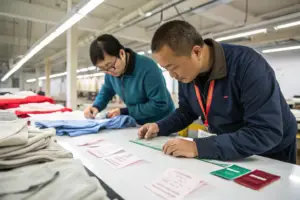
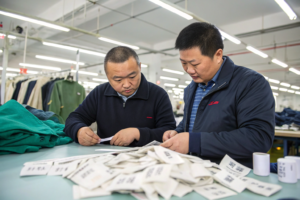
For every new style, we produce a placement sample for the smallest and the largest size in the range. The client approves these two extremes. The software then interpolates the exact placement coordinates for all intermediate sizes. This ensures that the branding looks intentional and perfectly scaled on every single garment, a detail that a less technically capable factory simply overlooks.
Conclusion
Custom logo apparel with rare style is the ultimate expression of a brand's commitment to quality. It is the fusion of artisanal craft and brand identity. We have built the dual capability to make this fusion a reality. Our integrated workflow protects the delicate rare garment during the branding process. Our palette of premium branding techniques, from tonal embroidery to water-based discharge, enhances rather than degrades the rare textile. And our approach to logo placement treats your brand mark as a design signature, a subtle, intelligent detail that rewards the customer's attention.
We do not just put logos on clothes. We complete the narrative of a rare, beautifully crafted garment with a brand mark that belongs there. The result is a product that sells at full price because it offers an experience that a commodity can never match.
If you have a rare style collection in development and you want to brand it with the same level of care and intelligence that you put into the design, let us show you the possibilities. Send us your logo artwork and your fabric choice. We will produce a sample branding plate on your fabric, with multiple technique options, for your review.
Contact our Business Director, Elaine, at elaine@fumaoclothing.com. She will arrange your sample branding plate and provide a quotation for your complete custom logo, rare style project. Let us make your brand a beautiful, tactile discovery.