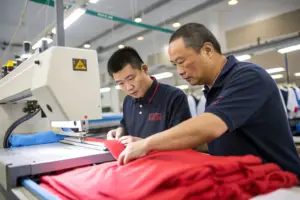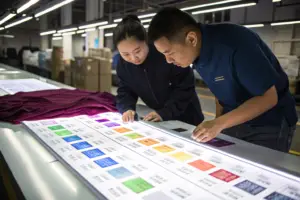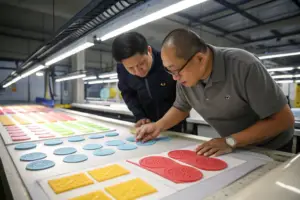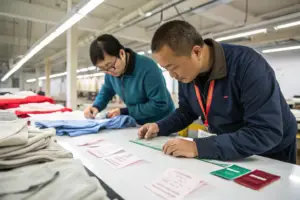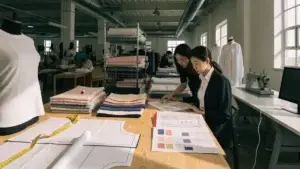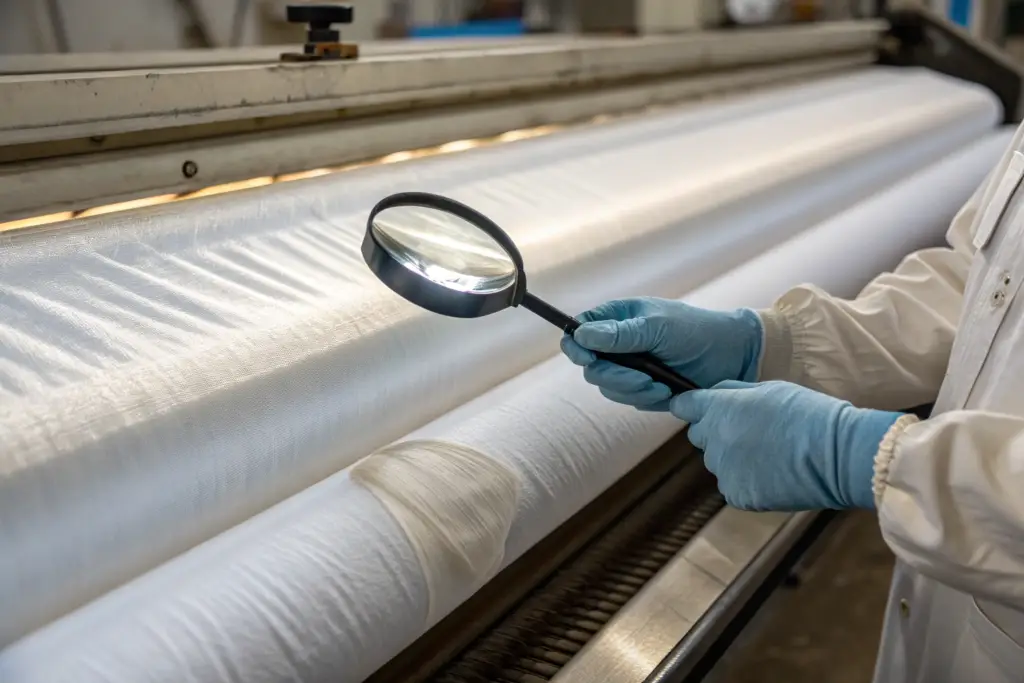
You have felt the disappointment. You launch a premium cotton t-shirt. The sample was soft, smooth, and substantial. The bulk shipment arrives, and the fabric is thinner. It pills after three washes. The color fades to a dull, lifeless version of your brand's signature shade. Your customer feels the difference, and they do not reorder. You realize the factory substituted a cheaper, lower-grade cotton to save a few cents. The heart of your product, the fabric itself, was a lie. First-class cotton is not a commodity. It is a specific, measurable, technical standard. A standard that most factories cannot, or will not, consistently meet.
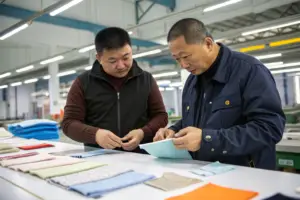
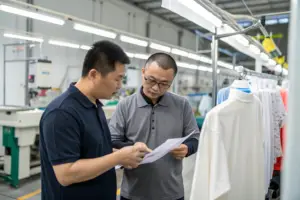
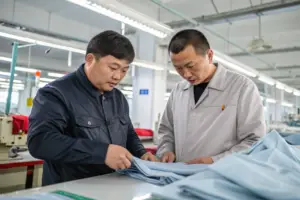
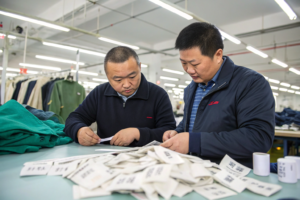
Shanghai Fumao delivers first-class quality for cotton fabrics by controlling the fiber at its source. We exclusively source long-staple and extra-long-staple cotton, including certified Supima and GOTS organic cotton, from audited mills. We verify every lot with objective lab testing for fiber length, strength, and colorfastness. We apply specialized finishing, including bio-polishing and compacting, to enhance the natural softness and ensure dimensional stability. The cotton fabric you spec is the cotton fabric you receive, consistently, order after order.
What is the technical difference between a $5 cotton t-shirt and a $50 cotton t-shirt? The answer is in the fiber length, the yarn spinning method, and the finishing chemistry. These are not opinions. They are measurable physical properties. Let me walk you through our cotton quality system, from the bale to the finished fabric.
Fiber First: Exclusive Sourcing of Long-Staple and Certified Cotton
The life of a cotton garment begins in a field, and the most critical quality decision is made there. The length of the individual cotton fiber, the staple, determines everything: the smoothness of the yarn, the strength of the fabric, and the resistance to pilling. Short-staple cotton, the cheap, mass-market standard, creates a fuzzy, weak yarn that pills and degrades. Long-staple and extra-long-staple cotton create a fine, strong, silky yarn that improves with age.
We exclusively source two categories of premium cotton: long-staple cotton, primarily from China and India, and certified extra-long-staple cotton, specifically American Supima. For our organic lines, we source GOTS-certified organic long-staple cotton. We do not buy commodity, short-staple cotton. We specify the fiber length and the micronaire value in our purchase contracts with mills. We buy the fiber quality that luxury brands require, and we verify it upon arrival.
Why Is Staple Length the Defining Measure of Cotton Quality?
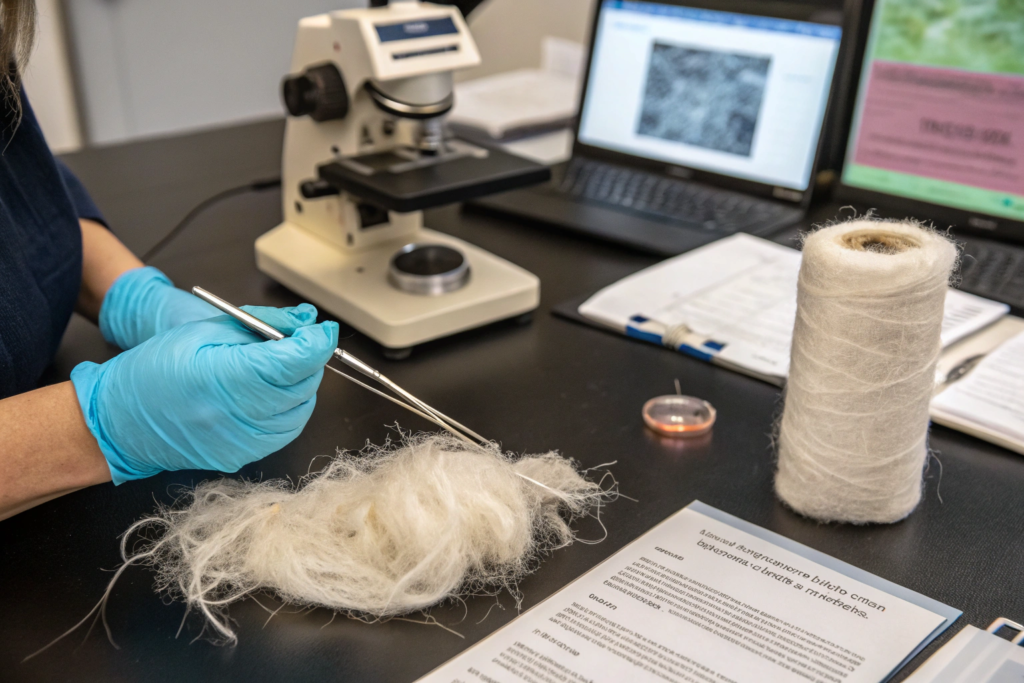
Cotton fiber length is measured in inches or millimeters. Standard, short-staple cotton measures 22mm or less. Long-staple cotton measures 28mm to 34mm. Extra-long-staple cotton, like Supima, exceeds 35mm. This length difference is the foundation of everything you feel in a garment.
Short fibers create a yarn with many protruding ends. These ends rub against each other, break, and tangle into pills. They also scatter light, making the fabric look dull. Long fibers can be spun much finer and with a tighter twist. The yarn surface is smooth, with very few loose ends. It reflects light uniformly, giving a natural, soft sheen. It resists pilling and feels silky against the skin. When you specify a luxury cotton t-shirt, you are specifying a staple length. We enforce that specification at the mill level. You can learn more about this fundamental metric from Cotton Incorporated's fiber quality resources.
What Is the Difference Between Supima and Generic Long-Staple Cotton?
Supima is a trademarked, certified American Pima cotton. It represents the top 1% of cotton grown globally. To carry the Supima name, the cotton must be grown in the US, be of an extra-long-staple variety, and pass strict quality audits. It is guaranteed to be 35mm or longer. Generic long-staple cotton can be excellent, but its quality can vary depending on the origin and the season.
We offer both Supima and premium generic long-staple cotton. We will present you with the technical specifications, the fiber length, the strength, and the micronaire, and the price differential. If your brand story requires the authenticity and marketing power of the Supima license, we can provide full chain-of-custody documentation. If you require a specific, measurable quality standard without the license cost, our premium generic long-staple cotton will often match Supima in hand feel and durability. The choice is yours, based on data, not marketing fluff. We verify the fiber ourselves.
Precision Yarn Spinning: Ring-Spun and Compact Yarn Technologies
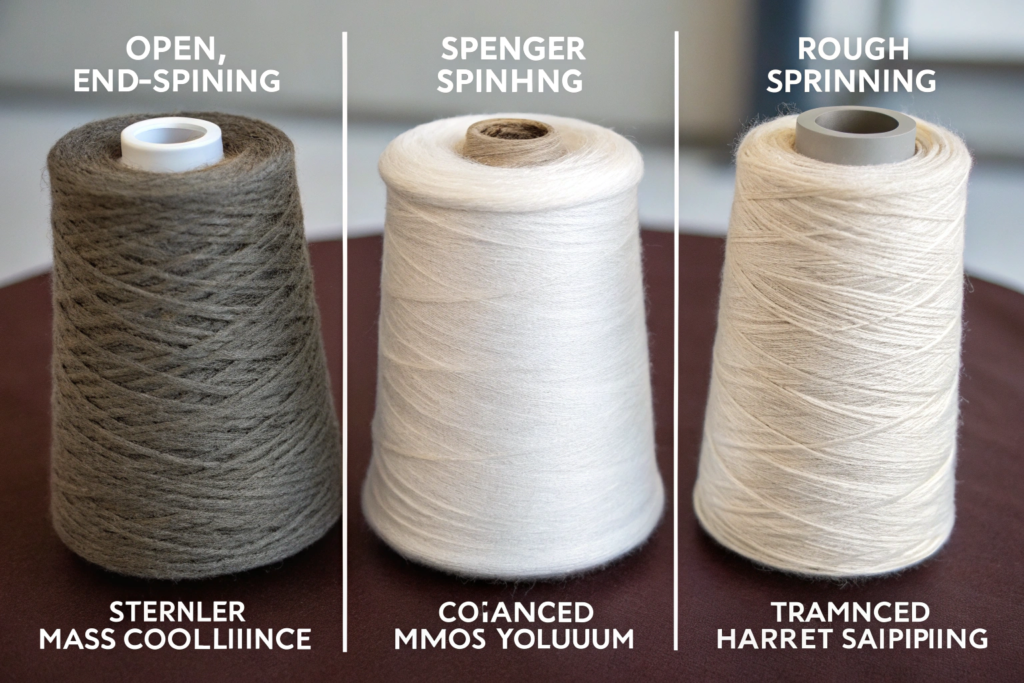
The finest long-staple fiber can be ruined by poor spinning. The spinning method determines the yarn's hairiness, its strength, and its softness. Open-end spinning, the fast, cheap method used for mass-market t-shirts, creates a yarn with a dense core and a fuzzy, rough surface. Ring-spinning, a slower, more traditional method, aligns the fibers and creates a smoother, stronger, softer yarn. Compact spinning, an advanced evolution of ring-spinning, virtually eliminates the remaining hairiness, creating the ultimate premium yarn.
We produce our premium cotton fabrics using only ring-spun and compact-spun yarns. We do not use open-end yarn for our first-class cotton products. Ring-spun yarn gives the fabric a superior hand feel, a soft, smooth touch that is immediately noticeable. Compact yarn goes a step further, removing the short, protruding fibers to create a clean, silky surface that resists pilling almost entirely. This is the yarn quality behind a garment that feels expensive from the first touch.
Why Does a Ring-Spun Yarn Feel So Much Softer Than an Open-End Yarn?
In open-end spinning, raw fibers are fed into a high-speed rotor that twists them into yarn. The process is violent and fast. The resulting yarn has a chaotic internal structure. The core is tightly bound, but the surface is covered in loose, entangled fibers. This is the fuzz you feel on a cheap t-shirt. Over time, these fibers tangle further and form pills. The yarn also feels hard and slightly rough because of the dense, untwisted core.
In ring-spinning, the fibers are drawn out and twisted by a mechanical ring and traveler. This process is more gentle and controlled. It aligns the fibers in a near-parallel arrangement before twisting them together. The result is a yarn with a much smoother surface, fewer loose fiber ends, and a softer, more natural feel. It also has a higher tensile strength than open-end yarn of the same thickness. For a San Francisco-based premium basics brand, switching their core t-shirt program to ring-spun yarn resulted in a dramatically better hand feel and a measurable reduction in pilling returns. The brand owner said it was the single best quality decision he ever made. This is the tangible difference.
What Is Compact Spinning and How Does It Achieve an Anti-Pill Finish?
Compact spinning is an enhancement of the ring-spinning process. In a standard ring-spinning frame, there is a small "spinning triangle" where the fibers are twisted together. Some short fibers escape this triangle and protrude from the yarn surface, creating hairiness. A compact spinning frame uses a pneumatic suction system to condense the fibers before they are twisted. This eliminates the spinning triangle.
All fibers, even the short ones, are fully integrated into the yarn body. The resulting compact yarn is virtually hairless. It is incredibly smooth, clean, and strong. A fabric made from compact yarn will pill significantly less than a standard ring-spun fabric. For a New York luxury menswear brand producing $150 polo shirts, we use a 50/1 compact-spun Supima yarn. The fabric has a luminous sheen and has passed a Martindale pilling test with a Grade 4-5 rating after 2,000 rubs. This is the technical definition of first-class.
Advanced Finishing: Bio-Polishing and Compacting for Lasting Quality
The yarn can be perfect, but if the finishing is crude, the fabric will fail. A cheap factory uses harsh chemicals to wash the fabric and applies resin finishes that make it feel stiff and heavy. The result is a fabric that is soft on the shelf but shrinks and hardens after a few washes. First-class cotton finishing is a gentle, scientific process. It uses enzymes and mechanical treatments to perfect the fabric's hand feel and lock in its dimensional stability without damaging the fiber.
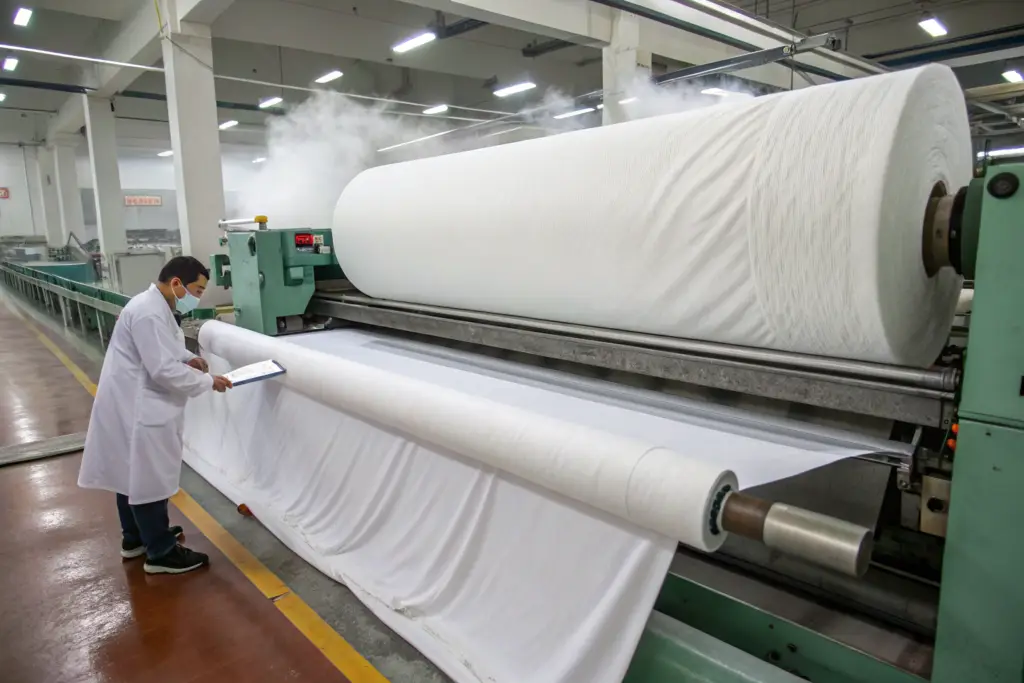
Our cotton finishing process has two critical stages: bio-polishing and compacting. Bio-polishing uses natural cellulase enzymes to gently digest the microscopic fuzz on the yarn surface. This removes the cause of pilling at the molecular level, leaving the fabric permanently smooth and soft. Compacting is a mechanical process that pre-shrinks the fabric using steam and pressure. It relaxes the tensions built into the yarn during spinning and knitting, guaranteeing less than 3% residual shrinkage after washing. Your garment stays soft, stays smooth, and stays its original size.
How Do Enzymes Clean the Fabric More Effectively Than Chemicals?
Traditional chemical finishing uses caustic soda to strip the fabric surface. It is aggressive. It weakens the fiber, creates a harsh hand feel, and produces toxic wastewater. Bio-polishing uses cellulase enzymes, biological catalysts that are highly specific. They target only the tiny, loose cellulose microfibrils that protrude from the yarn. They digest this surface fuzz without attacking the strong fiber core.
The enzyme bath is carefully controlled for temperature and pH. The process lasts about 45 minutes. The enzymes are then deactivated and washed away, leaving behind a fabric surface that is naturally clean and smooth. The softness is intrinsic to the fiber, not a temporary chemical coating. For a children's wear brand we work with, the bio-polished organic cotton onesies were measurably softer and remained pill-free after repeated washing, a critical requirement for baby skin. This is the difference between a fabric that is soft for one wash and a fabric that is soft for life.
Why Is the Compactor Machine the Guardian of a Garment's Shape?
A knitted cotton fabric is full of internal tension. The yarn was stretched during spinning and knitting. When you wash the garment, this tension releases. The fibers relax, the loops contract, and the t-shirt shrinks. A compactor machine uses a combination of steam, heat, and a controlled squeezing action to force the fabric to relax and shrink before it is cut and sewn.
We run our premium cotton jersey through our compactor to achieve a target residual shrinkage of 3% or less, which is well below the 5% industry norm. This means the size medium t-shirt you buy will still be a size medium after a dozen washes. We measure the shrinkage on every batch. For a Miami-based brand that had experienced severe shrinkage issues with a previous supplier, our compacted fabric solved the problem entirely. Their return rate for sizing issues dropped to near zero.
Conclusion
First-class cotton quality is not a subjective claim. It is a chain of objective, measurable decisions. It begins with the exclusive sourcing of long-staple and extra-long-staple fibers, verified upon arrival. It continues with the use of ring-spun and compact yarn spinning methods that create a smoother, stronger, pill-resistant yarn. It is perfected by a gentle, scientific finishing process that uses enzymes to clean the fabric and a compactor to lock its shape. This is how Shanghai Fumao delivers cotton fabric that feels luxurious, wears durably, and maintains its integrity wash after wash.
We do not cut corners on fiber, on yarn, or on finishing. We engineer cotton quality from the bale to the finished bolt. The result is a garment that honors your brand's promise to your customer.
If you are particular about the cotton quality in your collection, and you have been disappointed by fabric that degrades after a few washes, I invite you to test our cotton standards. We will send you a sample pack of our core cotton jerseys, including our Supima compact-spun and GOTS organic ring-spun qualities.
Contact our Business Director, Elaine, at elaine@fumaoclothing.com. She will arrange a cotton quality sample pack for your evaluation. Touch the fabric. Wash it. Stretch it. Then let us talk about how we can build your next collection on a foundation of genuine, verifiable, first-class cotton.