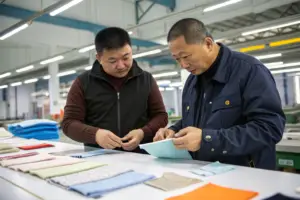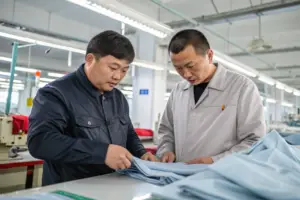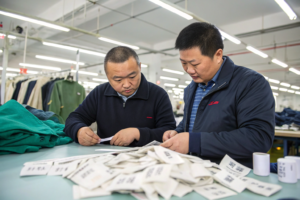
You are staring at a cost sheet, and the numbers do not work. The fabric is expensive. The labor is high. The target retail price leaves you with a margin that is too thin to breathe. You ask the factory for a discount, but they have already squeezed their own margins. The real savings, the kind that preserves quality and actually improves the product, are not found in negotiating a few cents off the unit price. They are found in technology. The right machine, the right software, the right automated process can strip out hidden waste that a cheaper factory never even sees. Waste that you are currently paying for.
First-class garment technology saves money for buyers by eliminating the two biggest hidden costs in manufacturing: material waste and labor inefficiency. At Shanghai Fumao, we use automated nesting software that cuts fabric utilization to over 85%, and specialized sewing automation that reduces the standard allowed minutes on complex operations. These technologies reduce the actual cost to manufacture your garment, savings we pass directly to your FOB price without touching your design or quality.
Most buyers think technology is just about quality. It is not. It is about physics and mathematics. It is about using a laser to cut more pieces from the same roll of fabric. It is about using a digital pattern to simulate the fit before you cut, so you do not waste two rounds of physical sampling. Let me show you the specific technologies on our factory floor that directly translate to a lower cost per unit, and a higher margin for your brand.
Automated Nesting and Zero-Tension Fabric Spreading
Fabric is typically 50% to 70% of a garment's total cost. It is the single largest line item. A factory that cuts fabric inefficiently is literally throwing your money into the waste bin. Standard manual spreading stretches the fabric, leading to shrinkage and misshapen pieces. Standard manual marker making leaves wide gaps between pattern pieces, wasting precious square inches that add up to meters of lost fabric per roll. We attack this waste at its source.
Our automated Gerber spreading machines and CAD nesting software are our primary cost-saving technologies for buyers. The spreader lays fabric in a completely tension-free state, eliminating the shrinkage distortion that causes waste. The CAD software algorithmically nests the pattern pieces into the tightest possible map, often achieving 85% to 90% fabric utilization. For a 10,000-unit order, a 5% fabric saving is a direct, significant reduction in your bill of materials.
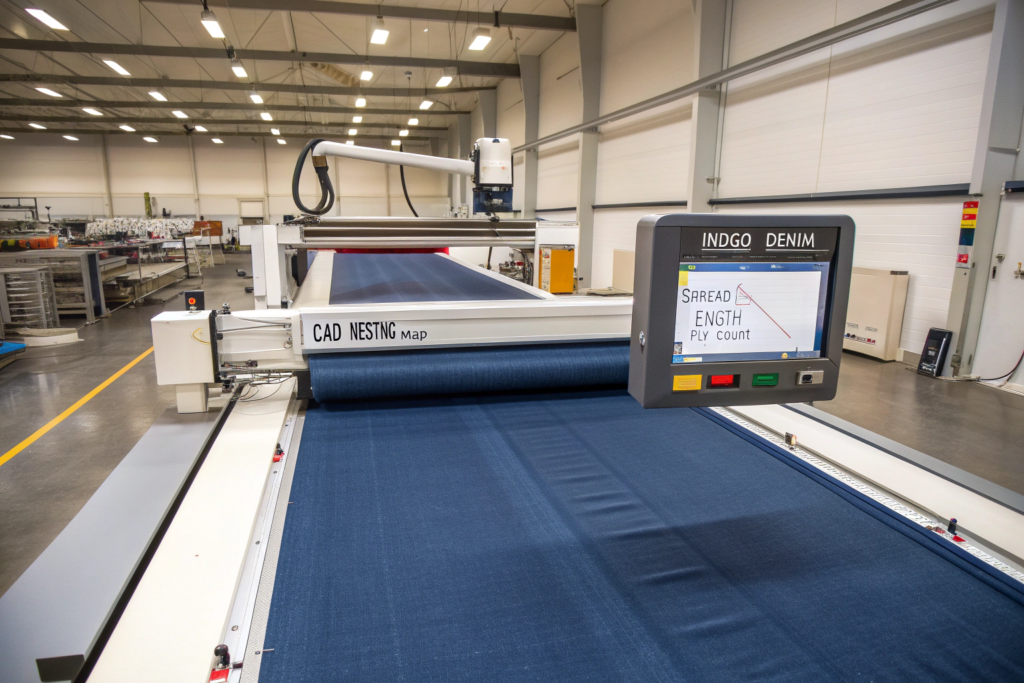
How Does an Automatic Spreader Save You 3% to 5% on Fabric Cost?
When a worker unrolls fabric by hand, they inevitably pull it. This tension stretches the fabric on the table. The pattern pieces are cut while the fabric is stretched. Later, the cut pieces relax and shrink back to their natural size. A size medium sleeve suddenly becomes a size small. The pieces are scrapped. The fabric is wasted. The cost of that wasted fabric is baked into the price you pay.
Our automatic spreader uses motorized, synchronized rollers that unroll the fabric with precisely zero tension. The fabric floats onto the cutting table in its completely relaxed, natural state. The cut pieces are dimensionally accurate. They do not shrink back. The cutting loss from tension distortion drops to near zero. This alone can save 3% to 5% of your total fabric cost, depending on the fabric type. For a stretch jersey order, this technology is not a luxury; it is essential for dimensional stability. You can explore more about this on Gerber Technology's spreading solutions.
What Is Algorithmic Nesting and How Does It Squeeze More Units from a Roll?
A manual marker maker arranges the pattern pieces on a paper plot. It is a skilled job, but a human cannot calculate the millions of possible arrangements to find the absolute tightest fit. Algorithmic nesting software can. Our CAD system imports the digital pattern pieces and uses a mathematical solver to rotate, flip, and nudge every piece until the gaps between them are minimized.
The software calculates the exact fabric utilization percentage. We set a target of 85% or higher. If the first nest is below 82%, our pattern engineer manually adjusts the software constraints for specific pieces and re-runs the solver. An improvement from 80% to 85% utilization means you get five more garments from every hundred meters of fabric. Across a large bulk order, that is a direct reduction in your fabric cost per unit. This is the financial power of computer-aided manufacturing applied intelligently.
Specialized Sewing Automation and SAM Reduction
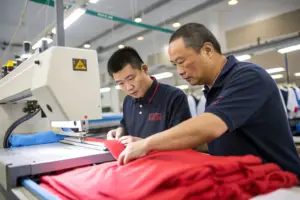
After fabric, labor is the second major cost. Every seam, every pocket, every buttonhole consumes time. We measure this time in Standard Allowed Minutes. A complex manual operation might take three minutes. An automated jig-assisted operation might take thirty seconds. The labor cost per garment is directly proportional to the SAM. By investing in specialized automation for repetitive, high-skill tasks, we dramatically reduce the labor time required to make your garment. This saving is reflected in your price.
We deploy task-specific automation to reduce the SAM on critical operations. Our automated pocket setters, buttonhole machines, and collar pressing jigs perform complex operations in a fraction of the manual time, with zero defects. A process that once took a skilled tailor three minutes can now be completed in fifteen seconds. The labor cost saving per unit is measurable and significant, especially for garments with complex construction.
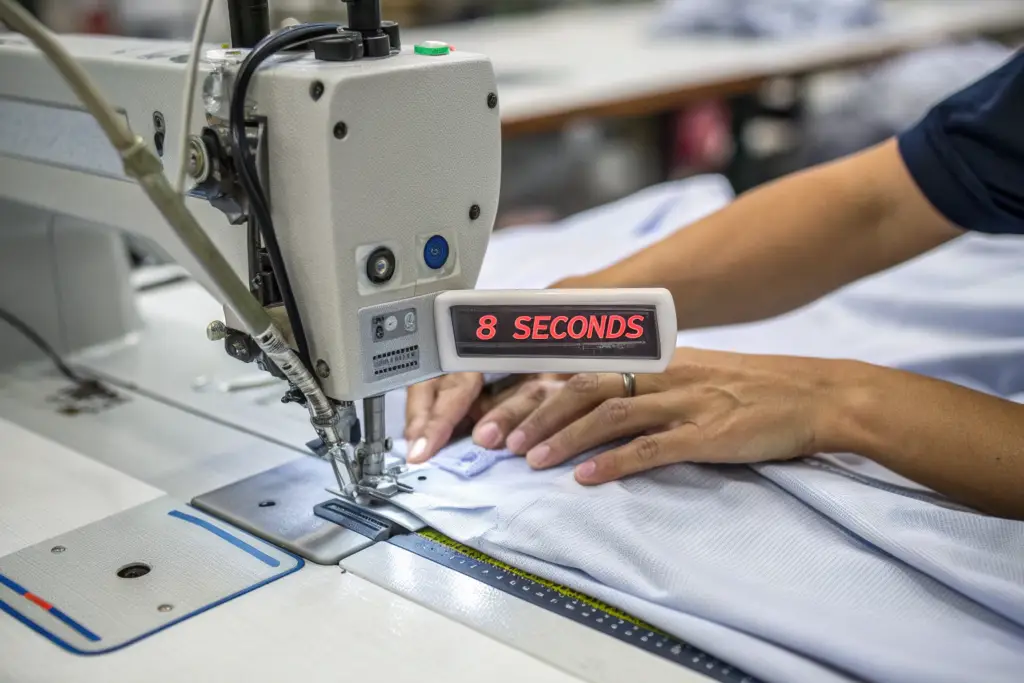
How Does a Pocket Setting Jig Cut Minutes from a Shirt's Cost?
Setting a patch pocket on a shirt requires precise folding of the seam allowances, accurate placement on the body, and two rows of neat topstitching. A manual operator might take two to three minutes to set a single pocket perfectly. It requires concentration and skill. Mistakes lead to rework.
Our automated pocket setting machine uses a folding jig and a programmed sewing path. The operator places the cut pocket fabric and the shirt body into the jig. The machine folds the pocket edges, positions it accurately on the shirt, and sews the entire perimeter in a pre-programmed stitch path in about twelve seconds. The result is perfect every time. The SAM for pocket setting drops from three minutes to fifteen seconds. That is a 2.75-minute labor saving on a single operation. Multiply that across 5,000 shirts, and the cost reduction is substantial. This is the sewing automation that makes a competitively priced garment without cutting corners on quality.
Can a Programmable Buttonhole Machine Reduce Cost and Improve Quality?
A hand-guided buttonhole machine requires the operator to carefully align the fabric and manually control the stitching speed. It takes time, and the consistency depends on the operator's steady hand. A keyhole buttonhole on a jacket front is a critical visual detail. A poorly sewn one can ruin a luxury garment.
Our programmable buttonhole machines use a laser guide and a pre-loaded stitch program. The operator simply positions the garment. The machine laser-guides the exact buttonhole length and shape, sews the buttonhole automatically, and trims the thread. The cycle time is seconds. Every buttonhole is identical to the engineering specification. The SAM is reduced, and the defect rate drops to zero. For a tailored blazer with four front buttonholes, this automation ensures luxury quality at a significantly lower labor cost than a purely manual operation. This is the direct financial benefit of targeted technology investment.
Digital 3D Prototyping and the Elimination of Sampling Waste
The traditional sampling process is a hidden cost drain. A brand develops a new style. The factory makes a physical sample. It is couriered to the buyer. The fit is wrong. Comments are made. A second sample is made and couriered. Maybe a third. Each physical sample costs money in fabric, labor, and express shipping. Each iteration burns a week of development time. We have largely replaced this wasteful cycle with a digital one.
Our 3D prototyping software eliminates the cost of multiple physical samples. We drape your digital pattern on a virtual avatar using the exact fabric physics parameters. You see the fit, the drape, and the details in a photorealistic 3D render. We iterate digitally until the fit is perfect. The physical sample is often approved on the first or second shot. This saves hundreds of dollars per style in sampling costs and compresses your development calendar by weeks.
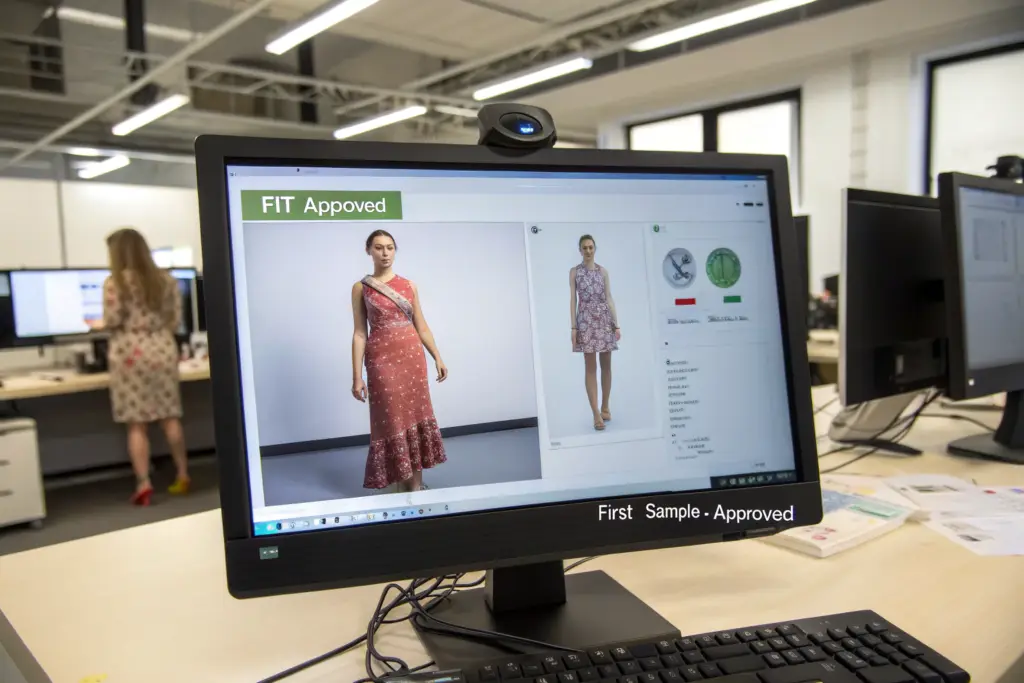
How Does a Digital Fit Session Replace a Physical Fit Sample?
A fit session traditionally requires a live model, a physical garment, a pattern maker with pins, and the designer in the same room. If the designer is in New York and the factory is in Shanghai, this involves an expensive international courier and a week of waiting. Our digital fit session happens on a screen.
We import your pattern into our 3D software and define the fabric's physical properties, such as weight, stretch, and drape. The software simulates the garment on a parametric avatar representing your target fit model. It generates a tension heatmap showing exactly where the garment pulls or gapes. We share this 3D simulation with you via a link. You rotate the garment, zoom in, and mark comments directly on the 3D model. We adjust the pattern and re-simulate. A process that once took two weeks and three physical samples now happens in 48 hours, often with just one final physical sample for confirmation. This is the cost-saving power of 3D fashion design technology.
What Is the True Cost of a Physical Sampling Round?
A single physical sample of a moderately complex women's dress costs between $80 and $150 to produce in fabric and labor. Express courier from Shanghai to the US costs another $40. If you sample three styles per season, and each requires three iterations, you are spending over $1,500 annually just on sampling freight and fabrication. This does not account for the lost time, the idle design team, or the delayed fabric ordering.
Our digital prototyping eliminates two of those three iterations. You save the direct cost of the samples and the freight. More importantly, you compress your development calendar by two to three weeks. This allows you to order fabric later, confirm the collection later, and still hit the same in-store date. In seasonal fashion, time saved is a significant competitive and financial advantage. It allows you to design closer to the season, reducing the risk of committing to a fabric or silhouette that the market moves away from.
Conclusion
First-class garment technology is not an expense. It is a direct investment in a lower cost of goods sold. An automatic spreader saves you 3% to 5% on your largest single cost: the fabric. Algorithmic nesting pushes that saving further. Task-specific sewing automation reduces the labor minutes in your garment, directly cutting your making cost. And digital 3D prototyping eliminates the wasteful, expensive, multi-iteration physical sampling cycle that bleeds money and time from your development budget.
At Shanghai Fumao, we deploy this technology precisely to give our buyer partners a competitive price without compromising the quality, the fit, or the rare design integrity of the garment. We do not cut corners. We cut waste. The result is a better product at a better price, with a better margin for your business.
If your current cost sheets are not working, and you suspect there is invisible waste in your supply chain, I invite you to let us analyze one of your current styles. We will perform a technology audit, showing you exactly where our automated processes would reduce the fabric consumption and labor time, and provide a revised cost breakdown.
Contact our Business Director, Elaine, at elaine@fumaoclothing.com. She will arrange a technical cost analysis of your best-seller. Let us show you, with real data, how our first-class technology translates into first-class savings for your brand.