A Denver-based outdoor apparel brand once placed a 5,000-unit order for premium fleece jackets with custom-branded zipper pulls. The zipper pulls were designed with the brand's logo debossed onto a matte black metal finish. The factory's sample was perfect. The brand approved it. The bulk order arrived with zipper pulls that looked correct in shape but had a subtly different finish—a slightly glossy, cheaper-looking black coating that chipped off after minimal use, exposing a shiny silver base metal underneath. The pulls had not been solid metal with a durable powder coat; they were cheap zinc alloy with a thin, electroplated paint that the factory had substituted to save $0.18 per unit. The entire shipment's perceived quality was destroyed by a single, small hardware component. The brand lost two wholesale accounts and spent $12,000 replacing the zipper pulls domestically.
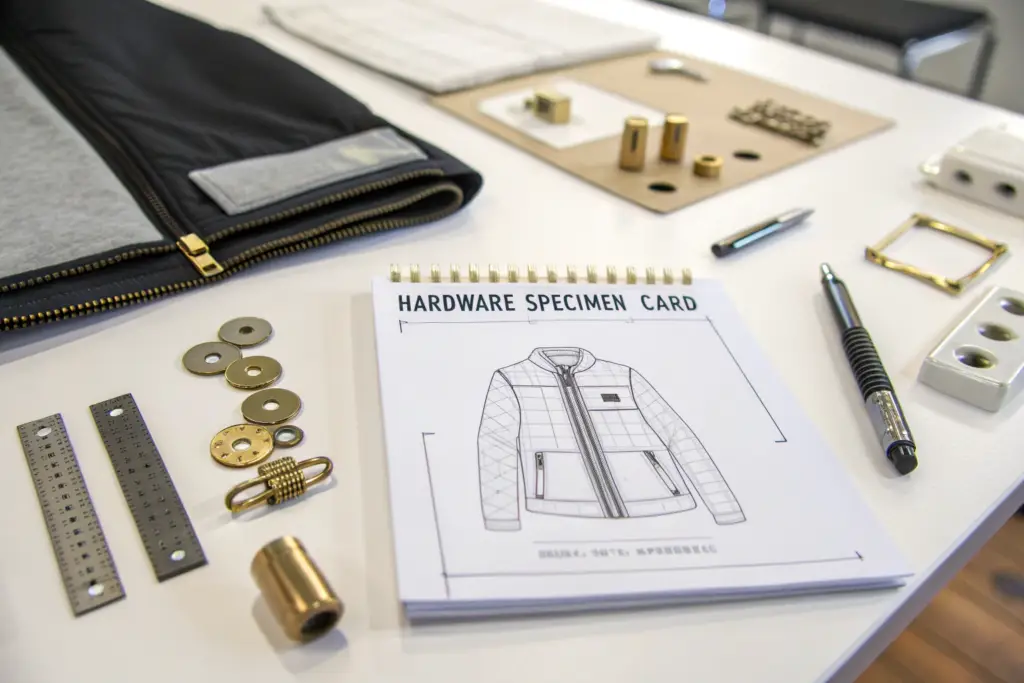
To safely request custom hardware and zippers for wholesale clothing orders, you must provide a "Hardware Specification and Verification Protocol" consisting of five non-negotiable elements: a physical, signed "Hardware Specimen Card" with the exact approved button, zipper pull, snap, and rivet physically attached and signed across the boundary onto the cardstock; a written "Material and Finish Specification" stating the exact base metal alloy, plating metal and thickness, and surface finish with a Pantone metallic color code; a "Performance Requirement Specification" with minimum cycle ratings for zippers and minimum pull-force requirements for snaps and buttons; a "Supplier Certificate of Authenticity" for branded hardware such as YKK zippers; and a "Pre-Production Hardware Approval" step where the factory submits a small batch of the actual production hardware for physical approval before it is installed on the bulk garments.
At Shanghai Fumao, I treat hardware specification with the same rigor as fabric specification. A zipper is not a commodity. A snap is not interchangeable. The hardware is the functional skeleton of the garment, and a failure at any hardware point renders the entire garment unwearable.
Why Is a "Physical Hardware Specimen Card" the Only Unforgeable Reference for Custom Trim Components?
A London-based luxury streetwear brand once approved a custom zipper pull from a digital photo. The photo showed a beautiful, deeply engraved logo on a matte black metal pull. The factory produced 3,000 jackets with zipper pulls that looked similar in shape but had a shallow, laser-etched logo that was barely visible and a semi-gloss finish that looked cheap. The brand rejected the shipment. The factory pointed to the digital photo approval and claimed the bulk pulls matched the image. The brand had no physical reference standard. The dispute cost both parties months of negotiation and a compromised discount that satisfied neither.
A physical hardware specimen card is the only unforgeable reference because it provides a three-dimensional, tactile, and visually inspectable standard that cannot be manipulated by lighting, camera angle, or digital editing, and the signature drawn across the boundary between each hardware piece and the cardstock creates a tamper-proof link between the specific, approved physical component and the document, meaning any substitution of a different zipper pull, snap, or rivet will be immediately revealed because the new component will not carry the continuation of the signature line that crosses from the cardstock onto the original approved specimen.
A digital photo can be taken under flattering lighting that hides surface imperfections. A physical specimen held in the hand reveals the true weight, the true surface texture, and the true engraving depth. The signature across the boundary means the specific piece attached to the card is the approved piece, and any substitute is instantly identifiable.
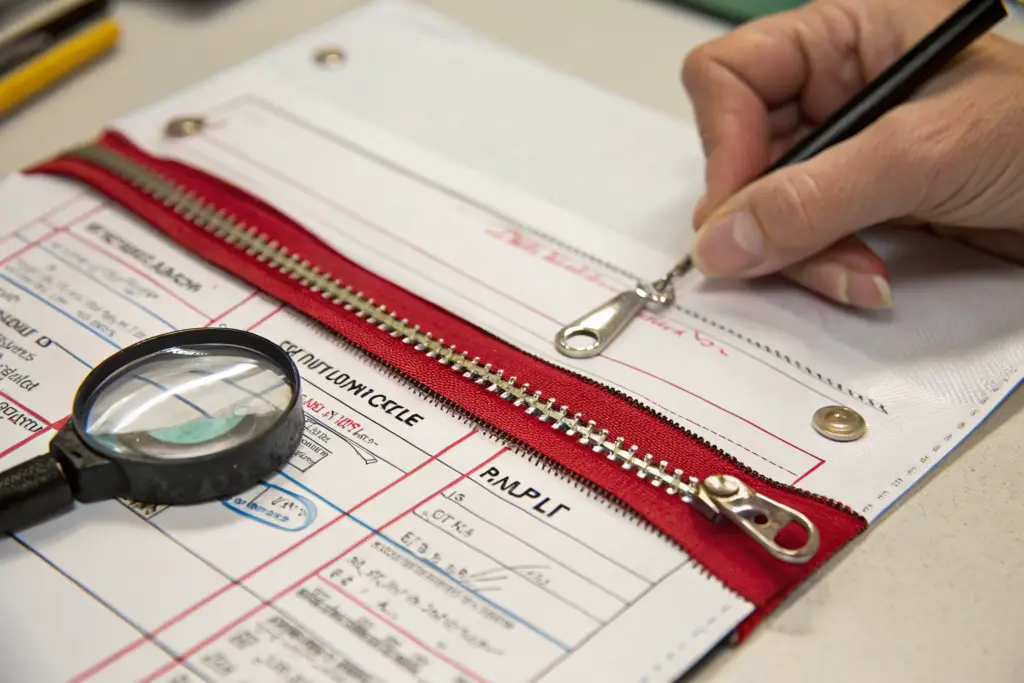
How Does a "Cross-Signed Boundary Line" Prevent a Factory's Purchasing Department From Substituting a Cheaper, Visually Similar Component?
The permanent marker line crosses from the cardstock onto the metal or plastic surface of the hardware piece. If the factory's purchasing department replaces the approved solid brass zipper pull with a cheaper zinc-alloy copy, the new pull will not have the continuation of the signature line. The break in the line is immediate, visible, and undeniable proof of substitution.
Why Must the Specimen Card Include Both the "Male and Female Halves" of a Snap or a Buckle?
A snap that functions perfectly with its matched partner may fail when paired with a different, visually similar but dimensionally incompatible counterpart. The specimen card must include the exact, approved male and female halves, tested together, signed together, and specified as a matched set.
What Specific "Material and Finish Specification" Prevents the "Shiny Silver Base Metal Under the Black Coating" Disaster?
A Portland-based technical outerwear brand once specified "matte black metal zipper" on their tech pack. The factory sourced a zipper with a matte black finish. The jackets launched. After a single season of wear, customers reported that the black finish was chipping off the zipper pulls, revealing a bright, shiny silver base metal underneath. The zipper was functional, but it looked cheap and damaged. The brand investigated. The zipper pull was made from cheap zinc alloy with a thin, electroplated black coating. The tech pack had specified the color and finish but had not specified the base metal, the plating process, or the coating thickness.
The material and finish specification must state the exact base metal alloy—such as solid brass, zinc alloy, or stainless steel—the plating metal and the minimum plating thickness in microns, the surface finish described with both a written term such as "matte powder coat" and a Pantone metallic color code, and the coating adhesion standard, such as "must withstand 100 hours of salt spray testing per ASTM B117 without visible corrosion or flaking," creating a complete, measurable, and testable material definition that leaves no room for the factory to substitute a cheaper metal with a visually similar but functionally inferior surface coating.
"Black metal" is a color description. "Solid brass base, nickel underplate at 5 microns, matte black powder coat at 40 microns, Pantone Black 6 C, salt spray test 100 hours" is a material specification. The first is a wish. The second is a contract that can be verified by an independent materials testing laboratory.
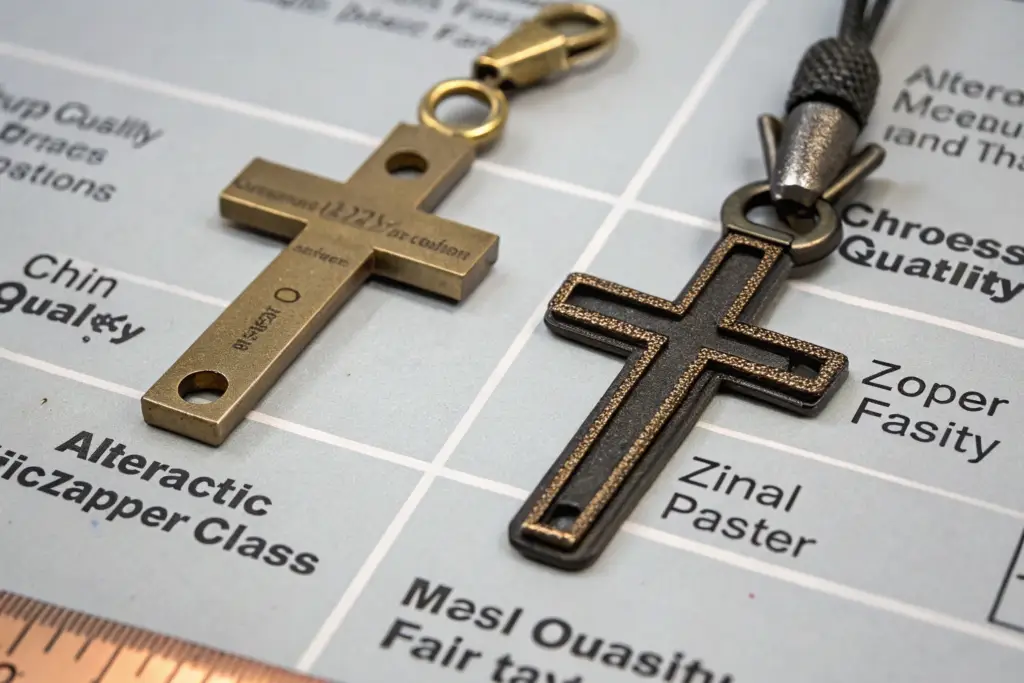
How Does a "Salt Spray Test Requirement" Eliminate Zippers That Will Corrode in a Coastal Retail Environment?
The salt spray test, ASTM B117, places the hardware in a controlled chamber that sprays a fine saltwater mist for a specified number of hours. A cheap electroplated coating will show visible corrosion—white rust or red rust—within 24-48 hours. A high-quality powder coat or proper electroplating with a nickel underplate will withstand 100 hours or more with no visible corrosion.
Why Must the "Plating Thickness in Microns" Be Specified, Not Just the Plating Metal Name?
"Gold-plated" can mean a 0.1-micron decorative flash that wears off in weeks or a 3-micron heavy gold electroplate that lasts for years. The micron thickness specification distinguishes the two and can be verified with an X-ray fluorescence (XRF) thickness gauge at an independent testing laboratory.
How Do You Verify a "YKK Zipper" Is Genuine and Not a Counterfeit With a Forged Logo?
A Chicago-based workwear brand once specified "YKK #5 brass zipper" on their tech pack. The bulk jackets arrived with zippers that had "YKK" stamped on the slider. The zippers began failing after approximately 200 open-close cycles—far below the 2,000-cycle rating of a genuine YKK #5 brass zipper. The brand sent a sample zipper to YKK's authentication department. The zipper was counterfeit. The factory had purchased cheap, unbranded zippers from a local market, and a small workshop had stamped a crude YKK logo onto the sliders using a manual press. The factory had saved approximately $0.60 per zipper and destroyed the brand's quality reputation.
To verify a YKK zipper is genuine, the brand must require the factory to provide a "YKK Certificate of Authenticity" or a purchase invoice directly from an authorized YKK distributor with the specific YKK product code and batch number, and then independently verify the physical zipper by examining the logo stamping quality under magnification—genuine YKK logos are crisp, precisely aligned, and deeply engraved, while counterfeit logos are often blurred, misaligned, or shallowly etched—and performing a simple cycle test on a random sample, opening and closing the zipper 100 times and checking for any skipping, jamming, or tape fraying.
A stamped logo on a slider is not proof of authenticity. A purchase invoice from an authorized YKK distributor, linked to a specific batch number that matches the zippers on the garments, is the documentary evidence. The physical examination and cycle test provide the physical evidence.
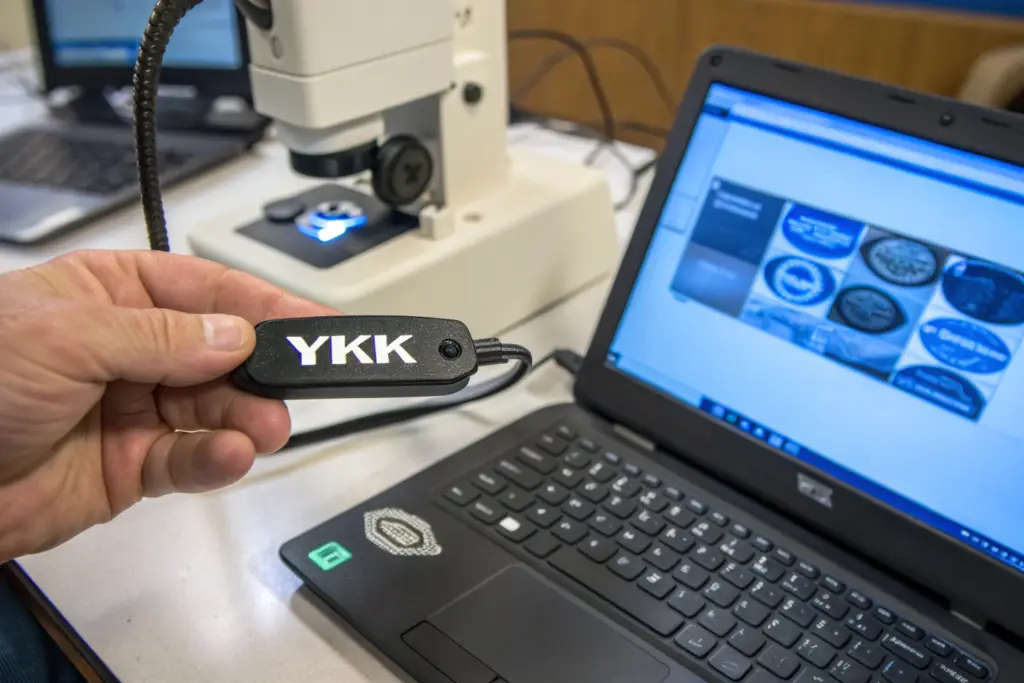
How Can a Brand Independently Verify a Factory's YKK Purchase Invoice With the Local YKK Distributor?
The brand requests the specific YKK distributor's name and contact information from the invoice, contacts the distributor directly, and confirms that the invoice number, product code, and batch quantity are genuine and were sold to the specific factory. This verification takes a single email or phone call.
What Is the "100-Cycle Zipper Test" That a Brand Can Perform on a Random Bulk Sample in Under Ten Minutes?
The brand takes a random jacket from the bulk shipment, opens and closes the zipper 100 times at a steady, moderate speed, and observes for any sticking, skipping teeth, slider jamming, or tape fraying. A genuine YKK zipper will operate smoothly throughout. A counterfeit will often begin to show problems—a sticky point, a skipped tooth, a rough section—within the first 50 cycles.
Why Does a "Pre-Production Hardware Approval" Step Catch a Component Substitution Before It Affects 5,000 Units?
A San Francisco-based sustainable fashion brand once approved a beautiful custom button from a pre-production sample. The sample button was made from recycled ocean plastic, with a deep, crisp logo engraving and a matte, slightly textured finish. The factory produced 5,000 jackets with these buttons. The bulk buttons, however, were from a different, cheaper production batch. The logo engraving was shallower, the matte texture was smoother and less distinctive, and the buttons felt lighter and less substantial. The factory had commissioned a high-quality sample batch for approval and then switched to a lower-cost production batch for the bulk order.
A pre-production hardware approval step catches a component substitution before it affects thousands of units by requiring the factory to submit a small, randomly selected batch of the actual production hardware—taken from the exact shipment that will be installed on the bulk garments—for the brand's physical approval, allowing the brand to compare these production components against the approved hardware specimen card and the material and finish specification, and identify any quality downgrade, material substitution, or finish deviation before the hardware is installed, when the cost of correction is a small batch replacement rather than a 5,000-unit rework.
A sample made for approval is often a hand-selected, specially prepared "golden sample" that represents the best possible outcome, not the average production quality. The pre-production approval batch must be drawn randomly from the actual production inventory to represent the true quality the bulk order will receive.
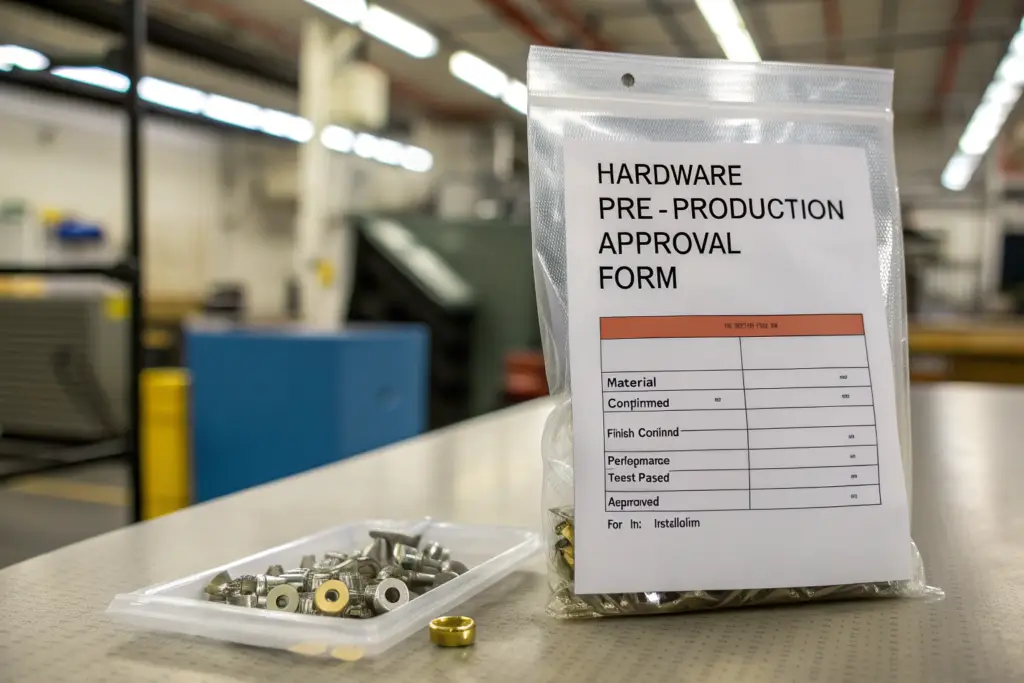
How Does a "Random Selection From Production Inventory" Differ From a Factory-Submitted "Approval Sample"?
The brand instructs the factory to have a third-party inspector or a live video call witness randomly select twenty hardware pieces from the production inventory cartons, not from a separate, pre-prepared sample bag. These randomly selected pieces are the ones shipped to the brand for approval. This prevents the factory from hand-picking perfect specimens.
Why Should the Pre-Production Hardware Approval Include a "Miniature Cycle and Pull Test" on the Submitted Components?
The brand performs the same 100-cycle zipper test and the same 70-Newton snap pull test on the pre-production hardware samples. If the production batch hardware fails a test that the original approval sample passed, the brand rejects the batch before installation and demands the factory source the correct, specified hardware.
Conclusion
Safely requesting custom hardware and zippers for wholesale clothing orders requires treating hardware specification as a precision engineering discipline, not an aesthetic afterthought. The physical hardware specimen card, with components signed across the boundary onto the cardstock, creates an unforgeable, tamper-proof reference standard. The written material and finish specification, with base metal alloy, plating thickness in microns, Pantone metallic color code, and salt spray test requirement, closes the gap between "looks like" and "is." The YKK certificate of authenticity, verified independently with the distributor, protects against the counterfeit zipper epidemic. The pre-production hardware approval step, with random selection from production inventory, catches a batch-level quality downgrade before it is installed on thousands of garments.
At Shanghai Fumao, I apply all five layers of this protocol to every custom hardware order. My hardware specimen cards are signed and archived. My material specifications include base metal, plating thickness, and test standards. My YKK zippers are sourced directly from authorized distributors and come with certificates of authenticity. My pre-production hardware approval process includes random selection and functional testing before installation. A zipper is a small component, but a failed zipper is a big problem.
If you are a brand buyer preparing to specify custom hardware for your next wholesale order, and you want a manufacturing partner who treats zippers, snaps, and rivets with the same rigor as fabric and stitching, contact my Business Director, Elaine. She can share our hardware specimen card template, our material and finish specification format, and our pre-production hardware approval checklist. Reach Elaine at: elaine@fumaoclothing.com. Specify the hardware that holds your garment together, down to the micron.