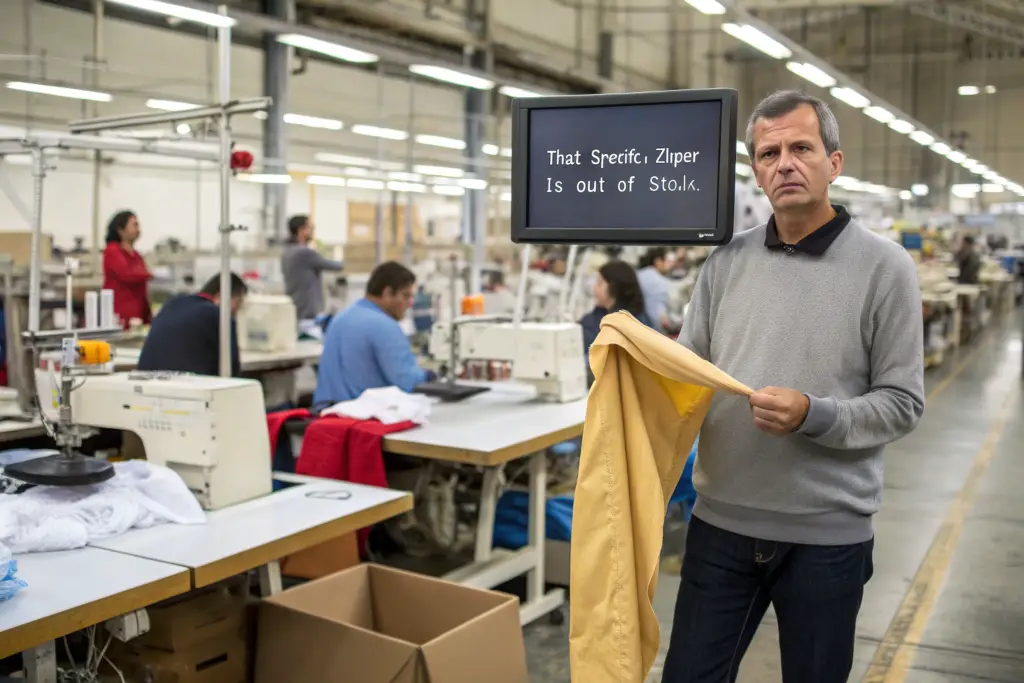
You have finalized your designs. You have secured your orders. Your factory is ready to start. But then the email comes: "The custom fabric is delayed by three weeks." Or, "The mill can't meet that MOQ." Or, "That specific zipper is out of stock." Suddenly, your entire, carefully planned production timeline collapses. Everything else—the cutting, the sewing, the shipping—grinds to a halt, waiting on a single, elusive component. A frustrated brand owner told me, "I can manage my factory. It's managing the raw materials that feels like trying to control the weather. It's the one thing that constantly, consistently delays everything."
Raw material sourcing is the single biggest bottleneck in clothing production because it is the longest, most unpredictable, and least flexible part of the supply chain. Unlike sewing labor, which can be scaled or shifted, material production is governed by the immovable physics of agriculture, complex chemical processing, and rigid industrial scheduling. The key constraints are: 1) Long, Immovable Lead Times (especially for custom dyeing and finishing), 2) High Minimum Order Quantities (MOQs) that create volume barriers, and 3) Deep Supply Chain Opacity, making it difficult to verify quality and predict delays.
At Shanghai Fumao, we see this bottleneck as the central challenge to solve for our B2B partners. Our expertise in CMT and strategic material management is built on years of navigating this complex reality. Let me explain the specific reasons why raw materials are the choke point and, more importantly, how a strategic partnership can help you work around it.
Why Are Lead Times for Custom Fabrics Inherently Inflexible?
The single biggest reason materials are a bottleneck is that you cannot rush physics. Unlike cutting and sewing, where you can add more operators or run an extra shift, the production of a custom fabric involves a series of sequential, time-consuming industrial processes that cannot be meaningfully compressed. This is especially true if you need a specific color, a custom blend, or a unique finish. Waiting for this process is often the longest, most anxious part of any production cycle.
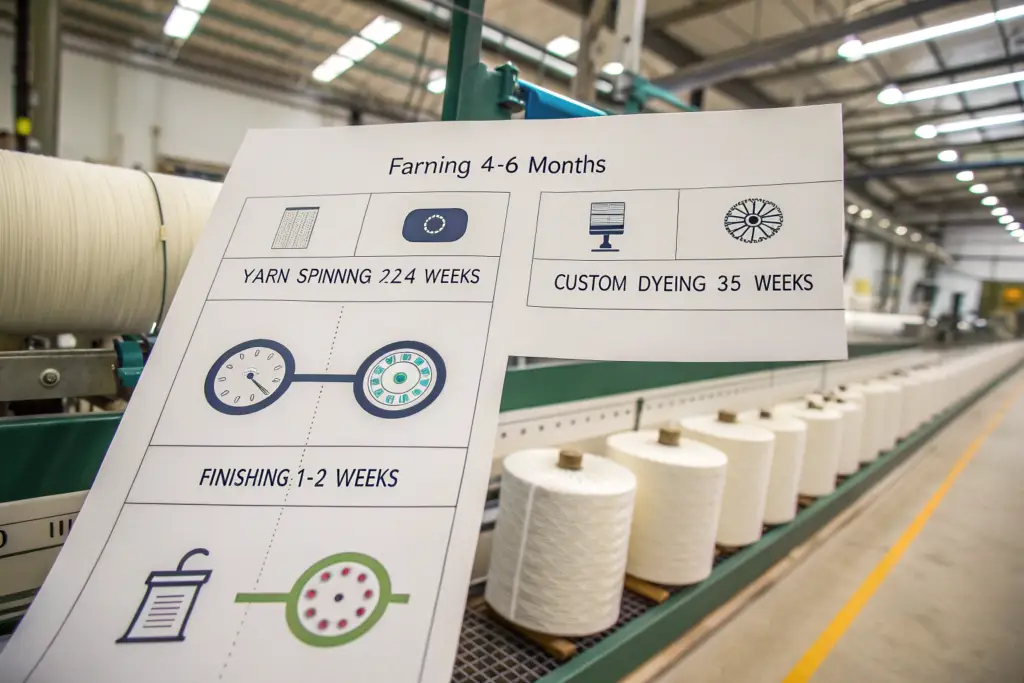
The lead time for custom fabric is inherently inflexible because it involves a sequence of non-compressible industrial steps. After the raw fiber is sourced, the yarn must be spun, the greige fabric woven or knitted, and then—the longest phase—the fabric must be custom dyed and finished. This dyeing and finishing alone typically takes 3-5 weeks, as it involves scheduling a large industrial dye machine, mixing a custom color formula, and running the fabric through multiple chemical and mechanical processes.
I recall a brand founder who had a brilliant design for a fall jacket using a specific shade of "Rust" in a custom-milled wool blend. She received her PO from a major retailer and immediately placed her fabric order. The mill told her the custom dyeing would take 5 weeks. She was shocked. She asked, "Can't you rush it?" The mill explained they were booked, and their machines run 24/7. There was no "rushing." She had to adjust her entire delivery schedule because of this immovable lead time. The lesson was hard: the mill's calendar dictates your production calendar. This is the reality of the fabric supply chain .
What Is the "Greige Fabric" Phase and Why Does It Matter?
Greige fabric (pronounced "gray") is the raw, undyed, unfinished cloth straight from the loom. The production of greige is itself a long process. The strategic importance of greige is that it is the "blank canvas." A smart strategy to beat the bottleneck is to pre-book greige fabric. You secure the raw material in advance. Then, when you are ready, you only need to dye and finish it, saving 3-5 weeks of lead time. This is a core strategy we use for our CMT reorder programs .
How Does Peak Season Congestion Make This Bottleneck Worse?
Just like factories, mills have peak seasons. Most brands are developing their Fall collections in the spring. This means everyone is trying to get their heavy wool and flannel dyed at the same time. This surge in demand overwhelms the dyeing capacity, stretching lead times from 4 weeks to 6-8 weeks. You are not just fighting a fixed timeline; you are competing for a limited resource against every other brand. This is why planning and strong mill relationships are essential.
How Do Fabric MOQs Create a "Wall" for Growing Brands?
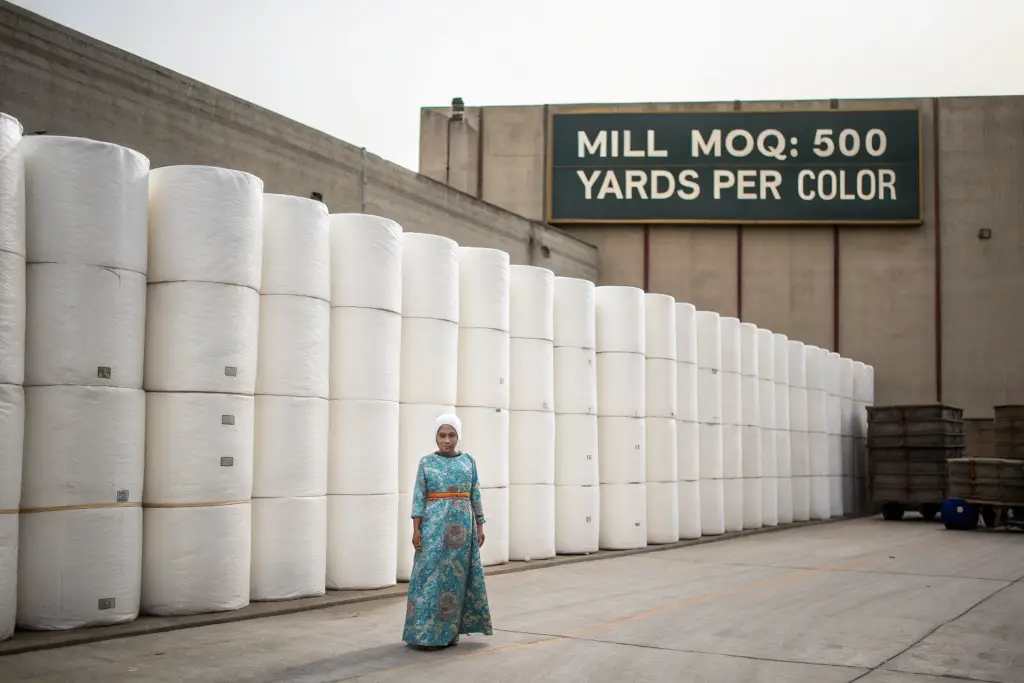
The bottleneck is not just about time; it is also about volume. Textile mills are high-capital, low-margin businesses. They are optimized for massive, efficient runs. Setting up a machine to dye a custom color involves significant setup and cleaning costs. Because of this, they impose Minimum Order Quantities (MOQs) . For a growing brand, these volume requirements can be an impossible barrier, forcing them into a choice between a massive, risky inventory purchase or being locked out of unique materials.
Fabric MOQs are a major bottleneck because they force brands to purchase far more material than they may need. A mill might require a 300-yard minimum for a custom color, which could translate to 300-600 units of a single garment, in a single color. This creates a massive barrier to entry for new brands, stifles design creativity, and forces brands to carry expensive deadstock inventory. It is a structural constraint of the conventional supply chain.
A brand founder I mentor had a beautiful, sustainable linen dress that was her best-seller. She wanted to offer it in a new, custom "Sage Green" for the spring season. Her mill told her the MOQ for the custom dye was 400 yards. She only needed 150 yards. She would have to buy over 2.5 times the material she needed, tying up thousands of dollars in deadstock. This is a classic bottleneck scenario. The CMT model, where a brand can seek out smaller, more flexible mills or use deadstock, is often the only way to break through this wall. This is the value of a flexible supply chain strategy .
What Are the Smart Strategies to Work Around High Fabric MOQs?
You do not have to accept the wall. Smart strategies include:
- Using "Stock" Fabrics: Choosing from a mill's or factory's library of in-stock, core fabrics in standard colors, which have no custom dyeing MOQs.
- Sourcing Deadstock: Buying leftover, high-quality fabric from jobbers, available in small quantities.
- Digital Printing: For custom prints, this allows for very short yardage runs with no screen setup fees.
Mastering these strategies is the key to unlocking small-batch production. This is a focus of our small-batch CMT services .
How Does the CMT Model Transfer the MOQ Risk to the Brand (and Why That's Good)?
In CMT, you manage the MOQ. This sounds like a burden, but it is actually a freedom. You are not limited by what a Full-Package factory is willing to source. You can find the mill with the lowest MOQ, use deadstock, or combine an order with another small brand. You control the solution. This is the power of owning your supply chain.
Why Is the Textile Supply Chain So Vulnerable to Unpredictable Disruptions?
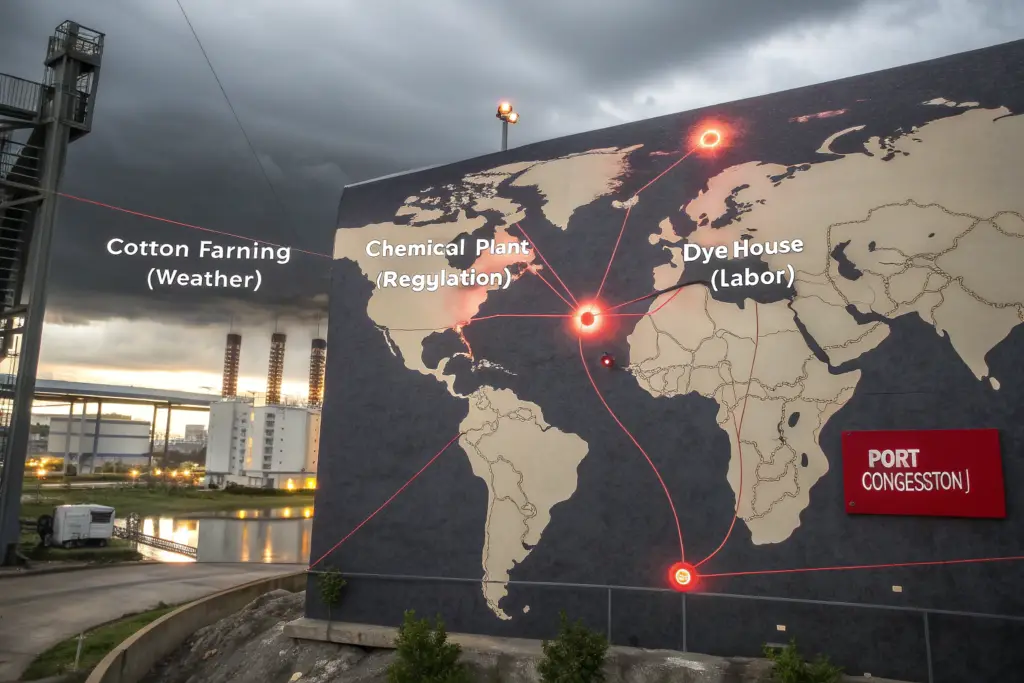
Beyond the predictable timelines and volume constraints, the raw material supply chain is uniquely vulnerable to shocks. These are forces that no factory, brand, or even mill can control. From extreme weather destroying a cotton crop to a chemical plant shutdown creating a shortage of a specific dye, the first mile of the supply chain is the most exposed to global volatility. A single disruption can create a bottleneck that echoes for months.
The textile supply chain is highly vulnerable to disruptions because it is a long, global, and often opaque chain. A drought in Texas can spike global cotton prices. An environmental regulation change in China can shut down a key dye house. A ship stuck in the Suez Canal can delay a critical shipment of yarn. Because brands often have no buffer stock of raw materials, any disruption at the source immediately halts all downstream production, creating an instant bottleneck.
A few years ago, a major chemical plant in China that produced a key component for a specific black dye had an unexpected shutdown for environmental reasons. The entire industry felt the shock. The lead time for anything dyed black—a core color for virtually every brand—doubled overnight. Factories were scrambling. Brands were panicking. It was a powerful lesson in how a single, invisible link in the supply chain can create a massive, global bottleneck. This is why a resilient strategy involves building a buffer stock of core materials and diversifying your supplier network.
How Can Pre-Booking and Buffer Stock Mitigate These Unpredictable Risks?
You cannot stop a storm, but you can build an ark. Pre-booking greige fabric and maintaining a buffer stock of your core materials is the single most effective way to insulate your production from these shocks. If you have a 3-month supply of your core fabric in stock, a temporary mill shutdown does not halt your production. This is a strategic insurance policy. This is a core part of our risk management advice for CMT partners .
How Does a Lack of Supply Chain Visibility Worsen the Bottleneck?
Often, a brand does not know where their mill's mill sources their yarn. This opacity means you have no warning of a disruption until it hits you. Building direct relationships with your material suppliers and demanding transparency creates a more resilient and visible supply chain. Knowing the origin of your raw materials is not just an ethical choice; it is a strategic one.
The raw material bottleneck is an industry-wide reality, but it does not have to be a crisis for your brand. The key is to move from a reactive posture to a proactive, strategic partnership. Our role is to provide the expertise, the systems, and the transparent communication to help you anticipate and navigate these challenges, turning a potential source of chaos into a managed, predictable part of your business.
Fumao helps you navigate the material bottleneck through a proactive, strategic partnership. We guide you on building a smart material strategy that includes pre-booking greige fabric for core programs, using stock fabrics for speed and low MOQs, and maintaining a buffer stock of essential materials. Our deep mill network provides alternative options when disruptions hit. Our transparent communication gives you early warning of potential delays. We help you build a resilient supply chain.
A brand founder told us, "Before Fumao, I was always reacting to material delays. I felt like a victim. Your team helped me build a proactive plan. Now, I have greige booked, I have buffer stock, and I know my options if a mill has a problem. I feel in control of my supply chain for the first time." That is our goal. To transform the biggest bottleneck in production from a source of chaos into a managed, strategic advantage. This is the power of a true strategic manufacturing partnership .

What Is a "Smart Material Strategy" That We Help You Build?
A smart material strategy is a multi-layered approach:
- Core Programs: Pre-book greige fabric for your proven, reorderable best-sellers.
- Speed & Test: Use a library of stock, "evergreen" fabrics for quick-turn orders and new style testing.
- Risk Management: Maintain a small buffer stock of your essential materials.
This hybrid approach provides both stability and flexibility. This is the foundation of our supply chain planning with CMT partners .
How Does Our Mill Network Provide Flexibility When One Source Fails?
We do not rely on a single source for any fabric category. We have a vetted network of mills. If your primary mill has a delay or a shutdown, we can quickly pivot to an alternative, pre-qualified source. This redundancy is a powerful risk mitigation tool that an individual brand would struggle to build on its own. This is the benefit of our sourcing expertise .
Conclusion
Raw material sourcing remains the biggest bottleneck in clothing production because it is a long, inflexible, and unpredictable chain governed by forces beyond our immediate control. The timelines are fixed by physics, the volumes are constrained by industrial economics, and the whole system is vulnerable to global shocks. It is the fundamental challenge of our industry.
At Shanghai Fumao, we do not offer a magic solution to this bottleneck. We offer a strategic partnership to navigate it. We provide the expertise, the planning tools, and the transparent communication to help you build a more resilient, flexible, and predictable material supply chain. We turn a source of chaos into a managed process.
If you are ready to move from reacting to material crises to proactively managing your supply chain, let's talk. Our Business Director, Elaine, can discuss how we help our partners build a smarter material strategy. Please email Elaine at: elaine@fumaoclothing.com.