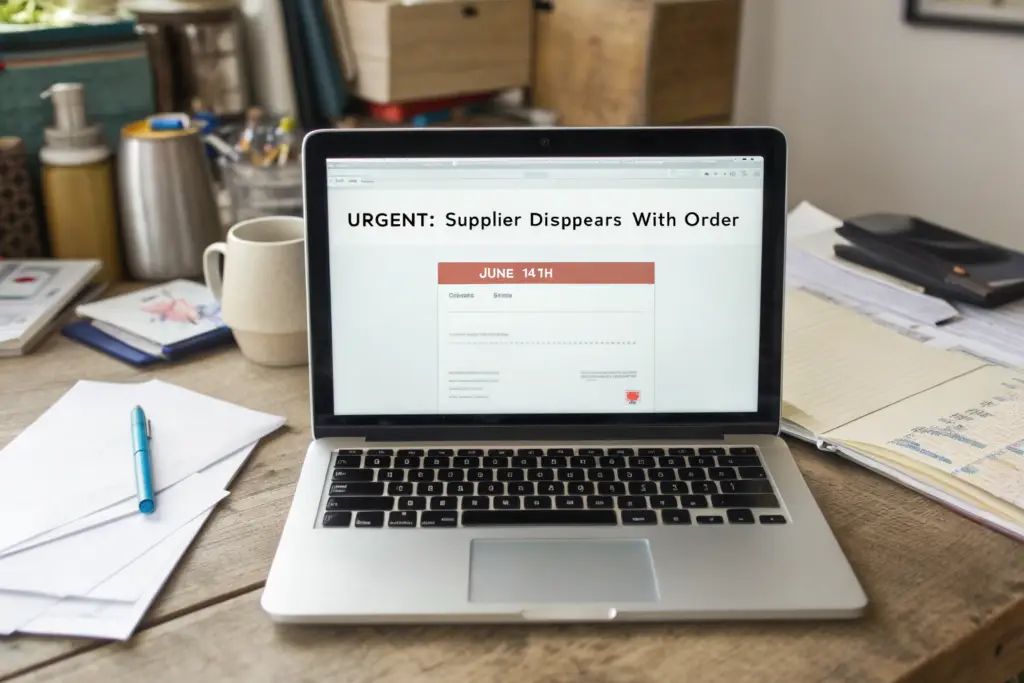
I remember the email that changed how I think about manufacturer reliability. It was June 14th, two summers ago. A brand owner from Seattle wrote to me in a panic. Her previous supplier, a factory she had found on Alibaba with impressive photos and a low minimum order, had gone completely silent. She had 1,500 women’s summer trench coats in production. The delivery date was three weeks past. The factory’s WhatsApp showed "last seen May 28th." She had paid a 30% deposit. The money was gone. The coats were either non-existent or sitting in a warehouse she could not access. She asked me if we could restart her entire order from scratch and deliver it in four weeks. We could not. The fabric sourcing alone would take three weeks. Her summer selling season was lost. That experience is not rare. It happens to brand owners every single day. The fear of choosing the wrong manufacturing partner is the single biggest barrier to launching a successful women’s summer coat line. The wrong choice costs you money, time, and the market window that only opens once a year.
A reliable manufacturer for varied types of women’s summer coats is defined by five verifiable attributes: transparent communication with a single point of contact who responds within 24 hours, in-house production capabilities that are verifiable through live video tours and third-party audit reports, a documented quality control system with measurable defect rate targets, a logistics infrastructure that offers DDP shipping and real-time cargo tracking, and a proven track record with client references and case studies that include specific order quantities and delivery timelines.
You do not find this manufacturer through a Google search and a quick email exchange. You find it through a structured vetting process that takes time, demands evidence, and eliminates candidates who look good on a screen but cannot perform in reality. At Shanghai Fumao, I have been on both sides of this equation. I have been a factory owner seeking to prove my reliability to skeptical brands. And I have consulted with brands who have been burned by unreliable suppliers. Let me walk you through the exact vetting methodology I recommend to my own clients when they ask me how to find a partner who will not disappear with their deposit.
The Pre-Vetting Phase: Identifying Candidates and Red Flags
The search for a reliable manufacturer starts with a paradox. The most visible suppliers are often the least reliable. A factory that spends heavily on Alibaba Gold Supplier status, Google Ads, and glossy trade show booths may be excellent at marketing. Marketing skill does not equal manufacturing competence. Some of the best factories I know in China have terrible websites. They do not need to advertise because their existing clients re-order year after year and refer new business by word of mouth. The challenge for a brand owner is finding these hidden, high-quality factories without an existing network. The solution is a multi-channel search strategy combined with aggressive early-stage filtering. Do not rely on a single platform. Use Alibaba International as one channel, but treat it as a lead generation tool, not a credibility verification tool. Use Google searches with specific long-tail keywords like "women’s linen trench coat manufacturer DDP shipping" or "lightweight quilted jacket factory BSCI certified." Use LinkedIn to search for factory owners and production managers directly, bypassing the sales representatives who often work on commission and will promise capabilities the factory does not have. Use industry trade shows, either in-person or virtual, to collect supplier catalogs and have face-to-face conversations that reveal communication quality instantly.
Your initial candidate list should include eight to twelve factories. You will eliminate half of them in the first week through basic responsiveness testing. Send each candidate the same specific inquiry: a description of a single summer coat style you want to produce, the target fabric weight, your order quantity range, and a request for a rough price estimate and production lead time. The quality of the response, not just the speed, will filter out the pretenders.
A factory that responds within 24 hours with specific questions about your design, fabric, and target price point is demonstrating the beginning of reliability. A factory that responds within 2 hours with a generic price quote that does not reference any of your specific requirements is demonstrating a sales-first, quality-second mentality. A factory that does not respond within 48 hours is demonstrating that you are not a priority. Cross them off the list. I also strongly recommend checking the factory’s claimed certifications against the issuing body’s public database. A factory that claims BSCI certification should have a valid audit report visible on the BSCI platform. A factory that claims GOTS certification should appear in the GOTS public database. A factory that claims Oeko-Tex certification should have a valid certificate number you can verify on the Oeko-Tex website. Certification fraud is common. In my experience, roughly 10% of factories that claim certifications on their Alibaba profiles cannot produce a valid certificate when asked. Eliminate them immediately. If they lie about certifications, they will lie about production timelines and fabric quality.

Why Is a Live Video Factory Tour Non-Negotiable Before Signing?
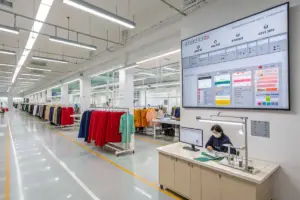
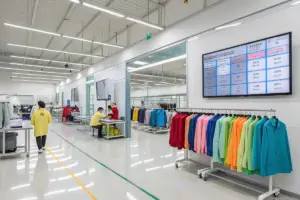
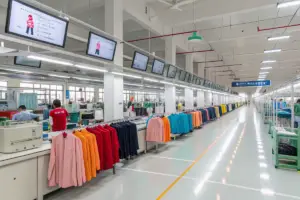
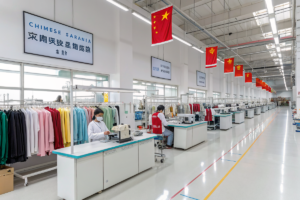
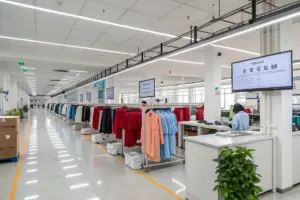
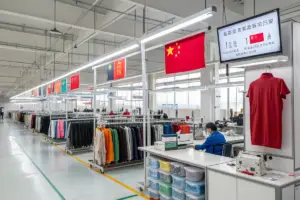
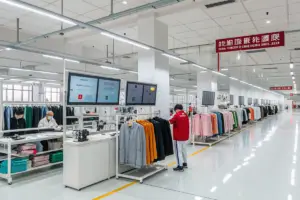
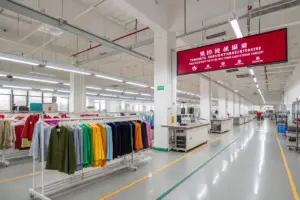
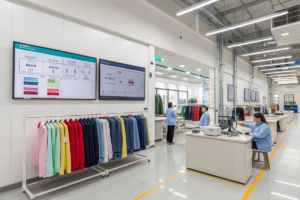
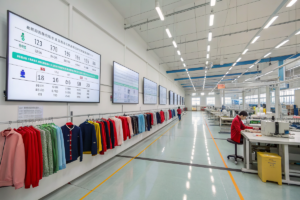
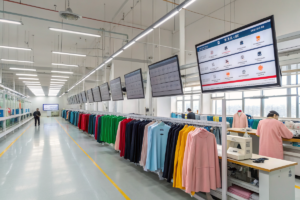
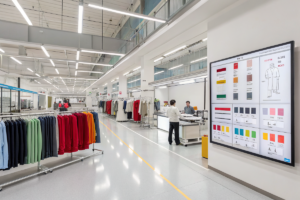
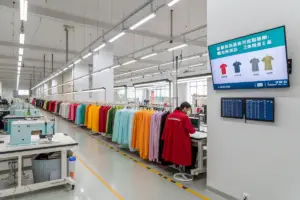
A live video tour is the single most effective tool for verifying a factory’s actual capabilities. Photographs can be stolen. A competitor’s factory floor can be photographed during a trade show visit. A showroom can be dressed up to look like a production line. A live video tour, conducted on a platform like Zoom or WeChat video call, cannot be faked in real-time. You can see the actual machines, the actual workers, the actual garments on the production line. You can ask the person holding the phone to walk to a specific area, zoom in on a specific machine serial number, or show you the current date’s production schedule on a whiteboard. I offer live video tours to every prospective client who asks. I walk them through our cutting room, our sewing lines, our embroidery department, our quality inspection stations, and our finished goods warehouse. I show them the fabric inventory shelves. I introduce them to the production manager on the floor. This transparency takes fifteen minutes and builds more trust than a hundred emails. If a factory hesitates, makes excuses about confidentiality, or claims their internet connection is too poor for video, they are hiding something. A factory that is proud of its operation wants to show it off. A factory that is hiding poor working conditions or non-existent production capacity wants to send you a brochure instead. I learned this lesson from a brand owner who visited a supplier in person after months of email communication. The factory in the photos had two floors of modern equipment. The factory in reality had one small room with ten machines and was subcontracting all the work to smaller workshops. The photos were of a different factory entirely. A live video tour would have revealed this in five minutes.
How Can You Verify a Factory’s Specialization in Summer Coats Specifically?
Generalist factories produce everything from t-shirts to jeans to bags. They may be competent at none of these categories. A factory that specializes in outerwear, and specifically in lightweight summer coats, will have the right machinery, the right supply chain relationships, and the right workforce skills for your product. You can verify summer coat specialization through three specific questions. First, ask for photos and production quantities of their last three summer coat orders. A specialist will provide detailed photos of various coat types: trench coats, dusters, quilted jackets, blazers, kimonos. A generalist will provide photos of t-shirts and hoodies with one or two coat samples they made once. Second, ask about their fabric sourcing relationships for lightweight summer fabrics. A specialist will name specific mills and specific fabric articles they order regularly: "We source our 160 GSM Tencel-linen from Xinyue Textile in Shaoxing, and we order approximately 5,000 meters per season." A generalist will give a vague answer about having many fabric suppliers. Third, ask about their production challenges with summer coat fabrics and how they solve them. A specialist will immediately mention specific issues like "puckering on lightweight cupro requires cut-away stabilizer and reduced stitch density" or "linen shrinkage must be accounted for with a pre-wash process before cutting." A generalist will not understand the question. These three questions, asked during a single phone call, will separate the true outerwear manufacturers from the factories that will use your order to learn how to make coats on your time and your budget.
Evaluating Quality Control Systems Across Multiple Coat Categories
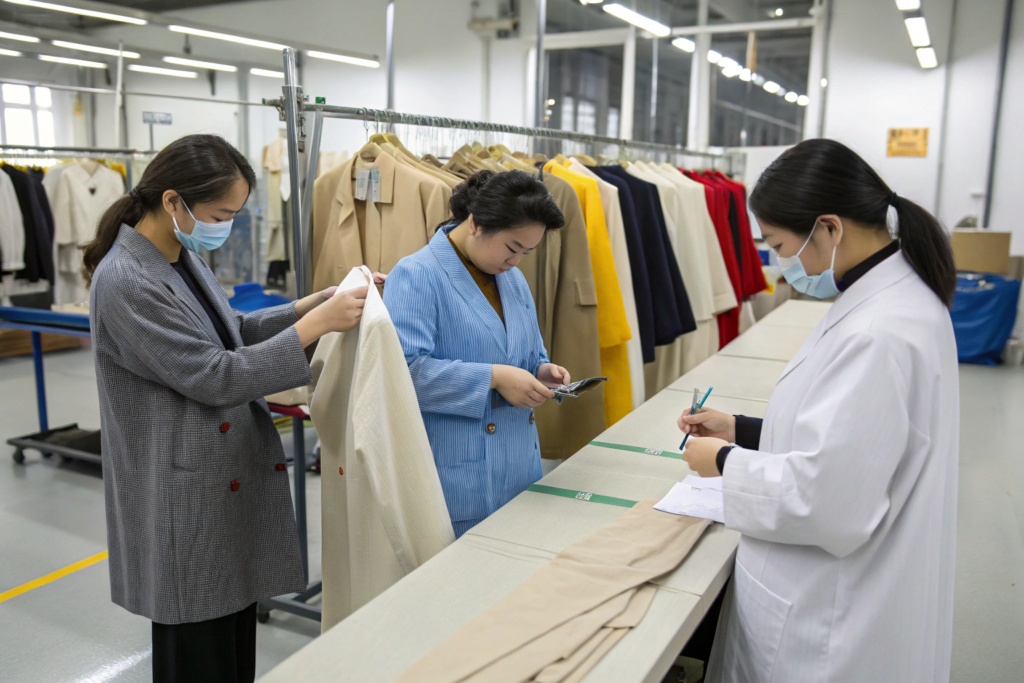
Quality control for women’s summer coats is inherently more complex than quality control for a uniform product category. A single order might include three distinct coat types: a structured linen blazer, a flowing chiffon kimono, and a quilted cotton duster. Each category requires different inspection criteria, different defect definitions, and different testing protocols. The blazer requires seam strength testing at the armholes. The kimono requires seam slippage testing on the French seams. The duster requires fill distribution inspection after a wash test. A reliable manufacturer must have a quality control system that is category-aware, not a one-size-fits-all checklist.
A multi-category summer coat quality control system must address four common defect types that vary by fabric and construction: seam puckering on lightweight wovens, fill migration on quilted garments, seam slippage on loosely woven linen or chiffon, and color fastness variation across different fabric types within the same garment. The factory must provide a category-specific inspection checklist for each coat type in your order.
I established this system at Shanghai Fumao after a painful lesson in 2021. We produced a multi-style summer coat order for a London brand. The order included 600 trench coats, 400 quilted shackets, and 300 chiffon kimonos. We applied our standard QC checklist to all three styles. The trench coats passed. The shackets passed. The kimonos failed at retail. The fabric was too slippery for the French seams we had designed. The seams pulled apart at the shoulder under normal wear. We had tested seam strength on the trench coat fabric, which was a stable cotton twill, and assumed the kimono chiffon would perform similarly. It did not. The returns cost the brand significant margin, and we absorbed the production cost of the replacement order. The next season, we implemented category-specific checklists with fabric-specific test protocols. We have had zero category-specific failure since.
What Specific Tests Should a Manufacturer Perform on Summer Coat Fabrics?
The minimum testing protocol for summer coat fabrics should include five tests, and the manufacturer should provide dated, pass/fail results for each test on your specific production fabric. The first test is color fastness to light. Summer coats are worn outdoors in direct sunlight. A fabric that fades after 20 hours of light exposure will look old and worn before the end of the season. We test to the ISO 105-B02 standard and require a minimum rating of 4 on the 8-point blue wool scale. The second test is color fastness to washing. Summer coats are washed more frequently than winter coats because they are worn against bare skin and absorb sunscreen and sweat. We test to ISO 105-C06 and require a minimum rating of 4 for color change and 3-4 for staining. The third test is seam slippage, which measures the tendency of a fabric to pull apart at the seams under stress. This is critical for loosely woven summer fabrics like linen, chiffon, and open-weave cotton. We test to ISO 13936-2 and require a maximum seam opening of 2 millimeters at a 120-newton load. The fourth test is pilling resistance. Fabrics with a brushed or peached finish, popular in summer coat linings and soft shackets, are prone to pilling. We test to ISO 12945-2 using the Martindale method and require a minimum rating of 3-4 after 2,000 rubs. The fifth test is dimensional stability, or shrinkage. A summer coat that shrinks 5% in length after washing becomes unwearable. We test to ISO 6330 and require maximum shrinkage of 2% in length and width. These five tests cost approximately $150 to $200 per fabric and take one week. A manufacturer who cannot provide these test reports, or who dismisses them as unnecessary for a summer coat, is not a reliable partner.
How Should the Inspection Process Differ for Structured vs. Unstructured Coats?
Structured coats, like tailored blazers and belted trench coats, and unstructured coats, like kimonos and open-front dusters, have fundamentally different failure modes. The inspection process must be tailored accordingly. For structured coats, the priority inspection points are the lapel roll and symmetry, the shoulder seam alignment, the sleeve setting, and the belt loop placement. A lapel that rolls unevenly on a trench coat is a visible defect that cannot be fixed. The inspector must lay the coat flat, measure the lapel width at three points on each side, and verify symmetry within 3 millimeters. The shoulder seams must sit flat without twisting. The sleeve must hang smoothly without rotation. For unstructured coats, the priority inspection points shift entirely. The seam finishing becomes the focus. A kimono with French seams must have clean, enclosed edges with no fraying visible inside the seam channel. The hem must be hand-rolled or machine-rolled with consistent width, typically 2 to 3 millimeters, along the entire circumference. An uneven hand-rolled hem varies from 1 millimeter to 5 millimeters and looks sloppy in motion. The drape must be evaluated on a dress form, not just flat on a table. An unstructured coat that looks perfect flat may hang awkwardly on a body due to off-grain cutting. We inspect unstructured coats on a size-specific dress form under both natural and artificial light to catch drape issues that a flat inspection would miss. A manufacturer who does not distinguish between these two inspection protocols is likely to miss defects that your customer will find immediately.
Logistics, Payment, and the Relationship Infrastructure
The quality of the product is meaningless if the logistics and payment infrastructure fails. A perfectly sewn summer coat that arrives in your warehouse in October, two months after the selling season ended, is not a successful product. It is a liability. The relationship infrastructure between brand and manufacturer is the scaffolding that supports on-time delivery, accurate documentation, and financial security. I divide this infrastructure into three pillars: payment terms that protect both parties, logistics arrangements that provide cost certainty, and communication systems that prevent misunderstandings from becoming crises.
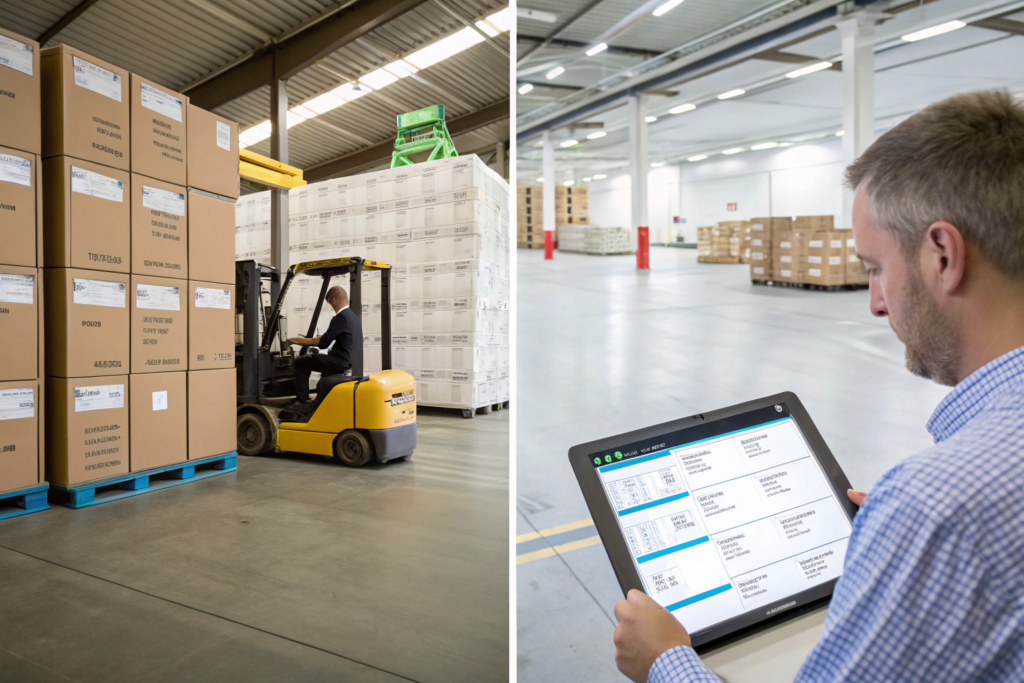
The logistics infrastructure for reliable summer coat delivery must include three components: DDP shipping terms that give you a fixed, all-in landed cost before production begins, real-time shipment tracking through a shared digital platform, and a documented customs clearance process with pre-determined HS codes for each coat category to prevent border delays. A manufacturer who cannot provide all three is transferring logistics risk onto you.
Payment terms are a sensitive negotiation point. A standard arrangement is a 30% deposit to begin production and a 70% balance payment before shipment. This structure protects the manufacturer from order cancellation risk and protects the brand from receiving a container of defective goods with no recourse. I strongly recommend that first-time buyers use a payment method with buyer protection, such as Alibaba Trade Assurance or a letter of credit, even if the manufacturer is established. A manufacturer who refuses any form of trade assurance and demands 100% upfront payment via wire transfer is signaling that they do not need to earn your trust. They may be perfectly legitimate. They may also disappear with your money. The risk is not worth taking on a first order. After two or three successful orders, when the relationship is proven, direct wire transfer on net-30 terms is a reasonable evolution. At Shanghai Fumao, we accept Trade Assurance for first orders, even though the Alibaba commission costs us 3% to 5%. We view it as a marketing expense that allows a new client to feel secure. The long-term value of the relationship far exceeds the short-term transaction cost.
What DDP Logistics Arrangement Should a Reliable Manufacturer Offer?
DDP, or Delivery Duty Paid, is the gold standard for brand-friendly shipping. Under DDP terms, the manufacturer assumes full responsibility for freight costs, insurance, import duties, and customs clearance at the destination port. You pay one agreed-upon price per unit, and that price includes everything from the factory floor to your warehouse door. There are no surprise bills from customs brokers. There are no storage fees accumulating at the port while you figure out how to clear a shipment. There is no phone call from a freight forwarder demanding an additional $1,800 for an exam fee you did not know existed. I transitioned Shanghai Fumao to a DDP-first model after watching too many brand owners lose margin to unpredictable logistics costs. A reliable DDP arrangement should include a written breakdown of the duty rate being applied to each coat category. Women’s woven cotton coats and women’s knitted synthetic coats may have different duty rates under the Harmonized Tariff Schedule. A manufacturer who cannot explain why they are applying a specific duty rate to your product is either guessing or hiding a markup in the shipping line item. The DDP quotation should also include a stated transit time with a realistic range, such as 25 to 30 days for ocean freight to the US West Coast, and a clear policy on who absorbs the cost of port delays or customs exams. In our DDP contracts, we absorb the cost of standard customs exams. If a random exam occurs, we pay the fee. The brand is not penalized for a process outside their control. This level of logistics transparency is a hallmark of a manufacturer who views the relationship as a long-term partnership, not a single transaction.
How Should You Structure Communication for a Multi-Style Summer Coat Order?
Multi-style orders amplify communication complexity. A single point of contact is essential. If you are emailing one person about fabrics, another about embroidery, and a third about shipping, information will fracture and errors will compound. You need one dedicated account manager who owns the entire order from deposit to delivery. This person should provide a weekly production status update, even if the update is "everything is on schedule, no issues." The silence between "we received your deposit" and "your goods are ready to ship" is where anxiety breeds and problems fester. I assign a specific account manager to each brand partner at Shanghai Fumao. That manager sends a standardized Friday update that includes the current status of each style, the percentage completion, any issues encountered and how they were resolved, and a photo of the production line showing the actual garments. This update takes fifteen minutes to prepare. It saves hours of anxious email exchanges later. For a multi-style order, the communication system should also include a shared digital folder containing the approved tech pack, the approved sew-out samples, the approved fabric swatches, and the signed-off pre-production sample for each style. Every approval should be documented with a date, a name, and a photograph. Verbal approvals are worthless when a dispute arises. If a brand owner says "I told you to change the button color" and the factory says "we never received that instruction," the documented approval trail determines who absorbs the cost of the error. A reliable manufacturer insists on written approvals. A manufacturer who accepts verbal change orders is not protecting you or themselves.
Building a Long-Term Partnership Beyond the First Order
The first successful order is not the finish line. It is the starting line. The true test of a reliable manufacturer is how they perform on the second order, the third order, and the unexpected mid-season re-order when your product goes viral and you need 500 units in three weeks. A short-term supplier views each order as an isolated transaction to be optimized for maximum profit. A long-term partner views each order as an investment in a growing relationship that will yield returns for years. The difference manifests in how the manufacturer handles problems, how they share cost-saving innovations, and how they prioritize your production when capacity is tight.
A long-term manufacturing partner demonstrates their commitment through four behaviors: they proactively suggest design or material modifications that reduce cost without reducing quality, they reserve production capacity for your anticipated re-orders based on your sales forecasts, they share fabric and trim sourcing opportunities such as deadstock or mill overruns that can lower your cost, and they invite you to participate in pre-season fabric development so your product has exclusive materials unavailable to your competitors.
I began offering pre-season fabric development to our long-term partners three years ago. In October, before the summer coat production cycle begins, I send a digital lookbook of new fabric developments from our partner mills. These are fabrics that are not yet in the market. A brand that commits to a new fabric in October gets exclusivity for that season. Their summer coat is made from a material that no competitor can access until the following year. This exclusivity creates a genuine competitive advantage that justifies a higher retail price and builds brand differentiation. A transactional factory does not offer this. They sell you the same fabric they sell to every other brand. A partnership factory builds your competitive moat alongside you.

How Can a Manufacturer Help You Plan Multi-Season Summer Coat Programs?
Seasonal planning is the highest-value service a manufacturer can offer beyond production itself. A summer coat program that sells well in June needs a replenishment strategy for July and an exit strategy for August. A manufacturer with category experience can advise on the realistic sell-through curve for each coat type. Quilted shackets peak in September and can be marked down in November without destroying brand equity. Linen blazers peak in May and June and should be cleared by late July to make room for pre-fall deliveries. This knowledge, accumulated over dozens of brand partnerships, is worth more than any per-unit cost saving. I provide a seasonal planning calendar to our partners that maps the ideal production start dates, shipping windows, and in-store dates for each coat category. The calendar is built backward from the consumer’s buying behavior. If the data shows that trench coat searches spike on Google in the second week of April, we plan production to deliver goods by the last week of March. This backward-planning methodology prevents the late deliveries that kill full-price sell-through. A manufacturer who only cares about production efficiency will schedule your order when it is convenient for their factory, not when it is optimal for your retail calendar. A reliable partner aligns their production schedule with your selling season.
What Should a Continuous Improvement Partnership Look Like?
Continuous improvement means the product gets better with every production run, not worse. The opposite often happens in manufacturing relationships. The first order receives careful attention. The fifth order is treated as routine and quality slips. A true partner maintains or improves quality across every run and documents the improvements. After each production order, we conduct a post-mortem review with the brand owner. We ask three questions. What went well that we should repeat? What went wrong that we should fix? What could we do differently next time to reduce cost or improve the product? The answers are documented and fed back into the tech pack for the next order. A specific example: a brand partner selling a belted linen trench coat reported that 3% of customers complained about the belt loops tearing after a few wears. Our post-mortem investigation revealed that the belt loop stitching was adequate for the fabric weight but insufficient for the tension created when customers cinched the belt tightly. We added a reinforcement bartack at each belt loop attachment point, increasing the sewing time by 8 seconds per coat and the cost by $0.06. The return rate for belt loop failure dropped to zero. This improvement was documented, applied to all future trench coat orders for all brands, and credited to the partner who raised the issue. That is a continuous improvement partnership. If your manufacturer does not conduct post-order reviews, or if they respond to quality issues with defensiveness rather than analysis, they are not a partner. They are a vendor. Vendors are replaceable. Partners are invaluable. Find the partner.
Conclusion
Finding a reliable manufacturer for varied types of women’s summer coats is a structured investigation, not a lucky discovery. It requires a pre-vetting phase that uses live video tours and certification verification to eliminate imposters. It requires an evaluation of category-specific quality control systems, because a factory that excels at trench coats may fail at chiffon kimonos. It requires a logistics and payment infrastructure that protects your margins and your timeline. And it requires a commitment to building a long-term partnership that extends beyond the first purchase order into seasonal planning and continuous product improvement.
The brands that succeed in the women’s summer coat market are not the ones with the most creative designs. They are the ones with the most reliable supply chains. A beautiful design that arrives late is a clearance item. A simple design that arrives on time is a full-margin best-seller. The manufacturer you choose determines which outcome you get. Choose based on documented evidence, not sales promises. Choose based on verified capabilities, not website photos. Choose based on structured communication, not friendly WhatsApp messages.
At Shanghai Fumao, we have built our factory and our client relationships around the principles I have described in this article. We offer live video tours before any commitment. We maintain category-specific QC checklists for every coat type we produce. We provide DDP logistics with transparent cost breakdowns. We assign a single account manager to each brand partner and send weekly status updates. We conduct post-order reviews and invest the findings into the next production run. We are not the cheapest manufacturer you will find. We are the manufacturer that delivers what we promise, when we promise it, at the quality level you approved.
If you are searching for a reliable partner for your women’s summer coat collection, I invite you to test our reliability yourself. Request a live video tour. Ask the hard questions about our defect rates, our certifications, and our delivery performance. Speak with our existing brand partners as references. Then make an informed decision based on evidence, not hope.
To begin that vetting process, contact our Business Director, Elaine. She can schedule your video tour, provide our quality control documentation, and prepare a detailed quotation for your specific coat designs. Email her directly at: elaine@fumaoclothing.com.