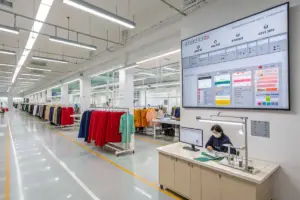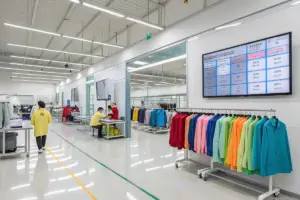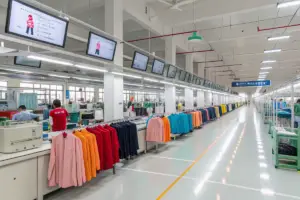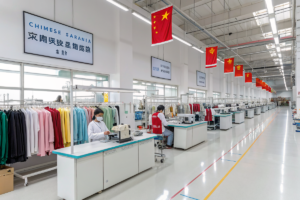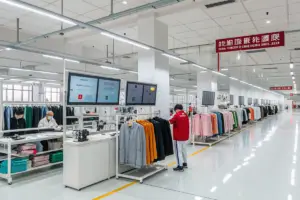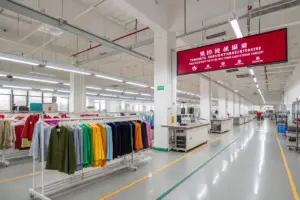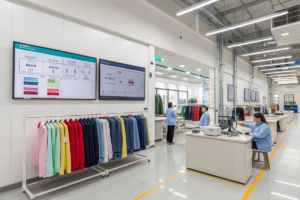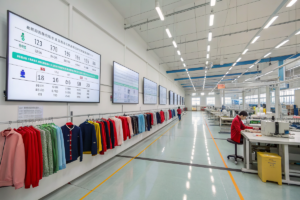
I walk through our Shanghai showroom every Monday morning and look at the order board. For the past three years, the European orders for belted trench coats have arrived earlier and in larger volumes than anywhere else. American brands order trenches for September. European distributors order them for April. That six-month gap used to confuse me. I thought the trench coat was an autumn garment, a back-to-school staple, a rainy-day necessity. I was wrong. The European market has redefined the belted trench as a summer layering piece, and the styling innovations coming out of Paris, Milan, and Copenhagen are driving global demand. The fear for a US brand owner is obvious. If you don’t understand how the European distribution network is styling this garment, you will miss the styling cues that American consumers will adopt twelve months later. You will be late to the party with last year’s silhouette.
European distributors are styling belted summer trench coats as lightweight, unlined "third pieces" thrown over shorts, slip dresses, and even swimwear. They are treating the trench not as outerwear, but as a structural accessory that adds shape to loose, minimalist summer outfits. The belt is cinched tight to create an hourglass contrast against oversized inner layers, and the fabrics have shifted entirely to cotton-linen blends, lightweight technical twills, and recycled nylons that breathe in 30-degree Mediterranean heat.
The European interpretation is about tension. It pairs the masculine structure of the trench with the feminine softness of summer silks. It mixes the formal heritage of the coat with the informality of a beach setting. At Shanghai Fumao, we have been manufacturing these European-styled trenches for distributors in Germany, the Netherlands, and Spain since 2022. Let me break down exactly what they are ordering, how they are styling it for their lookbooks, and what you need to know to capture this trend before it saturates the American market.
The European Silhouette Shift: Oversized Body, Cinched Waist
The first thing I noticed when European distributor tech packs started arriving was the measurements. The shoulder width was two centimeters wider than standard American specs. The body circumference was increased by 15 centimeters. But the belt length remained the same. This was not a mistake. This was a deliberate design choice that changes the entire psychology of the garment. A traditional trench coat fits close to the body. It is a tailored piece. The European summer trench is intentionally oversized in the body and sleeve, creating a slouchy, borrowed-from-the-boys volume that contrasts sharply with the cinched waist when the belt is tied. This silhouette communicates a message: I am put-together but I am not trying too hard. I am wearing a coat but I am not hiding. The volume also serves a functional purpose in summer. The extra space creates an air gap between the coat and the body, allowing heat to escape and a cooling breeze to circulate. A fitted trench in July feels like an oven. An oversized trench in July feels like a wearable tent of shade.
The defining measurement for a European-styled summer trench is the "belt cinch ratio." The body circumference at the waist, when laid flat, should be at least 2.2 times the wearer’s actual waist measurement. This creates the signature gathered, bloused effect at the back when the belt is pulled tight, which European stylists call the "cocoon drape."
We developed this pattern for a distributor in Amsterdam who supplies to Dutch concept stores. She sent us a reference photo of a vintage 1980s trench coat she had found at a flea market in Paris. The shoulder seams dropped to mid-bicep. The armhole was cut low and generous. The back vent extended higher than usual to allow the fabric to pool and drape when belted. We reverse-engineered the pattern, digitized it, and created a modernized block that maintained the slouchy proportions but worked with lightweight summer fabrics that the original heavy cotton gabardine would never support. The resulting sample was photographed on a model standing next to a canal, wearing nothing underneath but a white linen mini dress and sandals. The distributor sold 800 units to her boutique network before we had even shipped the first bulk order. The styling sold the coat, not the technical specs.

Why Is the Dropped Shoulder Critical for Summer Trench Appeal?
The dropped shoulder is the single most important pattern detail that separates a 2025 summer trench from a 2015 career trench. A set-in shoulder with a high, tight armhole signals formality. It says "board meeting" and "court appearance." A dropped shoulder signals relaxation. It says "weekend market" and "rooftop aperitivo." The European distributors understood this shift five years before the American mass market caught on. We now cut 80% of our summer trench orders with a dropped shoulder seam that sits 4 to 6 centimeters below the natural shoulder bone. The sleeve cap is cut flatter with less ease, so the top of the sleeve doesn’t puff up and create a structured, military look. Instead, it falls smoothly into a soft, casual slope. This also makes the coat more comfortable for layering over a chunky knit or a puff-sleeve dress, both of which are common in European summer styling when evenings turn cool. One of our German distributors specifically requested that the shoulder seam be finished with a felled seam on the outside, visible as a design detail, rather than hidden on the inside. This raw, almost utilitarian finishing touch added a workwear authenticity that her concept stores loved. It also saved two minutes of sewing time per coat, reducing the CMT cost slightly. A design detail that looks intentional and costs less to produce is a rare gift in this industry. We now offer this as a standard option.
How Are Stylists Playing with Belt Placement to Change Proportions?
The belt is not just a closure. It is a proportion tool. European stylists for distributor lookbooks are using the belt in ways that traditional trench marketing never explored. They are knotting the belt at the back, not the front, to create a clean, uninterrupted silhouette from the front view while shaping the back volume. They are threading the belt through the side loops only, leaving the front loops empty, and tying it at the back like a bow. This pulls the coat gently backward and creates an elegant "sweep" effect where the front panels curve away from the body. They are also replacing the standard self-fabric belt with contrasting grosgrain ribbons, leather cords, or even silk scarves threaded through the loops. We worked with a Spanish distributor who ordered her summer trench coats without any belt loops at all. Instead, we stitched wide, hidden channels inside the side seams and provided a separate, extra-long cotton tape belt that could be threaded through these channels and wrapped twice around the waist. This created a completely smooth back with no visible cinching mechanism. The belt was a secret. The coat appeared to float on the body. This level of styling innovation is what drives the European market’s premium pricing. They are selling a silhouette illusion, not just a coat.
Fabric Disruption: The Death of the Heavy Cotton Trench
I buried the classic 320-gram cotton gabardine trench coat last summer. Not literally, but I might as well have. A long-term client from London called me in June. She had been selling the same gabardine trench for eight seasons, and suddenly, her re-orders stopped. The feedback from her boutique accounts was unanimous: the coat was too heavy for the heat, too stiff to pack in a carry-on, and too formal for the post-pandemic casual lifestyle. She needed a replacement fabric, and she needed it fast. We pulled out our archive of European market samples and found a 160-gram cotton-Tencel-lyocell blend twill that we had developed for a Milanese distributor the previous year. It weighed half as much as the gabardine. It had a subtle, peachy hand feel from a light enzyme wash. It breathed like linen but draped like silk. She ordered 600 meters of it immediately. The resulting trench sold through in six weeks. The fabric was the innovation, not the pattern. The pattern was the same one she had always used. The fabric transformed a dying product into a best-seller.
The European market has abandoned cotton gabardine for summer trenches entirely. The winning fabrics for 2025 and 2026 are in the 140 to 200 GSM weight range, with a soft, sand-washed hand and a visual texture that photographs richly. The three dominant fibers are Tencel, linen, and recycled nylon, often blended together in various ratios to optimize drape, breathability, and packability.
This shift has massive implications for production. Lightweight fabrics are more difficult to sew. They shift under the needle. They fray at the edges. The seam allowances must be increased and finished with French seams or bound edges because overlocking a 150 GSM fabric creates a bulky, wavy ridge that ruins the clean lines of the trench. This requires a higher-skill workforce and slower stitching speeds. At Shanghai Fumao, we have a dedicated "lightweight line" with machines calibrated for delicate fabrics and seamstresses trained specifically in French seam construction. The production cost for a lightweight summer trench is about 18% higher than a standard gabardine trench, even though the fabric is cheaper, because the labor is more intensive. European distributors understand and accept this cost premium. They pass it on to the consumer with a higher retail price justified by the "summer weight" descriptor on the hang tag.
Is Recycled Nylon the Future of the Summer Trench Coat?
Recycled nylon is closing in fast. It started in the activewear sector, moved into the outerwear sector, and has now been adopted by high-fashion European distributors for summer trenches. The material is a revelation. It weighs as little as 90 GSM. It can be woven into a dense, tightly structured twill that holds shape like a much heavier fabric. It takes a water-repellent finish beautifully. It packs down to nothing. And it carries the sustainability story that European consumers demand. A Dutch distributor we work with launched a "packable trench" made from 100% recycled nylon sourced from discarded fishing nets. The coat had a matt, almost papery texture that looked incredibly expensive. It was storm-flap-free, with a minimalist hidden placket and a slim, self-fabric belt. It retailed for €220. The sustainability angle was not just marketing. The fabric supplier provided a blockchain certificate tracing the nylon from ocean waste collection in Chile to the polymer extrusion in Italy. This level of traceability is now a baseline requirement for many European boutique buyers, not a nice-to-have. The challenge with recycled nylon is the minimum order quantity from reputable mills. You cannot order 100 meters. You are looking at 1,000 meters minimum, often more. This forces a commitment that small brands struggle with. As a factory, we aggregate demand from multiple brands and place combined mill orders to meet the minimums. This allows smaller brands to access the same premium sustainable fabrics as the big distributors. It is a logistical headache on our end, but it’s worth it to democratize the fabric supply.
How Does Linen-Tencel Blend Perform for Structured Coats?
The linen-Tencel blend is my personal favorite for summer 2025 and 2026. Linen alone is too rigid and wrinkly for a structured trench coat. It creases at the elbows into sharp accordion folds that look messy, not intentional. Tencel alone is too fluid and drapey. It lacks the body to hold a lapel shape or a belt cinch. But blended at a 55% linen, 45% Tencel ratio, the two fibers compensate for each other’s weaknesses. The Tencel softens the linen’s rigidity. The linen gives structure to the Tencel’s drape. The result is a fabric that holds the architectural lines of a trench coat—the sharp lapel point, the structured epaulettes, the crisp belt—while moving and breathing like a summer dress. We also add a special finishing process: a "micro-sanding" treatment where the fabric passes over rotating brushes covered in fine-grit sandpaper. This abrades the surface fibers microscopically, creating an incredibly soft, almost suede-like hand without weakening the weave. It also reduces the linen’s tendency to shed crease marks. The coat looks freshly steamed even after a day of wear. A Parisian distributor I work with described this fabric as "summer cashmere." She wasn’t wrong. The consumer picks it up and the hand feel alone closes the sale. That is the power of a fabric that matches the sensory expectation of the season.
Styling Rules from Milan, Paris, and Copenhagen
European distributors do not just sell a coat. They sell a complete outfit. Their lookbooks are aspirational lifestyle documents that show a woman exactly how to wear a summer trench coat in her actual life, not just on a runway. Milan styles the belted summer trench as a sensual, almost glamorous layer over evening wear. Paris styles it as a casual-chic essential that looks thrown on but secretly carefully considered. Copenhagen styles it as a practical, bike-friendly utility piece that still looks editorial. Each city has its own rules, and understanding these regional differences is critical if you are a brand owner planning to market your trench coat to European buyers or to American consumers who follow European style influencers. Let me share what I have learned from manufacturing for distributors in each of these fashion capitals.
The three rules that unite all European summer trench styling are: first, the coat is never fully closed. It is either belted open or cinched but with the top two buttons undone to create a deep V-neck. Second, the sleeves are always pushed up or rolled to expose the forearm and wrist. Third, the footwear dictates the formality level. Sneakers make it casual. Heeled sandals make it evening. Flat leather slides make it resort.
These rules seem simple, but they have profound implications for how you design your coat. If the coat is never fully closed, the interior finish becomes visible. You cannot hide cheap lining or messy seam finishes inside. The coat must be as beautiful on the inside as it is on the outside. We respond to this by offering a "fully bound interior" option where every internal seam is finished with a contrast cotton binding in a stripe or a solid color that complements the shell fabric. This detail photographs perfectly in flat-lay Instagram shots where the coat is casually tossed open to reveal the inside.

What Is the Milanese Approach to Belted Summer Trench Styling?
Milan treats the summer trench as evening wear. This is the opposite of how most American brands position the garment. In Milan, a woman wears a silk-blend, liquid-sheen trench coat over a slip dress, with a statement gold belt cinching the waist over the coat itself. The coat’s self-belt is discarded entirely, tossed over the shoulder or left hanging loose, while a separate, more decorative belt does the work of defining the silhouette. The trench becomes a backdrop for accessories. The color palette is darker than you would expect for summer. Espresso brown. Olive. Midnight navy. The fabrics have a subtle luster, achieved through a high-twist yarn that catches the golden hour light on a rooftop terrace. We developed a "liquid twill" fabric for an Italian distributor last year. It was a 100% Tencel twill woven with a very high yarn twist, giving it a subtle, almost metallic sheen. The drape was incredible. It poured over the body like water. It was completely inappropriate for rain—it would water-spot instantly—but that was irrelevant. The Milanese customer was not wearing it for weather protection. She was wearing it as a fashion statement, a layer of elegance to wrap around herself as the sun went down over the Duomo. This styling creates a challenge for care labeling. You cannot label a silk-blend trench "machine washable." It must be dry clean only. The European customer accepts this trade-off. The American mass-market customer often does not. Know your audience.
How Is Copenhagen Redefining the "Bike-Friendly" Trench?
Copenhagen styling is driven by practical reality. The Danish woman rides her bicycle everywhere, in all weather, at all times of day. Her summer trench must accommodate this. It needs a longer back hem to cover her lower back when she leans forward over the handlebars. It needs a wind flap that actually buttons closed, because the self-generated wind chill on a bike at 20 kilometers per hour makes a 22-degree day feel like 15 degrees. It needs reflective details that are invisible in daylight but catch headlights at night. And it absolutely must be water-repellent, because Copenhagen summer weather changes five times a day. We worked with a Copenhagen-based distributor to engineer a "commuter trench" that addressed all these requirements without looking like a technical cycling jacket. We added a hidden reflective stripe inside the back vent that only becomes visible when the vent flaps open in the wind. We extended the back hem by 4 centimeters with a subtle fishtail shape. We used a matte, silent nylon fabric with a DWR coating so it didn’t make the swishing sound that most waterproof jackets make. The belt was designed to be removable, because a dangling belt is a safety hazard on a bike chain. The coat sold out at Illum, the Copenhagen department store, in ten days. The Danish consumer is willing to pay a premium—this coat retailed at €280—for a garment that genuinely solves a daily problem. The styling does not look technical. It looks minimal, clean, and effortlessly cool. But the engineering underneath is intensely functional. That is the Scandinavian design philosophy, and it sells.
The Distributor’s Playbook: How European Buyers Select Summer Trenches
European distributors buy differently than American brand owners. An American buyer often comes to me with a fully developed tech pack, a target landed cost, and a clear idea of exactly what they want. The European distributor comes with a moodboard, a fabric swatch from a competitor’s product they deconstructed, and a list of questions about sustainability certifications and shipping documentation. They are more exploratory in the buying process and more demanding in the compliance process. I had to learn this the hard way. Six years ago, I lost a potential partnership with a major German distributor because I could not provide a full Oeko-Tex Class I certification for every trim component, including the care label thread. The coat was perfect. The price was competitive. The thread failed the audit. That single experience reshaped our entire supply chain documentation system.
European distributors evaluate a summer trench coat on five criteria, in this order: fabric certification and sustainability credentials, seam construction quality and interior finishing, minimum order quantity flexibility and re-order speed, compliance with EU REACH chemical regulations, and finally, landed cost per unit. Price is not the first filter. It is the last gate.
This is a complete inversion of the typical American buying hierarchy, where price often sits at the top. It means you must front-load your quality story and your compliance documentation. Before I even discuss pricing with a new European buyer, I present our certification portfolio: GOTS for organic fibers, Oeko-Tex Standard 100 Class I, BSCI social compliance audit, and our carbon footprint measurement per garment. This builds a foundation of trust that makes the price negotiation smoother later. European distributors are not trying to beat you down on price. They are trying to verify that your product will not create a legal liability or a PR crisis for them. Once that verification is complete, they are loyal partners who place consistent, growing orders season after season.
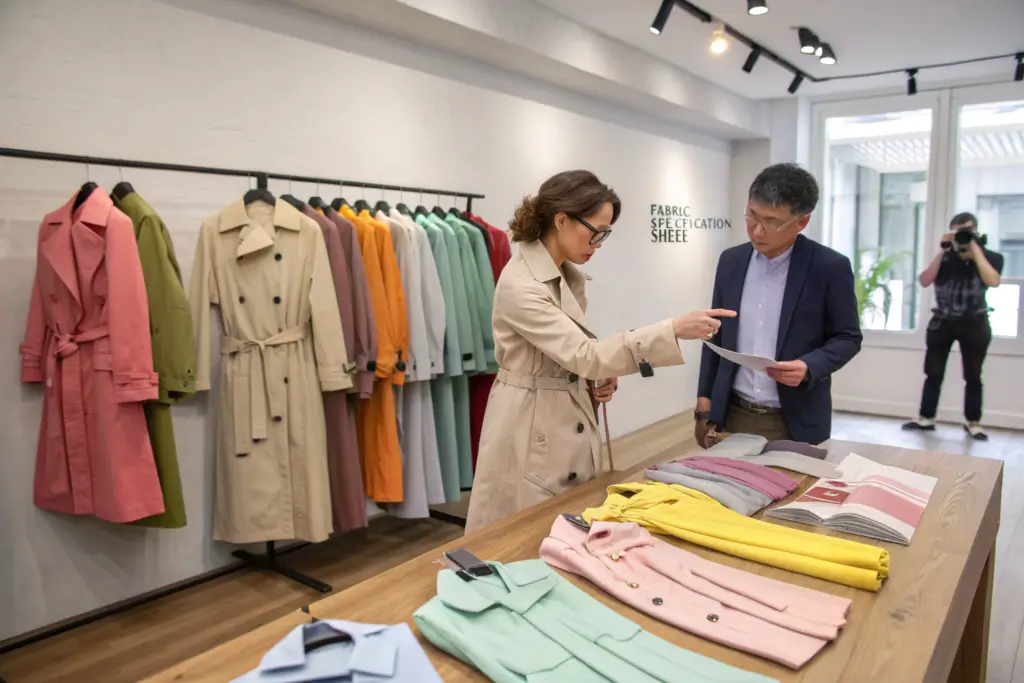
What Certifications Actually Close the Deal with European Buyers?
The list is specific and non-negotiable for most distributors above a certain size. Oeko-Tex Standard 100 is the absolute minimum. It certifies that every component of the garment is free from harmful substances. But many buyers now demand Class I, which is the strictest level, designed for baby products, rather than Class II, which is the standard adult apparel level. This requires us to source zippers, buttons, and threads from Class I certified suppliers, which narrows our vendor pool and increases trim costs by about 15%. The Global Organic Textile Standard (GOTS) is required if the shell fabric contains organic cotton. It certifies the entire supply chain, from farm to finished garment. GOTS certification is expensive and requires annual audits. We maintain it because it opens doors. The Business Social Compliance Initiative (BSCI) audit is a social compliance standard that European buyers use to verify that factory working conditions meet their ethical requirements. We have a BSCI rating of "B," which is a strong score, and we display the audit summary on a dedicated page on our website. A newer certification that is gaining traction rapidly is the Cradle to Cradle Certified product standard, which evaluates products across five sustainability categories including material health, material reutilization, and renewable energy use. We are currently working toward this certification for our core summer trench fabrics. European distributors view these certifications not as a bonus feature but as a license to do business. Without them, your coat does not even make it to the buyer’s sample review table.
How Do Minimum Order Quantities Differ for European vs. US Buyers?
European distributors order differently. A US brand might order 1,000 units of a single style in three colorways. A European distributor orders 200 units across five styles, each in four colorways. They want variety, not depth. This creates a production complexity that many factories refuse to handle. We handle it because we have built our production lines for flexibility, not just volume. The European model also places a heavy emphasis on re-order capability. The initial order is a test. If the coat sells well in the first two weeks on the boutique floor, the distributor wants a 200-unit re-order, in the same season, delivered within four weeks. This is impossible if you have already moved your production line to the next client’s order. We solve this by holding "greige reserve" fabric for our European partners. We dye and finish an initial batch for the first order and keep the undyed fabric in our warehouse. If a re-order comes, we can dye, cut, and sew the replenishment in 14 days instead of the standard 45. This requires capital investment in raw material inventory on our part, but it builds partnerships that last for years. European distributors have long memories. If you save their season with a fast re-order, they will come back to you for every subsequent season. If you fail them once, they will find a factory in Portugal or Turkey that can meet their flexibility requirements, and you will never hear from them again.
Conclusion
The European summer trench coat is a different species from its American cousin. It is lighter, softer, more oversized, and more deliberately styled as a fashion layer rather than a weather barrier. The European distributor has reimagined the trench as a summer essential that earns its place in a suitcase next to swimsuits and sandals, not a practical garment that waits in the closet for a rainy day. This redefinition has unlocked a year-round market for a product that used to be strictly an autumn staple.
The key takeaways are clear. First, drop the fabric weight below 200 GSM and embrace Tencel, linen blends, and recycled nylons. The era of the heavy gabardine trench is over for the summer season. Second, oversize the body and drop the shoulder to create the slouchy, cinched silhouette that European stylists have made iconic. The belt becomes a sculptural tool, not just a closure. Third, invest in interior finishing and visible design details. The coat is worn open. The inside is on display. Fourth, build your certification portfolio. Oeko-Tex Class I and BSCI are the entry tickets to the European distribution network. Without them, your product is invisible.
At Shanghai Fumao, we have spent the last five years studying and serving the European market’s demands for summer trench coats. We have the lightweight fabric mills on speed dial. We have the French seam specialists on our production floor. We have the greige fabric reserve system ready to support your re-orders when a style takes off mid-season. We understand the Amsterdam buyer’s obsession with sustainability and the Milan buyer’s demand for liquid drape. If you are ready to launch a summer trench coat program that meets European styling standards and appeals to the global consumer who follows European fashion cues, let’s build it together.
Contact our Business Director, Elaine, to discuss fabric options, minimum order quantities, and the production timeline for your summer 2026 trench coat collection. She can walk you through our certification documents and arrange a video tour of our lightweight production line. Reach her at: elaine@fumaoclothing.com.