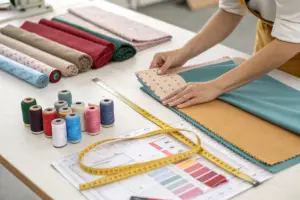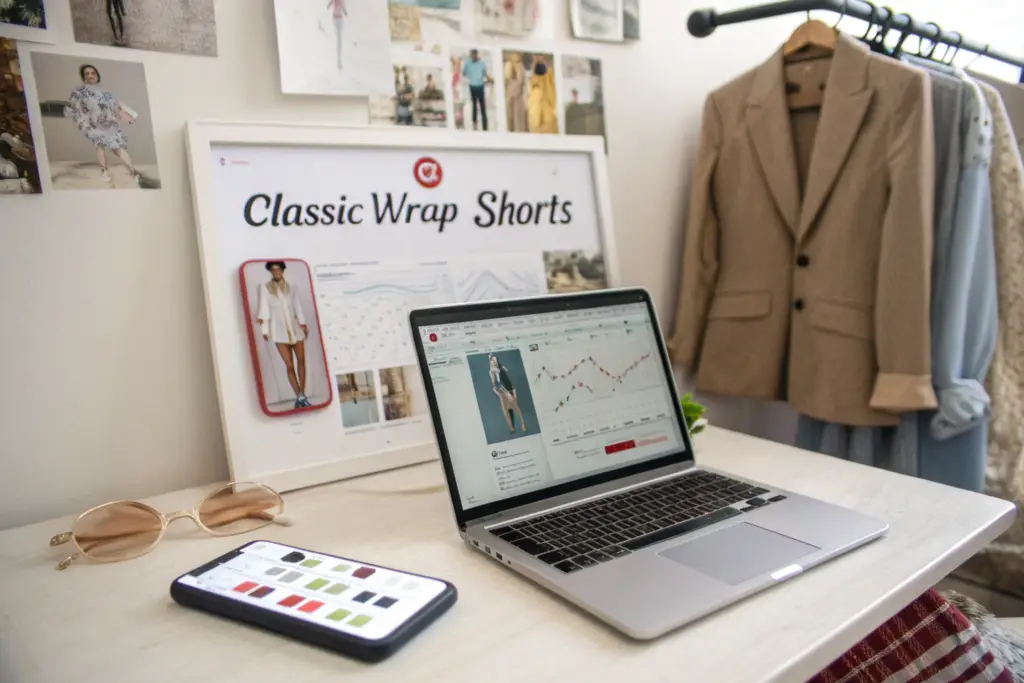
About two months ago, my sourcing team flagged something unusual. Three different brand clients, a resort wear label in Miami, a contemporary womenswear brand in Los Angeles, and a boutique chain in London, all submitted inquiries for the same product within the same week. They wanted classic wrap shorts. Not a specific fabric, not a specific color, but the silhouette itself. A wrap front, a side tie or button closure, a crossover panel that creates a flat, flattering front. It was not a product category we had cut in significant volume for at least five years. I asked my team to check the search data. Pinterest saves for wrap shorts had spiked. Google Trends showed a sharp upward curve starting roughly six weeks earlier. A dormant category had woken up, and the brands that noticed the signal first were already moving to capture it.
The sudden resurgence of classic wrap shorts on Pinterest this month is being driven by a confluence of three platform-specific dynamics: a seasonal shift in consumer search behavior as users begin planning spring and summer wardrobes and discover wrap shorts as a "new" silhouette within the vintage and Y2K aesthetic categories that dominate the platform, a series of viral styling pins from a small number of mid-tier fashion influencers whose wrap short outfits have been algorithmically amplified across the platform's discovery feeds, and Pinterest's unique role as a visual search engine where trend adoption follows a predictable curve from early adopter saves to mass-market search volume, with wrap shorts currently in the early acceleration phase of that curve.
At Shanghai Fumao, I have learned that Pinterest is not just a social media platform. It is the most reliable early indicator of consumer purchase intent in the fashion industry. A like on Instagram is a passive acknowledgment. A save on Pinterest is an active statement of desire. The user is planning a purchase, building a wardrobe, curating an aesthetic. When saves on a specific garment category spike, demand follows. Let me walk you through why wrap shorts are spiking now, and what brands should do about it.
What Is the Psychology Behind the Wrap Short Silhouette Appeal?
I have manufactured wrap shorts, wrap skirts, and wrap dresses for two decades, and I have watched how women react to them in fitting sessions and showroom appointments. The reaction is consistent and distinctive. A woman puts on a pair of wrap shorts, adjusts the side tie to her exact comfort, looks in the mirror, and smiles. The smile is not just about the appearance. It is about the control. The wrap short is one of the only rigid garment silhouettes that the wearer can adjust to her exact body at the exact moment of wearing. That adjustability creates a psychological response that a fixed-waistband short cannot replicate.
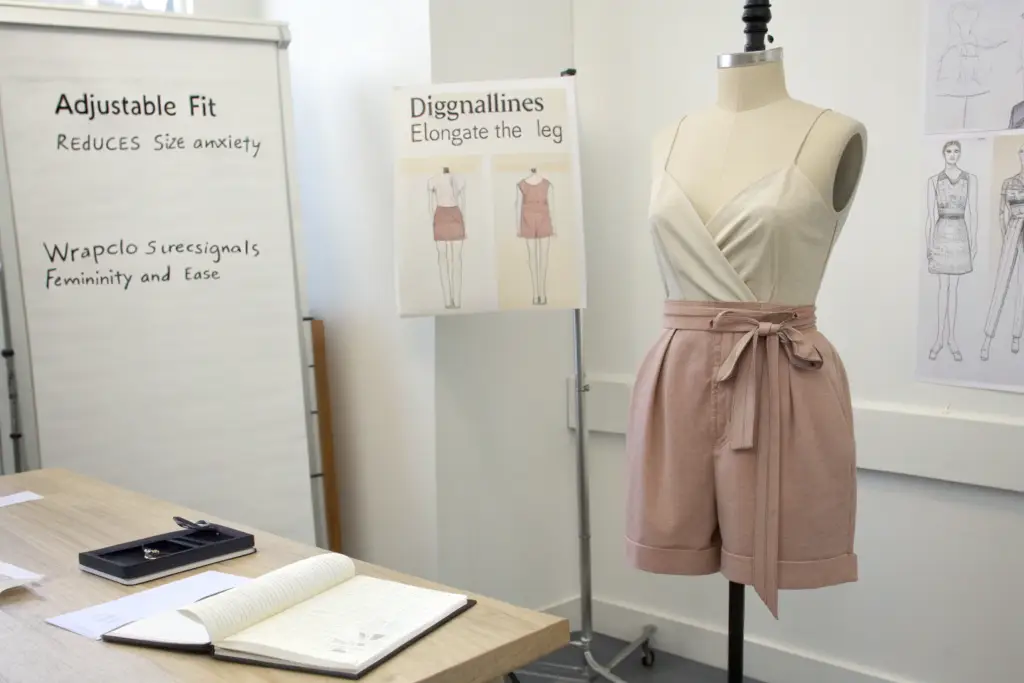
The psychological appeal of the wrap short silhouette is rooted in three distinct consumer needs: the desire for adjustable fit that accommodates natural body size fluctuations across days and within a single month, which reduces the anxiety associated with purchasing fitted bottoms online; the universally flattering visual effect of the diagonal crossover front panel, which creates an asymmetrical line that elongates the leg and defines the waist without the constriction of a fixed waistband; and the aesthetic association of the wrap detail with leisure, vacation, and effortless femininity, a set of positive emotional states that consumers seek to access through their clothing purchases.
How Does Adjustable Fit Reduce Purchase Anxiety for Online Shoppers?
The number one reason women return bottoms purchased online is poor fit. The waist is too tight. The hip is too loose. The shorts fit in the morning and feel tight in the evening. The shorts fit this week and do not fit next week. These fit issues are not necessarily the result of inaccurate sizing. They are the result of the natural human body fluctuating in size over time. A fixed waistband cannot accommodate that fluctuation. A wrap closure can.
The wrap short is secured by a tie or a button that the wearer positions herself. She can tie it slightly looser for a relaxed, casual look. She can tie it slightly tighter for a more defined waist. This adjustability eliminates the binary "fits or does not fit" judgment that triggers returns. It creates a continuum of acceptable fit that matches the continuum of the human body. The consumer who buys a wrap short is buying a garment that is statistically more likely to fit her when she tries it on at home. The reduced return anxiety translates into higher conversion rates and lower return rates for brands selling online. This adjustable fit and purchase confidence psychology is a measurable commercial advantage of the wrap silhouette.
Why Does the Diagonal Front Panel Create a Universally Flattering Effect?
The visual effect of clothing on the body is determined by the lines created by the garment. Horizontal lines widen. Vertical lines lengthen. Diagonal lines combine the lengthening effect of vertical lines with a dynamic, asymmetrical energy that draws the eye across the body rather than stopping it at a single point.
The wrap short creates a diagonal line across the front of the body from one hip to the opposite waist. This line performs two optical functions. It breaks the horizontal line that would otherwise be created by a straight waistband, eliminating the widening effect. It leads the eye upward and inward toward the narrowest point of the waist, creating an hourglass effect even on body types that do not naturally have a pronounced waist-to-hip ratio. The visual result is a universally flattering silhouette that makes the wearer feel confident. This is not a trend-driven aesthetic preference. It is a geometric principle that applies regardless of the current fashion cycle. This garment silhouette and body perception effect is why the wrap silhouette returns to popularity cyclically, and why it is returning now.
How Is Pinterest's Algorithm Amplifying the Wrap Short Trend?
Pinterest is often grouped with Instagram and TikTok under the broad category of social media, but this grouping obscures a fundamental difference that is essential for brands to understand. Instagram and TikTok are entertainment platforms. Users open them to be amused, to be distracted, to pass time. Pinterest is a planning platform. Users open it to plan a purchase, a project, or a life change. The user intent is fundamentally different, and that difference makes Pinterest a uniquely powerful trend signal for fashion brands.
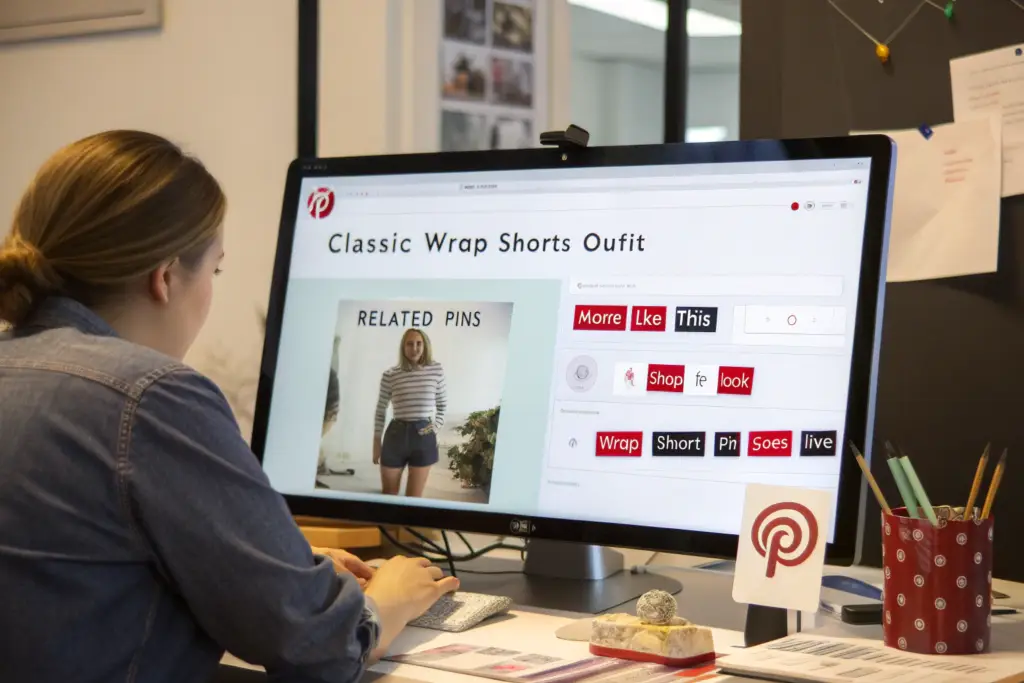
Pinterest's algorithm amplifies the wrap short trend through a self-reinforcing loop that begins when early adopter users save wrap short pins to their seasonal wardrobe planning boards, which signals the algorithm to show those pins to similar users through the "Related Pins" and "More Like This" recommendation features, which generates more saves from a broader audience, which further trains the algorithm to associate wrap shorts with seasonal fashion queries, creating an exponential growth curve in visibility that is not dependent on any single influencer or viral moment but on the accumulated weight of user intent signals.
Why Do Pinterest Saves Predict Purchase Intent Better Than Instagram Likes?
An Instagram like is a low-commitment action. The user double-taps a post while scrolling, often without pausing, and continues scrolling. The like may indicate genuine interest, or it may indicate a momentary aesthetic appreciation, or it may be a habitual, almost subconscious gesture. The like does not necessarily predict any future action.
A Pinterest save is a high-commitment action. The user has searched for a specific item or browsed a specific category. She has identified a specific pin that matches her vision. She has actively chosen to save that pin to a named board, which is typically organized around a specific project or purchase intent, such as "Summer Wardrobe 2026" or "Resort Outfit Ideas." The save represents an intention to return to the pin later, to use it as a reference, to make a purchase. Multiple studies have shown that Pinterest saves correlate with future purchase behavior more strongly than any engagement metric on entertainment-focused platforms. This Pinterest purchase intent data is why fashion brands that monitor Pinterest save trends consistently identify demand shifts before those shifts appear in sales data.
How Does the "Shop the Look" Feature Convert Trend Interest to Sales?
Pinterest has invested heavily in commerce infrastructure over the past several years. The "Shop the Look" feature allows users to click on specific items within a styled pin and be taken directly to a product page. The "Product Pins" feature displays real-time pricing, availability, and a direct purchase link.
When a wrap short pin goes viral on Pinterest, the commercial infrastructure is already in place to convert that interest into a transaction. A user who sees a styled wrap short outfit, saves it to her board, and clicks the "Shop the Look" tag on the shorts is taken directly to a retailer's product page. This shortens the path from inspiration to purchase from days or weeks to minutes. The brands that have wrap shorts available for purchase when the trend spikes capture that demand immediately. The brands that do not have the product available watch the demand pass them by. This Pinterest shopping features for brands infrastructure is the reason why trend responsiveness, the ability to move from trend signal to available product quickly, has become a critical competitive capability in fashion.
What Styling Trends Are Making Wrap Shorts Feel Fresh Again?
The wrap short is not a new invention. It has existed for decades, and it has cycled through periods of popularity and obscurity. When a dormant silhouette returns, it does not return in exactly the same form. It returns updated, re-contextualized, and styled in a way that makes it feel fresh to a generation of consumers who may not have seen it the last time it was popular. The styling is what makes the silhouette feel new.
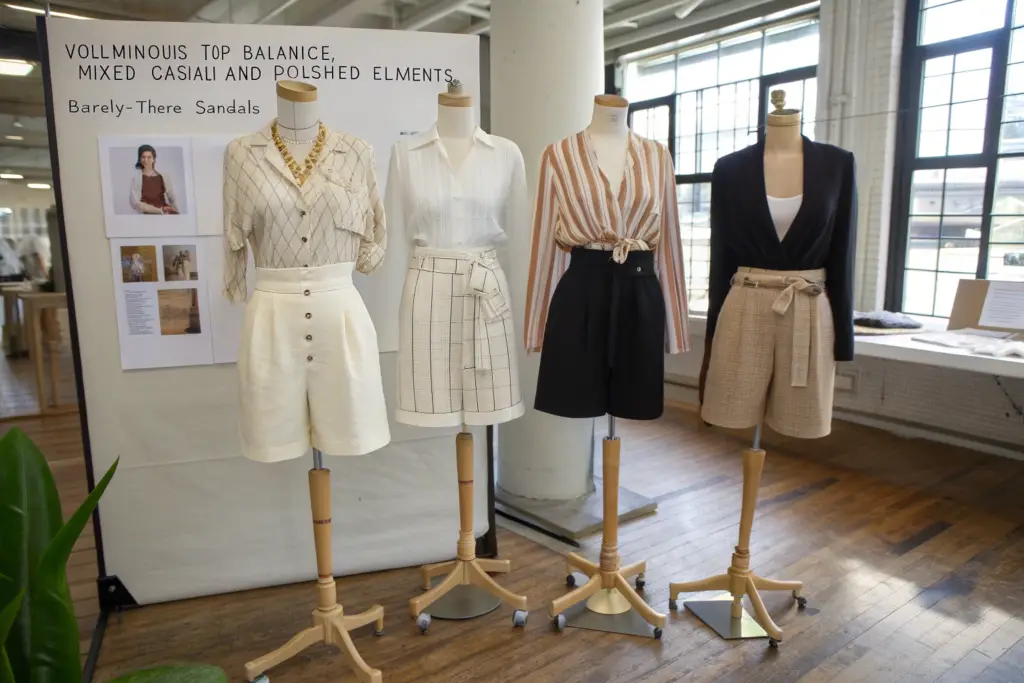
The current wrap short trend is being styled in three distinct ways that differentiate it from previous wrap short moments: the voluminous top balance, where the fitted, waist-defining wrap short is paired with an oversized, boxy, or voluminous top that creates a dramatic proportion contrast, the high-waisted, leg-lengthening proportion that positions the wrap closure at the natural waist rather than the hip, paired with a crop top or a tucked-in bodysuit for a torso-defining effect, and the mixed casual and polished aesthetic, where the inherently dressy wrap detail is paired with casual elements like flat fisherman sandals, baseball caps, and canvas totes to create an effortless, unstudied look.
How Does the "Voluminous Top" Proportion Update the Silhouette?
The wrap short is inherently a fitted, waist-defining garment. In previous trend cycles, it was often styled with equally fitted tops, creating a head-to-toe body-con silhouette that could feel dated or overly formal for contemporary casual wear. The current styling trend solves this by creating a dramatic proportion contrast.
The voluminous top, whether it is an oversized button-down shirt, a boxy cropped sweater, or a billowy linen blouse, creates a large, unstructured volume above the waist. This volume makes the defined waist of the wrap short appear even more defined by comparison, enhancing the silhouette's most flattering feature. The oversized top also introduces a casual, effortless energy that balances the dressy association of the wrap detail. The overall effect is a look that feels intentional, fashion-forward, and relaxed, rather than tight, formal, and dated. This contemporary wrap short styling proportion play is the key reason the silhouette feels relevant to younger consumers who may associate wrap shorts with older generations.
Why Does the High-Waisted Placement Feel Modern Now?
Waistband placement on shorts has migrated up and down over the decades. The low-rise era of the early 2000s placed the waistband on the hips. The mid-rise era that followed placed it just below the navel. The current dominant proportion is the high rise, with the waistband sitting at or above the natural waist.
The wrap short is inherently suited to the high-rise proportion. The wrap closure creates a clean, flat front that is most effective when positioned at the narrowest point of the torso. When positioned at the natural waist, the wrap detail defines the smallest circumference of the body and creates the maximum differential between the waist and the hip, producing the most dramatic and flattering silhouette. The high-rise placement also pairs naturally with the cropped tops and tucked-in bodysuits that are staples of current fashion. This alignment between the wrap short's intrinsic design logic and the current dominant proportion trend is not a coincidence. It is one of the reasons the silhouette is resonating now.
How Should Brands Respond to the Wrap Short Trend Quickly?
Identifying a trend signal is only valuable if the brand can act on it before the trend peaks and begins to decline. The window between the early acceleration phase of a Pinterest trend, the moment when saves are spiking, and the saturation phase, when every brand has the product and the consumer has moved on, is typically three to six months for an apparel category. A brand that moves quickly can capture the demand. A brand that follows its standard twelve-month development cycle will arrive with product just as the market is saturated.
Responding quickly to the wrap short trend requires a brand to leverage three specific acceleration strategies: utilizing an existing approved fabric from the current or upcoming season rather than initiating a new fabric development process, adapting an existing approved short fit block to the wrap silhouette by modifying only the front panel and closure, preserving the approved waistband, rise, and leg shape, and deploying a digital-first marketing launch on Pinterest itself, using promoted pins and Shop the Look tags to capture the existing demand directly on the platform where the trend originated, compressing the typical development-to-launch timeline from twelve months to eight to twelve weeks.
How Can Brands Use Existing Fabrics and Fit Blocks to Accelerate Development?
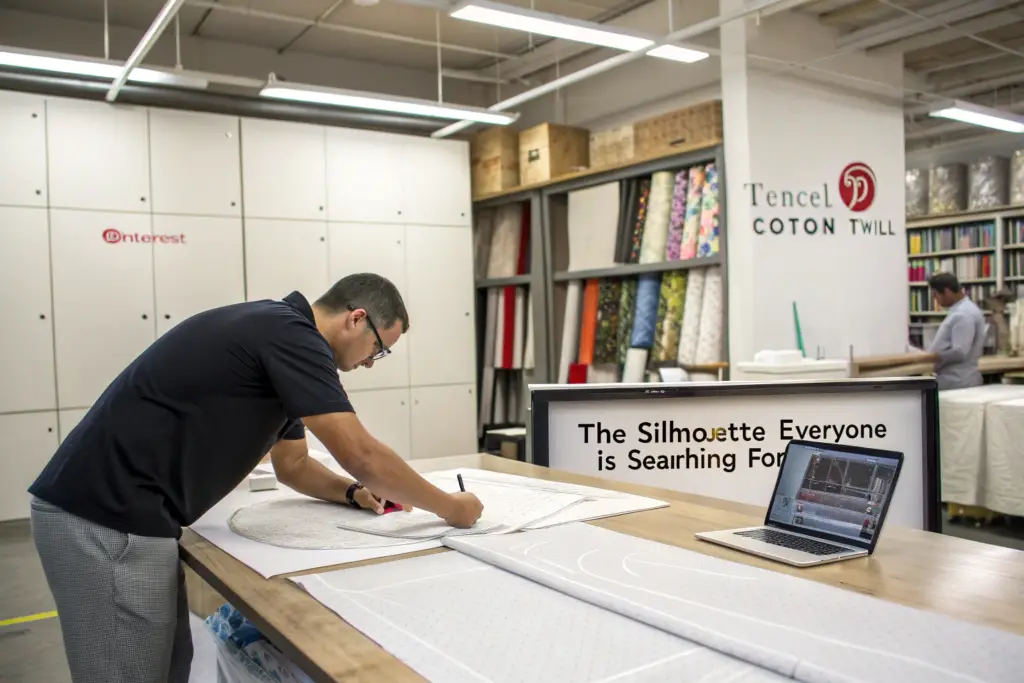
The longest lead time items in apparel development are fabric sourcing and fit approval. Developing a new fabric with a mill takes months. Fitting a new silhouette on multiple models and iterating through sample rounds takes weeks. A brand that starts both processes from scratch for a trend-driven product will miss the trend window.
The acceleration strategy is to use what is already approved. If the brand has an existing short fit block that is approved and in production, the wrap short can be developed as a modification of that block. The waistband curve, the rise, the hip shape, and the leg silhouette remain the same. Only the front panel and the closure are modified. The fit approval process is dramatically shortened because the back panel, the crotch curve, and the leg are already fitted. If the brand has an existing approved fabric, a linen blend, a Tencel twill, a cotton poplin, that fabric can be used for the wrap short. The fabric is already tested, the shrinkage is known, the colorfastness is approved, and the mill relationship is active. This rapid apparel product development approach compresses the development timeline from months to weeks.
What Is the Fastest Marketing Launch Strategy on Pinterest Itself?
The trend originated on Pinterest. The most efficient marketing strategy is to capture the demand on the platform where it already exists, rather than trying to redirect users to a different platform. Pinterest's advertising infrastructure allows a brand to target users who have searched for or saved wrap shorts, showing them a product pin with a direct purchase link.
The brand should create high-quality, aspirational lifestyle pins showing the wrap shorts styled in the three trending ways, with the voluminous top, with the high-waisted cropped top, with the mixed casual-polished aesthetic. These pins should be promoted to the specific audience segment that has demonstrated interest in wrap shorts, using Pinterest's interest and keyword targeting. Each pin should be a Product Pin with current pricing and a direct link to the product page. The product page should be live before the pin campaign launches. The campaign should go live within days of the product becoming available. The combination of trend-right product, rapid development, and direct-to-demand-platform marketing captures the trend at its peak demand. This Pinterest marketing for fashion brands approach is the most efficient path from trend signal to revenue.
Conclusion
The sudden resurgence of classic wrap shorts on Pinterest this month is not a random social media blip. It is a measurable, predictable, and commercially actionable trend signal. The psychological appeal of the silhouette, adjustable fit, universally flattering diagonal lines, and positive aesthetic associations, creates a genuine consumer preference that the Pinterest algorithm then amplifies through its save-based discovery engine. The result is a self-reinforcing growth curve in search volume, saves, and purchase intent that is currently in its early acceleration phase.
The styling trends that are making wrap shorts feel fresh to a new generation of consumers, the voluminous top contrast, the high-waisted proportion, and the casual-polished mix, are not fleeting. They are aligned with broader fashion movements that have been building for multiple seasons. The brands that move quickly, using existing fabrics and fit blocks to compress development timelines and launching directly on Pinterest where the demand already exists, will capture the trend at its peak margin potential.
At Shanghai Fumao, we have the pattern blocks, the fabric inventory, and the production flexibility to help brands respond to this trend signal quickly. If you are seeing the wrap short trend in your own market data and want to explore a rapid development program, contact our Business Director, Elaine, at elaine@fumaoclothing.com. Let's move fast and capture the demand while the curve is still rising.