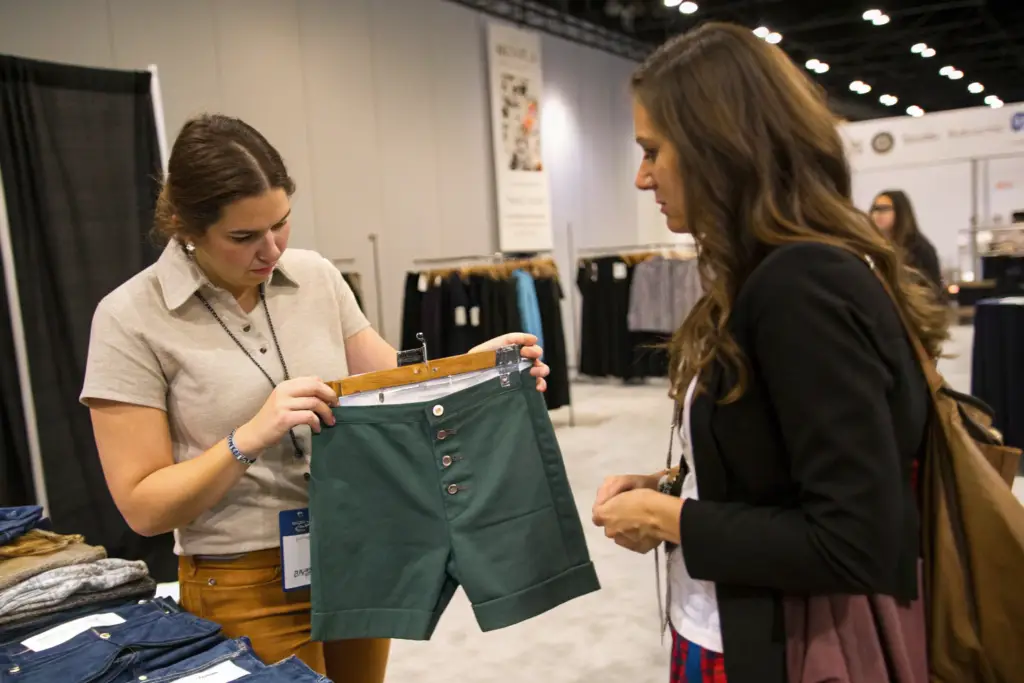
A few years ago, I listened to a salesperson from one of our brand clients pitch a pair of classic shorts to a boutique buyer at a trade show. The buyer picked up the shorts, examined the waistband, and asked a simple question: "Why does this closure have a button fly instead of a zipper?" The salesperson froze. She had no answer. She had been trained on the price sheet, the delivery timeline, and the fabric composition, but she had no idea why the shorts were designed the way they were. The buyer put the shorts down and moved to the next booth. A sale that could have been won with a story was lost because the salesperson did not know the story existed.
Educating your sales team about the heritage of classical shorts styles transforms them from order-takers into brand storytellers, equipping each team member with a structured knowledge base that connects specific design details, the rise of the waistband, the length of the inseam, the construction of the fly, the placement of the pockets, to their historical origins and functional purposes, enabling them to answer buyer questions with authority, differentiate the product from competitors on grounds more durable than price, and create an emotional connection between the buyer and the garment that significantly increases conversion rates and average order values.
At Shanghai Fumao, I have spent twenty years manufacturing classic shorts, and I have learned that the most successful brands are not necessarily the ones with the best designs or the lowest prices. They are the ones whose sales teams can communicate the value of the product with knowledge and conviction. A well-educated sales team is a competitive advantage that cannot be easily copied. Let me walk you through how to build that advantage.
What Are the Key Historical References for Classic Shorts?
The classic short is not a single garment with a single origin. It is a category that has evolved over a century, absorbing influences from military uniforms, collegiate fashion, sportswear, and resort culture. Each design detail that appears on a classic short today, the length, the pocket style, the closure type, the fabric choice, has a specific historical origin and a specific functional purpose. A salesperson who understands these origins can answer the question "Why is this short designed this way?" with a specific, factual, and interesting answer.
The key historical references that a sales team should know for classic shorts include the British military tropical uniform shorts of the early twentieth century, which introduced the tailored, knee-length silhouette and the use of durable cotton drill fabric, the Ivy League and collegiate shorts of the 1950s that established the flat-front chino short as a civilian staple, the Bermuda short tradition that defined the formal shorts category with its specific inseam length and pairing with knee socks and blazers, and the tennis and sportswear shorts of the 1970s and 1980s that introduced shorter inseams, brighter colors, and performance-adjacent styling.
How Did Military Uniforms Shape the Modern Classic Short?
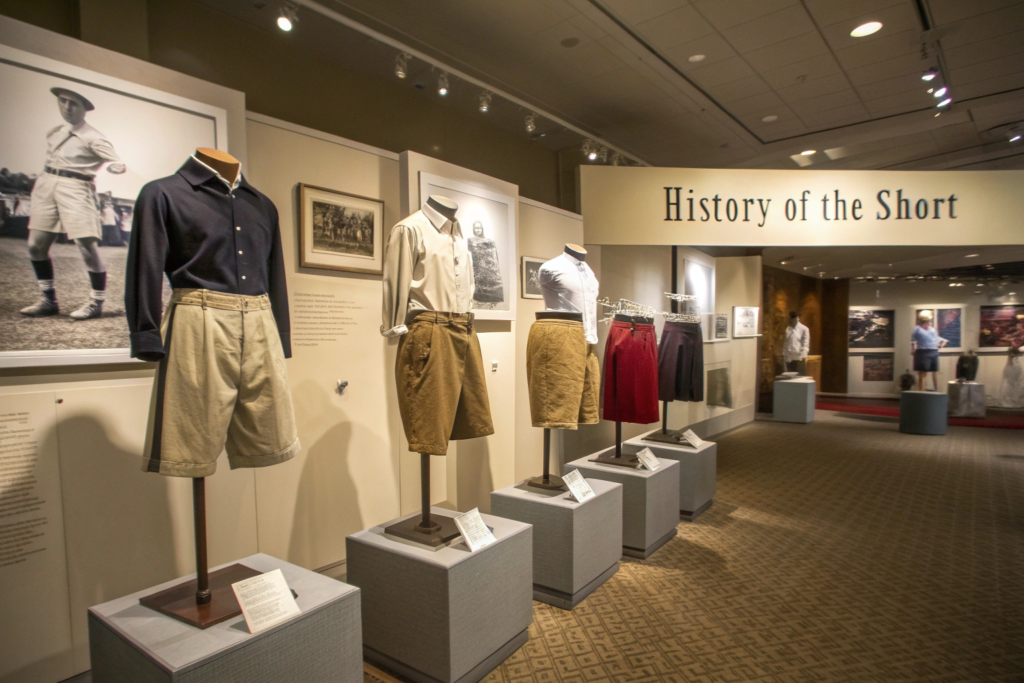
The modern classic short owes more to military tailoring than to any other single source. During the First and Second World Wars, British and American forces stationed in tropical and desert climates were issued tailored shorts as part of their uniform. These shorts were not casual wear. They were military garments, designed for durability, mobility, and a professional appearance under extreme conditions.
The British military tropical uniform short, often made from khaki cotton drill, established several design features that persist in classic shorts today. The knee-length inseam provided sun protection and a modest, professional appearance. The double-pleated front, common on military shorts of the era, allowed freedom of movement while maintaining a tailored silhouette. The durable cotton drill fabric, tightly woven and heavyweight, provided abrasion resistance and longevity. The slanted side pockets and buttoned rear pockets were designed to secure personal items during physical activity. After the wars, returning soldiers continued to wear these shorts as civilian leisurewear, and the style was adopted by the emerging resort and collegiate fashion markets. This military influence on menswear shorts is the foundational story that explains why classic shorts look the way they do.
What Role Did Bermuda Shorts Play in Formalizing the Category?
Bermuda shorts represent a unique chapter in the history of the classic short, one that is particularly useful for sales teams to understand because it directly addresses the question of when shorts can be worn in formal or business contexts. The Bermuda short originated on the British island territory of Bermuda in the early twentieth century, where the tropical climate made full-length trousers impractical for business attire.
Bermudian businessmen and civil servants adopted tailored shorts, worn with knee socks, a dress shirt, a tie, and a blazer, as acceptable business dress. This practice was not a relaxation of standards but a formalization of the short as a legitimate garment category. The Bermuda short was defined by a precise set of specifications: an inseam no shorter than three inches above the knee, a flat front or single pleat, side pockets, and welted or buttoned rear pockets. The fabric was typically a tropical weight wool or a high-quality cotton twill. This tradition established the principle that shorts, when properly tailored and styled, could be formal garments, not just casual beachwear. This Bermuda shorts history and style is a powerful narrative for a sales team selling classic shorts to buyers who may perceive all shorts as inherently casual.
How Do You Connect Historical Details to Modern Selling Points?
Historical knowledge is interesting, but it only becomes commercially valuable when it is connected to the specific product features that the buyer can see, touch, and appreciate. A salesperson who recites a list of historical facts without connecting them to the garment in the buyer's hands is delivering a lecture, not making a sale. The skill is in the connection, linking each visible design detail to its historical origin, and linking that origin to a specific benefit that matters to the buyer and their customer.
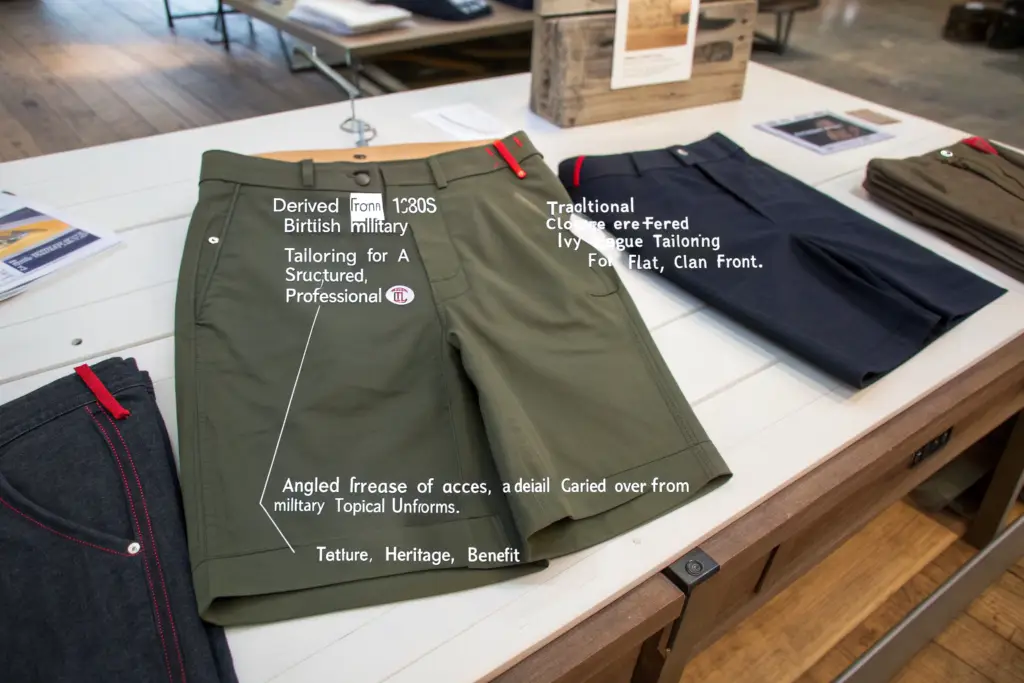
Connecting historical details to modern selling points requires building a "Feature, Heritage, Benefit" framework for each key design element of the short, where the feature is the visible detail such as a button fly or a double-needle topstitch, the heritage is the historical origin story that explains why the detail exists, and the benefit is the specific advantage it provides to the wearer, such as durability, comfort, or a refined appearance, with this framework allowing the salesperson to move fluidly from a buyer's question about any feature into a concise, compelling narrative that differentiates the product.
What Is the "Feature, Heritage, Benefit" Method for Sales Training?
The "Feature, Heritage, Benefit" method is a simple, repeatable structure that a salesperson can use to answer any product question. Instead of answering "What is this?" with a name, the salesperson answers with a mini-story that connects what the feature is, where it came from, and why it matters.
For example, a buyer points to the button fly on a pair of classic shorts and asks about it. The salesperson using the standard approach says, "That's a button fly." The salesperson using the Feature, Heritage, Benefit approach says, "That's a button fly closure, which was the standard on tailored trousers and shorts before the zipper became widely available in the 1930s. Many traditional tailoring houses and heritage brands still prefer it today because it lies completely flat against the waistband, which creates a cleaner front silhouette than a zipper fly can achieve." The feature is the button fly. The heritage is its origin in pre-zipper tailoring and its continued use in traditional menswear. The benefit is the flat, clean front appearance. This approach transforms a simple hardware question into a brand differentiation moment. This product storytelling for sales teams method can be applied to every design detail on a classic short.
How Do You Map Specific Short Features to Their Heritage Stories?
Every visible feature on a classic short has a story. The key is to identify the features that are most likely to attract a buyer's attention and to prepare a concise heritage story for each one. The mapping should be done systematically, and the resulting stories should be documented in a sales training manual.
The flat-front waistband, without pleats, traces its civilian popularity to the Ivy League style of the 1950s, which prized a clean, uncluttered silhouette as a reaction against the more voluminous pleated trousers of the previous generation. The benefit is a modern, streamlined appearance that flatters a wider range of body types. The quarter-top pockets, the angled slash pockets on the front, derive from military tailoring where the angle facilitated access to the pocket while seated or on horseback. The benefit is easier access and a more natural hand position. The cuffed hem, a folded-back hem that adds weight and structure, originated on formal trousers and Bermuda shorts as a way to add drape and a finished appearance to the leg opening. The benefit is a more substantial visual weight that balances the proportion of the short. This fashion history for retail training mapping creates a comprehensive knowledge base that a sales team can draw from.
How Should Sales Training Be Structured for Maximum Retention?
A one-time lecture on the history of classic shorts will be forgotten within a week. The human brain retains information that is used, applied, and reinforced. Sales training that is designed for retention is structured differently from training that is designed for information delivery. It is interactive, hands-on, and immediately applicable. It requires the salesperson to practice using the knowledge, not just to hear it.
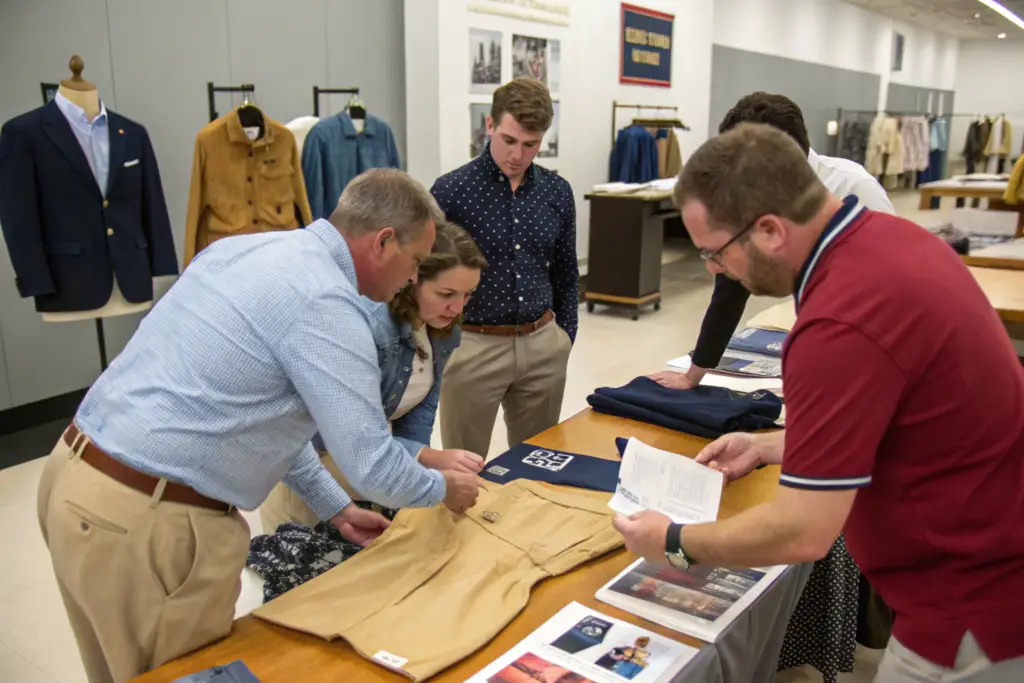
Effective sales training on the heritage of classic shorts should be structured as a blended learning program combining three elements: a physical product immersion session where salespeople handle the garments while learning the heritage stories associated with each touchable detail, a role-playing practice session where salespeople respond to common buyer questions using the Feature, Heritage, Benefit framework and receive immediate peer and trainer feedback, and a set of durable reference materials including a printed product heritage guide and a digital quick-reference card that the salesperson can access during real buyer interactions.
Why Does Physical Product Handling Improve Knowledge Retention?
The human brain forms stronger memories when multiple senses are engaged. Hearing a fact about a button fly engages one sensory pathway. Hearing the fact while touching the button fly, feeling the flat front, and comparing it to a zipper fly on another pair of shorts engages multiple sensory pathways simultaneously. The memory is encoded more deeply and retrieved more easily.
A physical product immersion session places the actual shorts in the salesperson's hands. The trainer walks through each feature, explaining its heritage and benefit while the salesperson examines the corresponding detail on the garment. The salesperson opens and closes the button fly. She measures the inseam length against a reference. She feels the weight of the fabric and the texture of the twill. This hands-on experience creates a sensory memory that is linked to the factual information. When the salesperson later picks up a pair of shorts in front of a buyer, the physical sensation triggers the associated heritage story. This tactile learning in retail training approach is standard practice in luxury brand training programs.
How Do Role-Playing Scenarios Prepare Salespeople for Real Buyer Questions?
Knowledge that cannot be deployed under pressure is not useful knowledge. A salesperson who knows the history of the Bermuda short but freezes when a buyer asks "Why should I buy this instead of a cheaper short from a competitor?" has knowledge that is not serving the sale. Role-playing bridges the gap between knowing and doing.
The training program should include a set of common buyer questions, including skeptical questions about price, questions about the relevance of historical details to modern consumers, and questions that compare the product to competitors. Each salesperson takes a turn playing the salesperson, with the trainer or a peer playing the buyer. The salesperson practices responding using the Feature, Heritage, Benefit framework. The response is evaluated on accuracy, conciseness, and persuasiveness. The feedback is immediate and constructive. After several rounds, the responses become fluid and natural. The salesperson develops the confidence to handle unexpected questions because the framework provides a structure that can be applied to any feature, not just the ones explicitly practiced. This sales role play training methods approach transforms passive knowledge into active selling skill.
What Reference Materials Support Ongoing Sales Team Education?
The training session ends, the salesperson returns to the showroom or the trade show booth, and the first buyer walks in. The salesperson has not fully internalized the heritage stories. She needs a reference. If no reference is available, she defaults to the price sheet and the delivery timeline. The investment in training is lost. Ongoing reference materials are not a supplement to training. They are an essential component of it, the bridge between the learning environment and the selling environment.
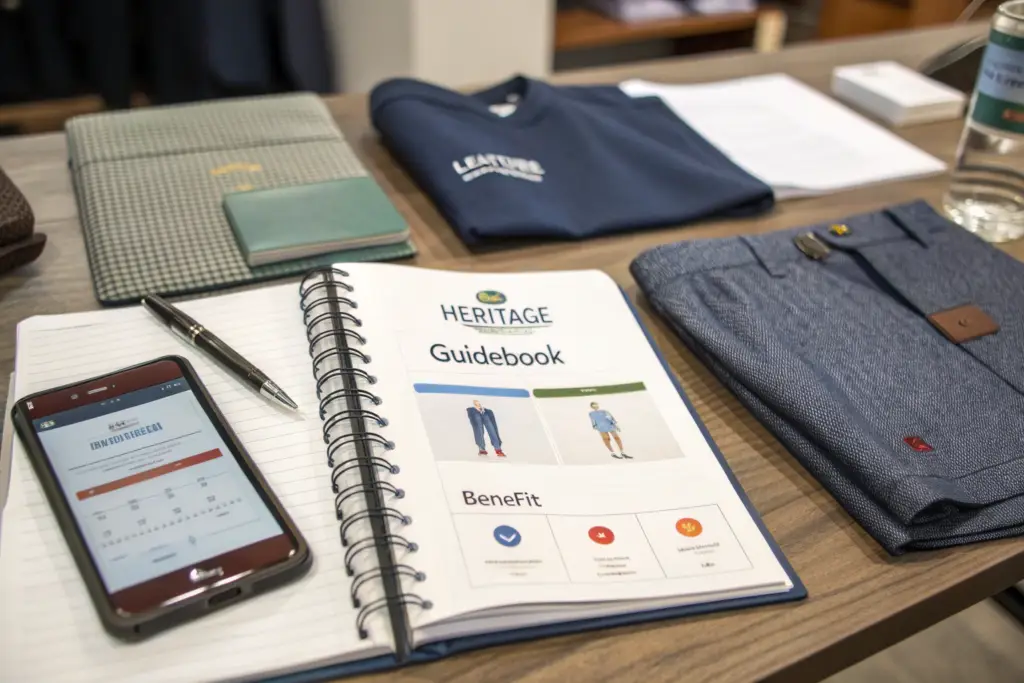
A complete reference system for ongoing sales team education on classic shorts heritage includes a printed product heritage guidebook organized by garment feature, with each feature receiving a page that includes a photograph, a brief historical narrative, and the Feature-Heritage-Benefit summary, a laminated pocket quick-reference card that distills the guidebook into the top ten buyer questions and the corresponding heritage-based answers, and a digital version of both resources accessible on the salesperson's smartphone, ensuring that heritage knowledge is available at the point of sale even when memory fails.
What Should a Product Heritage Guidebook Contain?
The product heritage guidebook is the definitive reference document. It is not a marketing brochure. It is an internal training manual that serves as the single source of truth for all product heritage information. It should be comprehensive, well-organized, and durable enough to survive daily use in a showroom or trade show environment.
The guidebook should be organized by garment feature, not by chronology or by product style. A salesperson encountering a buyer question about the waistband construction can flip to the waistband section and find the relevant heritage information immediately. Each feature section should include a clear, annotated photograph of the feature on the actual product, a concise historical narrative that explains the origin and evolution of the feature, a Feature-Heritage-Benefit summary box that provides the ready-to-use selling script, and a "Common Buyer Questions" subsection that anticipates skeptical or comparative questions and provides suggested responses. The guidebook should also include a glossary of tailoring terms and a timeline of shorts history for broader context. This sales training manual design approach creates a resource that salespeople will actually use, not one that sits on a shelf.
How Can Digital Tools Provide Just-in-Time Knowledge at the Point of Sale?
A printed guidebook is useful in the showroom. A trade show booth is a different environment. The salesperson is standing, moving, and engaging with multiple buyers simultaneously. She cannot flip through a book. She needs information that is accessible in seconds on the device in her pocket.
A digital quick-reference tool, typically a mobile-responsive webpage or a simple app, provides just-in-time access to heritage information. The salesperson can search by feature name, by buyer question keyword, or by product SKU, and receive the relevant Feature-Heritage-Benefit script instantly. The digital tool can also include short video clips, sixty to ninety seconds, that demonstrate the feature on the actual garment with a voiceover narration of the heritage story. These clips can be shown to a buyer directly on the salesperson's phone. The digital tool can be updated centrally, ensuring that all salespeople are using the same current information. This mobile sales enablement tools approach is standard in large brand organizations but is increasingly accessible to small and mid-size brands through simple, low-cost platforms.
Conclusion
Educating a sales team about the heritage of classic shorts styles is not a one-time training event. It is an ongoing investment in the team's ability to sell on value rather than on price. A salesperson who can connect the button fly to pre-zipper tailoring tradition, the flat front to 1950s Ivy League aesthetics, and the quarter-top pockets to military equestrian functionality is not just answering a buyer's questions. She is building a case that this short is worth more than the competitor's short, not because it is cheaper, but because it carries a century of design evolution in its construction.
The training must be structured for retention, with physical product handling, role-playing against real buyer questions, and durable reference materials that support the salesperson at the point of sale. The "Feature, Heritage, Benefit" framework provides a simple, repeatable structure that can be applied to any design detail on any product. The investment in this training pays for itself in higher conversion rates, larger average orders, and wholesale relationships built on product knowledge rather than price concessions.
If you are developing a line of classic shorts and want to equip your sales team with the heritage knowledge that differentiates your product in a crowded market, we can help you build the training materials as part of your manufacturing partnership. At Shanghai Fumao, we understand not just how to make classic shorts, but why each detail exists and what story it tells. Contact our Business Director, Elaine, at elaine@fumaoclothing.com. Let's give your sales team the knowledge that turns a pair of shorts into a story worth paying for.