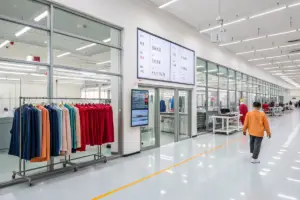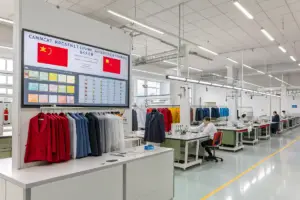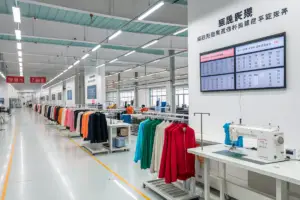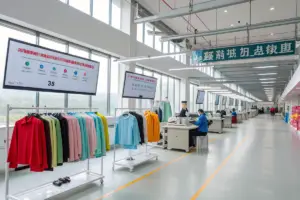
A San Francisco-based premium activewear brand once launched a line of high-end yoga leggings constructed with traditional cut-and-sew methods. The leggings had side seams, an elastic waistband, and a gusset panel. They sold well initially, but the returns soon revealed a consistent pattern of complaints. The side seams chafed against the skin during long yoga sessions. The waistband elastic left red marks and created a visible "muffin top" effect. The gusset seam created friction in the most sensitive area. The brand’s premium customers—women who spent $120 on yoga leggings and expected a near-invisible wearing experience—were returning the product at a 14% rate. A competitor launched a seamless legging constructed on a Santoni circular knitting machine, with no side seams, a knitted-in waistband with graduated compression, and a seamless gusset zone. The competitor captured the brand’s wholesale accounts within two seasons. The lesson was clear: the high-end consumer was not just buying a garment. She was buying the absence of seams.
Seamless production techniques are dominating the high-end wholesale women’s wear market because seamless garments, produced on advanced circular knitting machines that knit the entire garment body as a single, three-dimensional piece, eliminate the side seams, shoulder seams, and waistband attachment seams that cause chafing, skin irritation, and visible lines under clothing, while simultaneously offering a superior fit through engineered zones of graduated compression, breathability, and support knitted directly into the garment structure, creating a wearing experience that feels weightless, invisible, and custom-molded to the body—a sensory premium that traditional cut-and-sew construction, with its inherently stitched and joined panels, cannot replicate.
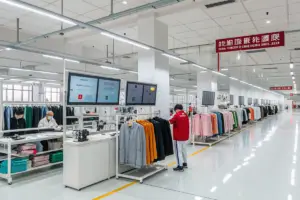
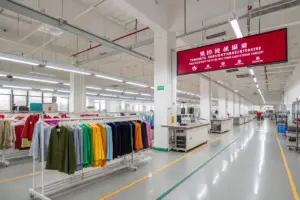
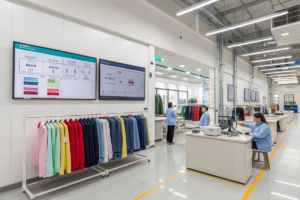
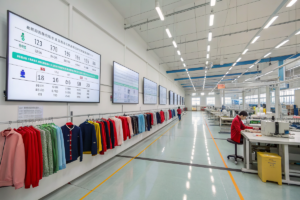
At Shanghai Fumao, I have invested in seamless knitting technology specifically because my high-end brand partners in the activewear, loungewear, and shapewear segments began demanding it. The wholesale buyers for premium department stores and specialty boutiques now specifically request seamless construction as a quality differentiator. A visible side seam on a $100+ garment is increasingly perceived as a quality deficit.
Why Does “Seamless Knitting” Eliminate the Chafing and Skin Irritation That Traditional Cut-and-Sew Seams Cause?
A New York-based luxury loungewear brand once sourced a beautiful modal-cashmere blend fabric for a line of premium lounge sets, constructed with traditional cut-and-sew methods. The fabric was exquisite against the skin, but the side seams and shoulder seams created friction points that customers noticed immediately. A customer with sensitive skin or a skin condition like eczema would feel the raised seam ridge against her body with every movement. The brand’s product reviews consistently mentioned that the garment was "almost perfect, but the seams are scratchy." The brand was delivering a premium fabric experience undermined by a construction method that introduced physical irritation at every seam line.
Seamless knitting eliminates the chafing and skin irritation of traditional seams because the garment is produced on a circular knitting machine that knits the entire body tube in three dimensions, creating a continuous, unbroken fabric surface from hem to neckline with no stitched side seams, no joined shoulder seams, and no attached waistband seam, eliminating the raised, rigid seam allowance ridges that rub against the skin during movement and the overlock stitching that can feel scratchy against sensitive skin, particularly in high-friction zones like the underarm, the inner thigh, and the waistline.
A traditional seam is a mechanical joint—two pieces of fabric, cut separately, sewn together with thread. The seam allowance creates a physical ridge. The overlock stitching creates a textured, sometimes abrasive surface on the inside of the garment. A seamless garment has no mechanical joints. The fabric flows continuously around the body, with the same smooth interior surface everywhere.
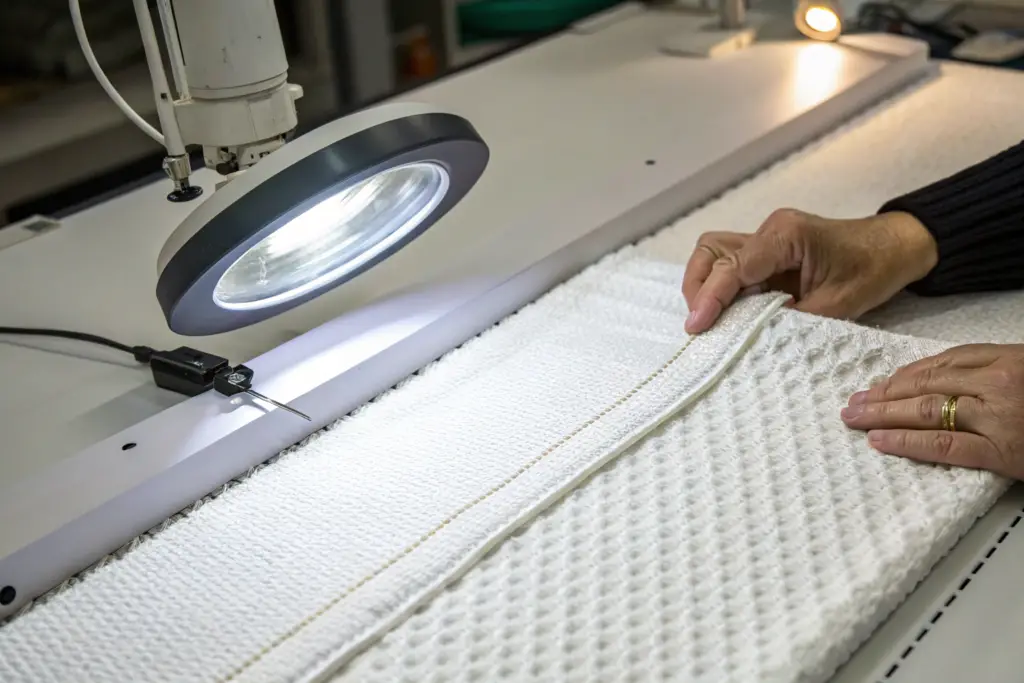
How Does a “Santoni Circular Knitting Machine” Produce an Entire Legging Body as a Single Piece Without Side Seams?
The Santoni machine knits in a continuous spiral, starting at the waistband, moving down through the hip and thigh, shaping the calf, and finishing at the ankle. The machine can alter the stitch type, yarn tension, and fabric density at any point in the spiral, creating a single, seamless tube that already contains all the shaping, compression zones, and ventilation panels that traditional cut-and-sew must achieve by cutting and joining separate fabric panels.
Why Is the “Underarm Zone” of a Seamless Top a Dramatically Superior Experience to a Traditional Set-In Sleeve Seam?
A traditional set-in sleeve has a circular seam that runs around the shoulder joint, directly through the high-friction, high-movement underarm area. A seamless top knits the body and the sleeve as a single piece, with no seam crossing the underarm. The fabric transitions smoothly through the armhole area, and the movement of the arm encounters no stitched ridge.
How Do “Engineered Compression and Ventilation Zones” Knitted Into the Fabric Provide Fit and Performance That Cut-and-Sew Cannot Match?
A Chicago-based premium shapewear brand once constructed their bodysuit using traditional cut-and-sew methods. To achieve shaping and compression in the waist and abdomen, they sewed in separate power-mesh panels. To achieve bust support, they sewed in a separate bra cup construction. To achieve a smooth back, they sewed in a separate back panel. The resulting garment had eight separate pattern pieces, seven major seam lines, and multiple points of potential seam failure. It provided shaping, but at the cost of comfort, invisibility under clothing, and long-term durability. A seamless competitor produced a bodysuit where the compression zones, support zones, and ventilation zones were all knitted into a single garment body by the knitting machine’s computerized pattern control, with no internal seams, no separate panels, and no failure points.
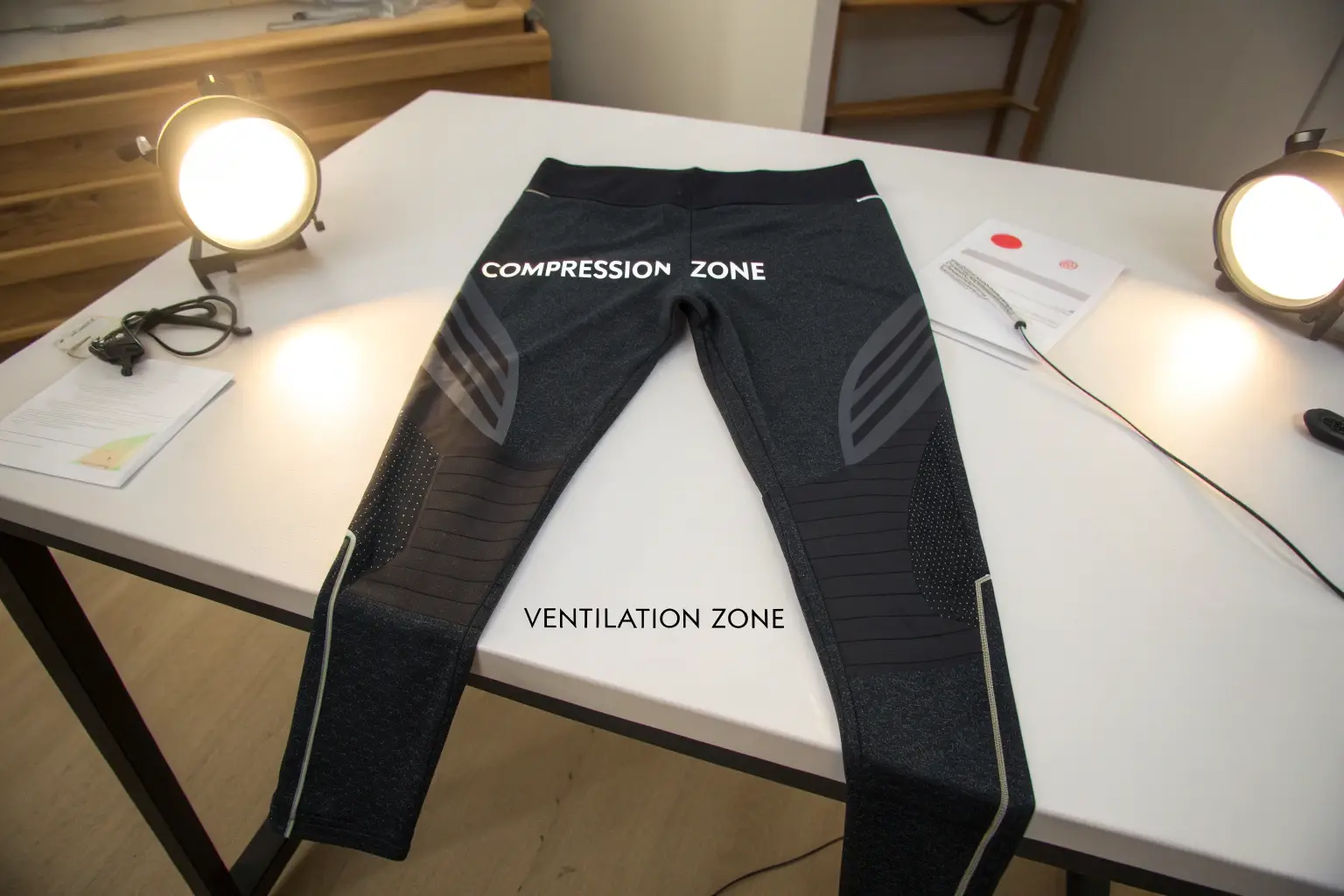
Engineered compression and ventilation zones knitted directly into the seamless garment provide fit and performance that cut-and-sew cannot match because the knitting machine’s computerized control system can alter the stitch type, yarn tension, and fabric density at any specific point on the garment body, creating a precisely mapped landscape of higher compression where support is needed, higher breathability where ventilation is needed, and lighter tension where freedom of movement is needed, all within a single, continuous fabric surface with no stitched seams, no glued panels, and no abrupt transitions between zones.
A cut-and-sew garment achieves different functions in different zones by sewing different fabrics together. A seamless garment achieves different functions by instructing the knitting machine to change its stitch pattern at specific coordinates on the garment body. The functional zones are integrated into the fabric structure itself, not added as separate pieces.
How Does a “Graduated Compression Waistband” Knitted Into the Fabric Differ From an “Elastic Waistband Sewn On”?
A sewn-on elastic waistband is a separate component—a strip of elastic, folded over the fabric edge, and stitched down. It creates a distinct, often tight band that can dig into the skin. A knitted-in waistband is an integral part of the fabric tube, where the knitting machine progressively tightens the stitch tension and may introduce a covered elastane yarn specifically in the waistband zone. The compression graduates smoothly from the waistband into the hip, with no seam, no ridge, and no abrupt pressure change.
Why Do “Mesh Ventilation Zones” Knitted Into a Seamless Top Provide Breathability Without Adding a Separate Mesh Panel?
The knitting machine is programmed to switch to a more open, mesh-like stitch structure at specific coordinates—behind the knee, across the back, under the arms. This mesh zone is made of the same yarn as the rest of the garment but knitted into an open structure that allows airflow. There is no separate mesh panel, no seam joining the mesh to the solid fabric, and no risk of the seam separating after repeated washing.
Why Does “Seamless Construction” Command a 30-50% Higher Wholesale Price and a Lower Return Rate?
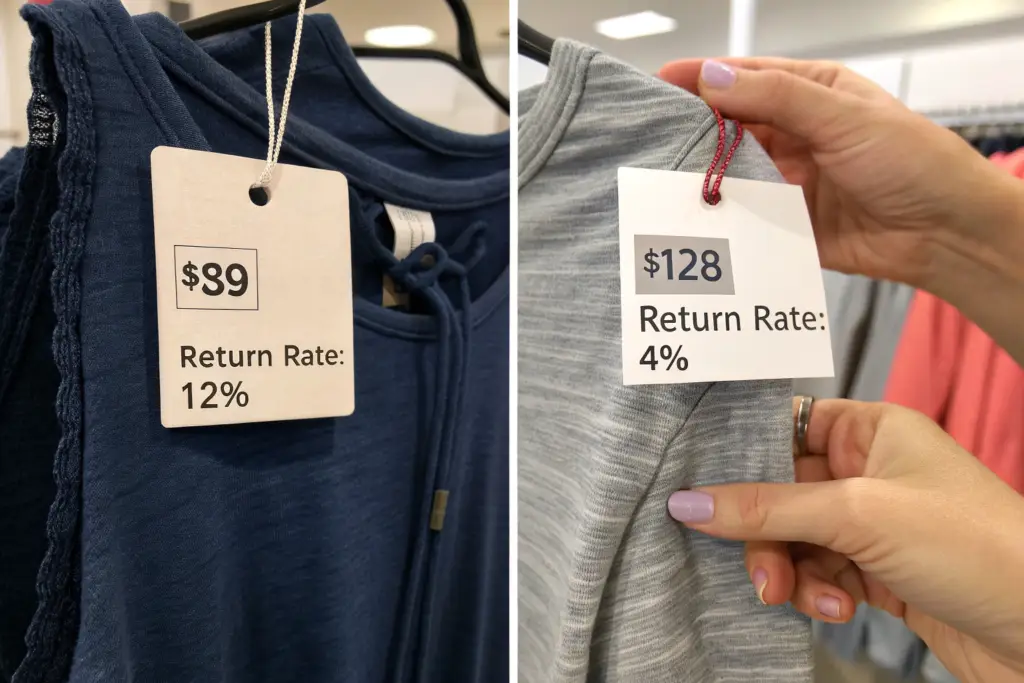
A multi-brand online retailer once shared their internal category data with me, comparing the performance of cut-and-sew activewear versus seamless activewear across a two-year period. The cut-and-sew category had an average retail price of $72 and an average return rate of 11.8%, with the top return reasons being "uncomfortable seams," "chafing," and "visible panty lines." The seamless category had an average retail price of $108 and an average return rate of 4.2%, with the top return reasons shifting to sizing issues unrelated to construction. The seamless garments were selling at a 50% price premium and being returned at roughly one-third the rate. The retailer was actively reducing their cut-and-sew activewear buy and increasing their seamless buy.
Seamless construction commands a 30-50% higher wholesale price and a lower return rate because the high-end consumer perceives the absence of seams, the weightless feel, and the engineered fit zones as a fundamentally superior product experience that justifies the premium price, and the objective reduction in skin irritation, chafing, visible panty lines, and seam failure means that fewer customers return the garment after wearing it, producing a lower return rate that wholesale buyers track as a key vendor performance metric and reward with larger future orders and premium floor placement.
The wholesale buyer’s decision is driven by two numbers: the sell-through rate at full price and the return rate. A garment that can command a higher retail price and generate fewer returns is a more profitable use of the buyer’s limited shelf space. Seamless construction improves both numbers simultaneously.
How Does the “Absence of Visible Panty Lines” Under a Seamless Legging Contribute to a Lower Return Rate?
Traditional leggings with side seams and a sewn-on waistband create visible lines under tight-fitting dresses and skirts. A customer who buys a legging specifically to wear under clothing will return it immediately if the seams are visible through the outer garment. Seamless leggings, with no side seams and a knitted-in waistband, are virtually invisible under clothing, eliminating this specific and common return trigger.
Why Does “Seam Failure” as a Return Reason Practically Disappear in a Seamless Garment?
A cut-and-sew garment has multiple seam lines—side seams, inseams, waistband attachment seams, hem seams—each of which is a potential failure point. A seamless garment has dramatically fewer stitched seams, reducing the number of potential seam failure points to near zero. The garment cannot fail at a side seam because there is no side seam.
What Specific “High-End Wholesale Categories” Are Being Transformed by Seamless Production?
A Denver-based multi-brand boutique owner once told me that she had initially associated seamless construction exclusively with activewear. She viewed it as a performance fabric technology for yoga pants and sports bras. Then a premium shapewear brand presented her with a seamless bodysuit that used the technology for completely different purposes—graduated compression, invisible under-clothing smoothness, and all-day comfort. Then a luxury loungewear brand showed her a seamless cashmere-blend sweater with no shoulder seams and an incredibly soft, smooth interior. She realized that seamless was not a category. It was a construction technology that could be applied across multiple high-end categories.
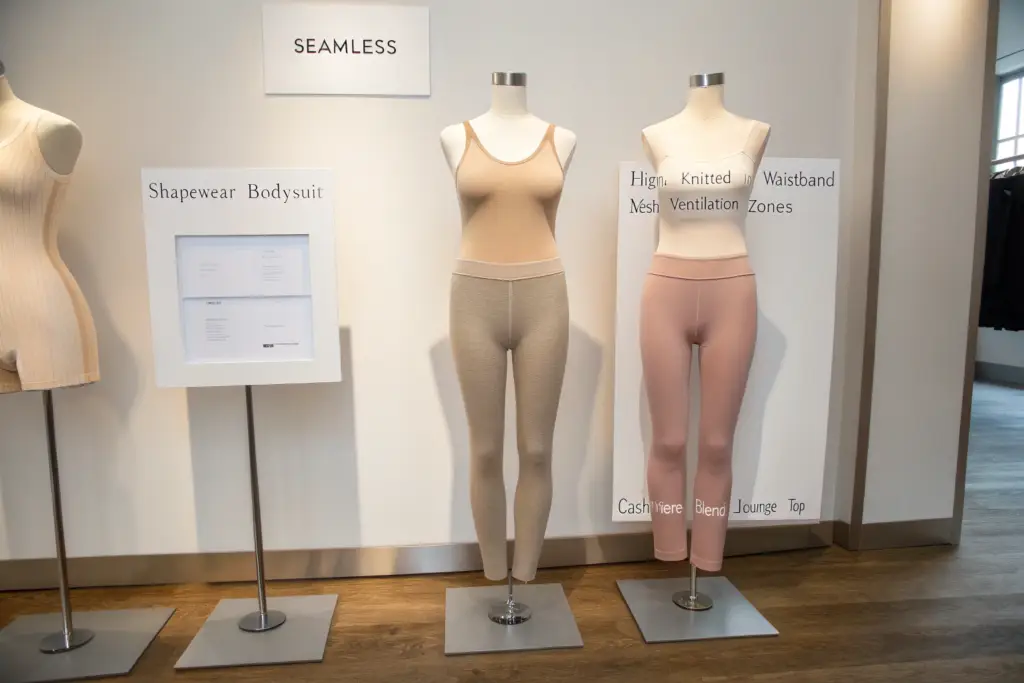
The specific high-end wholesale categories being transformed by seamless production include premium activewear and yoga wear, where seamless leggings and sports bras have become the category standard for premium brands; luxury shapewear and foundational garments, where seamless bodysuits and slips provide invisible, comfortable shaping; premium loungewear and sleepwear, where seamless tops, dresses, and robes offer an unparalleled sensory experience of softness and weightlessness; and increasingly, high-end ready-to-wear knitwear, where seamless sweaters and dresses eliminate bulky shoulder and side seams for a cleaner, more refined silhouette.
The common thread across these categories is the high-end consumer’s demand for a garment that disappears on the body—no chafing, no visible lines, no bulky seams, no pressure points. Seamless construction delivers this across activewear, shapewear, loungewear, and now knitwear.
How Is “Seamless Knitwear” Challenging Traditional Fully-Fashioned Knitting in the Premium Sweater Category?
Traditional fully-fashioned knitwear knits each panel separately and links them together at the seams. A seamless knitwear machine knits the entire sweater as a single piece, eliminating the shoulder seams, side seams, and sleeve attachment seams. The result is a sweater with a cleaner silhouette, a softer interior, and no bulky seam allowances at the shoulder and underarm.
Why Is “Seamless Shapewear” Replacing Traditional Cut-and-Sew Shapewear in Premium Department Stores?
Traditional shapewear is notorious for being uncomfortable—tight, restrictive, with multiple seams and panels that dig into the skin. Seamless shapewear uses graduated compression knitted directly into the garment, with no internal seams, creating a shaping effect that feels significantly more comfortable and is genuinely invisible under clothing. Premium department store buyers report higher customer satisfaction scores and lower return rates for seamless shapewear versus traditional.
Conclusion
Seamless production techniques are dominating the high-end wholesale women’s wear market because they deliver a fundamentally superior wearing experience that traditional cut-and-sew construction cannot replicate. The absence of side seams, shoulder seams, and waistband attachment seams eliminates the chafing, skin irritation, and visible panty lines that are the most common return triggers in premium activewear, shapewear, and loungewear. The engineered compression, support, and ventilation zones, knitted directly into the garment structure by the machine’s computerized pattern control, provide a precision of fit and function that sewing separate panels together cannot achieve. The combination of a demonstrably superior product experience and a measurably lower return rate allows wholesale brands to command a 30-50% price premium, making the investment in seamless knitting technology commercially compelling for both the brand and the factory.
At Shanghai Fumao, I have invested in seamless knitting technology to serve my high-end brand partners who compete in the activewear, shapewear, loungewear, and premium knitwear segments. My seamless production line can produce leggings, bodysuits, tops, and knitwear with engineered compression zones, graduated waistbands, and mesh ventilation panels, all knitted as single, continuous garment bodies with no side seams and minimal stitching.
If you are a brand buyer developing a high-end women’s wear line and you want to explore seamless construction for your next collection, contact my Business Director, Elaine. She can share our seamless capability overview, including available yarn qualities, achievable compression and ventilation zone specifications, and minimum order quantities for seamless production. Reach Elaine at: elaine@fumaoclothing.com. Give your customer the experience of wearing nothing at all.