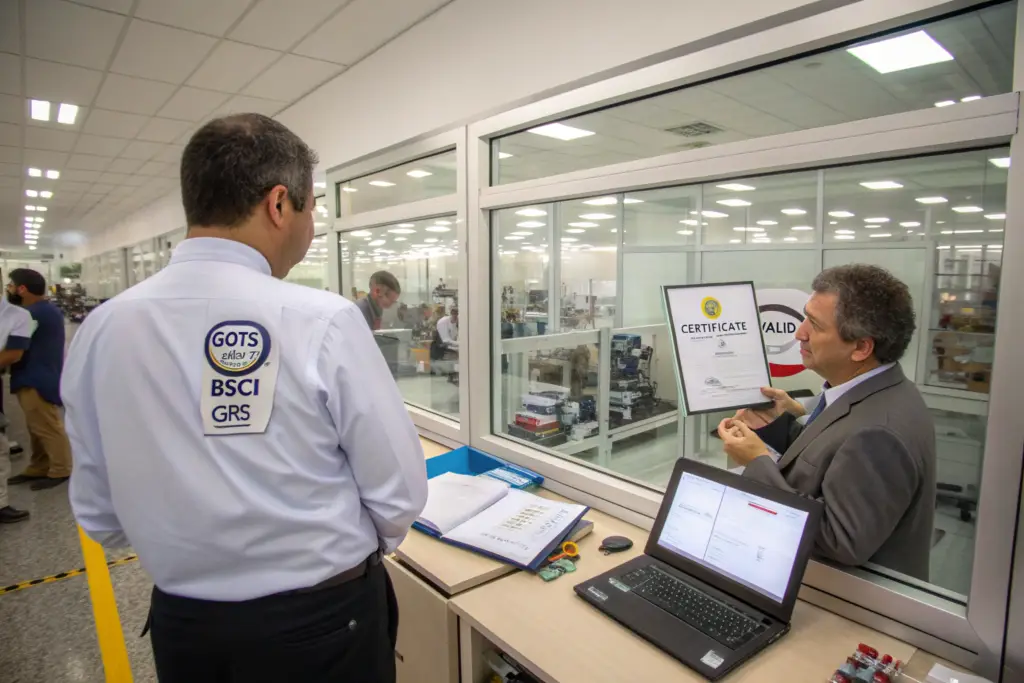
Two years ago, a fast-growing sustainable fashion brand from California placed a $185,000 order for GOTS-certified organic cotton loungewear with a factory they had sourced through a major B2B platform. The factory's profile displayed a GOTS certificate, an OEKO-TEX certificate, and a BSCI social compliance audit report. The brand's sourcing manager reviewed the PDFs, confirmed the logos looked correct, and approved the factory. The bulk order shipped. A European wholesale account, as part of their standard due diligence, independently verified the GOTS certificate number on the Global Organic Textile Standard public database. The number returned "Invalid - Certificate Expired or Not Found." The certificate was a sophisticated forgery. The factory was not GOTS-certified, the organic cotton was conventional cotton purchased at market price, and the brand was now facing a breach-of-contract lawsuit from their largest wholesale account for misrepresenting the product's organic certification. The brand's sourcing manager had confused a PDF document with an authentic, verifiable certification. The two are not the same thing.
Authentic factory certifications are the most critical factor in B2B apparel sourcing because a genuine, verifiable certification from an accredited third-party body is the only legally defensible, independently auditable evidence that a factory's claims about its organic fiber content, chemical safety standards, social compliance labor conditions, and recycled material chain of custody are factually true, and in the B2B wholesale environment, where the brand's own wholesale contracts with retailers include legally binding representations about the products' certifications, a forged or expired certificate does not just cause a quality dispute—it exposes the brand to breach-of-contract litigation, government regulatory fines, forced product recalls, and permanent delisting from wholesale platforms that track vendor compliance performance.
At Shanghai Fumao, I treat my factory's certifications as the legal foundation of my business. My GOTS certificate number can be verified live on the official database during a video call. My OEKO-TEX certificate is linked to my specific legal entity and physical address. My BSCI audit report is accessible on the Amfori platform. I do not send PDFs. I provide links to the live, official verification portals.
Why Is "Live Database Verification" the Only Unforgeable Proof of a Genuine Certification?
A UK-based children's wear brand once received a factory's "OEKO-TEX Standard 100 certificate" as a PDF attachment. The document looked completely authentic. It had the correct logo, the correct document structure, the correct stamp, and a plausible certificate number. The brand's compliance officer, trained in document verification, did not accept the PDF. She opened the official OEKO-TEX label-check portal at www.oeko-tex.com, entered the certificate number from the PDF, and clicked search. The database returned: "No results found." The certificate number belonged to a different factory that had been decertified three years earlier. The factory had simply copied the old number and photoshopped their own company name onto the document. The brand walked away from the negotiation and reported the factory to the B2B platform.
Live database verification is the only unforgeable proof of a genuine certification because every legitimate third-party certification body—GOTS, OEKO-TEX, GRS, BSCI, SA8000—maintains a publicly accessible, real-time online database where any buyer can enter the certificate number or the factory's name and instantly see the certificate's current status, the certified legal entity name, the scope of certification, the valid-from and valid-until dates, and the name of the auditing body, and a PDF certificate, no matter how professionally designed, is merely a digital image that can be created, edited, or entirely fabricated using basic graphic design software in under thirty minutes.
A PDF is a picture. A live database entry is a fact. The factory cannot edit the GOTS public database. The factory cannot alter the OEKO-TEX label-check portal. The live database is controlled by the independent certification body, not by the factory, and it represents the single source of truth for whether a certification is real, current, and applicable to the specific factory claiming it.
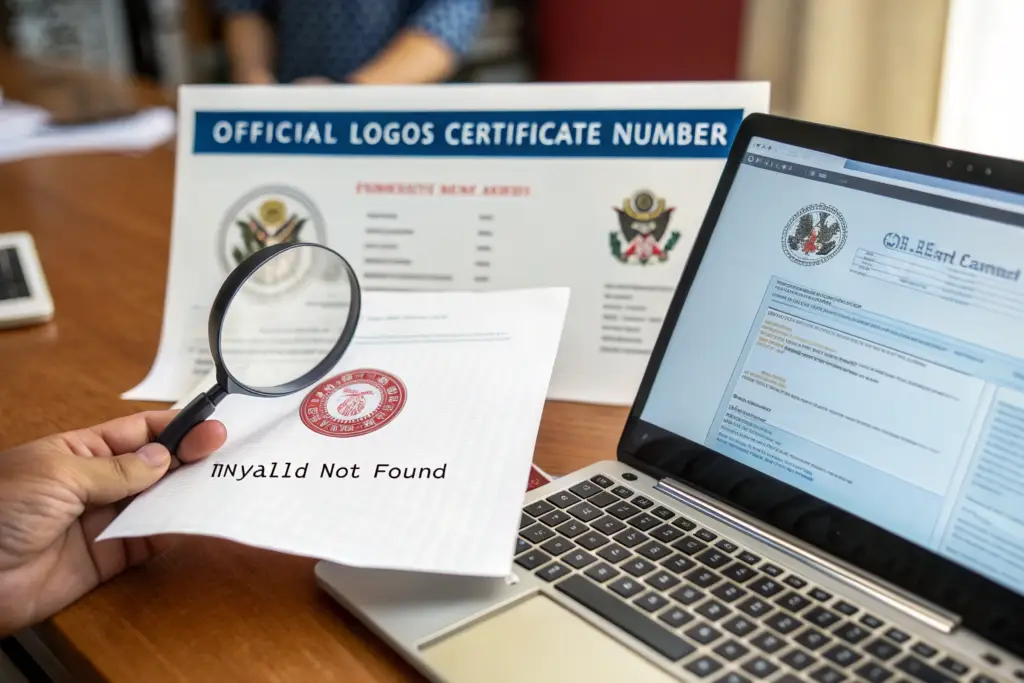
The buyer asks the factory representative to share their screen during a live video call, navigate to the official certification body's public database in real-time, enter the factory's certificate number, and display the live search result. A pre-recorded or photoshopped screenshot cannot be produced in a live, interactive screen share where the buyer can direct the navigation.
Why Must the "Legal Entity Name" on the Certification Match the "Legal Entity Name" on the Factory's Business License Exactly?
A trading company may hold a valid certification under one company name but produce goods in a different, uncertified factory under a different company name. The certified legal entity name on the database must be an exact character-by-character match with the legal entity name on the factory's government business license and on the sales contract.
How Does a "GOTS Transaction Certificate" Differ From a "GOTS Scope Certificate" and Why Does the Difference Matter Legally?
An Australian organic babywear brand once accepted a factory's GOTS Scope Certificate as proof that their order of 4,000 organic cotton onesies was certified organic. The Scope Certificate was genuine—the factory was authorized to handle GOTS organic cotton. The brand placed the order and marketed the onesies as "GOTS-Certified Organic Cotton." A consumer watchdog organization tested a random onesie from a retail store. The fabric contained 22% conventional, non-organic cotton. The factory had purchased a small quantity of organic cotton to maintain their Scope Certificate but was blending conventional cotton into bulk orders to reduce costs. The Scope Certificate proved the factory was authorized to handle organic cotton. It did not prove that the specific 4,000 onesies were made from it.
A GOTS Transaction Certificate differs critically from a GOTS Scope Certificate because the Scope Certificate merely authorizes a facility to handle organic textiles, while the Transaction Certificate is a batch-specific, purchase-order-specific document that traces the exact quantity of certified organic fiber from the specific supplier, through the specific factory, to the specific finished goods, using a mass balance calculation that mathematically reconciles the kilogram input of organic fiber with the kilogram output of finished garments, proving that the specific products in the brand's order were manufactured from certified organic material, not from a blend of organic and conventional fibers.
The Scope Certificate is a license to drive. The Transaction Certificate is the specific trip log proving where the vehicle actually went on a specific journey. A brand making a "GOTS Certified Organic" claim on a retail hangtag needs the Transaction Certificate for that specific batch, not just the factory's general Scope Certificate.

How Does the "Mass Balance Input-Output Calculation" on a Transaction Certificate Mathematically Prevent Fiber Fraud?
The certificate lists the total kilogram weight of certified organic yarn purchased by the factory for the specific order. It also lists the total kilogram weight of finished garments produced for that order. The two numbers must reconcile within a small, justifiable waste allowance. If the factory purchased 500 kilograms of organic yarn but produced 700 kilograms of finished garments, 200 kilograms of conventional fiber was blended in, and the mass balance reveals the fraud.
Why Must the Transaction Certificate Be Requested "After the Order Is Complete" Rather Than "At the Time of Order Placement"?
The Transaction Certificate documents what actually happened during production, not what was planned. It is issued after the production run is complete and the actual input and output weights are known. A pre-production promise of organic content is a plan; a post-production Transaction Certificate is a verified fact.
What Specific "Social Compliance Audit" Verifications Protect a Brand From the Reputational Catastrophe of Forced Labor in Its Supply Chain?
A major North American department store chain once delisted an established apparel brand overnight. The brand had sourced from a factory that held a "social compliance certificate" from an obscure, unaccredited certification body that the brand had never independently investigated. An investigative journalist published an exposé documenting excessive overtime, withheld wages, and unsafe working conditions at the factory. The department store's compliance team reviewed the brand's supply chain documentation and determined that the "certificate" was essentially purchased—a paper audit with no unannounced follow-up, no worker interviews, and no verification of payroll records. The brand lost 40% of its annual revenue in a single day.
A credible social compliance audit verification protects a brand from reputational catastrophe by ensuring that the factory's audit was conducted by an accredited, globally recognized auditing body such as Amfori BSCI, SA8000, or WRAP, that the audit was unannounced or semi-announced, that the audit report is accessible on the auditing body's official platform with a valid audit ID and a detailed corrective action plan for any findings, and that the audit included confidential worker interviews conducted without factory management present, all of which together provide genuine assurance that the factory's labor practices meet international standards, rather than a purchased paper certificate from an unaccredited body with no investigative rigor.
A "certificate" from an unknown body with a name that sounds official is worse than no certificate at all, because it provides a false sense of security. The brand's legal and reputational exposure is not reduced by a meaningless certificate; it is increased by the brand's reliance on a document that would not survive five minutes of scrutiny by a journalist, a regulator, or a wholesale account's compliance department.

How Does the "Amfori BSCI Platform" Provide Auditor Independence That a Factory-Paid "Consultant Audit" Cannot?
On the Amfori BSCI platform, the brand is a participant and the audit is commissioned through the platform, not directly by the factory. The auditor is assigned by an accredited auditing company, not selected and paid directly by the factory. The audit report, including all non-compliances, is uploaded to the platform and is visible to all BSCI participants. This structural independence prevents the factory from hiding unfavorable findings.
Why Must the Social Compliance Audit Include "Confidential Worker Interviews Off-Site"?
Workers interviewed on the factory premises with management present will not speak freely about working conditions, wages, or hours. A credible audit includes confidential interviews conducted off-site or in a private location where the worker is assured of anonymity and protection from retaliation. The absence of this element is a major red flag.
How Does a "Chain of Custody Certification" Like GRS Prevent a Brand From Making a False "Recycled Content" Claim?
A California-based activewear brand built their entire marketing identity around the claim "Made from 100% Ocean-Bound Recycled Plastic." The brand sourced from a factory that provided a "Recycled Content Certificate" from an unaccredited, factory-created certification body with an official-sounding name. A consumer environmental group investigated the claim, traced the factory's raw material supplier, and discovered that the "recycled" polyester was standard post-industrial factory scrap that had never been used by a consumer, never entered the waste stream, and certainly never came from the ocean. The brand was publicly exposed, faced a class-action false advertising lawsuit, and was permanently delisted by their two largest wholesale accounts.
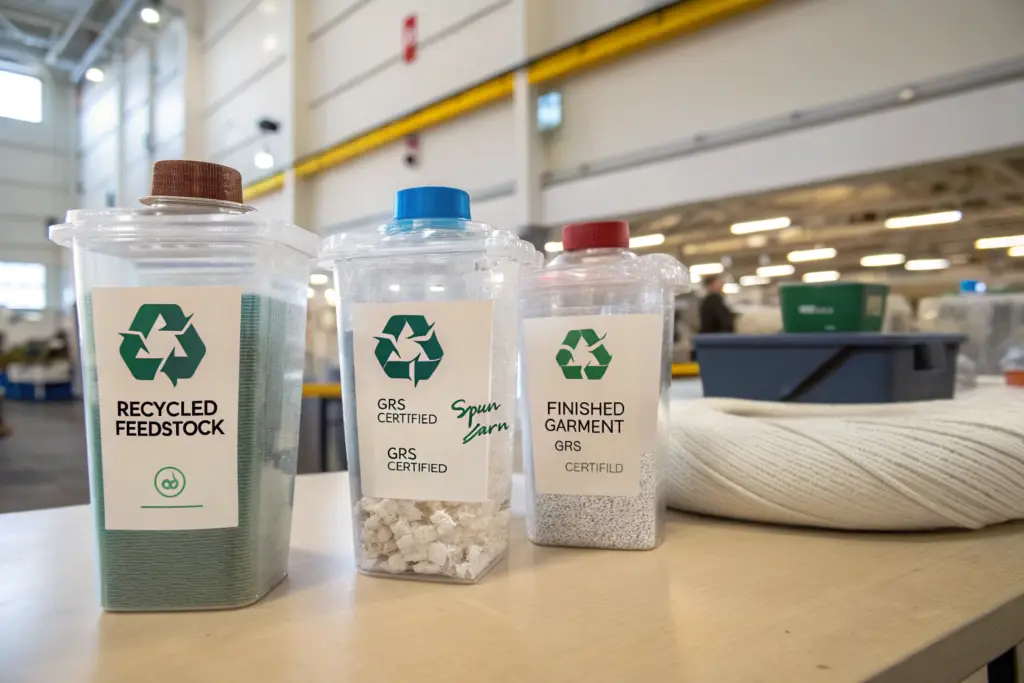
A credible chain of custody certification like the Global Recycled Standard (GRS) prevents a false recycled content claim by requiring that every entity in the supply chain—from the recycling facility that processes the plastic feedstock, to the spinning mill that produces the yarn, to the factory that sews the garment—holds a valid GRS Scope Certificate and that each batch of goods is accompanied by a GRS Transaction Certificate that traces the specific kilogram quantity of recycled material through every stage, providing a fully auditable, third-party-verified chain of custody from the recycled feedstock to the finished garment, which a self-issued, unaccredited certificate cannot provide.
The word "recycled" on a hangtag is a legal claim. In the US, the FTC Green Guides require that claims about recycled content be truthful, substantiated, and specific about the type of recycled content. A GRS Transaction Certificate provides the substantiation. A self-issued certificate from an unaccredited body is not substantiation; it is marketing fiction that exposes the brand to FTC enforcement action and consumer class-action litigation.
How Does a "GRS Transaction Certificate" Verify Whether the Recycled Content Is "Post-Consumer" or "Pre-Consumer"?
The GRS Transaction Certificate specifies the source of the recycled feedstock. Post-consumer material comes from products that were used by consumers, discarded, and diverted from the waste stream. Pre-consumer material is manufacturing scrap that never reached a consumer. The certificate distinguishes between the two, preventing a brand from claiming "post-consumer recycled" when the material is actually pre-consumer factory waste.
Why Must the "GRS Certificate" Be Issued by a "Textile Exchange-Accredited Certification Body" to Be Valid?
The Textile Exchange maintains a list of accredited certification bodies that are authorized to issue GRS certificates. A certificate from a body not on this list is not a valid GRS certificate. The brand can verify the certification body's accreditation status on the Textile Exchange website.
Conclusion
Authentic factory certifications are the most critical factor in B2B apparel sourcing because in the wholesale environment, the brand's own contracts with its retail customers contain legally binding representations about organic content, chemical safety, recycled materials, and ethical labor conditions. A forged, expired, or unverifiable certification is not a minor documentation error; it is a breach of those downstream contracts that exposes the brand to litigation, regulatory fines, product recalls, and permanent delisting from wholesale platforms. The PDF certificate is a picture that can be created in Photoshop. The live database verification on the certification body's official portal is the only unforgeable proof. The Scope Certificate is a facility license; the batch-specific Transaction Certificate is the proof that the specific goods were produced according to the standard. The social compliance audit from an accredited body with confidential worker interviews is the only credible assurance against forced labor. The GRS chain-of-custody certification is the only substantiation for a recycled content claim that will survive FTC scrutiny.
At Shanghai Fumao, I build my factory's compliance infrastructure on verifiable, accredited certifications. I do not send PDFs that could be forged. I share my screen during live video calls and navigate the official GOTS, OEKO-TEX, GRS, and BSCI databases in real-time, showing my factory's live, active certification status. I provide Transaction Certificates for every GOTS and GRS order after production is complete. My social compliance audit is conducted through the Amfori BSCI platform and is visible to any BSCI participant.
If you are a brand buyer evaluating manufacturing partners and you want to verify certifications through live database checks, not static PDFs, contact my Business Director, Elaine. She can schedule a live video verification session where she shares her screen and navigates the official certification databases for every certification we hold, showing you the live, current status of each one. Reach Elaine at: elaine@fumaoclothing.com. Verify the certification on the database, not the document.