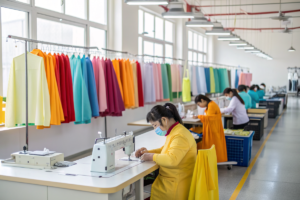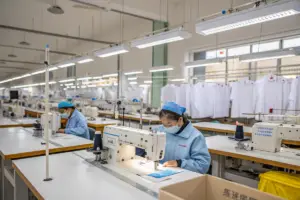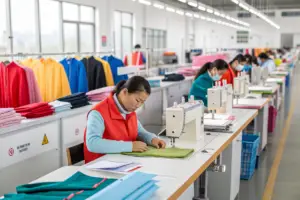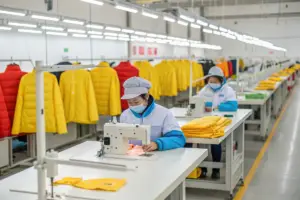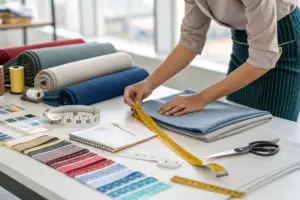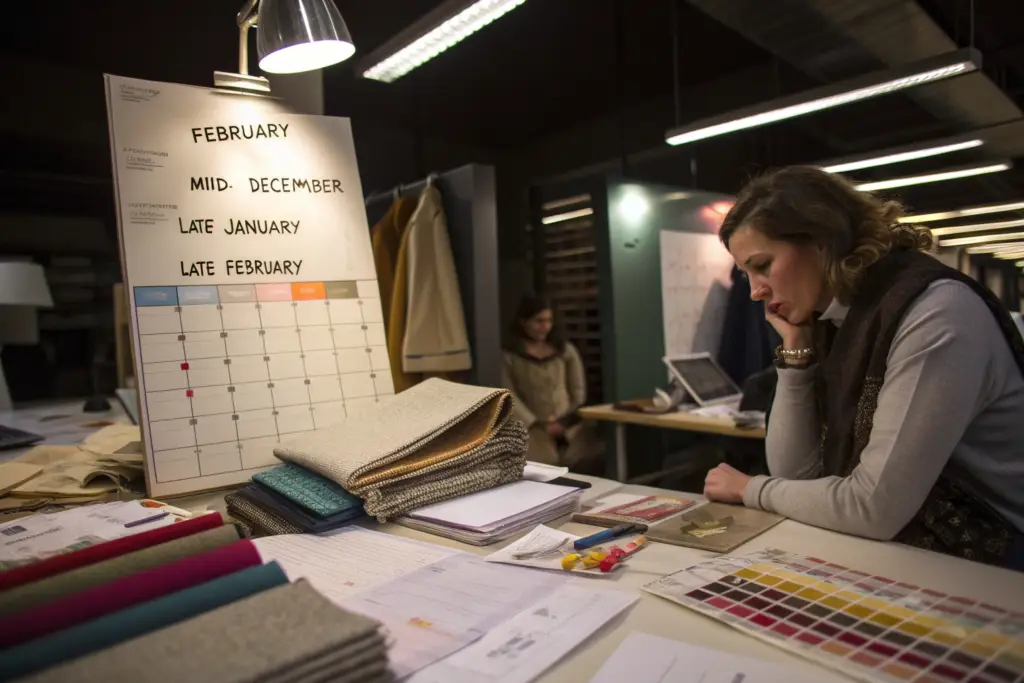
A fast-growing Miami-based resort wear brand once made a catastrophic calendar error that cost them their entire Spring season. The founder worked backward from the February wholesale trade show where she needed to present her collection to buyers. She calculated that bulk production required eight weeks. She allowed two weeks for shipping. She gave herself one week for final approvals. Working backward, she sent her tech packs to the factory in early November, confident that the timeline was generous. What she had completely failed to account for was the six-week sampling and approval process. The factory received the tech packs in November. The first samples arrived in mid-December. The fit was off on three styles. The revised samples arrived in late January. The fabric lab dips for two colors were rejected and required re-dyeing. By the time the final samples were approved, it was late February. The trade show had passed. The wholesale orders she had built her entire year around were never placed. The sampling timeline was not an optional phase she could compress. It was a physically irreducible sequence of development steps, and her failure to factor it into the calendar destroyed her season.
Smart apparel buyers always factor sampling time into their seasonal launch schedules because the sampling process—consisting of pattern development, fabric sourcing and lab dip approval, first sample sewing, fit correction, revised sample sewing, and final approval—is a physically sequential, iterative process that cannot be parallel-processed or meaningfully compressed beyond its irreducible minimum of four to eight weeks depending on garment complexity, and any attempt to compress it by skipping fit revisions, approving rushed lab dips, or accepting unrevised samples will produce a bulk production order that carries the uncorrected fit, color, and construction errors directly into thousands of units that will be returned by disappointed wholesale accounts and retail customers.
At Shanghai Fumao, I have seen too many promising brands sabotage their own launches by treating the sampling timeline as an inconvenient suggestion rather than a physical law of garment development. The sampling process is not a delay. It is a quality insurance policy, and the premium for that policy is time.
Why Is the "Irreducible Sampling Sequence" a Physical Law, Not a Negotiable Factory Preference?
A Denver-based activewear brand founder once called me in a panic, demanding a two-week sampling timeline for a complex, seven-style collection. She had secured a last-minute meeting with a major department store buyer and needed perfect samples for the presentation. I explained, as gently as I could, that physics would not permit it. The fabric for her styles required custom dye formulations that needed at least three rounds of lab dips to match her specific color palette. The patterns for her designs, which included several asymmetric cut lines and a new, untested stretch woven fabric, would require at least two muslin fittings to resolve the inevitable fit issues. The sampling process was not a single task that could be accelerated by working overtime. It was a sequence of dependent steps where each step's output was the next step's input, and no amount of urgency could change the fact that the dye master needed 48 hours to formulate and test a new color, or that the pattern maker needed a physical muslin on a live fit model to see how the fabric behaved under movement.
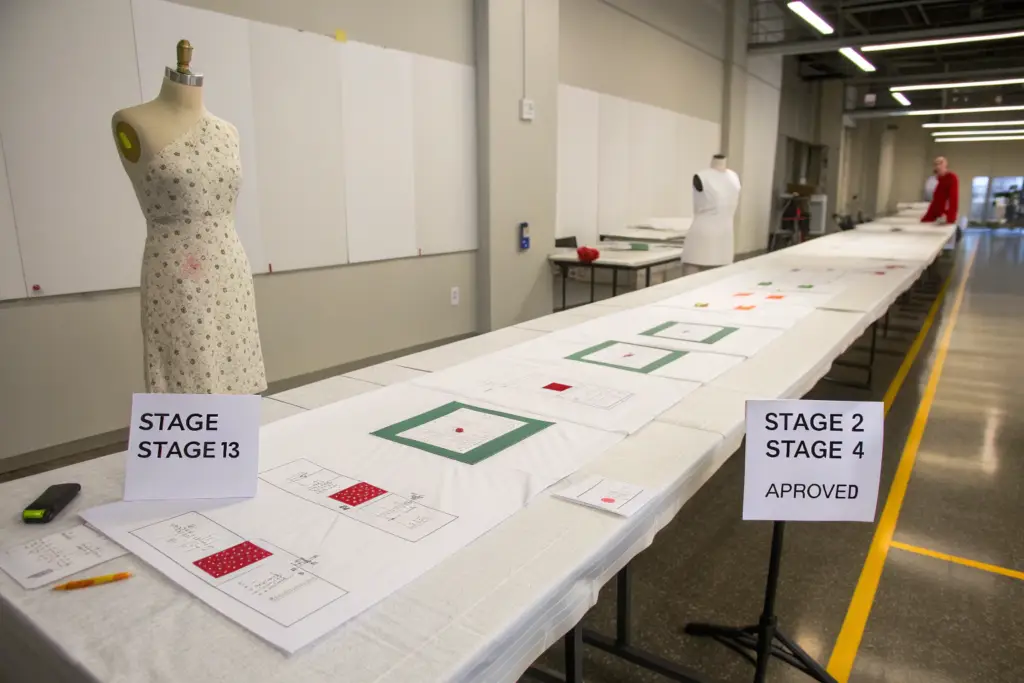
The sampling sequence is a physical law because each stage—fabric development, pattern drafting, first sample sewing, fit evaluation, pattern correction, and revised sample sewing—is dependent on the physical output of the previous stage, and many of these stages involve chemical processes like dye formulation and curing that have minimum required reaction times, physical processes like sewing and fitting that cannot be performed faster without introducing errors, and human evaluation processes like fit assessment on a live model that require a physical garment to exist before any judgment can be made, creating a sequential dependency chain that cannot be parallel-processed or compressed beyond its irreducible minimum duration without sacrificing the quality of the final approved sample.
You cannot approve a fabric color before the lab dip exists. You cannot create the lab dip before the dye master formulates and tests the dye. You cannot sew the first sample before the pattern is drafted. You cannot correct the fit before you see the first sample on a live model. Each stage is gated by the completion of the previous stage. This is not a factory policy; it is a manufacturing physics constraint.
How Does a "Custom Dye Formulation" Alone Require a Minimum of 7-10 Days, Regardless of Factory Speed?
The dye master receives the brand's target Pantone code or physical color swatch. He formulates an initial dye recipe—a precise mixture of multiple pigment colors—and dyes a small test swatch. The swatch is dried, finished, and measured against the target using a spectrophotometer. The Delta-E color difference is calculated. If the difference exceeds the acceptable threshold, the formulation is adjusted and the process is repeated. Each iteration—formulate, dye, dry, finish, measure—takes 24-48 hours. Two to three iterations are typical, consuming 7-10 days. This chemistry cannot be accelerated.
Why Does a "Live Fit Model Evaluation" Reveal Fit Issues That a 3D Digital Simulation Cannot Predict?
A 3D avatar can show fabric drape and basic tension maps. It cannot simulate soft tissue compression when a full arm presses against a torso, the specific way a fabric drags across a moving shoulder blade, or the pressure point discomfort of a waistband during seated posture. A live fit model, moving naturally, reveals these dynamic fit failures that a digital simulation misses, and correcting them requires a physical pattern adjustment and a new physical sample.
How Does "Reverse Calendar Planning" From the Retail Launch Date Expose the True Sampling Start Date?
An Austin-based boutique brand owner once showed me her seasonal calendar with genuine pride. She had marked the September retail launch date, the July bulk order deadline, and the May fabric procurement deadline. She believed she was thoroughly planned. I asked her where the sampling phase was on the calendar. She looked at the calendar, looked at me, and her face fell. She had assumed sampling happened "in between" the other phases, an invisible, compressible activity that could be squeezed into the gaps. I took her calendar and added the sampling phases: four weeks for fabric development and lab dips, two weeks for first samples, two weeks for fit corrections and revised samples, and one week for final approval. The added timeline pushed her required tech pack submission date back by nine weeks. She had already missed the start date for her own season by six weeks, and she had not even realized it.
Reverse calendar planning from the retail launch date exposes the true sampling start date by forcing the brand to place every required production phase onto a physical calendar in reverse chronological order, starting from the fixed, non-negotiable date when the goods must be on the retail floor and moving backward through the delivery transit time, the bulk production lead time, the fabric procurement lead time, and critically, the full sampling and approval sequence time, revealing that the tech packs must be finalized and submitted to the factory eight to ten months before the retail launch date—a timeline that surprises most first-time brand owners who intuitively assume four to five months is sufficient.
The calendar does not lie. A September launch requires a January tech pack submission. A February launch requires a June tech pack submission of the previous year. The reverse calendar forces the brand to confront the physical reality of the sampling timeline, not the hoped-for, compressed version that exists only in an optimistic founder's imagination.
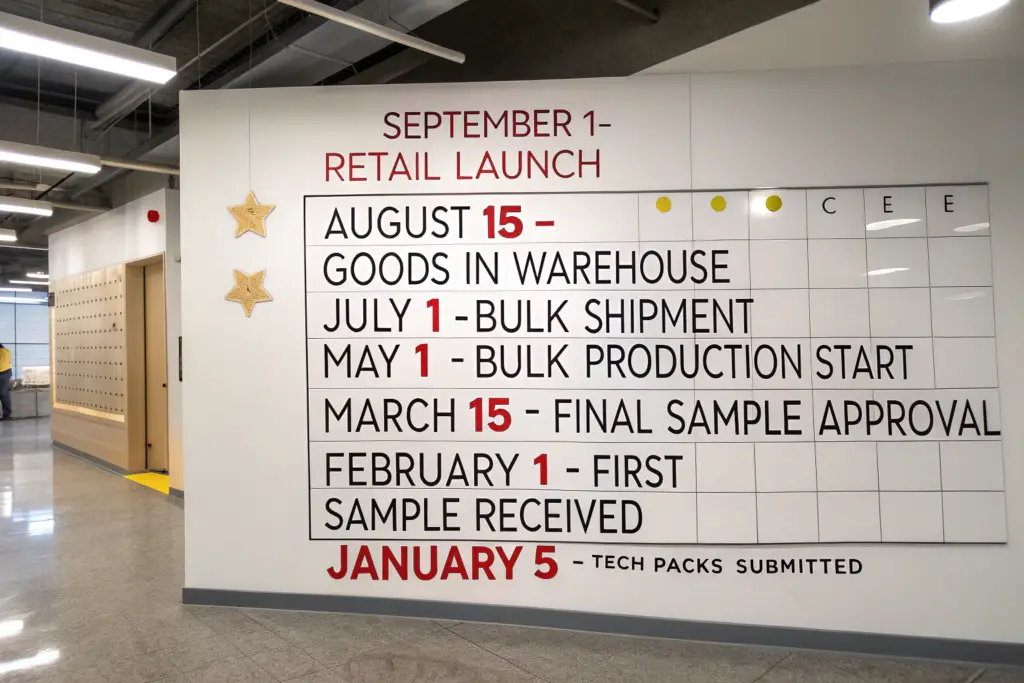
How Does a "Reverse Calendar Template" Prevent the "I Thought We Had More Time" Mid-Season Panic?
The template provides a pre-calculated timeline that every brand team member can see. The tech pack deadline is not an abstract suggestion; it is a specific date on a shared calendar, and missing that date visibly pushes the entire downstream timeline, including the retail launch, to a later date.
Why Must the "Sampling Phase" on the Reverse Calendar Include Specific Sub-Phases for Lab Dip Approval and Fit Correction, Not Just a Single "Sampling" Block?
A single block labeled "Sampling - 4 Weeks" hides the internal sequential dependencies. Breaking it into "Lab Dip Development - 2 Weeks," "First Sample Sewing - 1 Week," "Fit Evaluation and Pattern Correction - 1 Week," and "Revised Sample Sewing and Approval - 2 Weeks" makes each sub-phase visible and accountable. If the lab dip phase overruns by one week, the downstream sub-phases shift, and the impact on the final approval date is immediately visible.
What Are the Hidden "Approval Latency" Days That Brands Themselves Introduce Into the Sampling Timeline?
A Portland-based sustainable brand owner once complained to me that her factory's sampling process was "always two weeks late." I reviewed the timeline data from her last three seasons. The factory had shipped the first samples to her within the agreed timeline every single time. The delay was occurring after the samples arrived at her office. She was taking an average of eleven calendar days to evaluate the samples, gather internal feedback from her small team, consolidate the fit comments, and send the revision instructions back to the factory. The factory was waiting for her for nearly two weeks, and then being asked to compress their own work to make up for the delay. She was the bottleneck, and she had no idea.
The hidden approval latency that brands themselves introduce into the sampling timeline is the cumulative delay between the moment a sample physically arrives at the brand's office and the moment the brand sends a consolidated, specific, and actionable revision instruction back to the factory, a period that in many small to mid-sized brands averages seven to fourteen calendar days due to the sample sitting unopened, the decision-maker being out of the office, internal team feedback being collected asynchronously, and the feedback being communicated in vague, subjective language that requires multiple clarification emails, adding days or weeks to the sampling timeline that the factory cannot control and the brand's reverse calendar rarely accounts for.
The factory's sampling clock stops the day the sample is picked up by the courier. The brand's approval clock starts the day the sample arrives. The time between those two events is entirely controlled by the brand, not the factory, and it is the single largest source of sampling timeline inflation that smart buyers track, measure, and systematically reduce.
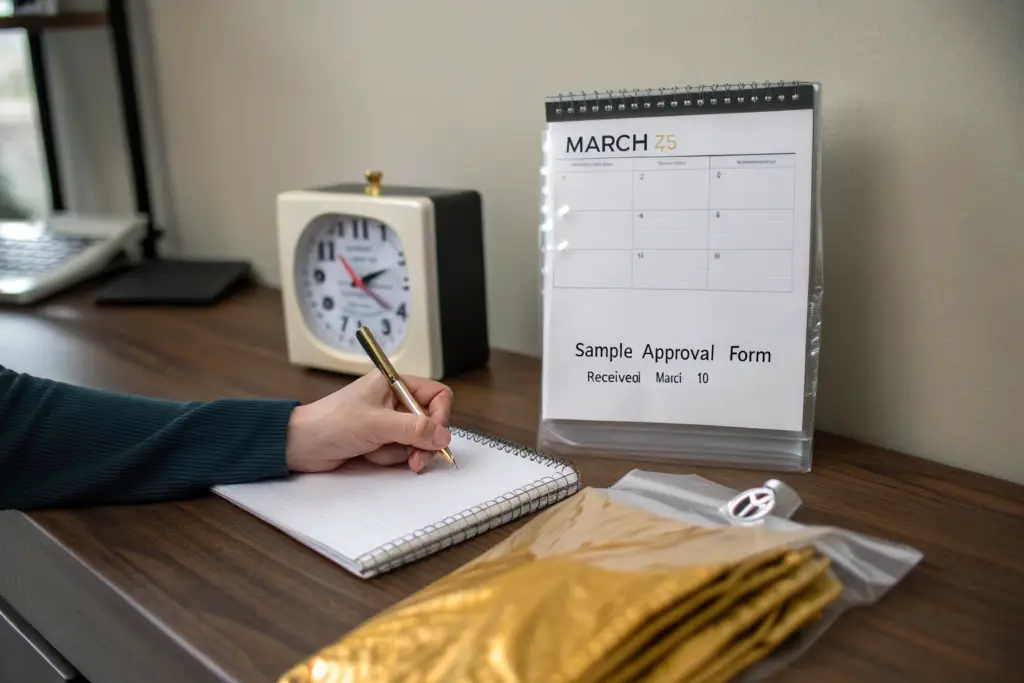
How Does a "48-Hour Sample Evaluation SLA" That the Brand Imposes on Itself Recover 8-12 Days Per Sampling Round?
The brand establishes an internal Service Level Agreement: every sample received is opened, evaluated on a fit model or dress form, and documented with specific, measured fit comments within 48 business hours of receipt. This self-imposed discipline recovers the 5-10 days of latency that an unstructured evaluation process introduces.
Why Should the Brand Consolidate "All Internal Feedback Into a Single, Numbered Revision Document" Before Sending It to the Factory?
A designer sends an email with three comments. The brand owner replies with two more comments. The sales director adds another comment on a separate thread. The factory's project manager must reconcile three separate, potentially conflicting feedback sources. A single, numbered revision document, consolidated internally before sending, eliminates the reconciliation confusion and the back-and-forth clarification delay.
How Does "Sampling Phase Parallel Processing" Reduce the Total Timeline Without Compressing Any Single Step?
A savvy New York contemporary brand owner once asked me, during our first sampling meeting, a question that demonstrated deep operational maturity: "Which phases of the sampling process can run in parallel, and which phases must run sequentially?" The question itself revealed that she understood the difference between compressing a step—which introduces errors—and overlapping independent steps—which recovers time without sacrificing quality. We identified that fabric lab dip development and initial pattern drafting could proceed simultaneously, because the dye master did not need the finished pattern to formulate a color, and the pattern maker could draft the first pattern using a substitute, similar-weight fabric. This parallel processing recovered two full weeks from the total sampling timeline without rushing a single step.
Sampling phase parallel processing reduces the total timeline by identifying and overlapping the specific development activities that are independent of each other and can proceed simultaneously without one waiting for the other's output—such as initiating fabric lab dip development at the same time as pattern drafting, sourcing trim components during the first sample sewing phase, and beginning the graded pattern development while the fit sample is in transit to the brand—recovering weeks from the total calendar without compressing any individual, quality-dependent step.
Sequential processing assumes Stage B cannot begin until Stage A is complete. Parallel processing asks, "What can we begin right now that does not depend on Stage A's output?" The dye master can mix color formulations from the brand's Pantone codes without seeing the finished pattern. The trim sourcer can order button and zipper samples from the trim specification sheet without seeing the first sample. These independent activities, when overlapped, recover calendar days without sacrificing quality.
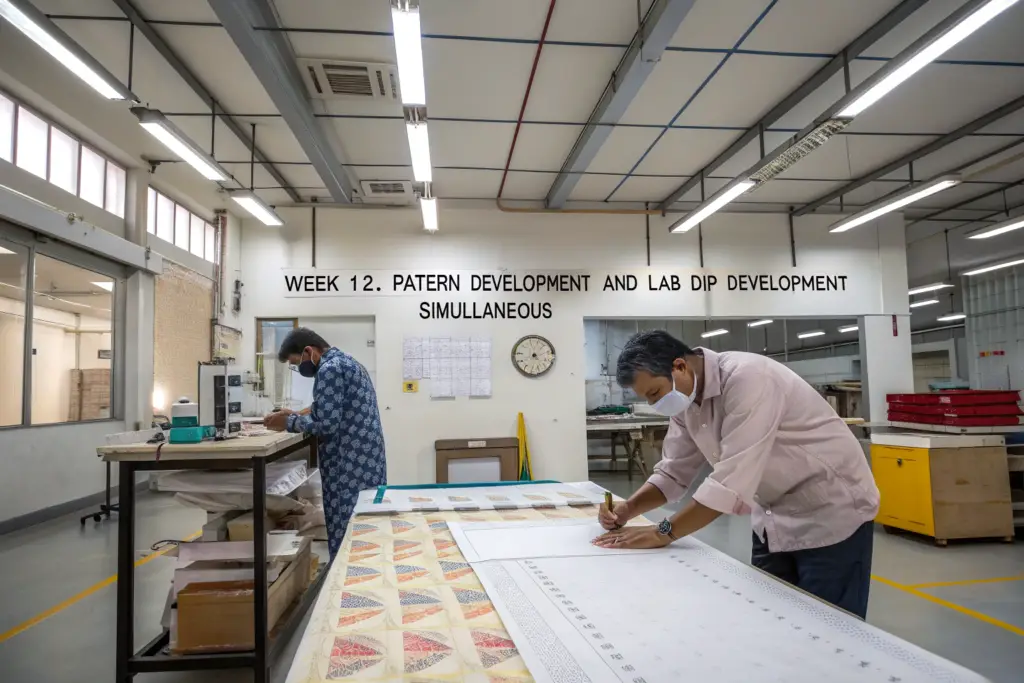
How Does "Initiating Lab Dips on the Day the Tech Pack Arrives" Recover 7-10 Days Compared to Waiting for the First Pattern?
The tech pack contains the Pantone color codes and the fabric specification. The dye master can begin formulating dye recipes the same day the tech pack is received, even before the pattern maker has finished the first pattern. By the time the first sample is ready to be cut, the lab dip has already completed one or two iterations.
Why Can "Trim and Component Sourcing" Run in Parallel With the First Sample Sewing Phase?
The tech pack specifies the buttons, zippers, snaps, and labels. The factory's trim sourcing team can order samples of these components from suppliers during the same weeks that the first garment sample is being sewn. By the time the fit sample is approved, the trim samples have arrived and been approved, and the components are ready for bulk ordering.
Conclusion
Smart apparel buyers factor sampling time into their seasonal launch schedules because they understand that the sampling process is not a buffer to be compressed, but a physical sequence to be respected, planned, and optimized. The irreducible sampling sequence—lab dip chemistry, pattern drafting, sample sewing, fit evaluation, and revision—cannot be eliminated or meaningfully compressed without introducing the very fit, color, and construction errors that the sampling process exists to prevent. The reverse calendar planning method reveals the true, often surprisingly early, tech pack submission date that the retail launch date demands. The self-imposed 48-hour sample evaluation SLA recovers the hidden latency that brands themselves introduce. The parallel processing of independent activities recovers weeks from the total timeline without sacrificing quality at any single step.
At Shanghai Fumao, I work with brand partners to build realistic, reverse-planned seasonal calendars that fully account for the sampling sequence. My project managers initiate lab dips on the day tech packs arrive, run pattern development in parallel with fabric sourcing, and track brand-side approval latency as closely as factory-side production time. A sampling timeline that is respected, not resented, is the foundation of a season that launches on time, with products that fit, in colors that match.
If you are a brand buyer planning your next seasonal launch and you want a manufacturing partner who will help you build a realistic, optimized sampling timeline—and then hold both the factory and your own team accountable to it—contact my Business Director, Elaine. She can share our reverse calendar planning template, our parallel processing timeline, and our sample evaluation SLA format. Reach Elaine at: elaine@fumaoclothing.com. Plan the sampling, or the sampling will plan your failure.