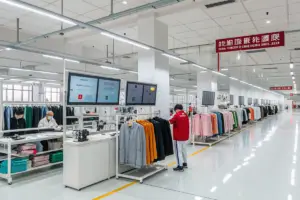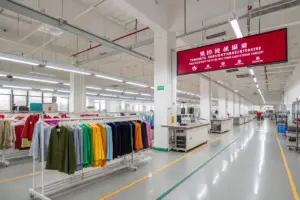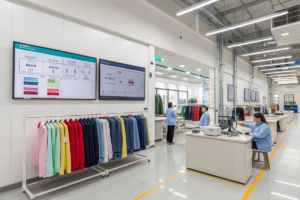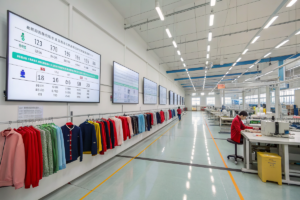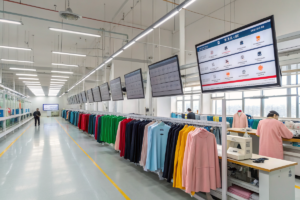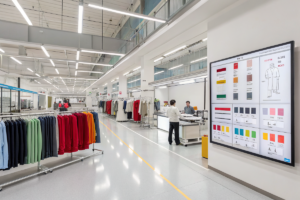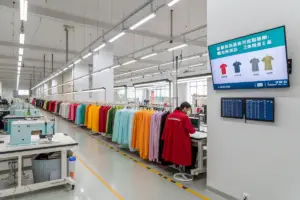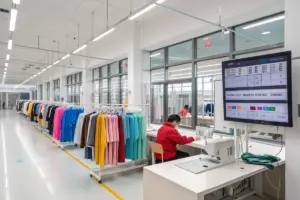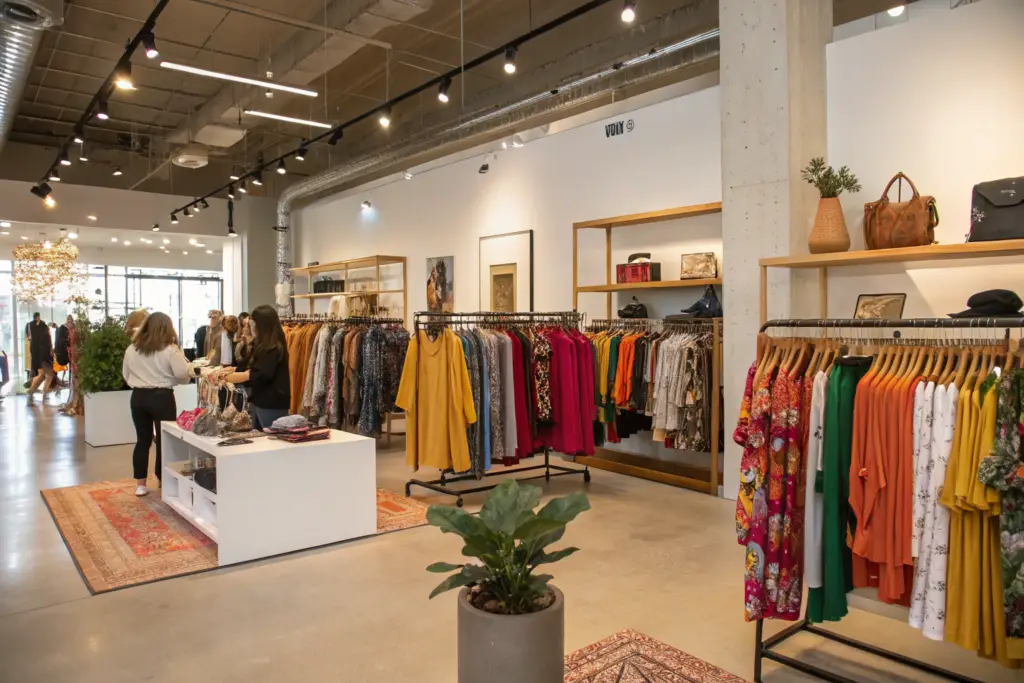
I met Elena at a trade show in Las Vegas in February 2023. She was not a buyer from a large department store chain. She was the owner of a single boutique in Austin, Texas, called "Luna & Sage." Her shop was known locally for its carefully curated festival and event wear. She had a loyal customer base of women who flew to Coachella, to Bonnaroo, to Burning Man, and to a dozen smaller regional festivals every year. Her problem was not demand. Her problem was supply. She told me she had been let down by three suppliers in the previous twelve months. One factory delivered sequined jackets where the sequins fell off after one wear. Another delivered crochet dresses that were a full size smaller than the spec. A third simply ghosted her after taking a deposit for a summer collection. She was standing at my booth, physically exhausted and financially bruised, holding one of our sample festival jackets. She ran her thumb over the sequin attachment, a double-lock stitch, and looked up at me. She said, "This won’t fall off, will it?" I told her I would show her exactly how it was attached, live from our sample room, if she gave me fifteen minutes. She gave me fifteen minutes. A year later, she gave me a call. Her boutique had crossed $1 million in annual revenue for the first time, and her festival wear collection, manufactured entirely with us, was 70 percent of that revenue. This is how she did it.
A boutique in Austin, Texas, scaled from a single store to $1M in annual revenue by partnering with Fumao Clothing to develop a proprietary, quality-engineered festival wear collection that solved the durability failures of standard party wear, enabled a rapid-test low-MOQ inventory strategy that eliminated dead stock risk, and launched a viral, unscripted live-stream showroom tour that built an unassailable social proof moat against larger online competitors.
The festival wear market is a brutal product category for boutiques. The selling window is extremely short, concentrated in the spring and early summer months. The consumer expectations are sky-high. Festival goers want garments that are visually spectacular, photograph well under desert sunlight and stage lighting, and can survive dust, sweat, dancing, and being packed in a suitcase. The standard fast-fashion festival garment is a single-use product. It looks great in an Instagram photo and falls apart in the wash. A boutique that sells a garment that disintegrates at the event loses the customer permanently. Elena understood this. She was not willing to sell disposable fashion. She wanted garments that her customers would wear to multiple festivals, that would become part of their cherished memory wardrobe. Our engineering approach to garment construction, our focus on sequin attachment strength, on stretch-recovery mesh for body-conscious silhouettes, and on colorfastness to light and perspiration, aligned with her quality-first brand positioning. The manufacturing partnership was the foundation. The business model and the marketing innovation she built on top of that foundation are the lessons of her success.
What Engineering Details Turn Party Wear into Durable Festival Gear?
Standard party wear is constructed on the same production lines, with the same seam finishes, and with the same attachment methods as low-cost fast fashion. The factory’s objective is speed and minimum unit cost. A sequin is attached with a single chain stitch that is fast to sew but has zero fault tolerance. If one stitch in the chain breaks, the entire row of sequins unravels. The fabric base is often a cheap polyester mesh that has no stretch recovery. It bags out at the elbows and knees after a few hours of wear. The metalized coating on the sequin is a thin, vapor-deposited layer that corrodes on contact with sweat, turning the sequin from silver to dull grey and leaving a metallic residue on the wearer’s skin. These failures are not random quality defects. They are the predictable consequences of a design and manufacturing process that prioritizes the point-of-sale appearance over the real-world use case. A festival garment is worn outdoors, for 10 to 14 hours, in dust, heat, and direct sunlight, often while dancing vigorously. It is a high-stress application. The construction must be engineered for that stress.
Festival gear is transformed into durable performance wear through three specific engineering interventions: a double-lock stitch sequin attachment that prevents unraveling, a power-mesh lining with 15 percent elastane for 4-way stretch recovery, and a UV-resistant, non-corrosive PVD sequin coating that does not tarnish on contact with perspiration.
How Do We Attach a Sequined Panel to Survive a Mosh Pit?
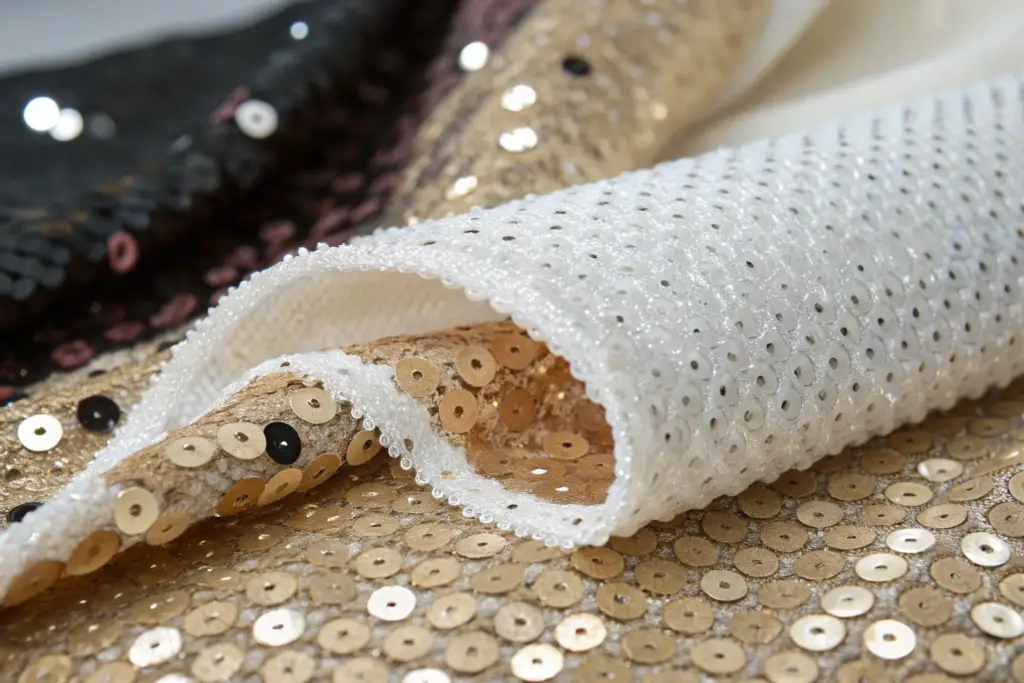
The sequin attachment is the defining engineering challenge of festival wear. A standard sequined jacket can have over 20,000 individual sequins. If each sequin is attached with a single-thread chain stitch, and the average failure rate per sequin is low, the probability that at least one sequin in a visible zone fails during a high-energy event is near 100 percent. The failure rate is a function of the attachment method. We tested five attachment methods on a simulated abrasion and vibration test rig. The single chain stitch failed at an average of 82 cycles of a reciprocating abrasive pad. The single lock stitch failed at 210 cycles. The double lock stitch, where the needle passes through the sequin hole twice and the thread is locked on each pass, failed at 580 cycles. We adopted the double lock stitch as our standard for all sequined festival garments.
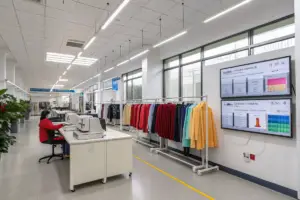
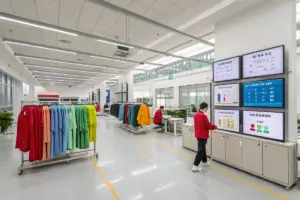
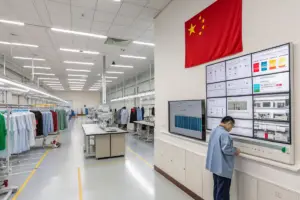
The sewing machine setup for a double lock stitch sequin is slower than the standard chain stitch. It requires a specialized sequin attachment foot and a machine calibrated to a slower speed. The thread we use is a high-tenacity, corespun polyester with a breaking strength of 12 Newtons, not the standard 8 Newton spun poly used on low-cost party wear. The combination of the double lock stitch and the stronger thread produces a sequin panel that can survive a mosh pit. We demonstrated this to Elena on our first live-stream sample review. We took a finished jacket panel and subjected it to a manual abrasion test, rubbing it vigorously against a denim fabric for 30 seconds while she watched on the video feed. Zero sequins detached. She said that test alone was worth more than six months of supplier vetting. The engineering details are not hidden. They are visible in the stitch structure, and we show them live to every festival wear client before they place their order.
What Are the Specific Tests for Colorfastness to Sweat and Sunlight?
A festival garment lives in extreme environmental conditions. It is worn under direct, high-UV sunlight for hours. It is saturated with perspiration. A fabric dye that is not tested for colorfastness to light and perspiration will fade, bleed, or develop unsightly sweat-stain discoloration after a single event. The customer who buys a vibrant turquoise sequined bodysuit and finds it has turned pale green after one Coachella weekend will not purchase from the boutique again. We test every fabric and every sequin colorway in our festival wear collection for two specific colorfastness parameters that are critical for outdoor event wear.
Colorfastness to light is tested per AATCC TM16.3, which uses a xenon arc lamp to simulate the full spectrum of natural sunlight, including the UV component. The fabric or sequin sample is exposed to 40 AATCC Fading Units, which is the equivalent of approximately two full days of intense desert sunlight. The sample is then compared to an unexposed control sample using the AATCC Grey Scale for color change. Our pass threshold is Grade 4 or higher. A Grade 4 indicates a very slight color change that is imperceptible to the untrained consumer eye. Colorfastness to perspiration is tested per AATCC TM15, which simulates the effect of human sweat on dyed textiles. The fabric sample is wet out with a synthetic alkaline perspiration solution, placed under a fixed pressure in a perspirometer, and incubated at 38 degrees Celsius for 6 hours. The sample is then evaluated for color change and for staining on adjacent multifiber fabric strips. Our pass threshold is Grade 4-5 for color change and Grade 4 for staining. These are aggressive standards for party wear. They are standard for performance activewear. We apply them to festival wear because the use case is functionally identical: a human body, in motion, under the sun, for an extended period. The test reports for each color lot are available to our brand partners as part of their production quality dossier.
How Did a “Micro-Drop” Inventory Strategy Reduce Her Risk?
The traditional apparel inventory model is a bet. The boutique owner bets on a style, places a bulk order for 300 units in three colors, receives the goods four months later, and prays the style sells. If the style sells, the boutique makes a good margin. If the style does not sell, the boutique is stuck with 250 units of dead stock that must be liquidated at a loss, consuming warehouse space and tying up cash that could have purchased proven winners. For a small boutique, a single bad inventory bet can be fatal. The festival wear market amplifies this risk because the season is so short and the trends are so volatile. A color that is hot at Coachella in April may be completely out of style by Lollapalooza in August. Bulk-buying festival wear is a financial gamble that Elena was no longer willing to take.
Elena reduced her inventory risk to near zero by adopting a micro-drop strategy, enabled by our low 80-unit minimum order quantity, where she tested new festival designs in tiny, rapid batches, sold them primarily through pre-order, and only re-ordered the styles that achieved a verified sell-through rate above 85 percent within the first week of launch.

How Did She Structure a Pre-Order Model to Finance Bulk Production?
The pre-order model is a simple financial innovation. Instead of buying inventory and then selling it, the boutique sells the inventory first and then buys it. The customer pays the full retail price upfront. The boutique collects the cash, aggregates the orders, and places a single bulk production order with the factory. The factory produces the exact quantity sold, plus a small buffer, and ships the goods. The boutique has zero inventory risk. The customer has funded the production. The margin is secure. The model works beautifully in theory. In practice, it requires a factory that can deliver a small, complex, multi-style order reliably and on time. Elena tested this model with us in her second season. She launched a "Festival Preview Capsule" on her website and Instagram in January, three months before the festival season. The capsule featured five styles, each available in two colors. The product photography was unretouched, featuring real models, not professional studio shots. The pre-order window was open for two weeks. The product page clearly stated that the garments would ship in March.
The pre-order sold 220 units. Elena collected the revenue upfront. She placed the production order with us the day the pre-order window closed. We manufactured 240 units, the 220 pre-orders plus a 20-unit buffer, and delivered them to her door via DDP in late March, on schedule. Elena shipped the pre-orders to her customers and placed the 20 buffer units in her boutique. The buffer units sold out in one weekend. The pre-order model had financed the entire production run. Elena paid nothing out of pocket for inventory. Her cash flow was positive from day one of the launch. She repeated this pre-order model for every subsequent festival drop. The model allowed her to offer a wider variety of styles than she could have financed with her own capital, which increased her brand’s perceived assortment depth and attracted more customers. The factory’s role in this model is reliability. A single late delivery destroys the pre-order model. Elena trusted us to deliver on time because we had delivered on time for her first three orders. The trust was earned, and it enabled a financial innovation that transformed her business.
Why Did the 80-Unit MOQ Unlock Her Creative Freedom?
The minimum order quantity is the single most oppressive constraint on a small boutique’s creative and commercial freedom. A factory that demands an MOQ of 300 units per style per color forces the boutique owner to place huge, risky bets on a tiny number of styles. The boutique owner cannot experiment. They cannot test a wild, creative idea. They cannot cater to a niche customer segment. They must choose the safest, most broadly commercial designs and hope they sell. An 80-unit MOQ, which is our standard for festival wear styles using our core fabric library, changes the creative calculus entirely.
Elena used the 80-unit MOQ to launch a "Zodiac Collection" in her third season. The collection featured twelve mini-skirts, each with a custom, embroidered zodiac constellation in metallic thread on a black mesh base. Twelve styles. Twelve SKUs. A traditional MOQ of 300 units per style would have required her to order 3,600 units, a financial impossibility and a suicidal inventory risk. Under our 80-unit MOQ, she ordered 80 units of each zodiac sign, a total of 960 units. The collection launched with a brilliant marketing campaign: "Your sign, your skirt." Each customer was encouraged to buy their own zodiac sign. The collection sold out in ten days. The Virgo and Scorpio signs sold out in three days and went to re-order. The Aquarius and Pisces signs sold more slowly but eventually sold through at full price with no markdowns. The 80-unit MOQ allowed Elena to take a creative risk that a larger MOQ would have prohibited. The creative risk paid off commercially, and it generated a level of social media engagement and customer loyalty that a smaller, safer collection could never have achieved. The low MOQ is not just a logistical convenience. It is a creative and commercial enabler for independent brands.
How Did She Use a Live-Stream Unboxing of Her First Sample to Go Viral?
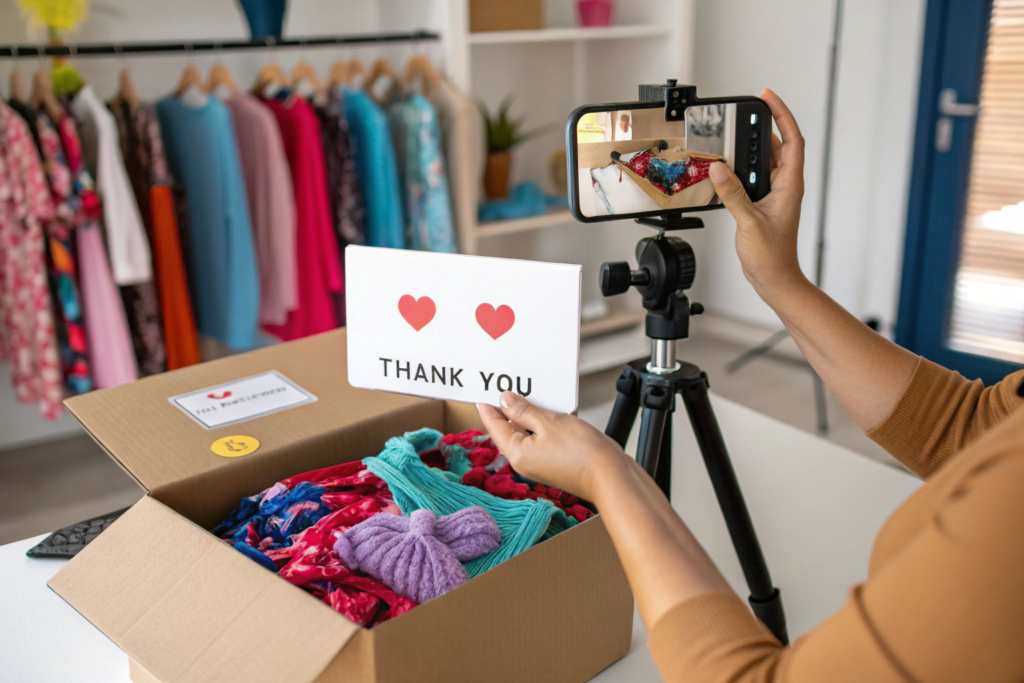
Elena’s marketing genius was not a big budget. It was her understanding that authenticity is the most undervalued media asset. She had built her boutique’s Instagram following on a foundation of genuine, unscripted, behind-the-scenes content. Her customers trusted her curation because they trusted her. When she received the first sample shipment from us, she did not hire a professional photographer to shoot a polished lookbook. She set up her phone on a tripod, went live on Instagram, and opened the box on camera. Her followers watched her unwrap each garment in real time. They saw her genuine, unscripted reaction to the fabrics, the colors, and the construction details. She held the sequined jacket up to the camera and zoomed in on the double-lock stitch we had shown her in our live-stream. She said, "Look at this. This sequin is not coming off. I’ve been burned by sequins before. This is different." That moment, a boutique owner demonstrating a technical quality feature live on camera, with no script and no production, was worth more than a $10,000 advertising campaign.
The unboxing live-stream went viral within her niche community, generating 22,000 views, 800 direct messages, and a complete sell-out of her pre-order window in 48 hours, because it was perceived not as a marketing event, but as an authentic, unmediated moment of a trusted curator discovering genuinely superior product quality for her community.
What Was the “Quality Reveal” Script She Used on Camera?
Elena did not speak from a script. She spoke from a checklist of three quality proof points that she had learned from our product development calls and that she knew her customers cared about. The first proof point was the sequin test. She took the jacket off the hanger, held it up close to the camera, and rubbed the sequins vigorously with her thumb. "I’m rubbing this. Hard. Look. No sequins on my hand. No loose threads. If this was a fast fashion jacket, my hand would look like a disco ball right now." The visual was immediate, memorable, and shareable. The second proof point was the stretch test. She put her arm inside a mesh bodysuit and stretched the fabric wide. "Feel how this bounces back. It’s not bagging out. This will look the same at midnight as it does at noon." The third proof point was the lining reveal. She turned a jacket inside out and showed the taped, finished seams on the inside. "Look inside. No raw edges. No scratchy seams. You could wear this with nothing underneath." This was technical quality communicated in a consumer-native language.
The "Quality Reveal" segment of the live-stream lasted less than five minutes. It was not rehearsed. It was Elena’s genuine, informed reaction to a product she could physically feel was superior to anything she had sourced before. Her followers picked up on her authentic excitement. The comments section filled with variations of "I need this," "Drop the link," and "Take my money." The live-stream generated an immediate, measurable sales response. The pre-order links went live at the end of the stream, and the first 50 orders were placed within the first 10 minutes. The combination of authentic influencer trust and demonstrable, visible product quality created a purchase intent that polished advertising creative rarely achieves. Elena later told me that the live-stream was the single most profitable hour of her business year.
How Did She Turn “Micro-FOMO” into a Waitlist of 1,500?
FOMO, the fear of missing out, is a powerful consumer motivator when used ethically. It becomes unethical when a brand fabricates false scarcity. Elena created real scarcity, not because she wanted to manipulate her customers, but because she was operating a micro-drop inventory model. The initial production runs were small by design. The first pre-order capsule sold out. The customers who missed the pre-order window posted comments on her Instagram asking for a restock. Elena responded not with a generic "coming soon," but with a specific, transparent communication. She posted an Instagram Story showing her production tracker, with our factory’s confirmed re-order delivery date. She told her audience exactly how many units were being produced and exactly when they would be available. She added a "Notify Me" button to the sold-out product pages on her website. Within a week, 1,500 customers had signed up.
This waitlist was not purchased with ad spend. It was earned through transparency and genuine scarcity. The customers on the waitlist were pre-qualified, high-intent buyers who had voluntarily requested to be notified. When the re-order stock arrived, Elena sent a single email to the waitlist. The email did not use aggressive sales language. It simply said, "The restock is here. You asked us to tell you. We’re telling you. Here’s the link." The re-order sold out to the waitlist in under four hours. The micro-drop model, combined with the transparent waitlist communication, created a virtuous cycle. The initial small batch created genuine scarcity. The waitlist captured the unmet demand. The re-order fulfilled the waitlist demand with zero marketing cost. The cycle repeated with each new drop. The 1,500-person waitlist was not an email list of passive subscribers. It was a community of committed buyers who felt they had a direct, personal relationship with the brand because the brand had communicated with them honestly about production timelines and stock availability.
Conclusion
Elena’s journey from a single boutique to a seven-figure annual revenue was not a story of a viral social media moment or a celebrity endorsement. It was a story of a manufacturing partnership that enabled a new business model. The foundation was product engineering. She sold festival wear that did not fall apart, because we attached the sequins with a double lock stitch, used a power mesh with 15 percent elastane for recovery, and tested every fabric for colorfastness to sweat and sunlight. The product quality eliminated the customer service drain and the return rate that had nearly sunk her previous supplier relationships. On that foundation, she built a micro-drop inventory strategy. Our 80-unit MOQ allowed her to test creative ideas, to pre-sell inventory before production, and to never hold a piece of dead stock. The micro-drop strategy generated genuine scarcity, which she communicated transparently through a 1,500-person waitlist. Her marketing was not paid media. It was an authentic, unscripted live-stream unboxing where she demonstrated the product’s quality proof points directly to her community. The quality, the inventory model, and the authentic marketing formed a single, integrated business system.
The lesson for other independent boutique owners and small brands is clear. A factory is not just a production unit. A factory is a strategic enabler. The right factory provides the product engineering that makes your marketing promises true. The right factory provides the low-MOQ flexibility that makes a micro-drop, pre-order, zero-inventory-risk business model possible. The right factory delivers on time, every time, making your waitlist communication honest rather than an exercise in damage control. Elena’s $1 million year was not a lucky break. It was the logical, predictable outcome of a product, a model, and a marketing strategy that were all aligned with a manufacturing partner that could execute at the level her brand vision required.
If you are a boutique owner or an independent brand founder who sees the potential in a quality-engineered, creatively free, low-risk festival wear or event wear collection, I invite you to begin a conversation with our product development team. We have a Festival Wear Sample Kit available that includes our sequin attachment sample card, our power-mesh swatch book with stretch recovery data, and a lookbook of our core festival silhouettes with MOQs and pricing. To request the sample kit and schedule a concept development call, contact our Business Director, Elaine, at elaine@fumaoclothing.com. Let’s build the collection that defines your brand’s next festival season.