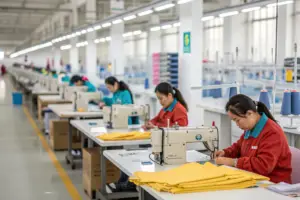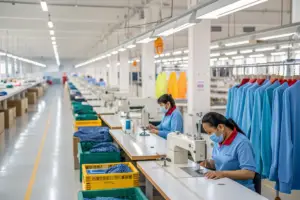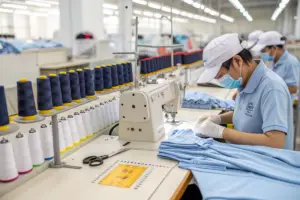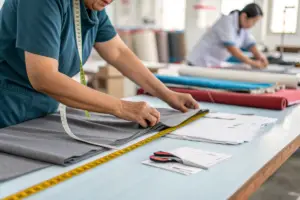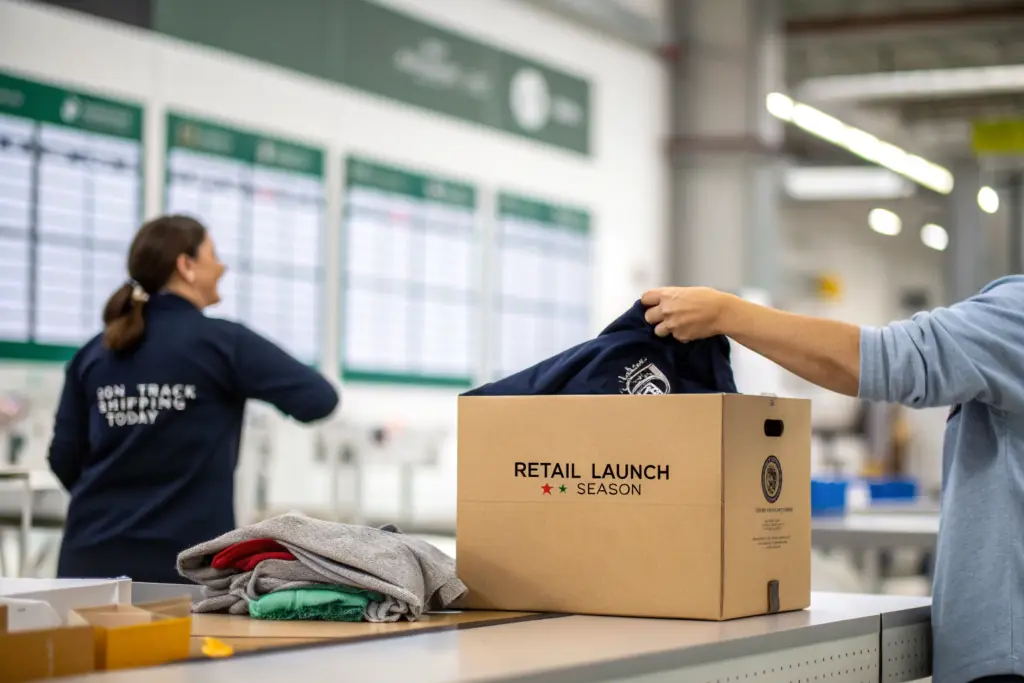
Three seasons ago, two nearly identical outdoor apparel brands—both based in Colorado, both targeting the same specialty retail accounts, both designing a new lightweight insulated jacket for the Fall season—placed their orders within the same week. Brand A worked with a factory that had a dedicated, experienced project manager who had pre-booked vessel space, pre-reserved greige fabric, and built a production schedule with pre-calculated buffers at every critical stage. Brand B worked with a factory that managed production reactively, responding to problems as they appeared. Brand A's jackets arrived at US retail accounts on September 1st. Brand B's jackets arrived on October 8th. Brand A captured the full-price selling window, secured premium floor placement in every account, and sold through at 82% full price. Brand B's jackets hit the floor after the peak buying window, competed against early-season markdowns, and sold through at 47%. The product was nearly identical. The factory's project management capability determined the outcome.
To leverage expert factory project management to beat your competitors to market, you must partner with a factory whose dedicated project manager operates on a "Preventative Critical Path" methodology that pre-identifies and de-risks every potential delay trigger weeks before it can occur, pre-books ocean freight capacity and greige fabric inventory before the peak season rush, provides a shared, real-time production tracking dashboard that allows you to monitor progress without email chains, and implements an "Exception-Only" communication protocol that notifies you immediately when a deviation from the schedule occurs, enabling you to make a same-day decision rather than discovering a problem days later.**
At Shanghai Fumao, I have seen brands win and lose entire seasons based on the project management capability of their factory partner. A beautiful product that arrives four weeks late is a clearance liability. An average product that arrives on week one of the selling season captures the full-price window. Speed-to-market is not a logistics metric; it is a competitive weapon.
Why Does a "Preventative Critical Path" Methodology Deliver Goods 3-5 Weeks Faster Than Reactive Timeline Management?
A fast-growing Chicago-based streetwear brand once worked with a factory whose project manager used a simple, reactive timeline: each stage had a single start date and a single end date, with no buffer, no contingency, and no pre-emptive risk identification. When the zipper shipment was delayed by four days, the cutting schedule slipped by four days. When the dye lot failed and required a re-dye, the sewing schedule slipped by seven days. When the vessel booking was confirmed late, the container missed its sailing and waited at the port for another six days. Each delay cascaded into the next, and the shipment arrived five weeks late. The project manager had not been negligent; she had simply managed the timeline as a sequence of events rather than as a system of interconnected risks.
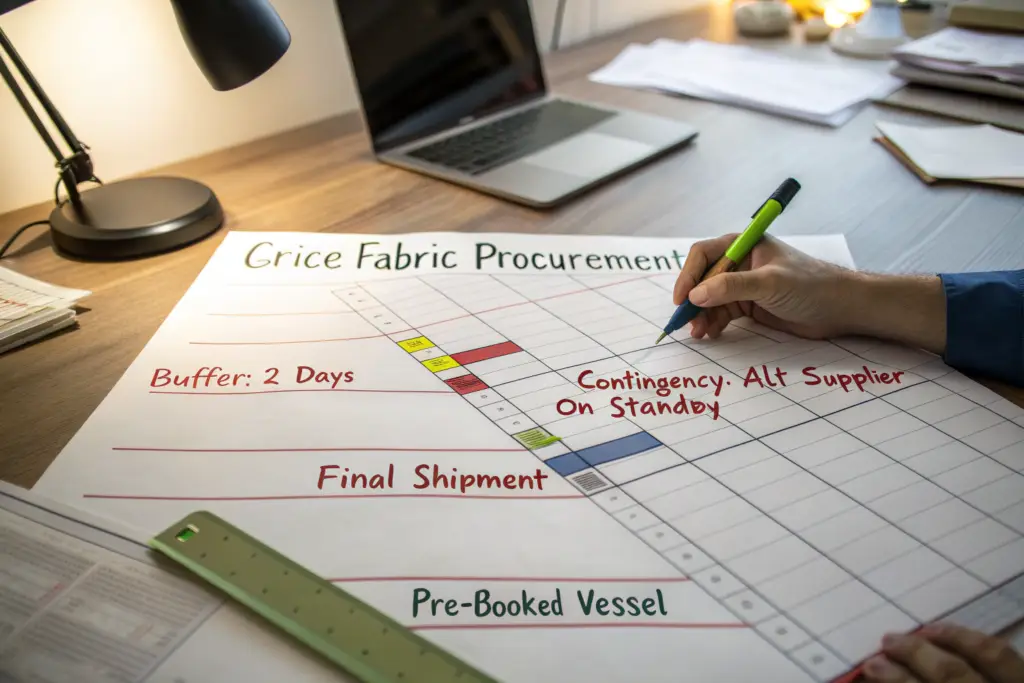
A Preventative Critical Path methodology delivers goods three to five weeks faster than reactive timeline management because it is built backward from the fixed, non-negotiable delivery date and incorporates a specific, statistically calculated "Stage Buffer" at each of the critical production milestones—fabric procurement, dye lot approval, trim delivery, cutting, sewing, finishing, and shipping—sized according to the historical variance of each stage, so that when the statistically predictable delays occur, they are absorbed within the pre-built buffers and the final delivery date remains unmoved, whereas a reactive timeline has no buffers and every delay cascades directly into the next stage, compounding the total delay with each successive stage.
A reactive timeline tells you when you are late. A preventative critical path ensures you are never late because lateness was designed out of the system at the planning stage. The buffer is not a pessimistic assumption; it is a statistical recognition that every production stage has a historical variance, and the cumulative variance must be absorbed by pre-planned slack, not by the delivery date.
How Is the "Stage Buffer" Size Calculated Using the Factory's Own Historical Production Data?
The project manager reviews the last 50 production orders for each stage. If the dye lot approval stage achieved first-pass approval in 84% of orders, and the average re-dye added 2.5 days, the buffer is calculated as the expected delay frequency multiplied by the average delay duration, plus one standard deviation. The buffer is data-driven, not guessed.
Why Does a "Backward-Built" Timeline Start From the Retail Floor Date, Not From the Factory Cut Date?
A forward-built timeline starts on the day the fabric is available and asks, "When will this be finished?" A backward-built timeline starts on the day the goods must be on the retail floor and asks, "When must every preceding stage be completed to hit this date?" The backward-built timeline reveals that the cut date must be six weeks earlier than the forward-built timeline assumed, forcing an earlier, more disciplined procurement schedule.
How Does "Pre-Booked Ocean Freight and Greige Fabric Reservation" Transform the Peak Season From a Bottleneck Into a Competitive Advantage?
During the global shipping crisis of late 2021, a Seattle-based outdoor brand watched in horror as their competitor's identical product category flew off shelves while their own shipment sat at a Chinese port for 23 days waiting for an available vessel. The competitor's factory project manager had booked vessel space in August for an October sailing. The Seattle brand's factory had waited until the goods were packed and ready in October before attempting to book space. By then, every vessel on the transpacific route was fully booked. The Seattle brand missed Black Friday. The competitor captured the entire season's demand.
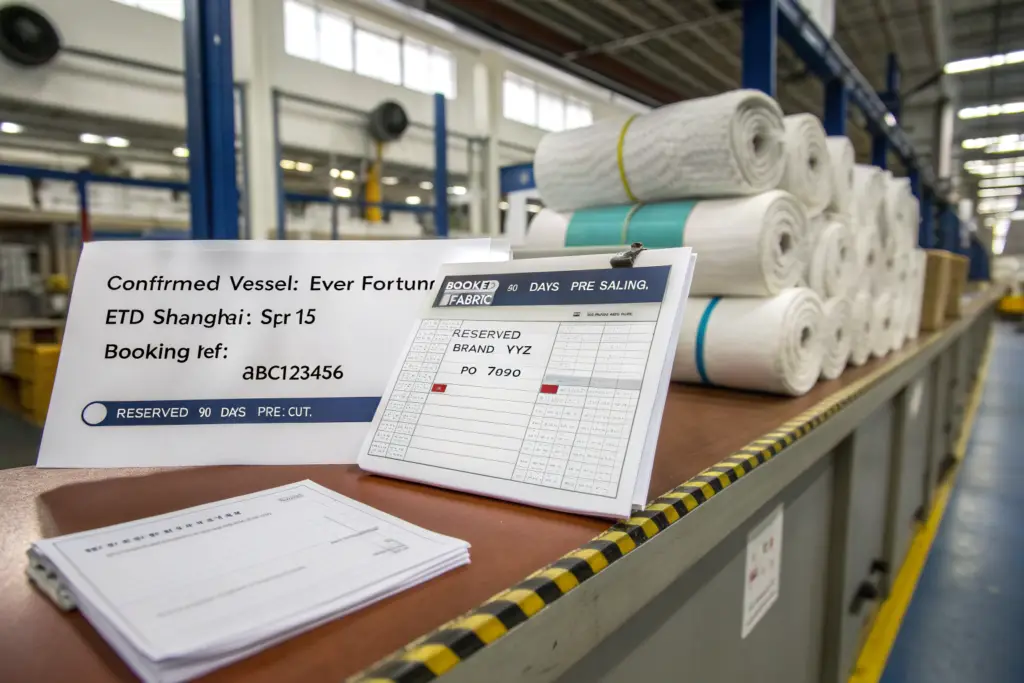
Pre-booked ocean freight and greige fabric reservation transform the peak season from a competitive bottleneck into a competitive advantage because the experienced project manager secures the two most critical and scarcest resources—ocean vessel space and undyed greige fabric—45 to 90 days before they are needed, when capacity and inventory are abundant and prices are lower, ensuring that when the production order is ready to ship, the vessel space is already confirmed and cannot be sold to a competitor, and when the dye lot is approved, the greige fabric is already physically sitting in the factory's warehouse and does not need to be ordered from a mill that is now operating on an extended peak-season lead time.
Peak season is a competition for scarce resources. The factory that secures those resources before the rush locks in both availability and price. The factory that waits until the rush competes for whatever is left, at whatever price the market demands. The difference in delivery timing is measured in weeks.
How Does "Pre-Booked Vessel Space 60 Days Before Sailing" Guarantee a Container Slot When the Market Is Sold Out?
Ocean carriers allocate vessel space on a first-confirmed, first-served basis. A booking confirmed 60 days before sailing is a contractual commitment from the carrier. A booking requested 7 days before sailing is a request that will be denied if the vessel is full. The early booking transforms vessel space from a variable into a certainty.
Why Does "Greige Fabric Reservation 90 Days Before Cutting" Eliminate the 3-5 Week Mill Lead Time That Destroys Production Schedules During Peak Season?
During peak season, fabric mills operate on lead times of 30-45 days. If the factory waits until the dye lot is approved to order the fabric, the cutting date is delayed by the mill's lead time. A greige fabric reservation pre-positions the undyed fabric in the factory's warehouse months earlier, when mill lead times are still 15-20 days. When the dye lot is approved, the fabric is already physically present and enters the dye house immediately.
What Is an "Exception-Only Communication Protocol" and How Does It Compress Decision Latency From 48 Hours to 2 Hours?
A New York contemporary brand once lost four critical production days because their factory's project manager sent a routine weekly status email that the brand owner did not open for 36 hours. Buried in the fourth paragraph of the email was a note that the zipper shipment was delayed and the project manager needed approval for an alternative supplier by Tuesday. The brand owner opened the email on Wednesday, approved the alternative supplier on Thursday, and the new zippers arrived the following Tuesday. The four-day decision latency pushed the entire production schedule back by eleven days.
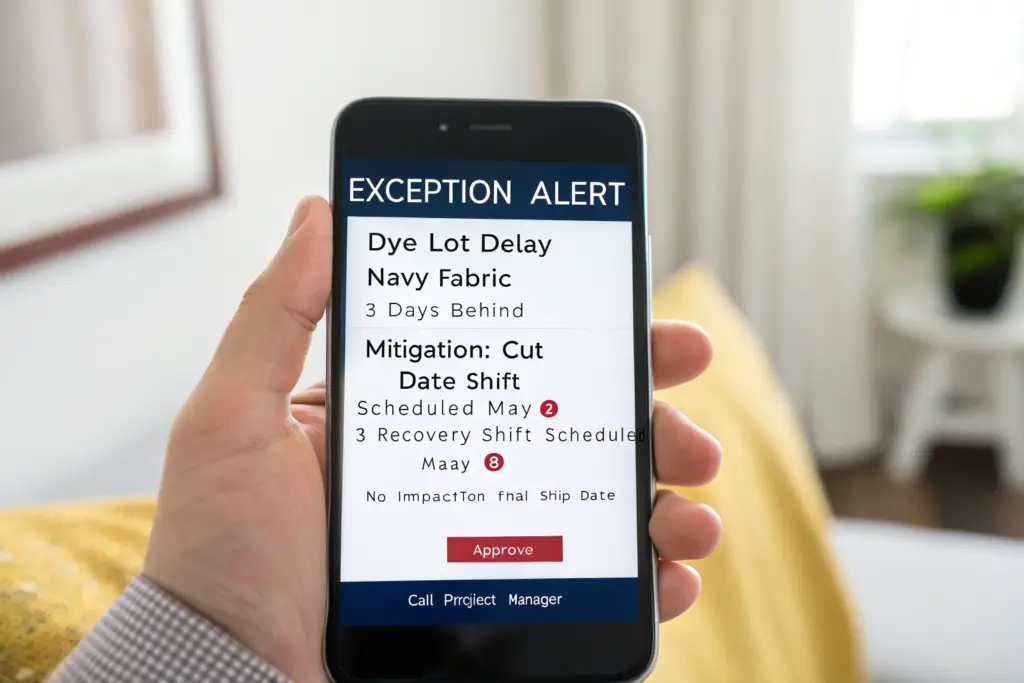
An Exception-Only communication protocol compresses decision latency from 48 hours to 2 hours by establishing a strict rule that the project manager communicates proactively with the brand owner only when a specific, pre-defined "exception condition" is triggered—a raw material delay exceeding 24 hours, a quality defect rate exceeding the AQL threshold, a machine breakdown halting production—and these alerts are sent via a dedicated, high-priority channel with a mandatory "Proposed Mitigation" field and a "Required Decision By" timestamp, while all routine status updates are passively visible on a shared dashboard that the brand owner can check at their convenience without generating inbox noise.
Routine updates are information. Exception alerts are decisions. Separating these two types of communication ensures the brand owner's attention is captured only when their decision is required to keep the production schedule on track, and the decision is presented with the necessary context and a clear deadline.
What Are the Six Specific Exception Conditions That Must Trigger an Immediate Alert?
The six conditions are: raw material delay exceeding 24 hours past the scheduled arrival date, inline QC defect rate exceeding the agreed threshold on any single inspection, a critical machine breakdown that will halt production for more than one shift, a labor shortage that reduces line output by more than 20%, a failed final AQL inspection, and a logistics delay that changes the vessel departure or port arrival date.
Why Must Every Exception Alert Include a "Proposed Mitigation" and a "Required Decision By" Timestamp?
An alert that says "Zipper is delayed" creates anxiety and a multi-email back-and-forth to determine the solution and the urgency. An alert that says "Zipper delayed 3 days. Alternative supplier can deliver in 2 days at $0.15/unit surcharge. Please approve by 5:00 PM today to maintain the cut date." provides the brand owner with everything needed to make an immediate, informed decision.
A Nashville-based lifestyle brand once spent $35,000 on a paid social media campaign promoting a new collection launch, scheduling the ads to begin on November 1st based on the factory's initial estimated delivery date. The factory, operating on a reactive communication model, did not inform the brand until October 28th that the shipment was delayed by ten days. The ads launched on November 1st to an empty warehouse. The brand spent $35,000 advertising products they could not ship, generating customer frustration and chargebacks.
A shared real-time production tracking dashboard enables the brand owner to make proactive, revenue-impacting decisions by providing a single, always-accessible view of every production stage for every style, with completion percentages updated at the end of each shift, color-coded status indicators, and an integrated logistics timeline showing the vessel's current GPS position and estimated port arrival date, allowing the brand owner to adjust marketing campaign launch dates, wholesale account delivery notifications, and inventory pre-allocation to retail accounts based on confirmed, real-time data rather than hopeful estimates or delayed email updates.
The period between production completion and retail delivery is a window of opportunity for the brand's operations team. Marketing campaigns can be scheduled with precision. Wholesale accounts can be notified of exact delivery dates. Warehouse labor can be allocated. The dashboard transforms this window from a period of anxious uncertainty into a period of confident preparation.
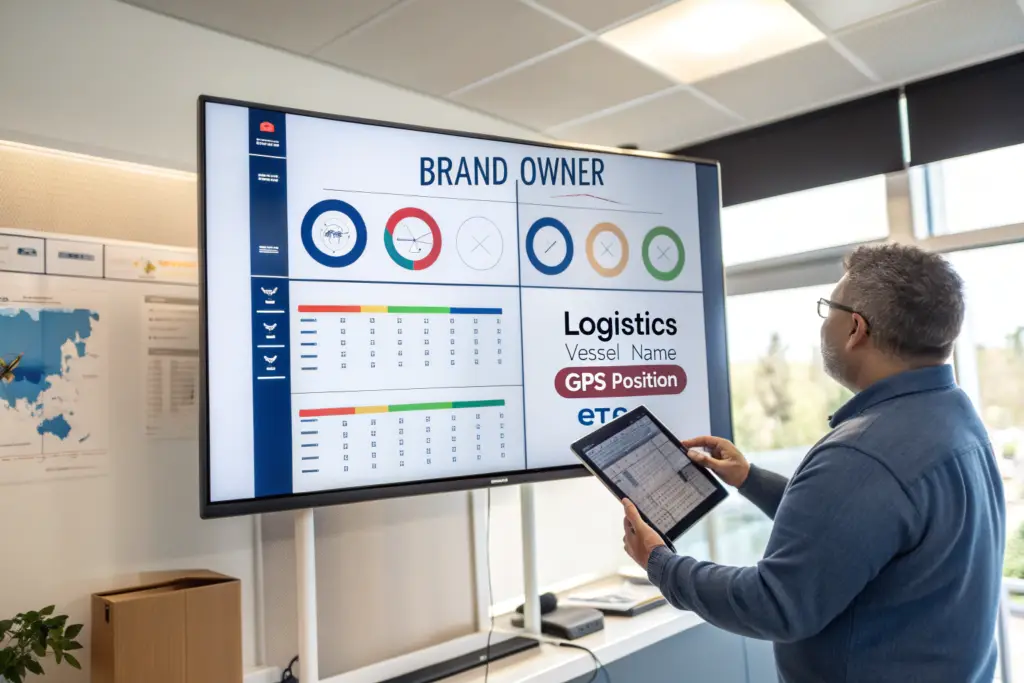
What Are the Five Universal Production Milestones That Must Appear on Any Effective Tracking Dashboard?
The five milestones are: Raw Material Receipt, Cutting Completion, Sewing Completion, Finishing and Final QC Completion, and Packing and Container Loading Completion. Each milestone shows a completion percentage and a status indicator.
How Does "Vessel GPS Tracking Integration" Allow the Brand to Notify Wholesale Accounts of an Exact, Confirmed Delivery Date Two Weeks in Advance?
The dashboard integrates satellite AIS vessel tracking data, showing the vessel's current position, speed, and estimated arrival date at the destination port. The brand can provide wholesale accounts with a confirmed delivery window two weeks before the goods arrive, allowing the accounts to plan floor sets and staffing.
Conclusion
Leveraging expert factory project management to beat your competitors to market is not about finding a factory that works faster. It is about partnering with a factory whose project management methodology is structurally designed to eliminate delays before they occur, compress decision-making time, and provide you with the real-time data you need to align your entire go-to-market operation with a confirmed, reliable delivery date. The Preventative Critical Path absorbs the statistically predictable delays within pre-calculated buffers so the final delivery date never moves. The pre-booked ocean freight and greige fabric reservation secure the critical resources before the peak season rush. The Exception-Only communication protocol captures your attention only when a decision is required, and presents that decision with the context and urgency to resolve it in hours, not days. The shared tracking dashboard gives you the visibility to plan marketing, sales, and inventory allocation with confidence.
At Shanghai Fumao, my project managers operate on this exact methodology. They build backward from your delivery date, pre-book vessel space and greige fabric, communicate with you only when a decision is needed, and provide a live dashboard of your production status. The result is a delivery date that functions as a commitment, not a hope, and a speed-to-market that places your product on the retail floor while your competitors' products are still on the water.
If you are a brand buyer who has lost a season to a late delivery and you want a manufacturing partner whose project management system is built to win the race to market, contact my Business Director, Elaine. She can share a sample Preventative Critical Path for your specific product category, demonstrate our live production tracking dashboard, and introduce you to the project manager who would be personally responsible for your on-time delivery. Reach Elaine at: elaine@fumaoclothing.com. Beat your competitors to the floor, not to the clearance rack.