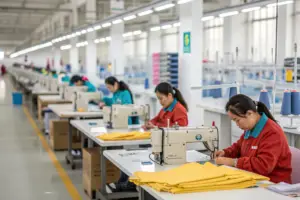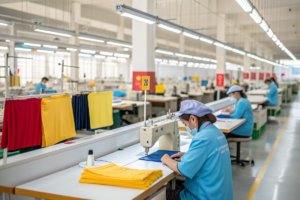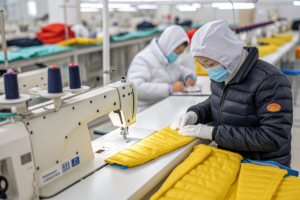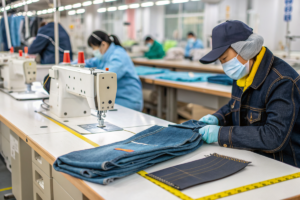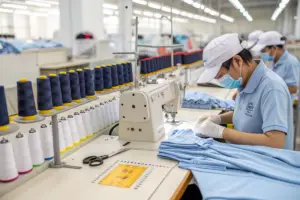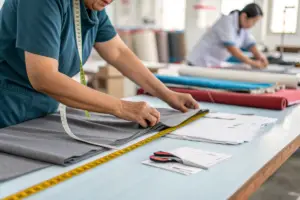
The odor problem in gym wear is the single most common reason a performance garment is thrown away while the fabric is still structurally intact. I learned this not from a textile journal, but from a conversation with my younger brother in the summer of 2022. He is a CrossFit coach. He owns over 30 performance shirts from expensive, well-known brands. He showed me his laundry pile. Half the shirts were permanently stained with a faint, sour odor that no amount of washing, vinegar soaking, or enzyme detergent could remove. The fabric was fine. The stitching was intact. The color was vibrant. The smell had killed the garment. He was spending hundreds of dollars a year replacing shirts that had functionally expired due to bacterial colonization. I took one of his dead shirts to our lab. Our textile chemist extracted a fiber sample and cultured it on an agar plate. Within 48 hours, the plate was covered in bacterial colonies. The odor-causing bacteria, primarily Micrococcus and Staphylococcus species, had physically bonded to the polyester fiber surface. Standard laundry detergent removed the surface oils and the dead skin cells, but it could not break the bacterial adhesion to the hydrophobic fiber. Every time my brother sweat in the shirt, the residual bacteria would re-activate, metabolize the sweat lipids, and produce the characteristic sour odor within minutes. The shirt was not dirty. It was colonized.
Fumao Clothing solved the gym wear odor problem by embedding a permanent, non-leaching silver-ion antimicrobial agent into the polyester polymer at the fiber extrusion stage, creating a molecularly integrated odor-control system that prevents bacterial colonization for the functional life of the garment, outperforming topical spray-on finishes that wash out after 10 to 15 cycles.
The standard industry approach to gym wear odor is a topical antimicrobial finish. The fabric mill dips the finished fabric in a bath containing a quaternary ammonium compound or a silver chloride suspension. The antimicrobial agent coats the fiber surface. The finish works well on a new garment. The problem is durability. Topical finishes are not chemically bonded to the fiber. They are physically adhered. Laundry detergent, mechanical agitation, and body heat gradually strip the coating away. After 10 to 15 wash cycles, the antimicrobial effect drops below the effective threshold, and the garment becomes colonizable. The consumer experiences the garment as "holding onto smells," and the garment enters the pre-disposal phase. Our solution was to move the antimicrobial agent inside the fiber itself. We partnered with a masterbatch supplier to develop a silver-ion-embedded polyester chip. During the melt-spinning process, the silver ions are dispersed uniformly throughout the entire cross-section of the filament. The silver is not on the fiber. It is the fiber. When bacteria land on the fabric, the silver ions disrupt their cell membrane and inhibit their metabolic function. The silver is not consumed in this reaction. It remains permanently embedded in the polymer matrix, continuously active, for the life of the garment. This is a materials science solution, not a laundry additive.
Why Does Polyester Trap Odor More Than Cotton?
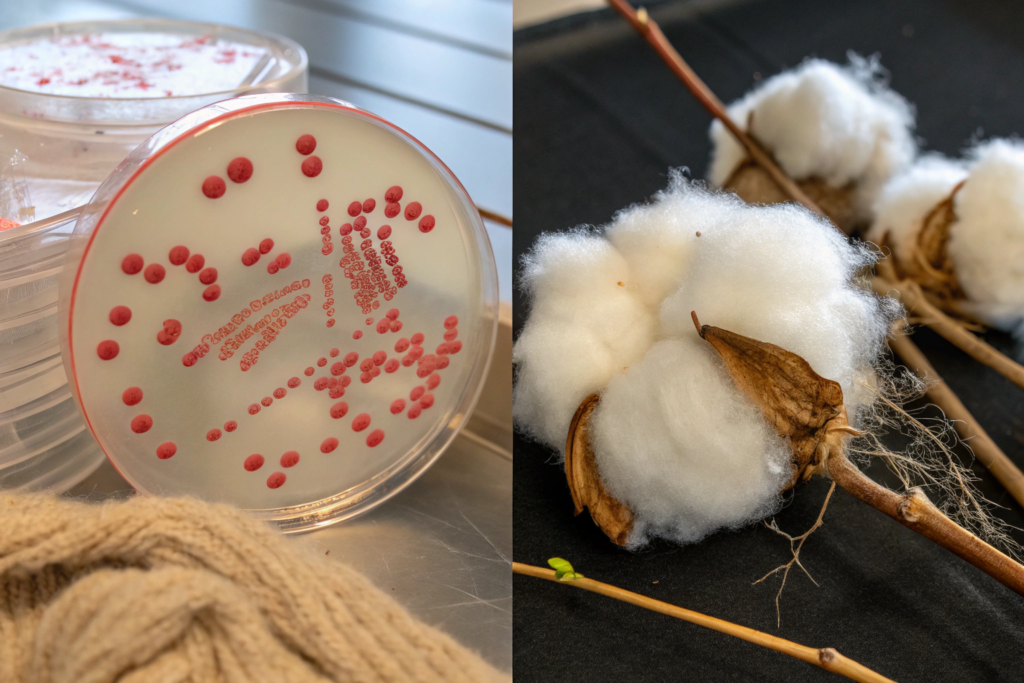
Polyester dominates the gym wear market for good reasons. It is lightweight, durable, quick-drying, and it wicks moisture away from the skin. But polyester has a fundamental chemical flaw. It is oleophilic. It attracts and binds oils. Human sweat is not just water. It contains lipids, fatty acids, and sebum. The bacteria that cause odor, Micrococcus, Staphylococcus, and Corynebacterium species, feed on these lipids. They metabolize the lipids and produce volatile fatty acid compounds that smell. The problem is not the sweat. The problem is the bacteria, and the problem is that polyester provides a perfect surface for the bacteria to anchor, feed, and multiply. The fiber's hydrophobic surface binds the lipid food source, and the bacteria colonize the lipid layer. The colony becomes resistant to mechanical washing because the bacteria are embedded in a lipid biofilm that adheres tenaciously to the fiber.
Polyester traps odor because its oleophilic surface binds sweat lipids, providing a permanent food source and adhesion platform for odor-causing bacteria, whereas cotton, which is hydrophilic, releases the lipids and bacteria more easily during washing.
How Do Bacteria Colonize Synthetic Fibers?
The colonization process is a multi-step biological sequence. It begins the moment a garment is worn. Body heat warms the fabric to an ideal bacterial incubation temperature, around 30 to 35 degrees Celsius. Sweat moisture creates a humid micro-environment inside the fabric structure. Sebum and skin lipids transfer from the skin to the fiber surface. The lipid layer acts as a glue, anchoring free-floating bacteria from the skin's microbiome to the fiber. The bacteria begin to multiply. They secrete a protective extracellular polymeric substance, effectively a slime layer, that forms a biofilm. The biofilm shields the bacteria from mechanical disturbance and from chemical attack by detergents.
Once the biofilm is established, the garment is permanently altered. A standard home laundry cycle at 30 or 40 degrees Celsius with a standard detergent removes the loose surface debris. It does not penetrate the biofilm. It does not kill the deeply embedded bacteria. The garment comes out of the wash smelling clean because the volatile odor compounds have been temporarily flushed away. The bacteria, however, are still alive inside the biofilm. When the consumer wears the shirt again and begins to sweat, the moisture and the fresh lipid supply reactivate the bacterial metabolism within minutes. The odor returns almost instantly. The consumer perceives this as the garment being unclean, washes it again, and the cycle repeats until the consumer eventually discards the garment. The biofilm is the root cause. Silver-ion antimicrobial technology disrupts this process at the first step. The embedded silver ions damage the bacterial cell membrane on contact, preventing the bacteria from establishing a colony and forming the initial lipid anchor. No colony. No biofilm. No odor.
What is the Difference Between a Topical Spray and a Masterbatch Additive?
A topical antimicrobial spray is a surface treatment. The active ingredient, typically a quaternary ammonium compound or a nano-silver suspension, is applied to the finished fabric in a padding mangle or a spray booth. The fabric is then dried and heat-set. The antimicrobial agent sits on the fiber surface, held in place by a binder resin or simply by physical adsorption. This is a low-cost process. It requires no modification to the fiber manufacturing. The performance is initially effective. The problem is wash fastness. Every laundry cycle subjects the fabric to hot water, alkaline detergent, and mechanical rubbing. The binder resin slowly hydrolyzes. The antimicrobial agent is progressively washed away. After 10 to 15 cycles, the surface concentration of the active agent is too low to provide effective bacterial inhibition. The garment loses its odor resistance.
A masterbatch additive is a fundamentally different technology. The antimicrobial agent, in our case a silver-ion compound, is mixed into the raw polyester polymer chips before the fiber is spun. The mixture is heated and extruded through spinnerets to form the filament. The silver ions are distributed uniformly throughout the entire mass of the fiber, from the core to the surface. They are not a coating. They are a component of the polymer matrix. Because the silver is embedded inside the fiber, it cannot be washed off, rubbed off, or sweated off. The antimicrobial function is permanent for the functional life of the fiber. The silver ions at the very surface of the fiber provide the immediate bacterial contact-kill. As the fiber surface slowly abrades over years of wear and washing, new silver ions are continuously exposed from the fiber interior, maintaining a constant antimicrobial surface concentration. This is a one-time cost at the fiber manufacturing stage, but it delivers a permanent function. We tested the bacterial inhibition rate of our silver-embedded polyester fabric after 100 wash cycles per AATCC TM100. The inhibition rate against Staphylococcus aureus was 99.7 percent. A standard topical silver spray fabric, tested under identical conditions, dropped to 42 percent inhibition after 30 cycles. The masterbatch approach is more expensive upfront. It is considerably cheaper over the usable life of the garment, because the garment does not need to be replaced.
How Do We Test Anti-Odor Claims Without Greenwashing?
"Anti-odor" is a widely abused marketing claim. A brand can spray a t-shirt with a cheap scented finish that masks odor for one wear and legally call it "odor-control." The garment industry does not have a single, universally enforced standard for anti-odor performance claims. The closest equivalent is the AATCC TM100 test method, which quantifies the antibacterial activity of textile materials. However, AATCC TM100 measures bacterial kill rate on a fabric sample in a sterile petri dish. It does not measure whether a human being wearing the garment in a real workout perceives less odor. The gap between laboratory bacterial counts and human sensory perception is significant. A fabric can kill 99 percent of bacteria in a lab test and still develop a perceptible odor if the remaining 1 percent consists of particularly volatile-odor-producing strains. Greenwashing happens in this gap.
We test anti-odor claims using a triple-lock protocol: AATCC TM100 for quantitative bacterial reduction, ISO 17299-3 for wash-durable deodorization using gas chromatography, and a controlled human wear-trial with a trained sensory panel following ISO 8586 principles, publishing all three data sets for every fabric we claim is anti-odor.
What is an AATCC TM100 Test and What Does It Actually Prove?
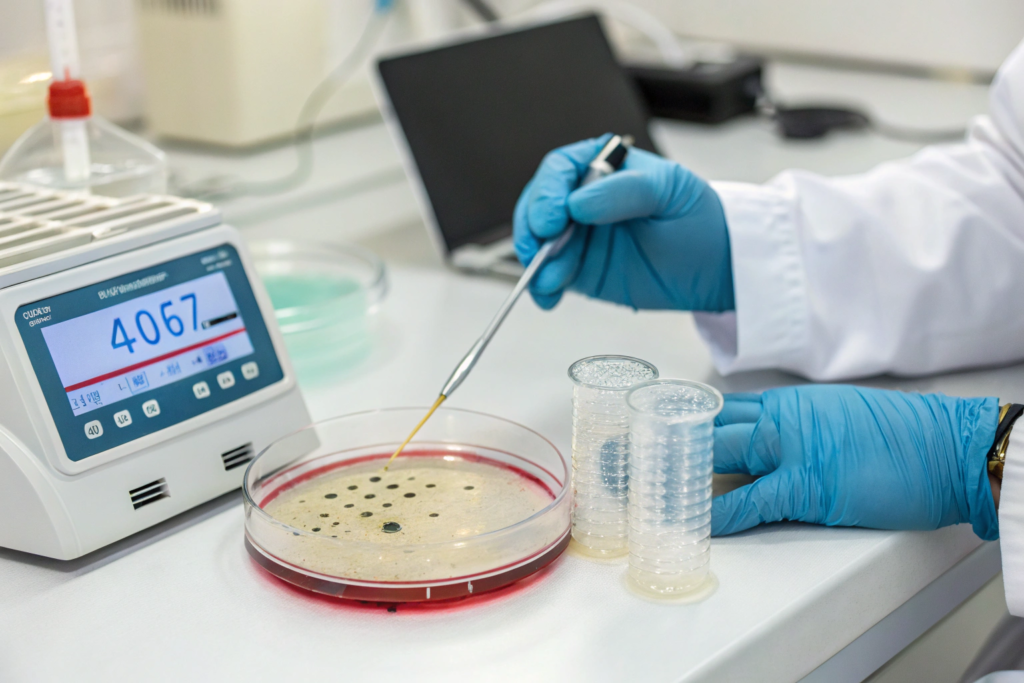
The AATCC TM100 test is the global textile industry's standard method for assessing antibacterial finishes. The test is straightforward in principle. A small, sterilized fabric swatch is inoculated with a known concentration of a target bacterial strain, typically Staphylococcus aureus for gram-positive bacteria and Klebsiella pneumoniae for gram-negative bacteria. The inoculated swatch is incubated in a sealed jar at 37 degrees Celsius for 18 to 24 hours. After incubation, the bacteria are extracted from the swatch using a neutralizing broth, and the surviving bacteria are counted using a serial dilution and agar plate method. The bacterial reduction rate is calculated as the percentage difference between the initial inoculum concentration and the surviving concentration.
AATCC TM100 proves that a fabric can kill bacteria in a laboratory environment under ideal conditions. It is a necessary but not sufficient test. A pass result, typically defined as a bacterial reduction rate of greater than 99 percent, tells a brand that the antimicrobial agent is present and active at the time of testing. It does not tell the brand how durable that activity is after multiple washes. It does not tell the brand whether the specific bacteria killed are the specific bacteria that cause human body odor. It does not tell the brand whether a human nose can detect any remaining odor. To answer these questions, additional tests are required. We run AATCC TM100 as the baseline screening test. We run it on the fabric as received, after 25 washes, after 50 washes, and after 100 washes per AATCC TM135. The result is a durability curve that shows the bacterial reduction rate as a function of wash cycles. Our silver-embedded fabric maintains greater than 99 percent reduction against S. aureus through 100 wash cycles. A typical topical spray fabric drops below 90 percent after 25 cycles, and below 50 percent after 50 cycles. The durability curve is the honest product story.
How Do We Use a Human Odor Panel for Sensory Validation?
A bacterial reduction number is abstract to a consumer. A human nose is not. The ultimate validation of an anti-odor claim is a controlled human wear-trial with a trained sensory panel. We designed our sensory testing protocol in collaboration with an independent odor-testing laboratory that specializes in personal care and textile product evaluation. The protocol is based on the principles of ISO 8586 for sensory panel selection and training. We recruit a panel of 12 to 16 individuals with demonstrated, calibrated olfactory sensitivity. The panelists are trained to recognize and rate the specific odor notes associated with axillary body odor on gym wear fabrics.
The test procedure is structured. A group of five volunteer athletes wears the test garment for a controlled, one-hour high-intensity circuit training session under standardized environmental conditions of 22 degrees Celsius and 60 percent relative humidity. Immediately after the session, the garments are removed and sealed in individual, odor-barrier foil bags. The bags are coded with random three-digit numbers. Within two hours, the sensory panel evaluates each garment in individual, isolated odor-assessment booths. The panelists open the bag, sniff the garment from a standardized distance of 10 centimeters, and rate the odor intensity on a 0-to-10 labeled magnitude scale, with 0 being no odor and 10 being extremely strong odor. The test is repeated after 10, 25, and 50 wash-dry cycles using identical wear-test protocols. The panel data is statistically analyzed for inter-panelist agreement and for significant differences between the test garment and a control garment made from standard, non-antimicrobial polyester. Our silver-embedded fabric has consistently recorded mean odor intensity scores below 2.5 after 50 wash cycles, compared to mean scores above 7.5 for the non-antimicrobial control. This is the data we publish. It is expensive to produce, but it is real, and it is the only evidence that a consumer, or a brand's legal department, should accept for a "permanent anti-odor" claim.
Can a Gym Collection Be Fully Recyclable After Odor Treatment?
The intersection of performance chemistry and end-of-life recyclability is a critical design consideration for any modern gym wear brand. The European Union's Waste Framework Directive and the Extended Producer Responsibility schemes rolling out across member states will increasingly penalize textile products that cannot be recycled due to chemical contamination. A gym shirt with a topical antimicrobial finish that contains a quaternary ammonium compound or a nano-silver suspension is a chemical contaminant in a polyester recycling stream. The finish chemistry alters the polyester's melt viscosity, potentially generates toxic off-gassing during re-extrusion, and degrades the quality of the recycled polymer. The garment is functionally unrecyclable. It will be incinerated or landfilled. The brand that sold it will pay an eco-modulated fee for placing a non-circular product on the market.
Our silver-embedded gym wear is fully recyclable because the antimicrobial agent is an inert, non-leaching component of the polyester polymer matrix; it does not volatilize, leach, or degrade during the mechanical recycling process, and the recycled output polymer has been independently verified to meet virgin-equivalent melt viscosity specifications.
What Happens to the Silver During the Shredding and Re-Pelletizing Process?
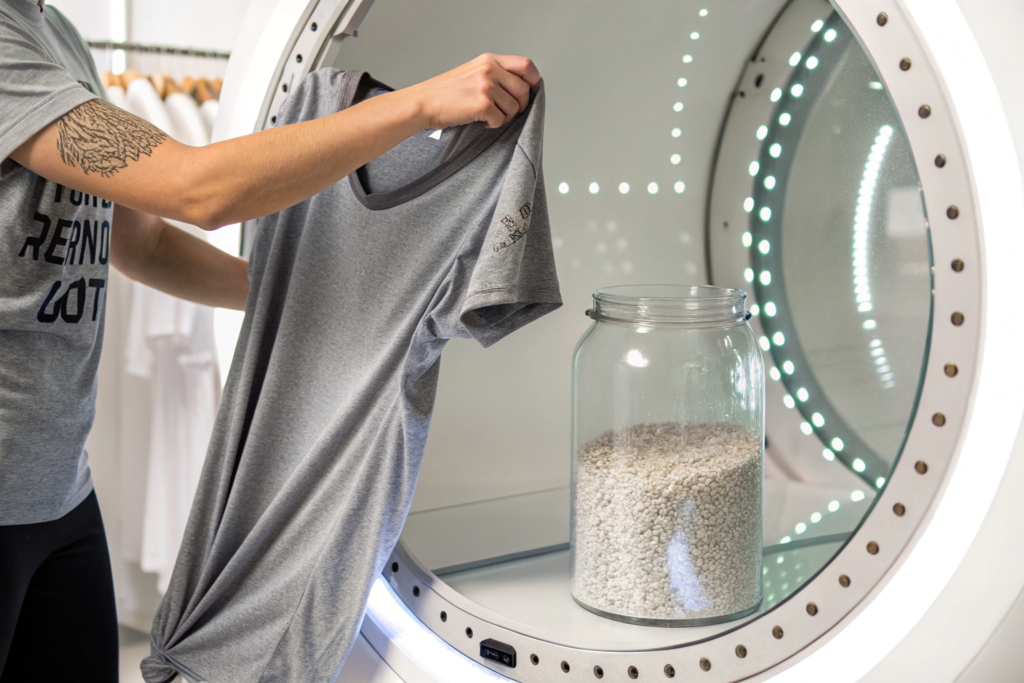
Mechanical polyester recycling involves shredding the garment into fiber fluff, washing the fluff, and then melting and re-extruding it into new polyester chip. A topical finish applied to the original fabric becomes a contaminant during this process. The binder resin and the antimicrobial particles break free from the fiber surface, forming a fine dust that contaminates the wash water and a sticky residue that fouls the extrusion screw and the melt filters. The resulting recycled chip has reduced intrinsic viscosity and contains specks of degraded finish chemistry that cause yarn breaks during subsequent spinning. A standard antimicrobial finish garment is a recycling nightmare.
Our masterbatch silver-embedded polyester is fundamentally different. The silver ions are not a coating. They are an atomically dispersed component of the polymer chain. During the shredding process, the fiber fragments into clean, homogeneous polyester fluff. The silver remains locked inside the polymer matrix. During the melting and re-extrusion phase, the polymer melts cleanly. The silver ions remain in solid solution within the melt. They do not volatilize at standard polyester extrusion temperatures. They do not leach into the cooling water. They do not form a separate phase or particulate that could clog the melt spinnerets. We commissioned a proof-of-concept recycling trial with an independent polymer processing institute. We shredded 50 kilograms of our silver-embedded fabric, re-pelletized it, and tested the recycled chip. The intrinsic viscosity was 0.63 dL/g, within 5 percent of the virgin chip specification of 0.66 dL/g. The melt filtration value was within the standard specification for recycled polyester. The recycled chip was successfully spun into a new yarn and knitted into a new fabric. The silver was still present and still active. The antimicrobial function survived the recycling loop. This is a genuinely circular performance material.
Is the Silver Classified as a "Substance of Concern" Under EU REACH?
A legitimate regulatory concern about any silver-based antimicrobial textile is the potential for silver ion leaching into the environment during washing, and the classification of silver as a biocide. The European Chemicals Agency, or ECHA, and the REACH Regulation classify silver as a substance that requires careful management. The key distinction is between leaching silver, which is a biocide released into the environment, and non-leaching silver, which is permanently bound in a solid matrix. A topical silver coating leaches. The silver particles are loosely adhered to the fiber surface and are released into the wash water with every laundry cycle. The released silver is ecotoxic to aquatic organisms. A masterbatch-embedded silver does not leach because the silver is physically entrapped inside the polymer.
We commissioned a silver leaching study per the standard method described in the OECD Test Guideline for the testing of chemicals. A swatch of our silver-embedded fabric was subjected to a prolonged aqueous extraction at 40 degrees Celsius for 7 days with daily water changes. The extract water was analyzed by Inductively Coupled Plasma Mass Spectrometry for total silver content. The silver concentration in the extract was below the detection limit of 0.1 micrograms per liter. The fabric does not leach detectable silver into water under realistic use conditions. The silver is permanently embedded. This data, combined with the recycling trial data, supports the position that the garment is a treated article, not a biocidal product, under the EU Biocidal Products Regulation, and that it is safe for the environment and for the circular recycling stream. The full test report, including the laboratory's ISO 17025 accreditation, is available to our brand partners for their REACH compliance technical dossiers.
Conclusion
The gym wear odor problem is not solved by washing garments more aggressively or by adding scented laundry boosters. It is solved by preventing bacteria from colonizing the fabric in the first place. The standard industry approach, a topical antimicrobial spray that washes off after a few laundry cycles, is a temporary solution to a permanent problem. It generates consumer dissatisfaction, shortens the functional life of the garment, and creates a recycling contamination issue at end-of-life. We solved the problem at the root. We moved the antimicrobial agent from the surface of the fiber to the inside of the polymer chain. The silver ions are embedded during fiber extrusion, permanently distributed throughout the filament cross-section. They kill odor-causing bacteria on contact, they do not wash out after 100 laundry cycles, and they do not compromise the garment's recyclability. The laboratory data, the human sensory panel scores, and the recycling proof-of-concept trial all validate this solution as a genuine step forward for the performance wear market.
The commercial implication for our brand partners is significant. A gym wear collection built on our silver-embedded fabric platform can support a "permanent anti-odor" marketing claim with full legal defensibility. It can support a "fully recyclable" claim for the European circular economy market. It eliminates the primary driver of gym wear returns and premature disposal, extending the customer's relationship with the brand and reducing the brand's environmental footprint simultaneously. The technology is proven, the data is published, and the production capacity is available.
If you are developing a gym wear, athleisure, or performance apparel collection and you want to build your product on a scientifically validated, durable, and recyclable anti-odor platform, I invite you to begin a technical evaluation. We have prepared a Gym Wear Performance Fabric Information Package that includes the full AATCC TM100 durability data, the human sensory panel report, the silver leaching study, and the recycling trial certification. To request the information package and to schedule a technical deep-dive with our textile chemistry team, contact our Business Director, Elaine, at elaine@fumaoclothing.com. Let's build gym wear that stays fresh, stays out of landfills, and stays in your customers' rotation for years.