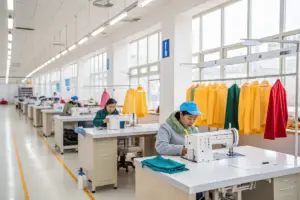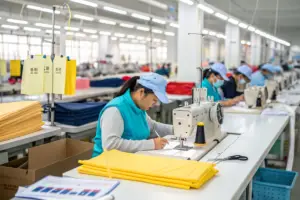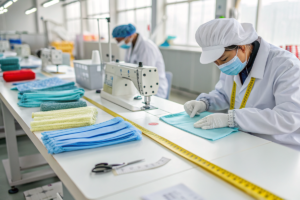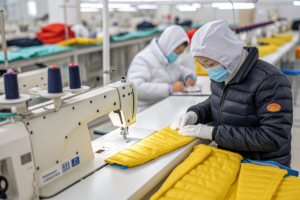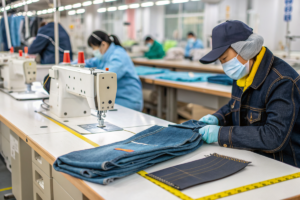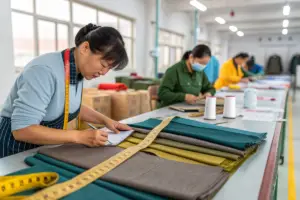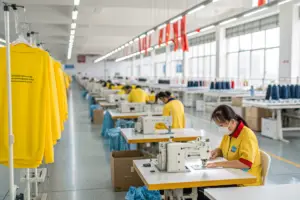
A fast-growing Los Angeles-based activewear brand once tried to scale from $2 million to $8 million in annual revenue using their original factory, which had no in-house design support. Every new style required the brand's founder—the sole designer—to create the tech pack in Los Angeles, email it to the factory, wait five days for pattern adjustments, receive a sample by courier, mark up the revisions, mail it back, and wait another ten days for the revised sample. Each new style took six to eight weeks to develop. The brand launched twelve new styles per season. The founder worked ninety-hour weeks. The brand's wholesale accounts demanded faster newness. The factory could only move as fast as the founder's email inbox. The scaling bottleneck was not production capacity. It was design development speed, and the factory had no team to absorb the design workload.
A dedicated factory design team is essential for rapidly scaling an apparel brand because it co-locates the pattern maker, the sample sewer, the textile engineer, and the quality inspector within the same facility as the production lines, compressing the design-to-sample feedback loop from a multi-week trans-Pacific mail-and-email cycle into a same-day, in-person collaboration where the brand's designer can stand next to the pattern maker at the cutting table, adjust a seam in real-time, and approve a revised sample within hours rather than weeks, multiplying the brand's new style output capacity without multiplying the brand's internal design headcount.
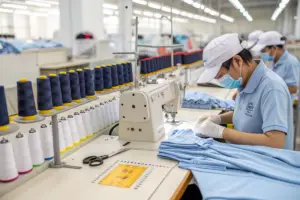
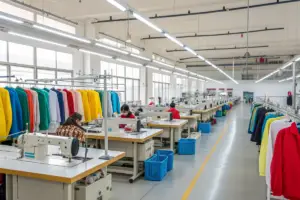
At Shanghai Fumao, I invested in building a dedicated, in-house design and development team precisely because I saw this bottleneck cripple so many promising brands. My pattern makers, sample sewers, and textile engineers sit fifty meters from my production lines. When a brand partner needs a fit adjustment, we walk to the sample room, adjust the pattern, sew a revised sample, and have it on a live video call with the brand within the same business day.
Why Does "Co-Located Pattern and Sample Development" Compress a Six-Week Sampling Cycle Into Six Days?
A Chicago-based streetwear brand that worked with a factory lacking an in-house design team once waited fourteen days for a simple sleeve length adjustment. The founder emailed the revision request on a Monday. The factory's sales rep forwarded it to an external pattern-making service on Tuesday. The pattern service adjusted the pattern on Thursday and couriered it back to the factory on Friday. The factory's sample room, busy with other clients' work, sewed the revised sample the following Wednesday and couriered it to the brand on Thursday. The brand received the sample on Monday—fourteen days after requesting a 2cm sleeve shortening. The same adjustment at a factory with a co-located design team would have taken approximately three hours.
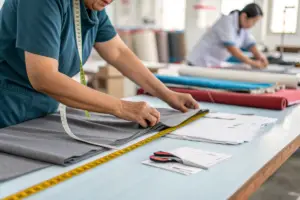
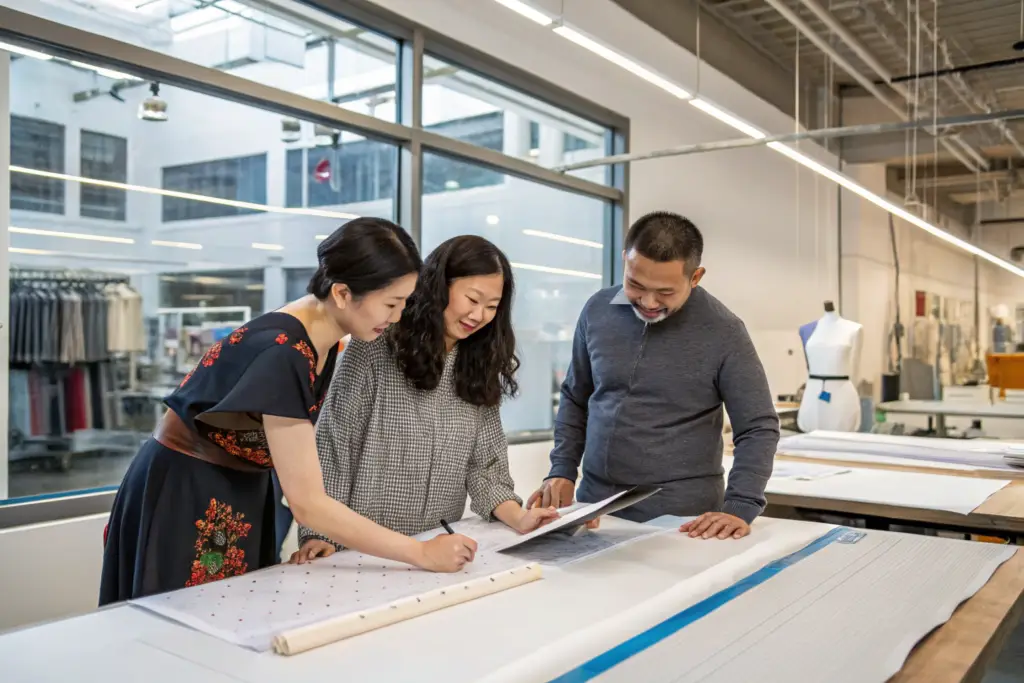
Co-located pattern and sample development compresses the sampling cycle from six weeks to six days because the pattern maker and the sample sewing room are physically located inside the same facility and are dedicated to the brand's development work, not shared across multiple external clients, allowing the brand's designer to communicate a fit revision directly to the pattern maker—either in person or via a live video call where the pattern maker adjusts the digital pattern on-screen in real-time—and the revised sample can be cut and sewn immediately and reviewed by the brand within the same business day, eliminating the multi-day courier transit, the multi-day queue for external pattern services, and the multi-day email forwarding delay that consumes 80% of a traditional sampling timeline.
The traditional sampling timeline is not consumed by actual pattern work or sewing. It is consumed by waiting—waiting for emails to be forwarded, waiting for external services to become available, waiting for couriers to deliver packages. Co-location eliminates the waiting by putting the designer, the pattern maker, and the sample sewer in the same room, either physically or via a live video link.
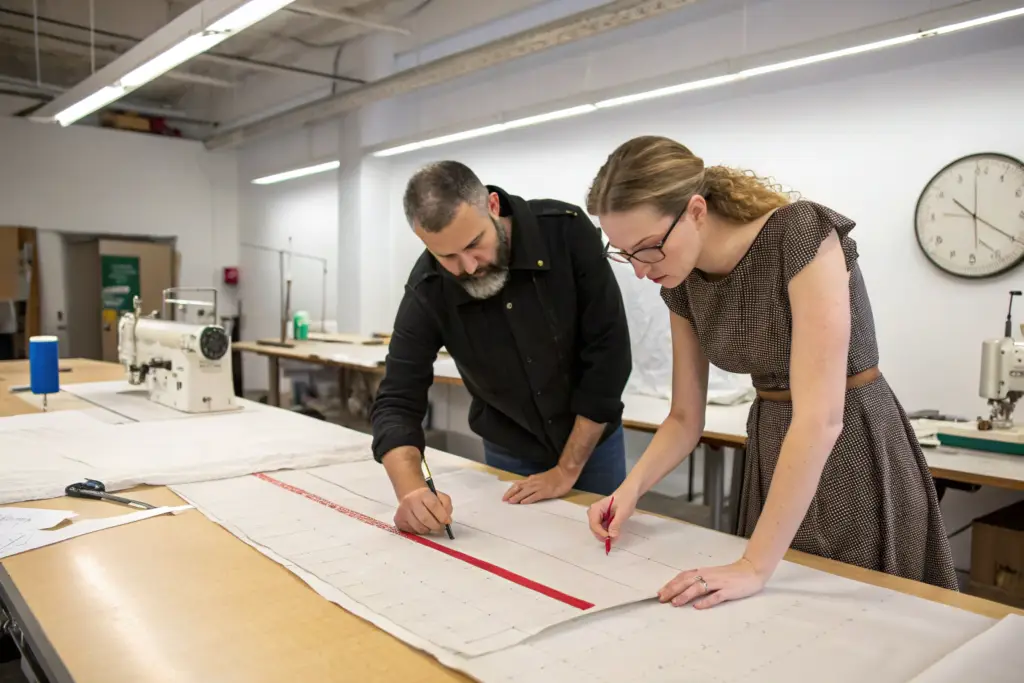
How Does a "Live Pattern Adjustment on a Video Call" Reduce a Fit Correction From Two Weeks to Two Hours?
The brand designer holds up the fit sample on a live video call. The pattern maker, watching the video feed, opens the digital pattern file on her CAD system. The designer says, "Lower the front armhole curve by 1cm at this point." The pattern maker adjusts the curve on screen, shares her screen so the designer can see the revised pattern instantly, and the designer approves it within the same call. The revised pattern is sent to the sample sewer, who cuts and sews the revised sample that afternoon.
Why Does an "In-House Sample Sewing Room" Dedicated to Development Work Prevent the "Sample Queue" Delay?
An external sample room serves multiple factory clients and has a queue. A revision sample from Brand A enters the queue behind Brand B's new development samples. An in-house sample room dedicated to the brand's development work has no queue—or a very short one—because the sample sewer is allocated exclusively to that brand's development during the active sampling period.
How Does a "Textile Engineer on the Factory Floor" Accelerate Fabric Innovation and Solve Material Problems in Real-Time?
A Portland-based sustainable outdoor brand once wanted to develop a recycled polyester fleece that felt as soft as their competitors' virgin polyester fleece but used 100% post-consumer recycled fiber. Their factory had no in-house textile engineer. The brand spent six months emailing back and forth with the factory's sales rep, who relayed questions to an external mill, who sent back fabric swatches that were either too rough, too thin, or too expensive. The brand eventually abandoned the development and launched with a standard fabric. A competitor, working with a factory that had an in-house textile engineer, launched a 100% recycled fleece with a superior hand feel six months earlier and captured the market.
A textile engineer on the factory floor accelerates fabric innovation by providing immediate, in-person expertise on fiber blends, yarn counts, knit structures, dye formulations, and finishing processes directly to the brand's designer during the development phase, allowing the designer to describe a desired fabric hand feel, weight, or performance characteristic and have the engineer translate that description into specific yarn specifications and knitting machine settings within hours, producing a test swatch the same week instead of waiting weeks for an external mill to interpret a relayed, second-hand request.
Fabric development is a conversation between a designer's tactile vision and an engineer's material knowledge. When the engineer is in the same building as the production line, that conversation happens at the speed of a walk to the knitting machine. When the engineer is at a distant mill and the communication is filtered through a non-technical sales representative, the conversation takes weeks and loses fidelity at every relay point.
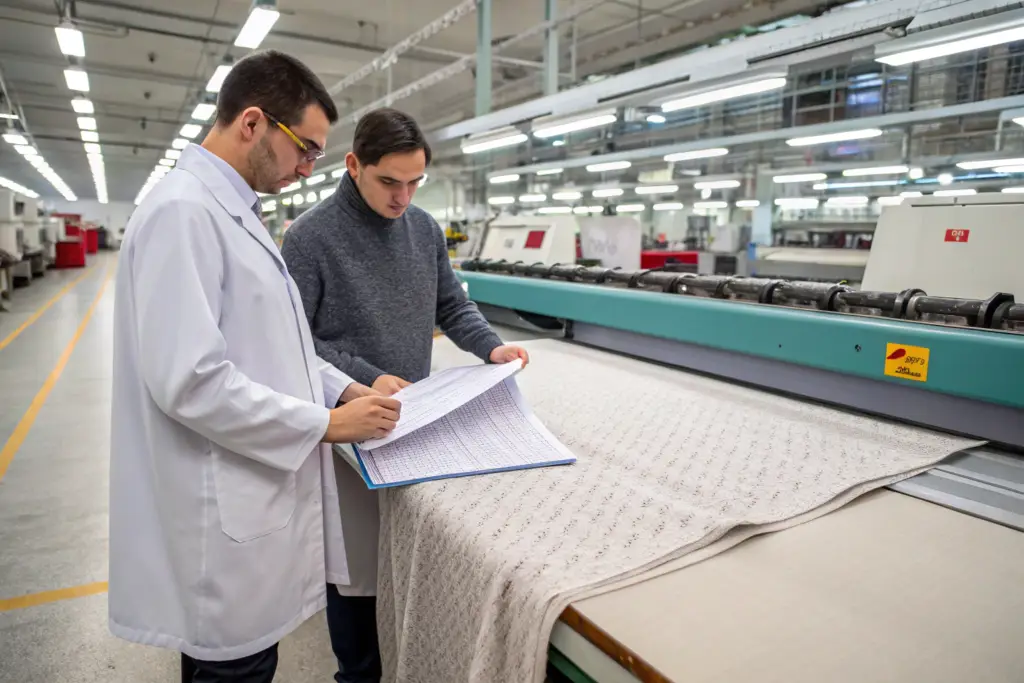
How Does a "Yarn Library With Physical Swatches" Inside the Factory Enable Same-Day Fabric Concept Development?
The textile engineer maintains a physical library of yarn cones and knitted swatches from various mills, organized by fiber content, yarn count, and hand feel. The designer can touch the swatches, select a yarn that feels close to the desired quality, and the engineer can knit a small test swatch on the factory's sample knitting machine that same day.
Why Can an In-House Textile Engineer "Reverse-Engineer" a Competitor's Fabric in Days Rather Than Weeks?
The brand provides a small swatch of a competitor's fabric. The engineer analyzes the fiber composition with a burn test and a microscope, measures the yarn count and stitch density, and replicates the construction on the factory's sample equipment. The analysis takes days, not weeks, because the engineer and the equipment are in the same building.
What "Quality-to-Design Feedback Loop" Exists When the QC Team Sits Next to the Design Team?
A New York premium basics brand once experienced a recurring quality issue across three consecutive seasons: the side seams on their bestselling t-shirt were twisting after washing. The factory's QC team flagged the defect in each season's final inspection report, and each season, the factory reworked or replaced the defective units. But the root cause—an unbalanced yarn twist in the fabric specification—was never communicated to the brand's design team or the factory's pattern maker. The QC team reported the defect. The design team never saw the report. The defect recurred because the feedback loop between quality inspection and design specification was broken.
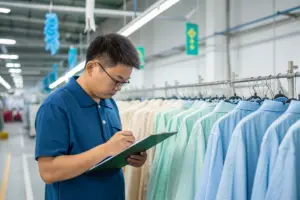
A quality-to-design feedback loop exists when the factory's QC team is physically and organizationally integrated with the design team, allowing the QC inspectors to bring a defective bulk production garment directly to the pattern maker's table, show the specific defect—a twisting seam, a recurring button attachment failure, a collar that consistently gapes—and collaborate on a design or specification change that eliminates the root cause in the next season's pattern, fabric specification, or construction method, transforming quality inspection data from a post-production defect report into a pre-production design improvement input.
A QC report filed in a folder is historical documentation. A QC inspector walking a defective garment to the pattern maker's desk and saying, "This collar has gaped on 3% of units across the last two seasons; can we adjust the collar band pattern to prevent this?" is continuous design improvement. The physical proximity enables the conversation that the report alone cannot trigger.
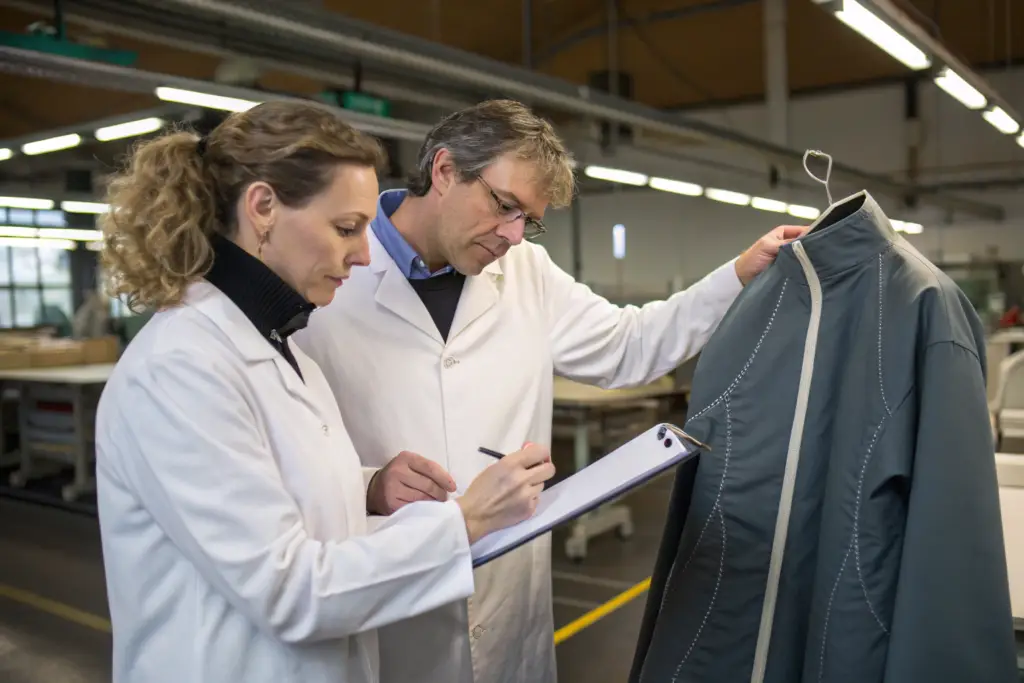
How Does a "Seasonal Defect Review Meeting" Between QC and Design Reduce the Following Season's Defect Rate by 40%?
At the end of each season, the QC manager and the design team sit down together with the season's defect data—a Pareto chart showing the most frequent defect types, with physical samples of each defect. The team identifies the top three recurring defects, traces each to its root design or specification cause, and implements a specific design change for the following season. The next season's defect rate drops measurably.
Why Does the "QC-to-Pattern Maker" Direct Feedback Path Prevent a "Button Attachment Failure" From Recurring?
The QC inspector shows the pattern maker a garment where the button has pulled off. The pattern maker examines the button attachment specification and discovers that the stitch count is too low for the button's weight. She updates the specification to include a higher stitch count and a lock-stitch finish. The next season's buttons stay attached.
How Does a "Dedicated Sample Fabric and Trim Library" Inside the Factory Enable a Brand to Test Ten New Concepts in the Time It Takes a Factory Without One to Test Two?
A Miami-based resort wear brand working with a factory that lacked a sample resource library once waited three weeks to test a simple concept: "What if we made the cover-up in this cotton voile instead of the rayon challis?" The factory had to order the cotton voile from a mill, wait for delivery, and then cut the sample. The three-week delay killed the brand's momentum. The concept was eventually abandoned because the season's development window had closed.
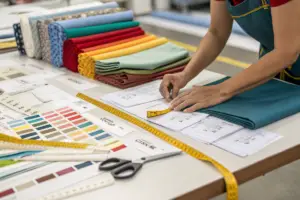
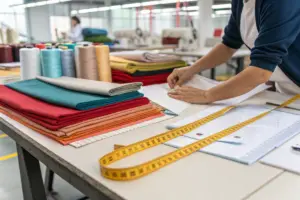
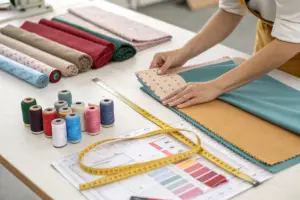
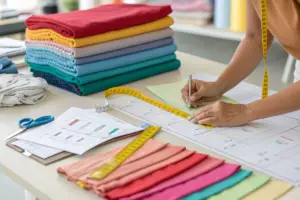
A dedicated sample fabric and trim library inside the factory enables a brand to test ten new concepts in the time it takes a factory without one to test two, because the library stocks short roll-ends of hundreds of fabric qualities, a full range of trim components, and a complete thread color inventory, all physically present in the factory and immediately available for sample cutting without ordering from external mills, allowing the designer to experiment with different fabric and trim combinations on a dress form in a single afternoon rather than waiting weeks for each new material to be procured.
Creative exploration requires tactile experimentation. A designer needs to drape a fabric on a form, hold a button against it, and see the combination in three dimensions. A sample library makes this experimentation immediate. Without a library, every experiment requires a procurement process that kills the creative momentum.
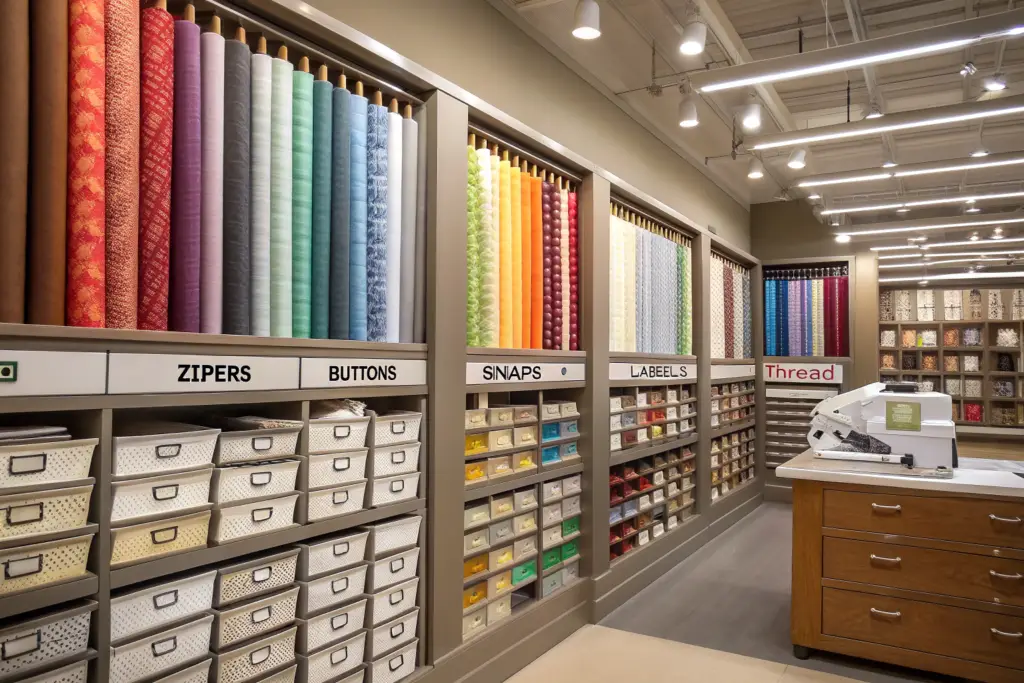
How Does a "Fabric Roll-End Inventory" From Previous Seasons' Productions Create a Free, Immediately Available Sample Resource?
The factory accumulates short roll-ends of fabrics from previous bulk production orders—lengths of 5-20 meters that are too short for bulk production but perfect for sample making. These roll-ends are organized in the sample library and are available at zero additional procurement cost and zero procurement time.
Why Does a "Trim Component Drawer" With Physical Samples of Every Available Button, Zipper, and Snap Accelerate the Design Decision?
A digital catalog of trims requires the designer to imagine how a button will look and feel on the actual garment. A physical drawer of trim samples allows the designer to place three different buttons on the actual fabric swatch, step back, and evaluate them visually and tactilely. The decision is made in minutes, not days.
Conclusion
A dedicated factory design team is not a luxury service for established brands. It is an essential scaling infrastructure for any apparel brand that needs to increase its new style output without proportionally increasing its internal design headcount or extending its development timeline. The co-located pattern maker and sample sewer compress the sampling cycle from weeks to days by eliminating the waiting time that dominates traditional remote development. The in-house textile engineer translates the designer's tactile vision into specific material specifications within hours, not weeks. The integrated QC-to-design feedback loop transforms defect data into design improvements that reduce the following season's defect rate. The sample fabric and trim library enables rapid creative experimentation without procurement delays.
At Shanghai Fumao, I built my dedicated design and development team precisely to serve brands in a scaling phase. My pattern makers, sample sewers, textile engineer, and QC team are all under one roof, fifty meters from my five production lines. When a brand partner needs to develop a new style, adjust a fit, engineer a new fabric, or solve a recurring quality issue, the entire team is physically present, immediately available, and connected to the production reality.
If you are a brand buyer whose growth is being throttled by a slow, remote, email-dependent design and development process, and you want a manufacturing partner whose in-house design team can accelerate your new style output, contact my Business Director, Elaine. She can introduce you to our pattern-making team, arrange a live video tour of our sample library, and demonstrate how our co-located development process can compress your sampling timeline. Reach Elaine at: elaine@fumaoclothing.com. Scale your brand with a factory design team that moves at the speed of your ambition.