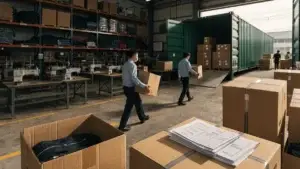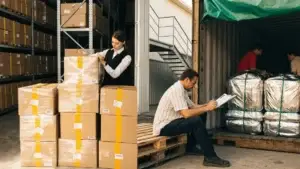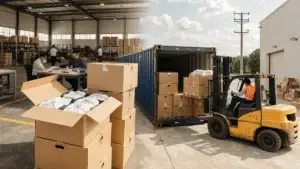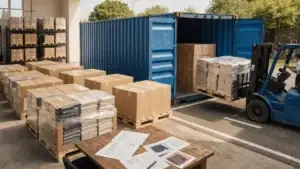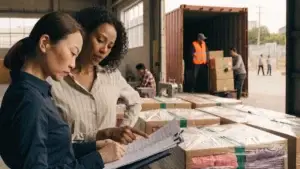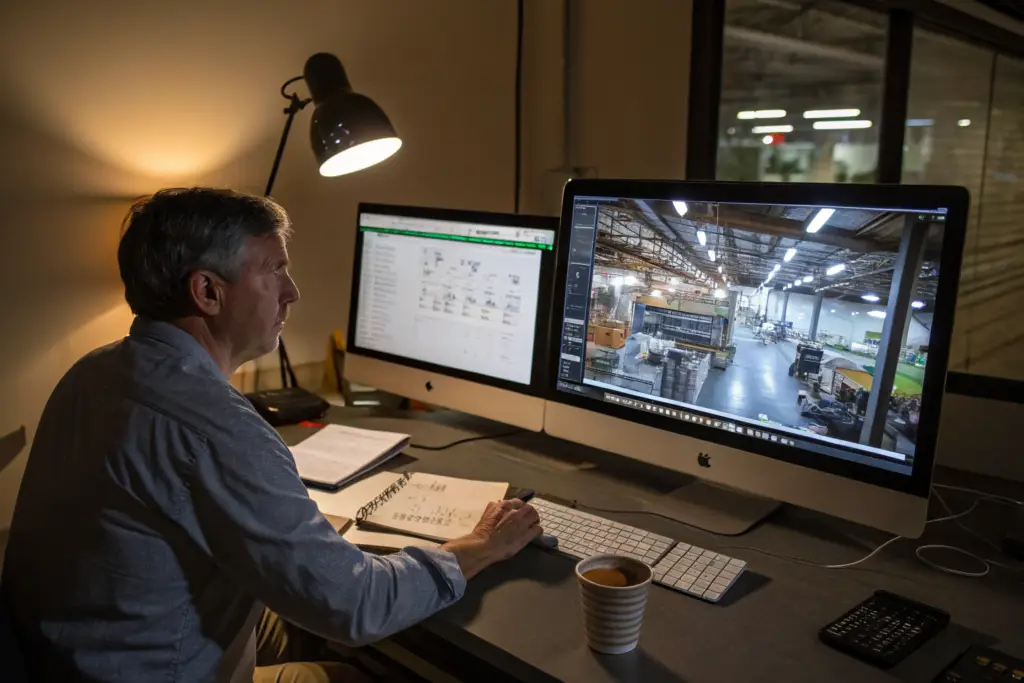
Four years ago, a Miami-based resort wear brand owner decided to manage his overseas production entirely via email and twice-monthly WhatsApp messages. He believed he was "staying in touch." His factory in China was producing a complex linen collection with custom embroidery and specific wash finishes. The factory sent weekly "all is on schedule" messages. The brand owner accepted them at face value. The shipment arrived with the embroidery thread color completely wrong—a bright coral instead of the specified dusty terracotta—and the enzyme wash had been over-applied, weakening the linen fabric. The brand owner had never conducted a single live video inspection, never requested a real-time photo of the embroidery thread against his Pantone chip, and never asked for a random sample pull during production. He had outsourced his production but had completely abdicated his management responsibility.
To successfully manage overseas apparel production directly from the United States, you must install a "Remote Production Management System" consisting of four non-negotiable pillars: a weekly scheduled, camera-on live video Production Walk-Through where the factory walks the line showing your specific order in progress; a shared, cloud-based Production Tracking Dashboard updated in real-time with cutting, sewing, finishing, and packing completion percentages; a triggered "Exception-Only" communication protocol where the factory contacts you immediately—within one hour—only when a predefined quality or timeline deviation occurs; and a pre-shipment live video inspection where you visually approve your actual packed goods via a random carton pull before authorizing the balance payment.
At Shanghai Fumao, I work with brand owners across every US time zone, and I have built a specific remote management infrastructure that allows a brand owner in California to inspect a sewing line in Zhejiang with the same level of detailed visibility as if they were standing on the factory floor.
Why Does a Weekly Live Video "Production Walk-Through" Replace the Need for Physical Factory Visits?
A Seattle-based technical outerwear brand owner once flew to China four times a year at a cost of approximately $12,000 annually in flights, hotels, and time away from his business. He still experienced quality issues because a factory can prepare a perfect "show floor" for a scheduled visit. During the pandemic, he was forced to switch to weekly live video walk-throughs. He discovered, unexpectedly, that the unscripted, unedited nature of a live video call—where he could say "stop, zoom in on that seam, measure it with the caliper on camera"—actually gave him more honest, more frequent, and more detailed visibility than his physical visits had ever provided.
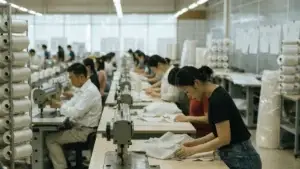
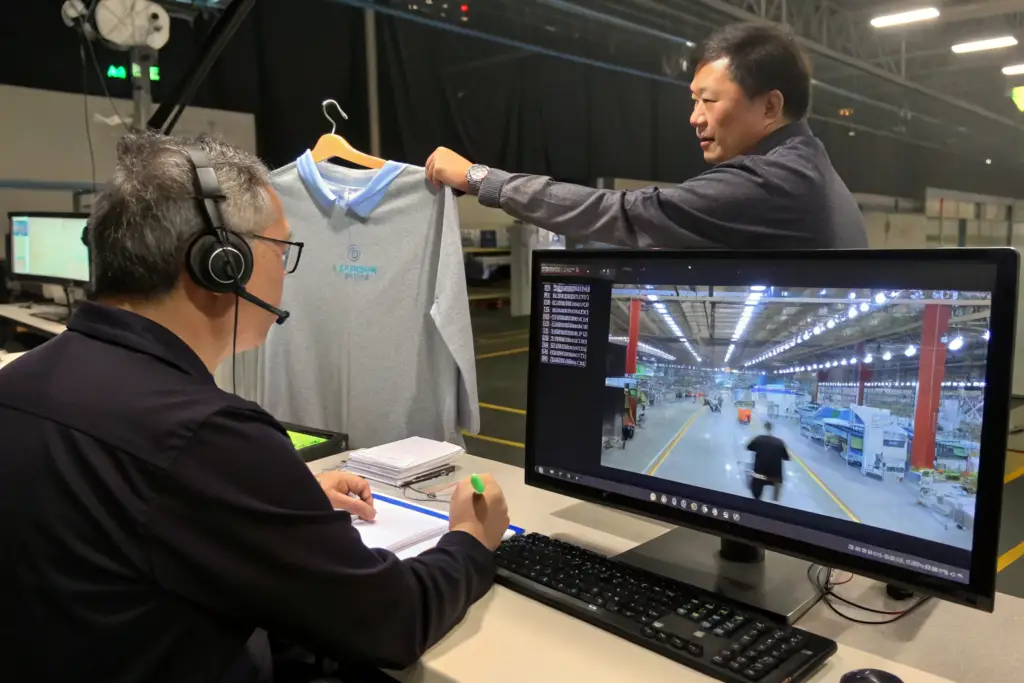
A weekly scheduled live video Production Walk-Through replaces the need for physical factory visits by providing a real-time, unedited, interactive inspection of your specific production line, where you can request the factory manager to zoom in on a specific seam, measure a specific garment dimension with a digital caliper on camera, show you the actual fabric roll tags to verify the dye lot number, and walk to the packing area to confirm your cartons are being assembled with the correct labels, all while asking questions and receiving immediate visual answers, creating a virtual presence that is in many ways superior to a pre-announced physical audit because the factory cannot stage or prepare for a specific moment on a continuously moving live camera.
A physical visit is a snapshot, often staged. A weekly live video call is an ongoing, unscripted documentary. The camera cannot hide the reality of the production floor because the brand owner controls where the camera points in real-time.
How Does a "Random Stop and Measure" Command During a Live Walk-Through Detect a Systemic Defect?
The brand owner can randomly say, "Stop the camera at the operator on station four. Pick up the piece she just finished. Measure the collar point length with a caliper and hold it to the camera." If the measurement is off-spec, the defect is caught in real-time on only a few units, and the machine is recalibrated immediately.
Why Is a "Fabric Roll Tag Zoom" More Powerful Than a Mailed Fabric Swatch for Verifying Material Authenticity?
A mailed swatch can be prepared from a specially selected roll. A live zoom onto the actual fabric roll being cut on the cutting table, showing the full roll tag with the mill name, dye lot number, and fiber composition, proves the material in production is the material that was ordered.
A Chicago-based streetwear brand owner once spent two hours every Monday morning emailing his factory, waiting for replies, and manually updating a spreadsheet based on the factory's verbal estimates. The factory's estimates were often optimistic or vague. The brand owner never truly knew whether his order was on track until it either shipped on time or didn't. This constant, low-grade anxiety consumed his mental energy and prevented him from focusing on growing his brand.
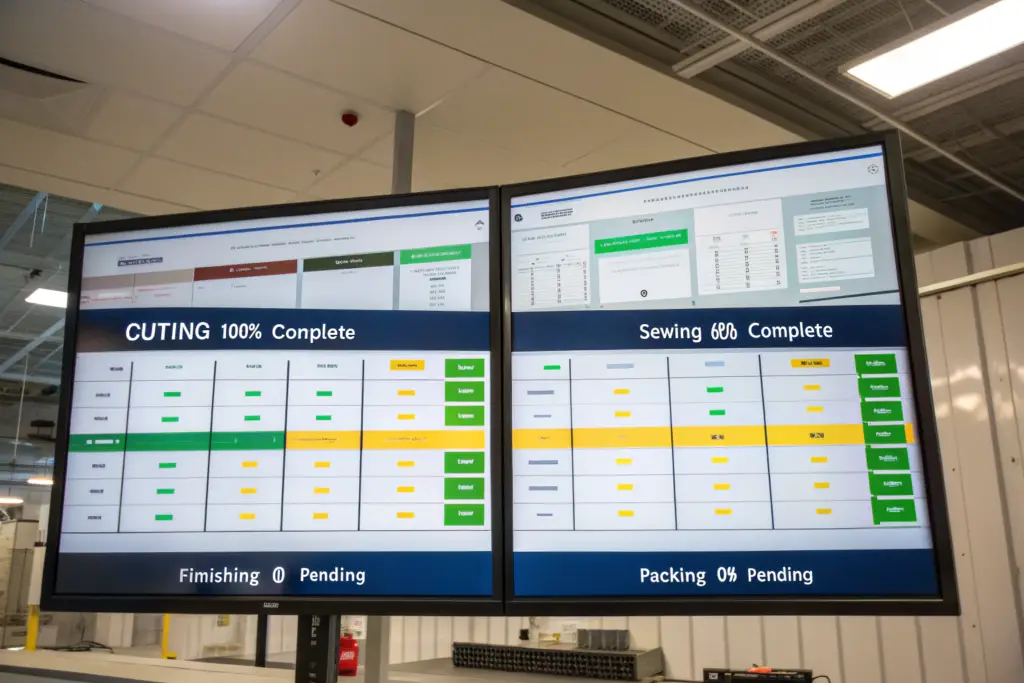
A shared cloud-based Production Tracking Dashboard eliminates "Where is my order?" anxiety by providing a single, always-accessible, real-time view of every production stage for every style in your order, with completion percentages updated by the factory's production team at the end of each shift, color-coded status indicators that show green for on-track, yellow for at-risk, and red for delayed, and an integrated logistics timeline that displays the booked vessel name, the container loading date, and the estimated port arrival date, all visible from your phone in under fifteen seconds.
The psychological cost of not knowing where your inventory is exceeds the operational cost of any minor production delay. A transparent dashboard replaces uncertainty with data.
What Are the Five Universal Production Milestones That Must Appear on Any Effective Tracking Dashboard?
The five milestones are: Raw Material Receipt (fabric and trims physically in the factory warehouse), Cutting Completion (fabric cut and bundled for sewing lines), Sewing Completion (garments fully assembled and inspected inline), Finishing Completion (garments washed, pressed, and final QC inspected), and Packing Completion (garments folded, polybagged, carton-packed, and cartons labeled).
How Does a "Last Updated by [Name] at [Timestamp]" Entry on the Dashboard Create Accountability?
Every status update on the dashboard must be accompanied by the name of the specific production team member who entered the update and the exact timestamp. If a status sits unchanged for 48 hours, the brand owner knows exactly who to ask about the delay.
What Is an "Exception-Only" Communication Protocol and How Does It Prevent Information Overload While Ensuring Nothing Is Missed?
A Denver-based outdoor brand owner's inbox was once flooded with 40-60 routine production emails per day from his factory—"fabric arrived," "cutting started," "first piece off the line," "lunch break." Buried in this avalanche of routine updates, he missed a critical email about a zipper shipment delay. By the time he saw the zipper email, three days had passed, and the production line had been forced to stop. The factory had communicated the problem, but the communication had been lost in noise.
An Exception-Only communication protocol prevents information overload while ensuring nothing critical is missed by establishing a strict rule: the factory communicates with the brand owner proactively only when a specific, pre-defined "exception condition" is triggered—a raw material delay exceeding 24 hours, a quality defect rate exceeding 1% on an inline inspection, a machine breakdown that will halt production for more than one shift, or a logistics delay that changes the vessel departure date—and these exception alerts are sent via a dedicated, high-priority channel such as a specific WhatsApp number or a tagged email subject line that the brand owner knows to check immediately, while all routine status updates are passively visible on the shared dashboard without generating a notification.
Routine updates are data for the dashboard. Exception alerts are signals that demand action. Separating these two types of communication ensures the brand owner's attention is reserved for the moments that actually require a decision.
What Are the Six Specific Exception Conditions That Should Trigger an Immediate Alert?
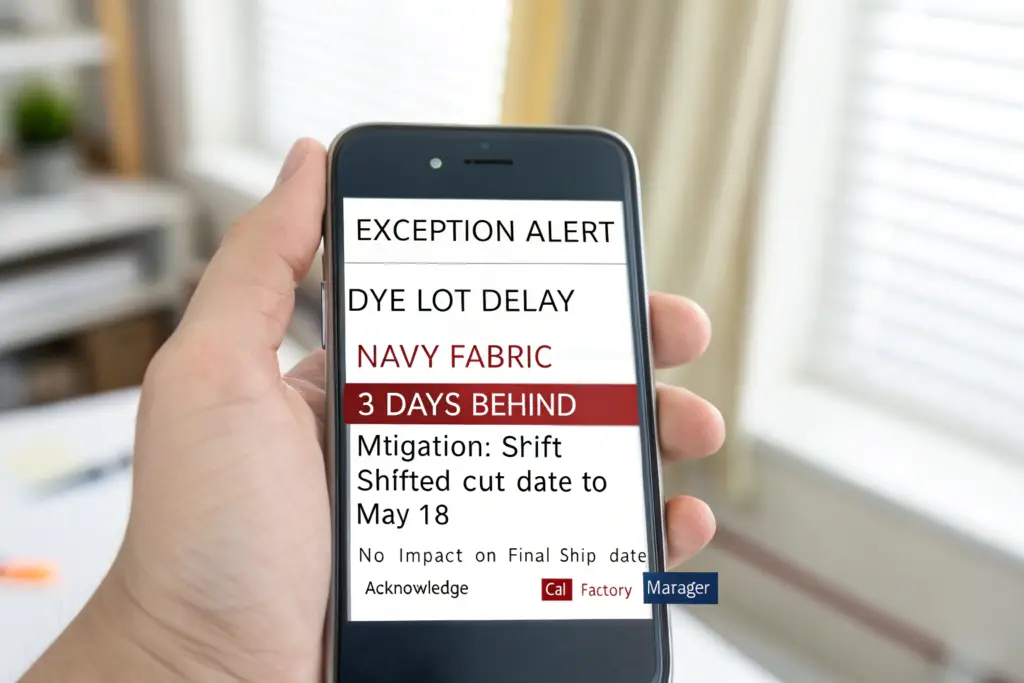
The six conditions are: Raw material delay exceeding 24 hours past the scheduled arrival date, inline QC defect rate exceeding 1% on any single inspection, a critical machine breakdown that will halt a production line for more than one shift, a labor shortage that reduces line output by more than 20%, a failed final AQL inspection, and a logistics delay that changes the vessel departure or port arrival date.
Why Should an Exception Alert Include a Mandatory "Proposed Mitigation" Field?
An alert that says "Fabric is delayed" creates anxiety and a back-and-forth email chain. An alert that says "Fabric is delayed by 3 days. Cut date shifted from May 15 to May 18. Sewing will run overtime on May 22-23 to recover schedule. Final ship date remains June 5." allows the brand owner to immediately assess whether the mitigation is acceptable and requires only a single "Approved" response.
How Does a Pre-Shipment Live Video Inspection Provide Final Approval Authority Before Funds Are Released?
A New York luxury streetwear brand once released a $45,000 balance payment based on a factory's emailed AQL report PDF. The report showed a passed inspection with a defect rate of 1.2%. When the goods arrived, the brand discovered that the AQL sample had been drawn from a prepared set of "clean" cartons, while the remaining cartons contained garments with a significantly higher defect rate. The brand had trusted a static report that could have been staged.
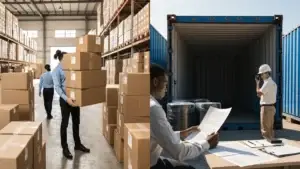
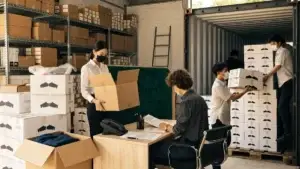
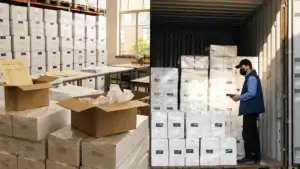
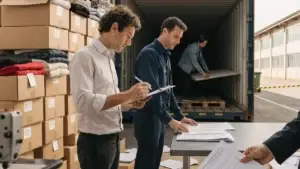
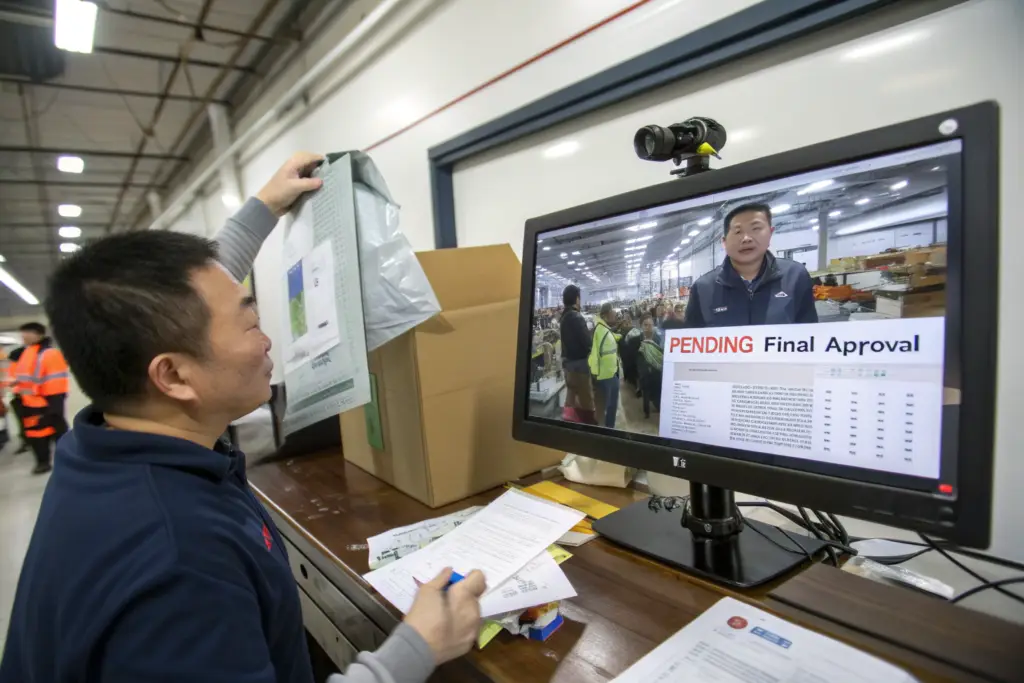
A pre-shipment live video inspection provides final approval authority before funds are released by connecting the brand owner directly to the factory's packing area via a live, unscripted video call, where the brand owner selects three specific carton numbers at random using a random number generator, instructs the factory QC team to open those exact cartons live on camera, pull the garments, and inspect them against the Golden Sample for measurement, color, and stitching quality, ensuring that the goods being packed are the same quality as the goods that passed the AQL report, before the balance payment is authorized.
A PDF report is a promise. A live video inspection of randomly selected cartons is verification. The balance payment should only be released after the brand owner's own eyes have seen the actual, packed goods.
How Does a "Random Carton Number Selection" During a Live Video Call Prevent a Staged Inspection?
The brand owner uses a random number generator app on their phone, generates three numbers between 1 and the total carton count, and instructs the factory team to locate and open those specific cartons. The factory cannot prepare specific cartons because the numbers are generated live and unpredictably.
Why Should the Brand Owner Physically Hold the Golden Sample Next to the Monitor During the Live Inspection?
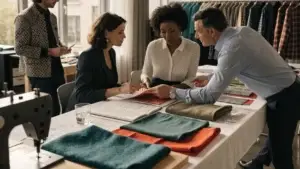
The Golden Sample is the physical, signed, legal quality standard. Holding it next to the monitor allows the brand owner to perform a direct side-by-side visual comparison between the approved reference garment and the random production garment on the screen, identifying any deviations in color, stitching, or proportion that a generic AQL report might not capture.
Conclusion
Successfully managing overseas apparel production from the United States is not about working longer hours or sending more emails. It is about building a structured remote management system that replaces physical presence with digital transparency. The weekly live video Production Walk-Through provides real-time, interactive visual access to your production line. The shared cloud-based Production Tracking Dashboard provides passive, always-available status visibility without generating inbox noise. The Exception-Only communication protocol ensures your attention is captured only when a decision is required. The pre-shipment live video inspection ensures your money is released only when your own eyes have verified the quality of your goods.
At Shanghai Fumao, I have built my entire client communication infrastructure around these four pillars specifically to serve US-based brand owners who cannot physically visit the factory. My production team conducts weekly scheduled walk-throughs with every active client. My tracking dashboard is updated at the end of every shift. My exception alerts include a mandatory mitigation plan. My pre-shipment inspections are conducted live with random carton selection.
If you are a US-based brand buyer who wants to manage your overseas production with the same level of visibility and control as if your factory were in the next state, contact my Business Director, Elaine. She can schedule a demonstration of our live video walk-through format, share a read-only view of our production tracking dashboard, and walk you through our Exception-Only communication protocol. Reach Elaine at: elaine@fumaoclothing.com. Manage your production from your desk, with data, not distance.