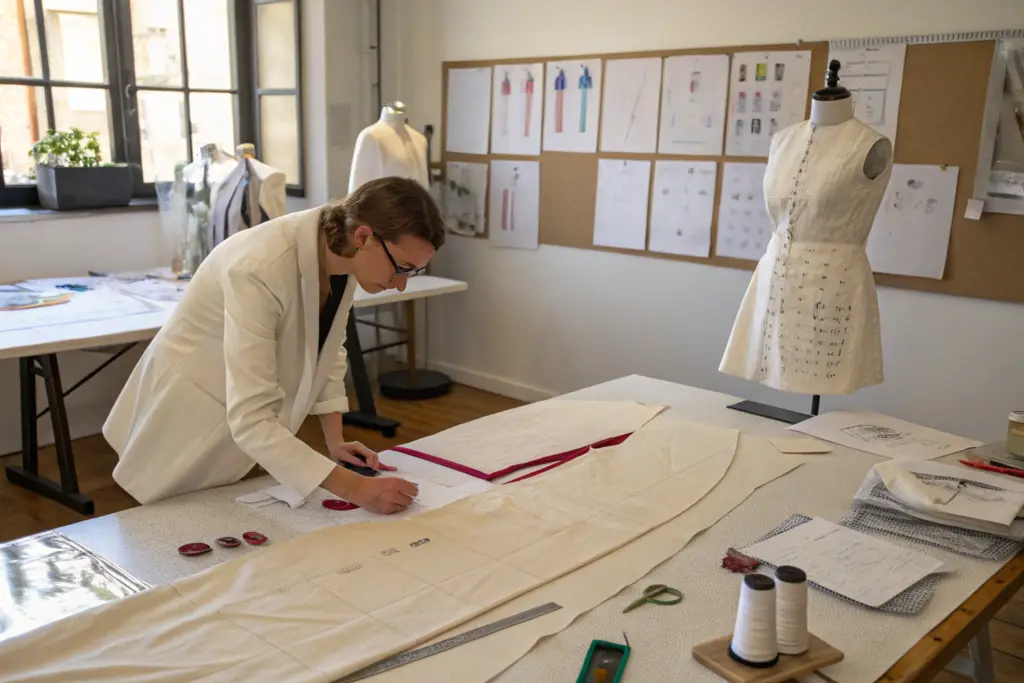
A Vancouver-based avant-garde designer once demanded a two-week sampling timeline for a collection of five highly customized garments, each involving a custom-developed burnout velvet fabric, asymmetrical laser-cut hem details, and hand-applied Swarovski crystal embellishments. The factory, pressured by the designer's insistence and the threat of losing the order, agreed to the impossible timeline. The samples arrived on day fourteen. The burnout velvet was patchy and uneven because the chemical application had not been properly tested. The laser-cut edges were scorched and fraying. The crystal placements were crooked. The designer rejected all five samples, and the factory had to start the entire sampling process from scratch, ultimately taking five weeks. The rushed two-week attempt had wasted three weeks and destroyed the relationship.
Highly customized fabric garments require a three to four week sampling timeline because each stage of the process—custom fabric development, specialized pattern engineering for non-standard design elements, sourcing and testing of unique trim components, and the integration of multiple specialized techniques like laser cutting, embroidery, or hand-finishing—cannot be parallel-processed and must proceed in a sequential, iterative loop where the output of each stage is physically inspected, measured, and approved before the next stage can begin, and any attempt to compress this sequential dependency creates a cascade of unverified assumptions that collapse into a failed sample.
At Shanghai Fumao, I have learned that a custom garment sample is not a product. It is a research and development project. The timeline is determined by the physics of textile dyeing, the geometry of pattern drafting, and the availability of specialized components—not by the urgency of the brand's launch calendar.
Why Does Custom Fabric Development Alone Consume the First 7-10 Days of Any Sampling Timeline?
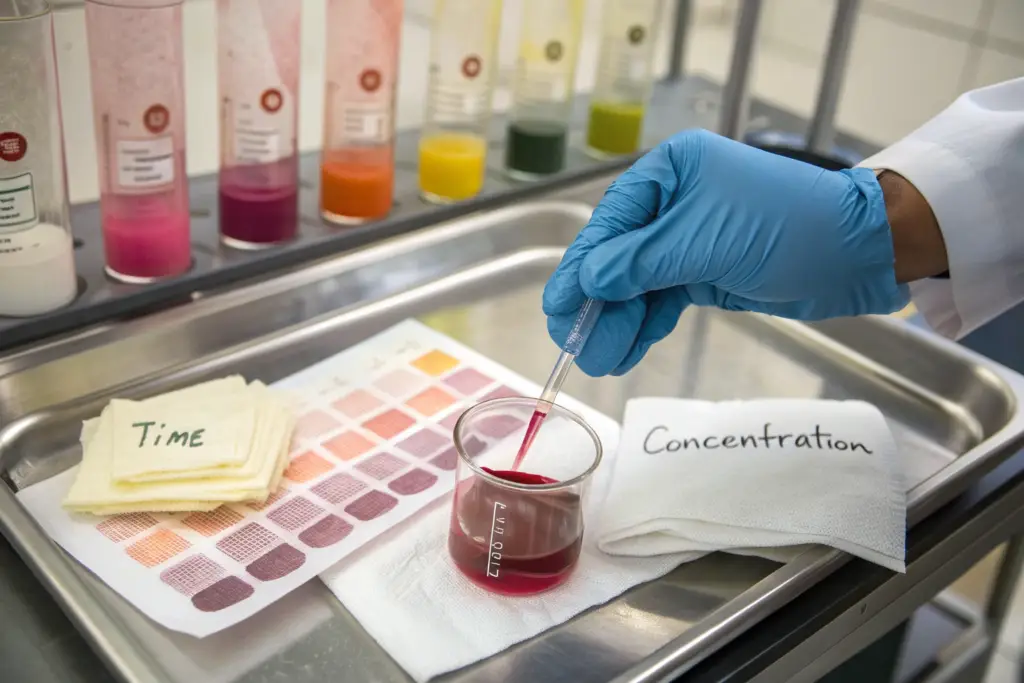
A Los Angeles-based contemporary brand once requested a custom "dusty rose with a hint of lavender" fabric color for a capsule collection. The factory's dye house had no existing formulation for this specific, poetic color description. The dye master began a manual color-matching process, mixing tiny quantities of red, blue, and white pigments, adjusting the ratios by fractions of a gram, and dyeing small test swatches one by one. The first swatch was too pink. The second swatch was too purple. The third swatch was too grey. The fourth swatch, after seven days of iterative adjustments, finally captured the exact "dusty rose with lavender undertone" the designer had envisioned. This was not a delay; it was the irreducible minimum time required to translate a subjective color vision into a reproducible chemical formula.
Custom fabric development consumes the first 7-10 days of a sampling timeline because any fabric that deviates from a standard, pre-existing mill offering requires a multi-step, sequential chemical development process: the yarn dye formulation must be created from scratch and tested on small swatches, the knit or weave structure must be produced on a sample machine and physically inspected for weight and drape, and if a specialty finish like a burn-out, crinkle, or coating is required, each chemical application must be tested individually and in combination to ensure the final fabric achieves the target aesthetic without compromising tensile strength or colorfastness.
A standard fabric is selected from a mill's existing catalog and requires zero development time. A custom fabric is invented from raw chemical components and textile physics. Invention is an inherently iterative, time-consuming process.
How Does a "Custom Yarn Dye" Process Differ in Timeline From a Standard "Piece Dye" Process?
A standard piece dye process takes a pre-existing greige fabric roll and dyes the entire roll in a single color, typically requiring 2-3 days. A custom yarn dye process dyes the individual yarns before the fabric is knitted or woven, requiring the yarn dyeing step (2-3 days), the yarn drying and conditioning step (1 day), and then the knitting or weaving step (2-3 days). The total timeline is approximately 5-7 days longer.
Why Does a Specialty "Burnout" or "Crinkle" Finish Require a Minimum of 72 Hours for Chemical Testing Alone?
A burnout finish uses a strong acid paste to dissolve specific fibers in a blended fabric, creating a sheer pattern. The acid concentration, application time, and neutralization process must be precisely calibrated for the specific fiber blend. A test swatch is treated, inspected for the correct sheer effect, and then tensile-strength tested to ensure the remaining fibers are not weakened. This cycle of apply-inspect-test takes a minimum of 24 hours per iteration, and two to three iterations are typically required.
How Does Pattern Engineering for Non-Standard Design Elements Add 5-7 Days to the Sampling Process?
A New York-based deconstructed tailoring brand once submitted a tech pack for a jacket with an "asymmetric, origami-folded collar" and a "sleeve that spirals around the arm." The pattern maker assigned to the sample spent three full days simply interpreting the 2D sketch into a 3D paper pattern. The first muslin toile was sewn, placed on the fit model, and the origami collar collapsed limply instead of standing in the intended sculptural folds. The pattern maker adjusted the internal interlining, added a hidden support structure, and re-cut the muslin. The second toile held the collar shape but restricted arm movement. A third adjustment resolved the arm mobility issue. The pattern engineering, entirely separate from the fabric development, consumed six working days.
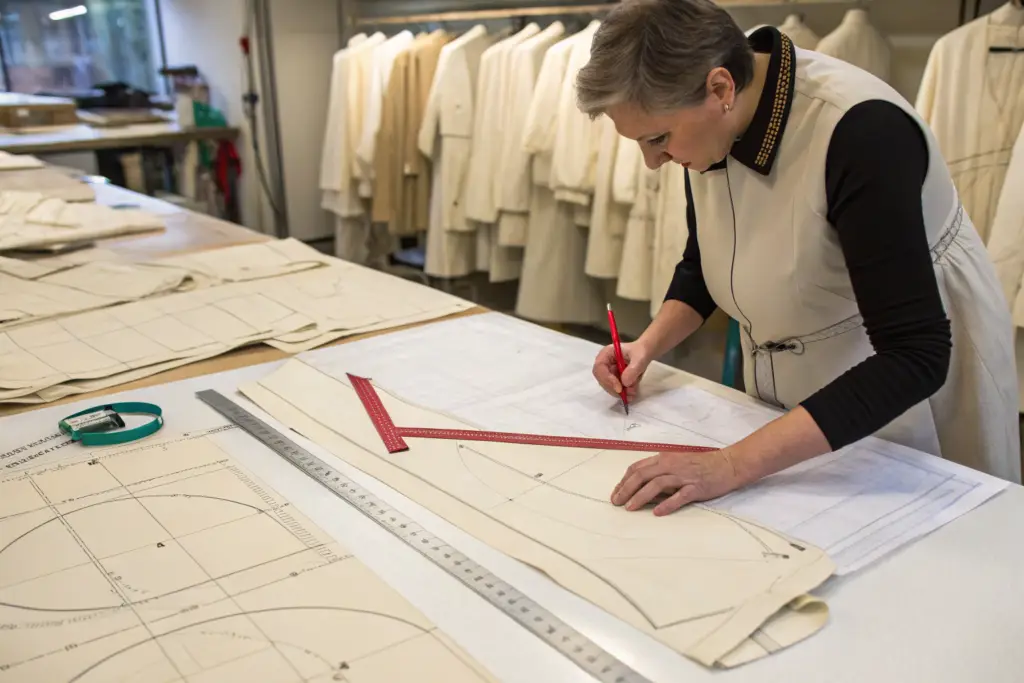
Pattern engineering for non-standard design elements adds 5-7 days to the sampling timeline because a pattern for a complex, non-standard garment design cannot be generated by modifying an existing block pattern and must be drafted from scratch on a flat surface, then tested in a physical muslin toile on a live fit model, where the 2D-to-3D translation reveals the physical design flaws—such as a collar that collapses, a sleeve that binds, or an asymmetric hem that hangs unevenly—that are invisible on a computer screen and require multiple rounds of physical pattern adjustment and re-testing.
A standard t-shirt pattern is a known, tested geometry. An asymmetric sculptural collar has never existed before. The pattern maker is solving a unique geometric puzzle in physical space, and each attempted solution must be physically sewn and tested.
Why Is a "Muslin Toile on a Live Fit Model" the Only Way to Test a Complex Pattern, and Why Does It Take Two Days Per Iteration?
A 3D digital simulation can approximate fabric drape, but it cannot simulate the specific way a complex, multi-layered interlining structure behaves under gravity or the exact range of motion restriction of an unconventional sleeve design. A physical muslin must be cut (2-3 hours), sewn (3-5 hours), fitted on the model (1 hour), marked for adjustments (30 minutes), and the pattern adjusted (2-3 hours). Each full iteration cycle consumes approximately two working days.
How Does an "Integrated Functional Element" Like a Hidden Zippered Pocket in an Unusual Seam Add Pattern Complexity?
A hidden zippered pocket requires the pattern pieces to include precise seam allowances for the zipper tape, a facing piece that covers the zipper on the interior, and reinforcement stitching points. If the pocket is integrated into an already unusual, curved seam, the pattern maker must engineer both the aesthetic seam curve and the functional zipper structure simultaneously.
What Specific Trim and Component Sourcing Delays Are Unique to Customized Garments?
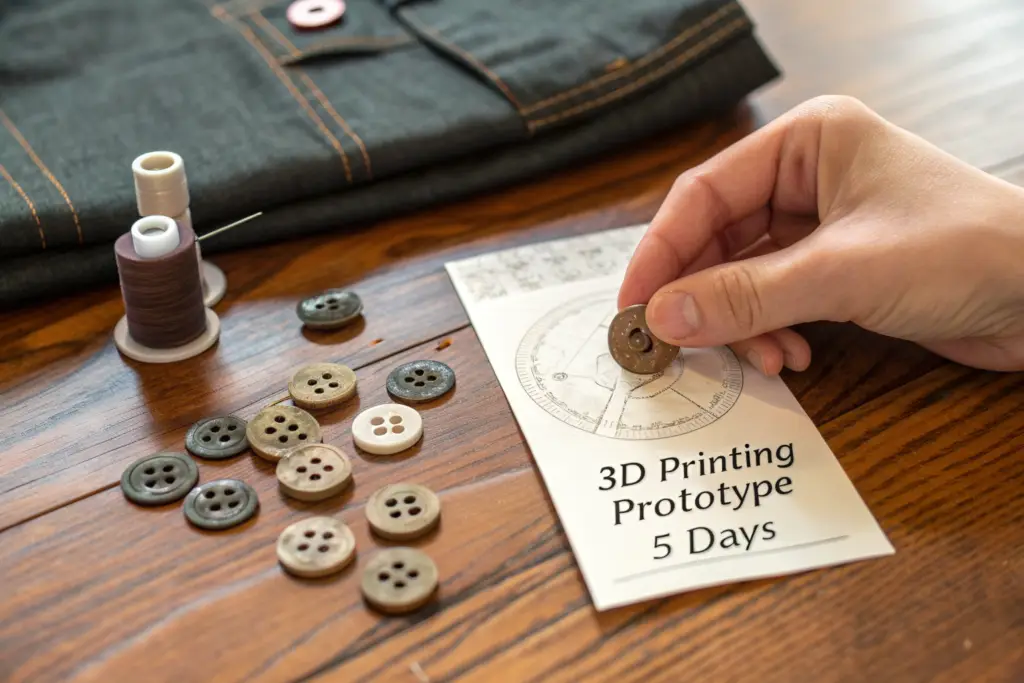
A Berlin-based sustainable luxury brand designed a jacket with buttons made from recycled ocean plastic, custom-molded into a unique hexagonal shape with the brand's logo debossed in the center. The factory's standard button supplier had no such button. The factory had to source a specialized 3D-printed mold, commission a small batch of prototype buttons from a resin prototyping house, test the buttons for shank strength and washing durability, and ship the approved prototypes to the brand for physical approval. The button sourcing alone consumed eleven calendar days.
Trim and component sourcing delays unique to customized garments add 5-10 days to the sampling timeline because any trim that is not a standard, off-the-shelf catalog item—a custom-shaped button, a uniquely printed label, a specialty zipper pull, a non-standard embroidery thread color—requires a separate micro-supply chain of design specification, prototype manufacturing, physical quality testing, and approval shipping that runs in parallel to the fabric and pattern development but often extends beyond the pattern completion date.
A standard white polyester button is in stock at the trim supplier's warehouse and ships in 24 hours. A custom hexagonal recycled-plastic button in a specific color with a debossed logo does not exist anywhere in the world and must be invented from scratch.
How Does a "Button Mold" for a Custom Shape Add a Minimum of 7 Days to the Trim Sourcing Timeline?
A custom button requires a metal injection mold to be precision-machined to the exact negative of the button shape. The mold machining takes 3-5 days. The first prototype buttons are then injection-molded, cooled, inspected, and shipped. If any dimension is off, the mold must be adjusted, adding further days.
Why Does a "Metallic Embroidery Thread" Require a Separate Tension and Breakage Test Before Sample Sewing?
Metallic threads are composed of a thin metallic foil wrapped around a polyester core. They are significantly more brittle than standard polyester thread and have a tendency to snap under the high-speed tension of an industrial embroidery machine. A test run on a sample embroidery machine is required to adjust the machine's tension settings and confirm the thread can run continuously without breaking.
How Does the Integration of Multiple Custom Techniques Into a Single Garment Create a Non-Linear "Integration Testing" Phase?
A London-based red-carpet fashion house once ordered a sample gown that combined a custom digitally printed silk charmeuse, hand-sewn beadwork along the bodice, and a structurally engineered internal corset. The printed silk was ready in week one. The beadwork was completed in week two. The internal corset was fitted in week three. But when the three elements were finally assembled into a single garment, the weight of the beadwork pulled the printed silk off-grain, distorting the print alignment, and the corset boning created visible ridges under the silk. The individually perfect components, when integrated, created a failed garment.
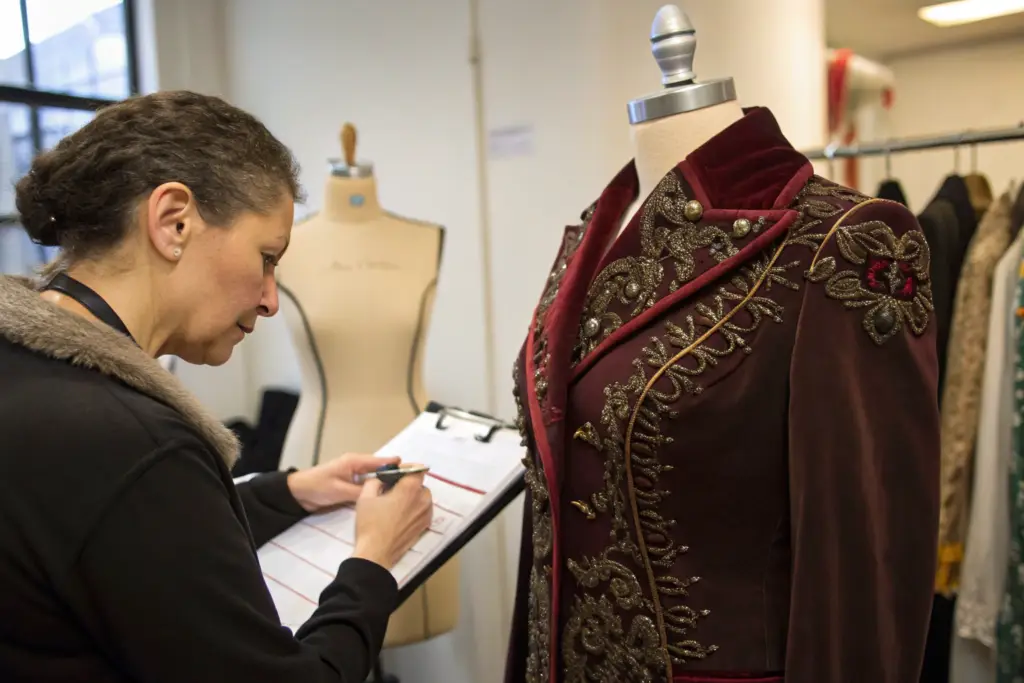
The integration testing phase adds 3-5 days to a customized sampling timeline because when multiple custom techniques—such as a specialty fabric, an embroidery design, and an unconventional seam structure—are combined into a single garment for the first time, their physical interactions reveal unpredictable failures: the embroidery tension may pucker the specialty fabric, the laser-cut edge may fray against the adjacent seam, or the weight of one component may distort the drape of another, requiring a dedicated period of full-garment assembly, inspection, and adjustment that cannot begin until all individual components are complete.
Each custom technique is tested in isolation during development. But a garment is a system, and systems fail at the interfaces between components. The integration testing phase is the moment when the individually validated subsystems are assembled and the hidden interface failures emerge.
How Does an "Embroidery Tension Versus Fabric Stability" Conflict Emerge Only During Final Integration?
A dense embroidery design requires a specific needle penetration density. A delicate custom fabric, like a lightweight burnout velvet, may have reduced tensile strength at the embroidered area. The fabric's ability to withstand the embroidery needle penetration was tested in isolation, but when the embroidered panel is sewn into the full garment, the additional stress of the seam joining the panel to the adjacent fabric can cause the weakened embroidered area to tear. This interface failure only appears during final assembly.
Why Must a "Full Garment Wash Test" Be Performed on the Final Integrated Sample and Not on Individual Components?
Different components—the shell fabric, the trim, the embroidery thread, the interlining—may have slightly different shrinkage rates. A component that shrinks 2% may be compatible with another component that shrinks 2.5% when tested in isolation, but when sewn together, the differential shrinkage creates puckering at the seam. The full integrated garment wash test reveals these differential shrinkage failures.
Conclusion
The three to four week timeline for a highly customized garment sample is not a reflection of factory inefficiency or slow communication. It is the irreducible physical time required to translate a unique design vision into a reproducible, physically validated sample. The custom fabric must be chemically invented, not just selected from a catalog. The non-standard pattern must be geometrically solved and physically tested on a live body, not just graded from a known block. The unique trim components must be sourced from specialized prototyping houses, not pulled from a standard inventory shelf. And the individually developed components must be physically assembled into a single garment and tested as an integrated system to reveal the hidden interface failures.
At Shanghai Fumao, I do not promise a two-week custom sample timeline because I know that a rushed custom sample is a failed sample. I allocate the full three to four weeks, with specific stage-gate checkpoints for fabric approval, pattern approval, trim approval, and final integration approval, and I communicate the status of each stage transparently to the brand buyer so that the timeline is visible, predictable, and justified.
If you are developing a highly customized collection and you want a manufacturing partner who respects the physical and chemical realities of custom garment sampling, contact my Business Director, Elaine. She can share our custom sampling stage-gate timeline template and walk you through the specific development steps for your unique fabric, pattern, and trim requirements. Reach Elaine at: elaine@fumaoclothing.com. Give your custom design the development time it physically requires, and the sample will be worth the wait.