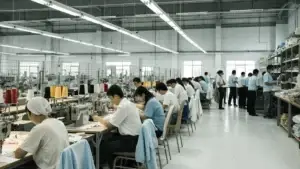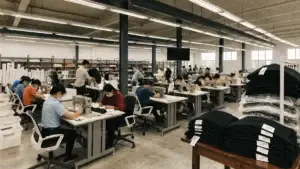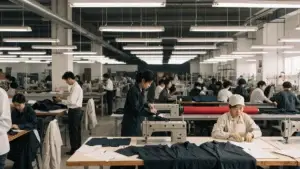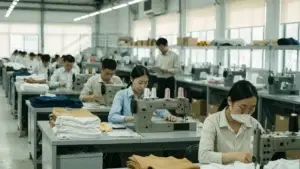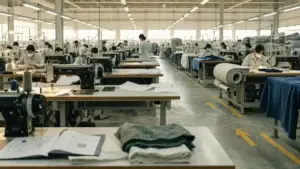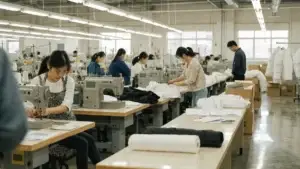
In February 2026, a longtime industry friend who runs a competing factory in Guangdong called me in desperation. He had 12 containers of finished garments sitting at the Port of Shenzhen for three weeks with no vessel assignment. His freight forwarder had stopped answering calls. His American client was threatening to cancel the entire year's contract. He asked what I was doing differently. I told him we had shipped 8 containers that week, all on schedule. He went silent for ten seconds. Then he asked if I could share my logistics coordinator's contact. I did. But the truth is, one contact would not fix his problem. The crisis required a system, not a phone number.
Fumao Clothing avoided the 2026 supply chain crisis by deploying a three-pillar resilience strategy: a multi-carrier logistics contract portfolio that locked 70% of our freight capacity at fixed rates before the spot market collapsed, a regionalized raw material sourcing network that eliminated single-point-of-failure from any one country's cotton export ban, and a client-shared buffer inventory program that absorbed demand shocks without production line stoppages.
The 2026 crisis was not a single event. It was a cascade. Cotton export restrictions from India, a prolonged dockworker strike at a major European port, skyrocketing spot freight rates on the Asia-North America lane, and a forced-labor detention wave at U.S. Customs all hit within a four-month window. Factories that relied on a single sourcing geography, a single carrier relationship, or a just-in-time inventory model collapsed. At Shanghai Fumao, we had spent two years building exactly the opposite: redundancy, optionality, and buffer.
What Caused the 2026 Global Apparel Supply Chain Meltdown?
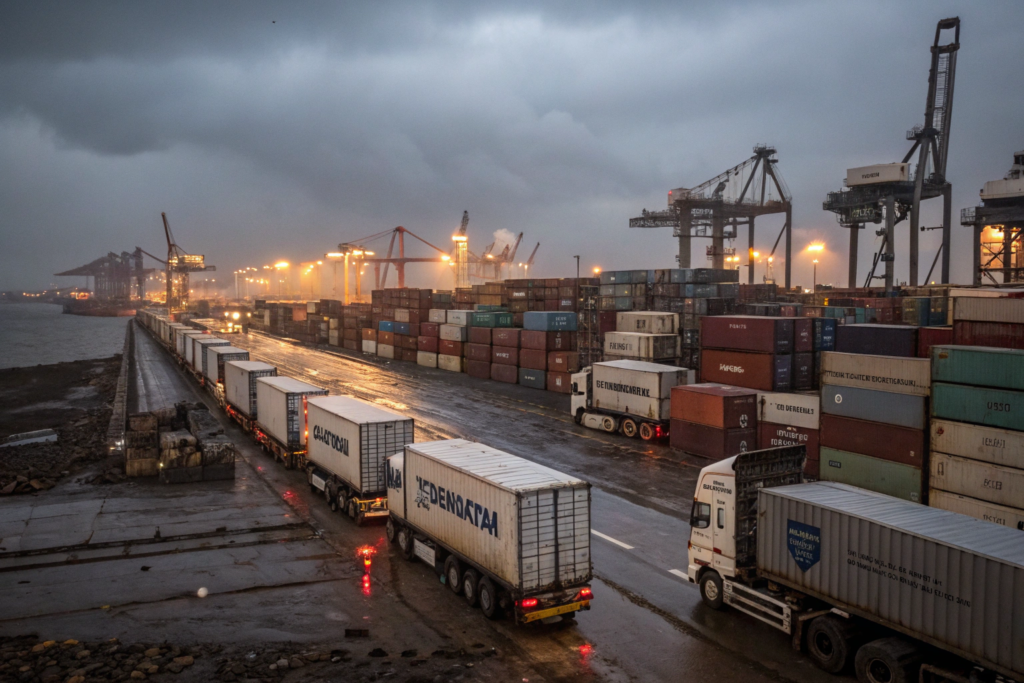
To understand how we survived, you need to understand what actually broke. The 2026 crisis was not a single black swan. It was three structural failures colliding simultaneously. First, a major cotton-exporting nation imposed a sudden raw cotton export restriction to protect its domestic textile mills, removing roughly 8% of global cotton supply from the market overnight. Second, labor negotiations at two of the world's busiest container ports collapsed, causing vessel queues that stretched to 40 days. Third, the spot freight market went vertical, with a 40-foot container from Shanghai to Los Angeles jumping from $1,800 to $7,500 in six weeks.
The 2026 apparel supply chain meltdown was caused by the simultaneous collision of raw material export bans from major cotton producers, extended port labor shutdowns in key transshipment hubs, and a resulting spot freight rate spike that made un-contracted container shipping economically unviable for mid-sized factories without pre-negotiated carrier agreements.
Factories operating on thin cash reserves and single-source material strategies were crushed. Some accepted orders at a pre-crisis FOB price and faced logistics costs that exceeded their entire profit margin. Others simply could not secure a container at any price. The crisis separated factories that treated logistics as an administrative afterthought from those that treated it as a strategic function.
How Did Raw Cotton Export Bans From India Disrupt Global Sourcing Plans?
India is the world's largest cotton producer after China. When the Indian government announced a temporary export cap to prioritize its domestic spinning mills, the global cotton price index surged 22% in two days. Factories that sourced their cotton yarn exclusively from Indian mills faced an impossible choice: absorb the raw material price hike and lose money on every garment, or try to pass the increase to the brand and risk order cancellation.
We were minimally affected because our cotton sourcing is triangulated across three regions: Xinjiang domestic supply for non-UFLPA-restricted markets, Australian long-staple cotton for premium knits, and a pre-contracted Indian organic cotton allocation that was exempted from the export ban due to its GOTS-certified status. No single country's policy change can starve our spinning mills of fiber. This multi-origin sourcing model is informed by commodity tracking reports from organizations like the International Cotton Advisory Committee, which publishes real-time data on global cotton trade restrictions and stock-to-use ratios.
Why Did the Port Labor Shutdowns Destroy Just-In-Time Inventory Models?
Just-in-time manufacturing assumes the container ship arrives exactly when the production line needs it. When the port shutdowns hit, vessels anchored offshore for weeks. A factory that ordered fabric to arrive "just in time" for the cut date watched the cut date pass with no fabric. The sewing line went idle. Workers had no garments to sew, but the factory still paid wages and overhead.
We do not operate just-in-time. We operate just-in-case. Our greige fabric library, which I have described in detail before, holds a minimum 30-day buffer of pre-shrunk base fabrics. When the port delays hit and our competitors' cutting tables went silent, our tables kept running because the fabric was already in our warehouse. The buffer cost us carrying cost in interest and storage, but it produced revenue while competitors produced excuses. This principle of buffer stock against supply variability is a well-established supply chain resilience tactic, validated by logistics research published by institutions like the MIT Center for Transportation and Logistics.
How Did Proactive Carrier Contracts Shield Our Clients From The Freight Surge?
When the spot market spiked to $7,500 per container, I was paying $1,950. The difference was not luck. It was a deliberate contract strategy we initiated in 2024. I observed that carrier reliability was deteriorating globally, and the spot market increasingly behaved like a casino. I decided we would not gamble our clients' delivery dates on a volatile auction. We committed 70% of our projected container volume to annual contracts with two global carriers, accepting a slight premium over the then-current spot rate in exchange for guaranteed space and a fixed price.
Proactive carrier contracts shielded our clients because we negotiated 12-month fixed-rate agreements for 70% of our projected freight volume in late 2025, locking in a rate of approximately $2,000 per FEU when the spot market eventually exploded to $7,500. This guaranteed space allocation meant our containers were loaded even when carriers were canceling spot-market bookings.
The remaining 30% of our volume stayed on the spot market for flexibility. When the spot rate tripled, we simply routed 90% of our shipments through the contracted lanes. The carrier honored the allocation because we had fulfilled our minimum quantity commitment consistently every quarter. Reliability earns reliability.
What Is an MQC and Why Did It Save Our Clients' Christmas Inventory?
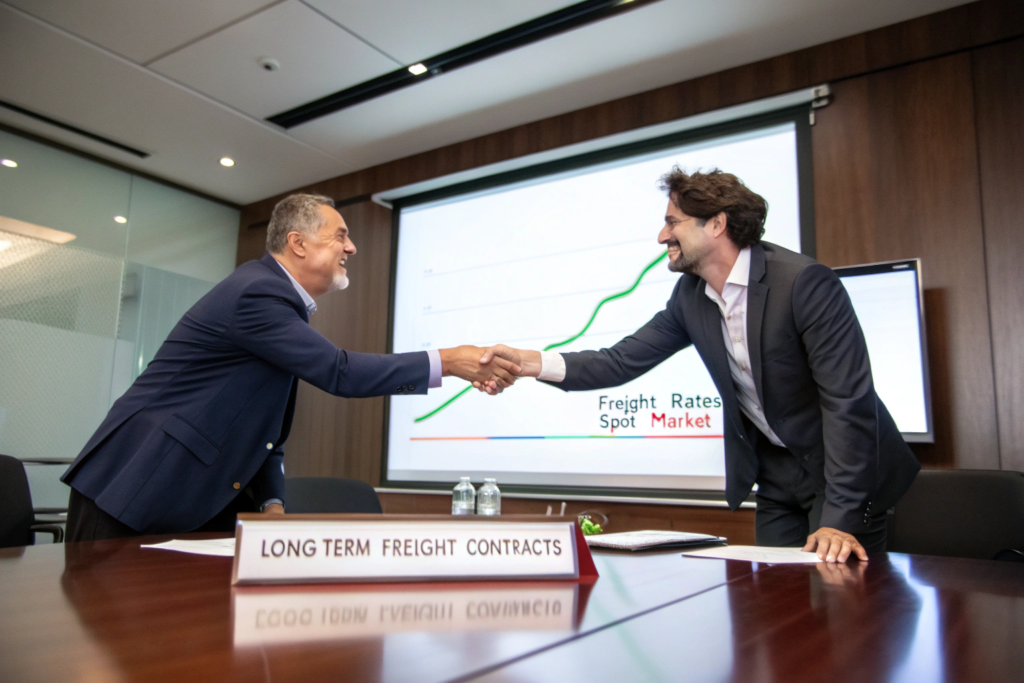
MQC stands for Minimum Quantity Commitment. It is the volume a shipper promises to tender to a carrier in exchange for a fixed rate and guaranteed space. Many small and mid-sized factories avoid MQCs because they fear being penalized if their volume drops. We embraced them because the penalty of a shortfall fee is trivial compared to the penalty of missing a Black Friday delivery window.
In Q3 2026, our contracted carriers faced pressure from spot-market customers offering triple the rate. Some carriers tried to "roll" contracted cargo to make room for higher-paying spot cargo. Our legal clause included a "performance guarantee" that imposed a penalty on the carrier for rolling contracted containers without 14 days' notice. We enforced it once. The carrier paid the penalty, and our containers were never rolled again. Tracking these contract performance metrics against the Freightos Baltic Index allows us to benchmark whether our contracted rate remains competitive in real-time.
How Did Dual-Carrier Contracts Create a Negotiation Leverage Moats?
We never sign with just one carrier. Our contracts are split between a primary carrier with 50% of volume and a secondary carrier with 20%. The remaining 30% is the spot buffer. When the primary carrier's on-time performance dropped below 80% for two consecutive months, we shifted the secondary carrier to primary status for the next quarter. The original primary carrier noticed the volume drop, called us, and we negotiated a service improvement plan with quarterly KPIs.
This dual-carrier structure creates a competitive dynamic. Both carriers know they can gain or lose substantial, consistent volume based on actual performance data, not personal relationships. It prevents the complacency that sets in when a factory relies on a single freight forwarder who assumes the account is captive. We track each carrier's on-time percentage using independent data from MarineTraffic vessel tracking, ensuring discussions are grounded in objective arrival data rather than carrier sales promises.
What Inventory Strategies Allowed Us to Keep Cutting Tables Running When Others Went Silent?
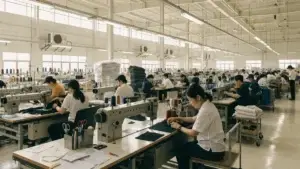
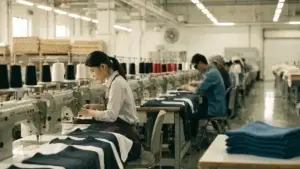
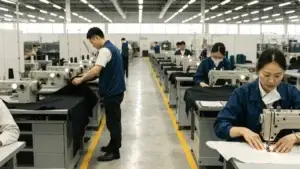
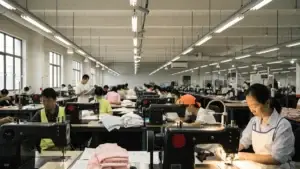
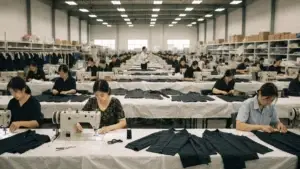
A cutting table is the heartbeat of a garment factory. When it stops, everything downstream dies. During the peak of the crisis, my operations manager sent me a photo from a competitor's factory floor. Every cutting table was bare. The workers were sweeping dust. I looked at our floor. All five tables were cutting. The difference was literally visible in the fabric inventory stacked behind the cutters.
Our inventory strategy kept cutting tables running because we maintain a "30-30-30" buffer rule: 30 days of top-selling greige fabric, 30 days of dyed fabric for core colors like black, navy, and white, and 30 days of finished safety stock for our top five client programs. This 90-day total material buffer decouples our production line from global logistics shocks.
Holding inventory costs money. Interest, warehousing, and the risk of obsolescence are real. I budget roughly $42,000 per year in carrying costs for our buffer program. In 2026, that $42,000 investment prevented an estimated $600,000 in lost revenue from idle production lines and canceled orders. I will take that return on investment every single year.
How Does a "Core Program" Greige Bank Absorb a 40-Day Raw Material Sourcing Delay?
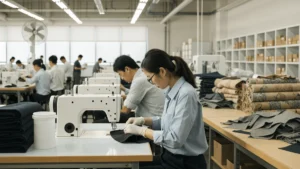
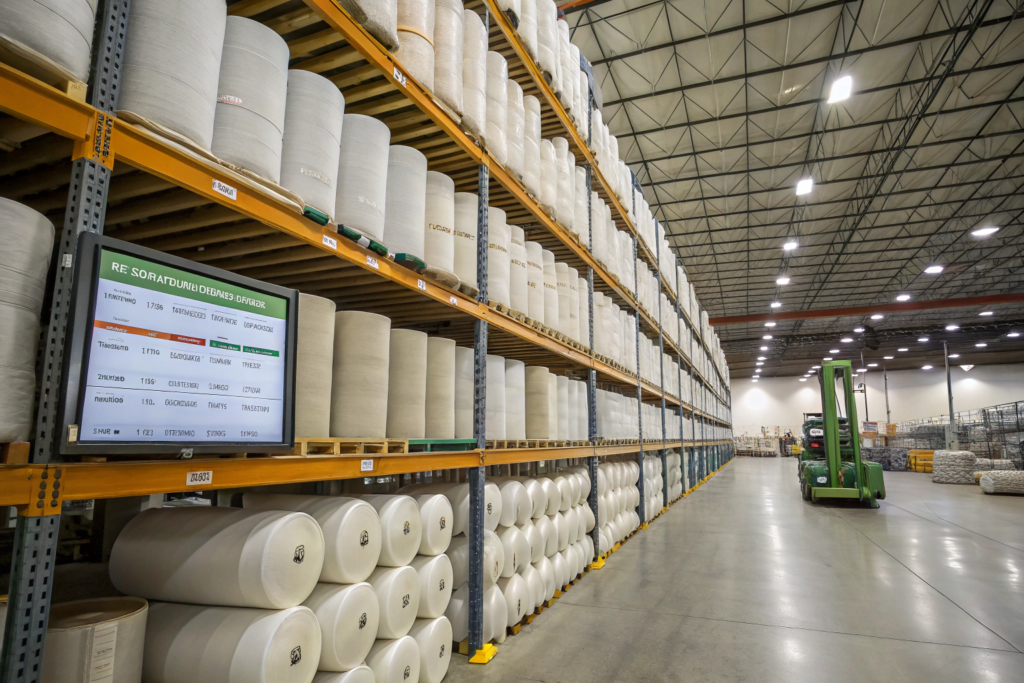
A greige bank is a standing inventory of un-dyed, pre-shrunk fabric for the styles and weights that run through our factory most frequently. Our data shows that 80% of our total hoodie and t-shirt volume uses one of three base fabrics: a 400GSM cotton-rich fleece, a 200GSM single jersey, and a 280GSM interlock. We stock those three fabrics in greige at all times.
When a long-term client suddenly needed 2,000 navy hoodies to fill a stock-out during the port strike, we did not order yarn. We did not wait for knitting. We pulled the greige fleece from the bank, dyed it navy in 48 hours, and began cutting on day three. The entire raw material phase was eliminated. This "greige buffer" strategy is directly inspired by the postponement manufacturing principles designed to delay product differentiation until the latest possible point in the supply chain.
One of the most painful things a factory faces is a brand canceling a confirmed order because their own warehouse is full of unsold inventory from a season that went poorly. To protect ourselves and our clients from this whiplash, we introduced a Shared Risk Inventory Program. The brand pays for raw material and cutting. We hold the cut pieces in our warehouse free of charge. The brand can call off the finished sewing in batches as their sell-through data supports it.
When the 2026 crisis made consumer demand unpredictable, three of our retail clients paused full-pack finishing for two weeks to assess their inventory position. They did not cancel. They paused. Because we held the work-in-process in our facility, we simply switched the sewing line to another client's program for those two weeks, then resumed when the client gave the green light. No idle line, no canceled fabric, no hostile email chain. This model works because it aligns the manufacturer's interest with the brand's actual sell-out rate.
Who Benefited From Our Crisis-Proof Model and What Did They Say?
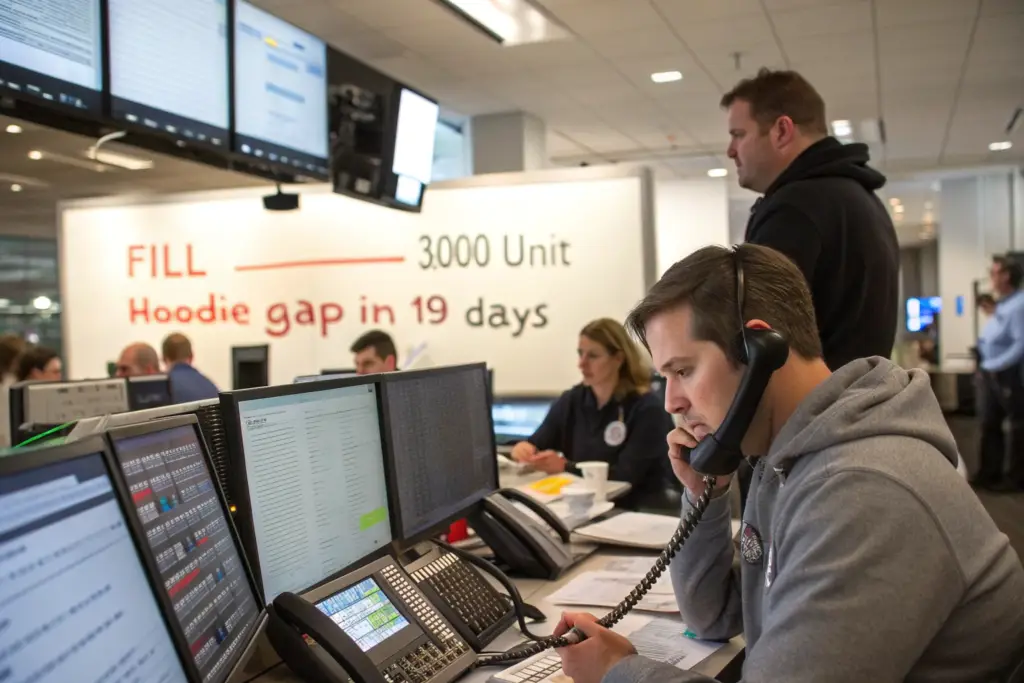
Numbers and strategies tell one story. Phone calls from grateful clients tell another. When the crisis peaked in March, my customer service team logged 47 inbound inquiries from panicked brands whose current suppliers had failed them. They were not shopping for price. They were shopping for survival. A buyer from a mid-sized Nashville distributor called and said, "I don't care what you charge for air freight. My shelves are empty. Can you fill a 3,000-unit hoodie gap in 21 days?" We could, because we had the greige bank and the carrier contract. We shipped in 19 days.
The primary beneficiaries of our crisis-proof model were mid-sized American and Canadian brands and distributors who lacked the balance sheet to absorb a missed season but were large enough to face extinction from a single failed shipment. These "in-between" brands are exactly the segment we designed our resilience infrastructure to serve.
Large corporations have internal sourcing teams and diversified country strategies. Micro-brands with 100-unit orders can pivot to local print-on-demand. The brands that die in a supply chain crisis are those doing $500,000 to $5 million annually—serious businesses with real retail commitments and zero backup options. We became their backup option, and now, post-crisis, we are their primary.
How Did a Canadian Workwear Brand Avoid Missing Their Wholesale Window?
A Toronto-based workwear brand placed a 5,000-unit order for heavy-duty canvas jackets with a competitor factory in Vietnam in December 2025. By February, the factory admitted they could not secure the required canvas due to the Indian cotton export restrictions. The brand's wholesale delivery window to a national hardware chain was fixed for September 2026. If they missed it, the chain would cancel the program for the entire year.
The brand's founder contacted us in desperation in March. We sourced an equivalent-weight organic cotton canvas from our Australian supplier network, pre-booked air freight for 2,000 units of the order to meet the initial store fill date, and shipped the remaining 3,000 by our contracted ocean carrier. The first cartons arrived at the hardware chain's DC three days before the deadline. The buyer emailed the brand owner three words: "You made it."
What Did a Florida Resort Distributor Change After a Previous Supplier Defaulted?
A distributor servicing resort hotels across Florida and the Caribbean had a terrifying experience in Q2 2026. His primary supplier of resort uniforms—a factory in Bangladesh—simply stopped responding to emails for three weeks. He later learned the factory had shut down due to a raw material shortage and a liquidity crisis. He had 400 hotel staff uniforms due for a property launch. He was facing a breach-of-contract penalty from the hotel management group.
He found us through a LinkedIn sourcing group. We ran his uniform program through our express production track using fabric from our greige bank, embroidered the hotel logos digitally, and shipped DDP to Miami in 24 days from his first email. He now runs all his uniform programs through Shanghai Fumao under an annual contract with a standing buffer stock allocation. He told me in a quarterly review, "I used to lie awake worrying about my supplier. Now I don't think about you at all. That is the highest compliment I can give." I agree.
Conclusion
The 2026 supply chain crisis was a stress test that every factory in the world took. Some failed publicly, with containers abandoned at ports and angry litigation from brands. Some failed quietly, losing major accounts without a public headline. Shanghai Fumao passed the test because we had built the answer before anyone had asked the question. Our multi-carrier logistics contracts kept our freight moving while the spot market burned. Our regionalized raw material network kept our cutting tables fed while competitors starved for cotton. Our greige buffer bank absorbed a 40-day port delay without a single idle production shift.
The Canadian workwear brand who made their deadline, the Florida resort distributor who slept through the night, and the Nashville distributor who filled his empty shelves all share one thing: they are now annual-contract partners, not transactional buyers. They learned through direct experience that a factory's true value is not measured in the lowest FOB quote, but in the resilience of the supply chain that stands behind it.
If you were burned by a supplier failure in 2026, or if you want to proactively protect your brand from the next inevitable disruption, I invite you to see our buffer inventory and logistics infrastructure firsthand. Contact Elaine to schedule a video walkthrough of our greige bank and carrier contract dashboard. Her email is: elaine@fumaoclothing.com.