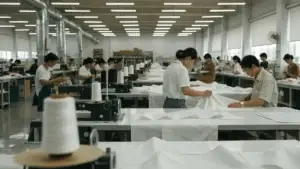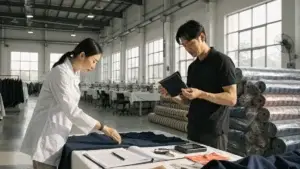
A Paris-based sustainable fashion buyer visited our factory last March. She walked past the reception area, ignored the coffee I offered, and asked to see our chemical storage room immediately. She spent 45 minutes reading the safety data sheets on our dye containers and checking the batch numbers against our Bluesign-approved inventory list. At the end, she looked up and said, "This is the first factory I have visited in Asia where the chemical logs were not written to impress me. They are simply correct." She placed a €200,000 order that afternoon.
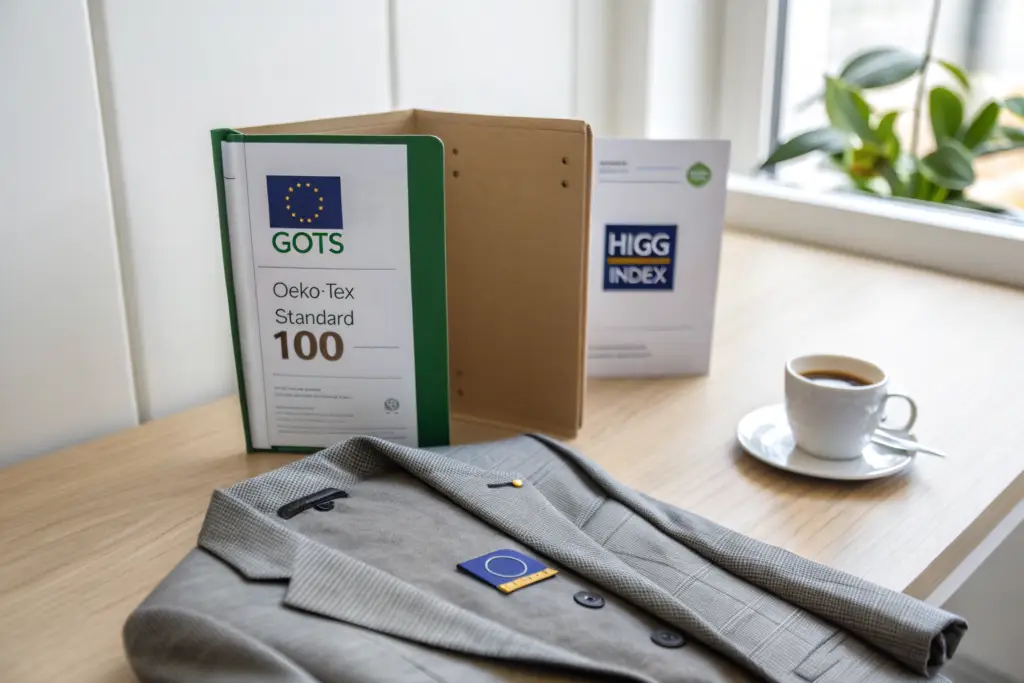
European brands praise Shanghai Fumao's certifications because we treat them as operational protocols, not marketing decorations. We hold GOTS, OEKO-TEX Standard 100, BSCI Grade A, and Higg FEM verified scores, but our differentiator is the daily discipline of documentation—every dye lot is traceable to a farm, every water test is logged hourly, and every social audit finding is closed with a corrective action that a brand can verify remotely.
European buyers operate under a regulatory framework that American brands are only beginning to face. The EU Strategy for Sustainable and Circular Textiles, the impending Digital Product Passport mandate, and extended producer responsibility laws make certification a legal requirement for shelf access. At Shanghai Fumao, we aligned our compliance architecture with European expectations five years ago. Here is why that investment earns their trust.
What Certifications Do European Buyers Demand Before Even Opening a Conversation?
The first email from a European brand is not a hello. It is a questionnaire. I receive a 40-page vendor onboarding document before any pricing discussion begins. The document asks for third-party certifications, chemical inventory disclosure, energy consumption data, and a detailed map of our fiber supply chain down to the gin level. If I cannot attach the valid certificates to the reply immediately, the conversation ends there. European procurement teams are not allowed to proceed without compliance pre-approval.
European buyers demand GOTS or OCS for organic claims, OEKO-TEX Standard 100 Annex 6 for baby articles, a valid BSCI or SMETA social audit with a minimum Grade B, and an up-to-date Higg FEM environmental module score. These are not preferences. They are the ticket to submit a bid.
The European market has moved beyond voluntary sustainability. Regulation is now law. The proposed EU Green Claims Directive means any brand making an environmental claim about a garment must back it with verified data from the manufacturing facility. A brand cannot say "eco-friendly cotton" unless the factory that spun the yarn holds the certificate chain. Here is what they verify.

Why Is GOTS Certification Non-Negotiable for Organic Textile Claims in the EU?
A brand cannot print "organic cotton" on a hangtag in Germany or Sweden without GOTS or OCS certification tracing back to the farm. I learned the strictness of this standard when we applied for our GOTS certification renewal last year. The auditor physically walked our entire production line, tracing the organic cotton bales from the storage rack through the carding machine to the finished jersey. He checked whether our organic cotton conveyor belt was physically separated from the conventional cotton belt to prevent fiber contamination.
GOTS also restricts the dye chemicals. We cannot use heavy metal-based dyes or formaldehyde-releasing finishing agents. Our entire dyehouse converted to GOTS-approved inputs, which cost 15% more, but European brands accept that cost because the GOTS logo on their product page prevents legal challenge from consumer protection agencies. The standard itself is governed by the Global Organic Textile Standard official criteria, which publishes every chemical input that is approved or banned under the latest version.
How Does an Up-to-Date Higg FEM Score Influence a European RFP Shortlist?
The Higg Facility Environmental Module measures water use, waste management, chemical management, and carbon emissions. A major European fast-fashion retailer sent us a request for proposal last year that stated explicitly: "Suppliers with a Higg FEM score below 50 need not apply." We scored 72 on our most recent verified assessment, which placed us in the top quartile of Asian manufacturers in our category.
The score matters because brands aggregate their supplier data to report the environmental footprint of their entire value chain to EU regulators under the Corporate Sustainability Reporting Directive. A low Higg score from a factory drags down the brand's public sustainability report. Our verified score and the detailed improvement plan we submit annually reassure European sustainability managers that we are actively reducing energy per garment, not just talking about it. The assessment methodology is maintained by the Sustainable Apparel Coalition, which updates the verification protocol annually.
How Does OEKO-TEX Standard 100 Translate to Safer Products for European Consumers?
European consumers read labels. They scan QR codes. They write emails to a brand's customer service asking about the specific chemicals used during dyeing. A Danish brand owner told me last year that his customer returned a baby blanket because the OEKO-TEX certificate number on the swing tag led to a broken link on the certifier's website. The customer assumed the certificate was fake. That is the level of scrutiny European brands face daily.
OEKO-TEX Standard 100 translates to safer products because it tests for over 100 harmful substances—including lead, phthalates, formaldehyde, and allergenic disperse dyes—at every stage of the textile. A product carrying the certificate guarantees that every component, from the sewing thread to the zipper tape, has been tested against a scientifically established safety limit.
We certify our entire fabric library to OEKO-TEX Standard 100 Annex 6, which is the strictest appendix covering baby and toddler products. Even if a client orders an adult hoodie, we default to the baby standard. It is simpler to maintain one high bar than to manage two separate chemical inventories. This protects European brands from the nightmare scenario of a chemical recall.
What Happens if a Single Azo Dye Molecule Slips Through the Testing Net?
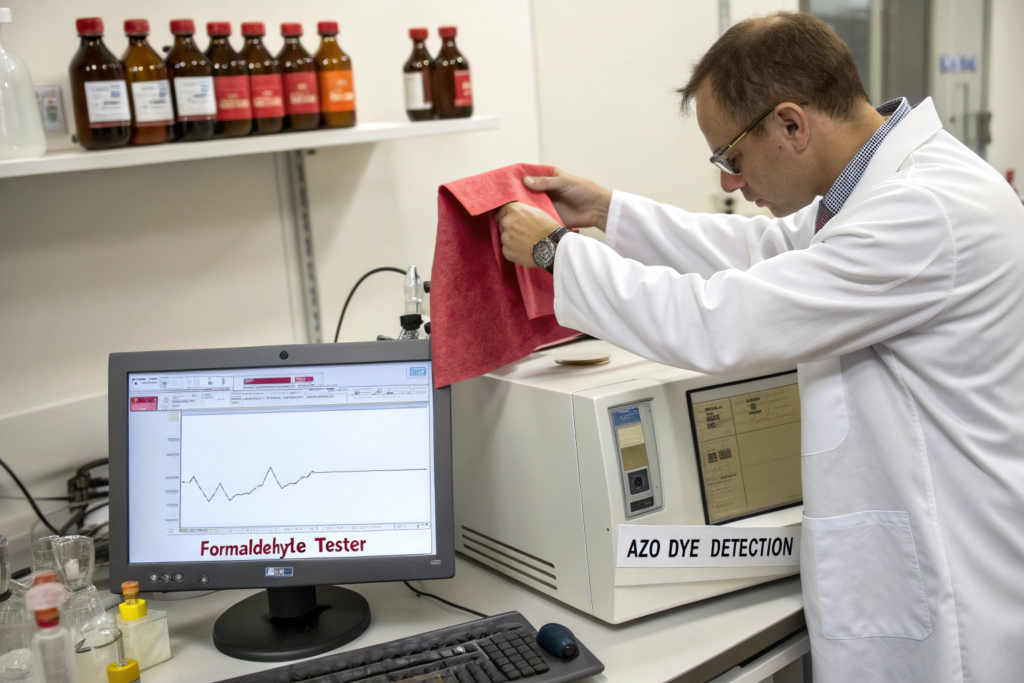
Azo dyes release aromatic amines that are classified as carcinogens. The EU REACH regulation bans their use in textiles that come into contact with skin. A single garment that tests positive for a banned amine can trigger a full-batch recall under the EU's RAPEX rapid alert system. The brand's name appears on a public government database of dangerous products. I watched a small German brand nearly collapse in 2023 because a competitor found a RAPEX alert on their baby romper and shared it on social media. The reputational damage was instant.
We prevent this by testing every incoming dye batch with an in-house spectrophotometer and sending a retain sample of every production lot to an external OEKO-TEX certified laboratory for independent verification. We do not wait for the brand to request a test. The test report is included in the shipment documentation. If the external lab flags a trace amine at 0.1 ppm, below the legal limit but detectable, we reject the dye lot anyway.
Why Do European Brands Specifically Demand the "Annex 6" Baby Classification?
Annex 6 is the OEKO-TEX product class for babies and toddlers. It requires testing against stricter limits for formaldehyde (16 ppm vs 75 ppm for adult clothing) and prohibits any trace of flame-retardant chemicals. A French children’s brand we partner with requested that their entire organic collection—from newborn onesies to 12-year-old pajamas—be built to Annex 6 standards. Their marketing headline became "Every Size, Baby-Safe."
This unified standard simplifies inventory for the brand. They do not need to segregate baby and non-baby stock in their warehouse. The cost premium for Annex 6 compliance is negligible when negotiated annually across bulk fabric procurement, and the legal protection it offers a European brand facing a class-action risk is substantial. This demand connects directly to European consumer safety directives enforced by agencies like the European Chemicals Agency.
Can Ethical Audits Like BSCI and SMETA Build Real Brand Trust in 2026?
A social audit certificate on a wall means nothing if the workers are afraid to speak. I have walked through factories where the auditor arrived, interviewed three pre-selected employees in the manager's office, and left with a perfect score. The workers returned to their stations having said nothing about the unpaid overtime pressure or the locked fire exits. European brands have become wise to this theater. They now demand unannounced audits, worker voice tools, and direct grievance access.
Ethical audits like BSCI and SMETA build real brand trust in 2026 only when they are verified by unannounced follow-ups, supported by digital worker-satisfaction surveys conducted anonymously, and connected to a publicly visible corrective action plan that the brand can track in real-time.
Our BSCI audit is a Grade A, but the grade is not the point. The point is that we publish the full audit report, including the minor non-conformities that we actually found and fixed. A Norwegian brand told me that our public corrective action log was the reason they chose us over a competitor with an identical certificate grade. Transparency about imperfection builds credibility.

How Do Unannounced "Shadow Audit" Clauses Change the Factory-Consumer Relationship?
A shadow audit occurs when a brand's own compliance team visits the factory without warning, separate from the scheduled certification audit. We welcome this. I included a clause in our master supply agreement granting any European partner the right to send an auditor with two hours' advance notice, not two weeks. The first time a Swedish client triggered this clause, our production manager simply handed them a visitor badge and walked them to the sewing floor. There was nothing to hide.
This open-door policy changes the dynamic. The brand no longer views us as a risk to be managed. They view us as a partner who is confident in their own systems. The ability to verify working conditions independently also satisfies the due-diligence obligations outlined by the amfori BSCI Code of Conduct, which encourages brands to go beyond paper audits with active engagement and worker interviews.
Does a Corrective Action Plan Need to Be Public to Win European RFP Bids?
Yes. A private CAP is a secret. A public CAP is a promise. Six months after our last BSCI audit, the auditor noted that our cafeteria menu lacked a vegetarian protein option consistently. It was a minor finding. We posted the finding on our website along with a photo of the new weekly menu that now includes tofu and lentil stew. A procurement manager from a Dutch brand cited that specific menu update in their internal justification memo for why we won their contract.
The EU Corporate Sustainability Due Diligence Directive is pushing brands to audit their entire supply chain for human rights and environmental impacts. A factory that openly shares its improvement journey, including small operational fixes, aligns with the directive's philosophy of continuous improvement rather than hiding evidence. This approach to demonstrated accountability is at the core of the European Commission's Due Diligence Guidance.
Who Benefits Most from a Fully Documented and Audited Apparel Supply Chain?
There is a chain of benefit that starts in our dyehouse and ends in a consumer's closet in Munich. The immediate beneficiary is the brand, who uses our documentation to defend their marketing claims and win shelf space at premium retailers like Galeries Lafayette or KaDeWe. The next beneficiary is the retailer, who avoids the liability of selling an unverified product. But the ultimate beneficiary, and the one who is increasingly driving purchase decisions, is the end customer who feels a physical relief when the QR code on the hangtag resolves to a valid, third-party verified certificate.
The entire value chain benefits from a fully documented supply chain: the brand gains legal protection and marketing credibility, the retailer gains shelf-ready compliance, the consumer gains verified safety and ethical assurance, and the manufacturer gains client retention in a market where every competitor claims to be "sustainable" without evidence.
We are not just selling clothes. We are selling a documented chain of evidence that travels with the garment from the farm to the wardrobe. If a journalist or a regulator asks a brand, "Prove this is organic and made fairly," the answer is not a paused pause, but a link to our shared digital dossier.
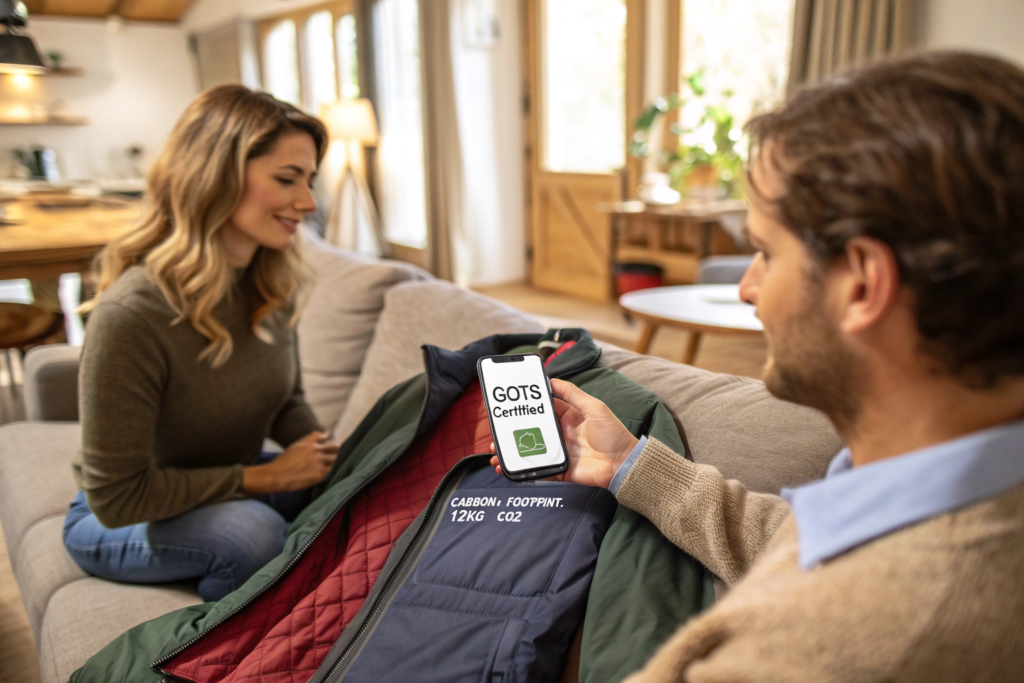
How Does a Digital Product Passport Turn Documentation into a Consumer Marketing Asset?
A Digital Product Passport (DPP) is a scannable tag that shows a garment's full lifecycle. When a consumer in Amsterdam scans our DPP-enabled hangtag with their phone, they see the organic cotton farm in India, the spinning mill in Jiangsu, our dyehouse in Shanghai, and the solar energy mix that powered the sewing line. This is not corporate jargon. It is a story with coordinates and valid certificates.
Brands have reported that products carrying our DPP pilots sell faster online than identical products without the passport. The transparency adds perceived value. The DPP also satisfies the upcoming EU regulatory mandate, but smart brands are deploying it now as a competitive differentiator. The GS1 Digital Link standard that underpins our DPP ensures the QR code is interoperable with any retailer's point-of-sale system globally, transforming a compliance tool into a seamless retail experience.
Why Does Supply Chain Documentation Help Smaller European Indie Labels Compete?
A small label with three employees cannot audit a factory in China. They cannot afford a trip to visit the cotton fields. But with our pre-built documentation package—the GOTS transaction certificate, the BSCI audit report, the Higg FEM score, and the OEKO-TEX lab test—they walk into a buyer meeting at a concept store with the same evidentiary firepower as a publicly traded corporation.
I saw a two-person Belgian label use our certification dossier to win a wholesale account from a major Parisian department store last year. The buyer told them, "Your documentation is cleaner than brands fifty times your size." That is the leveling effect of a fully documented, transparent supply chain. It democratizes trust. It allows the quality of the idea, and the integrity of the production, to compete on equal footing. This shift mirrors the access standards championed by Fashion Revolution's Transparency Index, which rates brands on how much supply chain information they disclose publicly.
Conclusion
European brands praise Shanghai Fumao's certifications not because we display them prominently in our lobby, but because we live the daily discipline required to maintain them honestly. Our chemical logs are inspected and accurate. Our social audit findings are public and corrected. Our organic cotton bales are stored separately from conventional cotton. When a buyer from Stockholm or Berlin opens our digital data room, they find not just PDFs of certificates, but the underlying evidence—the dye test reports, the worker committee minutes, the water recycling meter readings—that give those certificates meaning.
The European market in 2026 is the most regulated apparel market in the world. The Green Claims Directive, the DPP mandate, and the CSDDD are not future threats; they are current operational requirements. Shanghai Fumao built our compliance infrastructure to meet these demands head-on, which is why European brands increasingly treat us not as a vendor to audit, but as a supply chain partner who audits ourselves before they even ask.
If your European retail accounts are demanding cleaner documentation, or if you want to launch in the EU market with certifications that protect your brand from day one, contact Elaine. She can share our master compliance dossier, including our most recent BSCI audit and Higg FEM verified score. Her email is: elaine@fumaoclothing.com.