You have scheduled a live video tour with a potential factory. This is your single best opportunity to look behind the polished website and see the reality of the operation. But it is easy to get caught up in the moment and just passively watch the machinery go by. A brand owner told me, "My first video tour was a blur. The factory manager talked, and I just nodded. I hung up and realized I hadn't verified a single important thing. I had wasted my best opportunity."
A factory video tour is not a passive viewing; it is an active, real-time audit. The essential questions are not generic, but specific to the CMT model and designed to verify four critical areas: 1) Their Systems for Handling and Protecting Client Materials, 2) The Reality of Their Quality Control Culture, 3) The Tangible Signs of a Safe and Ethical Workplace, and 4) Their True Technical Capabilities with Your Specific Fabric Type. You must ask to see specific things, not just listen to a sales pitch.
At Shanghai Fumao, we welcome these pointed questions. We know a well-prepared potential partner is one who is serious about building a successful CMT or private label business. Let me give you the specific questions to ask and, more importantly, what to ask them to show you during your virtual walk-through, so you can turn a video call into a powerful verification tool.
What Material Handling Questions Prove They Are a True CMT Partner?
A standard factory is set up to handle its own inventory. A CMT factory must have specialized systems to manage your inventory. The single most important set of questions on a CMT video tour should be about their material handling. You need to see the physical spaces and the processes they use to receive, inspect, label, and store client-supplied fabric and trims. This is the core competency of a true CMT partner.
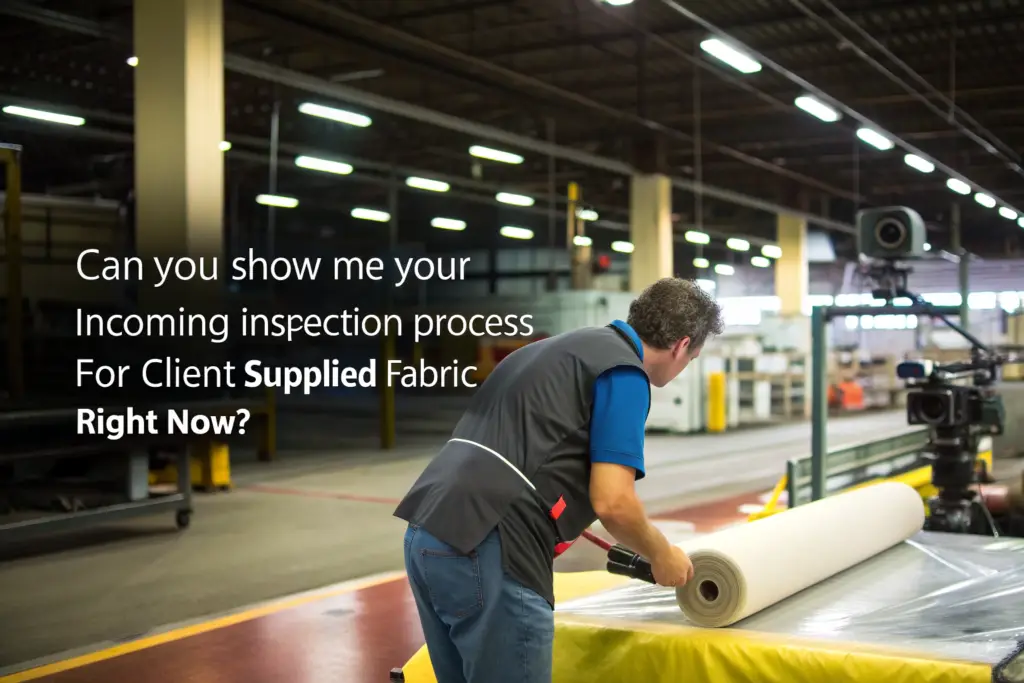
The essential material handling questions are action-oriented. Ask: "Can you walk me to your receiving area and show me your Incoming Inspection process in action? Show me the backlit table. Show me how you document a flaw." Then ask: "Now, show me how you label and store client-supplied fabric rolls and trims. I want to see the labels. How do you ensure my custom buttons for Style A never get mixed up with another client's similar buttons?" Their ability to show you a clear, organized, and documented system is the single most important indicator of a professional CMT partner.
A brand founder I mentor always asks to see the trim storage area. On a recent tour with a potential factory, she asked, "Show me a current client's sealed bag of buttons. I want to see the label." The factory manager hesitated, then showed her a shelf with loose, unlabeled bags. That was the end of the call. A professional factory, like Fumao, would have walked her to a designated, secure area, shown her a sealed bag with a clear, barcoded label containing the client's name, style number, and BOM reference, and explained their "Kit System." This is the level of organization you must see. This is the standard of our material management systems .
What Should a Professional Incoming Inspection Look Like Live?
Ask them to show you a roll being inspected right now. Look for a backlit table. The inspector should have a system for marking flaws (like a red sticker) and a tablet or paper form for logging the defect and taking a photo. They should be able to explain what they are looking for (weaving flaws, stains, shade variation). This process is your first line of defense, and it must be visible. This is a key part of our CMT quality transparency .
How Should They Explain Their Shade Banding Process?
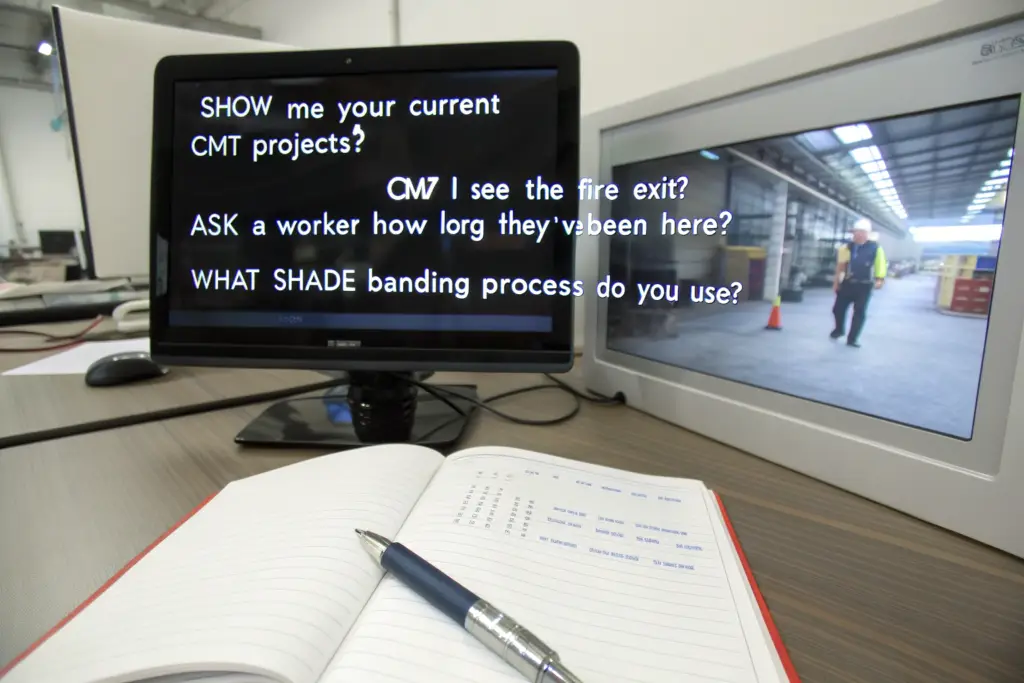
Ask: "Can you walk me over to your lightbox and explain your shade banding process?" A great answer is: "We evaluate every roll of client's fabric under this D65 lightbox. We group them into light, medium, and dark bands. Our cutting plan then ensures all panels for a single garment come from the same shade band to guarantee perfect color consistency within each piece." This is a critical process for premium quality. This is our standard for color consistency in CMT .
What Questions Uncover Their True Quality Control Culture?
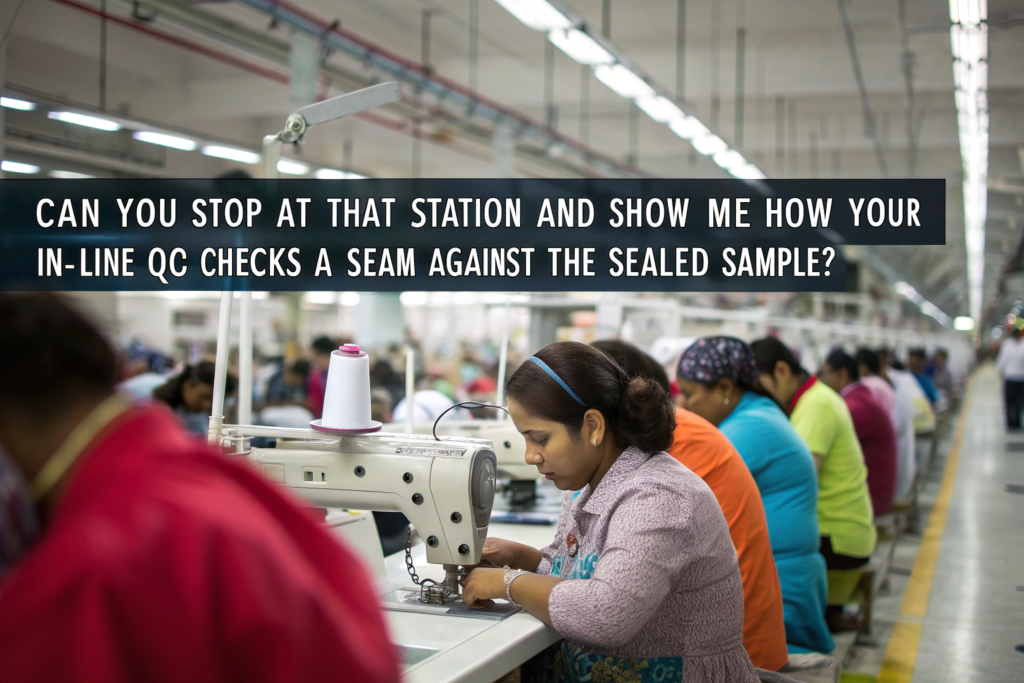
Every factory will say they have "great quality." A video tour allows you to test this claim by asking them to show you their QC systems in action, on the actual production floor. You are looking for evidence of a proactive, documented process, not a reactive one. The presence and use of the Sealed Sample on the floor is the number one indicator of a serious quality culture.
To uncover their true QC culture, ask to see it in action. Say: "Can you walk up to an inspector on the sewing line right now and ask them to show me how they would check a seam against the approved Sealed Sample? Do they have the sample with them? What are they looking for?" Also, ask your tour guide: "If that inspector finds a recurring defect, like a crooked pocket, what authority do they have? Can they stop the line?" The answers reveal if QC is a real-time, proactive process or just a final glance at the end.
On a recent tour with a potential partner, I asked our guide to walk up to an in-line inspector and ask her to show us her process. The inspector, without hesitation, held up the Sealed Sample she was carrying and showed us exactly how she was comparing the collar roll of the semi-finished garment against the approved standard. She explained what she was looking for. That unscripted moment was more powerful than any company presentation. It proved that QC was a living process on our floor. This is the level of transparency you should demand. This is the reality of our proactive quality culture .
What Is the Right Answer to "What Happens If You Find a Major Defect in Bulk?"
A reactive factory will say, "We fix it." A proactive factory will say, "We immediately stop the line, conduct a root cause analysis with the supervisor, implement a corrective action, and then resume production. We document the issue and communicate it to the client proactively." The difference is immense.
Can You See a Live Demonstration of a QC Tool?
Ask them to show you their metal measuring tape being used to check a specific Point of Measure (POM) on a garment right there on the line. Ask to see a pick glass (a small magnifying loupe) being used to check stitch density (SPI) . The presence and use of these calibrated, objective tools indicate a data-driven quality system, not a subjective one. This is part of our data-driven quality assurance .
What Questions Reveal If It Is a Truly Safe and Ethical Workplace?
While an audit report provides documentary proof of ethics, a live video tour allows you to see the unscripted, physical evidence of a safe and respectful workplace. A guide can talk about safety, but you can see if the exits are blocked. They can talk about worker wellbeing, but you can observe the worker's body language. This is where you look for the tangible signs that confirm or contradict the official story.
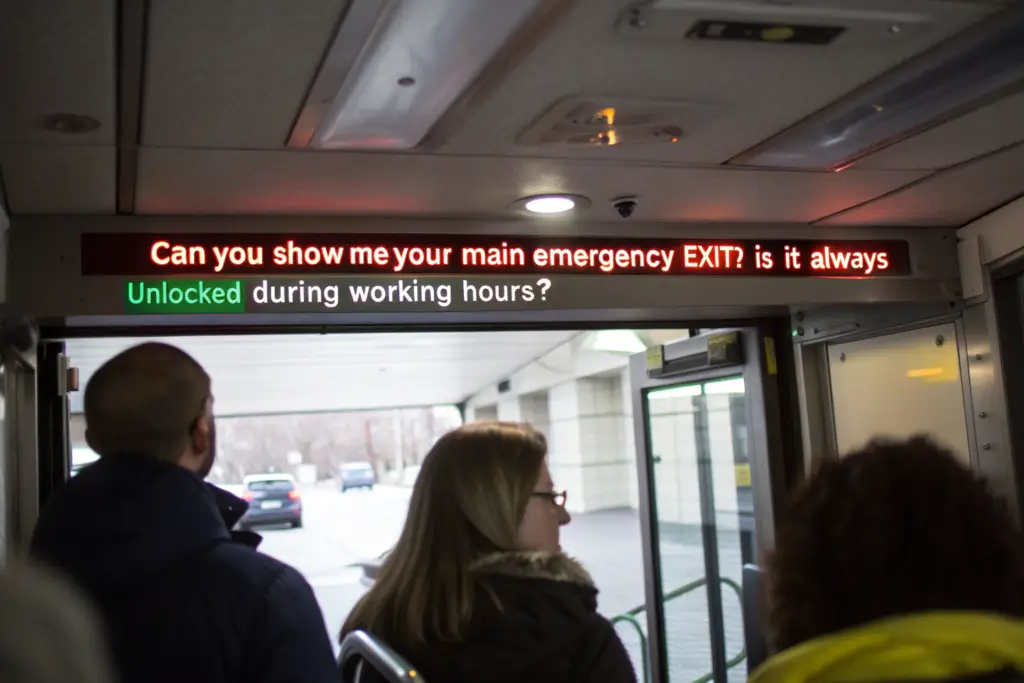
To verify a safe and ethical workplace, you must look at the physical details. Ask: "Can you point the camera at the ceiling? I want to see the fire sprinklers. Now can you walk me over to a main emergency exit? Show me that it's clearly marked and completely unobstructed." Then, ask to see a less obvious area: "Can you show me the inside of the workers' break room or restroom?" A clean, well-maintained facility in these areas is a powerful sign of a respectful culture. Also, observe the workers: do they look up and engage, or avoid eye contact?
A brand owner I know always asks to see the ceiling for sprinklers and the main exit. She also asks to see the women's restroom. She told me, "A dirty, poorly maintained restroom tells me everything I need to know about how the factory views its workers, and probably how they'll treat my materials. It's a non-negotiable test." On a tour with us, we walk her to the clean, well-lit restroom and show her the current, signed fire extinguisher inspection tags. These are the details that build real trust. This is the transparency of our ethical manufacturing commitment .
What Are the Visual Red Flags to Watch For?
Be vigilant for:
- Blocked or locked emergency exits.
- Excessive clutter or dust.
- Workers who look tense, fearful, or avoid eye contact with the camera.
- A refusal to show certain areas.
These visual cues often reveal a reality that a polished presentation tries to hide. This is a key part of a transparent vetting process .
How Can You Gauge Worker Morale from a Distance?
Ask your guide to (with permission) approach a random worker and ask a simple question like, "How long have you worked here?" Their reaction—a genuine, relaxed smile and a quick answer, or a hesitant, nervous glance—will tell you volumes about the factory's true culture. This is a powerful, human moment in a virtual audit.
What Questions Verify Their Technical Expertise with Your Specific Fabric?
Your product is unique. You are likely using CMT because you have a specific, perhaps challenging, fabric. A general tour of a sewing floor is meaningless if you do not verify that the factory has the specific equipment and expertise for your specific material. You need to see the tools and speak to the people who would actually handle your product.
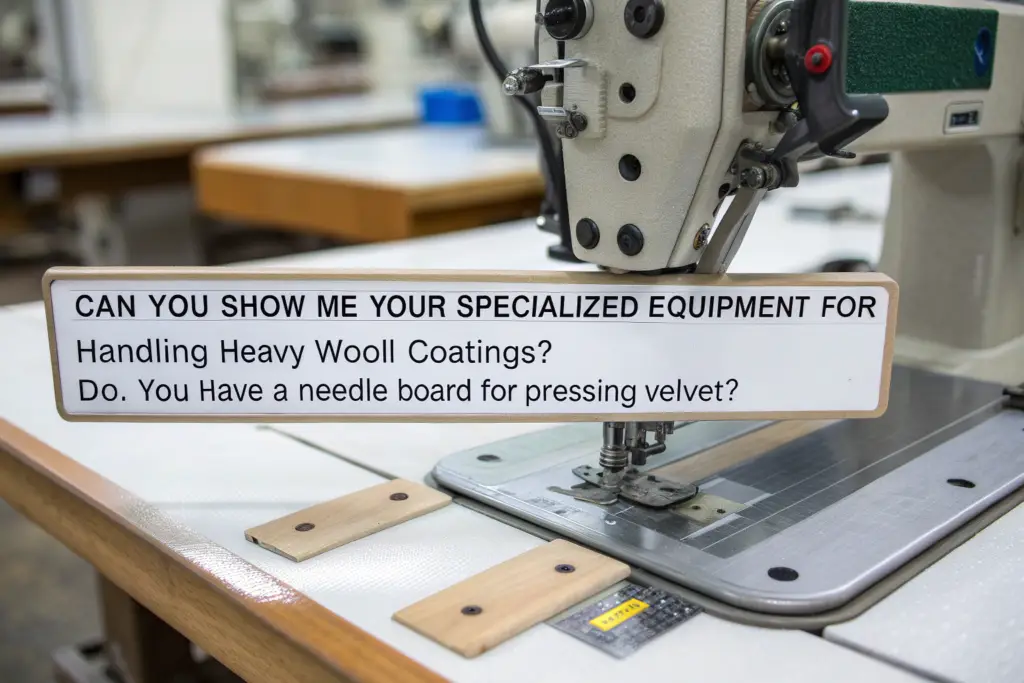
To verify technical expertise, ask targeted, show-me questions. Say: "I am producing a line of tailored jackets in a heavy Italian wool coating. Can you show me the specific machines—like your walking-foot units—that you would use for this fabric?" Or, "My collection uses delicate silk charmeuse. Can I see your 'silks kit'—the fine needles, specialized presser feet, and padded work surfaces you would use?" Their ability to immediately walk you to the right equipment and explain its use is the proof you need.
A luxury women's wear designer we work with always asks to see a factory's "silks kit" on a tour. She wants to see a collection of fine needles (size 70/10), a roller foot, and a smooth, padded work surface. On a tour with us, we walk her to our Delicates Line and show her exactly these items. We introduce her to the line supervisor, who has 20 years of experience handling silk. This specific, tangible evidence is what closes the deal. It proves we are not just a generalist, but a specialist. This is the focus of our specialty fabric lines .
What Questions Should You Ask About Their Experience with Your Fabric?
Be direct:
- "What is the most challenging fabric you have worked with recently in a CMT project?"
- "What specific needle type and machine settings would you recommend for my fabric?"
- "Can you introduce me to the supervisor of the line that would handle my order?"
A factory with genuine expertise will answer these questions confidently and with technical detail. A generalist will struggle. This is a key part of vetting a specialized CMT partner .
Why Is the Presence of a Walking-Foot Machine a Key Indicator?
If you are producing outerwear or any heavy, structured garment, a walking-foot (compound feed) machine is non-negotiable. It prevents the layers of thick fabric from shifting during sewing. Asking to see this specific machine on a tour is a quick, decisive test of their capability for your product. This is the core of our outerwear CMT expertise .
Conclusion
A video tour with a potential factory is your most powerful vetting tool, but only if you drive it with specific, show-me questions. You must move beyond the polished introduction and actively audit their material handling systems, their living quality culture, their commitment to safety, and their specific technical expertise for your product.
At Shanghai Fumao, we welcome this active, rigorous approach. We are prepared to walk you through every area, introduce you to our team, and show you the tangible evidence of our systems and skills. We believe that transparency is the only foundation for a trusted B2B CMT partnership.
If you are ready to conduct a thorough, professional virtual audit of a potential manufacturing partner, let's talk. Our Business Director, Elaine, can schedule a live, unscripted video tour of our facility and answer all of your questions. Please email Elaine at: elaine@fumaoclothing.com.