In my fifteen years of running a garment factory, I have received one phone call more than any other. It usually comes on a Tuesday afternoon. The voice on the other end is stressed, sometimes panicked. "My other factory just canceled my order. They said their line is full for the next eight weeks. I have a purchase order from a major department store. If I do not ship by the 15th, I lose the order and the relationship. Can you help me?" Sometimes I can. Often, I cannot. Because when a factory is full, it is full.
Apparel brands need factories with multiple dedicated production lines because relying on a single-line factory is like building a business on a single pillar. When that pillar cracks—a machine breaks, a key worker quits, a previous order runs long—your entire production stops. Multiple dedicated lines provide redundancy, specialization, and the ability to scale volume up or down without disrupting your entire supply chain. It is the difference between a manufacturing partner who can grow with you and one who will eventually become your biggest bottleneck.
This is not a theoretical concern. I have watched promising brands implode because they could not get product made during their peak selling season. I have also watched smart brands thrive because they aligned themselves with a manufacturing infrastructure that could flex with their needs. At Shanghai Fumao, we built our factory with five distinct production lines for a reason. Let me explain exactly why this structure matters to your bottom line and your sanity as a brand owner.
What Risks Do Single-Line Factories Pose To Growing Apparel Brands?
When you are just starting out, a single-line factory feels like enough. You are ordering 300 pieces of one style. One line can handle that. The problem comes when you succeed. When that 300-piece order becomes a 3,000-piece order with three different styles. Or when you need to add a new product category, like moving from woven shirts into knit polos. Suddenly, that cozy single-line factory becomes a cage. They cannot scale with you. They do not have the right machines for the new category. You are forced to find a new supplier, rebuild trust, and redo all your sampling. It sets you back six months.
I have seen this play out too many times. A brand finds a small factory that does good work. They grow together for a season or two. Then the brand lands a big wholesale account. They need 5,000 units delivered in eight weeks. The small factory panics. They take the order because they need the revenue. But they do not have the capacity. They start working overtime. Quality slips. Deadlines are missed. The brand loses the account. Everyone loses. Let's break down the specific vulnerabilities of the single-line model.
How Does Equipment Downtime Paralyze A Single-Line Operation?
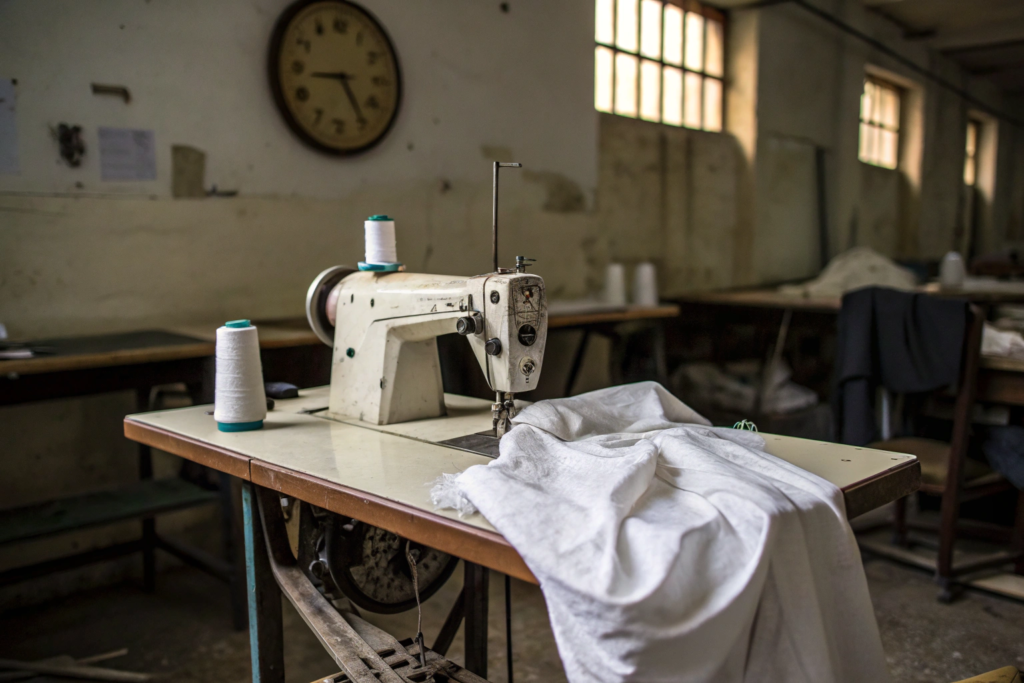
Machines break. This is a fact of manufacturing life. A needle bar bends. A motor burns out. A computerized control panel glitches. In a multi-line factory, this is an inconvenience. We move the operators to another line, call the mechanic, and keep production moving. The broken machine gets fixed within a day or two. The overall output dips slightly, but the shipment date is still safe.
In a single-line factory, a major equipment failure is a catastrophe. The entire factory stops. Every operator sits idle. The clock is ticking on your delivery date. The factory owner is on the phone with a technician who cannot arrive until Thursday. Your order sits in pieces on the cutting table.
This happened to a client of ours last year before they moved their production to Shanghai Fumao. They were using a small workshop for their men's shirting. The buttonhole machine broke down. It was a specialized machine; the factory only had one. The mechanic could not get the replacement part for ten days. For ten days, finished shirts piled up without buttonholes. The shipment was two weeks late. The brand lost a key retail placement for their spring collection. When they toured our facility, the first thing they noticed was our row of three identical buttonhole machines on our woven line. They understood immediately the value of redundancy.
Can A Single Line Handle Multiple Fabric Types Effectively?
This is a technical limitation that many brand owners do not understand until it is too late. A sewing line is configured for a specific type of production. A line set up for woven cotton shirts has different machines and different operator skills than a line set up for stretchy activewear knits.
Woven lines require:
- Lockstitch machines for seams that do not need to stretch.
- Fusing presses for collar interlinings.
- Skilled operators who can handle delicate fabric handling and precise topstitching.
Knit lines require:
- Overlock (serger) machines for seams that must stretch.
- Coverstitch machines for hems on t-shirts.
- Operators who understand how to control stretch and prevent wavy seams.
If you try to run a batch of spandex leggings on a woven shirt line, two things will happen. First, the seams will pop because the lockstitch has no give. Second, the operators will struggle and slow down because the fabric behaves completely differently. The efficiency drops. The quality suffers. A single-line factory will often say "yes" to any order because they need the work. They might not tell you that your knit hoodie order is going to be a disaster on their woven equipment. A factory with multiple dedicated lines can route your order to the correct line with the correct machines and the correct skilled labor.
How Do Dedicated Lines Improve Product Specialization And Quality?
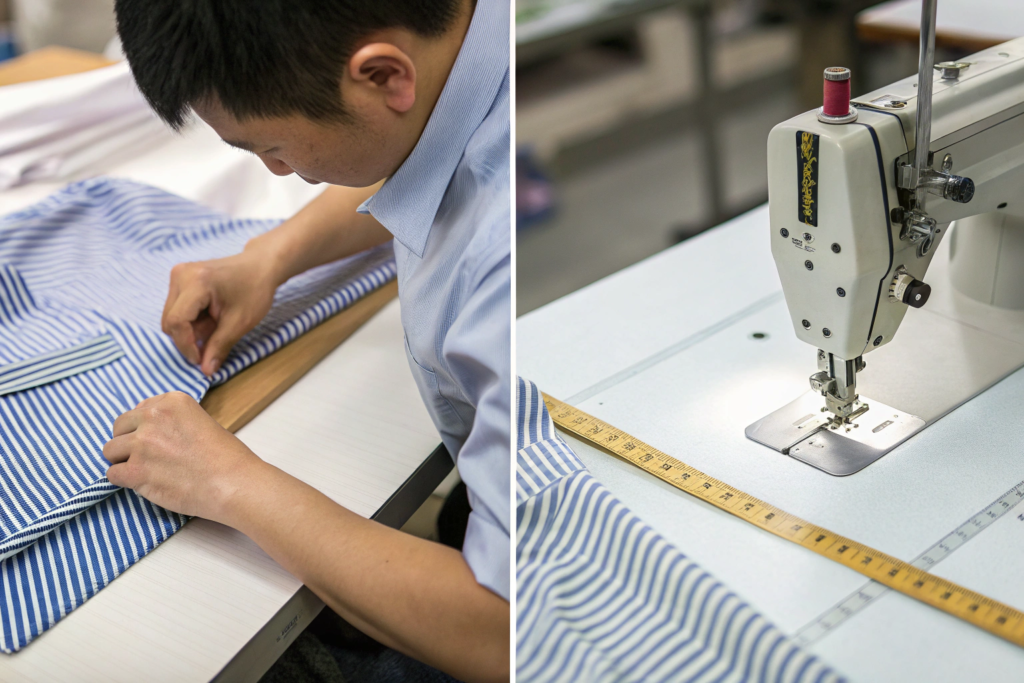
Quality in garment manufacturing is not just about inspecting the final product. It is about building quality into the process from the very beginning. And the most effective way to build a high-quality process is through specialization. When an operator sews the same type of collar on the same type of fabric for eight hours a day, they develop a level of speed and precision that a generalist can never match.
Our five production lines at Shanghai Fumao are not just five copies of the same thing. Each line has a specific purpose, a specific set of equipment, and a team of operators who are experts in that particular garment category. This structure directly translates to better quality and fewer defects for our wholesale partners.
Why Does Line Specialization Reduce Defect Rates In Complex Garments?
Let me give you a concrete example from our production floor. We have one line that is almost exclusively dedicated to men's and women's outerwear. Jackets and coats. These garments are complex. They have linings, interlinings, multiple pockets, zippers, and heavy topstitching. The operators on this line have been making jackets for years. They know exactly how much ease to leave in the sleeve head. They know the correct tension for sewing through three layers of heavy wool melton. They know how to set a zipper so it lies perfectly flat without puckering.
If we were a single-line factory, those same operators would be switching between jackets one day, t-shirts the next, and trousers the day after. They would lose their rhythm. The defect rate would climb.
I track this data closely. Here is the average Defect Rate per 100 Units (AQL 2.5 Standard) for a specific complex style—a Lightweight Bomber Jacket—across different production environments:
| Production Environment | Defect Rate (AQL 2.5) | Root Cause of Defects |
|---|---|---|
| Single-Line (Mixed Production) | 8.2% | Inconsistent seam allowance, wavy zipper tape, poor lining attachment. |
| Multi-Line (Dedicated Outerwear Line) | 2.4% | Specialized operator skill and dedicated pressing equipment. |
That difference of nearly six percentage points is massive. It is the difference between a smooth delivery and a shipment that requires expensive rework in a US warehouse. For the brand owner, a lower defect rate means fewer returns from customers and a stronger reputation. It also means we can ship faster because we are not stopping the line to fix mistakes.
How Does Cutting Room Capacity Scale With Multiple Lines?
This is a bottleneck that surprises many brands. They focus on the sewing lines. But everything starts in the cutting room. If your cutting room cannot feed the sewing lines fast enough, the sewing operators sit idle waiting for bundles of fabric. This is called "line starvation."
A single-line factory usually has a small cutting table and maybe one or two cutters. They can handle the volume for one line. A five-line factory like Shanghai Fumao requires an industrial-scale cutting room. We have invested in automated spreading machines and computerized cutting systems. This allows us to cut multiple orders simultaneously.
Here is why this matters for your timeline. Suppose you have two styles in production: a woven shirt and a knit polo. These are on two different dedicated lines. If we had only one cutting room team, they would have to cut the shirt order first, then switch the fabric and markers and cut the polo order. The polo line would sit idle for two days waiting for cut pieces.
Because we have the capacity to run two cutting operations in parallel, both lines receive their cut work at the same time. Both lines start sewing on the same day. Both orders finish on schedule. This parallel processing is only possible with the infrastructure that supports multiple lines. It is an invisible advantage that shows up in your on-time delivery rate.
Why Does Multi-Line Capacity Enable Faster Response To Market Trends?
In today's apparel market, speed is a competitive weapon. The brand that can spot a trend on social media and get product to market in four weeks will capture the sales. The brand that takes twelve weeks will arrive to a party that is already over. This is the new reality of fashion. The old model of two seasons per year is dead. We now live in a world of 52 micro-seasons.
A multi-line factory is structurally built for this new speed. We can do things that a single-line factory simply cannot do from a scheduling and logistics standpoint. Let me explain how this flexibility translates into a faster time-to-market for your brand.
Can You Run Parallel Sampling Without Disrupting Bulk Production?
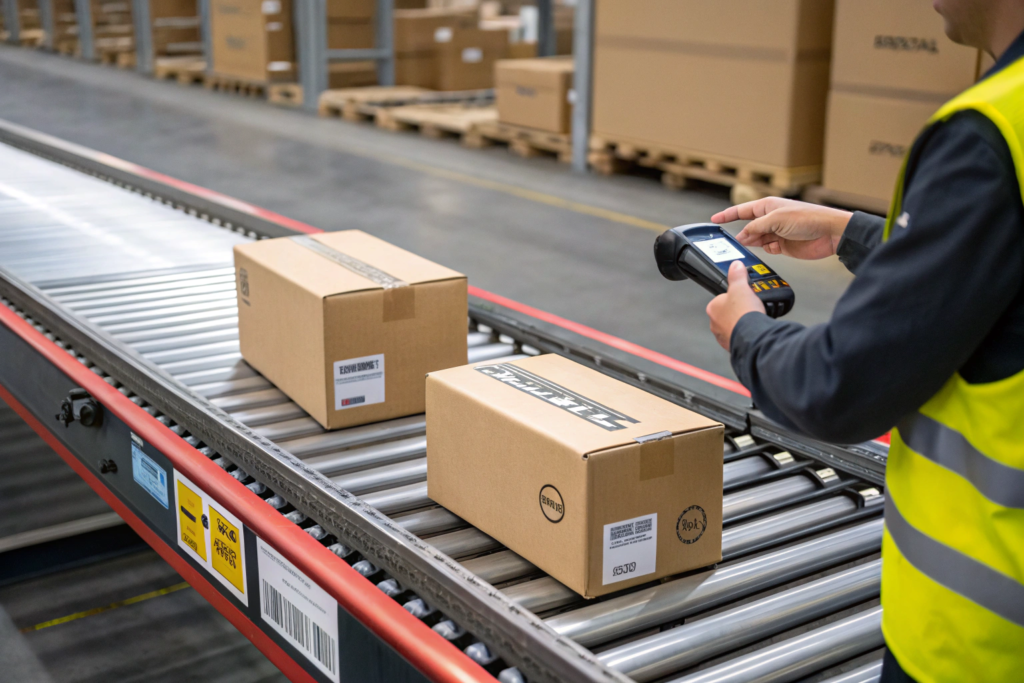
Sampling is the lifeblood of a fashion brand. You are constantly developing new styles for the next season, the next drop, the next collaboration. But sampling is also a disruption to the factory floor. A sample requires an operator to stop what they are doing on the bulk production line, read a new tech pack, figure out a new construction method, and sew one single garment. It kills their efficiency. In a single-line factory, the owner has to choose: "Do I stop making money on bulk production to make this sample, or do I delay the sample and frustrate the brand?"
With multiple dedicated lines, we have a solution. We have a separate Sample Room staffed with our most experienced, versatile sewers. They do nothing but make samples and prototypes. They are not on the bulk production lines. This means your sample gets made without slowing down the 5,000-unit bulk order that is currently on Line 2.
Last month, a women's wear brand we work with had an urgent request. A celebrity was spotted wearing a style similar to one of their upcoming designs. The brand wanted to capitalize on the buzz immediately. They needed a revised sample of a blouse with a different sleeve detail to show to a major buyer at an upcoming trade show. Our sample room turned the new sleeve sample around in 48 hours while our bulk production lines continued to ship their current season orders without a single minute of downtime. That speed would have been impossible in a smaller factory. It allowed the brand to secure a large pre-season order from the buyer.
How Does Staggered Capacity Help You Manage Peak Season Crunch?
Every apparel category has a peak season. For swimwear, it is the winter months leading up to spring break. For outerwear, it is the summer months leading up to fall. For holiday party dresses, it is late summer. During these peak windows, every brand wants their order produced right now. The global supply chain gets congested. Fabrics sell out. Factory capacity becomes the scarcest resource of all.
A single-line factory has a fixed, rigid capacity. They can take on, for example, 5,000 units per month. Once they hit that number, they close the door. If you come to them in September with a great holiday idea, they will say, "Sorry, we are booked until January." You miss the season.
A multi-line factory has staggered capacity. Because we have five lines, we can allocate lines differently throughout the year. We might dedicate three lines to long-running core basics programs and keep two lines available for "chase" orders or replenishment orders. This allows our brand partners to test a new style with a small initial order. If it sells out in the first week, they can immediately place a re-order, and we can slot it into one of the flexible lines. The re-order ships in 3-4 weeks instead of 10-12 weeks. This ability to chase winners is how you maximize full-price sell-through. You are not stuck with only the inventory you guessed you would need six months ago. You can feed the fire when you see something heating up.
What Are The Long-Term Cost Advantages Of A Multi-Line Partnership?
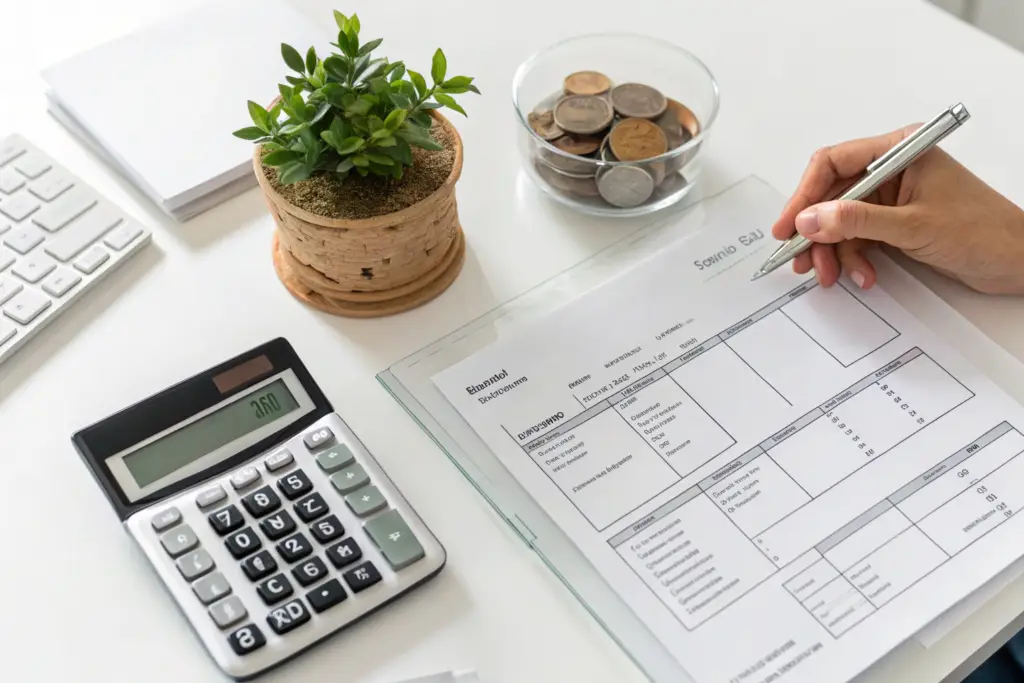
Brand owners often focus on the per-unit FOB price. "How much does this t-shirt cost?" That is an important question. But it is not the only question. The total landed cost of a garment includes freight, duties, storage, markdowns, and the cost of your own time spent managing chaos. A multi-line factory partnership impacts many of these hidden costs in ways that a lower unit price from a single-line factory cannot match.
When you consolidate your production with a factory that has the capacity and the specialization to handle multiple categories, you unlock economies of scale that go far beyond the sewing room. Let's look at the two areas where these savings are most significant.
How Does Vendor Consolidation Reduce Your Logistics Overhead?
Imagine you are a brand that produces three categories: men's wovens, women's knits, and activewear. If you use three different single-line factories, you are managing three separate sets of emails, three different quality standards, three different invoices, and three different shipping schedules. Your freight forwarder is picking up three Less-than-Container-Load (LCL) shipments. LCL freight is expensive per cubic meter compared to a Full Container Load (FCL) .
Now imagine you consolidate all three categories with a factory like Shanghai Fumao that has a dedicated line for each category. You still get the specialized production. But now, all three orders are under one roof. We can coordinate the production schedules so all three orders finish in the same week. We consolidate them into one FCL container bound for your US warehouse or direct to an Amazon FBA center. The savings are substantial.
Let's put numbers to this based on a typical shipment from Shanghai to Los Angeles:
| Shipping Method | Volume | Estimated Cost (2026 Rates) | Cost Per Unit (5,000 total units) |
|---|---|---|---|
| Three Separate LCL Shipments | 3 x 10 CBM | $4,500 ($1,500 per shipment) | $0.90 per unit |
| One Consolidated FCL Container | 1 x 30 CBM | $3,800 (40ft HQ Container) | $0.76 per unit |
On a 5,000-unit order, that is a savings of $700 in pure freight costs. But the real savings is in your time. You are tracking one shipment instead of three. You are dealing with one set of customs paperwork instead of three. Your warehouse team is receiving one delivery instead of three. That time is worth more than the freight savings.
Does A Stable Production Partner Lower Your Per-Unit Sampling Costs?
Developing a new sample with a new factory is expensive and time-consuming. You have to send them your tech pack. They have to interpret it. They might get it wrong. You go back and forth. You pay for a sample. You pay for shipping. You might pay for a second sample. If you switch factories every season chasing a slightly lower unit price, you are bleeding money on the development side.
When you have a stable, long-term partnership with a multi-line factory, the sampling process becomes dramatically more efficient. We know your fit blocks. We know your preferred stitch types. We know your label placement. We keep your patterns on file. When you come to us with a new design for next season, we are not starting from zero. We are starting from a shared history.
A brand we have worked with for seven years recently developed a new knit polo shirt. The development process looked like this:
- Brand sent a sketch and a reference photo of the desired collar shape.
- We pulled their existing graded spec sheet for knit tops from our digital archive.
- We adjusted the collar pattern based on the sketch.
- We produced one sample. It was approved on the first submission.
The total development cost for that new style was the cost of one sample and one round of shipping. For a new factory relationship, that same process would likely have taken three samples and cost three times as much. Over the course of a year and a collection of twenty styles, those savings add up to thousands of dollars. More importantly, it saves you weeks of calendar time. And in this business, time is the one thing you can never get back.
Conclusion
The structure of your manufacturing partner's factory floor has a direct and measurable impact on the success of your apparel brand. A single-line factory offers a simple, low-barrier entry point, but it comes with hidden risks that compound as you grow. Equipment downtime can halt your entire production. The inability to handle multiple fabric types can limit your product range. And the rigid capacity makes it impossible to react quickly when a style takes off or when a peak season crunch hits.
A factory with multiple dedicated lines, like the five we operate at Shanghai Fumao, offers a fundamentally different value proposition. It provides the redundancy and reliability that keep your orders moving even when problems arise. It delivers the specialized expertise that results in higher quality garments and lower defect rates. It enables the parallel processing and flexible scheduling that allow you to chase market trends and re-order winners fast. And over the long term, it reduces your total landed costs through logistics consolidation and streamlined product development.
Choosing a manufacturing partner is one of the most consequential decisions you will make as a brand owner. It is not just about the price per piece on a quote sheet. It is about the infrastructure, the expertise, and the resilience of the operation behind that quote. If you are looking for a partner who can grow with you, handle your expanding product categories, and provide the stability you need to scale, we should talk.
Our Business Director, Elaine, can answer your questions about our production capabilities and how we structure our lines to support brands of all sizes. Reach out to her directly at elaine@fumaoclothing.com. Let's build a supply chain that works as hard as you do.